Evan and Gordon Talk: Racially Accurate Casting

EVAN: Today’s topic is something that I hold very near and dear to my heart. Years of research on the topic has made me witness to all of the arguments that can be used against needing to have racially accurate casting, and because of this I’m going to propose something a little different

GORDON: Namely?

EVAN: That I switch sides for this conversation, and speak out against it.

GORDON: Intriguing. Mind starting us off with the first salvo?

EVAN: Statement: Racially accurate casting is not important. The most talented actor should be the one who gets the role.

GORDON: Doesn’t appearance play a key role in what makes an actor good? Peter Dinklage is good, but you wouldn’t really find him believable playing Abraham Lincoln or Kareem Abdul Jabbar.
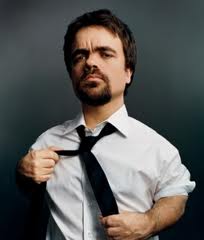
EVAN: In this case his stature, not his race, is what would keep him from playing either role in a convincing manner.

GORDON: But isn’t that essentially the same issue? Imagine the great Denzel Washington playing Lincoln- you’d be sitting there the entire time, no matter how much of a powerhouse Washington would be, taken out of the film because you have to deal with a black guy playing a white guy during the height of the civil war.

In any piece of film where you’re expecting realism, you’re going to expect the actors to conform to the styles and facts of the time. If you portray Georgia in the 1960s, you’re obviously not going to have a largely black cast portraying the upper class  or if you were to set the scene in early 1900s Ghana  you wouldn’t have a cast comprised of Caucasians. It wouldn’t make sense, no matter how good they are.

EVAN: If anything, Cloud Atlas at least proves that a talented actor can portray whoever they like, given an adequate amount of makeup. Halle Berry plays a Korean Man in the film, and does so in a convincing fashion that doesn’t at all take viewers out of the film in the least.

GORDON: I haven’t seen that film, so I can’t speak to the use of the actors for the parts they play. From my understanding that was a work of fantasy (or science fiction, I’m only going off what I can gather from the trailers). And in one or two movies, it’s probably not a big deal. After all, Cate Blanchett played Bob Dylan.

But imagine this applied to each and every movie, it simply wouldn’t work. Realism would deteriorate- and this would be especially detrimental in a film trying to deal directly with race relations.

EVAN: I personally feel that allowing any race to play any other speaks much more in terms of race relations. That’s a world where colour is a non-issue  because it shouldn’t be.

EVAN: I’m dying, Gordon. My life force is seeping out of me.

GORDON: Try to stick with it…

GORDON: And while it’s true that race ought to be a non-issue, that’s simply not how things are or have been in the past. Using black actors to play black characters and white actors to play white characters is fundamental to demonstrating past inequity and injustice with American racism and segregation. And that’s just one element.

Let’s talk about Indians playing Arabs. It happened in Lost and it happened in Community (with multiple actors), but Arabs look nothing like Indians. Indian actors are used simply because they fit the stereotype of what most people think an Arab looks like. It perpetuates an inaccuracy.

EVAN: Isn’t the fact that the role is an Arab important a large enough step? This is a minority with a major role on a TV show, and an opportunity for minority actors to step up, which they have in both cases.

GORDON: Barring Monk and Arrested Development, when’s the last time you saw an Arab actor? I’m not trying to argue against Indian actors, or actors of Indian heritage getting roles, but for the purpose of portraying the world as it is (or at least with some realism) we should have actors with some vague resemblance to the people they’re portraying on film.

After all, would you not be thrown off by guys with German accents playing French resistance fighters during WWII?

EVAN: If they had German accents then they simply wouldn’t be right for the role, which brings me back to my first point.

GORDON: Which, by proxy, brings us back to my first response. Ethnicity (depending on the situation) is just as valid an element of a guy’s candidacy for a role dealing directly with ethnicity as accents, or height, or any other factor (actual talent, of course, being the most important).

Vincent Cassel should probably not play Malcolm X. Adrien Brody should probably not play the Queen of England, though that would be pretty funny.

EVAN: If we’re going to stick with believability, than why is it so important that Indians not play Arabs? No one has ever made a big deal out of this, so clearly people believe that they are what their role calls them to be-

Likewise a Korean can to play a Chinese person can play a Japanese person. Audiences can’t tell the difference and believe that they are whatever the role is, and that’s okay.

GORDON: But Koreans do not look Chinese, Chinese people don’t look Japanese, and Arabs and Indians certainly don’t look like each other. The only reason this happens is because most people either don’t know (partly due to this inaccurate casting) or don’t care (in other words, all non-whites are basically one homogenous mass.

If all your life, you had seen black men and been told “these are Uzbekistanis,” then you’d go your whole life simply assuming that Uzbekistanis are, in fact, indiscernible from guys from Benin.

Your ignorance should not dictate which actors get which parts. Further, no Uzbekistan could really ever get a chance to play and Uzbekistani because of the years of misinformation.

EVAN: But there is a huge difference between a black person and an Uzbekistani. The examples I made have similarities that the example you used clearly does not.

To be such a stickler for accuracy is the other extreme, and just as wrong. You wouldn’t get someone with mental problems to accurately portray a character with mental problems, that just doesn’t make sense. Race should matter if it is noticeable, and like I said in the case of shows like Lost it is not.

EVAN: The logic above was used against me by someone in a thread on Reddit  You can check out our exchange here.

GORDON: Granted, my example was extreme, but that doesn’t change the point. Even though a Thai guy and a Japanese guy share more similarities than a Beninese guy and an Uzbekistani guy, there are still distinct differences between people from Thailand and people from Japan.

With regards to being a stickler- I admit, as I have previously, that you don’t have to have an exact replica of the character you’re trying to portray. Jet Li, I imagine, is doing pretty well for himself, and I still wouldn’t doubt his ability to portray a poor man very well. However, while you don’t need to be point for point, you do need to have some general similarity. That’s why we don’t have Emma Stone portraying Fidel Castro.

EVAN: I feel like the extremeness of your examples is damaging your point. If we’re sticking with race we should do that, and not bring in gender.

GORDON: It’s to demonstrate the underlying point in all of this: Verisimilitude. Realism. Accuracy.

EVAN: And since you said “you don’t have to have an exact replica of the character you’re trying to portray” why isn’t it okay to have Naveen Andrews play Sayid Jarrah on Lost?

GORDON: But the distinction is great enough. The accent is Indian, not Iraqi. Naveen does not look Iraqi. When an actor neither looks nor sounds like the character he is meant to portray, we have a problem.

EVAN: So if Jarrah had managed to sound Iraqi, would that have helped?

GORDON: It would’ve added to the realism and accuracy, yes. But that doesn’t change the fact that he’s very clearly Indian, not Arab.
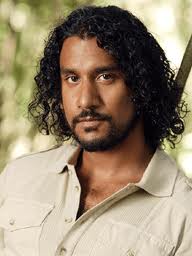
EVAN: Clear to a very select few. As mentioned, people didn’t seem to notice for the most part.

GORDON: Clear to a very select few. As mentioned, people didn’t seem to notice for the most part.

Most people don’t know what an Arab looks like. Do they know that Monk is Lebanese? That Cousin Maeby is Iraqi? Most do not. Ignorance is not an excuse for inaccurate casting.

EVAN: And that brings our exhausting exchange to an end. Trying to argue for something I so strongly disagree was one of the more difficult things I’ve ever done. I hope that in reading this you were able to see the holes in my argument and the truth in Gordon’s.

GORDON: Booyah.

The past few paragraphs alone have had the same effect on Evan as that life-sucking device in the Princess Bride. Commend him for biting the bullet.

And as for our discussion next time, your options are: What do we make of the upcoming Star Wars sequel?

EVAN: And. . . how about . . . How much artistic merit is there in a show like Adventure Time?

GORDON: I like it.

And to our beloved and devoted followers (who would organize into a vicious and unholy army of darkness if we ever were to ask it of ’em), feel free to suggest your own topic down in the comments section.

EVAN: And, as usual, thanks for reading.
Shame Day: Greg Land

As you probably know by now, comics are very important to me. It’s good art and good writing coming together as one, the creation of a medium that’s unique among all others. The ideal combination is a skilled creative writer coupled with a hard-working, attentive artist. This pairing doesn’t always happen, though. Sometimes a writer is forced to work with Greg Land.

If you type “Greg Land” into Google the second search result that comes up is the site known only as “LAAND!“, though the name of the url more than makes up for the possible vagueness. The site is a tumblr dedicated to the man’s “generally bad artwork and the sexist ethical repercussions to hiring him nowadays.”

To put it plainly, Greg Land doesn’t draw, he traces. This isn’t all the time, but the fact of the matter is that he does it so blatantly and conspicuously that it is impossible to ignore. The following gif will do more to convince you of this than a thousand pages of my writing.

There is seriously no ignoring that. Clicking the image links to the blog JIMSMASH!!! which catalogues many, many more instances of his copycatting. Another fantastic gif’d example is one where, and this is practically mindblowing, Land rips off of himself. The image on the right transitions back and forth between Jean Grey and Black Canary, both drawn by Land [and for competing companies, too].

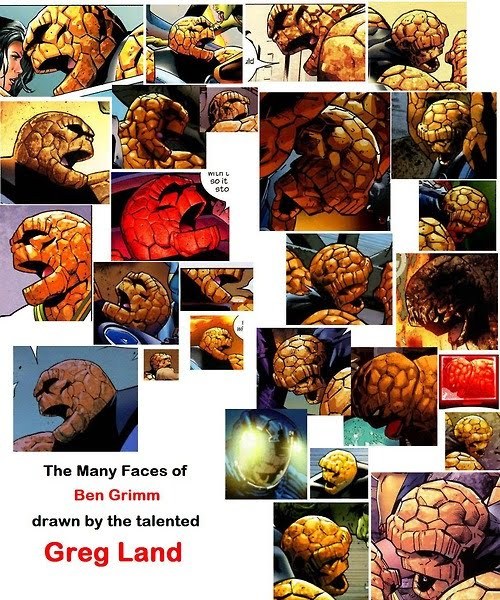
Here’s a pretty great image. It’s “The Many Faces of Ben Grimm drawn by the talented Greg Land.” He is a man who knows how to recycle.

Now all that I’ve mentioned is pretty atrocious, but here’s where it gets unbelievably worse. Observant comic fans have noticed that a lot of his references appear to be directly taken from porn films. There isn’t an argument more convincing than this picture:

What’s most upsetting [and there is a lot to get upset about] is that Greg Land continues to get work.

Marvel NOW! is the company’s decision to take their best titles and switch around talented writers and artists, creating combinations that will take their characters in new and exciting directions. Somehow Greg Land was assigned to Iron Man with writer Kieron Gillen who had this to say about him: “That’s the thing with Greg Land: his photorealistic style really pops and it’s a glamorous book in that way.”

That’s the thing, Kieron. They look photorealistic because he has traced actual photographs.

And right away, with our first look at the book’s interiors, we can already see that Land has ripped off of photos of a cosplayer, and from actually talented artist Adi Granov.

The saddest part is, Greg Land doesn’t even really know how to draw people anymore. His knowledge of anatomy is paltry at best, as helpfully illustrated in the post “Hips Don’t Lie: Pelvis? What Pelvis?” He may have been a legitimate artist once, but he’s traced so much and so often that when he does draw something freehand he can barely recall how to.

I understand that deadlines need to be made, and that in the world of comics this is not always easy to do. That should be taken into account, but this has gone on for so long it hardly stands as a defence. Greg Land should feel bad. His work is absolutely nothing to be proud of.

Manly Culture

Even if you haven’t recognized it for what it is, chances are, you’ve seen elements of it. The resurgence of beards, comments on period piece clips like “Why don’t we wear hats anymore?” or “Dang- they knew how to dress back then.” Or perhaps you’ve stumbled across The Art of Manliness or are (like me) a faithful apostle of Ron Swanson.

Now whether you’re aware of it or not, there is a growing culture based around this general perspective of “manliness” that supposedly existed from 5,000 BC to 1974 AD. The resurgence in the popularity of the beard, the wave of internet memes centered around being “classy,” our love affair with period pieces- all of this compounded has created the beginnings of a whole new subculture.

Don’t believe me? Just take a look at some of our favorite TV characters.

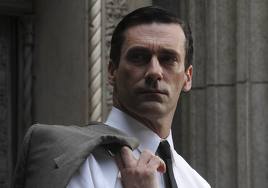
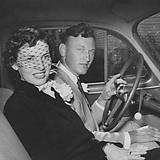
Don “F***-You, Liver!” Draper

Jack “Even Ayn Rand Thinks I’m Egotistical” Donaghy

Rick “Bad Decisions” Grimes

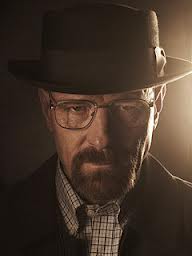
Walter “Tied with Draper for Making People Love Fedoras” White

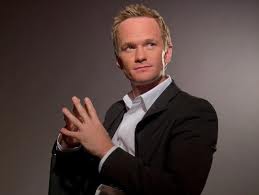
Barney “Legen- wait for it… -DARY!” Stinson

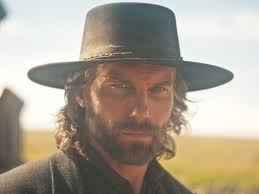
Cullen “I Will Punch You For No Particular Reason” Bohannon

Comedy, Drama, Action/Horror, Westerns- this is a pretty broad range, and we’ve got the same strong, dour antihero type in all of them. Men who remind us of our fathers and grandfathers. Tough as nails bastards who came to this country with only a dollar in their pockets- who took a break from their honest 8 to 8 jobs of hitting metal with other pieces of metal to kill Nazis and look dapper doing it.

So what’s this culture all about? As with any group, we can talk about the superfluous or cosmetic elements- in the case of the “manly” group, handshake etiquette, strait-razor whetting, and driving stick- but to really understand ’em, we’re going to need to look at the underlying values in play here.

Independence:

What do all the men shown above have in common? A degree of independence. They’re DIY guys. Men who aren’t reliant on the help or charity of others- in short, dudes who can take care of themselves in most any situation, from car repair to providing for the family to killing the undead. And on that note…

Initiative:

These are all men who don’t allow themselves to be victims. They’re proactive moment-seizing leaders who don’t wait idly by for someone to step up. Good or bad, they’re leading the way- and speaking of bad…

Stoic:

These are guys who tend to lend credence to the stereotype of the unspeaking, unfeeling male. At best, the strong, silent type- at worse, the uncommunicative lout. One way or another, they don’t let the situation get the better of them. That’d be undignified, and if there’s one thing that they’re about, it’s…

Dignity/Pride:

It’s in the way they dress, the way they speak, the way they expected to be treated. A kind of code that prohibits some things and makes others compulsory. You can’t hold your head high, then what’s the point in having one?

Moral Ambiguity:

These men are all, to varying degrees, antiheroes. Guys with their own agendas and a certain degree of moral ambiguity that keeps you on your toes. There’s a level of egotism, self-centeredness, and disregard for others that makes them pretty good at what they do, but what they do not all that good- certainly they don’t fit the traditional mold of the selfless, self-sacrificial hero.

Wealth:

And while it’s not true for all of them, money tends to be a major element of their stories. A drive to be successful, prosperous, and (again) independent. It’s the age-old dream of being your own boss.

So what does all of this boil down to?

Power.

It’s about power. These guys represent everything we, as a generation, aren’t. Independent, wealthy, self-assured, proud. Does that sound like us? Not at all. We’re the casual dressed, globally conscious masses struggling to make it by, and taking whatever miserable, degrading soulless job we can find. We’re not strong like these glamorized images of our grandparents are (having conveniently erased the racism, bigotry, and misogyny).

But we want to be.

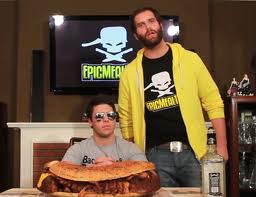
And so begins the perpetual motion machine of life-imitating-art and art-imitating-life. Epic Meal Time, Memes, Period Pieces- the list goes on.

So is this a good thing or a bad thing?

Well, there are good and bad elements to every culture (some more bad than good, and vice versa), but let’s list out the positives and negatives.

The positives have been wrapped in bacon

Positive:

  • We can stand to toughen up a bit a lot as a generation. We don’t need to be bending horseshoes with our teeth, but some basic survival skills and a thicker skin when it comes to discomfort and hardship would be nice (battery running out on your phone doesn’t count as suffering).
  • In these tough economic times, be able to do basic repairs to your house and car aren’t just good- they’re necessary. Same goes for any of the thrifty elements of the culture.
  • Even if we don’t have it quite yet, demanding a certain level of dignity in our work and our day to day lives isn’t just good for you as an individual- it improves society on the whole.
  • While we probably shouldn’t worship the fedora or declare the suit to be the only appropriate clothing for a man over the age of twelve, it certainly doesn’t hurt to know how to dress ourselves, or conduct ourselves well in any given situation.

Negatives:

  • The glorification of the past can, as I jokingly mentioned above, lead to the uglier elements of it being glossed over. We hail our grandfathers as being great men, forgetting how easy it is to make a name for yourself when none of the good or prestigious jobs can be given to equally qualified women or non-white men.
  • The culture really doesn’t leave a whole lot of room for women at all, other than the kitchen. This is not to say that all adherents of the culture see it this way, but when you’re trying to espouse 1950s society, that includes 50s traditional gender roles as well.
  • It can’t be denied that there’s a strong conservative appeal in this culture, as well as hints of Ayn Rand’s Objectivism. Glorifying wealth and success, especially when coupled with a “do whatever you need to do” mentality, can lead to the twisted perspective that poor people are poor because they are lazy.
  • This culture, despite the intentions of its adherents, does give a home for sexism. The uglier elements of the masculinity movement, those who view women as belonging in the home and nowhere else will doubtlessly find it a lot easier to fly under the radar in a culture that’s utterly dominated by males.

So what’s the final verdict?


“Manly” culture doesn’t appear to be either helpful or harmful- at least, not yet. The underlying issue being power, it’s going to be faced with the task of walking the thin line between empowerment and megalomania. So long as self-control is kept in mind, they oughta be fine.

Be sure to look for next week’s installment: “Science” Culture.

Does Billy Graham Think Mormonism Is A Cult?

Yesterday a friend of mine posted a link to an article on the TIME website titillatingly titled “Billy Graham No Longer Thinks Mormonism Is a Cult.”

For those of you who don’t know, Billy Graham’s name has long been synonymous with “famous Christian guy.” To put that into more quantitative terms, he has been spiritual adviser to US presidents Eisenhower and Nixon, and  as of 2008 has had an estimated lifetime audience of 2.2 billion. Christians the world over  look to him to be a powerful representative of their faith.

Roughly two weeks ago US presidential candidate, and Mormon, Mitt Romney visited Graham at his home. At some point during their time together, the 93-year-old Evangelist told him, “I will do all I can to help you.

Shortly after this the Billy Graham Evangelistic Association [BGEA] took down a reference to Mormonism as a cult on its website.

This has, as most any action in the political sphere, provoked all sorts of public outcry, some of it mild, some of it extreme to the point that Graham’s whole ministry has been dubbed “a sham.” Basically your typical response to an event that combines two of the conversation topics you’re not allowed to bring up at the dinner table.

The viewpoint of Mormonism by mainstream Christianity aside, what’s truly important is what the man himself believes. While on the BGEA website I found an actual answer by Billy Graham, undated, to the question “What is your definition of a cult, and how do cults differ from Christianity?” His answer is as follows:

Cults differ widely from each other, of course, but they often have several characteristics in common. (Your local Christian bookstore can suggest some books that describe cults in more detail.)

One characteristic is that cults reject the basic beliefs of the Christian faith—beliefs that Christians have held in common for almost 2,000 years. Instead, they say they alone have a full understanding of the truth about God, and the only way to know the truth is to be part of their group. Many cults have their own writings also, which they either substitute for the Bible or add to the Bible.

Cults also often have a strong leader—one who demands total obedience, and actually claims to speak for God. This is very dangerous, of course, because he or she may lead others into disaster. Remember: Only Christ is worthy of our allegiance, for only He is God’s Son. The Bible says, “Through him you believe in God … so your faith and hope are in God” (1 Peter 1:21).

Pray for your brother and ask God to help you share Christ’s love with him. Cult members are often very resistant to outsiders, but pray that in time he will see this group’s false claims. Most of all, may his experience challenge you and your family to a deeper commitment to Christ.

Let’s break down his definition in regards to the Mormon faith.

———

  • Cults reject the basic beliefs of the Christian faith.

When it comes down to the bare basics, and concentrating on the personhood and divinity of Jesus Christ, they’re pretty spot on. “Jesus Christ is the Savior of the world and the Son of God. He is our Redeemer.” Judging by this singular belief I suppose Mormonism would not be considered a cult.

  • Many cults have their own writings also, which they either substitute for the Bible or add to the Bible.

The Book of Mormon. People know about this because it is also the name of a popular Broadway musical. From their website it is apparently viewed as an addition, not a substitution, to the Bible. It is also a book which “contains the history and God’s dealings with the people who lived in the Americas between approximately 600 BC and 400 AD.”

  • Cults also often have a strong leader—one who demands total obedience, and actually claims to speak for God.

The head of the Church of Latter-Day Saints is known as the President of the Church. According to their Doctrine and Covenants, this man is the only one empowered to receive revelation for the entire church and clarify doctrine. Presidents can also correct or change any previous teachings.

———

Judging by the qualities of cults that Billy Graham lists, Mormonism hits two out of three. Why is it then that his organization took down the reference to the Church of Latter-Day Saints as a cult?

Ken Barun, the organization’s chief of staff, is quoted as as saying: “We removed the information from the website because we do not wish to participate in a theological debate about something that has become politicized during this campaign.”

Have politics, then, trumped religion in this case? A debate on faith is avoided in order to bypass a possible issue of contention with a presidential candidate, one that Graham directly endorses. Cults are described as groups that espouse “false claims,” but apparently that can be ignored in light of Romney’s campaign.

While it is unfair to cite the holy life Billy Graham has lived as invalid in light of his recent actions, his decision should nonetheless be viewed for what it is: a sign of weakness in prioritizing the politics of this world over a commitment to spiritual truth.

Fame Day: Racebending.com

This Thursday I want to call attention to a website that’s been in this blog’s links-sidebar basically since its inception. I came across Racebending.com around the time it began, and their stance on equality casting and representation in the media is one of the many reasons I decided it was time to start writing more about what I thought mattered.

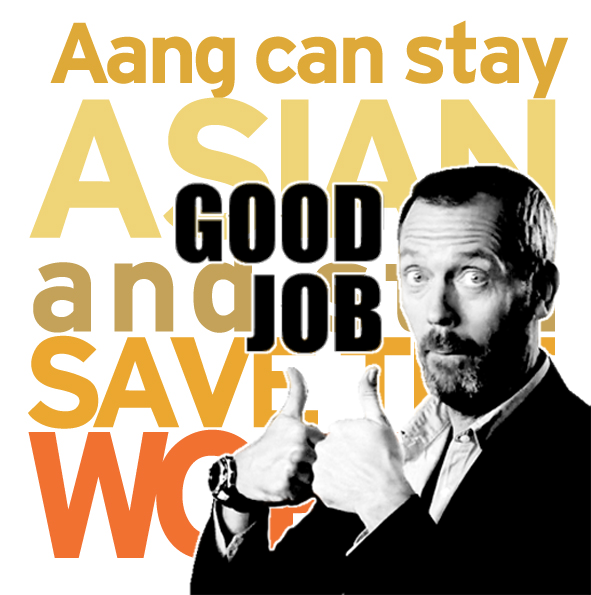
As their name might suggest, the site came about as a response to M. Night Shyamalan’s film adaptation of the Nickelodeon show Avatar: The Last Airbender. The entirety of the series was set in a distinctly Asian-inspired universe, and the casting decision was made to have the majority of the protagonists be played by Caucasian actors. The change is starkly apparent in the image below:

And for those of you who don’t think Zuko is a villain, click on the link for a thorough explanation.

The organization did a great amount in revealing the decisions that went into the making of the film. Most importantly was their breakdown of the casting calls that read “Caucasian or any other ethnicity,” and how the language affects those who apply for the roles as well as hinting at what they are looking for. They also exposed the blatant racism used by casting director Deedee Rickets, who was quoted as answering the question “Are you at a disadvantage if you didn’t wear a costume?” with the following:

Absolutely not! It doesn’t mean you’re at a disadvantage if you didn’t come in a big African thing. But guys, even if you came with a scarf today, put it over your head so you’ll look like a Ukrainian villager or whatever.

Although the movement was not enough to sway the studio, producers, or director of the film, the site stays up, continuing to work towards educating the internet on when and where whitewashing is taking place, and what people can do to stop it. They also take care to call attention to those who are advancing the role of minorities in the media, giving credit where it’s due.

Most recently the blog has been concentrating on the upcoming film Cloud Atlas, which stands out due to its use of “yellowface” by various actors. While the directing Wachowski siblings and others have cited the theme of reincarnation and  the fact that actors of colour will also be playing White roles, media liaison Mike Le lays out the stark difference between the two. In an interview with  the radio station Vocalo 89.5 he explains the tradition of yellowface in cinema as a means of controlling the perceptions of a race, and the damage it has done and can still do.

All in all, Racebending.com is run by people who are doing good things, and who care about representation whether it be based on race, gender, or orientation. They strive to see the media reflect the immense amount of diversity in our world, and that alone should be worth checking them out.

James Bond is Debonair, Deadly, and Black?

To start things off, current Bond actor Daniel Craig announced in 2008 that we might be ready for a bit of a shift in the mythos of Ian Fleming’s most well-known character. He’s quoted as saying “After Barack Obama’s victory I think we might have reached the moment for a coloured 007.”

Four years later and the Huffington Post has an interview with latest Bond Girl Naomie Harris, with an exchange that goes as follows:

In recent years there’s been talks of the possibility of fans seeing a black James Bond at some point. Do you have any personal favorites that you would consider for the role?

I didn’t realize that there was this talk and then I did a film with Idris [Elba] and he said that he met Barbara Broccoli [James Bond producer] and that it does seem like there is a possibility in the future that there could very well be a black James Bond. And I would have to vote for Idris because I just finished working with him and he’s a great guy. [Laughs]

Obviously this change would rile people [and racists] quite a bit, but it actually fits in with a very popular fan theory. The idea is that “James Bond” is a codename that’s passed on from one agent to the next, justifying the change of roles as the decades have rolled on, and the extreme personality changes in the character. Lee Tamahori, the director of Die Another Day actually espouses this theory, and thought it would be great if former Bond Sean Connery could make an appearance in his movie alongside Pierce Brosnan.

Idris Elba is an immensely-talented actor, and a shoe-in for the role. The London native has clearly thought long and hard on the issue, and although he appears to have had some uneasiness about it, the following quotes show that he now appears to be very on board with the idea.

I would do it, but I don’t want to be called the first black James Bond. Do you understand what I ‘m saying? Sean Connery wasn’t the Scottish James Bond and Daniel Craig wasn’t the blue-eyed James Bond. So if I played him, I don’t want to be called the black James Bond.”

– Idris Elba, interview with CNN, 2011.

I’d be honoured to play the part if it comes my way.

– Idris Elba, at the Golden Globes, 2012.

I engaged in a recent debate with someone over the casting of Ben Kingsley as the Mandarin in the upcoming Iron Man 3, and the same argument I’ve heard time and time again popped up. “The person who’s best for the job gets cast.” Somehow, though, I doubt that those who believe this will be using the same logic in support of Idris Elba portraying James Bond.

In all honesty, the world probably isn’t ready for a Black James Bond. People are, in general, averse to change, especially when it comes to their beloved characters. While a film with Elba as Bond will receive a large amount of criticism [much of it racist], it may just be the beginning to a world that truly doesn’t see colour.