Tag Archives: film

In With the Old [And In With the New]: The Silver Lining of Intertextuality

Last Friday I asked you all to watch a short video on the concept of intertextuality, which provides the basis for this week’s post.

While Nerdwriter1, the YouTuber responsible, initially describes the device as “something in a text, in this case a movie, that is shaped by another text” he later goes a step further in making the term distinct from mere allusion. Contemporary intertextuality, which he refers to as being “weaponized”, is defined as:

“objects, people or situations explicitly meant to trigger an emotional response”

To use my own visual example, successful intertextuality results in a combination of:

and

Being able to recognize and understand the reference is important, but equally essential is having that recognization elicit feelings, whether they be of awe, or joy, or pleasant surprise. Simply identifying a shot in a film as the replication of a comic book panel matters most if you care[d] about that original work. Continue reading

The Deepwater Horizon Film Reminds us That Hollywood is Still a Propaganda Machine

I’m kinda furious about this:

When first watching the trailer, I tried to remind myself that it was just a movie.

But it’s never just a movie, is it?

Given enough time, I’m sure I could list hundreds of films that changed my perspective on the world. The Hours was the first time I felt challenged on my once very black-and-white perspective on LGBT rights. Hotel Rwandadespite being called “revisionist junk” by then UN peacekeeper/now senator Romeo Dallaire, was the first movie to open my eyes to the role of politics in preventing, or allowing, genocide and devastation. There are just so many movies that moved me to reconsider my stance or opinion by challenging me to see the world through someone else’s eyes. Movies do affect us, often more than we’d like to admit. Heck, that’s exactly why we talk so much about representation in movies here on the blog.

So I am a movie fan who believes that movies impact their viewers. That’s why I’m furious that there is about to be a major blockbuster that will hero-wash “the worst oil spill in U.S. History” a spill that polluted the Gulf of Mexico for 87 days and leaked approximately 3.19 million barrels of oil. Continue reading

Why I Know “I’ll Be Back” to Watching 90’s Action Movies When I Have Kids

I came to the 90’s action party late.

Sure, I watched a few Arnie movies as a kid, but those were the blatantly child-friendly movies. I’m talking Kindergarten Cop and Jingle All The Way, fun romps to be sure, but nothing to prepare me for the awakening I had last year.

tumblr_n37uvariwk1rvcjd7o2_250

It all began when John convinced me to watch his favourite films from the 90’s (and a few from the 80’s). I decided to indulge my husband’s nostalgia. How was I to know it would end in an movie obsession that would leave me with a classic-action-movie-sized hole, never to be filled? I’ve had a hard time identifying what it is about these action movies that is still so appealing, so I thought I’d write a post trying to figure it out.

They’re Intensely Optimistic

I recently watched SicarioIt was an intense action (/crime/thriller) flick that follows the story of Kate Macer “an idealistic FBI agent [who] is enlisted by a government task force to aid in the escalating war against drugs at the border area between the U.S. and Mexico”. While it was certainly a thought-provoking and well-executed film, it was also reeeaaaalllllllllyyy depressing.

tumblr_o67zrqqwo71svgb0ro2_540

Have you ever noticed that? Some of the “best” films out there also happen to be the ones that leave you feeling like you’ve been punched in the gut. Perhaps it’s the gritty realism of contemporary films that sets them apart from previous action films, but that realism also prevents them from being a true escape from real-world troubles.

If you go back and watch almost any 90’s action movie you can go into it knowing your protagonist won’t come out of his adventure emotionally scarred. Instead, you know he’ll just rampage across your screen, kicking butt and taking names.

tumblr_nvz0p5t9kd1tbcweeo1_400

With an endless amount of bullets.

Continue reading

Free State of Mind: Andrew Govender Discusses Acting, Tradition, and Religion

Free-State-Updated-PosterThis is the third and final installment of “Free State of Mind”, a series of Q&As with the cast and crew of a South African film currently making the rounds at film festivals. You can read my review here, find out more about its creation from producer Terwadkar Rajiv here, and get some insight on how co-lead Nicola Breytenbach’s prepared for her role here.

Today’s interview is with Andrew Govender, who plays Ravi, the other half of the couple at Free State‘s core. Another former model like his co-star, he began his career at just sixteen-years-old. Being crowned Mr. South Africa in 2012 is only one of his many achievements, which include creating the Andrew Govender Book Club with the Nelson Mandela Foundation and being involved in various awareness campaigns.

Given that their characters share a few interesting parallels Govender answers a number of the same questions that Breytenbach did, with a few that are unique to Ravi himself.


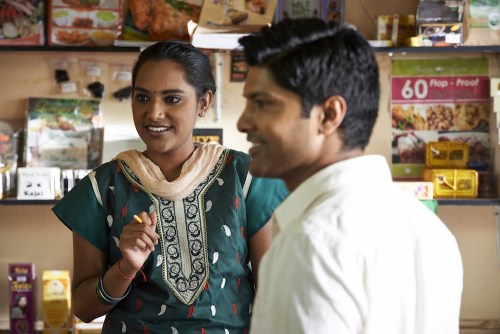
An arranged marriage is the biggest barrier that Ravi faces in his relationship with Jeanette. How would you say he views that tradition and what it means for his future?

I think he respects it and accepts it. He was brought up in a traditional Indian family and those are Indian traditions. However, when he gets to meet his arranged wife he realises that he doesn’t have much in common with her. That’s when he meets Jeanette and falls madly in love. He knows that he shouldn’t be pursuing a relationship with her because it’s illegal during that time for inter-racial relationships. However, he can’t help himself and that results in detrimental consequences.
ravisister

Ravi makes it clear that he’s concerned about his sister’s safety, but what does he ultimately think about what his family does under cover of darkness?

He understands that they are doing it for a greater cause and he respects that. However, he does care deeply for them and doesn’t want anything to happen to them when they go on these missions. He’s close to his family and wants to protect them.

From what I can tell this is your first role in a feature film. How was that experience, especially with it being a South African production instead of a big Hollywood movie?

It was an incredible experience. I got the opportunity to work with some really talented South African actors. I learnt a lot by being on set and having these actors mentor me throughout the filming process.

Our director Sallas de Jager was also really supportive and helped me to give the best performance I could. Even though this was a South African film, the production standards on the movie were really high. That can be attested to with all the international awards that the movie has won. I really hope that I will have the opportunity to work on more films both in South Africa and Hollywood. Acting is really something that I enjoy immensely.

How much did you know about South Africa’s Immorality Acts before signing on to this film?

Not a lot. I grew up post Apartheid, so most of what I knew was from what I heard, not what I could have experienced. It was quite eyeopening to learn more about that time in South Africa’s history and how Indian people were treated. I gathered as much information as I could from my parents about their experiences during that time. I also was really fortunate that my acting teacher had been in an inter-racial relationship and she was able to help me understand my character better.
meditation

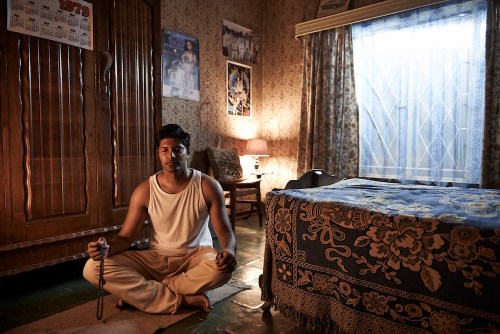
Religion plays a large part in Free State for both Ravi and Jeanette’s families. Did you come from a religious background, and did this have any affect on how you played the role?

Yes, I did. I grew up in a conservative traditional Indian family so religion was important to us. My character was also brought up with the same core values and so religion would have been important to him too. There’s a scene in the movie where my character meditates and also seeks relationship advice from a guru. So we are aware that he relies on religion to guide him in the choices that he makes.

Can Casting Choices Promote Global Cultural Dominance? A Possible Explanation for Whitewashing in Cinema

This is a weird, random, and controversial thought, but….

I wonder if this consistent pattern of replacing Asian characters with White actors (even with more and more Asian actors getting more screen time [at least on TV] and all these articles highlighting whitewashing) is a subtle and unconscious battle of cultural and racial dominance? If it stems from a fear-based place of “if you put more Asians as leads in mainstream, worldwide entertainment, then it removes some of the cultural dominance of the status quo”.

I’m really not trying to bash White people, but you really can’t argue that White people overall have more privileges than any other race. And White men are the heads and execs at basically every major company in Europe and North America. And in entertainment, which has major worldwide influence, White people and predominately men are the execs, directors, writers, producers, and agents. Ironically, they welcome foreign money with open arms from Chinese to Middle Eastern investors.

Asians, population-wise, are more than 50% of the world; China and India have enormous populations with a lot of spending power. Asian countries have created very popular forms of entertainment with anime, manga, and video games. They frequently feature characters of Asian descent. Japan has always been a powerhouse country, but their status as an Axis power in World War II has set them up historically as a bad guy. Then their strength in electronics and cars in the 90’s set them up as the “competition” (i.e. not American and not us). And Chinese is ALWAYS the bad guy in the news. “We can’t have factories in China. The Chinese are gonna take over.” There’s a history of US vs THEM. Besides the military, the only industry of world dominance that White America has complete control over is the entertainment industry. American movies make so much internationally. Ironically, the US entertainment industry depends on the income from the foreign markets, but cater very little to their populations by representing them on screen. They know that the foreign populations will come see their movies no matter what, because they aren’t doing huge budget CGI movies where they are. Continue reading

Free State of Mind: Actress Nicola Breytenbach on Getting in Character

Free-State-Updated-PosterThis is the second installment of “Free State of Mind”, a series of Q&As with the cast and crew of a South African film currently making the rounds at film festivals. You can read my review here, and find out more about its creation from producer Terwadkar Rajiv here.

Today’s interview is with Nicola Breytenbach, who plays Jeanette, one of the two romantic leads. While she has spent the past several years as a successful model, with her career taking her to runways across the world, Free State marks the beginning of her acting career. Just last month The Blue Mauritius began filming in Montreal, with the US and German co-production being her second ever silver screen role.


Jeanette is first introduced returning home to her father after finishing law school. While it isn’t heavily covered in the film, what kind of impact do you think that education had on how she views life, especially after she meets with Ravi [co-lead and love interest]? 

As Jeanette went to Wits University, which was a more liberal university than many others, it would have changed the way she viewed and felt about apartheid and the immorality act. She pursued higher education as it was instilled upon her by Maria and her father, but her true desire was to be a wife and mother.

Jeanette was raised in the very small remote town of Memel and even though it was a Christian white community it was very sheltered, and as she says in the beginning of the film that’s why she was a real ‘political innocent’. She wasn’t exposed to the reality of it much, except for a few remote incidents which completely shocked her. As her mother also passed away at such a young age and her father had a difficult time reaching out to her because of his grief, she was raised almost solely by Maria who is black South African Zulu.

Hence when she met Ravi, she didn’t think about his race and it didn’t deter her from seeing a friendly man who went out of his way to help her in this traumatic incident of a near accident. She only saw his compassion and how selflessly he had helped her. As time goes on, they both come to the realize the severity of the situation they are in, as well as the fact that they are engaged to others, but at this point it is too late, they have already fallen in love. Continue reading