Tag Archives: technology

Old James Bond Vs New James Bond

I have not seen Skyfall– I’m gonna kick things off by stating that right here and now. Nevertheless, I have been following the movie’s development for a while, and the apparent consensus from both the critics and the fans is that “at long last” Daniel Craig’s Bond actually gets back to the spirit of the rest of the series.

Let me break that down a bit.

See, the issue voiced by many Bond fans regarding Craig’s version is that the gritty realism often feels too much like something from the Jason Bourne universe. Many argue that Craig’s Bond lacks the feeling of the older movies, which were (comparatively) more lighthearted and glamorous than the darker and harsher installments we’ve seen over the past few years. This complaint, I’ve noticed, seems to come a lot more from older generations, usually from the 80s backwards, while my own generation seems much more comfortable with Craig’s version. It’s not that it’s about familiarity- after all, there were Bond films while we were growing up, however, I think the whole “New JB VS Old JB” contention really comes down to a shift in values.

I mean, let’s take a look at some of the old James Bonds.

They were off sipping Martinis, flirting with enemy spies, and driving classic cars that turned into planes or submarines or shot lasers and rockets. And all of that was a reflection of the time. The Space Age, where new and innovative technology was bringing us ever closer to a Jetson family standard of living. Those Bond movies were simply a reflection of that era. The same goes for the hedonistic Brosnan Bond of the 90s. The crazy (nearly to the level of cartoonish) villains and schemes, the deus-ex-machina technology (I’m looking at you remote-controlled muscle car) all reflected the materialistic culture that dominated the time.

In the same way, the new James Bond films are a reflection of our own age. The glamorization that marked earlier films would, if applied now, just look condescending. As the economic crisis drags on and as we become more and more acclimated to the issues of unemployment, poverty, and constant warfare, sympathizing with slick government agents in tuxedos driving luxury cars and infiltrating Mediterranean cruises gets pretty dang tough. The bloodied and battered, and ultimately more realistic, Bond that Craig gives us simply appeals more to us. He’s not so much a tour guide for us into the wild and fascinating world of espionage as he a full, tragic character struggling in a lousy situation. The whole divide is demonstrated beautiful in this clip from Casino Royale.

Even the Bond villains are demonstrative in a shift in values. Back in the 70s and 80s, the audience lived with the idea that all life on earth could be ended by a nuclear war. Madmen with doomsday devices simply made sense as the natural Bond enemy. Despite the hype over Iran and, a while back, North Korea, today the idea of a nuclear holocaust is relegated more to survivalist compounds. What are we worried about today? Shadowy cabals of wealthy warmongers manipulating our lives from inside our own governments. Even though Quantum of Solace was less popular as a Bond movie, it’s a perfect example of this similar shift in worldview. What were they bad guys after? A military coup in Bolivia in order to secure the rights to 90% of the country’s water. Even if it’s not too exciting, it’s still believable.

Now none of this is to knock any of the movies (barring A View to Kill, which was freaking awful), it’s simply to explain why there’s been a bit of contention over Craig’s incarnation. The simple fact of the matter is, Bond is going to evolve with time. Surely that’s something to be admired, not complained about…

Free Information Culture

The last of my installments (for now) in looking at these rising alternative cultures is “Free Information Culture,”  which shares the same problem with “science” culture in that there’s really no good name for it yet. I’ve referred to it before as “internet culture,” only the problem with that is that, like “science culture,” it isn’t so much the culture of the thing itself as the culture of the fanbase. In simpler terms, it’s the difference between Hollywood culture and movie-lover culture- it’s the end product that’s valued.
So what’s the internet’s “end product”?

Besides porn and stuff like this…

Free Information.

Whether it’s the news, or Wikipedia, or TED Talks, or Imgur, or anything else imaginable, it’s on the internet for free and public use. It’s something of a great equalizer. No matter where you’re from, what language you speak, what class you hail from- you can create or say anything and then get called gay in the comment section.

And while that last bit is sort of a joke, it does play a role in developing the “free information culture.” Granted, general anonymity can make us vicious and vile people, but it also (to some extent) strips us of our egos. When you make something online, you really don’t get much, if any, credit, but that’s alright since it isn’t the point. It’s just about creating, nothing more or less. Who drew the first rage face? Who started up Bad Luck Brian? Who edited and sourced that one Wikipedia page you used to stitch your last minute term-paper together? Who puts together those monthly fail compilation videos? I don’t know and will probably never know, but I do know that they’ll keep coming because of the simple joy of creating them. I and every other person with a half-decent internet connection.

And all of this simply isn’t understood by some people.

Recall the massive outcry against the SOPA and PIPA bills? What prompted the creation of  these acts was that some people- certain corporations in particular- couldn’t quite wrap their heads around the idea of free and unlimited access. Now maybe you agree with them, and maintain that posting copyrighted material of any kind is piracy and immoral, however, what needs to be understood is that this was viewed as an act on the very nature of the internet and everything it had come to represent.

Again excluding porn and stuff like this…

Now more and more companies are catching on to the idea that it’s wiser to try to work with the faceless and vengeful cat-worshippers of the internet than against them- just look at video game companies that are starting to work in tandem with modders. The game Minecraft in particular is a good example of this, as many of the new aspects of each update to the game coming from the fan-forums themselves. Nevertheless, there are still plenty of people out there (I’m looking at you, Music Industry) who continue to struggle (vainly) against the dissemination of what they view to be the “information wants to be free” crowd.

Again, it all boils down the core of the culture that the internet has produced, gravitating around the concepts of freedom and egalitarianism. Look at Wikileaks founder, Julian Assange.

If he did his work back in the early 90s, we can be pretty sure he’d be viewed overwhelmingly as a candidate for a James Bond villain. But today we (for the most part) view him as being a heroic (or at least positive) figure in a world that’s become increasingly secretive and unequal. Why this dramatic shift in perception? Again, it’s the internet and it’s affect on us. In a time of economic crisis we might not be able to go to the movies, or eat out, or drive for miles to see a friend, but we can watch something online, or browse recipes, or video-chat with the same buddies that you’d otherwise not be able to see. Any threat to your full and unrestricted access to the internet is, by proxy, a threat to some of the last pleasures you have left.

Hence the formation of a culture obsessed with the values of free speech, free access to information, and freedom from censorship. And with every development of the internet or our access to it serving as another leap in the evolution of the culture, it’s safe to say that the howl of anger that the governments of the world met when trying to create such bills as ACTA is only going to intensify.

“Science” Culture

Now that’s a lousy title, so let me kick things off by immediately clarifying what I’m talking about. This isn’t academia, or the world of contending theories and thirty-page papers on the finer points of psychopharmacolgy in relation to the mating habits of the Atlantic bluefin tuna. While this kind of world certainly does exist, it’s not what we’re talking about here. This is the culture not so much of scientists, as it is of science fans: those who are becoming increasingly invested in the idea that advancements in our knowledge is not only inherently awesome, but the solution to many, if not most or all, of the world’s problems.
“But Gordon, you striking portrait of wisdom and nobility,” you may be asking, “don’t we all fit that category?”

And to some extent, yes, we do. Even the most hardcore Luddite or primitivist will applaud the polio vaccine or HIV medication, but even so, there is a growing number of people who take things to the next level entirely. Check out this trailer:


Kind of a crazy premise- guy transfers his consciousness into a machine body. But still not too far off from the way many people believe we’ll eventually be living. “Transhumanism”, they call it, which, to grossly simplify it, is the general idea that the best (or even inevitable) course of human existence is to “evolve” beyond the confines of our biology. That with the progression of science and technology we’ll stop the effects of aging and be capable of improving upon our own minds and bodies. If you wanted to find a decent illustration of this kind of issue, try watching Battlestar Galactica (the new ones), or better still, Caprica. Now this is an extreme element of this culture, but a contributing element nonetheless. Major advances in prosthetics over the years, as well as films such as Surrogates, GamerAvatar, The Matrix, I, Robot (heck, any film or media dealing with the whole “what makes a person a person?” question) have all been instrumental in introducing transhumanist ideas. But of course, it’s more than just that.

It also has a lot to do with these guys:

These guys right here are arguably responsible for popularizing this entire culture, breaking down even dry subjects and making them compelling and (relatively) easy to grasp, even if only on the most basic level. You probably won’t go off to revolutionize the world of astrophysics after a few episodes of Cosmos, but chances are you’ll come away amazed. Would the recent Mars landing have had the same widespread popularity as it did without these guys? Would the cutting of manned space-missions have been met with the same outrage? Almost certainly not.

To some extent, the decline of religious adherence in the West may also be a factor in this culture. A growing number of individuals in the US are simply reporting themselves as being “without religion,” and the “science culture’s” emphasis on altruistic humanism (more on that in a minute) and skepticism offer a sympathetic atmosphere. The fact that many leaders (or at least, poster boys) for the culture are atheist (Mythbusters’ Savage and Hyneman, for example) or agnostic (Neil Degrasse Tyson) is also certainly a factor.

And perhaps the most fundamental element of all in this culture is the concept of “post-scarcity.” Quite simply, it’s the idea that we have progressed to a point where we no longer have scarcity of resources. E-books are typically used as an example, with adherents of the idea pointing out that with almost everything ever written in human history accessible in digital form, we could potentially give access to everything ever written to every man, woman, and child who will ever live without ever cutting down a single tree. The same logic is applied to film and music as well.

All of this combined creates and fuels a culture based ultimately on values of human welfare. In many respects, it’s the polar opposite of the “manly” culture discussed last week, emphasizing interdependence rather than independence, cooperation rather than competition, and progressive and postmodern social norms rather than traditional ones.

So what are the pros and cons of the culture?

Positives:

  • The fundamentally altruistic and humanistic elements of the culture are certainly something to be admired.
  • Money goes into scientific research, and cures and advancements come out; you can explain that.
  • Quite simply, the idea that we, as individuals and societies “aren’t done yet” creates a great atmosphere for experimentation, advancement, and general optimism about our conditions.

Negatives:

  • We could talk about playing God and paternalistic big-government and all that, but ultimately, the issue of the “science culture” is a fundamental misunderstanding of the way things actually are in the world. While it’s certainly true that there’s enough to go around, we simply aren’t a “post-scarcity” world. The vast majority of the planet is desperately poor, and their needs have to be met. The culture’s basic tenets also have the issue of seeming to assume that science is the answer to everything- that we can maintain our (general) levels of consumption and simply have our decadence off-set by the latest, greatest advance in clean energy. Now even if you assert that our problems can be solved by a use of technology to give us a surplus of everything we could ever possibly need, the same fact of the matter is that those technologies do not yet exist. The entire outlook is, quite simply, utopian, and while optimism should be applauded, it desperately needs to be tempered with realism.

And that’s it for today- be sure to check out Tuesday’s “Shame Day” post, and check in next time for our look at “internet/free information culture.”

Evan and Gordon Talk: The Greatest Flaw of This Generation

GORDON: Ladies and gentlemen- this is your captain speaking. After some unavoidable delays we will finally be taking off into our mid-week discussion. Our topic for today is “What’s the greatest flaw of this generation?”(This generation being those born in the late 80s to mid 90s: “The Millennials,” “Generation I”, “Gen Y”- call us what you will).

EVAN: As I mentioned in the news update, we scrapped our conversation last night, largely because it became cyclical. To be more specific, we ended up going back and forth between apathy and cowardice, with one leading back to the other and so on.

GORDON: But let’s widen the picture a bit. While apathy is the go-to criticism many have, also up there for our generation’s flaws is our alleged “sense of entitlement.” Thoughts?

EVAN: If we’re still going with your incredibly broad age range, then yes, I definitely think that a lot of kids these days feel a sense of entitlement. It’s just the norm now to have wireless internet, a phone, the latest iGadget, etc. They’re just expected, the new given.

GORDON: Is that fair, though? I mean- haven’t we assumed that phones, indoor toilets, and electricity are “the norm” since they were first invented?

EVAN: To a point, though, some of what you listed are basic necessities. I’d argue that indoor plumbing is considered much more standard than an iPad.

GORDON: This is true, but I don’t think our generation- barring the handful of people who actually do feel entitled- views the iPad or any specific item as being “standard”- it’s the interconnection that’s the norm, as well as the expectations for new technology.

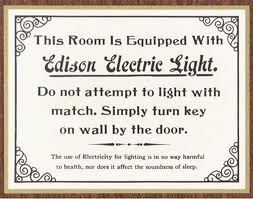
I mean, back in the day you didn’t need light bulbs. But if they’re mass produced, and safer than gas-lamps, then it just stands to reason that we’d eventually come to expect them.

But of course technology’s only one element. what about the idea that this generation is “entitled” in the sense that they get to “find themselves” or “focus on their art” or whatever hipster euphemism is being used to say “part-time employed”?

EVAN: Do I think that people feel they deserve the right to do more than just hit the ground running after college, get right down to the ol’ nine-to-five? I mean, yeah.

But I think this brings up a point I made yesterday about the “where” of our question. In France the age of retirement is 62 and that’s just expected. There are different standards depending on where you live in the world.

GORDON: This is true. I mean, each and every one of us would be considered spoiled brats if we jumped back a hundred years or so.

EVAN: Oh, no doubt. Especially you with your freakishly smooth hands.

GORDON: So would YOU say that the whole “entitlement” criticism stands?

And I use gloves. I refuse to be put down because I take better care of myself.

EVAN: You say that every time, but they’re still as smooth as a baby’s bottom.

GORDON: That means they’re working, and I’ll further have you know that I have a big ol’ scar in my right hand in the shape of a number “7.” But back to the issue-

It doesn’t seem like the “entitlement” bit sticks. Could we be classified as “lazy,” perhaps? The warped and stunted half-humans resulting from government dependence and the welfare state?

EVAN: Well, we discussed “laziness” last night specifically in the context of wanting to change what is clearly a broken system, but is what we’re talking about a general laziness? People just expecting to be spoon-fed?

GORDON: That’s the question. I recall a Cracked.com article in which the author kicked things off by apologizing for helping perpetuate the myth that a college education was a guarantee for a good job. Are we “lazy” in having had the expectation- as most of us had?

EVAN: Well, depending on who you ask, college is hard. In a way, I guess we expect that the hard work we put into maintaining a good GPA, et cetera, will result in finding employment once we’re out in the real world. Which, as I can attest to, is clearly not the case.

GORDON: So is that laziness then? Entitlement mentality?

EVAN: I don’t think that doing hard work and expecting a reward is laziness. That’s like someone working the fields and then being called a layabout because he expected crops to grow. A shaky comparison, I realize.

GORDON: Works for me. And I agree.

Now you yourself have accused us all of being creatively bankrupt. Could that be our major flaw? That we don’t make- we remix?

EVAN: I guess it depends on how we’re working this whole “greatest flaw of our generation” angle. The trend to rehash, remix, et cetera came about recently, but I’m not sure it’s because of us. Or is the question in regards to this day and age we’re in, and not those growing up in it?

GORDON: No, I mean us as an age-group, and that does pretty much answer the question right there. We are, for the most part, not the ones who are making the films and TV shows and music (give or take) of our time- that’s those who came before us.

EVAN: Exactly. Which is why we’re getting stuff like He-Man and Thundercats reboots, because those who were kids in the 80’s have a crippling nostalgia. Music is different, of course, but TV and movies are definitely controlled by the generation before us.

Okay, how about this. Maybe the flaw is our hellish appetite to be entertained.

GORDON: Ooh- interesting take. Expound, by all means.

EVAN: I mean, you’ve talked about the bilge that’s on television countless times. Do you know what we’ve been reduced to? A musical chairs gameshow called “Oh Sit!”

Are we so bored that we’ll watch people play “extreme musical chairs” for an hour?

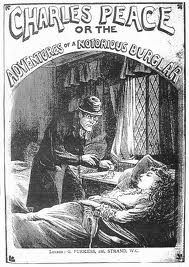
GORDON: I had no idea that existed. But surely this isn’t the first time in history that TV’s been crap. Or radio, or books, or music, or anything. Think of the “Penny Dreadfuls” back in the Victorian era- little, cheap trashy pulp-fiction novels made for mass consumption. Is that any worse than what we have today? Seems like the bilge is the same- it’s just the media that’ve changed.

EVAN: It may be the same, but it’s being produced at a frantic pace. That change, at least, has to be important.

GORDON: That speaks less to our appetites and more to our efficiency.

EVAN: I’d say that it has just as much to do with our appetites, judging by the content of what’s put out.

GORDON: We’re almost out of time, so let’s hit up some other key issues:

Apathy. As we said before, apathy tends to be the go-to criticism, at least, one of the major ones when it comes to our generation, and I think this is one of the easiest to put to rest. The Occupy Movement, environmentalism, increasing number of social movements, increasing global awareness- you name it. We’re strides ahead of the past couple generations. Heck, I’d go so far as to say we’re the most involved generation since the 60s and early 70s.

Well we’re out of time, and still of plenty of ground to cover- so rather than sloppily close up, we’ll be continuing our discussion next week with a question about hipster morality: “Do we want to be good, or do we just want to look good?” If you have any suggestions or recommendations for topics, don’t hesitate to shoot us a comment.

EVAN: Thanks for reading, and remember that CWR now updates every single weekday. I’ll see you tomorrow in our first ever “Fame Day” post!

Where’s the Counter-Culture?

In my last post, I grossly oversimplified a Marxist concept called “Alienation”. Today, I’ll be grossly oversimplifying the Marxist concept of dialectics.

Don’t give me any of that “Hegel said it first!” crap.

Boiled down to its basic components, it functions more or less as Newton’s third law of motion. Every action has an equal and opposite reaction, and that applies to society as well. Every spirit of the times is accompanied by a little inverted version of itself- or at least, its key values. Now according to dialectics, the conflict between these two opposites ultimately resolves in an evolved combination of the two, but in this post, we’re only addressing the first part.

Or at least, we would be if I could figure out what today’s counterculture is…

Think about it…

Look at the 1950s. For all the white-picket fences; sagely, pipe-smoking fathers; dutiful housewives/mothers, general patriotism and decency, and terror at the prospect of infiltration by degenerate Commies, there were greasers and bikers.

Despite the 1950s conjuring up images of idealized suburbia, this decade was the one that gave birth to rock and Hells Angels. Trafficking and dumping excrement and urine on their initiates doesn’t quite mesh with the general ideals of the time.

The same can be said for the sixties, which produced the hippies and the civil rights movement in the face of an otherwise conservative culture desperately trying to maintain the status quot.

Or the 70s, whose militancy and pessimism were a rejection of the peace, love, and hope values that arose during the previous decade.

Or the wildly egotistically and self-centered 80s producing (or at least, nurturing) anti-establishment and anti-corporate punks culture.

Even the 90s saw rise to goths, opposing the (comparatively) cheery and consumerist zeitgeist of the time.

So why not our era?

The Occupy Movement? I did consider them, but they don’t really fit the profile.

Despite being viciously cracked down on by the powers-that-be, the OWS protestors never really presented anything shockingly antithetical to the values we hold today. At least, not entirely.

Violence is (almost) universally decried as a means of protest and social change by all but those doing it. While America hasn’t seen much of it, continued rioting in Europe could very well mean not so much a brief outburst of rage as a entirely new perspective on what is and isn’t acceptable in society in general.

That’s one way of calling for social change…

Hipsters? I did briefly consider the whole Indy/Hipster movement as a possible subculture, and generally despised, the hordes of lost lumberjacks wandering the streets really don’t stand for anything that mainstream society is opposed to.

You are NOT a lumberjack and this is NOT Ok…

Annoying? Absolutely. Opposed to the spirit of the time? Not really. At most the hipster culture is guilty of desperately trying to cling to childhood nostalgia in the face of creative bankruptcy (see Evan’s post) and espousing thriftiness in the middle of a major economic depression (see my old post).

Bros. Everyone hates ’em, from their obnoxious machismo to their flaming skull t-shirts and spray-on tans.

Problem with this group is that it’s not a new group- just the latest reincarnation of the same kind of people. The same basic mentality can be found clear on back in Shakespeare’sRomeo and Juliet, which essentially starts with a bunch of bros crashing a party to pick up girls.

the 1890s, when “Bros” were called “Chums”…

Ok, so what if we look at what we have in society today and just invert it? What’s the major defining element of our generation? Technology. Internet and smartphones. Social media and memes. Anonymous and scams. The opposite of all this would be the primitivist subculture, right? The people who don’t wash or shave and live in compounds in the middle of nowhere.

And while it makes sense theoretically, we’re just not seeing a vibrant primitivist counterculture or even subculture. Even when you add in the survivalist subculture (in case you don’t know, those are they guys who think the gum’mint out ta git ’em), there’s still not exactly a rising trend in people learning how to skin squirrels or live in total harmony with the earth-mother.

What about these guys?

This site (which I’ll be delving more deeply into next week) really does seem to have an actually beef with contemporary culture- specifically in regards to men. Offering instructions on how to polish your shoes, store your fedora (you’re expected to have one, and if you don’t, to go out and get one), shave (or trim your beard, if that’s your thing), throw a punch, or patch a hole in your drywall (holes may be caused by punching it). In a lot of ways, the reverence this site has for the “traditional” concept of what a man ought to be like is reflective of a more general reaction against skinny jeans and YouTube comment section debates. While the site itself has a devoted cult following (and not a ton else), I have seen this general sentiment expressed, and I’m seeing it expressed more and more. Granted, I might be too close to the issue to be seeing it clearly- I myself think guys wearing skinning jeans should be put in stocks for all the village children to throw dead animals at- but perhaps you’ve run into this too. Just last night I heard a comedian complaining that the current generation were (in short) wimps. Gone, he said, were the days when you could chuck a television set out of a hotel window after some drug-fueled rock band had just given human decency the finger via a seven minute guitar solo. Another comedian remarked that “Our fathers would never take the crap we’re taking… the founders revolted because of a 3% tax increase- we won’t even riot when we’re being forced to strip down at an airport!”.

There is doubtlessly a certain mystique and appeal to the figure of powerful, well-dressed men, sitting around roaring fires, puffing on cigars and sipping aged scotch to celebrate that they were in complete control of their lives. Plenty of guys today would give their right arms to be Don Draper.

Though ideally minus the aggressive lung cancer and liver failure…

And interestingly enough, this general “Manly” reaction against emotionalism, appearance (over functionality), pacifism/nonviolence, and interdependence has elements from each of the cultures I described above. There’s the primitive concept of being free from dependence on technology that bears a similarity to the DIY slogans espoused by the “Manly”. There’s the “if you gotta punch a guy, you gotta punch a guy” mentality that seems related to the Black Bloc protest tactics. The simplicity of the Hipsters is here, and even the general “I am Man, here me roar” vibe seems to be a more sane version of Bro machismo.

But that’s all just a theory. Might be true- might be just a passing fad, though if it is just a fad, then we’re back at square one with a rather uncomfortable question.

If there is no counter-culture- what does that say about our culture today? Have we reached a point where we’re so pluralistic and tolerant and multicultural that everything’s acceptable- or is there just nothing substantial to rebel against? If there’s no antithesis, is there even a thesis?

Some Frightening Things About Popular Technology

Frederick Jameson said that “Contemporary people alternate between states of euphoria and anxiety.”

Euphoria, perhaps, because that is one natural reaction to being in the state of perpetual stimulation and entertainment and comfort (at least objectively) that we, the middle class, experience. Every minute, 48 hours of video is uploaded to YouTube. Any thought of YouTube, really, or Hulu or Grooveshark, makes one realize how kind of horrifyingly immense is the amount of entertainment available to anyone with an internet connection.

Cyborgs are probably going to start showing up soon. Hopefully Jean Luc Picard will be among them (if we can get a non-evil version).

You could do nothing but read, watch, and play on the internet for the rest of your life and there would still be more things you hadn’t seen or read. Information has always been that vast – for at least the last few centuries – but never before has it been so readily available almost all the time. With smartphones and future developments like SixthSense, access to the internet is going to start feeling like an extra limb – something without which you will feel nervous and clumsy and limited. For some people, this is already true – think about most people who’ve owned a smartphone for more than a few months, or anyone in a fantasy football league, or the fact that a SecondLife Shakespeare Company exists.

In The Shallows (read a good reflection on the book at The Millions), Nicholas Carr speculates and muses about the various psychological, social, and cultural effects of more completely immersing ourselves in an environment made entirely out of nonphysical stimulation.

As a member of the first generation to really experience internet access (if you count AOL 4.0 as internet access) for our whole lives, I look to the future of the human brain with interest and horror.