Author Archives: Kat

In Defence of the Theatre [or What the Film Version Just Can’t Give You]: A Culture War Report

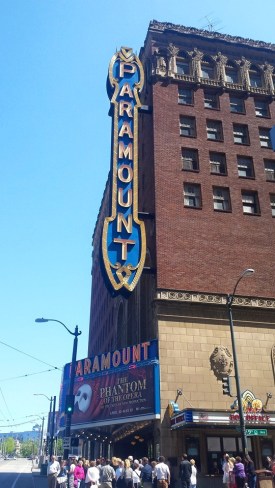
theatreA few weeks ago a close friend called me up because her family had bought a bunch of tickets to see The Phantom of the Opera at Seattle’s Paramount Theatre. Lucky for us, they ended up with a few extra tickets that they needed to sell. The tickets were an incredible deal and Seattle isn’t very far from where we live, so we leapt at the opportunity.

On the day of the play we were ecstatic. In high school, several friends and I had become obsessed with the film version of The Phantom of the Opera. One of these friends made himself a Phantom-like cape for Halloween and even managed to convince the rest of our class that we should have a Phantom of the Opera theme for our grad banquet. While John wasn’t quite as familiar (or obsessed) with Phantom, he had acted in community theatre in high school and was looking forward to seeing a professional version of such a well-known play.

At this point I should probably warn you about spoilers, just in case you have never seen the film or the play. 

Since our tickets were such a great price, we were hardly surprised when we were seated in the nosebleeds. Quite frankly, we didn’t care. We were too busy looking around at the ornate theatre itself.
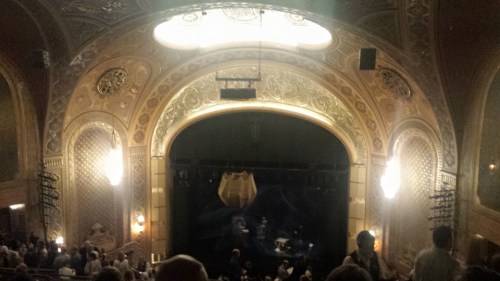
chandalier

This was the only photo I was allowed to take in the theatre itself. As you can see, we were pretty far back. The brown object in the centre is the chandelier, covered up, and the stage is covered with a dark screen that makes all the objects appear covered in cobwebs.

Continue reading

Did Mayweather Just Kill Boxing?

I watched the Mayweather-Pacquiao fight.

As a feminist, hearing about Mayweather’s history of domestic violence should have driven me to boycott the match. Unfortunately, as a fight fan, knowing about Mayweather’s behaviour also made me want to watch the fight; I really wanted to see him be defeated.

Every punch that Pacquiao landed was satisfying, even though having watched it makes me feel like a terrible person.

While I disagree with Pacquiao’s hard line stance against birth control of any kind, it was easy to root for a guy who consistently pours the money he wins back into his community and a variety of charities. Reportedly, Pacquiao will even be giving away half of the prize money he earned from his fight with Mayweather. 

Let’s also not forget how awesome it was that Pacquiao invited Jimmy Kimmel (dressed as Justin Bieber) to join him for his grand entrance.

Continue reading

The Hoarder Vs. The Purger: How Do You Appreciate What You Own Without Letting It Own You?

This will be a shorter post than usual because I am visiting my family for the week while John and I transition from “school home” to our “summer job home”. In the spirit of moving, I wanted to touch on a question that might occur to anyone who has ever had to pack up their belongings: How much stuff is too much stuff?

This is an example of what too much stuff looks like.

This past Saturday John and I handed back the keys to the basement suite we called home for our last two years of university life. Despite storing our books and dishes at a friend’s house, we still ended up with way more bags and boxes than our small car could possible hold. While I struggled to decide which pants I wore least often and how badly I would need those mason jars for canning, John had no qualms throwing out pretty much anything that he knew he wouldn’t need in the immediate future. He also jokingly called me a hoarder, knowing that it would get under my skin.

As I sat on my suitcase (in an attempt to keep as many of my clothes as possible), I thought back to a couple years earlier when almost all of my earthly possessions could fit into one suitcase. What is it that makes me hold onto things now so much more dearly than I did a few years ago? Continue reading

Is “Feminism” a Self-Defeating Label?

I’m a pretty slow learner when it comes to social media. I feel like I just mastered Facebook when it started going out of style. Unfortunately for me, social media sites are important tools when it comes to blogging. I’ve been making an effort to expand my horizons, starting with Twitter. So far, my favourite thing about Twitter is the hashtags.

Even before I started posting on Twitter, I would check to see what was trending and to follow conversations about race and gender that unfolded around hashtags like #WhyIStayed, #BringBackOurGirls, #GamerGate, #IfTheyGunnedMeDown, etc. Recently, when I went to tag a comment with “#feminist”, I noticed that the first two tags to show up were “#FeminismIsAwful” and “#FeministsAreUgly”. When I decided to make a comment about it, it wasn’t long before I got a response.

https://twitter.com/YTM1staWu1fy/status/590034450320199680

I’d like to consider what Jacob is saying. First, let’s set aside the long history of smearing feminism by calling feminists ugly for a second here.

Continue reading

Can You Be a Feminist and Still Love James Bond Films?

A teaser for the new James Bond film has hit and I am more than a little excited.

It also makes me feel conflicted because so many aspects of the Bond franchise fly in the face of much of what I strongly believe as a feminist. Below, I’ve outlined a few issues I have with the Bond movies, and below that some reasons why I haven’t given up on the franchise altogether. At this point I’m required to warn you about spoilers, although I seriously doubt I will reveal anything you don’t already know about the films.

1) Women are constantly objectified in Bond films

It’s no secret that the James Bond franchise is all about eye-candy, from the cars and gadgets to virtually every women who steps foot on set. Not only are these women present to demonstrate Bond’s power of seduction, they are also present to be viewed by the movie-goer.

And if near naked ladies aren’t enough for you, they will throw in some naked lady silhouettes in the opening credits.

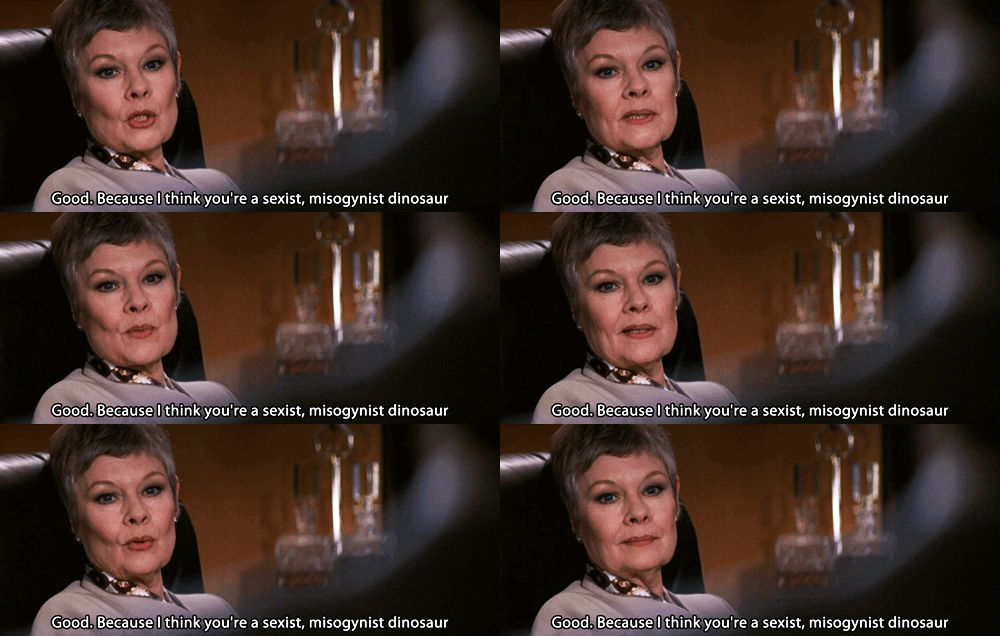
One of the only women to not be sexualized in her role was Judi Dench, who played M in the last seven Bond films. Unfortunately, although not surprisingly, she was killed off in the last film.


Continue reading

Can Video Games Make Thoughtful Social Critiques?

Just to be clear, I am not a gamer. The only video game I ever successfully completed was Jill of the Jungle, which we owned on floppy disk when I was a kid.

I’m pretty sure I only liked this game because Jane was a super cool tough girl,

In fact, up until this past year I would have argued that video games don’t really have any redeeming qualities. At worst, they are a hotbed of misogyny and xenophobia, as chronicled by female gamers on websites like Not in the Kitchen Anymore and Fat, Ugly or Slutty. At best, they are like a bottomless pit where the lives of children and adults disappear, never to resurface.

Although I suppose the same could be said about pretty well anything.

This year a good friend convinced me to try a Digital Humanities class at my University. For those of you who haven’t heard of the field before (I hadn’t either), Wikipedia defines it as the “intersection of computing and the disciplines of the humanities”.  If you want to see some examples of the kind of research being done in the field, you could check out two of my past posts describing DH scholar Lisa Nakamura’s guest lectures at my university.

While this class has challenged the way I see technology in general, it has particularly challenged my very negative perception of video games. In fact, Ian Bogost, one of the DH scholars we studied in the course, argues that games can form powerful arguments and unique social critiques. In his book, Persuasive GamesBogost describes arguments made by a game as “procedural rhetoric“, or, more simply as “the art of persuasion through rule-based representations and interactions, rather than the spoken word, writing, images, or moving pictures”.

Below, I’ve included four examples of persuasive games my DH professor shared with the class. Each of these games make relevant and thoughtful arguments that wouldn’t have been as effective if they didn’t appear in their procedural form.

The Parable of the Polygons

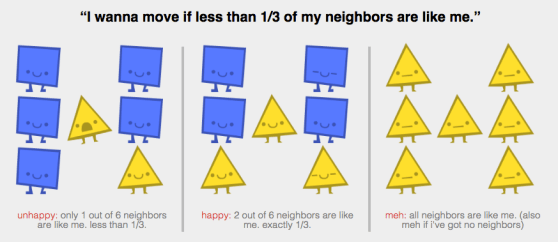
Vi Hart and Nicky Case preface their simple browser game by stating that “This is a story of how harmless choices can make a harmful world.” Hart and Case explain that the triangles and squares are “slightly shapist”. This means that the shapes prefer some level of diversity around them, but will become unhappy if they feel isolated in their community. Players are then asked to drag and drop the shapes until all of the squares and triangles are happy with the community of shapes around them.

Screen Shot 2015-03-25 at 1.28.02 PM

Click on the image to play the game

Once the player begins moving the shapes, it becomes apparent that even a slight bias will lead to large scale segregation. Continue reading