Category Archives: Fame Day

Fame Day: Vasili Arkhipov

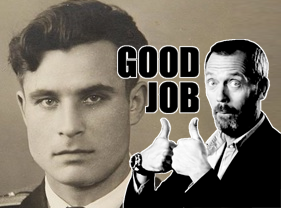
This Fame Day, I’ll be continuing my past line of praising men and women who have shaped our world and yet remained largely uncredited. There is perhaps no man more deserving of our admiration and respect in this regard than Vasili Arkhipov (1928-1998): “the man who saved the world.”

Arkhipov, born to a peasant family in what was then the USSR, joined the navy, participating in World War II, and further earning distinction as being a survivor of the K-19 submarine. Yeah, as in K-19: The Widowmaker.


The Widowmaker (also called The Hiroshima), for anyone who doesn’t know, was a nuclear submarine created by the USSR. Midway through it’s maiden voyage, The Widowmaker‘s nuclear safeguards failed, forcing the crew to heroically sacrifice their lives as they took shifts to rectify the problem, Vasili among them (the crew, not the problem). This event also inspired a movie.
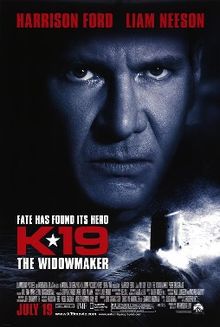
Now the fact that he willingly exposed himself to radiation to help save his crew mates is a feat in and of itself, however, Arkhipov’s true claim to fame was to come a year later, in October of 1962.

This was the height of Cuban Missile Crisis, and Arkhipov was serving as second-in-command on a Soviet nuclear submarine bound for Cuba. While in international waters, the submarine came into contact with a number of American vessels, which began dropping depth charges in an attempt to scare the submarine off. The submarine captain, having been without any contact from Russia for days and suspecting that a war between the US and USSR may have already started, ordered the launch of a nuclear torpedo. Arkhiphov stood up the captain, and after a heated debate, convinced him, along with the other submarines they were traveling with, to stand down. The simple result of Arkhipov’s refusal to let this torpedo be launched was the prevention of a nuclear holocaust and the saving of billions of lives. Without this man, it is almost certain that none of us would be alive today.

So here’s to Vasili Arkhipov, one of the unsung heroes of human history to whom we all owe an unimaginable debt. Thanks for being the sole barrier between mankind and its own bloody self-annihilation!
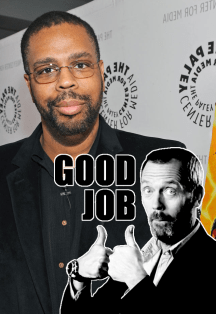
Fame Day: Dwayne McDuffie

This post is one that I write with both deep respect for its subject, as well as a great sense of loss. His impact on the world of comics is greater than many realize, and it was a truly tragic event when he passed away on February 21st of last year due to complications from emergency heart surgery.

While I didn’t know it at the time, McDuffie had a huge influence on my becoming a fan of comic books. Growing up in the Philippines, my dad got his hands on a bunch of trade paperbacks, one of which was Static [now Static Shock]. The series was one of many that was published my Milestone Media, a comic company co-founded by McDuffie and three others. Their aim was to “express a multicultural sensibility” that he felt was missing from the industry, and they succeeded.

The titular Static was the electric alter-ego of African American teen Virgil Ovid Hawkins, and continues to be one of my favourite comic characters ever. One of the many created by McDuffie for Milestone, he embodied the awkwardness of adolescence and the effects of vigilantism on one’s personal life. His world was realistic and gritty without succumbing to the darkness that other such worlds do. Static was well-written, action-packed, and, most importantly, relatable.
After Milestone had stopped publishing new companies, McDuffie went on to enter the world of television. He was hired as a staff writer for the Justice League animated series, and was promoted to both story editor and producer as the show became Justice League Unlimited. Of the show’s 91 total episodes McDuffie wrote, produced, or story-edited 69. McDuffie also did extensive work on continuing the Ben 10 series, wrote for the Teen Titans show, and scripted a number of DC’s direct-to-DVD animated films.

Dwayne McDuffie also had an extensive career working for both DC and Marvel, and earned three Eisner Awards. In addition he was awarded many others, including Comic Con International’s Inkpot Award. Above all, he was able to affect the entire industry for the better. It’s just a tragedy that he left us as soon as he did.

Fame Day: Frank Gilbreth

Last week I wrote about George Romero, a film-maker who has had perhaps one of the most profound influences on modern culture. Continuing in that vein, today I’d like to stir up some applause for Frank Bunker Gilbreth, Sr., or as you might better know him, the dad the Cheaper By The Dozen movies.

Now if you’ve seen any of the films, you’ll see the father of the twelve kids hopelessly overwhelmed until the family finally remembers that they need a happy ending to appeal to the widest possible audience causing them to get back together in the last ten or so minutes of movie. Truth is, the actual Frank Gilbreth was an excellent parent who took care of his twelve kids as best as could possibly be expected. How did he manage that? Well, it turns out Gilbreth was an expert in the study and application of efficiency, and applied his unique brand of training to his own family, as well as the workplace. Gilbreth was obsessed with reducing the steps every action took (which he named “therbligs,” reversing his own last name). For example, eliminating the “therblig” of having to search for your razor by having the razor painted bright red, making it easily noticeable. Things such as more efficient guns, pedal-operated trashcans, and arguable the entire study of ergonomics all owe a great debt to this man. But that’s not the big thing.

You ever see a nurse handing a surgeon his tools while in the middle of an operation?

Frank Gilbreth Sr. came up with that.

You ever see a soldier or spy blindfolded, reassembling his gun?

Frank Gilbreth Sr. came up with that too.

Think about that. How many lives have been saved and ended because of this guy? The guy died in 1924- think about all the expansion that’s happened in medicine and warfare since then. Think about all the people who have died or been saved since then. Heck, there’s a decent possibility neither you or I would exist without this guy’s work.

And his legacy is a terrible Steve Martin popcorn movie?

Ladies and gentlemen, if you will, a moment of applause for the real Frank Gilbreth.

Fame Day: George Romero

Who invented Rock-and-Roll? Who should be credited as the inventor of the video game? Who’s responsible for the Zoidberg meme? Who is responsible for the way we celebrate Halloween?

Simple truth of the matter is, we can trace plenty of elements of culture to the general time period or people group where they originated, but never just who first came up with the idea of shoelaces, or “push it somewhere else Patrick.”

There’s plenty of our culture that we just accept without being able to credit the inventor, however, this Fame Day we’ll be shining the spotlight on someone we can.

The one and only George Romero, whose influence on our culture arguable is on par with Rock-and-Roll.

Romero, for those few of you who might not recognize the name, is the creator of such films as Night of the Living Dead, Dawn of the Dead, and Day of the Dead, and according to many the father of all zombies.

Now while that affectionate title has been attached to him, the fact of the matter is, Romero did not invent the concept of the living dead. What he did do, however, was bring the concept out of obscurity, and do it so well that his work has become the basis for all subsequent zombie-horror. Zombieland, The Walking Dead, Shaun of the Dead, Resident Evil, Left for Dead, World War Z, Plants Vs. Zombies, Stephen King’s Cell, “Thriller,” I am Legend, you name it. There’s hardly an aspect of our culture that hasn’t had some zombie influence or spin-off (even before our recent craze), and there’s hardly an aspect of the zombie mythos that hasn’t been cemented and popularized by Romero. The man has simply hit it out of the park.

Now I’m not saying you have to like zombies- you don’t. I’m not saying that you have to like the films of George Romero- I don’t. But you have got to respect a man who has had such a profound influence on not only American, but world culture over the past half century (that’s right, half-century).

So, George Romero, in this last minute before midnight on Halloween 2012, we here at Culture War Reporters are tipping our hats to you.

Fame Day: Racebending.com

This Thursday I want to call attention to a website that’s been in this blog’s links-sidebar basically since its inception. I came across Racebending.com around the time it began, and their stance on equality casting and representation in the media is one of the many reasons I decided it was time to start writing more about what I thought mattered.

As their name might suggest, the site came about as a response to M. Night Shyamalan’s film adaptation of the Nickelodeon show Avatar: The Last Airbender. The entirety of the series was set in a distinctly Asian-inspired universe, and the casting decision was made to have the majority of the protagonists be played by Caucasian actors. The change is starkly apparent in the image below:

And for those of you who don’t think Zuko is a villain, click on the link for a thorough explanation.

The organization did a great amount in revealing the decisions that went into the making of the film. Most importantly was their breakdown of the casting calls that read “Caucasian or any other ethnicity,” and how the language affects those who apply for the roles as well as hinting at what they are looking for. They also exposed the blatant racism used by casting director Deedee Rickets, who was quoted as answering the question “Are you at a disadvantage if you didn’t wear a costume?” with the following:

Absolutely not! It doesn’t mean you’re at a disadvantage if you didn’t come in a big African thing. But guys, even if you came with a scarf today, put it over your head so you’ll look like a Ukrainian villager or whatever.

Although the movement was not enough to sway the studio, producers, or director of the film, the site stays up, continuing to work towards educating the internet on when and where whitewashing is taking place, and what people can do to stop it. They also take care to call attention to those who are advancing the role of minorities in the media, giving credit where it’s due.

Most recently the blog has been concentrating on the upcoming film Cloud Atlas, which stands out due to its use of “yellowface” by various actors. While the directing Wachowski siblings and others have cited the theme of reincarnation and  the fact that actors of colour will also be playing White roles, media liaison Mike Le lays out the stark difference between the two. In an interview with  the radio station Vocalo 89.5 he explains the tradition of yellowface in cinema as a means of controlling the perceptions of a race, and the damage it has done and can still do.

All in all, Racebending.com is run by people who are doing good things, and who care about representation whether it be based on race, gender, or orientation. They strive to see the media reflect the immense amount of diversity in our world, and that alone should be worth checking them out.

Fame Day: Extra Credits

Video games and video game culture gets a lot of bad press- not all of it
undeserved. However, in the midst of all the pandering, casual sexism, and juvenile sensibilities, there is a radiant beacon of hope.

Penny Arcade’s (and for a while, The Escapist’s) very own Extra Credits web show!

Even if gaming isn’t your thing, you have got to respect these guys and their weekly 11-minute clips for their neutrality and maturity alone. With the sensationalist media trying to cast even the smallest flaw of video games as the worst threat to humanity since polio, and the gaming community defending even the most idiotic element of their pastime as if it were the Dead Sea scrolls, that Extra Credits manages to remain the calm voice of reason that it is ought to be applauded.

But of course, there’s more on that. These guys are the good angel on the shoulder of the gaming industry, calling for video games to be not only a source of entertainment, but also of education and even a new form of art. Whether or not you agree with that is up to you, but you’ve got to admit- it’s a bold and noble stance in a subculture that too often obsessed with doing this:

Extra Credits, here’s to you- keep doing the great work you’re doing!

P.S.: Evan, being the meany-face that he is, is forcing me to make this post longer. Set below is one of Extra Credit’s finer videos, and an easy introduction into their more jargon-heavy clips on narrative, mechanics, and other elements of video games.