This Thursday I want to call attention to a website that’s been in this blog’s links-sidebar basically since its inception. I came across Racebending.com around the time it began, and their stance on equality casting and representation in the media is one of the many reasons I decided it was time to start writing more about what I thought mattered.
As their name might suggest, the site came about as a response to M. Night Shyamalan’s film adaptation of the Nickelodeon show Avatar: The Last Airbender. The entirety of the series was set in a distinctly Asian-inspired universe, and the casting decision was made to have the majority of the protagonists be played by Caucasian actors. The change is starkly apparent in the image below:
And for those of you who don’t think Zuko is a villain, click on the link for a thorough explanation.
Absolutely not! It doesn’t mean you’re at a disadvantage if you didn’t come in a big African thing. But guys, even if you came with a scarf today, put it over your head so you’ll look like a Ukrainian villager or whatever.
Although the movement was not enough to sway the studio, producers, or director of the film, the site stays up, continuing to work towards educating the internet on when and where whitewashing is taking place, and what people can do to stop it. They also take care to call attention to those who are advancing the role of minorities in the media, giving credit where it’s due.
Most recently the blog has been concentrating on the upcoming film Cloud Atlas, which stands out due to its use of “yellowface” by various actors. While the directing Wachowski siblings and others have cited the theme of reincarnation and the fact that actors of colour will also be playing White roles, media liaison Mike Le lays out the stark difference between the two. In an interview with the radio station Vocalo 89.5 he explains the tradition of yellowface in cinema as a means of controlling the perceptions of a race, and the damage it has done and can still do.
All in all, Racebending.com is run by people who are doing good things, and who care about representation whether it be based on race, gender, or orientation. They strive to see the media reflect the immense amount of diversity in our world, and that alone should be worth checking them out.
In recent years there’s been talks of the possibility of fans seeing a black James Bond at some point. Do you have any personal favorites that you would consider for the role?
I didn’t realize that there was this talk and then I did a film with Idris [Elba] and he said that he met Barbara Broccoli [James Bond producer] and that it does seem like there is a possibility in the future that there could very well be a black James Bond. And I would have to vote for Idris because I just finished working with him and he’s a great guy. [Laughs]
Obviously this change would rile people [and racists] quite a bit, but it actually fits in with a very popular fan theory. The idea is that “James Bond” is a codename that’s passed on from one agent to the next, justifying the change of roles as the decades have rolled on, and the extreme personality changes in the character. Lee Tamahori, the director of Die Another Day actually espouses this theory, and thought it would be great if former Bond Sean Connery could make an appearance in his movie alongside Pierce Brosnan.
Idris Elba is an immensely-talented actor, and a shoe-in for the role. The London native has clearly thought long and hard on the issue, and although he appears to have had some uneasiness about it, the following quotes show that he now appears to be very on board with the idea.
I would do it, but I don’t want to be called the first black James Bond. Do you understand what I ‘m saying? Sean Connery wasn’t the Scottish James Bond and Daniel Craig wasn’t the blue-eyed James Bond. So if I played him, I don’t want to be called the black James Bond.”
I engaged in a recent debate with someone over the casting of Ben Kingsley as the Mandarin in the upcoming Iron Man 3, and the same argument I’ve heard time and time again popped up. “The person who’s best for the job gets cast.” Somehow, though, I doubt that those who believe this will be using the same logic in support of Idris Elba portraying James Bond.
In all honesty, the world probably isn’t ready for a Black James Bond. People are, in general, averse to change, especially when it comes to their beloved characters. While a film with Elba as Bond will receive a large amount of criticism [much of it racist], it may just be the beginning to a world that truly doesn’t see colour.
If you’ve heard of this series (in either its film or book form), there’s a good chance it’s because David Fincher of Fight Club/Se7en/The Social Network fame directed the American remake. Even if you’ve heard of it, there’s a also a good chance you haven’t seen it- Fincher’s The Girl with the Dragon Tattoo did only so-so at the box-office, not quite tanking, but also not becoming as popular as many were speculating it would be. And that’s a real tragedy, because the story, in spite of its flaws, is a really good one- you’re just going to have to make a few adjustments in how you see it.
I. Watch the Swedish Version Instead
In my post about the differences between British and American television, I pointed out that American film typically physically glamorizes each and every character- no matter how minor- while the Brits are comfortable with their protagonists actually looking like people you’d meet on the street. While not quite to on the level of the British (from what little I have seen of Swedish film), the Swedes do seem to lean more towards the Brits when it comes to this, and while it doesn’t like it’s all that important, “humanizing” the characters a bit more by making them look like people you’d actually know gives all that more grittiness and clout to the issues the story grapples with.
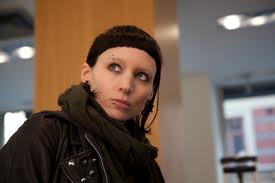
Beyond that, there’s the issue of casting for Lisbeth Salander. Now I’m not going to knock either Noomi Rapace or Rooney Mara, partly because they’re both terrifying…
But I do nevertheless have to address the eyebrows.
More specifically, the fact that Mara’s Lisbeth doesn’t have any.
Ok, that’s not entirely fair- Mara’s version does have eyebrows- they’re just wispy blonde and really hard to see. And that’s something that’s pretty dang unsettling- heck, it’s downright terrifying.
I know it’s probably petty, but Rapace’s Salander, having eyebrows we can actually see, makes it that much easier to watch an already tough movie.
II. Watch the Second Movie First (Then the First, Then the Third)
Not having had any background knowledge of the series, I accidentally wound up watching the second part of the trilogy (The Girl Who Played With Fire) instead of the first segment (The Girl With the Dragon Tattoo). As confusing as it was, I think that this is the best way to do it. While it’s a good movie, The Girl With the Dragon Tattoo really is something of a stand-alone piece, often accused of being pretty linear and slow. The subsequent stories, filled with high stakes of human trafficking and political intrigue, are a lot faster and more action-packed, but really depart from the general style of the first segment. By starting with The Girl Who Played With Fire, you get to be dropped right into the action and have a relaxing “flashback” with TGWTDT that fills in all the blanks and builds up tension and momentum for the final film, The Girl Who Kicked the Hornet’s Nest. Give it a shot- I promise it’ll pay off.
IV. Cut Steig Larsson Some Slack
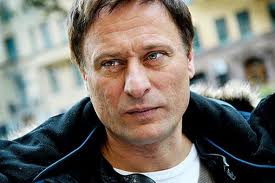
A lot of critics of both the film and the books have pointed out that the male protagonist in the stories, Mikael Blomkvist, is essentially author Steig Larsson’s literary avatar. As a result, plenty of people blow off the films and books as just being Larsson’s own little fantasy in which he, the last honest journalist teams up with a goth-punk hacker to solve mysteries together. The fact that Fincher chose Daniel Craig (a.k.a. James ****ing Bond) to play Blomkvist probably didn’t do anything to assuage those accusations.
But here’s the thing- Larsson can’t be accused of writing a fantasized version himself into his books because the real Steig Larsson is way more badass!
As a boy, Larsson witnessed the rape of a woman, and so wracked with guilt at not having been able to do anything, wound up dedicating the rest of his life to fighting for justice and equality. In the 70s, he traveled to Eritrea to train an all-female squad in the Eritrean People’s Liberation Front. He returned to Sweden to found a watchdog journalist group and investigate and combat neo-nazism and white supremacy, despite continually receiving death-threats.
Yeah, that’s not so much a biography as it is a superhero origin story. That’s enough right there to make Jack London and Ernest Hemingway look like pansies. If anything, Blomkvist is a version of Larsson nerfed for the sake of believability. Let’s cut the guy some slack.
IV. Understand a Bit About What’s Being Addressed
Part of the issue with the series is that it’s a commentary in no small part on Swedish social and political issues. I only recall it being hinted at in the American version, but the Swedish version of the film spent a bit more time touching on the Wennerstrom family’s (and the entire country’s) shameful flirtation with Nazism in the 30s and 40s, as well as the ongoing issues of xenophobia and racism in contemporary Sweden. Beyond that the series tries to address issues of corruption within the state, as well as the ugly reality of human trafficking (which despite growing awareness, might not quite strike home with American audiences). You don’t need to have a detailed understanding of the intricacies of State-Capitalist governance and Scandinavian history, but knowing a bit about the very real issues of fascism and racism in Europe does add a whole lot.
This is going to be a fairly short post, you guys. I leave for a college reunion in about an hour, and am running a little short on time. Maybe stay tuned for a longer one tonight, though.
If you’ve been reading this blog for a while [and really, who has?] then you probably know how I feel about movie trailers and previews. I was more excited than anything for this year’s The Avengers, but the amount of content they put out before its release was almost enough to rid me of a lot of my excitement for the movie.
On last night’s episode of Conan brought in director J. J. Abrams, and with him a clip from the sequel Star Trek into Darkness. Fans all over America huddled in front of their TVs in anticipation, only to see this:
The clip is all of three frames long.
Understandably viewers were more than a little disappointed. Honestly, I was as invested in the franchise as the average Trekkie, I imagine I would be too. Abrams lets us know leading up to the teaser that this is a scene where Spock is in a suit of some kind and is also in a volcano. Cue scene, cue outrageous applause from audience.
That might’ve been great for the studio audience, but not so much for people in their homes. Still, it’s good that a 2013 film has the restraint to not start bombarding people with footage.
And speaking of restraint, it seems like that’s what anyone who’s into film needs nowadays. It was my own fault that I found out exactly why the armour Stark wears in Iron Man 3 is the Mark XLVII. Do not look it up, it is a huge, enormous spoiler that will let you know a major plot point, as well as cause you to curse your need to know more and more bitterly.
With the way internet and the media work today, spoilers and leaks abound. It’s up to the viewers who want to preserve their theatre viewing experience to keep a modicum of self-control and not constantly keep checking comic book movie sites [this is more a message to myself than anything else].
What I’m trying to say is, be grateful, Star Trek fans. You have over half a year until Into Darkness comes out. Three seconds should be enough to tide you over for at least another month.
Despite our focus on American issues, we here at Culture War Reportersrecognize that in our world of ever-shrinking borders, there’s plenty more out there than just the cloudless skies of Nevada or the homeless-packed streets of Toronto (Evan, seriously- if the healthcare system’s so good, why does Canada have so many crazy people?).
Today we turn our attention to our pasty cousins across the pond, more specifically, their TV, excuse me, “Telly” (this is why you lost your empire- well, this and genocide), and how it stacks up next to ours.
CGI and Production Values
Now I have to admit- I haven’t extensively researched British and American television financing, nor have I had a chance to compare the two, taking into consideration differences in the economy and advertising fees over the past couple decades.
What I’m saying is- I’m not an expert.
That said, I don’t need to be an architect to tell you that chances are pretty good that a lot less money was put into making a tent than a condo. British TV shows, put bluntly, just seems to be vastly less funded than their American counterparts. Just take a look at this scene from America’s Battlestar Galactica.
Pretty intense, right? If there’s any poor-quality, it’s probably from the YouTube video, rather than the actual series.
Now look at this clip from Britain’s Doctor Who.
Way worse. And oddly enough, Doctor Who has a bigger fanbase than Galactica, and despite it’s ever-increasing popularity, still has to deal with props dug out of someone’s kitchen drawers. I’m not saying Doctor Who is bad- it’s not. It’s really good- only it’s tough to really feel the full effects of a horrific reveal when the monstrous alien that’s been lurking the shadows until now makes your sock-puppets look scary by comparison. I can’t claim to know the reason for it, and I’m not putting the Brits down for it- I’m simply saying that funding- especially in CGI- appears to be a significant difference between the worlds of British and American TV.
Pretty Faces
You’ve probably heard jokes cracked about this. Not the “British are ugly” or the “British have bad teeth” jokes- the fact that the people on British television have the audacity to look like the people you’d see on the street.
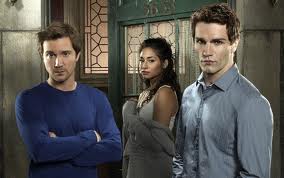
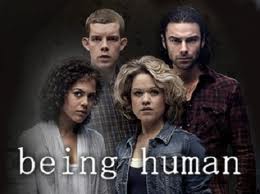
That’s not to say the Brits don’t share the American weakness for fantasizing and glamorizing each and every facet of life, but it’s pretty clear that it’s nowhere near on the scale we have here in the US. Here- take a look at the leading characters of the American version of Being Human.
The guy on the left is decently attractive, as is the girl, and the guy on the right looks more or less like a life-sized Ken doll. Idealized people- no question about it. Now look at the same characters in the British original:
There’s not a huge difference between the girl (the blonde girl is another character- ignore her), and the dark haired guy certainly isn’t his American counterpart and stop looking at that guy’s ears! Yes, they’re huge- they’re gargantuan– and no, this isn’t just an unflattering photo- they actually are trying to escape his head in the first three seasons.
The point is, when it comes to their actors, the British are- well, appear to be- considerably less shallow. They don’t need a couple of supermodels to tell a compelling story of murder, secrecy, and perversion- and speaking of which…
Raunch Codes
Watch this clip- but before you do, get all children and Weslyans out of the room.
Pretty nasty stuff, right? Don’t say we didn’t warn you!
People complain that American media is nothing but sex and violence, but believe me- those Axe commercials are prudish compared to the Brits (and indeed- most of Europe). We may give the Brits a run for their money when it comes to blood and gore but never will we compete with them when it comes to explicitness of this degree. It’s almost to the point where it’s not even repulsive- you’re just impressed at how logic-deafeningly far they take it.
But only almost.
The Dying and the Dead
It’s been said that the difference between British comedies and American comedies is that American comedies begin with everything going wrong and end with everything being fixed, while British comedies begin with everything going right and end with everything falling apart. I wouldn’t call a story where everyone dies of scurvy at the end a comedy, but then again, I don’t whittle my life away on a miserable island full of alcoholics and skinheads.
I can say that because the only people who hate the British more than the Irish, the Kenyans, the Indians, the Chinese, the Australians, the New Zealanders, Iranians, and the Egyptians are the British themselves.
The simple fact of the matter is that there is this viciously self-deprecating mentality that pervades every element of British culture (barring fox hunts, which are just weird) that couldn’t be further removed from the general sense of optimism that you tend to find in America. Just take a look at British crime series.
Now I’ve seen quite a few, and while this certainly isn’t universally true, what I’ve typically found is that British murder mysteries focus on the whole “Whodunnit?” element, whereas American murder mysteries either have a “How’d he do it?” or a drive to keep the murderer from murdering again. Gross over-generalizations, I know, but it does seem to be true that American crime series episodes end with the detectives patting each other on the back for having done justice, while British crime series episodes end with the detective giving some despairing monologue about the tragic depravity of all mankind.
Because that’s a very depressing (and therefore, British) way to end the post- allow me offer this:
To say I’ve been ragging a bit on the British would be an understatement, and no- despite our attempts to be unbiased, we here at Culture War Reporters don’t care much for contemporary English culture. That established, there may very well be something to be said for the Brit’s here. Is it pretty? Not remotely, but for all the weirdness (from our perspective) that British TV has to offer, it can’t be denied that it’s simply more “real” than American TV. The sets aren’t shiny, the people aren’t (exclusively) gorgeous, and a stories of sin and murder actually recognize human suffering. There’s certainly a lot from British TV that merits imitation here in America.
Except for sexually explicit sausage commercials. **** that.
EVAN: Last week you all voted for us to talk about the popularity of kung fu movies, so that is what we’re doing. The question that’s been on my mind being, why aren’t they popular anymore?
GORDON: See, I’m gonna have to butt heads with you right out of the gate. I just don’t think that kung fu movies are unpopular- at least, not anymore than at the supposed height of their glory…
EVAN: But there’s definite evidence of a time when they were all the rage. There were the dubbed martial arts films in the 70s and 80s, as well as the immense popularity of actors like Bruce Lee, Jackie Chan, and now Jet Li.
GORDON: No argument there.
EVAN: Recently, all that really comes to mind is Li’s role in The Expendables 2. Which is by no means a large one, considering the immensity of its cast.
GORDON: Well, that’s part of the problem- movies have developed since the 70s and 80s- none perhaps more dramatically than the action flick. Take The Matrix, for example.
EVAN: Definitely a revolutionary flick.
GORDON: Amazing stunts, choreography, and so on- and all hugely influenced by kung fu movies. In fact, Wikipedia goes right ahead and lists it as a “King Fu” movie.
Now look at an action film from the 60s or 70s. At the very best, you get Dirty Harry pistol-whipping some thug, and more often than not, you get Captain Kirk doing some weird slap-fight with a man in green spandex.
EVAN: Hey, that man in green spandex had it coming.
GORDON: This is true. What I’m driving at here, I guess, is that kung fu movies haven’t gone away- they’ve been incorporated into every major action flick made since the 80s.
Just look at fight scenes in a modern action movie- that’s Judo, or Jui Jitsu, or Karate, or Muay Thai, and so on and so forth.
EVAN: Okay, let me come at this from a different angle. Would you say that at this point in time, Jet Li is the go-to guy as an Asian actor who specializes in martial arts?
GORDON: More or less, sure.
EVAN: How many [Western] movies has the guy been in compared to Jason Statham?
GORDON: Couldn’t say. I’m guessing Statham’s got him beat, though.
EVAN: Why is it that more often than not, whenever martial arts are depicted in a movie they’re performed by a white guy?
GORDON: Oof- where to begin? Tacit racism, hiring ease, translation, and so on.
EVAN: I’m just saying that there was a time, mid to late 90s and early 00s where Asian actors could still headline these films. You’ve got the Rush Hour films and Shanghai Noon and its sequel, to name some Jackie Chan vehicles. And you had stuff like Romeo Must Die with Jet Li.
As far as Wikipedia can tell me, all the martial arts films starring Asians in the last few years were made in Asia.
GORDON: And are nevertheless seen by Western audiences. Take The Raid, an Indonesian film, or The Man With the Iron Fists, which people are pretty psyched for, or Tony Jaa’s work.
EVAN: Yes. Tony Jaa.
GORDON: As there did before. I mean, barring certain movies, like Crouching Tiger, Hidden Dragon or Rush Hour, how much appeal did kung fu movies have anyways? I’m not knocking them or anything, but it seems that with certain exceptions for major pieces, kung fu movies (in the West) have always been mostly popular as a sugenre with fans of said subgenre. Much like the monster movie, or the sci-fi horror.
EVAN: At some point they epitomized the action genre, so I’d say they had a lot of appeal. I mean, it rode the trend of dojos and whatnot opening up all over North America.
GORDON: Wasn’t that with the 80s stupid action flick, though? I mean, c’mon. It was the 80s. Get some Aryan guy to face-kick a bunch of minorities, slap on an over-the-top title and you’ve got a hit.
EVAN: I was mostly referring to the fact that Asian martial arts films became so popular that they started creating them in Hollywood, using Asian actors.
GORDON: So the issue here isn’t kung fu- it’s Asians in media…
EVAN: We can concentrate on the genre and its popularity before we follow that train of thought. Why do you think it’s lessened so much? And if it has, what has replaced it?
GORDON: I think that the rise in awareness of martial arts in the West is responsible for that. Suddenly, you can get all the amazing choreographed fights without them being (necessarily) rooted in Asian culture.
The equivalent would probably be the Western/Cop flick and it’s influence on Hong Kong action movies.
EVAN: So what you’re saying is that Western culture has realized that this isn’t a genre that solely the East can lay claim to.
GORDON: Not entirely, anyways. Depends on how you define a “Kung Fu Movie.” I was just going with a movie that’s heavily rooted in martial arts.
EVAN: I mean, I’d say that it’s because the Asian actors that we [Westerners] can relate to are getting old. Jackie Chan is 58. Jet Li is 49. No one has really stepped up [or has been able to] and taken their places.
GORDON: Well- no argument there. Barring perhaps Tony Jaa. Who will **** you up if you so much as look at his elephant the wrong way.
EVAN: ช้าง อยู่ ไหน [chang yuu nai]?! If you saw the movie, you’d get it.
GORDON: Go see the movie. Now.
EVAN: Watch it please. Tom Yum Goong as it was released in Thailand, but retitled The Protector for an American release.
GORDON: Also, eat tom yum goong. It is the best thing ever.
EVAN: Anyway. I just think it’s interesting, the fact that there’s clearly still an interest in Asian martial arts.
Using two panda-related examples, Dreamworks’ Kung Fu Panda movies, and Blizzard’s upcoming expansion for World of WarCraft, Mists of Pandaria.
GORDON: This is true.
EVAN: Pandarens had existed in WarCraft for years before those movies, by the way. Just for everyone who’s saying that Blizzard ripped the concept of anthropomorphic martial arts fighting pandas from a Jack Black movie.
GORDON: And with that, we’re out of time.
EVAN: Don’t we have ten more minutes? We started at ten past.
GORDON: Oh. I thought we started on the hour.
EVAN: Nay. And we’re keeping all of this dialogue.
GORDON: To assure our readers that we too are flawed mortals?
EVAN: Well, that one of us is.
GORDON: Touché.
Back on the subject- let’s not forget that thanks to Netflix and piracy, it’s easier and easier to get movies from out of the country anyways. Just look at Red Cliff.
EVAN: Red Cliff?
GORDON: Epic action movie. Based on ancient Chinese history, and a text called “The Romance of the Three Kingdoms,” if I recall correctly. Some sort of an Eastern equivalent to “swords and sandals” flicks. Which are awesome, by the way.
EVAN: Yes. We do love our “swords and sandals” movies.
GORDON: Go watch Ironclad. Watch it now.
EVAN: If only to watch Paul Giamatti’s veins pop out on his neck as an angry King John.
GORDON: Words cannot describe how irritated he is in that movie. It defies logic. Also, a man gets beaten to death with his own arm.
EVAN: Actually, I am fairly sure the severed arm belonged to a different guy.
Back on topic one last, time, before we run out of it- It seems that Asian cinema continues to chug on, producing martial arts movies even if Western Cinema has since moved past that. In a way, what was popular for a period of time in Hollywood never stopped in Asia. Though those movies still changed the action genre in a huge way.
GORDON: Absolutely. From The Bourne Identity to Batman Begins, the blood of Kung Fu movies still pumps strong. And with that, we’re out of time. Be sure to swing in next week for our discussion on the upcoming season of Community.
EVAN: Nooooooooo. That’s next-next week. The day before the new season starts.
GORDON: Why must you make a fool of me?
EVAN: Why must you make a fool of yourself.
GORDON: Anyways. Be sure to vote for our discussion topic next week.


 Most recently the blog has been concentrating on the upcoming film Cloud Atlas, which stands out due to its use of “yellowface” by various actors. While the directing Wachowski siblings and others have cited the theme of reincarnation and the fact that actors of colour will also be playing White roles, media liaison Mike Le lays out the stark difference between the two. In an interview with the radio station Vocalo 89.5 he explains the tradition of yellowface in cinema as a means of controlling the perceptions of a race, and the damage it has done and can still do.
 I. Watch the Swedish Version Instead