Category Archives: internet

“Rape”: A Continuation

The second post I ever wrote on this blog was about the word “rape,” and since then it has not ceased to be an issue. A number of events have occurred in the past couple of months, and re-reading many of them this week has reminded me what a big deal it can be.

About a month ago stand-up comedian Daniel Tosh was doing a show when an audience member commented on the bit he was doing. He had been going on about how hilarious rape jokes were [his position: always], when the woman interrupted him by yelling “Actually, rape jokes are never funny!” She reports that Tosh responded with the words: “Wouldn’t it be funny if that girl got raped by like, 5 guys right now? Like right now?”

John Seavey, one of the writers on Mightygodking, wrote a response to what happened, titled “From the “How To Be A Decent Human Being” File….” In it he decried Tosh’s response to the woman, and basically lay down that freedom of speech or not, threatening someone sexually is not something you ever do.

I talked to Gordon about this yesterday, and not to turn this into another “Evan and Gordon Talk” post, but I had to add just a little of our conclusion to this one:

[after agreeing that probably no one in the audience actually took Tosh’s words “seriously.”]

EVAN: I mean, I guess we can both be on the level that to at least one member involved, Tosh, it was not a threat.

GORDON: Agreed. You also promised to crap in my bed. [I will not deny this -E.]

EVAN: Valid, but 1/5 of all Gordons don’t have their beds crapped in.

Similar to my first post on the word, there are those out there who believe that this is all a matter of sensitivity. Comedians like Louis C.K. have defended Tosh‘s right to free speech. Others on the internet have taken more creative avenues to back up the “rape joke” that was made [warning for language and content]:


The video, for those who don’t feel like or want to watch it, is a press conference with the character “F-ck Bot 5000.” He answers that rape jokes are off limits, while jokes about “9/11,” “dead babies,” and “making fun of autistic children” are perfectly acceptable. The point being, from what I can tell, that people are being overly sensitive about a particular buzzword, but letting these other topics slide completely.

Then, of course, there’s the whole “legitimate rape” thing. On August 19th Todd Akin, Republican nominee for the state of Missouri Todd, told KTVI-TV that “First of all, from what I understand from doctors [pregnancy from rape] is really rare. If it’s a legitimate rape, the female body has ways to try to shut that whole thing down.”

Now I’m no Biology major, but I have friends who are, and none of them can back up his claims. His words have, of course, created quite the uproar on the internet. Jezebel compiled a very thorough “Official Guide to Legitimate Rape,” which compiles the ways in which the word and act have been portrayed in past years. I strongly recommend checking it out.

Finally, game designer James Desborough wrote a post this past June entitled “In Defence of Rape.” After admitting that the title is instigative at best, he, and this is a direct quote, states “Rape or attempted rape is a f-cking awesome plot element, one of many.”

Gordon and I talked about this one as well, and the issue is, at the heart of his argument, not wrong. The gist of what he’s saying is [and I quote Gordon] “Look, rape can be an effective and powerful storytelling element, so long as it isn’t trivialized.” And that’s not something I can disagree with.

What I can disagree with is his statement that “I’m not prepared to take spurious claims about ‘rape culture’ etc at face value without something substantive to back them up.” It’s one that he uses to defend his argument, lumping “rape culture” in with the “‘all men are bastards’ argument.” I don’t see what can be more substantive than the gigabytes of rape porn on the internet. I mean, it’s not like it’s hiding or anything. If some weirdo gets off on The Girl with the Dragon Tattoo then that’s one instance, but the people creating rape porn for a very large audience is not.

Rape is, as ever, a hotly debated issue. While we can always say that people are being too sensitive, the fact is that it is a very real, legitimate act that happens more than once a minute. It’s not something to be made light of, and especially not something to “jokingly threaten” someone with. It is also not something that can simply be thrown around in speech without strong knowledge of what’s being talked about.

People Are Upset About Aveline de Grandpré [What Else Is New?]

So this news came out while I was still at camp, so I’m definitely a little behind the times. Ubisoft revealed at E3 in early June that another game in the Assassin’s Creed series would be joining Assassin’s Creed III when it launched this October 30th. The following is a trailer for that game:


The AC franchise has always been ahead of its time in terms of racial representation. Altaïr ibn La’Ahad, a Syrian assassin, Ezio Auditore da Firenze, an Italian, and Ratohnhaké:ton [Conor Kenway], English/Mohawk are the stars of the first, second, and third games respectively. Each game has given slavish devotion to historical accuracy, but each has also starred a male protagonist. Until now.
Aveline de Grandpré is an African/French assassin, the only black female video game character I can think of besides Rochelle of Left 4 Dead 2, and from what I can tell a complete and total badass. This is a huge step on Ubisoft’s part, and I’m both impressed and proud that they’ve made this choice. Especially when the reception was so expected.

Clicking on the image to the left will bring up comments on the video I posted. Choice comments are:

Yup, [I know] AC isnt so realistic, but a women? :/

okay a female is reasonable but seriously y does she have to be black! wtf

looks like i’m not alone on this lol. so many people think i’m racist or something lol

It may seem like this is only to be expected from the video game community, often [and accurately] thought to be both extremely racist and sexist.  It was only earlier this year that fans of the book series The Hunger Games took to the internet to express their disgust that Rue, a character in the novel, was portrayed by a black actress in the film.

The image on the right is one of many incredibly offensive tweets about the casting. Jezebel reported on the phenomenon early this year, but it seems that it’s not the only Hunger Games related news that the site has to write about this year.

While the role of Panem-ian heartthrob Finick Odair has already been  given to Sam Claflin, months earlier a campaign was started to give it to biracial actor Jesse Williams. This was, again, met with some pretty intense criticism. From racists. Unfortunately a lot of the negative/ignorant comments on this messageboard have been deleted, though Jezebel’s write-up on the situation can be read hereThe campaign tumblr is still out there, though it now also discusses racial casting, which I definitely don’t have a problem with.

Suffice to say, the world still has a ways to go before we, in North America, anyway, can simply start accepting that not everyone out there is white, and therefore not everyone who appears in art, either electronic or literary, is either. These comments I posted may just be an example of the “loud minority,” but if female or nonwhite protagonists are really a big deal, maybe we should be loud as well.

I think Aveline de Grandpré is an amazing addition to an already stellar video game series. I think it is fantastic that she’s black and that she is a woman, and I think that you should too.

Violence (Not) In Media

In the wake of the Aurora Shooting, the Sikh Temple Massacre, and a recent spate of gun violence across the country, the debate of the violence in media has once again reared its head. On one side, those who cite the saturation of film, music, and video games with violence and the glorification of violence as responsible for creating these monsters, or at the very least, pushing them over the edge. On the other side, the ranks of apologists, who declare that it’s ridiculous to blame movies and music for mass-murder.  I’m not here to analyze the claims of either point, or to make an argument for one side or the other- that’s already been done better by The Escapist’s Robert Chipman (check it out here).

No, I’m here to address the subject of violence and its possible contributing factors outside of film and music.

When I touched on a complaints I had with movies like Brideshead Revisited and I Love You Man a few weeks ago, I briefly mentioned goth-rock-star Marilyn Manson, whose music was accused by many of being responsible for having influenced the Columbine shooters in committing the massacre. Interviewed by Michael Moore in his documentary Bowling for Columbine, Manson had this to say regarding violent influences:

And therein really lies the crux of the issue- when tragedies like this happen, the scope of our outrage is usually so small that we fail to take into account all the other possible factors. We can cite GTA or rock or rap or cartoons as being responsible and maybe- just maybe- there’s something to that. But what about everything else? If violence in media causes violence, surely violence itself should be cited here!

You remember this?

That’s Marine Corps veteran Scott Olsen, moments after he was shot in the head with a gas canister from close range. Part of the brutal crackdown by police on the Occupy Oakland protests last year- back when Mayor Jean Quan decided the best way to deal with a peaceful protest was by turning her town into a war zone.

But why talk about Oakland and countless other cities being turned into war zones when we can just talk about actual war?

As I’ve mentioned in previous posts, this is the single longest war in American history. Year after year after year, it goes on, and with no end in sight. That’s got to be the single largest and publicized campaign advocating violence, yet where is the outrage against it?

And what about hunting? That’s all about guns and the glorification of killing things…

What about Civil War Reenactors?

What about the national anthem? That thing is full of references to bombs. What about the 4th of July? A day when we celebrate our victory in a war by setting off explosives!

What about the very way we talk about violence? Should the Mob Museum here in Las Vegas be shut down? Should we do away with anything related to pirates? Should we stop teaching about the war of 1812 in schools?

And so on…

You get the idea. Ours is a culture and history built on violence. It’s in everything–  not just our media. While I’ve got my own views on what does and doesn’t cause or promote violence, my purpose here isn’t to take a side. I’m simply trying to demonstrate that if you do want to try to get into the causes of violence, you don’t get to be selective about who you put on trial.You want to find out if there was something in our world beyond the killer’s diseased mind responsible for death and destruction, you have to look at everything- anything less is just a witch hunt, pure and simple.

Let’s face it, half the time, tragedies like these are the platform from which we get to lynch things we didn’t like to begin with…

…I wonder if that kind of vicious and petty mentality might contribute to violence at all…

Is “Art of Manliness” Sexist?

Imagine my surprise to log on to Culture War Reporters to jot down my Tuesday post, only to find Elisa having already written something. I can only imagine that her cutting in on my territory means that she’s looking to start a fight so vicious, bloody, and prison-lunch-line-shanking-ly brutal it will make the combined carnage of the fall of Masada and the genocide at Wounded Knee look like a slap-fight between a couple of elderly Mennonites.

But I’m not here to talk about that. I’m here to make good on my promise last week- to investigate and determine whether or not Art of Manliness is sexist.


Of course, before we begin we have to define what “sexism” is. The obvious answer would be discrimination/prejudice against women, but it has got to be more than that. The stereotyping of women (regardless of whether its positive or negative) has also got to be a part of sexism, just as much as it would be a part of racism or any other form of bigotry.

Now at first glance, Art of Manliness really doesn’t touch on the subject of gender relations all that much. For every one of their articles on subjects such as “What to Wear on a First Date“, there are ten articles on how to shine your shoes, shuffle a deck of cards, hitchhike around the US, make maple syrup, and even a world history of shaving. On the whole, the blog is far more invested in trying to break from what it sees as a culture totally lacking in strength, competence, and independence.

But of course, you really can’t devote an entire blog to what makes a man a man without every once in a while stumbling across the subject of women.

For example, take a look at “Women and Children First? Down with the Ship?” or “Womanly Things We Wish Women Still Did“. In both cases, the author simply brings up the subject, allowing the readers to duke it out in the comments section on whether or not the old cry of “Women and children first!” is still right or fair (or if it ever was to begin with).

On the whole, Brett McKay (the principal author) understands that the subject of feminism and feminist issues are still quite controversial, and only more volatile in the venue of his Art of Manliness blog. For the most part, he either allows his readers to debate such questions as “should men hold doors open for women?”, or refers the issue to his wife (and co-author) Kate. Indeed, from everything I’ve read on the blog, it would appear that the single most “edgy” post on gender roles (“What Can Manly Men Expect of Women?”) really doesn’t do anything more than point out (what the author sees) as a double-standard in what men and women can ask of each other. In fact, I’ll stick my neck out there and say that the author makes some solid points on women’s issues and feminism.


When I was in college, my house was once visited by a collection of female students bearing cookies that they had baked for the men of the campus. The self-titled “Domestic Divas” claimed their mission was to call for a return to “Biblical” roles for men and women, and a rejection of “feminism”. My reaction, and the reaction of every sane man and woman on that campus, went sort of like this:


As many pointed out, this well-meaning but idiotic group had ignored the fact that their ability to be at college (or to speak to men without us having spoken to them first) was a direct result of feminism. And while perhaps not as extreme as in the case I just cited, this basic problem seems rather prevalent in our culture- many women seem to take the struggles and hardships of their predecessors for granted. The (few) benefits of 1950s society are looked back on fondly, but the abuse, neglect, and degradation is completely forgotten. I don’t think Brett McKay is sexist for decrying equality in gender roles combined with inequality in social expectations. McKay isn’t stating that its a woman’s place to dress up for a date, but simply that its as an appreciated gesture as flowers or getting the door.

No, I think Art of Manliness is sexist for completely different reasons.

And in the defense of the authors of the blog, I don’t think it’s anything intentional.

My main issue comes down to this. Art of Manliness is a good site. Heck, it’s a great site. The information is useful, the writing is concise and simple. The subject matter is instructive and edifying. Only it’s directed solely at men.

Don’t get me wrong, I’m not saying that I don’t think both myself and the males of my generation could stand to toughen up a bit…

I just don’t think that the characteristics or skills in the blog are in any way unique to men. Starting fires, shooting guns, shuffling a deck of cards, picking out a good scotch, backing up a trailer, breaking down a door, wrestling alligators (yeah, that’s an article)- these are all things just as useful to women as they are to men. There’s even an article titled “How To Parallel Park… Like a Man!“.


See, I’d imagine that we’d just call that “Parallel Parking”, since driving isn’t exactly exclusive to men or something men are just better at. And I don’t want to hear the whole “Men are evolutionary predisposed to having better spatial judgment” schpeel. First, if it’s correct, it just means men are more likely to have better spatial abilities- it’s not universally true. Second, just because I’m six feet tall doesn’t mean I stand a chance against a five foot NBA star in a basketball match- training trumps negligible physique every time. I’m a man and a relatively new driver- I’d bet that every woman driver in the city I live in can parallel park faster and better than I can.

Case in point…

The real problem with Art of Manliness isn’t so much the content but that the content is labeled as being “for men”. Even the abstract qualities brought up in the blog are good for men and women alike. The post on the virtue of justice uses an illustration in which justice is depicted as a woman, for ****’s sake. Bravery, intelligence, perseverance, leadership, heroism- can you really tell me that these aren’t just as admirable in women as they are in men?

(Just as a final note, I want to thank and recommend Reaction Gifs, from where I frequently borrow my illustrations- it’s a neat site, check it out).

Where’s the Counter-Culture?

In my last post, I grossly oversimplified a Marxist concept called “Alienation”. Today, I’ll be grossly oversimplifying the Marxist concept of dialectics.

Don’t give me any of that “Hegel said it first!” crap.

Boiled down to its basic components, it functions more or less as Newton’s third law of motion. Every action has an equal and opposite reaction, and that applies to society as well. Every spirit of the times is accompanied by a little inverted version of itself- or at least, its key values. Now according to dialectics, the conflict between these two opposites ultimately resolves in an evolved combination of the two, but in this post, we’re only addressing the first part.

Or at least, we would be if I could figure out what today’s counterculture is…

Think about it…

Look at the 1950s. For all the white-picket fences; sagely, pipe-smoking fathers; dutiful housewives/mothers, general patriotism and decency, and terror at the prospect of infiltration by degenerate Commies, there were greasers and bikers.

Despite the 1950s conjuring up images of idealized suburbia, this decade was the one that gave birth to rock and Hells Angels. Trafficking and dumping excrement and urine on their initiates doesn’t quite mesh with the general ideals of the time.

The same can be said for the sixties, which produced the hippies and the civil rights movement in the face of an otherwise conservative culture desperately trying to maintain the status quot.

Or the 70s, whose militancy and pessimism were a rejection of the peace, love, and hope values that arose during the previous decade.

Or the wildly egotistically and self-centered 80s producing (or at least, nurturing) anti-establishment and anti-corporate punks culture.

Even the 90s saw rise to goths, opposing the (comparatively) cheery and consumerist zeitgeist of the time.

So why not our era?

The Occupy Movement? I did consider them, but they don’t really fit the profile.

Despite being viciously cracked down on by the powers-that-be, the OWS protestors never really presented anything shockingly antithetical to the values we hold today. At least, not entirely.

Violence is (almost) universally decried as a means of protest and social change by all but those doing it. While America hasn’t seen much of it, continued rioting in Europe could very well mean not so much a brief outburst of rage as a entirely new perspective on what is and isn’t acceptable in society in general.

That’s one way of calling for social change…

Hipsters? I did briefly consider the whole Indy/Hipster movement as a possible subculture, and generally despised, the hordes of lost lumberjacks wandering the streets really don’t stand for anything that mainstream society is opposed to.

You are NOT a lumberjack and this is NOT Ok…

Annoying? Absolutely. Opposed to the spirit of the time? Not really. At most the hipster culture is guilty of desperately trying to cling to childhood nostalgia in the face of creative bankruptcy (see Evan’s post) and espousing thriftiness in the middle of a major economic depression (see my old post).

Bros. Everyone hates ’em, from their obnoxious machismo to their flaming skull t-shirts and spray-on tans.

Problem with this group is that it’s not a new group- just the latest reincarnation of the same kind of people. The same basic mentality can be found clear on back in Shakespeare’sRomeo and Juliet, which essentially starts with a bunch of bros crashing a party to pick up girls.

the 1890s, when “Bros” were called “Chums”…

Ok, so what if we look at what we have in society today and just invert it? What’s the major defining element of our generation? Technology. Internet and smartphones. Social media and memes. Anonymous and scams. The opposite of all this would be the primitivist subculture, right? The people who don’t wash or shave and live in compounds in the middle of nowhere.

And while it makes sense theoretically, we’re just not seeing a vibrant primitivist counterculture or even subculture. Even when you add in the survivalist subculture (in case you don’t know, those are they guys who think the gum’mint out ta git ’em), there’s still not exactly a rising trend in people learning how to skin squirrels or live in total harmony with the earth-mother.

What about these guys?

This site (which I’ll be delving more deeply into next week) really does seem to have an actually beef with contemporary culture- specifically in regards to men. Offering instructions on how to polish your shoes, store your fedora (you’re expected to have one, and if you don’t, to go out and get one), shave (or trim your beard, if that’s your thing), throw a punch, or patch a hole in your drywall (holes may be caused by punching it). In a lot of ways, the reverence this site has for the “traditional” concept of what a man ought to be like is reflective of a more general reaction against skinny jeans and YouTube comment section debates. While the site itself has a devoted cult following (and not a ton else), I have seen this general sentiment expressed, and I’m seeing it expressed more and more. Granted, I might be too close to the issue to be seeing it clearly- I myself think guys wearing skinning jeans should be put in stocks for all the village children to throw dead animals at- but perhaps you’ve run into this too. Just last night I heard a comedian complaining that the current generation were (in short) wimps. Gone, he said, were the days when you could chuck a television set out of a hotel window after some drug-fueled rock band had just given human decency the finger via a seven minute guitar solo. Another comedian remarked that “Our fathers would never take the crap we’re taking… the founders revolted because of a 3% tax increase- we won’t even riot when we’re being forced to strip down at an airport!”.

There is doubtlessly a certain mystique and appeal to the figure of powerful, well-dressed men, sitting around roaring fires, puffing on cigars and sipping aged scotch to celebrate that they were in complete control of their lives. Plenty of guys today would give their right arms to be Don Draper.

Though ideally minus the aggressive lung cancer and liver failure…

And interestingly enough, this general “Manly” reaction against emotionalism, appearance (over functionality), pacifism/nonviolence, and interdependence has elements from each of the cultures I described above. There’s the primitive concept of being free from dependence on technology that bears a similarity to the DIY slogans espoused by the “Manly”. There’s the “if you gotta punch a guy, you gotta punch a guy” mentality that seems related to the Black Bloc protest tactics. The simplicity of the Hipsters is here, and even the general “I am Man, here me roar” vibe seems to be a more sane version of Bro machismo.

But that’s all just a theory. Might be true- might be just a passing fad, though if it is just a fad, then we’re back at square one with a rather uncomfortable question.

If there is no counter-culture- what does that say about our culture today? Have we reached a point where we’re so pluralistic and tolerant and multicultural that everything’s acceptable- or is there just nothing substantial to rebel against? If there’s no antithesis, is there even a thesis?

Supreme Court, Media Slips, and general un-with-itness

When I was a kid, I pretty much imagined the adult world as a complex and efficient system abounding in efficiency, professionalism, and self-restraint. The more I interact with the real world, though, and see how and why things get done, the more I’m convinced that society is perpetually on the brink of collapse.

This is sort of comforting, because it means that I will actually fit into this society of flawed individuals. There were a few things about the Supreme Court ruling on the health care mandate that reminded me of this on Thursday –

First,

source: News Wrong On Individual Mandate  article.wn.com
source: jimromenesko.com

These things. CNN and Fox have gotten enough news coverage for their slipups, but the the fact that 2 out of the 3 major US news cable networks reported incorrectly in haste – on a supreme court ruling, no less – is fairly disconcerting. The race to report the news made everyone scramble semi-ridiculously on Thursday, and CNN and Fox happened to be the ones to scramble in the wrong direction. One could consider the NYT’s release conservatively paced, and they only waited for 20 minutes before reporting. What’s more, at least CNN apologized for the error –

“CNN regrets that it didn’t wait to report out the full and complete opinion regarding the mandate,” the NYT quoted. “We made a correction within a few minutes and apologize for the error.”
Fox news released: “Fox reported the facts as they came in,” even though they reported that the mandate was found unconstitutional. This in contrast with CNN’s staff memo: “We got it wrong and we take that very seriously.” CNN’s release didn’t even try to weasel their way out with the fact that the mandate was technically ruled unconstitutional under the Commerce Clause: “CNN reported that fact, but then wrongly reported that therefore the court struck down the mandate as unconstitutional”.

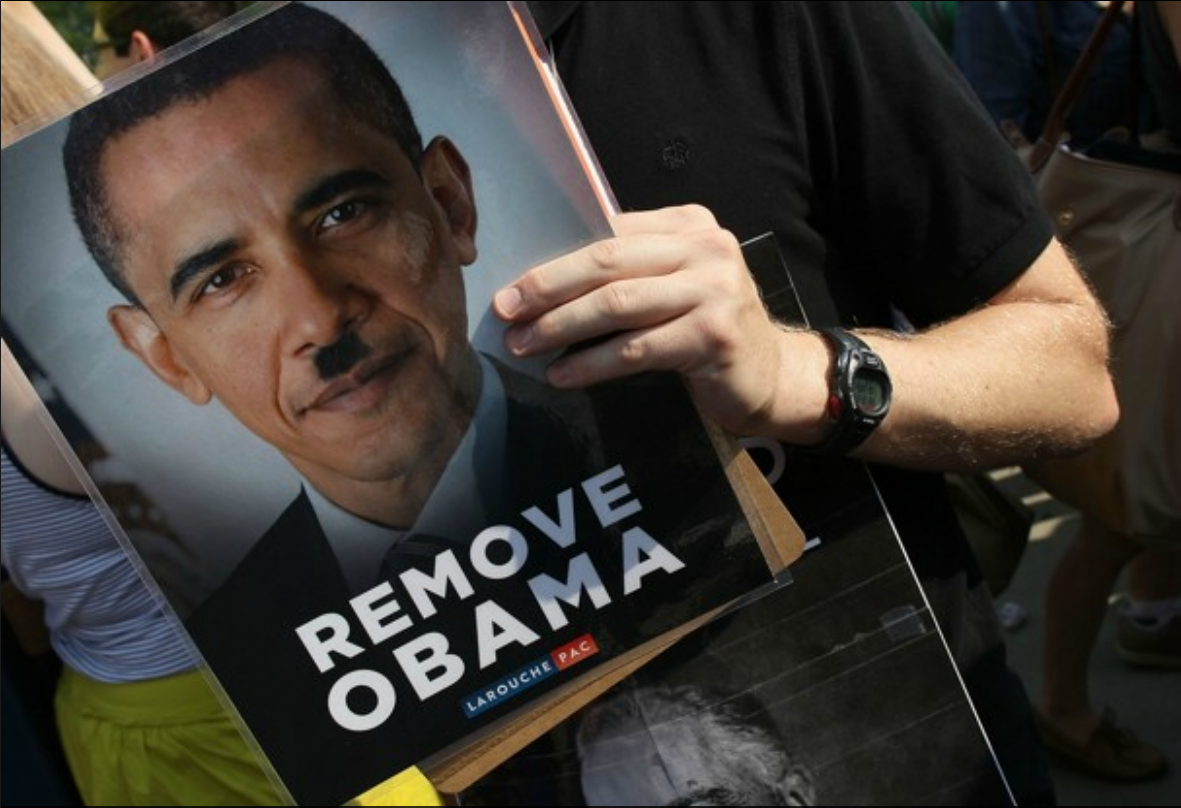
The strangely tabloidic media buzz surrounding the Supreme Court decision was reflected in the protesters and supporters of the mandate outside the building Thursday (the Washington Post has a pretty interested slide show of the crowd here), which included a few of these:

I have no grand conclusion about all of this1 – these were just instances of a not-entirely-together social infrastructure in the past week.2

1I never do
2This title is less catchy than Evan’s
Also, I couldn’t figure out how to make this relevant but this photo also came of the debacle, which is another cause for sadness.