Who invented Rock-and-Roll? Who should be credited as the inventor of the video game? Who’s responsible for the Zoidberg meme? Who is responsible for the way we celebrate Halloween?
Simple truth of the matter is, we can trace plenty of elements of culture to the general time period or people group where they originated, but never just who first came up with the idea of shoelaces, or “push it somewhere else Patrick.”
There’s plenty of our culture that we just accept without being able to credit the inventor, however, this Fame Day we’ll be shining the spotlight on someone we can.
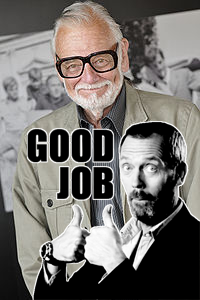
The one and only George Romero, whose influence on our culture arguable is on par with Rock-and-Roll.
Romero, for those few of you who might not recognize the name, is the creator of such films as Night of the Living Dead, Dawn of the Dead, and Day of the Dead, and according to many the father of all zombies.
Now while that affectionate title has been attached to him, the fact of the matter is, Romero did not invent the concept of the living dead. What he did do, however, was bring the concept out of obscurity, and do it so well that his work has become the basis for all subsequent zombie-horror. Zombieland, The Walking Dead, Shaun of the Dead, Resident Evil, Left for Dead, World War Z, Plants Vs. Zombies, Stephen King’s Cell, “Thriller,” I am Legend, you name it. There’s hardly an aspect of our culture that hasn’t had some zombie influence or spin-off (even before our recent craze), and there’s hardly an aspect of the zombie mythos that hasn’t been cemented and popularized by Romero. The man has simply hit it out of the park.
Now I’m not saying you have to like zombies- you don’t. I’m not saying that you have to like the films of George Romero- I don’t. But you have got to respect a man who has had such a profound influence on not only American, but world culture over the past half century (that’s right, half-century).
So, George Romero, in this last minute before midnight on Halloween 2012, we here at Culture War Reporters are tipping our hats to you.
EVAN: Today’s topic is something that I hold very near and dear to my heart. Years of research on the topic has made me witness to all of the arguments that can be used against needing to have racially accurate casting, and because of this I’m going to propose something a little different
GORDON: Namely?
EVAN: That I switch sides for this conversation, and speak out against it.
GORDON: Intriguing. Mind starting us off with the first salvo?
EVAN: Statement: Racially accurate casting is not important. The most talented actor should be the one who gets the role.
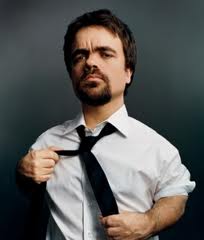
GORDON: Doesn’t appearance play a key role in what makes an actor good? Peter Dinklage is good, but you wouldn’t really find him believable playing Abraham Lincoln or Kareem Abdul Jabbar.
EVAN: In this case his stature, not his race, is what would keep him from playing either role in a convincing manner.
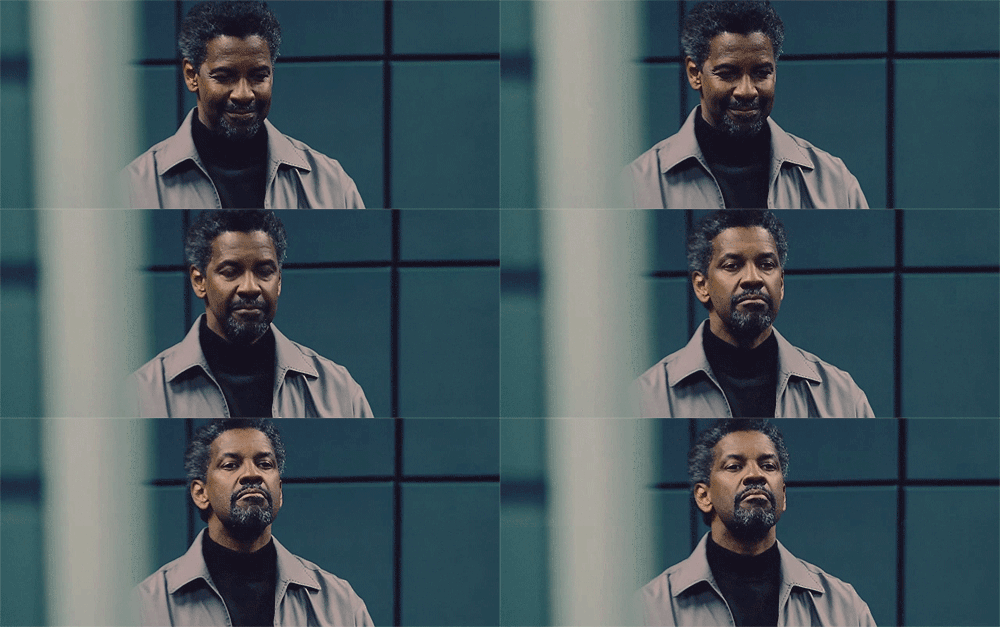
GORDON: But isn’t that essentially the same issue? Imagine the great Denzel Washington playing Lincoln- you’d be sitting there the entire time, no matter how much of a powerhouse Washington would be, taken out of the film because you have to deal with a black guy playing a white guy during the height of the civil war.
In any piece of film where you’re expecting realism, you’re going to expect the actors to conform to the styles and facts of the time. If you portray Georgia in the 1960s, you’re obviously not going to have a largely black cast portraying the upper class or if you were to set the scene in early 1900s Ghana you wouldn’t have a cast comprised of Caucasians. It wouldn’t make sense, no matter how good they are.
EVAN: If anything, Cloud Atlas at least proves that a talented actor can portray whoever they like, given an adequate amount of makeup. Halle Berry plays a Korean Man in the film, and does so in a convincing fashion that doesn’t at all take viewers out of the film in the least.
GORDON: I haven’t seen that film, so I can’t speak to the use of the actors for the parts they play. From my understanding that was a work of fantasy (or science fiction, I’m only going off what I can gather from the trailers). And in one or two movies, it’s probably not a big deal. After all, Cate Blanchett played Bob Dylan.
But imagine this applied to each and every movie, it simply wouldn’t work. Realism would deteriorate- and this would be especially detrimental in a film trying to deal directly with race relations.
EVAN: I personally feel that allowing any race to play any other speaks much more in terms of race relations. That’s a world where colour is a non-issue because it shouldn’t be.
EVAN:I’m dying, Gordon. My life force is seeping out of me.
GORDON: Try to stick with it…
GORDON: And while it’s true that race ought to be a non-issue, that’s simply not how things are or have been in the past. Using black actors to play black characters and white actors to play white characters is fundamental to demonstrating past inequity and injustice with American racism and segregation. And that’s just one element.
Let’s talk about Indians playing Arabs. It happened in Lost and it happened in Community (with multiple actors), but Arabs look nothing like Indians. Indian actors are used simply because they fit the stereotype of what most people think an Arab looks like. It perpetuates an inaccuracy.
EVAN: Isn’t the fact that the role is an Arab important a large enough step? This is a minority with a major role on a TV show, and an opportunity for minority actors to step up, which they have in both cases.
GORDON: Barring Monk and Arrested Development, when’s the last time you saw an Arab actor? I’m not trying to argue against Indian actors, or actors of Indian heritage getting roles, but for the purpose of portraying the world as it is (or at least with some realism) we should have actors with some vague resemblance to the people they’re portraying on film.
After all, would you not be thrown off by guys with German accents playing French resistance fighters during WWII?
EVAN: If they had German accents then they simply wouldn’t be right for the role, which brings me back to my first point.
GORDON: Which, by proxy, brings us back to my first response. Ethnicity (depending on the situation) is just as valid an element of a guy’s candidacy for a role dealing directly with ethnicity as accents, or height, or any other factor (actual talent, of course, being the most important).
Vincent Cassel should probably not play Malcolm X. Adrien Brody should probably not play the Queen of England, though that would be pretty funny.
EVAN: If we’re going to stick with believability, than why is it so important that Indians not play Arabs? No one has ever made a big deal out of this, so clearly people believe that they are what their role calls them to be-
Likewise a Korean can to play a Chinese person can play a Japanese person. Audiences can’t tell the difference and believe that they are whatever the role is, and that’s okay.
GORDON: But Koreans do not look Chinese, Chinese people don’t look Japanese, and Arabs and Indians certainly don’t look like each other. The only reason this happens is because most people either don’t know (partly due to this inaccurate casting) or don’t care (in other words, all non-whites are basically one homogenous mass.
If all your life, you had seen black men and been told “these are Uzbekistanis,” then you’d go your whole life simply assuming that Uzbekistanis are, in fact, indiscernible from guys from Benin.
Your ignorance should not dictate which actors get which parts. Further, no Uzbekistan could really ever get a chance to play and Uzbekistani because of the years of misinformation.
EVAN: But there is a huge difference between a black person and an Uzbekistani. The examples I made have similarities that the example you used clearly does not.
To be such a stickler for accuracy is the other extreme, and just as wrong. You wouldn’t get someone with mental problems to accurately portray a character with mental problems, that just doesn’t make sense. Race should matter if it is noticeable, and like I said in the case of shows like Lost it is not.
EVAN: The logic above was used against me by someone in a thread on Reddit You can check out our exchange here.
GORDON: Granted, my example was extreme, but that doesn’t change the point. Even though a Thai guy and a Japanese guy share more similarities than a Beninese guy and an Uzbekistani guy, there are still distinct differences between people from Thailand and people from Japan.
With regards to being a stickler- I admit, as I have previously, that you don’t have to have an exact replica of the character you’re trying to portray. Jet Li, I imagine, is doing pretty well for himself, and I still wouldn’t doubt his ability to portray a poor man very well. However, while you don’t need to be point for point, you do need to have some general similarity. That’s why we don’t have Emma Stone portraying Fidel Castro.
EVAN: I feel like the extremeness of your examples is damaging your point. If we’re sticking with race we should do that, and not bring in gender.
GORDON: It’s to demonstrate the underlying point in all of this: Verisimilitude. Realism. Accuracy.
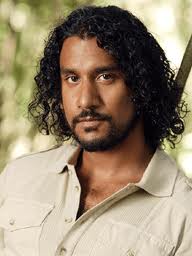
EVAN: And since you said “you don’t have to have an exact replica of the character you’re trying to portray” why isn’t it okay to have Naveen Andrews play Sayid Jarrah on Lost?
GORDON: But the distinction is great enough. The accent is Indian, not Iraqi. Naveen does not look Iraqi. When an actor neither looks nor sounds like the character he is meant to portray, we have a problem.
EVAN: So if Jarrah had managed to sound Iraqi, would that have helped?
GORDON: It would’ve added to the realism and accuracy, yes. But that doesn’t change the fact that he’s very clearly Indian, not Arab.
EVAN: Clear to a very select few. As mentioned, people didn’t seem to notice for the most part.
GORDON: Clear to a very select few. As mentioned, people didn’t seem to notice for the most part.
Most people don’t know what an Arab looks like. Do they know that Monk is Lebanese? That Cousin Maeby is Iraqi? Most do not. Ignorance is not an excuse for inaccurate casting.
EVAN: And that brings our exhausting exchange to an end. Trying to argue for something I so strongly disagree was one of the more difficult things I’ve ever done. I hope that in reading this you were able to see the holes in my argument and the truth in Gordon’s.
GORDON: Booyah.
The past few paragraphs alone have had the same effect on Evan as that life-sucking device in the Princess Bride. Commend him for biting the bullet.
And as for our discussion next time, your options are: What do we make of the upcoming Star Wars sequel?
EVAN: And. . . how about . . . How much artistic merit is there in a show like Adventure Time?
GORDON: I like it.
And to our beloved and devoted followers (who would organize into a vicious and unholy army of darkness if we ever were to ask it of ’em), feel free to suggest your own topic down in the comments section.
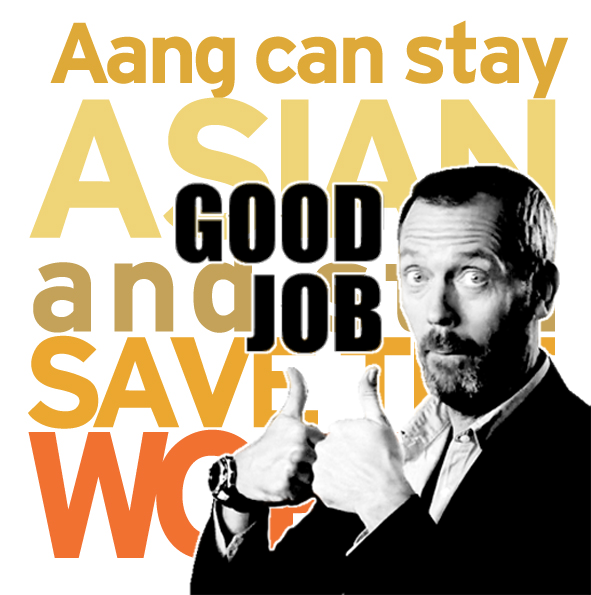
This Thursday I want to call attention to a website that’s been in this blog’s links-sidebar basically since its inception. I came across Racebending.com around the time it began, and their stance on equality casting and representation in the media is one of the many reasons I decided it was time to start writing more about what I thought mattered.
As their name might suggest, the site came about as a response to M. Night Shyamalan’s film adaptation of the Nickelodeon show Avatar: The Last Airbender. The entirety of the series was set in a distinctly Asian-inspired universe, and the casting decision was made to have the majority of the protagonists be played by Caucasian actors. The change is starkly apparent in the image below:
And for those of you who don’t think Zuko is a villain, click on the link for a thorough explanation.
Absolutely not! It doesn’t mean you’re at a disadvantage if you didn’t come in a big African thing. But guys, even if you came with a scarf today, put it over your head so you’ll look like a Ukrainian villager or whatever.
Although the movement was not enough to sway the studio, producers, or director of the film, the site stays up, continuing to work towards educating the internet on when and where whitewashing is taking place, and what people can do to stop it. They also take care to call attention to those who are advancing the role of minorities in the media, giving credit where it’s due.
Most recently the blog has been concentrating on the upcoming film Cloud Atlas, which stands out due to its use of “yellowface” by various actors. While the directing Wachowski siblings and others have cited the theme of reincarnation and the fact that actors of colour will also be playing White roles, media liaison Mike Le lays out the stark difference between the two. In an interview with the radio station Vocalo 89.5 he explains the tradition of yellowface in cinema as a means of controlling the perceptions of a race, and the damage it has done and can still do.
All in all, Racebending.com is run by people who are doing good things, and who care about representation whether it be based on race, gender, or orientation. They strive to see the media reflect the immense amount of diversity in our world, and that alone should be worth checking them out.
GORDON: Brrrrrrrrrrrrrrrrraaaaaaaaaaaaaaaaaaaaaaaaaaaaaaaiiiiiiiiiiiiinnsss. I mean: Welcome to this week’s installment of Gordon and Evan Talk. Our subject for today: Zombies, have we had enough already?
EVAN: Answer: yes.
GORDON: Have we though? The media keeps on pumping out zombie show/game/story/you-name-it, and we keep gobbling them down like, well, zombies.
For the most part, I try to keep my politics toned down here at CWR, but every once in a while, something comes along that straddles the line between ideology and culture that’d be wrong not to talk about.
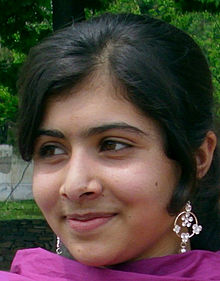
I’m guessing you may have heard of Malala Yousafazi.
Young Pakastani girl known for being a women’s education and peace activist, shot by a reported Taliban assassin just short of a week ago and just today being flown to England to continue her recovery.
You may have seen this picture of her:
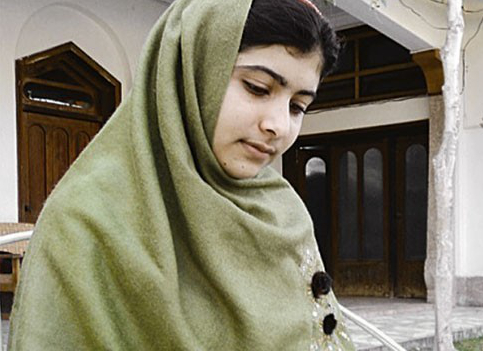
But the picture you may not have seen is this one here:
That’s young Malala wearing a hijab, a head-covering worn by many Muslim women as part of their understanding of modesty. Yep, Malala’s a Muslim– but that’s something you’re not gonna hear on the news or read in your paper.If Islam is mentioned at all, chances are, it’s in reference to Malala’s would be assassin- not her (or her friends who were with her). Why is that? How come the same frenzied media attention that is devoted to listing off every attack or offense on the part of “Radical Islam” utterly fails to note the Islamic element when it’s related to something positive. I can understand- maybe even overlook- the fact that the news doesn’t offer any attention to the millions of Muslims (the ones I grew up with) who just go about their day without doing anything to anyone. But the moment a Muslim man or woman stands up for what he or she believes, even going so far as be nearly murdered for those beliefs and actions, religion disappears from the picture.
And while we’re at it, there’s another thing that’s been bothering me.
You remember Pussy Riot? Feminist Punk Band who got into trouble for playing anti-Putin songs in a historic Russian cathedral?
Why is it that when they got convicted of “hooliganism” and were sentenced to two years in prison (a term waaay disproportionate to the crime) the world united in outrage, and when Leah-Lynne Plante was arrested-
Oh.
Who’s “Leah-Lynne Plante”?
She’s an activist up in Washington State whose apartment was raided by FBI and SWAT Teams. See, back on May 1st, there was some vandalism that occurred in Seattle and Leah-Lynne was a suspect.
How many people who have vandalized walls or billboards actually have the police investigate them, let alone the FBI and the Joint Terrorism Task Force? Of those people, how many have black clothes and books confiscated as “evidence”?
Obviously this has about as much to do with vandalism as Pussy Riot’s sentencing had to do with disturbing the peace. See, Leah-Lynne Plante is a self-proclaimed anarchist, and after refusing for a third time to answer questions before a grand jury. Considering the Grand Jury that’s investigating these and other alleged anarchist criminals was first created in March (two months prior to when she allegedly committed these crimes) doesn’t exactly reflect well on the whole “liberty and justice for all” element of the legal system.
But that’s all beside the point.
The point is, you probably don’t know about it. Your news has almost certainly never reported it, and considering the similarities between the two cases, doesn’t Leah-Lynne Plante’s case deserve your attention just as much as anti-government rockers off in Moscow?
Your media doesn’t think so.
And I think we’re being asked too much. I think we’ve had enough.
See, you can’t pick and choose- if the media want to take the violent or oppressive actions of Muslims as being representative of their faith, they have to apply the same logic to Muslim heroism as well. The same goes for equal air-time. The news can’t report on a bunch of women in brightly colored balaclavas for being broadsided by the state and then whistle Dixie while one in a black shirt has her home raided by men in kevlar.
Consistency- I’m not expecting that the news be factual (and considering it’s the news, that’s a pretty big thing to let slide) but they have got to be fair or stop calling themselves reporters. If they wanted to pick and choose their battles, they should’ve become bloggers instead.
EVAN: Hey, readers. Welcome back to yet another segment of “Evan and Gordon Talk.” This week we’re going to be discussing the limits of stand-up comedy, specifically in terms of crassness. How far, exactly, is too far?
GORDON: I’m gonna come on out swinging say that there’s really no such thing as “limits,” just inappropriate timing and venue.
EVAN: Alright, well, let’s take an example and see if you can provide an appropriate time and venue. To retread some well-worn territory, how about rape jokes?
GORDON: Before our readers jump to conclusions, please here me out-
Rape jokes aren’t alone in being terrible things. We have murder, the Holocaust, disease, Darfur- you name it. Yet we set rape aside. My best estimation for why that is for us (in the west) is that it’s a clear and present issue- as opposed to starvation and disease. It is, therefore, something that’s close to home- something that we don’t typically joke about on the grounds that it’s, well, “real,” for lack of a better term.
Now I’d be hard pressed to imagine a scenario in which a rape joke would be okay. But then again, if I were living in the late 1940s, I believe I’d be just as hard pressed to imagine a situation in which a Holocaust joke would be funny.
EVAN: I’m still waiting for an answer to the question.
I’ve got a video that my brother is quite fond of where Ricky Gervais jokes about Hitler and Nietzsche, and it’s actually quite funny, and does involve the Holocaust. I suppose it could be argued that time has allowed us to not turn to the oft-used cry of “too soon.” But, again, I am interested to know about a way rape jokes might be considered not extremely inappropriate.
GORDON: My point is- I can’t see the future; none of us can. The fact that I can’t imagine a venue in which such a thing would be funny doesn’t mean that it, like the Holocaust or any terrible event, won’t be joked about years from now and be just as funny as that Ricky Gervais bit.
You see what I’m saying?
EVAN: I think what needs to be discussed is the difference between funny and appropriate.
GORDON: Touché. But before we get into that, let’s clarify our terms here.
We’ve been saying “rape joke,” but the truth of the matter is, we’re not talking about “rape jokes”- we’re talking about ones specifically pertaining to women, aren’t we? I mean, how many “Don’t drop the soap!” jokes do we hear and think nothing of?
*For clarification to our readers- what got Evan and I thinking about this was a Tosh scandal– look it up.
EVAN: Okay, so specifically jokes regarding male on female rape, to clarify. Go on.
GORDON: Well- doesn’t that force us to rethink the entire question? With that in mind, do we have to ask rather “Who can be joked about?”
EVAN: I think that’s a pretty vague question. We can joke about a lot of people: kids, politicians, Americans-
There’s a difference between a priest walking into a bar and a woman who’s been sexually assaulted.
GORDON: Let me offer you this, for clarification. There’s a bit by (awesome) comedian Aziz Ansari which includes a rape joke. In this case the “victim” in the situation is a man. There was no outrage.
Contrast this with the outrage that surrounds rape jokes regarding women. Why is there this difference in public reaction?
EVAN: Again, what I’m asking is to specifically discuss an appropriate time and venue for the type of joke already clarified. To explore the difference is to go back to what you said earlier, that rape for us in the West is more “real” than genocide or drought, etc.
You explained it yourself fairly quickly, I think. For most of the public rape of men is not as “real” as the rape of women.
GORDON: Then, as awful as it sounds to us now, isn’t it possible that in a world where female rape is as “real” as the Holocaust (or any of the other stuff terrible stuff we joke about today) it’d be just as tame as the aforementioned jokes?
EVAN: But all you’re saying is that there’s a possible future in which rape jokes are acceptable. As an “appropriate time and venue” the same can be said of everything from cannibalizing your own children to bestiality.
I’d also argue that the aforementioned jokes aren’t classified as “tame” even today. Just less sensitive.
GORDON: Fair enough. I guess I should restate my position.
The issue isn’t with what gets put into a joke, so much as who or what is being mocked. Mocking a victim- be it a murder victim, rape victim, holocaust victim- that’s not cool.
EVAN: Let me try to reiterate what you’re saying- We can mock an action, just not the victim?
GORDON: Absolutely- as we wound up concluding in our discussion of “ironic racism,” the point is to satirize/mock/etc. racism for the hideous and idiotic thing that it is.
EVAN: As often exemplified by comedians such as Russell Peters and Dave Chappelle.
GORDON: Exactly.
I could cite similar jabs at that Arch-Dirtbag Todd Akin by political comedians and satirists who used rape NOT to make fun of rape, but to make fun of Todd Akin’s mind-boggling moronic views on the very same subject, and NOT to make fun of rape victims.
EVAN: That’s a really great way of putting it.
And I think this is the first time we’ve actually really broken down a topic, instead of following rabbit trails and culminating with me mocking you for your human failings.
GORDON: You’re just losing your touch.
EVAN: Hey, this has been a fairly deep and legitimate conversation.
GORDON: That it has.
EVAN: And we are now reaching the end of our allotted 45 minutes. The two choices for next week’s topic are:
GORDON: What’s the greatest flaw of our generation?
EVAN: And “Television Wars.” i.e. all of the shows that feel the need to just slap words in front of the word “wars” and have at it.
Once again, thank you all for reading. Feel free to stick around and check out other posts, and definitely come back next Wednesday for our next installment.

 Who invented Rock-and-Roll? Who should be credited as the inventor of the video game? Who’s responsible for the Zoidberg meme? Who is responsible for the way we celebrate Halloween?







 Most recently the blog has been





 Culture War Reporters