Category Archives: politics

Manly Culture

Even if you haven’t recognized it for what it is, chances are, you’ve seen elements of it. The resurgence of beards, comments on period piece clips like “Why don’t we wear hats anymore?” or “Dang- they knew how to dress back then.” Or perhaps you’ve stumbled across The Art of Manliness or are (like me) a faithful apostle of Ron Swanson.

Now whether you’re aware of it or not, there is a growing culture based around this general perspective of “manliness” that supposedly existed from 5,000 BC to 1974 AD. The resurgence in the popularity of the beard, the wave of internet memes centered around being “classy,” our love affair with period pieces- all of this compounded has created the beginnings of a whole new subculture.

Don’t believe me? Just take a look at some of our favorite TV characters.

Don “F***-You, Liver!” Draper

Jack “Even Ayn Rand Thinks I’m Egotistical” Donaghy

Rick “Bad Decisions” Grimes

Walter “Tied with Draper for Making People Love Fedoras” White
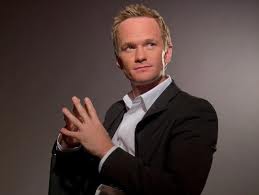
Barney “Legen- wait for it… -DARY!” Stinson
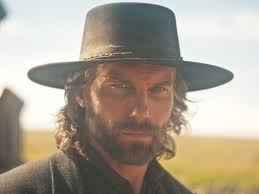
Cullen “I Will Punch You For No Particular Reason” Bohannon

Comedy, Drama, Action/Horror, Westerns- this is a pretty broad range, and we’ve got the same strong, dour antihero type in all of them. Men who remind us of our fathers and grandfathers. Tough as nails bastards who came to this country with only a dollar in their pockets- who took a break from their honest 8 to 8 jobs of hitting metal with other pieces of metal to kill Nazis and look dapper doing it.

So what’s this culture all about? As with any group, we can talk about the superfluous or cosmetic elements- in the case of the “manly” group, handshake etiquette, strait-razor whetting, and driving stick- but to really understand ’em, we’re going to need to look at the underlying values in play here.

Independence:

What do all the men shown above have in common? A degree of independence. They’re DIY guys. Men who aren’t reliant on the help or charity of others- in short, dudes who can take care of themselves in most any situation, from car repair to providing for the family to killing the undead. And on that note…

Initiative:

These are all men who don’t allow themselves to be victims. They’re proactive moment-seizing leaders who don’t wait idly by for someone to step up. Good or bad, they’re leading the way- and speaking of bad…

Stoic:

These are guys who tend to lend credence to the stereotype of the unspeaking, unfeeling male. At best, the strong, silent type- at worse, the uncommunicative lout. One way or another, they don’t let the situation get the better of them. That’d be undignified, and if there’s one thing that they’re about, it’s…

Dignity/Pride:

It’s in the way they dress, the way they speak, the way they expected to be treated. A kind of code that prohibits some things and makes others compulsory. You can’t hold your head high, then what’s the point in having one?

Moral Ambiguity:

These men are all, to varying degrees, antiheroes. Guys with their own agendas and a certain degree of moral ambiguity that keeps you on your toes. There’s a level of egotism, self-centeredness, and disregard for others that makes them pretty good at what they do, but what they do not all that good- certainly they don’t fit the traditional mold of the selfless, self-sacrificial hero.

Wealth:

And while it’s not true for all of them, money tends to be a major element of their stories. A drive to be successful, prosperous, and (again) independent. It’s the age-old dream of being your own boss.

So what does all of this boil down to?

Power.

It’s about power. These guys represent everything we, as a generation, aren’t. Independent, wealthy, self-assured, proud. Does that sound like us? Not at all. We’re the casual dressed, globally conscious masses struggling to make it by, and taking whatever miserable, degrading soulless job we can find. We’re not strong like these glamorized images of our grandparents are (having conveniently erased the racism, bigotry, and misogyny).

But we want to be.

And so begins the perpetual motion machine of life-imitating-art and art-imitating-life. Epic Meal Time, Memes, Period Pieces- the list goes on.

So is this a good thing or a bad thing?

Well, there are good and bad elements to every culture (some more bad than good, and vice versa), but let’s list out the positives and negatives.

The positives have been wrapped in bacon

Positive:

  • We can stand to toughen up a bit a lot as a generation. We don’t need to be bending horseshoes with our teeth, but some basic survival skills and a thicker skin when it comes to discomfort and hardship would be nice (battery running out on your phone doesn’t count as suffering).
  • In these tough economic times, be able to do basic repairs to your house and car aren’t just good- they’re necessary. Same goes for any of the thrifty elements of the culture.
  • Even if we don’t have it quite yet, demanding a certain level of dignity in our work and our day to day lives isn’t just good for you as an individual- it improves society on the whole.
  • While we probably shouldn’t worship the fedora or declare the suit to be the only appropriate clothing for a man over the age of twelve, it certainly doesn’t hurt to know how to dress ourselves, or conduct ourselves well in any given situation.

Negatives:

  • The glorification of the past can, as I jokingly mentioned above, lead to the uglier elements of it being glossed over. We hail our grandfathers as being great men, forgetting how easy it is to make a name for yourself when none of the good or prestigious jobs can be given to equally qualified women or non-white men.
  • The culture really doesn’t leave a whole lot of room for women at all, other than the kitchen. This is not to say that all adherents of the culture see it this way, but when you’re trying to espouse 1950s society, that includes 50s traditional gender roles as well.
  • It can’t be denied that there’s a strong conservative appeal in this culture, as well as hints of Ayn Rand’s Objectivism. Glorifying wealth and success, especially when coupled with a “do whatever you need to do” mentality, can lead to the twisted perspective that poor people are poor because they are lazy.
  • This culture, despite the intentions of its adherents, does give a home for sexism. The uglier elements of the masculinity movement, those who view women as belonging in the home and nowhere else will doubtlessly find it a lot easier to fly under the radar in a culture that’s utterly dominated by males.

So what’s the final verdict?


“Manly” culture doesn’t appear to be either helpful or harmful- at least, not yet. The underlying issue being power, it’s going to be faced with the task of walking the thin line between empowerment and megalomania. So long as self-control is kept in mind, they oughta be fine.

Be sure to look for next week’s installment: “Science” Culture.

Does Billy Graham Think Mormonism Is A Cult?

Yesterday a friend of mine posted a link to an article on the TIME website titillatingly titled “Billy Graham No Longer Thinks Mormonism Is a Cult.”

For those of you who don’t know, Billy Graham’s name has long been synonymous with “famous Christian guy.” To put that into more quantitative terms, he has been spiritual adviser to US presidents Eisenhower and Nixon, and  as of 2008 has had an estimated lifetime audience of 2.2 billion. Christians the world over  look to him to be a powerful representative of their faith.

Roughly two weeks ago US presidential candidate, and Mormon, Mitt Romney visited Graham at his home. At some point during their time together, the 93-year-old Evangelist told him, “I will do all I can to help you.

Shortly after this the Billy Graham Evangelistic Association [BGEA] took down a reference to Mormonism as a cult on its website.

This has, as most any action in the political sphere, provoked all sorts of public outcry, some of it mild, some of it extreme to the point that Graham’s whole ministry has been dubbed “a sham.” Basically your typical response to an event that combines two of the conversation topics you’re not allowed to bring up at the dinner table.

The viewpoint of Mormonism by mainstream Christianity aside, what’s truly important is what the man himself believes. While on the BGEA website I found an actual answer by Billy Graham, undated, to the question “What is your definition of a cult, and how do cults differ from Christianity?” His answer is as follows:

Cults differ widely from each other, of course, but they often have several characteristics in common. (Your local Christian bookstore can suggest some books that describe cults in more detail.)

One characteristic is that cults reject the basic beliefs of the Christian faith—beliefs that Christians have held in common for almost 2,000 years. Instead, they say they alone have a full understanding of the truth about God, and the only way to know the truth is to be part of their group. Many cults have their own writings also, which they either substitute for the Bible or add to the Bible.

Cults also often have a strong leader—one who demands total obedience, and actually claims to speak for God. This is very dangerous, of course, because he or she may lead others into disaster. Remember: Only Christ is worthy of our allegiance, for only He is God’s Son. The Bible says, “Through him you believe in God … so your faith and hope are in God” (1 Peter 1:21).

Pray for your brother and ask God to help you share Christ’s love with him. Cult members are often very resistant to outsiders, but pray that in time he will see this group’s false claims. Most of all, may his experience challenge you and your family to a deeper commitment to Christ.

Let’s break down his definition in regards to the Mormon faith.

———

  • Cults reject the basic beliefs of the Christian faith.

When it comes down to the bare basics, and concentrating on the personhood and divinity of Jesus Christ, they’re pretty spot on. “Jesus Christ is the Savior of the world and the Son of God. He is our Redeemer.” Judging by this singular belief I suppose Mormonism would not be considered a cult.

  • Many cults have their own writings also, which they either substitute for the Bible or add to the Bible.

The Book of Mormon. People know about this because it is also the name of a popular Broadway musical. From their website it is apparently viewed as an addition, not a substitution, to the Bible. It is also a book which “contains the history and God’s dealings with the people who lived in the Americas between approximately 600 BC and 400 AD.”

  • Cults also often have a strong leader—one who demands total obedience, and actually claims to speak for God.

The head of the Church of Latter-Day Saints is known as the President of the Church. According to their Doctrine and Covenants, this man is the only one empowered to receive revelation for the entire church and clarify doctrine. Presidents can also correct or change any previous teachings.

———

Judging by the qualities of cults that Billy Graham lists, Mormonism hits two out of three. Why is it then that his organization took down the reference to the Church of Latter-Day Saints as a cult?

Ken Barun, the organization’s chief of staff, is quoted as as saying: “We removed the information from the website because we do not wish to participate in a theological debate about something that has become politicized during this campaign.”

Have politics, then, trumped religion in this case? A debate on faith is avoided in order to bypass a possible issue of contention with a presidential candidate, one that Graham directly endorses. Cults are described as groups that espouse “false claims,” but apparently that can be ignored in light of Romney’s campaign.

While it is unfair to cite the holy life Billy Graham has lived as invalid in light of his recent actions, his decision should nonetheless be viewed for what it is: a sign of weakness in prioritizing the politics of this world over a commitment to spiritual truth.

Shame Day: Concerned Women for America

“Concerned Women for America.”

It sounds almost like a cartoonish satire of the kind of people who storm into PTA meetings demanding to know why their children have been
“exposed to filth” after discovering a copy of Catcher in the Rye, Slaughterhouse Five, or Harry Potter in their kids’ assigned reading list. The kind of people who warn about the corrosive and unwholesome messages hidden in rock songs, or who sit horrified in front of the TV as some sensationalist dead-inside “journalist” warns about the latest secret teenager trend that’s sure to kill them/get them pregnant.

And as much as it sounds like something that’s ripped out of Footloose, Concerned Women for America is very real.

And that is an absolute shame.

Let’s take a look at some of the bilge that these guys are producing.

What caught my eye was a recent article of theirs on Malala Yousafzai, a heroic Pakistani girl and women’s rights and peace activist. In this post, the authors launch a vicious attack on Islam as being an inherently barbarous and misogynistic religion with a murderous agenda for any who dare oppose it. As the article states

“Malala questioned the station of women under Islam’s oppressive thumb, and the Taliban tried to put her six feet under the ground.”

This, quite simply, is a lie.

Yes the Taliban tried to kill Malala, and yes, Malala questioned the station of women-but what the authors of the article neglect to mention is that Malala Yousafzai is a Muslim herself.

Apparently it’s not enough that this fifteen year old girl (and she is fifteen, not fourteen, as the CWA article wrongly states) has to deal with the threat of violence and murder- she now has to endure her activism being hijacked by the “Concerned Women for America” bent on turning her sacrifice into a smear campaign against her own religion, which they claim is both “false” and “hate-filled.”

But why stop there?

The “Concerned Women for America” are also turning their ignorant ire against the “Slut Walks,” which for those of you who may be unaware, are parades of women wearing clothes of different degrees of modesty or exposure to make the point that it doesn’t matter how you’re dressed- one’s wardrobe is never an “invitation to rape” as some sex-offenders have tried claiming.

Being the moral, upstanding people that they are, CWA has sent up a howl of protest against these walks, declaring:

“The latest desperate bid for attention by the publicity-starved feminists is to sponsor SlutWalks — events where scantily clad women take to the streets en masse to claim their “right” to dress and behave however they want or to go anywhere at any time without the risk of being sexually assaulted or deemed streetwalkers.”

“They propose somehow to make the point that even if what they wear, their drunken state, or their presence alone in a very vulnerable place might indicate their willingness to participate in a sexual free-for-all, women should not be subject to lewd propositions or be at risk of being raped.”

Now I could leave it right there- those two statements alone are enough to demonstrate without a shred of doubt just what vile, reprehensible misogynistic scum the CWA is made of, but just to hammer in a few more nails for safe measure, here are some of there other quotes.

Here’s a lovely little comment regarding the Russian punk-rock protest group “Pussy Riot,” recently sentenced to two years in prison for singing an anti-government song in a cathedral.

Their formal statements about the incident reveal their utter lack of morality, embrace of a “blame-everyone-but-us” ideology, and disdain for capitalism and individual responsibility. Like their U.S. counterparts, they want “human rights, civil and political freedoms” for themselves but not for Christian believers or anyone else with different beliefs… Christians around the world are facing intolerance of their beliefs and sometimes violence as well. In spite of the Constitution, religious liberty is under attack in the United States, with the federal government telling religious institutions that they must violate their beliefs and support homosexual “marriage,” homosexual adoptions, contraception, and abortion or face penalties.

Really? A handful of women sing a song in a church decrying the increasingly totalitarian state, get the ridiculous sentence of two years prison for doing so (the same action in the US would merit a fine, if that) and it’s you who are the persecuted ones.

Here’s another good one- outrage that a Macy’s employee was fired for confronting a transgender person for using the women’s dressing room.

Transgender?  Give me a break!  First of all, there is no such thing; it is a choice of behavior.  And hope as we might, our desire to behave in a certain way does not legitimize a chosen behavior.  It certainly does not entitle them to circumvent the rights of society and our moral tenets in order for them to “have their way.”  Natalie Johnson, the employee in question, was quoted in an ABC interview, “I refuse to comply with this policy,” and “There are no transgenders in the world.  A guy can dress up as a woman all he wants.  That’s still not going to make you a woman.”

An easy call? Certainly not, but this self-righteous outrage is just plain stupid. What if the person in question had been born a hermaphrodite? How would he or she be treated then? Would that kind of ambiguity have justified the guy/gal being denied service? If that’s our logic, why not deny service to people in wheelchairs for not conforming to the societal norm? That logic just doesn’t hold up.

End of the day, “Concerned Women for America” is what cancer would look like if it were an social movement. Shame on this vile organization.

Culture, Not Criteria

Earlier today Evan sent me a link to a documentary on YouTube dealing with the subject of “hacktivists,” or more specifically, the rise of internet mischief and mayhem group “Anonymous.” For the most part, the movie was decent enough, though of course it wasn’t without its own agenda and a there are a few misconceptions resulting from that. But this post isn’t going to be a review. Rather, it’s going to launch off from an interesting phenomena I saw throughout the documentary- and that was the way people talked about Anonymous.

See, whenever people talk about the group, they usually have to veer off into a parenthetical speech where they try to explain just exactly who these guys are, and how at the same time they can be anybody, because anybody can be “Anonymous.” The end result is that they wind up sounding like a paranoid schizophrenic or conspiracy theorist, and the explanation itself doesn’t sound all that believable. After all, how can any individual or group take on the mantle and conduct whatever hacking or pranking or ranting they do against their enemies without some leadership? How do they do anything if they have no demands or agenda?

The problem here (and elsewhere, but we’ll get to that in a minute) is that a completely wrong lens is being used to look at the group. People are looking for structure or goals- the two things that usually define any collection of people, and that’s where it falls apart. Anonymous isn’t a group, it’s an idea. It’s a culture.

Now that sounds strange, but bear with me here.

What’s a conservative?

You probably have an image in your head right now. You can probably tell me what a conservative would think about a certain issue, or how he or she would act in a certain scenario, or the general value system one might have, but if I really pushed you for criteria, my guess is that you wouldn’t be able to give me one. After all- there are varying ideas of “conservatism,” and no real defined boundaries. You’ll find conservatives who state that the “religious extremists” have a skewed view of conservative values, and those same extremists offer the exact same criticism of those wimpy fiscal conservatives. Regardless of the specifics, once you stand back, both groups do fit neatly into the category of “conservative.”

Now apply the same general lens to Anonymous.

What’s “Anonymous”? It’s not a group with an ideology- it’s an ideology with a group, or rather, a whole bunch of groups. Consensus isn’t made through secretive discussion boards or by a clandestine collective of angry computer-geeks. Consensus isn’t made at all- actions simply stem from a general set of perspectives and ideas (the most major of which is freedom of speech and opposition to censorship) held by the adherents. Anonymous doesn’t exist as a coherent, structured group anymore than any culture or subculture exists as a coherent, structured group. Sure you’ve got your major players, and you’ve got various projects or movements within, but at the end of the day, there’s no list of demands, just a set of values.

The reason I bring this up is that this kind of organic organization is becoming more and more prevalent in our culture, the most notable example perhaps being the “Occupy Movement.” Critics of the movement, in its early days, continually parroted the protest of “But what do they want?“- the issue with that being that there was no, and never could be, any list of demands. Occupy wasn’t a structured or unified group- it was, like Anonymous is, a culture. A massive number of people sharing (and developing) certain common perspectives and values and then taking actions based on those views (those actions further developing those views, and so on ad infinitum). Trying to get demands out of Occupy protestors would’ve been about as fruitful as trying to get demands out of conservatives. You’re going to get conflicting specifics, even if there is a general set of guiding principles.

And of course, there are others out there. Though there’s no real term or name for it yet, there’s a rising “Manly” culture, comprised of elements of survivalists, masculinists, and guys who debate each other on-line about how to build porches and properly maintain classic muscle cars. Now I can’t claim to know the origin of this- perhaps it’s partly a reaction against our increasing dependence on technology, perhaps it stems from our powerlessness in a time of political and economic hardship- but either way, it is a growing culture based in principals of independence, self-sufficiency, self-control.

On the other side of the spectrum, there’s the general philosophies and ideas of the trans-humanists, futurists, utopians, geeks, nerds, and people who worship the ground Bill Nye and Neil DeGrasse Tyson walk on. Those who view technology as being the solution to most, if not all, human ills, and eagerly await the day when you can get a free jet-pack when you go in for your cancer vaccine.

Now why bring any of this up?

Because it’s important.

We’re currently breaking away from the liberal/conservative paradigm, and we’re going to need to understand what else is out there. This isn’t to say that we’ve only had conservative and liberal cultures- that simply isn’t true. But we can’t deny that there has been, over the past decade, developments of new value-systems which are really neither here nor there. New and alternative views for what the world ought to be, and how you ought to be in it. Over the course of the next few weeks, I’ll be focusing on dissecting these various concepts, so be sure to stop by next Monday for my examination of “Manly” culture.

October 15: What’s Not Being Talked About In The News

For the most part, I try to keep my politics toned down here at CWR, but every once in a while, something comes along that straddles the line between ideology and culture that’d be wrong not to talk about.

I’m guessing you may have heard of Malala Yousafazi.

Young Pakastani girl known for being a women’s education and peace activist, shot by a reported Taliban assassin just short of a week ago and just today being flown to England to continue her recovery.

You may have seen this picture of her:

But the picture you may not have seen is this one here:

That’s young Malala wearing a hijab, a head-covering worn by many Muslim women as part of their understanding of modesty. Yep, Malala’s a Muslim– but that’s something you’re not gonna hear on the news or read in your paper.If Islam is mentioned at all, chances are, it’s in reference to Malala’s would be assassin- not her (or her friends who were with her). Why is that? How come the same frenzied media attention that is devoted to listing off every attack or offense on the part of “Radical Islam” utterly fails to note the Islamic element when it’s related to something positive. I can understand- maybe even overlook- the fact that the news doesn’t offer any attention to the millions of Muslims (the ones I grew up with) who just go about their day without doing anything to anyone. But the moment  a Muslim man or woman stands up for what he or she believes, even going so far as be nearly murdered for those beliefs and actions, religion disappears from the picture.

And while we’re at it, there’s another thing that’s been bothering me.

You remember Pussy Riot? Feminist Punk Band who got into trouble for playing anti-Putin songs in a historic Russian cathedral?

Why is it that when they got convicted of “hooliganism” and were sentenced to two years in prison (a term waaay disproportionate to the crime) the world united in outrage, and when Leah-Lynne Plante was arrested-

Oh.

Who’s “Leah-Lynne Plante”?

She’s an activist up in Washington State whose apartment was raided by FBI and SWAT Teams. See, back on May 1st, there was some vandalism that occurred in Seattle and Leah-Lynne was a suspect.

How many people who have vandalized walls or billboards actually have the police investigate them, let alone the FBI and the Joint Terrorism Task Force? Of those people, how many have black clothes and books confiscated as “evidence”?

Obviously this has about as much to do with vandalism as Pussy Riot’s sentencing had to do with disturbing the peace. See, Leah-Lynne Plante is a self-proclaimed anarchist, and after refusing for a third time to answer questions before a grand jury. Considering the Grand Jury that’s investigating these and other alleged anarchist criminals was first created in March (two months prior to when she allegedly committed these crimes) doesn’t exactly reflect well on the whole “liberty and justice for all” element of the legal system.

But that’s all beside the point.

The point is, you probably don’t know about it. Your news has almost certainly never reported it, and considering the similarities between the two cases, doesn’t Leah-Lynne Plante’s case deserve your attention just as much as anti-government rockers off in Moscow?

Your media doesn’t think so.

And I think we’re being asked too much. I think we’ve had enough.

See, you can’t pick and choose- if the media want to take the violent or oppressive actions of Muslims as being representative of their faith, they have to apply the same logic to Muslim heroism as well. The same goes for equal air-time. The news can’t report on a bunch of women in brightly colored balaclavas for being broadsided by the state and then whistle Dixie while one in a black shirt has her home raided by men in kevlar.

Consistency- I’m not expecting that the news be factual (and considering it’s the news, that’s a pretty big thing to let slide) but they have got to be fair
or stop calling themselves reporters. If they wanted to pick and choose their battles, they should’ve become bloggers instead.

Evan and Gordon Talk: The Greatest Flaw of This Generation

GORDON: Ladies and gentlemen- this is your captain speaking. After some unavoidable delays we will finally be taking off into our mid-week discussion. Our topic for today is “What’s the greatest flaw of this generation?”(This generation being those born in the late 80s to mid 90s: “The Millennials,” “Generation I”, “Gen Y”- call us what you will).

EVAN: As I mentioned in the news update, we scrapped our conversation last night, largely because it became cyclical. To be more specific, we ended up going back and forth between apathy and cowardice, with one leading back to the other and so on.

GORDON: But let’s widen the picture a bit. While apathy is the go-to criticism many have, also up there for our generation’s flaws is our alleged “sense of entitlement.” Thoughts?

EVAN: If we’re still going with your incredibly broad age range, then yes, I definitely think that a lot of kids these days feel a sense of entitlement. It’s just the norm now to have wireless internet, a phone, the latest iGadget, etc. They’re just expected, the new given.

GORDON: Is that fair, though? I mean- haven’t we assumed that phones, indoor toilets, and electricity are “the norm” since they were first invented?

EVAN: To a point, though, some of what you listed are basic necessities. I’d argue that indoor plumbing is considered much more standard than an iPad.

GORDON: This is true, but I don’t think our generation- barring the handful of people who actually do feel entitled- views the iPad or any specific item as being “standard”- it’s the interconnection that’s the norm, as well as the expectations for new technology.

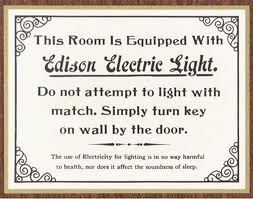
I mean, back in the day you didn’t need light bulbs. But if they’re mass produced, and safer than gas-lamps, then it just stands to reason that we’d eventually come to expect them.

But of course technology’s only one element. what about the idea that this generation is “entitled” in the sense that they get to “find themselves” or “focus on their art” or whatever hipster euphemism is being used to say “part-time employed”?

EVAN: Do I think that people feel they deserve the right to do more than just hit the ground running after college, get right down to the ol’ nine-to-five? I mean, yeah.

But I think this brings up a point I made yesterday about the “where” of our question. In France the age of retirement is 62 and that’s just expected. There are different standards depending on where you live in the world.

GORDON: This is true. I mean, each and every one of us would be considered spoiled brats if we jumped back a hundred years or so.

EVAN: Oh, no doubt. Especially you with your freakishly smooth hands.

GORDON: So would YOU say that the whole “entitlement” criticism stands?

And I use gloves. I refuse to be put down because I take better care of myself.

EVAN: You say that every time, but they’re still as smooth as a baby’s bottom.

GORDON: That means they’re working, and I’ll further have you know that I have a big ol’ scar in my right hand in the shape of a number “7.” But back to the issue-

It doesn’t seem like the “entitlement” bit sticks. Could we be classified as “lazy,” perhaps? The warped and stunted half-humans resulting from government dependence and the welfare state?

EVAN: Well, we discussed “laziness” last night specifically in the context of wanting to change what is clearly a broken system, but is what we’re talking about a general laziness? People just expecting to be spoon-fed?

GORDON: That’s the question. I recall a Cracked.com article in which the author kicked things off by apologizing for helping perpetuate the myth that a college education was a guarantee for a good job. Are we “lazy” in having had the expectation- as most of us had?

EVAN: Well, depending on who you ask, college is hard. In a way, I guess we expect that the hard work we put into maintaining a good GPA, et cetera, will result in finding employment once we’re out in the real world. Which, as I can attest to, is clearly not the case.

GORDON: So is that laziness then? Entitlement mentality?

EVAN: I don’t think that doing hard work and expecting a reward is laziness. That’s like someone working the fields and then being called a layabout because he expected crops to grow. A shaky comparison, I realize.

GORDON: Works for me. And I agree.

Now you yourself have accused us all of being creatively bankrupt. Could that be our major flaw? That we don’t make- we remix?

EVAN: I guess it depends on how we’re working this whole “greatest flaw of our generation” angle. The trend to rehash, remix, et cetera came about recently, but I’m not sure it’s because of us. Or is the question in regards to this day and age we’re in, and not those growing up in it?

GORDON: No, I mean us as an age-group, and that does pretty much answer the question right there. We are, for the most part, not the ones who are making the films and TV shows and music (give or take) of our time- that’s those who came before us.

EVAN: Exactly. Which is why we’re getting stuff like He-Man and Thundercats reboots, because those who were kids in the 80’s have a crippling nostalgia. Music is different, of course, but TV and movies are definitely controlled by the generation before us.

Okay, how about this. Maybe the flaw is our hellish appetite to be entertained.

GORDON: Ooh- interesting take. Expound, by all means.

EVAN: I mean, you’ve talked about the bilge that’s on television countless times. Do you know what we’ve been reduced to? A musical chairs gameshow called “Oh Sit!”

Are we so bored that we’ll watch people play “extreme musical chairs” for an hour?

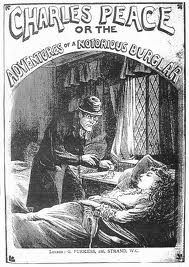
GORDON: I had no idea that existed. But surely this isn’t the first time in history that TV’s been crap. Or radio, or books, or music, or anything. Think of the “Penny Dreadfuls” back in the Victorian era- little, cheap trashy pulp-fiction novels made for mass consumption. Is that any worse than what we have today? Seems like the bilge is the same- it’s just the media that’ve changed.

EVAN: It may be the same, but it’s being produced at a frantic pace. That change, at least, has to be important.

GORDON: That speaks less to our appetites and more to our efficiency.

EVAN: I’d say that it has just as much to do with our appetites, judging by the content of what’s put out.

GORDON: We’re almost out of time, so let’s hit up some other key issues:

Apathy. As we said before, apathy tends to be the go-to criticism, at least, one of the major ones when it comes to our generation, and I think this is one of the easiest to put to rest. The Occupy Movement, environmentalism, increasing number of social movements, increasing global awareness- you name it. We’re strides ahead of the past couple generations. Heck, I’d go so far as to say we’re the most involved generation since the 60s and early 70s.

Well we’re out of time, and still of plenty of ground to cover- so rather than sloppily close up, we’ll be continuing our discussion next week with a question about hipster morality: “Do we want to be good, or do we just want to look good?” If you have any suggestions or recommendations for topics, don’t hesitate to shoot us a comment.

EVAN: Thanks for reading, and remember that CWR now updates every single weekday. I’ll see you tomorrow in our first ever “Fame Day” post!