Category Archives: politics

Go Rewatch The Girl With the Dragon Tattoo

If you’ve heard of this series (in either its film or book form), there’s a good chance it’s because David Fincher of Fight Club/Se7en/The Social Network fame directed the American remake. Even if you’ve heard of it, there’s a also a good chance you haven’t seen it- Fincher’s The Girl with the Dragon Tattoo did only so-so at the box-office, not quite tanking, but also not becoming as popular as many were speculating it would be. And that’s a real tragedy, because the story, in spite of its flaws, is a really good one- you’re just going to have to make a few adjustments in how you see it.

I. Watch the Swedish Version Instead

In my post about the differences between British and American television, I pointed out that American film typically physically glamorizes each and every character- no matter how minor- while the Brits are comfortable with their protagonists actually looking like people you’d meet on the street. While not quite to on the level of the British (from what little I have seen of Swedish film), the Swedes do seem to lean more towards the Brits when it comes to this, and while it doesn’t like it’s all that important, “humanizing” the characters a bit more by making them look like people you’d actually know gives all that more grittiness and clout to the issues the story grapples with.

Beyond that, there’s the issue of casting for Lisbeth Salander. Now I’m not going to knock either Noomi Rapace or Rooney Mara, partly because they’re both terrifying…

But I do nevertheless have to address the eyebrows.

More specifically, the fact that Mara’s Lisbeth doesn’t have any.

Ok, that’s not entirely fair- Mara’s version does have eyebrows- they’re just wispy blonde and really hard to see. And that’s something that’s pretty dang unsettling- heck, it’s downright terrifying.
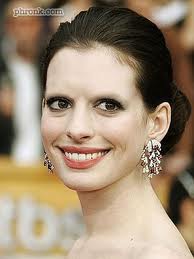
I know it’s probably petty, but Rapace’s Salander, having eyebrows we can actually see, makes it that much easier to watch an already tough movie.

II. Watch the Second Movie First (Then the First, Then the Third)

Not having had any background knowledge of the series, I accidentally wound up watching the second part of the trilogy (The Girl Who Played With Fire) instead of the first segment (The Girl With the Dragon Tattoo). As confusing as it was, I think that this is the best way to do it. While it’s a good movie, The Girl With the Dragon Tattoo really is something of a stand-alone piece, often accused of being pretty linear and slow. The subsequent stories, filled with high stakes of human trafficking and political intrigue, are a lot faster and more action-packed, but really depart from the general style of the first segment. By starting with The Girl Who Played With Fire, you get to be dropped right into the action and have a relaxing “flashback” with TGWTDT that fills in all the blanks and builds up tension and momentum for the final film, The Girl Who Kicked the Hornet’s Nest. Give it a shot- I promise it’ll pay off.

IV. Cut Steig Larsson Some Slack

A lot of critics of both the film and the books have pointed out that the male protagonist in the stories, Mikael Blomkvist, is essentially author Steig Larsson’s literary avatar. As a result, plenty of people blow off the films and books as just being Larsson’s own little fantasy in which he, the last honest journalist teams up with a goth-punk hacker to solve mysteries together. The fact that Fincher chose Daniel Craig (a.k.a. James ****ing Bond) to play Blomkvist probably didn’t do anything to assuage those accusations.

But here’s the thing- Larsson can’t be accused of writing a fantasized version himself into his books because the real Steig Larsson is way more badass!

As a boy, Larsson witnessed the rape of a woman, and so wracked with guilt at not having been able to do anything, wound up dedicating the rest of his life to fighting for justice and equality. In the 70s, he traveled to Eritrea to train an all-female squad in the Eritrean People’s Liberation Front. He returned to Sweden to found a watchdog journalist group and investigate and combat neo-nazism and white supremacy, despite continually receiving death-threats.

Yeah, that’s not so much a biography as it is a superhero origin story. That’s enough right there to make Jack London and Ernest Hemingway look like pansies. If anything, Blomkvist is a version of Larsson nerfed for the sake of believability. Let’s cut the guy some slack.

IV. Understand a Bit About What’s Being Addressed

Part of the issue with the series is that it’s a commentary in no small part on Swedish social and political issues. I only recall it being hinted at in the American version, but the Swedish version of the film spent a bit more time touching on the Wennerstrom family’s (and the entire country’s) shameful flirtation with Nazism in the 30s and 40s, as well as the ongoing issues of xenophobia and racism in contemporary Sweden. Beyond that the series tries to address issues of corruption within the state, as well as the ugly reality of human trafficking (which despite growing awareness, might not quite strike home with American audiences). You don’t need to have a detailed understanding of the intricacies of State-Capitalist governance and Scandinavian history, but knowing a bit about the very real issues of fascism and racism in Europe does add a whole lot.

So what are you waiting for? Go watch ’em!

Wither Feminism?

This isn’t the first time I’ve lamented about the sorry state of feminism in the culture wars, and it certainly won’t be the last- nevertheless, the time has come for me to really lay out exactly what it is that’s killing feminism.


Sure feminism was necessary at one point, but it’s just not relevant anymore
.

You never hear that stated outright, but it seems to be underlying most responses on why feminism isn’t as major an issue was it was in the 70s or the 60s or the 50s or whenever exactly it was that the last wall of patriarchy supposedly fell.

Let’s face it, women can vote, run for and hold public office, be CEOs or workers, and so on and so forth. Really, shy of being able to serve in combat (American women, anyways), one might argue that all doors are now open. This mentality even seems to be affected most contemporary feminists, who though I am sure have the very best intentions, really can’t find much to rail about themselves. I’ve been through blog post after blog post, article after article, and found that overwhelmingly the subjects being discussed are mostly rants against Todd Akin (not to say that idiot doesn’t deserve it) or retrospectives on the battles of the past. Take a look at the contents of the latest Ms. magazine:

With Wonder Woman at the helm, the issue celebrates 40 years of fearless reporting with 40 Ms. and key feminist moments that shaped our history; birthday letters from dozens of life-long readers; and essays from founding editors Gloria Steinem and Letty Pogrebin, and current Executive Editor Kathy Spillar.

In the special 40th anniversary issue, you’ll also read about:

– What’s at stake for women in the 2012 election

– The significant ballot initiatives in your state

– Record numbers of women running for office

That’s their central points for their fall issue.

Now let’s take a look at Jezebel.

I had a rough time sifting through the articles for one that best demonstrates my point (I know Jezebel isn’t so much a “feminist” website as it is a “women’s interest” one- though exactly what that means I can’t rightly say)- for the most part, they seem tangential at best. “What is it with Women and Law and Order: SVU?”  or “Should Women Run? You’re Damn Right They Should.

That last one’s not talking about running for office- it’s literally about jogging. ‘Cuz apparently there was some blog post asserting that women with a certain body type aren’t cut-out to be runners, and that merited a response. Sure, whoever said that was wrong, but is that what feminists have been reduced to? Chasing down solitary quips of (comparatively) benign misinformation in the ugly bowels of the blogosphere? If that’s the standard for a worthwhile target, Evan and I should be beaten to death for mixing up when the premier of Community is going to be shown.

Please don’t beat us to death…

If this is the substance of the contemporary feminist movement, can you really blame people for feeling that all that’s to be done has been done? Can you really blame people for stereotyping self-proclaimed feminists as just angsty or contrarian? Is feminism just going to wither away?

I hope not- there’s still plenty of work to be done.

See this picture?

It’s from Dove’s “True Beauty” campaign. A series of advertisements aimed at combating anorexic and unrealistic standards of beauty. I’m sure the owners of Dove- a corporation by the name of Unilever- would be proud.

You know what other company Unilever owns?

Yep- these guys.

Now as I have family who read this blog, I’ve got embedded for you below the mildest Axe commercial I can find- be assured that it’s prudish and progressive compared to the rest of ’em.

That’s what we’ve got here- a corporation that on one hand is hawking their products by telling you that you’re beautiful just the way you are, and on the other hand depicting women as mindless dolls in low-cut dresses who can be manipulated with aerosol bottles. The latter alone would be a slap in the face, but that fact that the company is two-faced enough to shamelessly operate both utterly discredits their “True-Beauty Campaign” and exposes the fact that they’re ready, willing, and able to use feminism itself as a vehicle for controlling and objectifying women and perceptions about ’em.

This is Paul Polman, Unilever’s CEO, and he can go **** himself.

See, there’s this offshoot of modern feminism called “Sex-positive feminism” (you might know it by other names), which broken down to its most basic elements asserts that women’s use of their sexuality is empowering- and while no one would deny sexuality as an integral part of any human being- more often than not, this line of thought is used to justify strip clubs, prostitution, pornography, etc. as being actually good for women.

Now I’m not going to start accusing the founders of “Sex-positive feminism” of selling out their own movement- I don’t think that’s what their intention was. But then again, such things are what the road to hell is paved with, and even if the goal of this off-shoot was to make sexuality just as empowering as brains or brawn, the simple truth of the matter is that the prostitute isn’t probably viewed by her client as being a more well-rounded person because of her job. Heck- using this logic, I might argue that a twelve year old Honduran girl whose working for 32 cents an hour in a sweatshop is likewise “empowered”.

Strange how “Dead by 26 feminism” isn’t quite as popular…

Feminism isn’t dead- it’s just got a knife at it’s throat, and if saving feminism from becoming a tool of the very system that it was first established to combat isn’t a worthwhile endeavor- I don’t know what is. To anyone who would complain that all the important battles have been won- I present to you this. “Your solution to saving feminism is by saving feminism?” you might ask- and hey, it’s a valid point. But this isn’t just some circular exercise- this is a struggle for what’s really empowering. It’s a fight over messages- will we be told “These shoes are empowering!” or “No- they are shoes– empowerment comes from how far you walk and how much butt you kick.” Isn’t that worth something?

At the very least it beats writing an angry article about how body shape doesn’t exclude you from jogging.

P.S. I know I should also say some stuff about the “Slut Walks” (“Slutwalks”?, “Slut-Walks”?), the issue of rape, the continued problems of worker-manager ratios, etc. but it’s past 1:30 in the morning- please excuse the narrowness of this post.

The Good, the Bad, and the Racist

Over the past weeks, there’s been some talk here in Vegas about changing the name of our airport from McCarran to something- anything– else. Named after Nevada senator Pat McCarran (1876-1954), the group pushing for the change were of the opinion that it wasn’t quite right having one of the busiest airports in the world named after a viciously racist Fascist-sympathizing McCarthyite. Last night, I caught a bit of a local talk-show as I was channel surfing, and heard the subject get brought up. Steve Sebelius, a major journalist in Vegas, was commenting on the name-change movement’s loss of momentum, pointing out that despite McCarran’s psychotic antisemitism and racial bigotry, he was the principal defender of gambling in Nevada, and that without him “None of us would be sitting here”. The show wrapped up after that closing comment, and whether or not the they addressed the whole issue of what comprises one’s legacy I can’t tell you. Frankly, I would like to see the airport’s name changed- and not just the airport, but every street, boulevard, and building named after a bigot. But as the journalist rightly pointed out, the world doesn’t quite work in white and black.

Pictured: Pat McCarran, who objects to me using the words “white” and “black” so close to each other…

As much as we’d like to imagine (at our history book’s insistence) that America was created by heroic men who only drank distilled freedom and wiped the sweat from their brows with patriotic American flags autographed by Jesus, this nation was built on the backs of slaves and the bones of Native Americans. The same man who authored the Declaration of Independence owned his sister-in-law, and despite his assertion that it was self-evident that all men are created equal, hated and feared German immigrants with a passion that the Minutemen Project would feel is “a bit much”. Jackson- the hero of Federalism, the slaughter of Native Americans. FDR, the creator of the New Deal, the guy who forced over a hundred thousand Japanese Americans out of their homes and into prison camps. Between genocide, exploitation, segregation, and a host of other forgotten sins, there’s not much in US history or culture that doesn’t carry with it a stain of injustice or inequity.

Our food included…

But how, then, do we deal with this? If we rename racist streets or airports, why stop there? Why not get rid of the sexists’ names? Or those who were just plain greedy or arrogant or inept? It seems if we go down that road, we’ll wind up leaving everything blank as we dig through history in search of the perfect human being. On the other hand, we can’t exactly drive down Hitler avenue and assert that his anti-smoking campaign is just as much a part of his legacy as the concentration camps and Kristalnacht. So how do we measure a figure’s good acts against his bad ones? I’d personally like to see Jefferson Street renamed Malcolm X Street, yet I have to simultaneously deal with the fact that X held many racist views himself until his conversion and change of heart later in life. Again, how do we discern between the good guys and the bad guys? No one’s perfect, but not everyone uses child soldiers either. Simply, people are complicated.

Case and point…

And because I don’t want to leave you hanging with another “Make of it what you will” post (as I did in my report on Extreme Midget Wrestling– check it out), I’m going to fly in the face of caution and offer this criteria for naming your airports and roads:

I. Is he or she a good guy?

That’s it. If you can’t answer “yes” immediately to that question, and if “mostly” doesn’t work either- move on to someone else. Simple as that. There is always going to be controversy- and we’re going to have to deal wit that. Values change, secrets are uncovered, and some heroes become villains and villains heroes- but for now. For right now- let’s go ahead and make the change. Yeah, it’s a pain in the neck, but if we do it right the second time around, hopefully we won’t need to change up the names for a another seventy years or so. And before someone writes in about it being part of our past or our heritage- let me shoot you down right now. Yes, bigotry, as ugly as it is, is a part of our history. But changing names doesn’t mean that we’re running away from it- it means we’re passing judgment on it. In the end, that’s what I want to cite as my heritage- not racism, but the condemnation thereof.

Go Listen to “Guilty Pleasures: Art and Politics”

Two days ago Gordon and I talked about “hipster racism,” a topic he heard about via an eye-opening lecture by novelist China Miéville. The talk was titled Guilty Pleasures: Art and Politics, and discussed far more than what we were able to given our time.

A number of things: Firstly, I am not going to discuss or summarize his lecture in its entirety; it was forty-some minutes long and that would be ridiculous, just listen to it for yourself. Secondly, I am not a socialist, and much of what he was saying was through that filter. He did, after all, speak at a little something called “Socialism 2012.” I am not someone who has very strong political leanings, but I am someone who truly loves art in its many forms. The following are the three ideas he spoke about that stuck me the most.

The Artist and Their Art

Miéville, about a minute in, states that the socialist position on art and politics is this: “[socialists] do not judge art by the politics of the creator of that art.” He then quickly adds that they do so all the time anyway. I briefly wrote about this in a post about Jewish children’s author Rich Michelson. Michelson hosted a session that was largely about race and background, and how they impact audiences’ opinions of a work. Is a Jewish author allowed to write about the struggle of the civil right’s movement? And if not, then why?

The relationship between creator and his or her art is heavily debated, but its extremes are very easy to criticize. Miéville said that they’d all sat through “egregious folk music” simply because of the grounds of its sentiments expressed. Simply having a good message does not make art good. A Christian movie about the horrors of porn is not in and of itself a bad thing; having it feature ghosts [and be a clear knock-off of Paranormal Activity] is. To put it in the form of a proverb, “the road to hell is paved with good intentions.” Feel free to replace “hell” with “bad art” or “disappointed audiences.”

Guilty Pleasures

The title of his talk and what I’m the most interested in, Miéville listed different axes of socialist guilt. The third of which [17:56] he says is:

The question of quality: “I know it’s not very good but I like it anyway.” A declaration of kind of defensive guilt.

The thing is, he realizes that the statement is inherently flawed. By saying something is not very good we declare that we can make qualitative judgements about art, and this leads to questions like: “What is art? What makes it good, bad, better? What kind of social phenomenon is it?”

When it comes to television shows I have a standard rule, and that is to watch it ’till its dying days. I have watched all of The Office to date, and that is the same as 30 RockHow I Met Your Mother, and a slew of other shows. Sooner or later they begin to break down [see my first example], but I stick to them. The reason I’m bringing this up is The Big Bang Theory.

Gordon hates TBBT. He hates it because, honestly, it’s not a very good show. He often says that “nerdface” is an excellent way to describe their treatment of the characters. That being said, I have, and do [sometimes still] enjoy it. Do I feel guilty? As an English and Writing major, yes. I studied for four years to differentiate between good and bad writing. As a general media consumer and television enthusiast, yes, I still feel guilty. And, as Miéville said, I somehow defend myself by admitting to others that I realize it is not very good.

Does this justify me? I don’t think so. But beyond what it means to be good or bad, what does it mean to like?

What Does It Mean to “Like” Art?

I like the Dungeons and Dragons Monster Manual. I like the novels of Barbara Cummings [sp?]. I like Gramsci’s prison notebooks. [20:15]

None of these statements tells him anything about his relationship with each piece of art, because they’re all so distinct. What further complicates the verb is the discussion of “the art piece one enjoys disliking” [20:32]. We can like to dislike things; Justin Bieber basically encapsulates this idea by himself. While he never ends up truly defining the word, he seeks closure in the writing of another.

What follows is a piece of writing by Lady Mary Wortley Montagu, an 18th century writer, and Miéville’s response to it [34:45]:

“The pretty fellows you speak of I own entertain me sometimes, but is it impossible to be diverted with what one despises? I can laugh at a puppet show and at the same time know there is nothing in it  worthy of my attention or regard.”


This is one of the most liberating things I have ever read in terms of the cultural sphere. It is not obligatory to have footnoted opinions about everything you consume.

I read his meaning in that last paragraph as being that we need not get caught up in guilt. There should be a way of looking at what we like that doesn’t involve us castigating ourselves. I can enjoy the King Fantastic Remix of Drive It Like You Stole It without being a proponent of foul language. Likewise I can read AmazingSuperPowers, be amused, and not have to argue how high- or lowbrow its humour is. While the intent of an artist and the perceived quality of their work should be taken into account, there are times when we can simply like, or more simply enjoy, art, whatever it may be.

Evan and Gordon Talk: Hipster Racism

GORDON: Welcome back, ladies, gentlemen, and persons who defy conventional gender roles, to another edifying episode of Evan and Gordon Talk. Our topic for tonight: Hipster Racism.

Evan- if you’ll offer a quick definition.

EVAN: Uh, I’m going to leave you to that, actually. Gordon sent me this link to check out, and the bit about “hipster racism” is actually quite short [appearing at about 00:00]. The speaker, China Miéville, had a lot of amazing things to say, and I lost it in there somewhere. [I’ll probably be writing more about the lecture on Friday]

GORDON: Essentially, “Hipster Racism” or “Ironic Racism” are jokes or comedy with traditionally racist content, funny not because they put people down, but funny because of how utterly atrocious and ignorant they are. Similar to a dead baby joke.

The question we’ll be dealing with tonight is this: Is ironic racism still just racism?

EVAN: This strikes a similar chord with a conversation I had with . . . a friend of mine, where he called Arab people “towelheads.”

GORDON: Yikes. Continue reading

Violence (Not) In Media

In the wake of the Aurora Shooting, the Sikh Temple Massacre, and a recent spate of gun violence across the country, the debate of the violence in media has once again reared its head. On one side, those who cite the saturation of film, music, and video games with violence and the glorification of violence as responsible for creating these monsters, or at the very least, pushing them over the edge. On the other side, the ranks of apologists, who declare that it’s ridiculous to blame movies and music for mass-murder.  I’m not here to analyze the claims of either point, or to make an argument for one side or the other- that’s already been done better by The Escapist’s Robert Chipman (check it out here).

No, I’m here to address the subject of violence and its possible contributing factors outside of film and music.

When I touched on a complaints I had with movies like Brideshead Revisited and I Love You Man a few weeks ago, I briefly mentioned goth-rock-star Marilyn Manson, whose music was accused by many of being responsible for having influenced the Columbine shooters in committing the massacre. Interviewed by Michael Moore in his documentary Bowling for Columbine, Manson had this to say regarding violent influences:

And therein really lies the crux of the issue- when tragedies like this happen, the scope of our outrage is usually so small that we fail to take into account all the other possible factors. We can cite GTA or rock or rap or cartoons as being responsible and maybe- just maybe- there’s something to that. But what about everything else? If violence in media causes violence, surely violence itself should be cited here!

You remember this?

That’s Marine Corps veteran Scott Olsen, moments after he was shot in the head with a gas canister from close range. Part of the brutal crackdown by police on the Occupy Oakland protests last year- back when Mayor Jean Quan decided the best way to deal with a peaceful protest was by turning her town into a war zone.

But why talk about Oakland and countless other cities being turned into war zones when we can just talk about actual war?

As I’ve mentioned in previous posts, this is the single longest war in American history. Year after year after year, it goes on, and with no end in sight. That’s got to be the single largest and publicized campaign advocating violence, yet where is the outrage against it?

And what about hunting? That’s all about guns and the glorification of killing things…

What about Civil War Reenactors?

What about the national anthem? That thing is full of references to bombs. What about the 4th of July? A day when we celebrate our victory in a war by setting off explosives!

What about the very way we talk about violence? Should the Mob Museum here in Las Vegas be shut down? Should we do away with anything related to pirates? Should we stop teaching about the war of 1812 in schools?

And so on…

You get the idea. Ours is a culture and history built on violence. It’s in everything–  not just our media. While I’ve got my own views on what does and doesn’t cause or promote violence, my purpose here isn’t to take a side. I’m simply trying to demonstrate that if you do want to try to get into the causes of violence, you don’t get to be selective about who you put on trial.You want to find out if there was something in our world beyond the killer’s diseased mind responsible for death and destruction, you have to look at everything- anything less is just a witch hunt, pure and simple.

Let’s face it, half the time, tragedies like these are the platform from which we get to lynch things we didn’t like to begin with…

…I wonder if that kind of vicious and petty mentality might contribute to violence at all…