Category Archives: politics

Shame Day: Rebranding

In the latest batch of lectures offered through the ISO’s [International Socialist Organization] annual Socialism conference, there is a speech regarding the issue of post-modernist philosophy. While the title and speaker escape me, as does the majority of the lecture, one particular line stood out to me, and it went a little something like this:

How do you prove a post-modernist wrong? Drop him in the middle of the ocean and tell him that his petty and self-imposed definitions are the reasons he’s drowning.

Now that’s not exactly how the line went- but that’s pretty much the gist of it. The whole point of the speech was to point out the flaw in post-modernism, that while we do tend to make problems for ourselves with our adherence to self-imposed definitions (you can hear a lot of this reasoning used in the whole debate over sexual orientation), there are nevertheless certain inescapable truths regarding our situations that can’t be overcome by changing our attitudes. Your refusal to adhere to any preconceived notions of health doesn’t stop cancer from killing you. An oncoming train doesn’t care one way or the other if you choose to accept society’s standards.

All of that’s just to say: perspective isn’t everything; some facts are simply immutable; which brings us to the topic of this fine Shame Day.

Rebranding.

I recently came across this collection of shots taken from a Family Guy episode.

As much as you can rail on the show, you have to admit that every once in a while it manages to make some pretty clever points. Obviously the joke here is that we have a pretty twisted double-standard in this country. Simply paying for sex is prostitution, but add a camera and a few loose titles and you suddenly have a completely legal act. Pretty much nothing has actually changed, and as ridiculous as it is, this idiotic mentality is actually taking sway.

You may have heard of the rather clever bars in Minnesota (and England, though I can’t confirm the Brits) circumventing anti-smoking laws by declaring their patrons to be actors, and their cigarettes/cigarillos/pipes/cigars/etc. to be props. Obviously this isn’t actual theater, but because the law prohibits smoking in some situations but not in others, the bars can pretty easily get around the issue (which, by the way, I applaud them for). This isn’t meant to be an example of this mentality going wrong, just an example of it being used (even if somewhat sarcastically). But don’t worry, the uglier side of this is just ahead.

You may also have heard of cadmium, a toxic chemical sometimes used in paint, being used in the making of Shrek glasses sold by fast food empire McDonald’s (though other companies were complicit as well). Upon being discovered, many of these companies simply rebranded their products as being “adult collector’s items,” the FDA having separate standards for acceptable cadmium levels in products geared towards adults. Obviously these items are not “adult collector’s items” and would still wind up in the hands of kids, but hey, what do these guys care? They can get away with it by ducking through this little definitional loophole.

That even goes for the commander-and-chief, who drew fire (rightly so) from most every side of the political sphere when he, to reduce the embarrassment of collateral damage from drone-strikes, simply expanded the definition of militant to include anyone within the bast radius of the strike. There are inner-party members of IngSoc who would call that “a bit much.” I mean, think about it. The single most powerful individual on the planet has declared that the weapons of his country have something that resembles a cross between the logic of a four year old and the papal bull of inability. “We only kill terrorists, we killed that twelve-year old, therefore, we killed a terrorist. High-fives all around.”

My view of pretty much everything the president does

Look, rebranding can be sleazy, but this is simply insane. Naming a fish a bird will not result in different results when chucking it off of a roof. Some things simply are. A smoker is a smoker, cadmium is toxic, and a dead kid is only ever a dead kid.

And that’s just a shame.

A Brief Argument Against Anti-Piracy

Over the past couple years, the issue of regulating the internet has repeatedly arisen, and while there have been many issues contributing to this, there is perhaps none more well known than the contention over copyright infringement and piracy.

Now for  a brief disclaimer.

I am a Marxist. I do not believe in “property” as the word would be recognized today. Every written work, every film, every piece of art belongs to every human being living. The Godfather series is just as much a part of our legacy and inheritance as the Mona Lisa, and as such, access to it should be enjoyed by all.

https://i0.wp.com/gifninja.com/animatedgifs/297918/it-belongs-in-a-museum.gif

This is all to say that I don’t view “copyright infringement” as constituting any true offense. On the contrary, it’s simply the people taking back what was rightfully meant for them to begin with- but I’m not here to talk about that.

No, I’m here to talk about how the music and film industries’ witchhunt for media pirates is doing them (and everyone else) far more harm than good. Let me break it down for you.

I. Some People Will Never Buy

It’s a strange statement, but a true one. There may be a slim minority of people who pirates actually are keeping from the major industries through their cheaper/free service, however it ought to be fairly safe to say that there are plenty of people out there who would not otherwise listen to certain artists or watch certain shows. We’re living in tough times, and with your average movie ticket running at about twenty bucks (to say nothing of the gas getting to the theater and back), for many of us piracy is the only way we’ll see new movies and shows. Assuming there’s a segment of the population who will never, ever pay to see The Godfather, stamping out free avenues- namely piracy- doesn’t save the industry any cash. On the contrary, it just means that those people who don’t get to see the movie because they won’t pay for it aren’t talking about it, and generating buzz that might well attract people who will pay to see the movie. And speaking of them…

II. Some People Will Always Buy

https://i0.wp.com/www.reactiongifs.com/wp-content/uploads/2012/11/take-my-money.gif

Just as some people simply can not or will not pay (such outrageous prices) for entertainment, you will find people who will spare no expense when it comes to it. There are plenty of people who want to see movies on the big screen. There are plenty of people who want to see their band live in concert.The Mona Lisa is a perfect example of this.

No ownership claimed...

You can see pictures of Mona Lisa anywhere; it’s one the most widely recognized images in human history. Because it’s available for free most anywhere, no one will actually go see it, right? After all, it’s been “pirated” to death. Yet that room in the Louvre is packed wall to wall with people who want to see the thing for themselves. Why? Because it’s the original. Doesn’t matter that it’s roped off, or behind glass, or barely visible, or that the guards usher you along after thirty seconds- it’s still wildly popular. The same is true of all media. Some people- plenty of people- will part with their cash to see Avatar in 3D, rather than watching some grainy, laggy version taken on a hand-held video camera in Thailand.

III. Anti-Piracy Hurts the Audience

You may not have experienced this in the states, but there was once a time when DVDs were listed by region codes, and could only be played on players that recognized that region. In other words, a DVD from America couldn’t be played on a DVD player from Europe and vice versa. You were granted a limited number of “switches,” but seeing as how you typically only got seven, it just put off the problem, rather than solving it. The goal (one of ’em, at least) was to prevent international piracy of DVDs through cracking down on how far away they came from, but all that just came down to it being a huge hassle for everyone, regardless whether or not their purchase was legitimate. Imagine all the time, money, and manpower that was invested in that venture that wound up solving nothing and quite possibly leading the industries involved to lose more money over that debacle than they would’ve lost to actual piracy. The same could be said for those hyperbolic ad campaigns comparing piracy to car theft

IV. Anti-Piracy Hurts the Industry

And while we’re talking about the industry shooting itself in the foot, let’s not forget the fact that preventing access to one film will very often lead to prevention of access to another. Quite simply, a person who doesn’t see The Godfather is not likely to go see the sequel, whereas someone who has seen The Godfather has a far better probability of winding up trying to see the sequel, either legitimately or through piracy. Is it a guarantee? No, but it’s still a better chance for the industry to make some cash than by preventing the person from seeing the first film at all.

V. Anti-Piracy Hurts the Environment

Lastly, I have to point out that we have free access to most films, music, and TV shows anyways- down at the local library. Only problem with that is when I drive to the library, I’m spending gas money, creating traffic, and spitting out exhaust fumes. Now I can get most anything down there for absolutely free, and no one complains. But imagine instead that I save on gas money, I keep the streets clear, and I reduce my carbon footprint by staying inside and watching the same movie I would’ve gotten free at the library. Suddenly, I’m a soulless criminal. Does that make sense to you?

https://i0.wp.com/www.reactiongifs.com/wp-content/uploads/2011/09/1239638148802.gif

What’s to be gained from all of this? Despite the doom-and-gloom prophecies of the industries, piracy continues on its merry path and yet we haven’t seen a decrease in the quality or production values of our movies.

Though "quality" is such a tricky word...We have more music artists now than we did a decade ago (at least, more access to them), in spite of piracy, and two of the most popular genres of our generation, techno and dub-step (I will never stop being ashamed of that) is heavily based on remixing and sampling other people’s work, i.e., piracy.

Look- I’m not asking the media giants to be happy about piracy, but at the same time, I have to question whether it’s really even worth it. All that cash being poured into anti-piracy gambits isn’t workingif it doesn’t already outweigh the revenue lost, wouldn’t all that time and effort be better spent elsewhere? Wouldn’t it be more profitable elsewhere?

https://i0.wp.com/media.tumblr.com/tumblr_manlx9hrn71r2sv68.gif

Just sayin’.

Shame Day: Nationalism

Imagine for a moment, the existence of two mythical lands: Acirema and Adanac. Imagine that you are a citizen of Acirema, living in a little town bordering Adanac. Despite your isolation, you’re just as patriotic as any another Acireman. You wave the Acireman flag, salute it, pledge your undying allegiance to the homeland, and swear to defend her against all attacks. You cheer on your Acireman compatriots competing in the Olympics. You stand up and applaud when they win, and howl with despair when they lose. As far as you are concerned, you are a proud Acireman, a citizen of the greatest nation on earth; you love your country just as every red-blooded Acireman is expected to.

And then it is discovered in an old, forgotten document that a century earlier your far-off neck of the woods was actually purchased by Adanac from some forgettable Acireman president. All this time the Acireman-Adanacian border was actually twenty miles further south, making your town and everyone in it Adanacian. What do you do? You were born in another country, making you a citizen from a country that has until now been foreign to you. Do you still salute the Acireman flag? Do you still cheer for the Acireman athletes? Do you still decry the metric system as a tool of the devil?

You probably get the point by now.

Nationalism, boiled down to its most basic components, is the idea that borders matter. That being born on one side of an imaginary line fabricated by affluent racists a few centuries ago should make you a different person than if you were born a few miles north/south/east/west of it.

Now we’re not exactly caught up in some series of Napoleonic conflicts, so why bring up nationalism as the topic for this week’s shame day?

It’s because of this quote by President Obama:

“America remains the one indispensable nation, and the world needs a strong America, and it is stronger now than when I came into office…”

Now let’s take a few minutes to reflect on the sheer arrogance of that statement.

Done?

Good, now let’s break it down.

According to the president, America, and only America, is the one necessity in the world. Brazil, we’re ok if that goes away. The UK can sink into the ocean. China, Russia, Nigeria, Japan,  Italy, Laos- these places are “dispensable.” They don’t serve an important function like America does. America is “indispensable”- the one indispensable nation.

Now if this quote came from some goose-stepping splinter cell in Nowhere, Arkansas, we could probably ignore this. However, as it came from the single most powerful man on the planet, we’re probably not crazy for raising some concerns.

I mean, let’s assume the guy is right- America’s existence is the cornerstone of all stability and decency in the universe, and it is simply more important and valuable than all the other nations of the earth. Shouldn’t we then be concerned about damaging this sole stitch in the fabric of civilization? Puerto Rico, a US territory, is currently petitioning to become a state. If it does, will the America that Obama calls indispensable change in such a way as to unravel all of that? What about selling an acre of land in the south to Mexico, would that shift in the border constitute a change to this indispensable nation?

Or maybe it has nothing to do with borders- maybe America’s indispensable nature has to do with its people. Obviously to protect this, we must maintain things the way they are, and keep any immigrants from entering into the nation, or any Americans from immigrating out, lest we screw up the quota that makes us us. Or maybe it’s not about borders or people- maybe America’s unique nature as “indispensable” comes from its values- that’s why we need to never add or abolish any laws or rules or alter our culture or worldview in any way.

Let’s be realistic here. I’m an American, and I am not exceptional. God Almighty does not smile more upon me for have been born in square A than in square B. My blood is not somehow more precious than that of someone who lives a few feet across an imaginary line in the dirt. If a Mexican, a Canadian, and I were drowning in the ocean, you would not be more obligated to rescue me for either of them. I am not any less dispensable than any other human being on the planet by virtue of my passport or my heritage. This idea that we are somehow inherently divided as human beings on the basis of where we were born is unspeakably stupid. There’s nothing wrong with liking the unique things about the place where you live, or the good and courageous things that are being done, or have been done, or the noble values that your countrymen hold. But ranking these things- the unique things, the good and courageous actions, the noble values- as being less or more important on the basis of their proximity to you is just a flipping shame.

Fame Day: Vasili Arkhipov

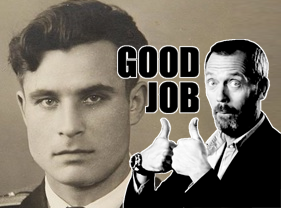
This Fame Day, I’ll be continuing my past line of praising men and women who have shaped our world and yet remained largely uncredited. There is perhaps no man more deserving of our admiration and respect in this regard than Vasili Arkhipov (1928-1998): “the man who saved the world.”

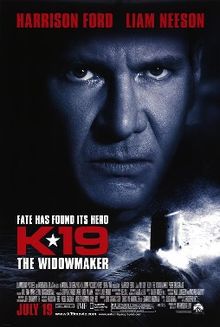
Arkhipov, born to a peasant family in what was then the USSR, joined the navy, participating in World War II, and further earning distinction as being a survivor of the K-19 submarine. Yeah, as in K-19: The Widowmaker.


The Widowmaker (also called The Hiroshima), for anyone who doesn’t know, was a nuclear submarine created by the USSR. Midway through it’s maiden voyage, The Widowmaker‘s nuclear safeguards failed, forcing the crew to heroically sacrifice their lives as they took shifts to rectify the problem, Vasili among them (the crew, not the problem). This event also inspired a movie.

Now the fact that he willingly exposed himself to radiation to help save his crew mates is a feat in and of itself, however, Arkhipov’s true claim to fame was to come a year later, in October of 1962.

This was the height of Cuban Missile Crisis, and Arkhipov was serving as second-in-command on a Soviet nuclear submarine bound for Cuba. While in international waters, the submarine came into contact with a number of American vessels, which began dropping depth charges in an attempt to scare the submarine off. The submarine captain, having been without any contact from Russia for days and suspecting that a war between the US and USSR may have already started, ordered the launch of a nuclear torpedo. Arkhiphov stood up the captain, and after a heated debate, convinced him, along with the other submarines they were traveling with, to stand down. The simple result of Arkhipov’s refusal to let this torpedo be launched was the prevention of a nuclear holocaust and the saving of billions of lives. Without this man, it is almost certain that none of us would be alive today.

So here’s to Vasili Arkhipov, one of the unsung heroes of human history to whom we all owe an unimaginable debt. Thanks for being the sole barrier between mankind and its own bloody self-annihilation!

Old James Bond Vs New James Bond

I have not seen Skyfall– I’m gonna kick things off by stating that right here and now. Nevertheless, I have been following the movie’s development for a while, and the apparent consensus from both the critics and the fans is that “at long last” Daniel Craig’s Bond actually gets back to the spirit of the rest of the series.

Let me break that down a bit.

See, the issue voiced by many Bond fans regarding Craig’s version is that the gritty realism often feels too much like something from the Jason Bourne universe. Many argue that Craig’s Bond lacks the feeling of the older movies, which were (comparatively) more lighthearted and glamorous than the darker and harsher installments we’ve seen over the past few years. This complaint, I’ve noticed, seems to come a lot more from older generations, usually from the 80s backwards, while my own generation seems much more comfortable with Craig’s version. It’s not that it’s about familiarity- after all, there were Bond films while we were growing up, however, I think the whole “New JB VS Old JB” contention really comes down to a shift in values.

I mean, let’s take a look at some of the old James Bonds.

They were off sipping Martinis, flirting with enemy spies, and driving classic cars that turned into planes or submarines or shot lasers and rockets. And all of that was a reflection of the time. The Space Age, where new and innovative technology was bringing us ever closer to a Jetson family standard of living. Those Bond movies were simply a reflection of that era. The same goes for the hedonistic Brosnan Bond of the 90s. The crazy (nearly to the level of cartoonish) villains and schemes, the deus-ex-machina technology (I’m looking at you remote-controlled muscle car) all reflected the materialistic culture that dominated the time.

In the same way, the new James Bond films are a reflection of our own age. The glamorization that marked earlier films would, if applied now, just look condescending. As the economic crisis drags on and as we become more and more acclimated to the issues of unemployment, poverty, and constant warfare, sympathizing with slick government agents in tuxedos driving luxury cars and infiltrating Mediterranean cruises gets pretty dang tough. The bloodied and battered, and ultimately more realistic, Bond that Craig gives us simply appeals more to us. He’s not so much a tour guide for us into the wild and fascinating world of espionage as he a full, tragic character struggling in a lousy situation. The whole divide is demonstrated beautiful in this clip from Casino Royale.

Even the Bond villains are demonstrative in a shift in values. Back in the 70s and 80s, the audience lived with the idea that all life on earth could be ended by a nuclear war. Madmen with doomsday devices simply made sense as the natural Bond enemy. Despite the hype over Iran and, a while back, North Korea, today the idea of a nuclear holocaust is relegated more to survivalist compounds. What are we worried about today? Shadowy cabals of wealthy warmongers manipulating our lives from inside our own governments. Even though Quantum of Solace was less popular as a Bond movie, it’s a perfect example of this similar shift in worldview. What were they bad guys after? A military coup in Bolivia in order to secure the rights to 90% of the country’s water. Even if it’s not too exciting, it’s still believable.

Now none of this is to knock any of the movies (barring A View to Kill, which was freaking awful), it’s simply to explain why there’s been a bit of contention over Craig’s incarnation. The simple fact of the matter is, Bond is going to evolve with time. Surely that’s something to be admired, not complained about…

Shame Day: Americans and the Environment

Today is Election Day for the United States of America, so I suppose this is just as good a time to write about this as any. While the embedded video below “stars” Mitt Romney, he is in no part the focal point of this post.


The video was brought to my attention via a tweet by Canadian webcomic artist Kate Beaton, which linked to an article titled “Watch Romney grin awkwardly as his audience shouts down climate activist.”

A breakdown of said video:

  • Mitt Romney has some things to say about ways to help those affected by Hurricane Sandy.
  • A man yells at around 00:22, and says  “What about climate? What about climate, that’s what caused this monster storm!”
  • He holds up a sign that says “End Climate Silence.”
  • This is almost instantly met with boos.
  • The boos turn into a rousing cheer of “USA! USA!”
  • At around 36 seconds in his sign is violently yanked down.
  • Seemingly unperturbed, the man tries in vain to yell above the crowd; he does not succeed.
  • 00:54 has the camera zoom in nice and close on Romney’s awkward grinning face.
  • Thirty seconds after the man’s outburst, Romney continues his speech where he left off as if nothing happened.

Even watching that video for a third and fourth time to write this I’m still both shocked and angry. This man was raising a legitimate point about  the source of the storm, and he was shouted down. What’s more, he was shouted down by dozens of people yelling the name of their country over and over and over.

Why did this happen? Sure, the guy may have been interrupting what was ultimately supposed to be a way for Gov. Romney to raise support, but is that a reason to boo him? Is it a reason to yank his sign down? You can see the man struggle to keep it up and then decide it’s not worth the trouble.

As a presidential candidate, can you stop Americans from crying “USA! USA! USA!”? Yes. You can. When what is typically a patriotic cheer is used to instead bully someone and invalidate their opinion. It is disgusting what happened, and anyone involved should feel disgraced by their behaviour.

A reply to Beaton’s tweet put it well when he said:

“Nero, what about the fire?” “USA! USA! USA!”

Oh, and here is an actual video where Romney basically says that caring about the environment is a joke: