Category Archives: politics

When Life Gives You Don Lemon III: The Lemon Awakens

Well faithful readers, it’s a new year. While your ever-vigilant crew at Culture War Reporters has certainly enjoyed their break, time marches inexorably on and we’ve got some catching up to do. Why not kick things off with our favorite nemesis and all-around nutjob Don Lemon.

Who we can always rely on to bring us incisive and relevant info on today’s most pressing stories.

As dedicated readers will certainly recall, CNN anchor Don Lemon is not exactly a good person. Lemon represents everything wrong with the news today: ignorance to facts, obstinance in the face of correction, and glee in chasing whatever headline will pull in the ratings- and all from behind a facade of journalism. And certainly, there are plenty of folks in the media today who are notorious for each of these problems, but few manage the impressive feat of having all them at once, and definitely not with the reach and influence that Lemon has. The man’s the perfect storm of power, obliviousness, stubbornness, and ****y ethics, and yours truly has made a point of keeping an eye on him in the same way that you’d keep an eye on a typhoon brewing off the coast. And I’m sad to say that, no, it looks like Hurricane Don isn’t showing any signs of abating.


Continue reading

2015’s Cultural Battleground – Gordon’s Account

EDITOR’S NOTE: We end this year by each taking a look back and picking our five best posts, explaining both their importance to us and to the world we currently live in.  Clicking the banner images will link you to each post, so as 2015 comes to a close join us in remembering how far we’ve come, but also how far we still have to go.

unnamed4Somewhere in our collective history someone decided to depict God as a bearded, old human, dwelling in the clouds above. The trend caught on and has been going strong for the past couple millennia. As ubiquitous as this portrayal of the almighty has become, we argue that this imagery is the root of some of the worst theology (and art, music, and video) out there today, and how problematic it’s become for both the believer and non-believer alike.

unnamedFew images have so perfectly captured the abject and hellish misery of war than this year’s photograph of the body of Aylan Kurdi- only 3 years old. A would-be refugee from the ongoing conflict in Syria, Aylan and his brother drowned after an overcrowded boat capsized during a desperate attempt to reach Europe. The photograph evokes the deepest feelings of sadness for the dead and sympathy for the living- but crucially missing from the emotional equation is anger. Read on to discover why pity for refugees simply doesn’t cut it. Continue reading

Save Refugees, Save America

I believe in America.

I believe that the defining characteristic of this nation was its unerring sense of moral conviction- that all we did was in the advancement of some great work set into motion by ages past. That every undertaking stemmed from the deepest confidence in the simple rightness of our cause.

This faith led us, countless times, to commit terrible acts that damn the conscious of the nation. Slavery and Wounded Knee. Manzanar and Kandahar. McDonald’s and McCarthy. It’s led to the popular image abroad of Americans as fundamentally arrogant; loudly voicing their opinions without being asked, demanding where they have no right, interfering where they have no business.

And it was this same faith that has pulled this nation back every time. Yosemite and Normandy. Harlem and Harper’s Ferry. John Muir and Eugene Debs. The faith that sent millions to these shores from every corner of the world and the same unabashed confidence that sent American music, art, film, and literature back.

In spite of our divisions and our failings- and they are neither minor nor few- we are united by the common belief that our cause is not merely just but justice itself, and that its triumph needs only ingenuity, passion, and will to be secured.

For good or ill, it is this value that made America. Continue reading

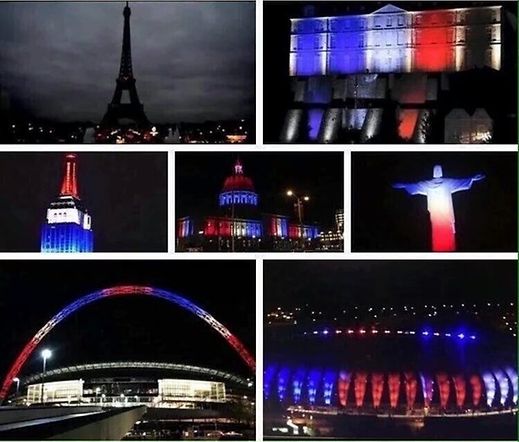
3 Reasons Why the Paris Attack Feels like 9/11 and 1 Reason Why It Demands A Different Response

Since the terrorist attacks in Paris on Friday, I encountered several articles that criticize the way the Western world responded to the tragic loss of life in Paris. While each of these articles bemoans the loss of 132 innocent lives, they also highlight similar atrocities that happened before the Paris attack and were almost completely overlooked.

In a lot of ways this event, and its media response, reminded me of the attack on the Twin Towers in 2001. While the media response to this tragedy has been a little more self-aware, our international reaction has been similar to how it was last time this kind of tragedy affected a Western nation. Rather than discuss the way we responded to these attacks, I wanted to examine why we reacted the way we did.

1) It felt close to home

I remember waking up the morning of 9/11, walking into the living room to see my mom crying. My dad turned to me and told me the world had changed overnight. Hearing about the attacks on Paris gave me the same shiver of fear that I felt that day. I don’t think it’s hard to dissect what motivates that feeling. These particular attacks were frightening because they happened to Western nations, and we in the West are very accustomed to feeling in control. We took control over much of the world during an age of imperialism, colonization, and slavery. Today we continue to control much of the world through unfair aid practices and political manipulation. These kind of attacks are terrifying because they make us feel like we don’t have as much control as we think we do.

Even though last Thursday 45 innocent victims lost their lives to a terrorist attack in Beirut and, 6 months ago a similar attack in Kenya killed 147 innocent people, many of us heard little to nothing about those attacks until their news coverage was compared to what occurred in Paris. In our effort to show solidarity with Paris, the Western world made it apparent that certain tragedies frighten us more than others.

As Elie Fares explained in his blog comparing the media response to the Paris and Beirut attack,

“When my people died, they did not send the world in mourning. Their death was but an irrelevant fleck along the international news cycle, something that happens in those parts of the world.”

Continue reading

The Case For Unisex Bathrooms

Well readers, once again this post comes to you late- and you can blame a combination of my own schedule and the complexity of addressing theological minutiae. Rather than trying to grapple with the subject of superstition in contemporary Christianity, we’re going to be looking at an equally strange subject:

Unisex bathrooms.

Now if you’re like me you probably don’t spend much time thinking about the bathroom- except when you’re cleaning it in preparation for guests or writhing in agony after eating a Big Mac because you didn’t have any options (seriously, when did McDonald’s start putting glass in their burgers?). Which is why it should come as some surprise to you that the city of Houston is up in arms over that very subject- or more specifically, who gets to use ’em.

Now a few of you may vaguely recall that in 2014 the city of Houston passed the Houston Equal Rights Ordinance, or “HERO”, a piece of legislation banning discrimination in terms of employment, housing, and use of public accommodations. For the most part there was no controversy over most of the ordinance, which prevents discrimination against race, sexual orientation, sex, and marital status, but what really riled up some was the inclusion of the following element-“Gender Identity.”

Now the inclusion of the term “Gender Identity” is important because it means that transsexuals may, without harassment or prevention, be permitted to use the bathroom of whatever gender they identify as. In other words, a woman who was once a man would be allowed to use the male bathroom and vice versa.

Needless to say, some folks were not happy about this. Continue reading

We’re Fighting For Our Rights, Not Yours: Suffragette and the Persistence of White Feminism

This month I got to go out and cast my vote in the Canadian federal election. I owe this privilege to women who came before me. Women who sacrificed their time, energy, and sometimes their lives because they believed that we deserved the same privileges as men. Because I’m thankful for the sacrifices those women made, I’m ecstatic to see a film coming out this month that celebrates those women and explores what they went through in order to win us the freedoms we have today.

However, if you have been paying attention to the way the film has been publicized, you may have heard about the controversy surrounding one of its marketing campaigns:

By wearing this particular quote on their shirts, these successful white actresses have demonstrated another instance of what many activists and bloggers have begun to call “white feminism”.  In her article, “This is What I Mean When I Say ‘White Feminism'”, Cate Young explains that

“White feminism is a set of beliefs that allows for the exclusion of issues that specifically affect women of colour. It is “one size-fits all” feminism, where middle class white women are the mould that others must fit.  It is a method of practicing feminism, not an indictment of every individual white feminist, everywhere, always.”

We have seen several recent examples of white feminism play out in our pop culture, like the recent “feud” between Taylor Swift and Nicky Minaj or Patricia Arquette’s Oscar acceptance speech. However, white feminism has negatively affected the lives of women of colour in more than just the pop culture arena. Consider our right to vote, for example. Continue reading