Category Archives: television

Stars Earn Stripes (Is a Terrible, Awful, Idiotic Abomination)

When I was watching the bad acid trip that the Brits were passing off as the opening ceremonies of the Olympics, I saw an ad for an upcoming NBC reality show called Stars Earn Stripes.

For those of you too lazy to watch the YouTube video, Stars Earn Stripes is essentially a collection of B and C level celebrities (and Terry Crews) who are put through elements of basic military training and then tasked with carrying out “missions” (i.e. blow stuff up).

Naturally, the reaction of both myself and everyone I was watching with went a little something like this:

Ironically, this is one of the “missions”…

Despite the ad touting that “In the end, it’s all about understanding one thing… true bravery… It’s about honoring our veterans and our law enforcement officers…”.

I’m going to go out on a limb here and say that a show where a bunch of people are given a couple months of watered down military training in an environment more or less free from danger and label it as comparable to the pain, sacrifices, stress, and general hardship of the actual military is about as far as you can get from honoring them. One of the guys I saw the commercial with had been in the military himself, stationed in Afghanistan, and he asserted that the idea of the show was offensive (as did everyone else in the room). Indeed, restoring some faith in humanity, the reaction of pretty much everyone to Stars Earn Stripes has been more or less this:

Marking the first time comments on a YouTube Video have been mostly intelligent and well-reasoned…

Let’s break it down here. Stars Earn Stripes is presenting:

  1. A Sanitized View of War
  2. A Glamorized View of War
  3. An Insult to Anyone who is or ever has Been Involved in War

First, let’s address the sanitizing or “white-washing”, as some critics are calling it. Stars Earn Stripes still has ten days to air, however, I think it’s safe to say that the actual decisions and consequences on the show are nothing like what they are in reality. The ad boasts that they will use “Real Explosions” and “Live Ammo”, as if this somehow adds weight or danger to the show. You what other shows have been using live ammo and real explosions for years?

Mythbusters
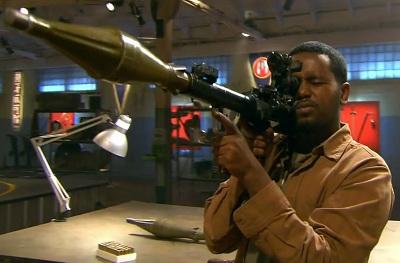
Deadliest Warrior (Sorry I couldn’t find a Gif for this)

…Or pretty much any show having anything to do with guns and explosions…

See, the celebrities might be in some danger- but hardly anything that you can’t find on other shows, and nothing on the level of what combat soldiers have to deal with. On top of this, I’m guessing that the celebrities aren’t going to actually kill anyone, or have to grapple with the moral and psychological ramifications of doing so. In fact, the celebrities will never have to worry about any of the basic aspects of military service that soldiers are expected to deal with- constant danger, the possibility of being disabled (if not killed or captured or tortured) for life, the possibility of killing and innocent civilian by accident, or (for the female contestants) the rampant problem of rape. Terry Crews is a tough guy, I’m sure, but I have my doubts as to how he’d react actually witnessing someone (on any side of the conflict) killed. Let’s face the facts, Stars Earn Stripes is not going to show you bodies in all their gory reality. This isn’t war- this is Hollywood.

Second, let’s talk about the glamorization we’re sure to see hear. Of course Stars Earn Stripes will present the celebrities having little breakdowns, or getting dusty or bruised, but even John McClane got pretty trashed in Die Hard.
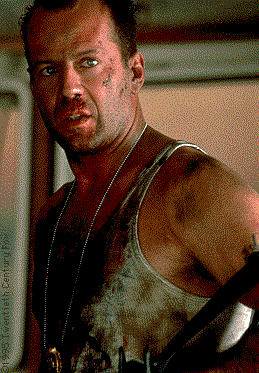
But the military isn’t just concussion grenades and contusions- there’s plenty of… well- boredom to it. I’m not saying this to put down the armed forces, I’m just trying to offer an accurate picture here. There are toilets to be scrubbed, mess halls to be cleaned, uniformed to be creased and beds to be made. There’s paperwork and basic maintenance. Are we gonna see the Stars Earn Stripes celebrities get chewed out for not having left six inches between their blankets and their sheets? I doubt it.

Thirdly, the combination of the previously mentioned points creates a completely and wholly inaccurate picture of the conditions the men and women of the military find themselves in. Stars Earn Stripes isn’t about the military, it’s about a highly fetishized aspect of war. And make no mistake- we’re not talking about just the military here- we’re talking about war. Without the past decade or so of nonstop conflict in Afghanistan, Iraq, and elsewhere, it’s highly doubtful that Stars Earn Stripes would even exist, after all, what’s the point of doing a show about the military if you can’t jam it full of explosions? An almost assured side-effect of this lousy and poorly thought-out attempt to “honor” the troops (i.e. make money off of them and their hardships) is the glorification of war. It doesn’t matter if you’re the most dogged pacifist or hard-line advocate of “just cause”- we all know that war itself is not something that should be portrayed this way. Maybe you think war is wrong, maybe you think war is right- you never think war is pretty. As William Tecumseh Sherman, perhaps the most brutal general of the Civil War, put it “There is many a boy here today who looks on war as all glory, but, boys, it is all Hell.”

The guy who burned Atlanta to the ground just by glaring at it would know….

It cheapens war. In the off chance that you want to hear my full rant about this, here’s the link. The simple version is that this drastic level of ignorance when it comes to the bloodshed- you know, the actual war is not only an insult to the military, but to any and all victims of war, and a direct attack upon the basic decency and dignity of humanity at large.

I’d say that NBC’s heart is in the right place, only I don’t think that’s true. I think this show is a calculated plan to manipulate emotions and capitalize off of human suffering. This has nothing to do with honoring anyone- this is about lining wallets.

Again, to NBC I submit this as my closing remark:

Good Show! (Or, What’s Wrong With The Simpsons)

Over the past couple days, actors Donald Faison and Zach Braff have been campaigning for Obama here in Vegas. While I’m not a fan of their political stance, I freaking love Scrubs and have been re-watching the show for what must now be about the ninety-billionth time.

It got me thinking about a discussion Evan and I had a while back, in which we concluded after some debate that Scrubs is the best show of all time.

Ok, that’s not going to mean anything to you if you haven’t actually seen Scrubs. If you haven’t, go watch it now.

Now think about it- has there been a bad episode of Scrubs? Has there ever been an even sub-par episode of Scrubs?

There really hasn’t. Not every episode is fun to watch (it’s a hospital- you can’t expect them not to deal with mortality and whatnot)- some episodes are downright depressing and tragic. Even so, there show never fails to have some substance to it and (and this is the big thing) never really diminishes in quality despite having been on air for eight seasons (nobody counts the ninth as cannon).

But more on that in a minute…

See, what makes Scrubs so consistently good isn’t that it’s funny- it is funny, but not every episode, and not every joke in the funny episodes will have you on the floor.

Though most will…

It’s that it’s consistent all the way through. The characters develop, certainly, but they never really shift dramatically or break away from who they were a season ago. JD is always JD, Turk is always Turk, and so on. The wacky, exaggerated universe of the show never strays too much into total realism or too far off into surrealism. In short, and episode seen in the last season of Scrubs is about the same (extremely high) quality that the initial episodes are.

Now I know you’re all saying, “But Gordon, you ruggedly handsome bastion of logic and truth, surely consistency isn’t all there is to it!”, and yes, it’s not just consistency that makes a show good. Comedies need to be funny, dramas need to be agonizing, and so on- nevertheless, these things are dwarfed when it comes to consistency- let me give you an example of this done wrong.

Community. I remember seeing ads for it in my first year of college and thinking “Neat- a show about college. Something I and my demographic can all relate to and get a kick out of. This looks like it’s gonna be good”.

And it was.

(Barring that they had an Indian guy playing an Arab kid because apparently all brown people are the same…)

Really good. In fact, the first season of Community is probably one of the funniest things I’ve ever seen in the couple decades I’ve been alive. But what proceeded the glorious first season was one of the fastest and ugliest burnouts in television history.

You remember how Abed was socially-challenged but ultimately human in his attempts to relate to people and make is father (also played by an Indian actor) proud? Remember how Jeff wanted to get his degree and regain control over his life? Remember how Troy was trying to deal with the loss of his status? How Annie was trying to reinvent herself?

Yeah, all of that went down the toilet in the subsequent season. The motivations that gave the episodes conflict and helped progress the characters and the story as a whole were more or less dropped, and the little quirks that made the characters funny and interested got so blown up that they became the only aspect of the characters. Abed went from movie-geek to schizoid mess, Jeff became charming (and nothing else), Troy became just Abed’s buddy, and Annie was just the sweet naive straight-man (more or less) to the rest of the group. On top of becoming gross caricatures of their former selves, the show stopped dealing with college (which you might recall as being the reason so many people started watching the first place) and became centered entirely on the clownish escapades of the group. Granted, every once in a while you got good episodes, but never on the same level as the first season. Every time I sat down to watch Community the smile faded from my face and I could react in no other way but this:
“But Gordon, you roguish fountain of delight, isn’t this more a warning against being madcap than straying from the characters and story?”

I’d have to concede that, if it weren’t for such shows as South Park and American Dad. Both of these shows have been from their inception pretty surreal, nonsensical, and all-around crazy. Yet both shows have maintained that same level of craziness and remain (more or less) as popular now as when they started.

I admit, these shows are not for everyone…

Again, an excellent example of how shows drifting away from their original material kills them would perhaps the most iconic animated show of all time: The Simpsons.

My old roommate never saw the early Simpsons, and is to this day convinced that the show is side-splitting in its hilarity. And he’s probably right- I stopped watching the Simpsons after my first year of college- I got tired of having my heart broken.

Perhaps it’s best encapsulated in this quote by Lisa Simpson back in Season 2:

I heard you last night, Bart. You prayed for this. Now your prayers have been answered. I’m no theologian. I don’t know who or what God is exactly. All I know is he’s a force more powerful than Mom and Dad put together and you owe him big.

Would you ever hear that from Lisa in one of the later seasons? You would not. Why? Because Lisa has moved from being a brilliantly smart little girl to a pointy-haired midget channeling the whiny liberal indignation of Bill Maher.
Is there anything wrong with Lisa as she is today? Not really, no. If that’s who her character is, then that’s who her character is- only the hitch here is that’s not who Lisa started off as. Had Lisa started off as the yellow counterpart of Brian Griffin, then I wouldn’t have any problem. Had Homer started off as a food-crazed buffoon or Marge as a simple housewife, I’d probably still watch the show. Again, it’s the gradual change from one thing to another that’s responsible for people drifting away from the series. It’s not that shows go stale (not that staleness can’t be a problem- just look at the Gilligan’s Island episode where they’re almost rescued), it’s that they change too much.

And hey, with our ever-shortening attention spans and our rapidly changing culture, maybe that’s not such a bad thing.

Bad Influence

Last night, I watched Brideshead Revisited, and let me tell you, it is one festering pile of garbage.

Seriously, **** this movie…

Now before anyone launches into a tirade- yes, I am aware that Brideshead was originally a novel and, from what a lot of critics have said, one that was infinitely better than the movie, the later of which reduced all of the author’s points on culture, religion, and relationships to a couple hours of pretty set design and not much else. Simple fact of the matter is Everyone Poops could have been adapted for the big screen and still have been better than this confusing mess.

Michael Bay was going to, but the book was too cerebral for him…

Look- I can’t speak to either the novel or the author. People who have read the book say it was better than the film, and while I have difficulty believing that, I’m willing to give them the benefit of the doubt. I’m not hear to address that- I’m here to address the fact that someone at some point did actually think that what they presented in the movie was somehow not only worth watching, but worth paying for.

It aint- in case you haven’t gotten that message yet…

I’m not a fan of British period-pieces; if I wanted to see eloquent people with miserable lives, I’d talk to English majors.

What we have in this movie is a group of extremely rich youngsters lounging about an elegant mansion, downing enough alcohol to make newyears in Vegas look like a Baptist ice-cream social, and whine and wail for over half an hour about how miserable their lives are. Not in any existentialist sense, mind you- these characters aren’t disillusioned with luxury, they’re just frustrated that they can’t have everything that they want when they want it the way they want it. This is essentially Walden without any redeeming qualities- just pasty, entitled brats with delusions of insight, giving trailing speeches about their long “suffering”.

And I’m not bringing this up just because one movie sucked- this seems to be part of a greater problem in our culture. I’ve seen the same kind of problem in the film I Love You, Man.

Back in college, my housemates loved this movie. Suggested it every movie night just to see me shiver with horror and disgust. In case you’re not familiar with the plot line, let me break it down for you:

Peter’s getting married. Peter simply doesn’t have any guy friends outside of his brother (played by Andy Samberg, who was the only good part of the movie), and he one night overhears his fiancee’s vile, harpy collection of friends gossiping that it’s weird Peter’s not going to have a best man at his wedding. Peter, who apparently bases his self-esteem on the idle chatter of obnoxious strangers is filled with self-doubt and embarks on a quest to get himself a male friend- because, you know, what will his future wife’s evil friends think of him if he doesn’t?

If you’re trying to jump through the screen, grab this guy, and slap him across the face while screaming quotes from Nietzsche- don’t worry, that was my first reaction too. How we’re supposed to sympathize with this self-pitying sadsack is beyond me- the guy makes Ted from Scrubs look like Teddy Roosevelt by comparison.

I’m not trying to say that every character in a movie- or even every main character- has to be someone admirable. Just look at American Psycho. I’m not saying that these characters have to be ultimately successful. Just look at Goodfellas or The Godfather trilogy. I’m not saying that the characters have fit a classic/stereotypical form of “manliness” (in the case of male characters, anyways)- just look at Zombieland, Superbad, Napoleon Dynamite, or Scott Pilgrim vs the World.

Between movies like Brideshead Revisited, I Love You, Man, and pretty much every romance movie that ever has or ever will be made, there’s this common attitude of entitlement, self-pity, and melodrama.

Ok, you could kill yourself or- OR– spend some time working at a homeless shelter, petition on behalf of political prisoners, overthrow corrupt dictatorships since you are, y’know, immortal…
Just say’n…

Now I know you must all be saying “But Gordon, you charming devil- what’s the big deal? So what if a section of film is dominated by this lousy message of egocentricity, ignorance, and impotence?”

Let me show what the big deal is.

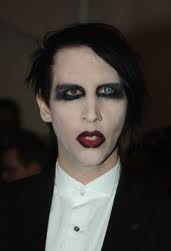
See this guy here? This is goth shock-rocker Marilyn Manson. If you’re not a fan, chances are you’ve still heard of him- in the days that followed the Columbine Shootings, Manson was argued by many conservative and religious critics as having been responsible for influencing the shooters. And obviously, that’s just a single example- whether it’s true or not, we’re all familiar with the outcry against violence in the media- be it anything from video games (see any GTA game) to music (Wu-Tang Clan aint nothin’ to fornicate with) to movies (just take your pick).

Let’s assume, just for a minute, that this is all true. I’m going to discuss the whole “does-violence-in-media-cause-more-violence?” question later in the week, but for now, let’s just say that the answer is “yes”. If these things have a serious negative effect on the views- especially young viewers- and deserve to be censored or even banned on that logic, surely the same can be said for the equally detrimental attitudes and actions (or lack thereof) found in movies like Brideshead Revisited and the like. What do these things teach us?

I was going to say “Stalking and manipulative relationships are romantic”, but I really didn’t have the stomach to slog through countless Twilight posters looking for Edward crouched in the window- enjoy this picture instead…

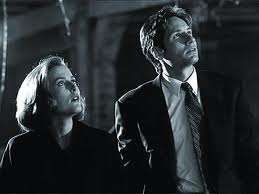
Again- the problem isn’t with romance as a concept or a plot device or anything like that. I’m not a sensitive guy in even the loosest use of the word, but despite my callousness, I really don’t have a problem with romance- it’s just that romance, as a genre, tends to produce these awful, reprehensibly selfish attitudes, and at the same time make the actual relationships pretty dumb as well. Though no one is ever going to admit it, couples like House and Cuddy or Scully and Mulder are both more believable, moving, and inspiring at their worst moments than any Romance film couple at their best.

Obligatory “Still a Better Love Story Than Twilight”…

What else can I say? Romance movies, and indeed, all media that promotes this whiny, entitled message seems to be just as harmful- if not more- than the bloodiest action flick or the most violent rap or rock. I’d be just as worried about the effects of such media on young minds as I am about the most car-stealing-liest-prostitute-beating-iest video game ever made. Allow me to leave you with this brilliant tweet from comedian Dave Chapelle to drive my point home.

Where’s the Counter-Culture?

In my last post, I grossly oversimplified a Marxist concept called “Alienation”. Today, I’ll be grossly oversimplifying the Marxist concept of dialectics.

Don’t give me any of that “Hegel said it first!” crap.

Boiled down to its basic components, it functions more or less as Newton’s third law of motion. Every action has an equal and opposite reaction, and that applies to society as well. Every spirit of the times is accompanied by a little inverted version of itself- or at least, its key values. Now according to dialectics, the conflict between these two opposites ultimately resolves in an evolved combination of the two, but in this post, we’re only addressing the first part.

Or at least, we would be if I could figure out what today’s counterculture is…

Think about it…

Look at the 1950s. For all the white-picket fences; sagely, pipe-smoking fathers; dutiful housewives/mothers, general patriotism and decency, and terror at the prospect of infiltration by degenerate Commies, there were greasers and bikers.

Despite the 1950s conjuring up images of idealized suburbia, this decade was the one that gave birth to rock and Hells Angels. Trafficking and dumping excrement and urine on their initiates doesn’t quite mesh with the general ideals of the time.

The same can be said for the sixties, which produced the hippies and the civil rights movement in the face of an otherwise conservative culture desperately trying to maintain the status quot.

Or the 70s, whose militancy and pessimism were a rejection of the peace, love, and hope values that arose during the previous decade.

Or the wildly egotistically and self-centered 80s producing (or at least, nurturing) anti-establishment and anti-corporate punks culture.

Even the 90s saw rise to goths, opposing the (comparatively) cheery and consumerist zeitgeist of the time.

So why not our era?

The Occupy Movement? I did consider them, but they don’t really fit the profile.

Despite being viciously cracked down on by the powers-that-be, the OWS protestors never really presented anything shockingly antithetical to the values we hold today. At least, not entirely.

Violence is (almost) universally decried as a means of protest and social change by all but those doing it. While America hasn’t seen much of it, continued rioting in Europe could very well mean not so much a brief outburst of rage as a entirely new perspective on what is and isn’t acceptable in society in general.

That’s one way of calling for social change…

Hipsters? I did briefly consider the whole Indy/Hipster movement as a possible subculture, and generally despised, the hordes of lost lumberjacks wandering the streets really don’t stand for anything that mainstream society is opposed to.

You are NOT a lumberjack and this is NOT Ok…

Annoying? Absolutely. Opposed to the spirit of the time? Not really. At most the hipster culture is guilty of desperately trying to cling to childhood nostalgia in the face of creative bankruptcy (see Evan’s post) and espousing thriftiness in the middle of a major economic depression (see my old post).

Bros. Everyone hates ’em, from their obnoxious machismo to their flaming skull t-shirts and spray-on tans.

Problem with this group is that it’s not a new group- just the latest reincarnation of the same kind of people. The same basic mentality can be found clear on back in Shakespeare’sRomeo and Juliet, which essentially starts with a bunch of bros crashing a party to pick up girls.

the 1890s, when “Bros” were called “Chums”…

Ok, so what if we look at what we have in society today and just invert it? What’s the major defining element of our generation? Technology. Internet and smartphones. Social media and memes. Anonymous and scams. The opposite of all this would be the primitivist subculture, right? The people who don’t wash or shave and live in compounds in the middle of nowhere.

And while it makes sense theoretically, we’re just not seeing a vibrant primitivist counterculture or even subculture. Even when you add in the survivalist subculture (in case you don’t know, those are they guys who think the gum’mint out ta git ’em), there’s still not exactly a rising trend in people learning how to skin squirrels or live in total harmony with the earth-mother.

What about these guys?

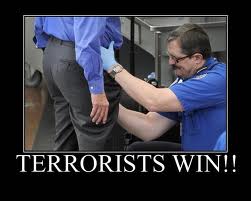
This site (which I’ll be delving more deeply into next week) really does seem to have an actually beef with contemporary culture- specifically in regards to men. Offering instructions on how to polish your shoes, store your fedora (you’re expected to have one, and if you don’t, to go out and get one), shave (or trim your beard, if that’s your thing), throw a punch, or patch a hole in your drywall (holes may be caused by punching it). In a lot of ways, the reverence this site has for the “traditional” concept of what a man ought to be like is reflective of a more general reaction against skinny jeans and YouTube comment section debates. While the site itself has a devoted cult following (and not a ton else), I have seen this general sentiment expressed, and I’m seeing it expressed more and more. Granted, I might be too close to the issue to be seeing it clearly- I myself think guys wearing skinning jeans should be put in stocks for all the village children to throw dead animals at- but perhaps you’ve run into this too. Just last night I heard a comedian complaining that the current generation were (in short) wimps. Gone, he said, were the days when you could chuck a television set out of a hotel window after some drug-fueled rock band had just given human decency the finger via a seven minute guitar solo. Another comedian remarked that “Our fathers would never take the crap we’re taking… the founders revolted because of a 3% tax increase- we won’t even riot when we’re being forced to strip down at an airport!”.

There is doubtlessly a certain mystique and appeal to the figure of powerful, well-dressed men, sitting around roaring fires, puffing on cigars and sipping aged scotch to celebrate that they were in complete control of their lives. Plenty of guys today would give their right arms to be Don Draper.

Though ideally minus the aggressive lung cancer and liver failure…

And interestingly enough, this general “Manly” reaction against emotionalism, appearance (over functionality), pacifism/nonviolence, and interdependence has elements from each of the cultures I described above. There’s the primitive concept of being free from dependence on technology that bears a similarity to the DIY slogans espoused by the “Manly”. There’s the “if you gotta punch a guy, you gotta punch a guy” mentality that seems related to the Black Bloc protest tactics. The simplicity of the Hipsters is here, and even the general “I am Man, here me roar” vibe seems to be a more sane version of Bro machismo.

But that’s all just a theory. Might be true- might be just a passing fad, though if it is just a fad, then we’re back at square one with a rather uncomfortable question.

If there is no counter-culture- what does that say about our culture today? Have we reached a point where we’re so pluralistic and tolerant and multicultural that everything’s acceptable- or is there just nothing substantial to rebel against? If there’s no antithesis, is there even a thesis?

Why We Need Graphic Violence

Once upon a time, a lion was sent to the king of Sweden. After it died, its skin and bones were sent to a taxidermist so that the animal could be stuffed and preserved- the only problem was that this was the eighteenth century, and the taxidermist had never seen a lion before. His resulting work was this:

With only the most cursory knowledge of what a lion was, the work turned-out something that looks like it was pulled straight from a Looney-Tunes episode.

I’d suggest laughing at that picture for as long as you can- the rest of this post is going to be pretty unpleasant.

Most people’s Facebook news feeds are made up of snippets of conservations between friends, invitations to apps you’ll never use, the occasional rant, and baby pictures. Most people, but not so much me- only I do get to see pictures of babies, but more on that in a minute.

See, I grew up in the Middle East, specifically in Syria. For those of you who don’t keep up with the news (at all), my adopted homeland is currently in the grips of a brutal civil war. One of the ways the rebels and dissidents spread news is through social media- especially Facebook, and having “liked” such pages as “Syrian Days of Rage” and “Syrian Revolution 2011”, my news feed is mostly comprised of grainy YouTube videos of soldiers declaring their defection to the Free Syrian Army (FSA), or pictures of mass protests, or of a solitary Republic flag tied to a streetlight. Or a baby.

I warned you before that things were going to become unpleasant- again, if you’re sensitive, stop reading now.

This picture was of a baby who was killed in Gaza during the short-lived but brutal Gaza war in the early weeks of 2009. It was a bombing that killed the child. It was burned so badly the skin still on it had been turned soot-black, and was tight and shiny. You might mistake it for one of those life-sized baby dolls if two broken femurs hadn’t been sticking out where the legs should have been, or if the flesh around the left arm hadn’t melted off the bone.

It was frozen like that. Eyes closed and head rolled back so that against all reason, it looks like her or she could have been sleeping. The body’s held up by a Red Crescent paramedic, and there are no words in any language that will ever describe the look that’s on his face.

There are more of them. A young man on a hospital bed, the right side of his jaw ripped open and hanging against his neck, smiling as best as he still can and gesturing the peace sign. A man killed in a shelling bombardment, held together with white gauze and bedsheets.  A little boy, dead on the floor, drenched in blood and the right side of his body blown off.

That last one was from earlier today.

Last week, I mentioned how this generation is living in the longest war in American history, three times as long as WWII. I want to underscore this. I’m twenty one, and more than half of my existence has been during a period of uninterrupted conflict. I was eleven years old when the US went to war in Afghanistan, and today I could join up to fight in that exact same war. In a couple years, we’ll have kids going to high school who have never had a day of peace.

But this isn’t about that. I’m not here to rage against war, or take a stand for it. I’m not going to throw up my hands and declare that we’ve always been at war with Eastasia.

Though it wouldn’t too far from the truth…

I’m not going to talk about what war does to us so much as I’m going to discuss what we do to war.

Let’s face it, for many of us, the current wars the US (and other nations) are involved in don’t affect us much. We’re not on rations, or ducking into bomb shelters, or being told that if we don’t carpool the Axis wins.

Not in so many words, anyways…

Whether a village in some valley in central Afghanistan is controlled by American or Taliban forces really doesn’t change our plans for the day. A harsh as it sounds, whether or not people are killed in Afghanistan doesn’t have much bearing on anyone but the families of the deceased, and it’s there that the problem lies.

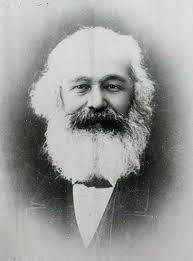
See, we have had a problem in our society for a long time, but with the advent of the internet and similar technologies, it’s becoming worse and worse. Alienation. If you’ve heard it, it was probably in relation to Karl Marx, talking about the separation of workers from the ability to control their lives.

Because we’re dealing with some rough stuff, here’s a picture of Marx smiling…

In a more general sense, it’s simply it’s the separation of things that should naturally go together. Profit shouldn’t be separated from work, and work shouldn’t be separated from profit. Merit shouldn’t be separated from recognition, and recognition shouldn’t be separated from merit. Above all else, actions shouldn’t be separated from consequences- only that’s exactly what we have today.

Most of us are more than willing to wolf down a juicy hamburger, but how many of us would be willing to watch the cow be killed, let alone kill it ourselves? How many of us who wear shirts and shoes made in sweatshops would be willing to stand in the sweatshop hurling profanities and threats at the twelve year-olds hunched over the machinery? How many of us enjoy the advances of the civil rights movement would, back in the 60s and 70s, face off police dogs, hoses, and fire-bombs?

See, we’re a nation that enjoys the hard work of other people. We’re a nation that doesn’t like getting its hands dirty. We’re a nation that has no problem sending kids off to fight, kill, and die on some windswept ridge in Afghanistan because we don’t have anything to do with them afterwards. War is cheap for us. The men and women of our armed forces are expendable to us. Again, I’m not trying to condemn or vindicate the wars we’re in, but what I am saying is that we can’t make reasonable decisions about war until we’re actually confronted with the ugly, bloody, gritty consequences of it. We need pictures of the dead. We need them shoved in our faces on a daily basis. We shouldn’t be able to turn on the news without seeing rubble, the smoke, the wounded, or the dying in graphic detail. For all the outcry against violence in our media, the truth of the matter isn’t that the problem is with violence, but with violence that has been tailored to give us satisfaction and strip away all meaning to it. War, for good or ill, is all for nothing unless we actually understand it. Can we honestly say that we’re acting in the same way now we would be if we actually had to witness the consequences of our actions?

Until then, we’re just the same Swedish taxidermist, making ridiculous travesties out of things we don’t understand. We need graphic violence.

Game of Thrones translates better to the screen than Lord of the Rings


I read Game of Thrones back when it was a relatively nerdy thing to do (I’m not bragging; the geekiness of it at the time cancels out any hipster cred I could claim now) – back when I had to tell people that it was “fantasy, but also good”. So seeing the books translated into an HBO series (insert shout-out to the casting directors for being awesome) is pretty exciting, and seeing it done well is even more exciting.

During the (EDIT: second-to-last episode) of Season 2 – specifically, the siege scene – there was this shot of Stannis’ army lifting up ladders to the walls of King’s Landing, and one of my friends said that it looked like the Two Towers. Upon further thought, I realized that I liked the film representation of the King’s Landing siege – and the Game of Thrones books in general – better than I liked the Lord of the Rings adaptations. As the LotR movies were the most significant and noticeable film event in my life so far, this was a pretty strange realization. So I tried to figure out why I thought that Game of Thrones was doing a better job on screen.

I do love extravagant battle scenes, and the LotR movies delivers, but I always feel kind of jerked around by the battle scenes in LotR. I was watching The Two Towers and noticed how formulaic the Helm’s Deep battle sequence is. The tactics are interesting enough, but the camera just focuses on giving us series of tantalizing deaths to push my hopes one way or another – we’ll see a handful of individual “good team” deaths accompanied by tragic music, only to then be fed a series of orcs getting killed by archers to keep us hopeful and interested. Tactically, Helm’s Deep isn’t a very interesting battle – good team is losing/bad team is scary, Gandalf comes back with Eomer, good team is winning again.

EDIT: I have been informed that I am woefully underinformed, and this giant scary battering ram’s name is Grond and is NOT from the battle of Helm’s deep. I’m keeping this picture up, though.

In terms of effects and extravagance, the LotR team did an incredible job. The scenes are beautiful. But the use of repeated grisly deaths and cruelly interesting kills just to jerk around the viewers’ emotions started to feel like a cheap tactic.

A quote you wouldn’t hear in Lord of the Rings: “Those are brave men knocking at our door. Let’s go kill them!”

In Game of Thrones, however, I noticed the battle in the Season 2 finale was different. For one thing, there wasn’t a specific side to cheer for – I mean, everybody likes Tyrion and Sansa, but it probably wouldn’t be a terrible thing if Joffrey were kicked off the throne, and what’shisface’s (the Stag guy’s) bitterness is relateable, and not necessarily borne of some intransigent evil. The scene also depicted more of the tactics and the actual progression of the battle, I thought, than dragging the viewers along by alternately dashing and keeping up their hopes.

The whole story of Game of Thrones, I think, falls short of the story of LotR. Martin relies too much (like Ayn Rand in We the Living) on making us disappointed – true, the events are appropriately random and unexpected, but (is it ridiculous to say this?) random and unexpected for 1200 pages gets sort of predictable. Or at least, rhythmic. But the honesty of the characters and the anti-gloriousness of their predicaments makes it more suited to visual media than LotR. The broad, mythic scope of LotR made for beautiful movies that would never quite live up to the epicness of the books. In the end, even after all of the stunning shots of New Zealand, the story was too big to be sold.

In LotR, we know , essentially, that the good team is going to win. In Game of Thrones, while the Stark family is pretty unabashedly Good, the rest of the characters are up for grabs. Villanous actions in LotR are generally due to some inherent evil (orcs, Uruk-Hai, Sauron), but villainous actions in Game of Thrones are usually the product of a relateable motivation (love, fear, greed) and aren’t generally limited to specific characters. Game of Thrones is morally messier, and while LotR calls upon values like honor and steadfastness, the characters in Game of Thrones are constantly questioning the actual merits of those values

Questioning the merits of virtue
Jaqen: “A girl has no honor!” Arya: *shrug*

LotR is a myth. Grittiness of character is not its thing – it excercises a style of storytelling that requires suspension of disbelief and an appreciation value of behavioral archetypes. In LotR, Aragorn becomes king and is reunited with Eowyn – in Game of Thrones, Eddard Stark dies in the middle of the first book. LotR’s plots make for fabulous books, and the prose and the world Tolkien created is LotR’s real strength. Game of Thrones by no means compares to Tolkien’s prose, but it makes for interesting characters, engaging dialogue, and non-predictable battles. Because of this, Game of Thrones is way, way better for visual media.

In Game of Thrones, Robert says of killing people: “They never tell you how they all sh** them selves, They don’t put that part in the songs.” Lord of the Rings was the song, and Game of Thrones is showing us the parts the songs leave out. Each type of story is legitimate in its own right – but Game of Thrones seems to translate better to the screen.