Category Archives: Youth

Kids Watching Kids Being Kids

I was going to write about Jamie Foxx being cast as Electro in The Amazing Spider-Man 2, but I write about comic book movie news all the time. Today I’m going to be discussing another topic very near and dear to my heart: cartoons.

There’s a stark difference between what’s on children’s programming now and what there was when I was younger. I’m not here to critique the quality of the shows, because stuff like The Regular Show and The Amazing World of Gumball are really good; I’m here to comment on the content.

Cartoons used to be about kids. At the youngest end of the scale you had Rugrats, which was literally about babies. Moving up you went through Hey Arnold!The Weekenders, all the way up to the aptly named 6teen. These were kids who went to school, who had sleepovers, who hung out with their friends. They were relatable.

The following is the opening theme from The Weekenders [1999-2004]:


This is the opening theme from Sidekick [2010-present]:


Both of these shows are, at their core, about the same thing. The difference is the gimmick present in the latter. Sidekick is about kids, sure, but it’s about kids who are training at the Academy for Aspiring Sidekicks. To contrast, The Weekenders is about kids who enjoy hanging out with each other on weekends.

That’s not to say genre-mixing in kids’ shows hasn’t been around for ages, and that I don’t enjoy them. Programs about kids who are also spies have been around since Kim Possible and Totally Spies. One of my all-time favourite shows, Fillmore!, is a shameless parody of hard-boiled police dramas, with its characters often acting more like tiny adults than children.

The fact is, I miss shows without gimmicks. When all you have to deal with is a football-headed kid and his pals, that forces you as a writer to be creative, to make the ordinary extraordinary but still relatable. Stuff can get weird, like the barbarically tribal kindergarteners in Recess, but for the most part you’re sticking to real life stuff. Honestly, being a kid is a bizarre enough experience as it is.

I love Adventure Time and its protagonist, Finn the Human. He’s a fourteen-year-old kid, and his escapades are all kinds of awesome. The thing is, I’m never going to be best friends/brothers with a magical talking dog, or date a girl who is literally on fire. I get escapism, I know why it’s important, but I also can’t feel the same way about Adventure Time as I do The Weekenders. I could have been Tino or Carver, but there’s no way I can ever be Finn.

Manly Culture

Even if you haven’t recognized it for what it is, chances are, you’ve seen elements of it. The resurgence of beards, comments on period piece clips like “Why don’t we wear hats anymore?” or “Dang- they knew how to dress back then.” Or perhaps you’ve stumbled across The Art of Manliness or are (like me) a faithful apostle of Ron Swanson.

Now whether you’re aware of it or not, there is a growing culture based around this general perspective of “manliness” that supposedly existed from 5,000 BC to 1974 AD. The resurgence in the popularity of the beard, the wave of internet memes centered around being “classy,” our love affair with period pieces- all of this compounded has created the beginnings of a whole new subculture.

Don’t believe me? Just take a look at some of our favorite TV characters.

Don “F***-You, Liver!” Draper

Jack “Even Ayn Rand Thinks I’m Egotistical” Donaghy

Rick “Bad Decisions” Grimes

Walter “Tied with Draper for Making People Love Fedoras” White

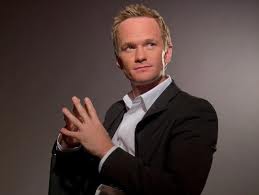
Barney “Legen- wait for it… -DARY!” Stinson

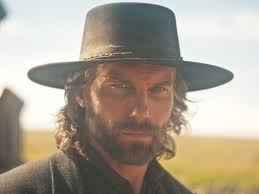
Cullen “I Will Punch You For No Particular Reason” Bohannon

Comedy, Drama, Action/Horror, Westerns- this is a pretty broad range, and we’ve got the same strong, dour antihero type in all of them. Men who remind us of our fathers and grandfathers. Tough as nails bastards who came to this country with only a dollar in their pockets- who took a break from their honest 8 to 8 jobs of hitting metal with other pieces of metal to kill Nazis and look dapper doing it.

So what’s this culture all about? As with any group, we can talk about the superfluous or cosmetic elements- in the case of the “manly” group, handshake etiquette, strait-razor whetting, and driving stick- but to really understand ’em, we’re going to need to look at the underlying values in play here.

Independence:

What do all the men shown above have in common? A degree of independence. They’re DIY guys. Men who aren’t reliant on the help or charity of others- in short, dudes who can take care of themselves in most any situation, from car repair to providing for the family to killing the undead. And on that note…

Initiative:

These are all men who don’t allow themselves to be victims. They’re proactive moment-seizing leaders who don’t wait idly by for someone to step up. Good or bad, they’re leading the way- and speaking of bad…

Stoic:

These are guys who tend to lend credence to the stereotype of the unspeaking, unfeeling male. At best, the strong, silent type- at worse, the uncommunicative lout. One way or another, they don’t let the situation get the better of them. That’d be undignified, and if there’s one thing that they’re about, it’s…

Dignity/Pride:

It’s in the way they dress, the way they speak, the way they expected to be treated. A kind of code that prohibits some things and makes others compulsory. You can’t hold your head high, then what’s the point in having one?

Moral Ambiguity:

These men are all, to varying degrees, antiheroes. Guys with their own agendas and a certain degree of moral ambiguity that keeps you on your toes. There’s a level of egotism, self-centeredness, and disregard for others that makes them pretty good at what they do, but what they do not all that good- certainly they don’t fit the traditional mold of the selfless, self-sacrificial hero.

Wealth:

And while it’s not true for all of them, money tends to be a major element of their stories. A drive to be successful, prosperous, and (again) independent. It’s the age-old dream of being your own boss.

So what does all of this boil down to?

Power.

It’s about power. These guys represent everything we, as a generation, aren’t. Independent, wealthy, self-assured, proud. Does that sound like us? Not at all. We’re the casual dressed, globally conscious masses struggling to make it by, and taking whatever miserable, degrading soulless job we can find. We’re not strong like these glamorized images of our grandparents are (having conveniently erased the racism, bigotry, and misogyny).

But we want to be.

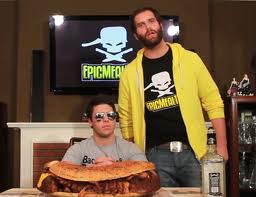
And so begins the perpetual motion machine of life-imitating-art and art-imitating-life. Epic Meal Time, Memes, Period Pieces- the list goes on.

So is this a good thing or a bad thing?

Well, there are good and bad elements to every culture (some more bad than good, and vice versa), but let’s list out the positives and negatives.

The positives have been wrapped in bacon

Positive:

  • We can stand to toughen up a bit a lot as a generation. We don’t need to be bending horseshoes with our teeth, but some basic survival skills and a thicker skin when it comes to discomfort and hardship would be nice (battery running out on your phone doesn’t count as suffering).
  • In these tough economic times, be able to do basic repairs to your house and car aren’t just good- they’re necessary. Same goes for any of the thrifty elements of the culture.
  • Even if we don’t have it quite yet, demanding a certain level of dignity in our work and our day to day lives isn’t just good for you as an individual- it improves society on the whole.
  • While we probably shouldn’t worship the fedora or declare the suit to be the only appropriate clothing for a man over the age of twelve, it certainly doesn’t hurt to know how to dress ourselves, or conduct ourselves well in any given situation.

Negatives:

  • The glorification of the past can, as I jokingly mentioned above, lead to the uglier elements of it being glossed over. We hail our grandfathers as being great men, forgetting how easy it is to make a name for yourself when none of the good or prestigious jobs can be given to equally qualified women or non-white men.
  • The culture really doesn’t leave a whole lot of room for women at all, other than the kitchen. This is not to say that all adherents of the culture see it this way, but when you’re trying to espouse 1950s society, that includes 50s traditional gender roles as well.
  • It can’t be denied that there’s a strong conservative appeal in this culture, as well as hints of Ayn Rand’s Objectivism. Glorifying wealth and success, especially when coupled with a “do whatever you need to do” mentality, can lead to the twisted perspective that poor people are poor because they are lazy.
  • This culture, despite the intentions of its adherents, does give a home for sexism. The uglier elements of the masculinity movement, those who view women as belonging in the home and nowhere else will doubtlessly find it a lot easier to fly under the radar in a culture that’s utterly dominated by males.

So what’s the final verdict?


“Manly” culture doesn’t appear to be either helpful or harmful- at least, not yet. The underlying issue being power, it’s going to be faced with the task of walking the thin line between empowerment and megalomania. So long as self-control is kept in mind, they oughta be fine.

Be sure to look for next week’s installment: “Science” Culture.

Underemployed, Pilot Episode: A TV Review

Right after finishing the very first episode and right before reading what the A.V. Club’s TV Club thought about it seemed like the perfect time to write my review of MTV’s Underemployed.

As a recent college graduate, the premise instantly caught my attention. Five young Chicagoans begin their first episode slightly buzzed on the eve of their graduation, dreaming about where they’re going to be in a year. Throwing lofty goals back and forth they’ve already begun planning their 1-year reunion where they’ll celebrate their “world domination.”

From left to right: Miles, Daphne, Sophia, Raviva, and Lou.

The characters are Lou and  Raviva, the couple who broke up so that both parties could go on to pursue their dreams [grad school and music, respectively], Miles, the would-be model, Daphne, the aspiring advertiser, and author-to-be Sophia, who I lovingly dubbed “VA” for “virginal Asian girl” [I thought the full acronym somewhat inappropriate].

Flashforward to the present and, to make things easier myself, the friends find themselves making up the following list:

  • Lou is street-canvassing [fundraising] for an environmental organization.
  • Raviva is working at a bar in which music is played.
  • Miles is a part-time male stripper.
  • Daphne is an unpaid intern at an advertising agency.
  • Sophia is working at a “Donut Girl” and is still a virgin.

Now, before I get any further, I’ll have you know that I am a sucker for ensemble shows. Friends is television gold as far as I’m concerned, and as a result I’m fairly into Community, and, even more recently [and into], Happy Endings. That being said, Wikipedia’s extremely scant article on the show categorizes it as a comedy-drama, or “dramedy.”  The problem is, the show is heavy on the drama, and very light on the humour.

Raviva shows up at Lou and Miles’ apartment pregnant. This, of course, creates the situation of Lou realizing he needs to take care of her. How this is dealt with is almost painful, and awkward in a way that just isn’t funny. His clumsy attempts at trying to find out whether or not he’s the father aren’t even cringe-worthy in a way that’s entertaining [see: The Office].

Elsewhere Daphne lets her super-hunky boss know that she has been an unpaid intern for one year, a premise that made me so livid I thought I was going to spit. He, in turn, asks he out to lunch, where they kiss, and then proceed to have sex in his car [after promising her that he’ll work things out].

On the smaller side of things, a cougary woman gives Miles her card while he works catering at an art gallery, which piques his interests since it reads “GQ.” They later have sex. Sophia meets an old classmate who is, of course, on the pathway to success, and his boss, who is a lawyer.

None of these things in and of themselves are terrible, the problem is pacing. Almost everything that’s introduced is almost instantly resolved, meaning that as viewers we don’t have much to look forward in the next episode, or the season to come in general.

For starters, Raviva wastes absolutely no time in giving birth to a beautiful baby girl. Miles finds a job with his dad [albeit after many, many interviews], and Daphne confronts her boss and demands to be paid [and coming out with a great deal of $750 a week and a parking space]. On the comedic side even the joke of Miles thinking he’s gotten a modelling gig is explained away in seconds. The man he thinks is Calvin Klein straight-up tells him that “You’re here to serve mojitos, and mini tacos, and eye candy.”

As far as events that completely blindside the viewer out of nowhere, Sophia is invited out on the phone. We’re led to believe it’s her former classmate, but it’s his boss, which is surprising. What’s even more surprising is that his boss makes a move on her. And then they are having lesbian sex and I no longer had any idea what was going on.

You can tell that somehow the people at MTV realized how the plot leaves us without much to look forward to [save for Daphne’s continuing tryst with hunky boss] by how the episode ends. With a voiceover and caption saying “this season, on Underemployed” followed by almost two full minutes of what’s to come.

In the end, I found myself interested in watching future episodes, but only because of what the teaser provided. While Sophia hints at her search for sexual identity by telling Daphne that “I might be [different]” it takes the teaser to slap us in the face with her saying “I don’t know what my sexuality is.” In other news, new parents Miles and Raviva will struggle, and cheat on each other [just tongue action, as far as I can tell]! All of these things serve to pull the viewer in, but none of these hooks can be found in the pilot.

I’ll probably be tuning in next week to watch at least the second episode, but it’s not very likely. While Underemployed scratches the surface of what it means to find purpose in life after dreams crash and burn, its pacing and distinct lack of laughs also means that it offers a look at life after college that moves both quickly and joylessly.

Stray Observations [something the TV Club does and that I’ve always wanted to do]:

  • None of these characters have average, run-of-the-mill names. To be fair, neither did most of the cast of Friends.
  • For kids who’ve just gone through four years of college, those are some pretty unrealistic goals. Touring as a musician? Writing [let along publishing] a novel?
  • It is oddly refreshing, however, to see an Asian character who majored in English and is big into writing.
  • While I have complained about a dearth of humour, there was a line, said by Raviva’s mother, that I thought was funny: “She is like a set of Russian dolls right now, and every one of them is a total b-tch.”
  • Finding out that Miles became a male stripper was also pretty funny.
  • The episode ends with the five friends having dinner in the biggest apartment I have ever seen. I’m talking bigger than the apartment in New Girl, and a little bigger even than Dave and Max’s in Happy Endings.

There is absolutely no way they could afford this apartment. No. Way.

  • Finally, the show made the decision of actually saying the title of the show in the following line by Sophia: “If life is just about working and earning money we’re all screwed. But if life is about living, none of my friends are underemployed.” I hope they’re proud of themselves for that.

Underemployed
Tuesdays, 10 p.m. EST
MTV

Evan and Gordon Talk: The Greatest Flaw of This Generation [Continued]

EVAN: Last week Gordon and I discussed the greatest flaw of this generation, and discussed apathy, laziness, entitlement, and creative bankruptcy. Deciding that we had much more to work with, Gordon left us with this question last week, which heads this continuation of the topic:

““Do we want to be good, or do we just want to look good?”

GORDON: I’m not entirely sure I can come up with any swift dismissal of this possibility, I mean- look at the world we live in. Do we believe in being environmentally and socially conscious? Absolutely. But to what extent? I mean, we’ll chuck our soda cans in the recycling, but are we gonna picket Monsanto?

Are we really just observing these “little” things because they’re expected of us? Do we actually care one way or another?

EVAN: As far as recycling goes, we do that in Canada because it’s the law. Looking good only has so much to do with it.

If we want to go with the example of, say, giving a few dollars towards an environmental organization [or maybe because the fundraiser was cute], that works a little more maybe. It at least contrasts with picketing/protesting. I think we care, but maybe not enough? That’s if we’re quantifying “care” now by the actions that it results in.

GORDON: Is it, perhaps, that we’re cynical? Do we as a generation ultimately despair of the effectiveness of any method of change? Is the reason we’re unable to really go the distance when it comes to our causes because we think it’s all just in vain?

EVAN: Do we think it’s all futile? I mean, we’re certainly led to believe that to some extent. To focus on environmentalism, the extent of the destruction to this earth is growing ever closer to irreversible, and we’re made aware of this.

As far as documentaries and the like go, however, we are told over and over that what we do does indeed matter. Being conscious about how we spend our money and that sort of thing.

GORDON: That’s what we’re told, but then again, the creators of such documentaries are overwhelmingly members of older generations.

Look at the Occupy Movement, for example.

People were there from all demographics, but more than anyone else it was the youth- our generation. Despite massive popularity, that venture ultimately met its death under the boot heels of riot cops and a fog of pepper spray.

It’s been about a year since it all started, and the situation is the same, yet there’s really no push for any resurrection of the movement or even for any major protest at all. Have we given up? We’re all the same people- we have all the same drives and values- have we simply despaired of peaceful protest?

EVAN: It’s funny you should say that, since just yesterday former protesters gathered in a park in Toronto to call attention to the movement that happened a year ago.

That aside, maybe you can explain what exactly happened as the movement petered out. It’s somewhat well-known that the weather was a large contributor to those occupying various streets and cities, but what else led to its collapse. Was it simply fatigue?

GORDON: I’d blame massive crackdowns on the part of the mayors of the occupied cities- let’s not forget that mayor Jean Quan pretty much turned Oakland into a warzone. Injured a protesting war vet so badly most folks thought he was going to become the first casualty of the movement (he pulled through, fortunately).

EVAN: This sort of all falls back to a point I made in relation to apathy our first attempt at this topic. That people care, but simply don’t feel like stepping outside their comfort zones. I realize that this may seem like a ludicrous thing to say in the face of the Occupy Movement, but I feel that the vast majority of youth, our generation, don’t want to do what it takes.

They, we, value comfort too much.

GORDON: I’m gonna have to second that theory.

I remember back when I was in college, going door-to-door trying to get students to boycott various unethical companies [Coca-Cola, Nike] doing business on campus. I was amazed at how many people would nod their heads and smile and agree with each and every word out of my mouth until I called on ’em to stop buying those companies’ products.

Guts. We got none. Difficulty with the concept of actual sacrifice, you know?

EVAN: And the refreshing taste of Coca-Cola is the very basest of comforts. If we can’t part with a caffeinated beverage we’re into, then what can we do?

I’ve joined in your personal boycott of the company, and although it can be a little difficult, it’s certainly nothing compared to being beaten by batons as I march on Parliament.

GORDON: Is that it then? Are our values just skewed ever so slightly in favor of immediate gratification? Do we prefer keeping our skulls in once piece over bread and freedom?

EVAN: History would say: yes. At least until things reach a certain point. Until we realize that being comfortable doesn’t outweigh what we put up with to get that comfort.

GORDON:  So what’s the word for this?

EVAN: To put it simply would be “laziness,” and we both know it’s more than that.

GORDON: “Over-Attachment,” perhaps?

EVAN: “Comfort-Loving”?

GORDON: “Hesitation”? “Looking back towards Sodom”?

EVAN: Looking back towards Sodom assumes that they’re actually doing something.

GORDON: It’s a fear- a very specific kind of fear. The kind where you “choke” just before doing something major.

EVAN: I’m going to say there’s probably something in French or German for that, but since we’re writing this in English we’re pretty limited in our options.

GORDON: Can we make one up?

EVAN: Heh. I don’t see why not.

How about . . . “Statusquophilia.”

GORDON: “Fluxophobia”?

EVAN: Haha, I like how we went different directions with our Greek roots.

GORDON: As do I. Shall we have the readers vote?

EVAN: Sounds good to me, and we should be wrapping things up anyway. Want to summarize how we got here?

GORDON: Ultimately, o readers, it all comes down to this. The great and terrible flaw of our generation- from what we’ve discussed- is not a sin of commission. We are not entitled, we are not lazy, we are not without our values. Our fault is in what we lack the guts to be good, the balls to be bad. In short, the unwillingness to part with what we have for the chance to attain something more. We’re trapped in a dance with the devil we know.

EVAN: Vote for the terminology you like more. “Statusquophilia,” meaning a love for things as they are, or “Fluxophobia,” meaning, in this case, a fear of sacrifice.

GORDON: For next week’s topic, we’ve got: Zombies- Are We Beating a Dead Horse At This Point?

EVAN: Or what is going on with all the wars on television? I’m referring to programs like “Storage Wars” and the like. Real wars are happening, I realize this.

GORDON: And with that, people of the interwebs, we are out of time- make sure to vote for your preferred word as well as the topic for next week, and be sure to check out our new “Fame/Shame Day” feature!

Evan and Gordon Talk: The Greatest Flaw of This Generation

GORDON: Ladies and gentlemen- this is your captain speaking. After some unavoidable delays we will finally be taking off into our mid-week discussion. Our topic for today is “What’s the greatest flaw of this generation?”(This generation being those born in the late 80s to mid 90s: “The Millennials,” “Generation I”, “Gen Y”- call us what you will).

EVAN: As I mentioned in the news update, we scrapped our conversation last night, largely because it became cyclical. To be more specific, we ended up going back and forth between apathy and cowardice, with one leading back to the other and so on.

GORDON: But let’s widen the picture a bit. While apathy is the go-to criticism many have, also up there for our generation’s flaws is our alleged “sense of entitlement.” Thoughts?

EVAN: If we’re still going with your incredibly broad age range, then yes, I definitely think that a lot of kids these days feel a sense of entitlement. It’s just the norm now to have wireless internet, a phone, the latest iGadget, etc. They’re just expected, the new given.

GORDON: Is that fair, though? I mean- haven’t we assumed that phones, indoor toilets, and electricity are “the norm” since they were first invented?

EVAN: To a point, though, some of what you listed are basic necessities. I’d argue that indoor plumbing is considered much more standard than an iPad.

GORDON: This is true, but I don’t think our generation- barring the handful of people who actually do feel entitled- views the iPad or any specific item as being “standard”- it’s the interconnection that’s the norm, as well as the expectations for new technology.

I mean, back in the day you didn’t need light bulbs. But if they’re mass produced, and safer than gas-lamps, then it just stands to reason that we’d eventually come to expect them.
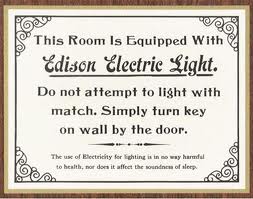
But of course technology’s only one element. what about the idea that this generation is “entitled” in the sense that they get to “find themselves” or “focus on their art” or whatever hipster euphemism is being used to say “part-time employed”?

EVAN: Do I think that people feel they deserve the right to do more than just hit the ground running after college, get right down to the ol’ nine-to-five? I mean, yeah.

But I think this brings up a point I made yesterday about the “where” of our question. In France the age of retirement is 62 and that’s just expected. There are different standards depending on where you live in the world.

GORDON: This is true. I mean, each and every one of us would be considered spoiled brats if we jumped back a hundred years or so.

EVAN: Oh, no doubt. Especially you with your freakishly smooth hands.

GORDON: So would YOU say that the whole “entitlement” criticism stands?

And I use gloves. I refuse to be put down because I take better care of myself.

EVAN: You say that every time, but they’re still as smooth as a baby’s bottom.

GORDON: That means they’re working, and I’ll further have you know that I have a big ol’ scar in my right hand in the shape of a number “7.” But back to the issue-

It doesn’t seem like the “entitlement” bit sticks. Could we be classified as “lazy,” perhaps? The warped and stunted half-humans resulting from government dependence and the welfare state?

EVAN: Well, we discussed “laziness” last night specifically in the context of wanting to change what is clearly a broken system, but is what we’re talking about a general laziness? People just expecting to be spoon-fed?

GORDON: That’s the question. I recall a Cracked.com article in which the author kicked things off by apologizing for helping perpetuate the myth that a college education was a guarantee for a good job. Are we “lazy” in having had the expectation- as most of us had?

EVAN: Well, depending on who you ask, college is hard. In a way, I guess we expect that the hard work we put into maintaining a good GPA, et cetera, will result in finding employment once we’re out in the real world. Which, as I can attest to, is clearly not the case.

GORDON: So is that laziness then? Entitlement mentality?

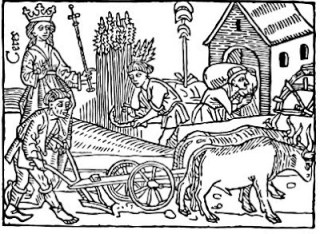
EVAN: I don’t think that doing hard work and expecting a reward is laziness. That’s like someone working the fields and then being called a layabout because he expected crops to grow. A shaky comparison, I realize.
GORDON: Works for me. And I agree.

Now you yourself have accused us all of being creatively bankrupt. Could that be our major flaw? That we don’t make- we remix?

EVAN: I guess it depends on how we’re working this whole “greatest flaw of our generation” angle. The trend to rehash, remix, et cetera came about recently, but I’m not sure it’s because of us. Or is the question in regards to this day and age we’re in, and not those growing up in it?

GORDON: No, I mean us as an age-group, and that does pretty much answer the question right there. We are, for the most part, not the ones who are making the films and TV shows and music (give or take) of our time- that’s those who came before us.

EVAN: Exactly. Which is why we’re getting stuff like He-Man and Thundercats reboots, because those who were kids in the 80’s have a crippling nostalgia. Music is different, of course, but TV and movies are definitely controlled by the generation before us.

Okay, how about this. Maybe the flaw is our hellish appetite to be entertained.

GORDON: Ooh- interesting take. Expound, by all means.

EVAN: I mean, you’ve talked about the bilge that’s on television countless times. Do you know what we’ve been reduced to? A musical chairs gameshow called “Oh Sit!”

Are we so bored that we’ll watch people play “extreme musical chairs” for an hour?

GORDON: I had no idea that existed. But surely this isn’t the first time in history that TV’s been crap. Or radio, or books, or music, or anything. Think of the “Penny Dreadfuls” back in the Victorian era- little, cheap trashy pulp-fiction novels made for mass consumption. Is that any worse than what we have today? Seems like the bilge is the same- it’s just the media that’ve changed.
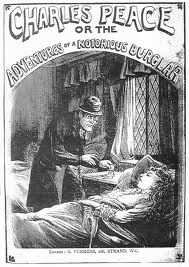
EVAN: It may be the same, but it’s being produced at a frantic pace. That change, at least, has to be important.

GORDON: That speaks less to our appetites and more to our efficiency.

EVAN: I’d say that it has just as much to do with our appetites, judging by the content of what’s put out.

GORDON: We’re almost out of time, so let’s hit up some other key issues:

Apathy. As we said before, apathy tends to be the go-to criticism, at least, one of the major ones when it comes to our generation, and I think this is one of the easiest to put to rest. The Occupy Movement, environmentalism, increasing number of social movements, increasing global awareness- you name it. We’re strides ahead of the past couple generations. Heck, I’d go so far as to say we’re the most involved generation since the 60s and early 70s.

Well we’re out of time, and still of plenty of ground to cover- so rather than sloppily close up, we’ll be continuing our discussion next week with a question about hipster morality: “Do we want to be good, or do we just want to look good?” If you have any suggestions or recommendations for topics, don’t hesitate to shoot us a comment.

EVAN: Thanks for reading, and remember that CWR now updates every single weekday. I’ll see you tomorrow in our first ever “Fame Day” post!

Evan and Gordon Talk: Facebook and Privacy

EVAN: So in spite of the fact that I voted for my topic of preference on last week’s poll, Facebook and privacy and whatnot won. Having bitterly admitted that, Gordon?

GORDON: While the topic of Facebook (or all social networking) and privacy certainly isn’t a new debate, it’s not one that’s lost its relevance either.

As we rely on the internet more and more as our primary means of communication and entertainment, how do we address the issue of having every little element of our lives dissected and sold to the highest bidder?-

EVAN: I mean, really, everyone has been the target more or less of having their information used by Facebook. Log on and check out those sidebar ads; every one has been tailored using the cookies of sites you’ve visited. Which is why mine are always StarCraft related, etc.

GORDON: First thing we gotta ask is- “Is this really a problem? Aint it better to have ads that are actually relevant to you, rather than yet another ****ing insurance commercial courtesy of Geico?”

EVAN: Ugh, Geico. How many ad campaigns can a single company have?

EVAN: Moving disgustedly along, that’s a very relevant point. I’m interested in video games, so to have sidebar ads about such things is not something I can really complain about.

GORDON: I’ve got a pretty aggressive adblock, so I’m fortunate enough not to have to deal with that; but the underlying assumption with that kind of thought is that ads are inevitable. That you can’t get away from ’em, so you might as well try to get ones you like…

EVAN: Which is why, as you well know, I only thumbs up a select number of ad types on Hulu. Food, alcohol, video games, and certain movies.

GORDON: But with Hulu- you are the person in control. I mean, think of it this way: would you tolerate a guy going through your garbage so he can send you junk mail tailored to you?

EVAN: I’ve gotta think about that for a second . . . I mean, not getting junk mail about window/door services would be nice.

The whole “going through your garbage” thing definitely carries some different associations then simply tracking cookies. Maybe it’d be more like- a TV guy who follows you around when you shop, noting what you are and aren’t interested in.

GORDON: But that’s also flawed- in that scenario, you’re actually looking for stuff to buy….

EVAN: Well, you window shop, I mean- browsing, etc. Looking at what you look at, that sort of thing.

GORDON: So I’ve got this obnoxious guy following me wherever I go, listening in on my every word, and trying to sell me his wares without rest. Isn’t that one of the ironic punishments in Dante’s Inferno?

EVAN: Bringing this back to Facebook and whatnot, do we in general have a problem with the ads? I mean, they’re not the most obtrusive to begin with.

GORDON: Well, ads are only one example. What about your location?

EVAN: People want that stuff, though. It’s part of this new generation, tweeting where you are, statuses that read “I just had lunch with ______ at ______.”

GORDON: I’m not talking about when you state your location, I’m talking about when your location is pinpointed and used regardless of your awareness. Sexy Singles in Houghton being a prime example.

EVAN: Heh.

For context, Houghton is where we both attended college. It is so small it is not considered a town. It is a hamlet.

GORDON: The majority of the population- vast majority- is made up of the student body.

EVAN: Vast majority.

GORDON: Meaning that the town decreases by about 80% each summer.

EVAN: But those ads are all the same- they’re just slapping a different town [or hamlet] name onto whatever’s being advertised.

GORDON: But are you really okay with that? That not only your interests are out there, but your location as well? Regardless of your consent?

EVAN: As far as I can tell, it’s more eerie than anything else. And it goes from creepy to laughable when something like “Sexy Singles in Houghton” comes up.

GORDON: Now, as you are in Canada, this might not sound as relevant to your situation- but what about the gummint’ commin’ t’get’ ya?

I mean, there have been issues here in the States,  huge issues, with companies turning over personal information- including conversations- to law enforcement and security agencies without much (if any) process.

EVAN: Heh. “Gummint.” But yeah, that stuff has definitely happened. And seriously, what Facebook does with our personal information is very important.

GORDON: I guess it’s more or less the same for me- though I was a bit older, and having grown up in Syria (where they eventually blocked Facebook)- I never put anything on there I didn’t assume everyone could and would read.

Still do. Or don’t, rather.

EVAN: It’s interesting in that privacy settings are so much more advanced now though, in a way. If you don’t want people looking at even your profile pictures you can do that. Meaning that potential employers can’t use it as a legitimate check on future employees anymore.

GORDON: Now that  is messed up. We can all agree on that.

EVAN: Hm?

GORDON: Employers attempting to maintain control over their workers by monitoring their FB profiles, citing “character” as a reason or justification.

EVAN: Ah, that’s what you were getting at. So to some extent we’re in control of an aspect of our privacy on Facebook.

GORDON: No question. But speaking in a more general sense, what does that do to us as a people? As a society?

EVAN: Well, I for one am incensed when I want to look at a pretty girl’s profile pictures, and even though she clearly has them, I’m told that “there are no pictures in this album.” Bold-faced lies.

GORDON: You’re a pervert.

EVAN: My point stands.

GORDON: So we’re more dishonest with each other? We’re still ironing out the wrinkles in our old-world/cyber-world blend?

EVAN: Are we more dishonest with each other? I mean, if we’re really deconstructing this, the internet has made us more dishonest than we’ve ever been ever.

GORDON: Explain.

EVAN: Nothing we put online is necessarily true. Dating website profiles back me up on this.

GORDON: This is true. Are we then actually more skeptical and guarded despite the critics’ claims?

EVAN: Which are-

GORDON: The general spiel- the internet (social networking especially) is playing on our trust and making us more and more exposed for those who would make money off of us.

EVAN: Ah. Vulnerable, etc. I gotcha.

I’d say people in general are still naive enough to fall for obviously stupid ads [if they didn’t work they wouldn’t still be around]. But we are more skeptical as a generation, so really both are true.

GORDON: Fair enough.

EVAN: And we are exactly out of time.

GORDON: Remember to stop by next week for our discussion on the upcoming season of Community.

EVAN: Yes. It’s gonna be good. And I already know you’re going to end this with that Troy/Abed gif.

GORDON: I am indeed.