GORDON: Today, we’re going to be touching on a nerve that’s still pretty raw in the US, even after a century and a half.
Specifically, we’re going to be talking about the ol’ stars and bars- the flag of the former Confederate States of America.
EVAN: I’d like to remind everyone reading this that I am a Canadian. The most experience I have with the Confederate flag is in seeing it on the top of the General Lee from the remake of, and not the original, Dukes of Hazard.
As an Asian-Canadian who spends far more time on comic book news sites than actual news sites, this week has been all sorts of crazy. There’s been . . . a lot to take in.
Mighty Avengers
To begin with, next month heralds the first issue of Mighty Avengers. Take out the “gh” and add “nori” and you more or less have an understanding of what the book is all about.
I refuse to show any of the interior artwork, so this variant is all you’re going to get.
The fact that we have far too many titles featuring the word “Avengers” aside, this is a huge deal in that, of the nine heroes in the team, the majority are people of colour. Luke Cage, Falcon, Blue Marvel, and Monica Rambeau are African-American, White Tiger [Ava Alaya] is Hispanic, and Power Man [Victor Alvarez] is a mix of both. Rounding out the team are Spider-Man, She-Hulk, and a new Ronin whose identity is yet to be revealed.
With the very talented Al Ewing on writing, the only thing that would make this book perfect were if Ron Wimberly, who illustrated the variant cover on the left, were the actual artist on the book. Unfortunately, that job was given to Greg Land. I do not have anything civil to say about him. Just click the link. Continue reading →
As this Sunday draws to a close, I’m bracing myself for the inevitable chorus of “So… what did you do over the weekend?” I’ll be encountering at work. I’ll be giving the same answer I always give:
“Nothing.”
Well, that’s not entirely true. I slept in, did a little reading, cleaned up my house, shopped for groceries, and surfed the web a bit. Barring the occasional oil change on my car, that’s pretty much all I do.
And for some reason, people take issue with that. I really and truly can’t count the number of times I’ve been called “old.” “You’re the oldest 22 year old I know.” “Your idea of fun… it’s like a 50 year old’s.” “You’re like an old man.”
It’s time to get familiar with the Black Panther character.
This prompted the usual onslaught of internet speculation, and both have since been taken down. The next day he wrote a tweet to quell the masses who were clamouring to hear more about an upcoming Black Panther film.
Thx to the fans for bringing #blackpanther to my attention, NOT in talks about this project with .@Marvel
A few weeks ago I stumbled onto a website called The Microaggressions Project and then promptly forgot about it. Returning to it tonight I looked over the “About” page, which had the following paragraph at the top:
This project is a response to “it’s not a big deal” – “it” is a big deal. ”It” is in the everyday. ”It” is shoved in your face when you are least expecting it. ”It” happens when you expect it the most. ”It” is a reminder of your difference. ”It” enforces difference. ”It” can be painful. ”It” can be laughed off. ”It” can slide unnoticed by either the speaker, listener or both. ”It” can silence people. ”It” reminds us of the ways in which we and people like us continue to be excluded and oppressed. ”It” matters because these relate to a bigger “it”: a society where social difference has systematic consequences for the “others.”
A little later on they define what “microaggressions” are, a term that was originally coined to speak about racial experiences. From the essay “Racial microaggressions in everyday life: implications for clinical practice,” which appeared in American Psychologist, Vol. 62, No.4:
“Racial microaggressions are brief and commonplace daily verbal, behavioral, or environmental indignities, whether intentional or unintentional, that communicate hostile, derogatory, or negative racial slights and insults toward people of color.”
One example of this could be a White couple walking down the street and having a Black man pass by them on the sidewalk. The woman clutches her purse tighter against her body, the subconscious idea being, of course, that Black men are prone to crime and should not be trusted.
As an Asian-Canadian I’ve experienced microaggressions plenty of times. I’ve had someone ask me if I was half-White [I am clearly not] with their rationale being that my “English was very good.” It can be an everyday occurrence for non-White people [I deign to use the word minorities, since I do believe that balance is turning the other way], and begs the question: “Why is this such a big deal?”
Writer of the aforementioned article and author of Microaggressions in Everyday Life: Race, Gender, and Sexual Orientation, Derald Wing Sue, PhD, has observed that microaggressions have actually been found to: “(a) assail the mental health of recipients, (b) create a hostile and invalidating work or campus climate, (c) perpetuate stereotype threat, (d) create physical health problems, (e) saturate the broader society with cues that signal devaluation of social group identities, (f) lower work productivity and problem solving abilities, and (g) be partially responsible for creating inequities in education, employment and health care.”
In other words, a Black or Latino man being stopped for a “random vehicle check” by police could be upset, and may even be accused of overreacting. Maybe they should simply be used to this and not let it bother them. The truth is that it makes them feel, even if only subconsciously, like second-class citizens. It’s true in a case as blatant as this one, and in an as subtle an action as hanging a Confederate flag or having a Native American stereotype as a high school mascot.
Microaggressions work in every direction. It’s like going to a Vietnamese restaurant and being given a fork and spoon instead of chopsticks because you’re White and not Asian. Microaggressions are built on assumptions and can make people painfully aware of who they are. They are rarely meant to offend, but often do.
It truly is a shame that so much of the time we send out microaggressions without so much as a second thought, and then defend ourselves by deeming the offended to be “too sensitive.” While we won’t always be aware of how our words or actions can harm others, we can at the very least listen to the people being hurt, and in doing so try to lessen the presence of microaggressions in our society.
GORDON: You know what they call a quarter pounder with cheese in France?
EVAN: What?
GORDON: A poor attempt at distracting our readers from the fact that we ain’t gonna be talking about drugs like we said we would.
EVAN: I have seen very few Tarantino films, and only barely recognize the references.
GORDON: You make me sad.
EVAN: I know.
That aside, what we’re going to be talking about today is Django Unchained, a movie I finished watching less than an hour ago and the subject of this Monday’s post [written by Gordon].
GORDON: So what did you think?
EVAN: Initial thoughts are: Very long. Not what I expected. Apparently in Django’s world everyone is a skinbag filled to bursting with blood.
GORDON: Speaking as someone who’s fired black-powder guns, I can actually kinda see something like that happening.
EVAN: That is ridiculous, but interesting to know.
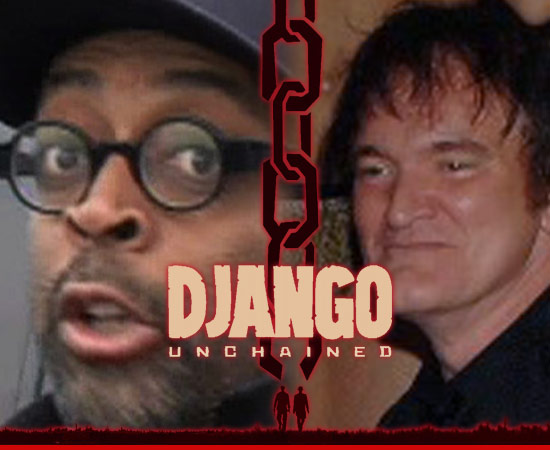
Now if you don’t have anything in particular you wanted to talk about, did you want to maybe address Spike Lee’s reaction to this film really quick?
GORDON: The Lee-Tarantino feud has been going on for a long time now, so I really wasn’t surprised that Lee reacted the way he did. I naturally wish he had at least seen the movie, but I don’t think it would’ve made a difference in his mind.
EVAN: To give readers a little context, director Spike Lee tweeted:
GORDON: I get where he’s coming from, but (1) I don’t think the movie dishonors the slaves and (2) I don’t think that there should be any time period off-limits for telling stories.
EVAN: I definitely agree with both points. Tarantino does not disrespect the plight of slaves during the time period, and there are really no eras of history that we shouldn’t be allowed to explore through various media. How it’s done is what matters.
GORDON: It’s Tarantino; you either love him or you hate him. He does a spastic, scatterbrained style of movie which is two parts tense dialogue and three parts references to obscure exploitation flicks. It is what it is.
EVAN: So did you like it?
GORDON: I did, but not as much as his other movies. And not for the subject matter, simply for the storytelling. I felt it was anticlimatic. Especially compared to his second latest, Inglourious Basterds.
EVAN: Very much agreed. You expect [SPOILER ALERT YOU’VE BEEN WARNED] Monsieur Candy to be killed by Django, or at least in a big way, but instead he’s just shot by Dr. Schultz with his sleeve-Deringer.
GORDON: And there’s still plenty left in the film, we just kinda trudge through it. I simply wasn’t impressed. I mean- I ain’t asking for a John Wu fightscene, but something more than [SERIOUSLY YOU GUYS, SPOILERS] Django shooting unarmed people from the top of the plantation stairs.
But as far as the whole thing goes, relatively amusing and a major stepping stone in addressing the subject of slavery.
EVAN: I mean, sort of going back to where Lee was coming from, it’s not a very realistic depiction by any means, a revenge story of this fashion can’t be. That being said, isn’t it the same sort of concept as Inglourious Basterds? Revenge enacted by the persecuted?
GORDON: That’s exactly what it is. A revenge fantasy. Bad guys being killed by the people who they oppressed. It gives us a feeling of divine judgment upon the wicked. Which is a theme a lot of westerns have.
REVENGE.
EVAN: I have seen at least one, and you are not wrong.
GORDON: I think what Lee needs to get is this:
This was not a movie about slavery, this was a movie about revenge set in the world of slavery. This wasn’t- and shouldn’t be- taken as a commentary of any kind about African-Americans anymore than Kill Bill should be taken as a commentary on women.
You wanna pick a fight with Tarantino, do it over something that’s actually there. (And just so everyone knows, I really like Spike Lee’s work and admire the guy as an individual)
EVAN: So you’re saying that slavery must be viewed as a backdrop, and not the subject matter? I know that you wrote your Monday post on this, but we can go over it just a little.
GORDON: That’s exactly it. It’s not a history film, it’s a Tarantino film. Don’t look for realism there, and don’t look for buoyancy in a nightstand; it’s not what either of them are for.
EVAN: I agree with you to a point, in that the exploration of slavery was in no means Tarantino’s intent. It’s just difficult to look past that as subject matter when it permeates the film [what with it opening up on a slave’s scarred back, etc].
GORDON: That is true, and you can question whether or not it’s right for Tarantino to use the subject matter to shock and horrify people and draw in crowds, but from what I saw and understood of the film the scenes of horror inflicted upon the slaves were, what’s the word for this, “respectful?” enough to indicate that even blood-and-guts Quentin wasn’t unaware of what he was dealing with.
EVAN: I can accept that. Two more thoughts as we wrap up this talk: the soundtrack and Samuel L. Jackson as a real life Uncle Ruckus.
GORDON: The soundtrack sucked. We can all agree on this. Usually he can make it work- this time he didn’t.
EVAN: My cousin and I actually really liked it.
GORDON: Really? I couldn’t disagree more. I felt it lacked cohesion, which the soundtracks in his other works normally have. Heck, more often than not it’s the commonalities in the soundtracks trying the whole thing together.
EVAN: I felt like the more contemporary hip-hop rap tracks were a little bit jarring, but thought the other songs overall were good picks.
GORDON: We’ll have to agree to disagree on that one. Let’s move on.
EVAN: Samuel L. Jackson’s character.
If you don’t know who that is on the right you need to start watching The Boondocks right now. Finish this post first, then immediately go find an episode online or something.
GORDON: I thought he knocked it out of the park. Didn’t have any problem with him whatsoever.
EVAN: 1) Did not know Samuel L. Jackson could play such a convincing old man. 2) Sycophants in films are normally played up for comedic value, and that is no less the case here.
GORDON: Let’s not forget that Jackson was not only an active member of the civil rights movement, but even associated with some of its more radical leaders.
EVAN: That is something that I, and presumably our readers, did not know.
To end this off, did you have a favourite moment in the film? [I SHOULDN’T HAVE TO WARN ABOUT SPOILERS, BUT I AM ANYWAY]
GORDON: For me, it would have to be the scene where Christoph Waltz (who really stole the show) was explaining bounty-hunting the Django in the bar. The dude is awesome to watch.
EVAN: Christoph Waltz’s accent was amazing. I could listen to him talk all day.
My personal favourite was the posse getting ready to go kill Django and Schultz and arguing about the masks. The dialogue was hilarious, and Jonah Hill was a nice surprise, too.
GORDON: That was awesome. And speaking of awesome stuff, our discussion topic for next week:
EVAN: Ah man, I kind of just want to talk about movies. Could we somehow generally address the trend towards big budget sci-fi flicks that’s coming about in Hollywood?
GORDON: No. No more movies. We do ’em too much already.
EVAN: Fine, fine. Suggestions?
GORDON: College: what should its purpose be? Careers or Well-Rounded Individuals?
EVAN: Or just in general, I’m not sure it has to go one of two ways. But that’s a good one. I’m on board.
Thanks everyone for reading, and for continuing to unwittingly stumble upon our blog in 2013! Evan and Gordon out.


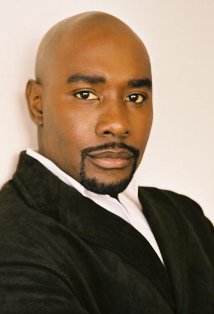 Four days ago actor Morris Chestnut, who will appear in the upcoming Kick-Ass 2, posted the following


 Culture War Reporters