Tag Archives: Canada

Quebec Pt. IV: 3 Indespensible (and Free) Tools for Translation

I cannot take personal responsibility for finding a single one of the amazing resources I’m going to include below. Instead, I have to give all the credit to the friends I’ve made here in Trois-Pistoles. If any of you happen to read this, thanks for being so rad.

Word Reference

Alright, I have to admit I still use Google Translate now and then, but there is a good reason teachers always tell you to stay away from it. It’s doing translation, and that is all. Unfortunately, literal translation can go very wrong. Like the time I planned a trip to France and told my hosts I could be “catching a coach” from the UK. Turns out instead of using the word for the vehicle, I used the French word for a sports-team coach. Awkward.
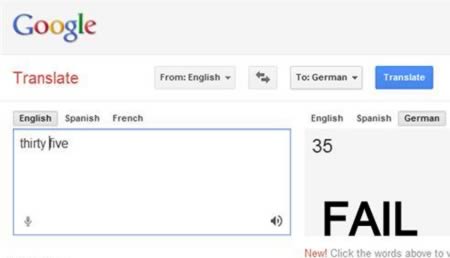
googletranslatefail

Also, Google Translate can be a little lazy sometimes.

So, when you find yourself searching for the right word, turn to WordReference instead. It’s not going to pretend to do all the work for you, like Google Translate, but it also isn’t going to pepper your translation with hilarious nonsensical phrases.

WodReference has “two of its own dictionaries plus those of Collins” and the French dictionary alone has “over 250,000 translations”. You can also find a verb conjugator and a forum for each language. Generally speaking you can find every possible definition of a given word, along with any idioms associated with it. If you do have trouble finding a word or phrase, however, you can often find an answer in the language forum. Continue reading

Why Palestine Can’t Use Nonviolence

I’m sticking with this topic because I was asked, somewhat indirectly, to cover the tactics Hamas has been using. I don’t think I can do that without sounding like an apologist for Hamas- which I’m not a fan of, in spite of my constant proclamations of solidarity with the struggle of Gaza. Still, I wanted to deliver on some level, and the more I thought about it, the more I found myself returning to a quote of JFK’s- that “those who make peaceful protest impossible make violent protest inevitable.”

Whenever any conflict flares up enough in Palestine for the West to take notice, we’re inevitably going to encounter the idea that the Palestinians are to be blamed for not using “peaceful protest”. Such comments usually come from folks who can’t deny the plight of Palestinians but who can’t yet bring themselves to actually take a stand for them- but we’ll get to that in a minute.

At times like these, we tend to cite our own “peaceful protests”, conveniently only talking about the white-washed portions of it. We’ll talk about MLK Jr. all day long, and forget that even such “nonviolent” civil rights luminaries as Fannie Lou Hamer kept herself armed to the teeth. Heck, Hamer herself declared “I keep a shotgun in every corner of my bedroom and the first cracker even look like he wants to throw some dynamite on my porch won’t write his mama again.”

Yes indeed. And only one of many such examples within the “non-violent” movements of the 50s and 60s.

Continue reading

Quebec Pt. III: 4 Things You Inadvertently Learn in French Immersion

1) There are muscles in your mouth you’ve never used before

I’ve never thought much about language, at least not beyond trying to figure out what to say next. Even then I don’t really think things through. If you never had much of an interest in linguistics (like myself) it can come as a surprise when you start to learn about the basics of how spoken language works.

Here at Trois Pistole one of the French Teachers is a linguist and, incidentally, an anglophone. This gives him a lot of insight. As an English Speaker he has first-hand experience with the kind of mistakes we are likely to make while learning French. Then, as a linguist, he has a good idea of why exactly we make those mistakes. Luckily for us, he also hosts a phonetics clinic once a week to teach us the little details of pronunciation. Last week he focused on how French vowels work. The image I’ve included below is meant to represent where French vowel sounds come from in our mouths.

The French “i”, which sounds like an English “e”, is formed at the front of the mouth when the jaw closed (antérieure, fermée). In contract, the French “ɑ” comes from the back of the mouth and requires a wide open jaw (postérieure, ouverte).

Continue reading

BC Girl in a Québécois World

Guess where I am right now?

That’s right, Quebec! (Sorry, you don’t get a prize because I already gave you the answer in the title of the post).

Look how far away I am from home!!

Those of you who follow the blog (or know me in person) will know that I live in British Columbia. Anyone who saw my excited Facebook announcement will know why I am here, but for anyone who didn’t, I want to give you an outline of where I am exactly and why.

This past year John and I both applied for a program called Explore. It’s a bursary provided by the Canadian government that pays for English students to experience French immersion (and vice versa for French students). The bursary covers room and board along with the cost of the classes, the majority of extra curricular activities and textbooks. Students just need to find their own way to the school they’ve chosen. The bursary covers a wide variety of schools; some provide a credited program and some do not. John and I both applied for the language program in a small town called Trois Pistoles. Since it’s pretty easy to find pockets of English in both Montreal and Quebec City, we chose somewhere small that would (ideally) force us to use French as much as possible.

Continue reading

Culture War Correspondence: Patriotism

GORDON: Friends, Romans, countrymen, this post is being written by the rocket’s red glare. Or whatever they have in Canada- not usually a nation I associate with explosives.

EVAN: Funnily enough, it’s my turn to do the intro.

GORDON: Your intros are bad, and you should feel bad.

EVAN: I mean, you’re not wrong. [ . . . ] Is this part of the thing?

GORDON: Yes. The audience will find this little bit amusing and endearing.

EVAN: It’s actually funny that you mention my country and explosives given that it sounds like a literal war zone outside. Happy Canada Day, everyone. What better time to discuss the topic of patriotism?

GORDON: With the rapid approach of July 4th, no better time at all. Though perhaps you could enlighten our readers south of the wall as to what exactly Canada Day is…

EVAN: It’s . . . Canadian Independence Day. That’s pretty much it. An opportunity for those close to the border to catch some lovely fireworks three days early. I’ve never celebrated the 4th down south, but I can only assume they more or less work roughly the same way.

GORDON: If you mean hamburgers and standing around in a mosquito ridden park for four hours waiting for a deeply underwhelming fireworks display, then yes.

EVAN: That’s it. That’s exactly it. Continue reading

Culture War Correspondence: Being Canadian

EVAN: I was going to start off this introduction with a whole slew of Canadian stereotypes, complete with obnoxious faux-Canadian-written-accent, but let’s be honest, my inexperience with all such things is what originally made me opt for this topic in the first place.

This commercial should help fill in a few blanks, though.

It should be no secret to many of you that Kat hails from the Great White North, and while I myself was born there I’ve spent much of my life abroad. In today’s discussion our goal is to work through some of what it means to count oneself a Canuck.

KAT: This will be no easy task, since in our two corners of the country Evan and I are both closer to the States than we are to each other. Does Canada even have a distinct culture? Or are we like one massive tumour growing onto American pop culture?

Why don’t we start by spitballing some of the things we both tell people about when describing our “home and native land”? Continue reading