Tag Archives: Culture

Manly Culture

Even if you haven’t recognized it for what it is, chances are, you’ve seen elements of it. The resurgence of beards, comments on period piece clips like “Why don’t we wear hats anymore?” or “Dang- they knew how to dress back then.” Or perhaps you’ve stumbled across The Art of Manliness or are (like me) a faithful apostle of Ron Swanson.

Now whether you’re aware of it or not, there is a growing culture based around this general perspective of “manliness” that supposedly existed from 5,000 BC to 1974 AD. The resurgence in the popularity of the beard, the wave of internet memes centered around being “classy,” our love affair with period pieces- all of this compounded has created the beginnings of a whole new subculture.

Don’t believe me? Just take a look at some of our favorite TV characters.
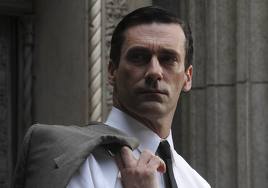
Don “F***-You, Liver!” Draper

Jack “Even Ayn Rand Thinks I’m Egotistical” Donaghy

Rick “Bad Decisions” Grimes
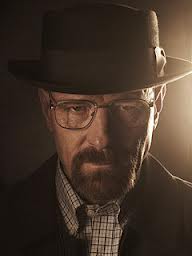
Walter “Tied with Draper for Making People Love Fedoras” White
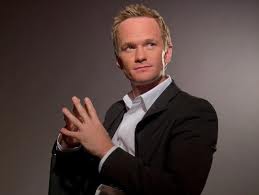
Barney “Legen- wait for it… -DARY!” Stinson
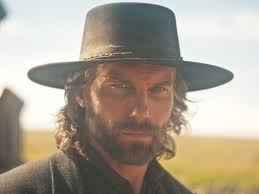
Cullen “I Will Punch You For No Particular Reason” Bohannon
Comedy, Drama, Action/Horror, Westerns- this is a pretty broad range, and we’ve got the same strong, dour antihero type in all of them. Men who remind us of our fathers and grandfathers. Tough as nails bastards who came to this country with only a dollar in their pockets- who took a break from their honest 8 to 8 jobs of hitting metal with other pieces of metal to kill Nazis and look dapper doing it.

So what’s this culture all about? As with any group, we can talk about the superfluous or cosmetic elements- in the case of the “manly” group, handshake etiquette, strait-razor whetting, and driving stick- but to really understand ’em, we’re going to need to look at the underlying values in play here.

Independence:

What do all the men shown above have in common? A degree of independence. They’re DIY guys. Men who aren’t reliant on the help or charity of others- in short, dudes who can take care of themselves in most any situation, from car repair to providing for the family to killing the undead. And on that note…

Initiative:

These are all men who don’t allow themselves to be victims. They’re proactive moment-seizing leaders who don’t wait idly by for someone to step up. Good or bad, they’re leading the way- and speaking of bad…

Stoic:

These are guys who tend to lend credence to the stereotype of the unspeaking, unfeeling male. At best, the strong, silent type- at worse, the uncommunicative lout. One way or another, they don’t let the situation get the better of them. That’d be undignified, and if there’s one thing that they’re about, it’s…

Dignity/Pride:

It’s in the way they dress, the way they speak, the way they expected to be treated. A kind of code that prohibits some things and makes others compulsory. You can’t hold your head high, then what’s the point in having one?

Moral Ambiguity:

These men are all, to varying degrees, antiheroes. Guys with their own agendas and a certain degree of moral ambiguity that keeps you on your toes. There’s a level of egotism, self-centeredness, and disregard for others that makes them pretty good at what they do, but what they do not all that good- certainly they don’t fit the traditional mold of the selfless, self-sacrificial hero.

Wealth:

And while it’s not true for all of them, money tends to be a major element of their stories. A drive to be successful, prosperous, and (again) independent. It’s the age-old dream of being your own boss.

So what does all of this boil down to?

Power.

It’s about power. These guys represent everything we, as a generation, aren’t. Independent, wealthy, self-assured, proud. Does that sound like us? Not at all. We’re the casual dressed, globally conscious masses struggling to make it by, and taking whatever miserable, degrading soulless job we can find. We’re not strong like these glamorized images of our grandparents are (having conveniently erased the racism, bigotry, and misogyny).

But we want to be.

And so begins the perpetual motion machine of life-imitating-art and art-imitating-life. Epic Meal Time, Memes, Period Pieces- the list goes on.

So is this a good thing or a bad thing?

Well, there are good and bad elements to every culture (some more bad than good, and vice versa), but let’s list out the positives and negatives.
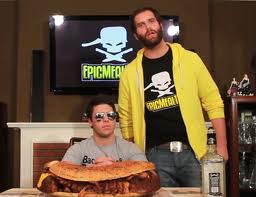
The positives have been wrapped in bacon

Positive:

  • We can stand to toughen up a bit a lot as a generation. We don’t need to be bending horseshoes with our teeth, but some basic survival skills and a thicker skin when it comes to discomfort and hardship would be nice (battery running out on your phone doesn’t count as suffering).
  • In these tough economic times, be able to do basic repairs to your house and car aren’t just good- they’re necessary. Same goes for any of the thrifty elements of the culture.
  • Even if we don’t have it quite yet, demanding a certain level of dignity in our work and our day to day lives isn’t just good for you as an individual- it improves society on the whole.
  • While we probably shouldn’t worship the fedora or declare the suit to be the only appropriate clothing for a man over the age of twelve, it certainly doesn’t hurt to know how to dress ourselves, or conduct ourselves well in any given situation.

Negatives:

  • The glorification of the past can, as I jokingly mentioned above, lead to the uglier elements of it being glossed over. We hail our grandfathers as being great men, forgetting how easy it is to make a name for yourself when none of the good or prestigious jobs can be given to equally qualified women or non-white men.
  • The culture really doesn’t leave a whole lot of room for women at all, other than the kitchen. This is not to say that all adherents of the culture see it this way, but when you’re trying to espouse 1950s society, that includes 50s traditional gender roles as well.
  • It can’t be denied that there’s a strong conservative appeal in this culture, as well as hints of Ayn Rand’s Objectivism. Glorifying wealth and success, especially when coupled with a “do whatever you need to do” mentality, can lead to the twisted perspective that poor people are poor because they are lazy.
  • This culture, despite the intentions of its adherents, does give a home for sexism. The uglier elements of the masculinity movement, those who view women as belonging in the home and nowhere else will doubtlessly find it a lot easier to fly under the radar in a culture that’s utterly dominated by males.

So what’s the final verdict?


“Manly” culture doesn’t appear to be either helpful or harmful- at least, not yet. The underlying issue being power, it’s going to be faced with the task of walking the thin line between empowerment and megalomania. So long as self-control is kept in mind, they oughta be fine.

Be sure to look for next week’s installment: “Science” Culture.

Evan and Gordon Talk: Zombies

GORDON: Brrrrrrrrrrrrrrrrraaaaaaaaaaaaaaaaaaaaaaaaaaaaaaaiiiiiiiiiiiiinnsss. I mean: Welcome to this week’s installment of Gordon and Evan Talk. Our subject for today: Zombies, have we had enough already?

EVAN: Answer: yes.

GORDON: Have we though? The media keeps on pumping out zombie show/game/story/you-name-it, and we keep gobbling them down like, well, zombies.

Continue reading

Culture, Not Criteria

Earlier today Evan sent me a link to a documentary on YouTube dealing with the subject of “hacktivists,” or more specifically, the rise of internet mischief and mayhem group “Anonymous.” For the most part, the movie was decent enough, though of course it wasn’t without its own agenda and a there are a few misconceptions resulting from that. But this post isn’t going to be a review. Rather, it’s going to launch off from an interesting phenomena I saw throughout the documentary- and that was the way people talked about Anonymous.

See, whenever people talk about the group, they usually have to veer off into a parenthetical speech where they try to explain just exactly who these guys are, and how at the same time they can be anybody, because anybody can be “Anonymous.” The end result is that they wind up sounding like a paranoid schizophrenic or conspiracy theorist, and the explanation itself doesn’t sound all that believable. After all, how can any individual or group take on the mantle and conduct whatever hacking or pranking or ranting they do against their enemies without some leadership? How do they do anything if they have no demands or agenda?

The problem here (and elsewhere, but we’ll get to that in a minute) is that a completely wrong lens is being used to look at the group. People are looking for structure or goals- the two things that usually define any collection of people, and that’s where it falls apart. Anonymous isn’t a group, it’s an idea. It’s a culture.

Now that sounds strange, but bear with me here.

What’s a conservative?

You probably have an image in your head right now. You can probably tell me what a conservative would think about a certain issue, or how he or she would act in a certain scenario, or the general value system one might have, but if I really pushed you for criteria, my guess is that you wouldn’t be able to give me one. After all- there are varying ideas of “conservatism,” and no real defined boundaries. You’ll find conservatives who state that the “religious extremists” have a skewed view of conservative values, and those same extremists offer the exact same criticism of those wimpy fiscal conservatives. Regardless of the specifics, once you stand back, both groups do fit neatly into the category of “conservative.”

Now apply the same general lens to Anonymous.

What’s “Anonymous”? It’s not a group with an ideology- it’s an ideology with a group, or rather, a whole bunch of groups. Consensus isn’t made through secretive discussion boards or by a clandestine collective of angry computer-geeks. Consensus isn’t made at all- actions simply stem from a general set of perspectives and ideas (the most major of which is freedom of speech and opposition to censorship) held by the adherents. Anonymous doesn’t exist as a coherent, structured group anymore than any culture or subculture exists as a coherent, structured group. Sure you’ve got your major players, and you’ve got various projects or movements within, but at the end of the day, there’s no list of demands, just a set of values.

The reason I bring this up is that this kind of organic organization is becoming more and more prevalent in our culture, the most notable example perhaps being the “Occupy Movement.” Critics of the movement, in its early days, continually parroted the protest of “But what do they want?“- the issue with that being that there was no, and never could be, any list of demands. Occupy wasn’t a structured or unified group- it was, like Anonymous is, a culture. A massive number of people sharing (and developing) certain common perspectives and values and then taking actions based on those views (those actions further developing those views, and so on ad infinitum). Trying to get demands out of Occupy protestors would’ve been about as fruitful as trying to get demands out of conservatives. You’re going to get conflicting specifics, even if there is a general set of guiding principles.

And of course, there are others out there. Though there’s no real term or name for it yet, there’s a rising “Manly” culture, comprised of elements of survivalists, masculinists, and guys who debate each other on-line about how to build porches and properly maintain classic muscle cars. Now I can’t claim to know the origin of this- perhaps it’s partly a reaction against our increasing dependence on technology, perhaps it stems from our powerlessness in a time of political and economic hardship- but either way, it is a growing culture based in principals of independence, self-sufficiency, self-control.

On the other side of the spectrum, there’s the general philosophies and ideas of the trans-humanists, futurists, utopians, geeks, nerds, and people who worship the ground Bill Nye and Neil DeGrasse Tyson walk on. Those who view technology as being the solution to most, if not all, human ills, and eagerly await the day when you can get a free jet-pack when you go in for your cancer vaccine.

Now why bring any of this up?

Because it’s important.

We’re currently breaking away from the liberal/conservative paradigm, and we’re going to need to understand what else is out there. This isn’t to say that we’ve only had conservative and liberal cultures- that simply isn’t true. But we can’t deny that there has been, over the past decade, developments of new value-systems which are really neither here nor there. New and alternative views for what the world ought to be, and how you ought to be in it. Over the course of the next few weeks, I’ll be focusing on dissecting these various concepts, so be sure to stop by next Monday for my examination of “Manly” culture.

The Good, the Bad, and the Racist

Over the past weeks, there’s been some talk here in Vegas about changing the name of our airport from McCarran to something- anything– else. Named after Nevada senator Pat McCarran (1876-1954), the group pushing for the change were of the opinion that it wasn’t quite right having one of the busiest airports in the world named after a viciously racist Fascist-sympathizing McCarthyite. Last night, I caught a bit of a local talk-show as I was channel surfing, and heard the subject get brought up. Steve Sebelius, a major journalist in Vegas, was commenting on the name-change movement’s loss of momentum, pointing out that despite McCarran’s psychotic antisemitism and racial bigotry, he was the principal defender of gambling in Nevada, and that without him “None of us would be sitting here”. The show wrapped up after that closing comment, and whether or not the they addressed the whole issue of what comprises one’s legacy I can’t tell you. Frankly, I would like to see the airport’s name changed- and not just the airport, but every street, boulevard, and building named after a bigot. But as the journalist rightly pointed out, the world doesn’t quite work in white and black.

Pictured: Pat McCarran, who objects to me using the words “white” and “black” so close to each other…

As much as we’d like to imagine (at our history book’s insistence) that America was created by heroic men who only drank distilled freedom and wiped the sweat from their brows with patriotic American flags autographed by Jesus, this nation was built on the backs of slaves and the bones of Native Americans. The same man who authored the Declaration of Independence owned his sister-in-law, and despite his assertion that it was self-evident that all men are created equal, hated and feared German immigrants with a passion that the Minutemen Project would feel is “a bit much”. Jackson- the hero of Federalism, the slaughter of Native Americans. FDR, the creator of the New Deal, the guy who forced over a hundred thousand Japanese Americans out of their homes and into prison camps. Between genocide, exploitation, segregation, and a host of other forgotten sins, there’s not much in US history or culture that doesn’t carry with it a stain of injustice or inequity.

Our food included…

But how, then, do we deal with this? If we rename racist streets or airports, why stop there? Why not get rid of the sexists’ names? Or those who were just plain greedy or arrogant or inept? It seems if we go down that road, we’ll wind up leaving everything blank as we dig through history in search of the perfect human being. On the other hand, we can’t exactly drive down Hitler avenue and assert that his anti-smoking campaign is just as much a part of his legacy as the concentration camps and Kristalnacht. So how do we measure a figure’s good acts against his bad ones? I’d personally like to see Jefferson Street renamed Malcolm X Street, yet I have to simultaneously deal with the fact that X held many racist views himself until his conversion and change of heart later in life. Again, how do we discern between the good guys and the bad guys? No one’s perfect, but not everyone uses child soldiers either. Simply, people are complicated.

Case and point…

And because I don’t want to leave you hanging with another “Make of it what you will” post (as I did in my report on Extreme Midget Wrestling– check it out), I’m going to fly in the face of caution and offer this criteria for naming your airports and roads:

I. Is he or she a good guy?

That’s it. If you can’t answer “yes” immediately to that question, and if “mostly” doesn’t work either- move on to someone else. Simple as that. There is always going to be controversy- and we’re going to have to deal wit that. Values change, secrets are uncovered, and some heroes become villains and villains heroes- but for now. For right now- let’s go ahead and make the change. Yeah, it’s a pain in the neck, but if we do it right the second time around, hopefully we won’t need to change up the names for a another seventy years or so. And before someone writes in about it being part of our past or our heritage- let me shoot you down right now. Yes, bigotry, as ugly as it is, is a part of our history. But changing names doesn’t mean that we’re running away from it- it means we’re passing judgment on it. In the end, that’s what I want to cite as my heritage- not racism, but the condemnation thereof.

Good Show! (Or, What’s Wrong With The Simpsons)

Over the past couple days, actors Donald Faison and Zach Braff have been campaigning for Obama here in Vegas. While I’m not a fan of their political stance, I freaking love Scrubs and have been re-watching the show for what must now be about the ninety-billionth time.

It got me thinking about a discussion Evan and I had a while back, in which we concluded after some debate that Scrubs is the best show of all time.

Ok, that’s not going to mean anything to you if you haven’t actually seen Scrubs. If you haven’t, go watch it now.

Now think about it- has there been a bad episode of Scrubs? Has there ever been an even sub-par episode of Scrubs?

There really hasn’t. Not every episode is fun to watch (it’s a hospital- you can’t expect them not to deal with mortality and whatnot)- some episodes are downright depressing and tragic. Even so, there show never fails to have some substance to it and (and this is the big thing) never really diminishes in quality despite having been on air for eight seasons (nobody counts the ninth as cannon).

But more on that in a minute…

See, what makes Scrubs so consistently good isn’t that it’s funny- it is funny, but not every episode, and not every joke in the funny episodes will have you on the floor.

Though most will…

It’s that it’s consistent all the way through. The characters develop, certainly, but they never really shift dramatically or break away from who they were a season ago. JD is always JD, Turk is always Turk, and so on. The wacky, exaggerated universe of the show never strays too much into total realism or too far off into surrealism. In short, and episode seen in the last season of Scrubs is about the same (extremely high) quality that the initial episodes are.

Now I know you’re all saying, “But Gordon, you ruggedly handsome bastion of logic and truth, surely consistency isn’t all there is to it!”, and yes, it’s not just consistency that makes a show good. Comedies need to be funny, dramas need to be agonizing, and so on- nevertheless, these things are dwarfed when it comes to consistency- let me give you an example of this done wrong.

Community. I remember seeing ads for it in my first year of college and thinking “Neat- a show about college. Something I and my demographic can all relate to and get a kick out of. This looks like it’s gonna be good”.

And it was.

(Barring that they had an Indian guy playing an Arab kid because apparently all brown people are the same…)

Really good. In fact, the first season of Community is probably one of the funniest things I’ve ever seen in the couple decades I’ve been alive. But what proceeded the glorious first season was one of the fastest and ugliest burnouts in television history.

You remember how Abed was socially-challenged but ultimately human in his attempts to relate to people and make is father (also played by an Indian actor) proud? Remember how Jeff wanted to get his degree and regain control over his life? Remember how Troy was trying to deal with the loss of his status? How Annie was trying to reinvent herself?

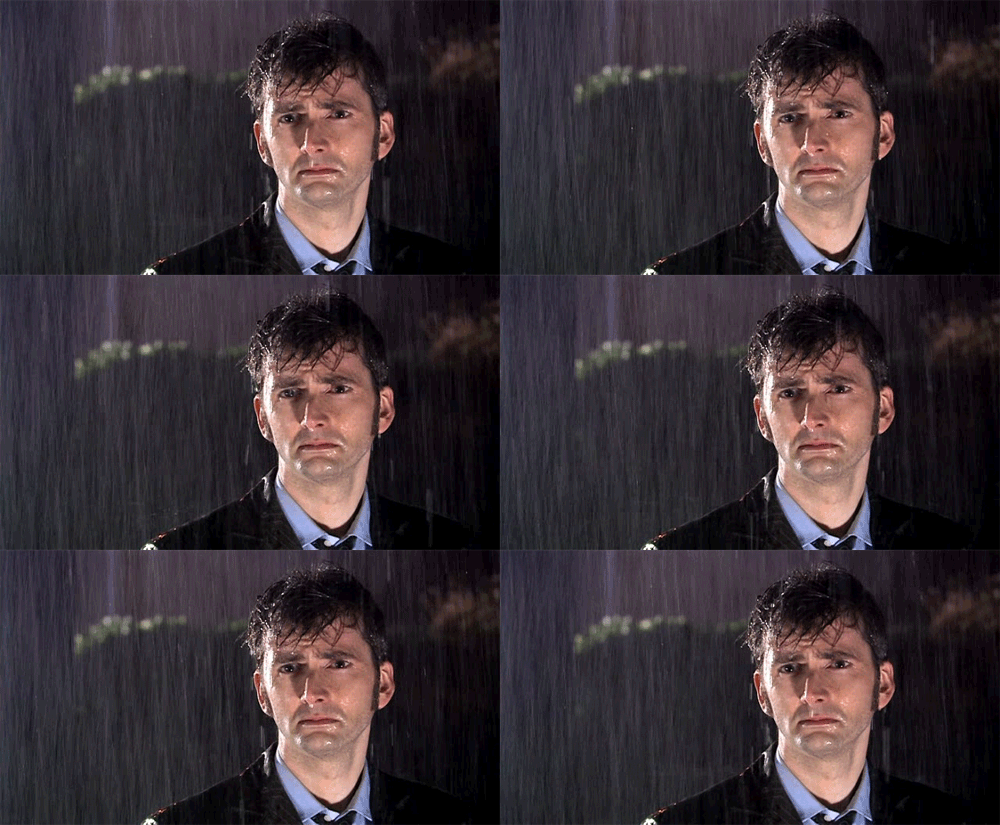
Yeah, all of that went down the toilet in the subsequent season. The motivations that gave the episodes conflict and helped progress the characters and the story as a whole were more or less dropped, and the little quirks that made the characters funny and interested got so blown up that they became the only aspect of the characters. Abed went from movie-geek to schizoid mess, Jeff became charming (and nothing else), Troy became just Abed’s buddy, and Annie was just the sweet naive straight-man (more or less) to the rest of the group. On top of becoming gross caricatures of their former selves, the show stopped dealing with college (which you might recall as being the reason so many people started watching the first place) and became centered entirely on the clownish escapades of the group. Granted, every once in a while you got good episodes, but never on the same level as the first season. Every time I sat down to watch Community the smile faded from my face and I could react in no other way but this:

“But Gordon, you roguish fountain of delight, isn’t this more a warning against being madcap than straying from the characters and story?”

I’d have to concede that, if it weren’t for such shows as South Park and American Dad. Both of these shows have been from their inception pretty surreal, nonsensical, and all-around crazy. Yet both shows have maintained that same level of craziness and remain (more or less) as popular now as when they started.

I admit, these shows are not for everyone…

Again, an excellent example of how shows drifting away from their original material kills them would perhaps the most iconic animated show of all time: The Simpsons.

My old roommate never saw the early Simpsons, and is to this day convinced that the show is side-splitting in its hilarity. And he’s probably right- I stopped watching the Simpsons after my first year of college- I got tired of having my heart broken.

Perhaps it’s best encapsulated in this quote by Lisa Simpson back in Season 2:

I heard you last night, Bart. You prayed for this. Now your prayers have been answered. I’m no theologian. I don’t know who or what God is exactly. All I know is he’s a force more powerful than Mom and Dad put together and you owe him big.

Would you ever hear that from Lisa in one of the later seasons? You would not. Why? Because Lisa has moved from being a brilliantly smart little girl to a pointy-haired midget channeling the whiny liberal indignation of Bill Maher.
Is there anything wrong with Lisa as she is today? Not really, no. If that’s who her character is, then that’s who her character is- only the hitch here is that’s not who Lisa started off as. Had Lisa started off as the yellow counterpart of Brian Griffin, then I wouldn’t have any problem. Had Homer started off as a food-crazed buffoon or Marge as a simple housewife, I’d probably still watch the show. Again, it’s the gradual change from one thing to another that’s responsible for people drifting away from the series. It’s not that shows go stale (not that staleness can’t be a problem- just look at the Gilligan’s Island episode where they’re almost rescued), it’s that they change too much.

And hey, with our ever-shortening attention spans and our rapidly changing culture, maybe that’s not such a bad thing.

Bad Influence

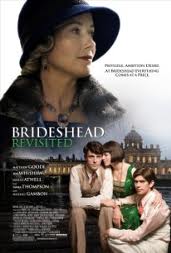
Last night, I watched Brideshead Revisited, and let me tell you, it is one festering pile of garbage.

Seriously, **** this movie…

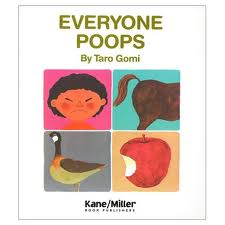
Now before anyone launches into a tirade- yes, I am aware that Brideshead was originally a novel and, from what a lot of critics have said, one that was infinitely better than the movie, the later of which reduced all of the author’s points on culture, religion, and relationships to a couple hours of pretty set design and not much else. Simple fact of the matter is Everyone Poops could have been adapted for the big screen and still have been better than this confusing mess.

Michael Bay was going to, but the book was too cerebral for him…

Look- I can’t speak to either the novel or the author. People who have read the book say it was better than the film, and while I have difficulty believing that, I’m willing to give them the benefit of the doubt. I’m not hear to address that- I’m here to address the fact that someone at some point did actually think that what they presented in the movie was somehow not only worth watching, but worth paying for.

It aint- in case you haven’t gotten that message yet…

I’m not a fan of British period-pieces; if I wanted to see eloquent people with miserable lives, I’d talk to English majors.

What we have in this movie is a group of extremely rich youngsters lounging about an elegant mansion, downing enough alcohol to make newyears in Vegas look like a Baptist ice-cream social, and whine and wail for over half an hour about how miserable their lives are. Not in any existentialist sense, mind you- these characters aren’t disillusioned with luxury, they’re just frustrated that they can’t have everything that they want when they want it the way they want it. This is essentially Walden without any redeeming qualities- just pasty, entitled brats with delusions of insight, giving trailing speeches about their long “suffering”.

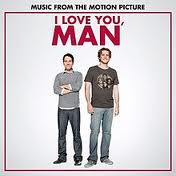
And I’m not bringing this up just because one movie sucked- this seems to be part of a greater problem in our culture. I’ve seen the same kind of problem in the film I Love You, Man.

Back in college, my housemates loved this movie. Suggested it every movie night just to see me shiver with horror and disgust. In case you’re not familiar with the plot line, let me break it down for you:

Peter’s getting married. Peter simply doesn’t have any guy friends outside of his brother (played by Andy Samberg, who was the only good part of the movie), and he one night overhears his fiancee’s vile, harpy collection of friends gossiping that it’s weird Peter’s not going to have a best man at his wedding. Peter, who apparently bases his self-esteem on the idle chatter of obnoxious strangers is filled with self-doubt and embarks on a quest to get himself a male friend- because, you know, what will his future wife’s evil friends think of him if he doesn’t?

If you’re trying to jump through the screen, grab this guy, and slap him across the face while screaming quotes from Nietzsche- don’t worry, that was my first reaction too. How we’re supposed to sympathize with this self-pitying sadsack is beyond me- the guy makes Ted from Scrubs look like Teddy Roosevelt by comparison.

I’m not trying to say that every character in a movie- or even every main character- has to be someone admirable. Just look at American Psycho. I’m not saying that these characters have to be ultimately successful. Just look at Goodfellas or The Godfather trilogy. I’m not saying that the characters have fit a classic/stereotypical form of “manliness” (in the case of male characters, anyways)- just look at Zombieland, Superbad, Napoleon Dynamite, or Scott Pilgrim vs the World.

Between movies like Brideshead Revisited, I Love You, Man, and pretty much every romance movie that ever has or ever will be made, there’s this common attitude of entitlement, self-pity, and melodrama.

Ok, you could kill yourself or- OR– spend some time working at a homeless shelter, petition on behalf of political prisoners, overthrow corrupt dictatorships since you are, y’know, immortal…
Just say’n…

Now I know you must all be saying “But Gordon, you charming devil- what’s the big deal? So what if a section of film is dominated by this lousy message of egocentricity, ignorance, and impotence?”

Let me show what the big deal is.

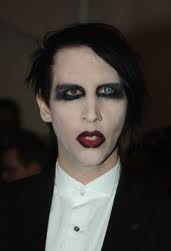
See this guy here? This is goth shock-rocker Marilyn Manson. If you’re not a fan, chances are you’ve still heard of him- in the days that followed the Columbine Shootings, Manson was argued by many conservative and religious critics as having been responsible for influencing the shooters. And obviously, that’s just a single example- whether it’s true or not, we’re all familiar with the outcry against violence in the media- be it anything from video games (see any GTA game) to music (Wu-Tang Clan aint nothin’ to fornicate with) to movies (just take your pick).

Let’s assume, just for a minute, that this is all true. I’m going to discuss the whole “does-violence-in-media-cause-more-violence?” question later in the week, but for now, let’s just say that the answer is “yes”. If these things have a serious negative effect on the views- especially young viewers- and deserve to be censored or even banned on that logic, surely the same can be said for the equally detrimental attitudes and actions (or lack thereof) found in movies like Brideshead Revisited and the like. What do these things teach us?

I was going to say “Stalking and manipulative relationships are romantic”, but I really didn’t have the stomach to slog through countless Twilight posters looking for Edward crouched in the window- enjoy this picture instead…

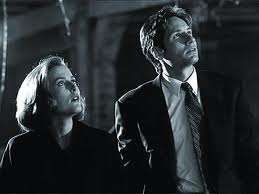
Again- the problem isn’t with romance as a concept or a plot device or anything like that. I’m not a sensitive guy in even the loosest use of the word, but despite my callousness, I really don’t have a problem with romance- it’s just that romance, as a genre, tends to produce these awful, reprehensibly selfish attitudes, and at the same time make the actual relationships pretty dumb as well. Though no one is ever going to admit it, couples like House and Cuddy or Scully and Mulder are both more believable, moving, and inspiring at their worst moments than any Romance film couple at their best.

Obligatory “Still a Better Love Story Than Twilight”…

What else can I say? Romance movies, and indeed, all media that promotes this whiny, entitled message seems to be just as harmful- if not more- than the bloodiest action flick or the most violent rap or rock. I’d be just as worried about the effects of such media on young minds as I am about the most car-stealing-liest-prostitute-beating-iest video game ever made. Allow me to leave you with this brilliant tweet from comedian Dave Chapelle to drive my point home.