As you all doubtlessly know, two days ago, a gunman entered a Sikh temple in the little town of Oak Creek, Wisconsin, killing six and injuring four more before being shot dead by police. The killer, one Wade Michael Page, was connected to a number of vicious white-supremacist groups, most notably the “Hammerskins”, a white-supremacist group that focuses on dispersing racist messages and propaganda through music- Page being the founder of one band and a member in another.
Why is this even being brought up here? As strange as it may seem, there’s an argument to be made for the Oak Creek massacre having its origins in culture. Now many of you might be thinking of the Aurora massacre, and no, this isn’t some discussion about our attitudes towards guns, violence in media, or anything of the kind. There’s certainly a good discussion to be had on that subject as well, but it’s not what I’ll be addressing here.
No, what I’m going to be talking about is this:
Fascism.

It’s coming back.
See, the idea that the culture, traditions, and history of specific people group are superior to those of all others and should be promoted and maintained through brute force didn’t die when Hitler blew his bigoted brains all over an underground bunker in Berlin, or when Communist freedom fighters gunned down Mussolini in a picturesque Italian village. It’s been dormant for a long time, but in recent years, it has again shown its ugly face.
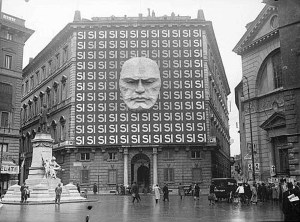
Nope- uglier than that…
While there have been plenty of racially motivated murders over the years since Nazism fell (to say nothing of countless lesser hate crimes), what we’re seeing now is a resurgence in full-fledged Fascist ideology- but before we get into that, just a side note.
For many of you, the term “Fascism” probably conjures up images of generic authoritarianism. Obama’s a Fascist. Rush Limbaugh’s a Fascist. That one really strict teacher is a Fascist.

I’ve struggled for a while to come up with a good, succinct definition for what Fascism is all really about, so I’m going to offer this illustration. To a Fascist, his people (often, race) are inherently great and good, and they are inherently great and good because of their traditions, values, and culture, which are all also inherent to them. The greatness of the nation is lost when evil, conniving undesirables start pushing their own cultures, values, and traditions, which are subversive and degenerative to the nation. Therefore, these degenerates who threaten the nation must be stomped out (often quite literally), and the “original” culture/traditions/values must be restored, enforced, and maintained through an all-powerful government, police force, military, etc.
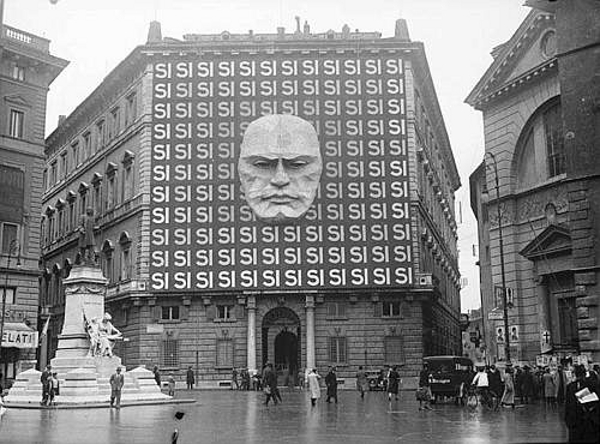
There’s more to it, of course. I could talk about the concepts of autocracy, corporatism, use of ancient Roman symbolism, and the like, but for now, let this all above be the definition we work with.
Now why do I say it’s coming back? Certainly if we disregard the recent massacre and the occasional race-related attack, there doesn’t seem to be any major Fascist threat in the US. The KKK isn’t roaming with impudence in the South. Gangs of Nazis aren’t attacking Jewish stores and businesses. Self-proclaimed defenders of the nation aren’t roaming the boarders trying to-
 Oh yeah…
Ok, but it’s not like there’s been any major attack on people for having different skin or heritage or religio-
 Ok, fine, but it’s not like any of this bigotry has been legislated or-
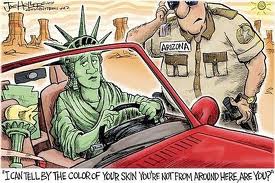 …Yeah…
See, that’s how it works. It’s subtle, discreet. The great Sinclair Lewis perhaps said it best:
 And this is just America. In Europe, Fascism is even more prevalent and less shameless, simply take a look at France, where the government has instituted laws banning certain forms of Muslim garb, or forcibly expelling the Roma Gypsies.
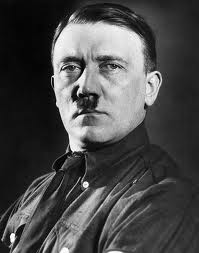
I recall another guy who took actions to get rid of gypsies…
Over in Germany, Chancellor Angela Merkel declared that “Multiculturalism has failed”…

Kinda forgetting about the last time a German chancellor declared the failure of multiculturalism…
…And in Britain, holocaust-denier Nick Griffin, leader of the white-supremacist British Nationalist Party (BNP) was elected to the European Parliament. That’s about the equivalent of the Grand Wizard of the KKK getting elected to congress.

I’d show you an actual picture of Nick Griffin but **** that guy…
And this is to say nothing of the escalating attacks on immigrants across Europe. Why? Because many Europeans and Americans are buying into the idea that the values, traditions, culture, and beliefs of other people are a direct threat to them. I recall in college on particularly nasty student who asserted that “All immigrants should go home”. Interesting, considering he had an Italian last name. Does he mean that he too will leave America? Of course not. Does he mean the Canadians who attended that school? Not at all. “Immigrants” was simply code for those “undesirable brown people”. But don’t take the words of one bigoted student as evidence of this ugly trend- just look at Congressman Steve King’s attempt to make English the “Official Language” of the US!
Now why on earth would you try to make English the official language of the US? It’s not like the vast majority doesn’t already speak it. And what if we did speak Spanish? How would it make a difference to anyone what we speak… unless English was somehow viewed as “inherent” to America!
 There’s really part of the problem. It’s a perspective on society. Back in College, I had a conservative friend whose opposition to gay marriage was that “the traditional family is the building block of society, and changing the family weakens society”. I’m not saying he’s a fascist- not at all, but this view of society as a solid, unchanging thing is what really serves to create so much of the general bigotry and outright fascism that we see today. When society’s well-being is linked to culture, to maintain society is to maintain culture, and while there’s a certain logic there, all too often it’s taken to mean that every aspect of culture, right down to traditional gender roles, religion, and racial demographics, must be controlled. It’s the reason why you see Muslims, immigrants, homosexuals, or as the past couple days have shown us, Sikhs, targeted. And don’t for a minute imagine that it’s just Aryans who take up this line of thought. I recently had an encounter with an Asian immigrant who cited that his country was once upon a time a “Christian country”, and that he was concerned at Hindus, Buddhists, and the like building places of worship in his community.
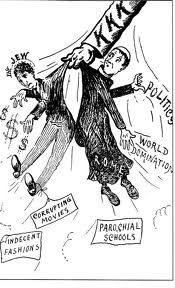 Only where does it end? Suppose you argue that non-Christians should be excluded from a country because their cultures threaten the stability of the nation- what the minority groups? I always want to bring this up when I hear someone make the argument that America is a “Christian Country”- does that include the Mormons and Jehovah’s witnesses? What about Unitarians? Episcopalians? Catholics? Mennonites?

That’s the crux of the matter. The Fascists- both the self-declared and the self-deluded- would have us believe that we’re all hopelessly divided. That we cannot respectfully disagree with each other. That you can’t speak Mandarin and I can’t speak Arabic and the two of us get along. That multiculturalism is a fantasy. That we can’t have our own practices and perspectives while all agreeing, to some degree, on how to live together. We’re meant to live in constant fear that if we tolerate anyone who doesn’t fit in, there goes our way of life.
So let it go.

This will be harder for some than others…
The title of this blog is the Culture War Reporters, and perhaps what needs to be understood is that the culture war isn’t something that can (or should) be won. There’s always going to be divergence in opinion and in behavior. There’s always going to be new things coming in, and old things struggling to stay on. There’s always going to be good stuff and bad, so at the end of the day, why worry? Don’t buy the idea that culture can be maintained, or that one group has found all the answers. For all the dark content about murders, genocide, and the like, strange a line from Disney’s Ratatouille should fit so appropriately. Defending his lifestyle against the accusation that it’s “against nature”, Remy the rat declares that “Change is nature”.


 The UK







 Hugo was another demonstration that a large part of Scorsese is dedicated to documentary. His movie plots rarely rely only on a simple story structure, but draw at truth about some world or society or person – in The Aviator, it was the telling of the life of Howard Hughes; in Kundun it was the exile of Dalai Lama Tenzin Gyatzo from India; In Shutter Island it was the mechanics of early 20th century mental health treatment. Scorsese has also made a fair share of documentaries, on topics like


 reassuring sense of the fantastic – lovers of flim noir, steam punk, cyber punk and any aesthetically-intentional style may drool a little. I am unsure about how I feel about 3D – I am too poor and not interested enough to see the more expensive version of the movie – but the fact that directors like Scorsese and Jackson are using it is making me consider itmore carefully. I can at least see how the aesthetic would work well with the round, polished dimension that 3D movies have.


 Culture War Reporters