
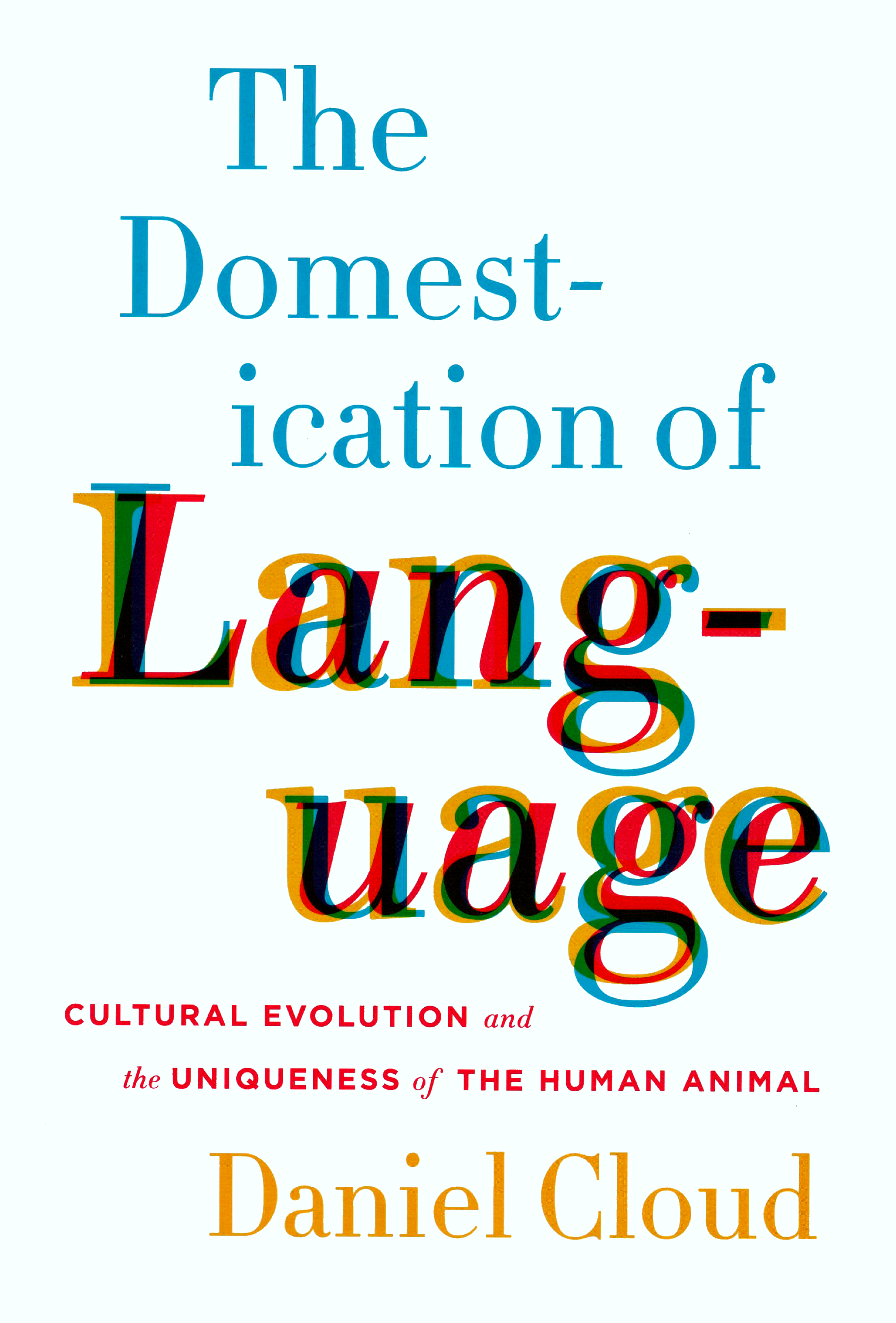
 This week I finished The Domestication of Language: Cultural Evolution and the Uniqueness of the Human Animal, a book whose subject matter should be self-evident. Shortly afterwards I was given the opportunity to talk to Daniel Cloud, the author of said work and professor of philosophy at Princeton University.
To summarize it very briefly the book is a thorough and eye-opening examination of language as a piece of culture that has been grown and thus evolved due to choices and actions we’ve made as human beings. While our discussion of his work was incredibly thorough and actually exceeded an hour I’ve managed to cut it down to something that closely approximates a conversation, and one that I hope will convince you to pick up a copy for yourselves.
Evan: Now I will of course be putting together some form of introduction to preface this interview, but I thought it would be good for our readers to hear you describe yourself in your own words-
Cloud: I would say that I am an American philosopher carrying on the American philosophical tradition. I worked in science for a while in Russia and China which gave me some some experience with socioeconomic change; I was in those places during a period of upheaval. Research as a philosopher most interested me when I decided to quit and go back to school. Biology and evolution in particular stood out as I already knew a lot about the social sciences.
Evan: As far as The Domestication of Language: Cultural Evolution and the Uniqueness of the Human Animal is concerned I would describe your primary goal as breaking down the origin of human language. Would you agree with that?
Cloud: My goal was and is to explain where language comes from, yes, but specifically the theory of cultural evolution and if it works relative to language. Language is one type of culture, and the specific type of culture I chose to focus on in this book was words as they’re discrete identities that are easy to identify and track throughout history.
The larger project is actually to track humans as being distinct from other types of living things. To return to language I present it as a tool for exploring the way cultural evolution works. It’s the application of the word “domestication” as seen in the title, the theory that just like animals and plants what we have in the present day is very different from how it began. Words are only the first thing I’ve tried to identify in this way. I could just as easily have turned to fashion or clothes or any other kind of culture. Continue reading


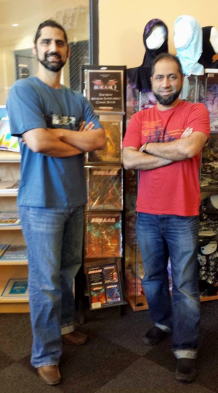


 EVAN: Favourite Lovecraft-themed alcoholic beverage?


 Culture War Reporters
When Life Gives You Don Lemon
See, I started off writing this post with the intention of revealing the man as nothing more than an inept clown, motivated by bumbling incompetence rather than malice or spite. The more research I did, however, the less I found myself able to support that idea. There’s nothing innocuous or innocent about Don Lemon.
While many of us were probably unaware of Lemon until his “don’t get raped” comments (or his bull**** non-apology, which we’ll get to in a second), I actually recognized him the second I saw him. Back at the end of September, Lemon, along with co-anchor Alisyn Camerota, had an interview with Islamic scholar Reza Aslan.The “interview” (the whole thing seemed more reminiscent of a McCarthyist witch-hunt) swiftly degenerated into an agonizing fear-mongering session- the very memory of which still makes my blood boil. I’ll let the ever-entertaining Cenk Uygur (of “The Young Turks”) break the debacle down for you.
Continue reading →
Rate this:
6 Comments
Posted in America, Islam, media, morality, race, television
Tagged Alisyn Camerota, Autmatic, Bill Cosby, Cenk Uygur, cnn, commentary, corporal punishment, Don Lemon, ethics, Fear, fear mongering, gaff, gun, interview, Joan Tarshis, journalism, Lemon, media, news, race, racism, rape, Reza Aslan, scandal, Semi-Automatic, stop and frisk, stupid, The Young Turks, Time