Tag Archives: politics

Culture, Not Criteria

Earlier today Evan sent me a link to a documentary on YouTube dealing with the subject of “hacktivists,” or more specifically, the rise of internet mischief and mayhem group “Anonymous.” For the most part, the movie was decent enough, though of course it wasn’t without its own agenda and a there are a few misconceptions resulting from that. But this post isn’t going to be a review. Rather, it’s going to launch off from an interesting phenomena I saw throughout the documentary- and that was the way people talked about Anonymous.

See, whenever people talk about the group, they usually have to veer off into a parenthetical speech where they try to explain just exactly who these guys are, and how at the same time they can be anybody, because anybody can be “Anonymous.” The end result is that they wind up sounding like a paranoid schizophrenic or conspiracy theorist, and the explanation itself doesn’t sound all that believable. After all, how can any individual or group take on the mantle and conduct whatever hacking or pranking or ranting they do against their enemies without some leadership? How do they do anything if they have no demands or agenda?

The problem here (and elsewhere, but we’ll get to that in a minute) is that a completely wrong lens is being used to look at the group. People are looking for structure or goals- the two things that usually define any collection of people, and that’s where it falls apart. Anonymous isn’t a group, it’s an idea. It’s a culture.

Now that sounds strange, but bear with me here.

What’s a conservative?
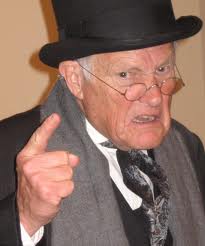
You probably have an image in your head right now. You can probably tell me what a conservative would think about a certain issue, or how he or she would act in a certain scenario, or the general value system one might have, but if I really pushed you for criteria, my guess is that you wouldn’t be able to give me one. After all- there are varying ideas of “conservatism,” and no real defined boundaries. You’ll find conservatives who state that the “religious extremists” have a skewed view of conservative values, and those same extremists offer the exact same criticism of those wimpy fiscal conservatives. Regardless of the specifics, once you stand back, both groups do fit neatly into the category of “conservative.”

Now apply the same general lens to Anonymous.

What’s “Anonymous”? It’s not a group with an ideology- it’s an ideology with a group, or rather, a whole bunch of groups. Consensus isn’t made through secretive discussion boards or by a clandestine collective of angry computer-geeks. Consensus isn’t made at all- actions simply stem from a general set of perspectives and ideas (the most major of which is freedom of speech and opposition to censorship) held by the adherents. Anonymous doesn’t exist as a coherent, structured group anymore than any culture or subculture exists as a coherent, structured group. Sure you’ve got your major players, and you’ve got various projects or movements within, but at the end of the day, there’s no list of demands, just a set of values.

The reason I bring this up is that this kind of organic organization is becoming more and more prevalent in our culture, the most notable example perhaps being the “Occupy Movement.” Critics of the movement, in its early days, continually parroted the protest of “But what do they want?“- the issue with that being that there was no, and never could be, any list of demands. Occupy wasn’t a structured or unified group- it was, like Anonymous is, a culture. A massive number of people sharing (and developing) certain common perspectives and values and then taking actions based on those views (those actions further developing those views, and so on ad infinitum). Trying to get demands out of Occupy protestors would’ve been about as fruitful as trying to get demands out of conservatives. You’re going to get conflicting specifics, even if there is a general set of guiding principles.

And of course, there are others out there. Though there’s no real term or name for it yet, there’s a rising “Manly” culture, comprised of elements of survivalists, masculinists, and guys who debate each other on-line about how to build porches and properly maintain classic muscle cars. Now I can’t claim to know the origin of this- perhaps it’s partly a reaction against our increasing dependence on technology, perhaps it stems from our powerlessness in a time of political and economic hardship- but either way, it is a growing culture based in principals of independence, self-sufficiency, self-control.

On the other side of the spectrum, there’s the general philosophies and ideas of the trans-humanists, futurists, utopians, geeks, nerds, and people who worship the ground Bill Nye and Neil DeGrasse Tyson walk on. Those who view technology as being the solution to most, if not all, human ills, and eagerly await the day when you can get a free jet-pack when you go in for your cancer vaccine.

Now why bring any of this up?

Because it’s important.

We’re currently breaking away from the liberal/conservative paradigm, and we’re going to need to understand what else is out there. This isn’t to say that we’ve only had conservative and liberal cultures- that simply isn’t true. But we can’t deny that there has been, over the past decade, developments of new value-systems which are really neither here nor there. New and alternative views for what the world ought to be, and how you ought to be in it. Over the course of the next few weeks, I’ll be focusing on dissecting these various concepts, so be sure to stop by next Monday for my examination of “Manly” culture.

Evan and Gordon Talk: The Greatest Flaw of This Generation [Continued]

EVAN: Last week Gordon and I discussed the greatest flaw of this generation, and discussed apathy, laziness, entitlement, and creative bankruptcy. Deciding that we had much more to work with, Gordon left us with this question last week, which heads this continuation of the topic:

““Do we want to be good, or do we just want to look good?”

GORDON: I’m not entirely sure I can come up with any swift dismissal of this possibility, I mean- look at the world we live in. Do we believe in being environmentally and socially conscious? Absolutely. But to what extent? I mean, we’ll chuck our soda cans in the recycling, but are we gonna picket Monsanto?

Are we really just observing these “little” things because they’re expected of us? Do we actually care one way or another?

EVAN: As far as recycling goes, we do that in Canada because it’s the law. Looking good only has so much to do with it.

If we want to go with the example of, say, giving a few dollars towards an environmental organization [or maybe because the fundraiser was cute], that works a little more maybe. It at least contrasts with picketing/protesting. I think we care, but maybe not enough? That’s if we’re quantifying “care” now by the actions that it results in.

GORDON: Is it, perhaps, that we’re cynical? Do we as a generation ultimately despair of the effectiveness of any method of change? Is the reason we’re unable to really go the distance when it comes to our causes because we think it’s all just in vain?

EVAN: Do we think it’s all futile? I mean, we’re certainly led to believe that to some extent. To focus on environmentalism, the extent of the destruction to this earth is growing ever closer to irreversible, and we’re made aware of this.

As far as documentaries and the like go, however, we are told over and over that what we do does indeed matter. Being conscious about how we spend our money and that sort of thing.

GORDON: That’s what we’re told, but then again, the creators of such documentaries are overwhelmingly members of older generations.

Look at the Occupy Movement, for example.

People were there from all demographics, but more than anyone else it was the youth- our generation. Despite massive popularity, that venture ultimately met its death under the boot heels of riot cops and a fog of pepper spray.

It’s been about a year since it all started, and the situation is the same, yet there’s really no push for any resurrection of the movement or even for any major protest at all. Have we given up? We’re all the same people- we have all the same drives and values- have we simply despaired of peaceful protest?

EVAN: It’s funny you should say that, since just yesterday former protesters gathered in a park in Toronto to call attention to the movement that happened a year ago.

That aside, maybe you can explain what exactly happened as the movement petered out. It’s somewhat well-known that the weather was a large contributor to those occupying various streets and cities, but what else led to its collapse. Was it simply fatigue?

GORDON: I’d blame massive crackdowns on the part of the mayors of the occupied cities- let’s not forget that mayor Jean Quan pretty much turned Oakland into a warzone. Injured a protesting war vet so badly most folks thought he was going to become the first casualty of the movement (he pulled through, fortunately).

EVAN: This sort of all falls back to a point I made in relation to apathy our first attempt at this topic. That people care, but simply don’t feel like stepping outside their comfort zones. I realize that this may seem like a ludicrous thing to say in the face of the Occupy Movement, but I feel that the vast majority of youth, our generation, don’t want to do what it takes.

They, we, value comfort too much.

GORDON: I’m gonna have to second that theory.

I remember back when I was in college, going door-to-door trying to get students to boycott various unethical companies [Coca-Cola, Nike] doing business on campus. I was amazed at how many people would nod their heads and smile and agree with each and every word out of my mouth until I called on ’em to stop buying those companies’ products.

Guts. We got none. Difficulty with the concept of actual sacrifice, you know?

EVAN: And the refreshing taste of Coca-Cola is the very basest of comforts. If we can’t part with a caffeinated beverage we’re into, then what can we do?

I’ve joined in your personal boycott of the company, and although it can be a little difficult, it’s certainly nothing compared to being beaten by batons as I march on Parliament.

GORDON: Is that it then? Are our values just skewed ever so slightly in favor of immediate gratification? Do we prefer keeping our skulls in once piece over bread and freedom?

EVAN: History would say: yes. At least until things reach a certain point. Until we realize that being comfortable doesn’t outweigh what we put up with to get that comfort.

GORDON:  So what’s the word for this?

EVAN: To put it simply would be “laziness,” and we both know it’s more than that.

GORDON: “Over-Attachment,” perhaps?

EVAN: “Comfort-Loving”?

GORDON: “Hesitation”? “Looking back towards Sodom”?

EVAN: Looking back towards Sodom assumes that they’re actually doing something.

GORDON: It’s a fear- a very specific kind of fear. The kind where you “choke” just before doing something major.

EVAN: I’m going to say there’s probably something in French or German for that, but since we’re writing this in English we’re pretty limited in our options.

GORDON: Can we make one up?

EVAN: Heh. I don’t see why not.

How about . . . “Statusquophilia.”

GORDON: “Fluxophobia”?

EVAN: Haha, I like how we went different directions with our Greek roots.

GORDON: As do I. Shall we have the readers vote?

EVAN: Sounds good to me, and we should be wrapping things up anyway. Want to summarize how we got here?

GORDON: Ultimately, o readers, it all comes down to this. The great and terrible flaw of our generation- from what we’ve discussed- is not a sin of commission. We are not entitled, we are not lazy, we are not without our values. Our fault is in what we lack the guts to be good, the balls to be bad. In short, the unwillingness to part with what we have for the chance to attain something more. We’re trapped in a dance with the devil we know.

EVAN: Vote for the terminology you like more. “Statusquophilia,” meaning a love for things as they are, or “Fluxophobia,” meaning, in this case, a fear of sacrifice.

GORDON: For next week’s topic, we’ve got: Zombies- Are We Beating a Dead Horse At This Point?

EVAN: Or what is going on with all the wars on television? I’m referring to programs like “Storage Wars” and the like. Real wars are happening, I realize this.

GORDON: And with that, people of the interwebs, we are out of time- make sure to vote for your preferred word as well as the topic for next week, and be sure to check out our new “Fame/Shame Day” feature!

October 15: What’s Not Being Talked About In The News

For the most part, I try to keep my politics toned down here at CWR, but every once in a while, something comes along that straddles the line between ideology and culture that’d be wrong not to talk about.

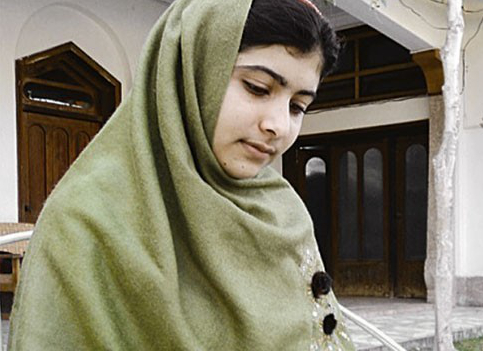
I’m guessing you may have heard of Malala Yousafazi.

Young Pakastani girl known for being a women’s education and peace activist, shot by a reported Taliban assassin just short of a week ago and just today being flown to England to continue her recovery.

You may have seen this picture of her:

But the picture you may not have seen is this one here:

That’s young Malala wearing a hijab, a head-covering worn by many Muslim women as part of their understanding of modesty. Yep, Malala’s a Muslim– but that’s something you’re not gonna hear on the news or read in your paper.If Islam is mentioned at all, chances are, it’s in reference to Malala’s would be assassin- not her (or her friends who were with her). Why is that? How come the same frenzied media attention that is devoted to listing off every attack or offense on the part of “Radical Islam” utterly fails to note the Islamic element when it’s related to something positive. I can understand- maybe even overlook- the fact that the news doesn’t offer any attention to the millions of Muslims (the ones I grew up with) who just go about their day without doing anything to anyone. But the moment  a Muslim man or woman stands up for what he or she believes, even going so far as be nearly murdered for those beliefs and actions, religion disappears from the picture.

And while we’re at it, there’s another thing that’s been bothering me.

You remember Pussy Riot? Feminist Punk Band who got into trouble for playing anti-Putin songs in a historic Russian cathedral?

Why is it that when they got convicted of “hooliganism” and were sentenced to two years in prison (a term waaay disproportionate to the crime) the world united in outrage, and when Leah-Lynne Plante was arrested-

Oh.

Who’s “Leah-Lynne Plante”?

She’s an activist up in Washington State whose apartment was raided by FBI and SWAT Teams. See, back on May 1st, there was some vandalism that occurred in Seattle and Leah-Lynne was a suspect.

How many people who have vandalized walls or billboards actually have the police investigate them, let alone the FBI and the Joint Terrorism Task Force? Of those people, how many have black clothes and books confiscated as “evidence”?

Obviously this has about as much to do with vandalism as Pussy Riot’s sentencing had to do with disturbing the peace. See, Leah-Lynne Plante is a self-proclaimed anarchist, and after refusing for a third time to answer questions before a grand jury. Considering the Grand Jury that’s investigating these and other alleged anarchist criminals was first created in March (two months prior to when she allegedly committed these crimes) doesn’t exactly reflect well on the whole “liberty and justice for all” element of the legal system.

But that’s all beside the point.

The point is, you probably don’t know about it. Your news has almost certainly never reported it, and considering the similarities between the two cases, doesn’t Leah-Lynne Plante’s case deserve your attention just as much as anti-government rockers off in Moscow?

Your media doesn’t think so.

And I think we’re being asked too much. I think we’ve had enough.

See, you can’t pick and choose- if the media want to take the violent or oppressive actions of Muslims as being representative of their faith, they have to apply the same logic to Muslim heroism as well. The same goes for equal air-time. The news can’t report on a bunch of women in brightly colored balaclavas for being broadsided by the state and then whistle Dixie while one in a black shirt has her home raided by men in kevlar.

Consistency- I’m not expecting that the news be factual (and considering it’s the news, that’s a pretty big thing to let slide) but they have got to be fair
or stop calling themselves reporters. If they wanted to pick and choose their battles, they should’ve become bloggers instead.

Wither Feminism?

This isn’t the first time I’ve lamented about the sorry state of feminism in the culture wars, and it certainly won’t be the last- nevertheless, the time has come for me to really lay out exactly what it is that’s killing feminism.


Sure feminism was necessary at one point, but it’s just not relevant anymore
.

You never hear that stated outright, but it seems to be underlying most responses on why feminism isn’t as major an issue was it was in the 70s or the 60s or the 50s or whenever exactly it was that the last wall of patriarchy supposedly fell.

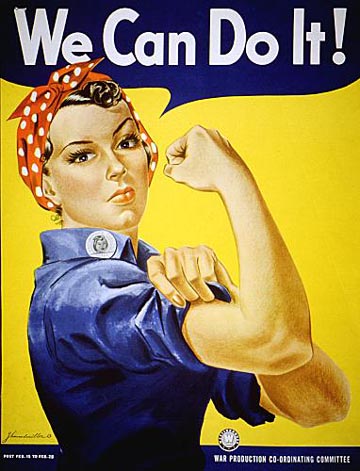
Let’s face it, women can vote, run for and hold public office, be CEOs or workers, and so on and so forth. Really, shy of being able to serve in combat (American women, anyways), one might argue that all doors are now open. This mentality even seems to be affected most contemporary feminists, who though I am sure have the very best intentions, really can’t find much to rail about themselves. I’ve been through blog post after blog post, article after article, and found that overwhelmingly the subjects being discussed are mostly rants against Todd Akin (not to say that idiot doesn’t deserve it) or retrospectives on the battles of the past. Take a look at the contents of the latest Ms. magazine:

With Wonder Woman at the helm, the issue celebrates 40 years of fearless reporting with 40 Ms. and key feminist moments that shaped our history; birthday letters from dozens of life-long readers; and essays from founding editors Gloria Steinem and Letty Pogrebin, and current Executive Editor Kathy Spillar.

In the special 40th anniversary issue, you’ll also read about:

– What’s at stake for women in the 2012 election

– The significant ballot initiatives in your state

– Record numbers of women running for office

That’s their central points for their fall issue.

Now let’s take a look at Jezebel.

I had a rough time sifting through the articles for one that best demonstrates my point (I know Jezebel isn’t so much a “feminist” website as it is a “women’s interest” one- though exactly what that means I can’t rightly say)- for the most part, they seem tangential at best. “What is it with Women and Law and Order: SVU?”  or “Should Women Run? You’re Damn Right They Should.

That last one’s not talking about running for office- it’s literally about jogging. ‘Cuz apparently there was some blog post asserting that women with a certain body type aren’t cut-out to be runners, and that merited a response. Sure, whoever said that was wrong, but is that what feminists have been reduced to? Chasing down solitary quips of (comparatively) benign misinformation in the ugly bowels of the blogosphere? If that’s the standard for a worthwhile target, Evan and I should be beaten to death for mixing up when the premier of Community is going to be shown.

Please don’t beat us to death…

If this is the substance of the contemporary feminist movement, can you really blame people for feeling that all that’s to be done has been done? Can you really blame people for stereotyping self-proclaimed feminists as just angsty or contrarian? Is feminism just going to wither away?

I hope not- there’s still plenty of work to be done.

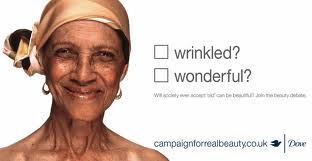
See this picture?

It’s from Dove’s “True Beauty” campaign. A series of advertisements aimed at combating anorexic and unrealistic standards of beauty. I’m sure the owners of Dove- a corporation by the name of Unilever- would be proud.

You know what other company Unilever owns?

Yep- these guys.

Now as I have family who read this blog, I’ve got embedded for you below the mildest Axe commercial I can find- be assured that it’s prudish and progressive compared to the rest of ’em.

That’s what we’ve got here- a corporation that on one hand is hawking their products by telling you that you’re beautiful just the way you are, and on the other hand depicting women as mindless dolls in low-cut dresses who can be manipulated with aerosol bottles. The latter alone would be a slap in the face, but that fact that the company is two-faced enough to shamelessly operate both utterly discredits their “True-Beauty Campaign” and exposes the fact that they’re ready, willing, and able to use feminism itself as a vehicle for controlling and objectifying women and perceptions about ’em.

This is Paul Polman, Unilever’s CEO, and he can go **** himself.

See, there’s this offshoot of modern feminism called “Sex-positive feminism” (you might know it by other names), which broken down to its most basic elements asserts that women’s use of their sexuality is empowering- and while no one would deny sexuality as an integral part of any human being- more often than not, this line of thought is used to justify strip clubs, prostitution, pornography, etc. as being actually good for women.

Now I’m not going to start accusing the founders of “Sex-positive feminism” of selling out their own movement- I don’t think that’s what their intention was. But then again, such things are what the road to hell is paved with, and even if the goal of this off-shoot was to make sexuality just as empowering as brains or brawn, the simple truth of the matter is that the prostitute isn’t probably viewed by her client as being a more well-rounded person because of her job. Heck- using this logic, I might argue that a twelve year old Honduran girl whose working for 32 cents an hour in a sweatshop is likewise “empowered”.

Strange how “Dead by 26 feminism” isn’t quite as popular…

Feminism isn’t dead- it’s just got a knife at it’s throat, and if saving feminism from becoming a tool of the very system that it was first established to combat isn’t a worthwhile endeavor- I don’t know what is. To anyone who would complain that all the important battles have been won- I present to you this. “Your solution to saving feminism is by saving feminism?” you might ask- and hey, it’s a valid point. But this isn’t just some circular exercise- this is a struggle for what’s really empowering. It’s a fight over messages- will we be told “These shoes are empowering!” or “No- they are shoes– empowerment comes from how far you walk and how much butt you kick.” Isn’t that worth something?

At the very least it beats writing an angry article about how body shape doesn’t exclude you from jogging.

P.S. I know I should also say some stuff about the “Slut Walks” (“Slutwalks”?, “Slut-Walks”?), the issue of rape, the continued problems of worker-manager ratios, etc. but it’s past 1:30 in the morning- please excuse the narrowness of this post.

The Good, the Bad, and the Racist

Over the past weeks, there’s been some talk here in Vegas about changing the name of our airport from McCarran to something- anything– else. Named after Nevada senator Pat McCarran (1876-1954), the group pushing for the change were of the opinion that it wasn’t quite right having one of the busiest airports in the world named after a viciously racist Fascist-sympathizing McCarthyite. Last night, I caught a bit of a local talk-show as I was channel surfing, and heard the subject get brought up. Steve Sebelius, a major journalist in Vegas, was commenting on the name-change movement’s loss of momentum, pointing out that despite McCarran’s psychotic antisemitism and racial bigotry, he was the principal defender of gambling in Nevada, and that without him “None of us would be sitting here”. The show wrapped up after that closing comment, and whether or not the they addressed the whole issue of what comprises one’s legacy I can’t tell you. Frankly, I would like to see the airport’s name changed- and not just the airport, but every street, boulevard, and building named after a bigot. But as the journalist rightly pointed out, the world doesn’t quite work in white and black.

Pictured: Pat McCarran, who objects to me using the words “white” and “black” so close to each other…

As much as we’d like to imagine (at our history book’s insistence) that America was created by heroic men who only drank distilled freedom and wiped the sweat from their brows with patriotic American flags autographed by Jesus, this nation was built on the backs of slaves and the bones of Native Americans. The same man who authored the Declaration of Independence owned his sister-in-law, and despite his assertion that it was self-evident that all men are created equal, hated and feared German immigrants with a passion that the Minutemen Project would feel is “a bit much”. Jackson- the hero of Federalism, the slaughter of Native Americans. FDR, the creator of the New Deal, the guy who forced over a hundred thousand Japanese Americans out of their homes and into prison camps. Between genocide, exploitation, segregation, and a host of other forgotten sins, there’s not much in US history or culture that doesn’t carry with it a stain of injustice or inequity.

Our food included…

But how, then, do we deal with this? If we rename racist streets or airports, why stop there? Why not get rid of the sexists’ names? Or those who were just plain greedy or arrogant or inept? It seems if we go down that road, we’ll wind up leaving everything blank as we dig through history in search of the perfect human being. On the other hand, we can’t exactly drive down Hitler avenue and assert that his anti-smoking campaign is just as much a part of his legacy as the concentration camps and Kristalnacht. So how do we measure a figure’s good acts against his bad ones? I’d personally like to see Jefferson Street renamed Malcolm X Street, yet I have to simultaneously deal with the fact that X held many racist views himself until his conversion and change of heart later in life. Again, how do we discern between the good guys and the bad guys? No one’s perfect, but not everyone uses child soldiers either. Simply, people are complicated.

Case and point…

And because I don’t want to leave you hanging with another “Make of it what you will” post (as I did in my report on Extreme Midget Wrestling– check it out), I’m going to fly in the face of caution and offer this criteria for naming your airports and roads:

I. Is he or she a good guy?

That’s it. If you can’t answer “yes” immediately to that question, and if “mostly” doesn’t work either- move on to someone else. Simple as that. There is always going to be controversy- and we’re going to have to deal wit that. Values change, secrets are uncovered, and some heroes become villains and villains heroes- but for now. For right now- let’s go ahead and make the change. Yeah, it’s a pain in the neck, but if we do it right the second time around, hopefully we won’t need to change up the names for a another seventy years or so. And before someone writes in about it being part of our past or our heritage- let me shoot you down right now. Yes, bigotry, as ugly as it is, is a part of our history. But changing names doesn’t mean that we’re running away from it- it means we’re passing judgment on it. In the end, that’s what I want to cite as my heritage- not racism, but the condemnation thereof.

Evan and Gordon Talk: Affirmative Action

EVAN: So last week I asked people on Facebook what they wanted us to talk about, and the answer that got the most votes was affirmative action. This is a pretty broad topic, but thinking about it in the past couple of days I have at least a few possible directions to go with it. But before we do that, a definition-

GORDON: Well, that eternal fount of knowledge that is Wikipedia sets affirmative action down as:

“policies that take factors including ‘race, color, religion, gender, sexual orientation, or national origin’ into consideration in order to benefit an underrepresented group ‘in areas of employment, education, and business’, usually justified as countering the effects of a history of discrimination.”

Though of course, we’re probably more familiar with it in regards to racial or gender quotas for certain businesses.

EVAN: Right, like hiring a minority to make some sort of company quota-

GORDON: Ironically, despite the outcry against this particular aspect of affirmative action, it isn’t actually legal in the US to set quotas for any race.

EVAN: Which I did not know. But it happens, of course.

GORDON: That it does. That quota being typically “100% white.”

EVAN: I meant more along the lines of the executive minority training program featured in Season 6 of The Office.

GORDON: That too. “Token” minority hiring.

EVAN: And Gabe’s childish delight at pulling in someone who wasn’t black [Kelly], like all of the other entries were.

GORDON: It’s been a while since I’ve seen it.

EVAN: It’s all good.

GORDON: Let’s get right down to it here- affirmative action is still a contentious practice, but let’s face it, now more than ever it’s demonstrative of inherent bias in the system.

EVAN: As someone who doesn’t keep up with the news as often as he should, the most recent event I can recall that featured this was the rioting that was happening in Paris.

GORDON: Go on…

EVAN: Oh man, I was really hoping you’d remember. But it was a minority group rioting, and the way they solved it all was that employers had to hire people from this group, and pay them regardless of how well/hard they worked.

GORDON: Ergh- it’s France. These are the same people who nearly elected a neo-Nazi to be prime minister, and and have massive racial bigotry issues- just look at their expulsion of the Roma.

I’d hesitate before using them as an example- let’s bring the issue a little closer to home. Take America, for example.

EVAN: Well, your home.

GORDON: We have a workforce completely and utter disproportionate to the population. Even as the white population diminishes, the vast majority of administrative jobs are held by white males.

It’s like what I brought up in my article on TLC.

EVAN: Misrepresentation of an entire population, yeah?

GORDON: Absolutely.

EVAN: So that’s America, but where does affirmative action come into it, are you saying it’s needed?

GORDON: I’m saying that it isn’t working. If affirmative action was meant to end hiring and promotional discrimination on the basis of race and gender, it’s utterly failed, and the proof of that is everywhere around us.

EVAN: Well, you know more about the States than I do, especially with you saying that it’s illegal. Are there any affirmative action movements than you can bring up at all?

GORDON: The only major issue I can recall in the past couple years was a lawsuit brought against Walmart.

EVAN: Go on.

GORDON: Back in 2007, a gender discrimination lawsuit (Walmart v. Dukes) was filed, with a massive number of women citing that despite nearly two-thirds of Walmart employees being women, only a third of management was female- and that’s to say nothing of other charges against Walmart’s routine exploitation of its female employees.

A court (tragically) ruled that the various individuals suing didn’t have quite enough in common to constitute being a “class”, so the case was more or less thrown out.

EVAN: Their sharing a gender not withstanding?

GORDON: Welcome to America.

vv

EVAN: Moving on to something I may know a little more about, affirmative action is a term that comes up quite a lot in regards to Native Americans, or what we in Canada refer to as “First Nations.”

GORDON: Shoot-

EVAN: There’re reservations, of course, land that belongs [is given] to said people. I’ve heard many times friends saying that they were 1/16 such and such, and would be able to “claim land.” Also the fact that gambling is legal on such properties, which I still don’t fully understand.

GORDON: The issue of native rights is an entirely different topic- something we oughta cover, but not quite in this post.

EVAN: I’m just saying that I think it ties directly into what we’re discussing. This is all stuff that’s “usually justified as countering the effects of a history of discrimination.”

GORDON: Granted. One could make an argument for lumping together reparations and affirmative action, but affirmative action is really strictly defined as pertaining to admissions- into either a university or the workplace.

How IS that in Canada, anyways? You got management proportionate to your population makeup?

EVAN: I am not sure. Let me check.

Well, I can confidently say that our minority population is 16%, though this excludes First Nations. Taking them into account, they add 4%, making a solid 20% of our population being nonwhite.

GORDON: Okay. So in your experience, is one in five Canadian manages/execs/bosses/administrators/etc. from a minority group?

EVAN: I’d say that in Toronto, at least, you’re as likely to see a white person as a non-white person. Depending on the neighborhood, you may find it difficult to see more than a handful of Caucasians.

GORDON: But in management…

EVAN: Right. I’m not exactly in a lot of offices… So I don’t know if I can comment on that.

GORDON: Gun to your head…

EVAN: I want to say 1/5 are probably minorities. Which matches up with the statistics I mentioned.

GORDON: Ah, good.

I love how useful this GIF is...

EVAN: I’m a little perturbed that you put a gun to my head in this post.

GORDON: Heh…

Before any of the readers jump down my throat, I know am I’m looking at the problem from a white-liberal viewpoint. Simple fact of the matter is, college is expensive (don’t I know it… **** you Evan, and your ridiculously great government benefits), and the small, wealthy majority in US is (overwhelmingly) white. Someone might make an argument for qualifications being required over race, but that’s exactly where affirmative action is SUPPOSED to come in.

It’s meant to help even the playing field, but it just doesn’t- again, look around.

EVAN: Qualifications required over race and affirmative action. Could you explain that further?

GORDON: Imagine you’re an employer. And imagine this we’re not living some depression-era-hellscape where you’re asking that an entry level employee have five to ten years of experience.

EVAN: . . . I’m listening. This is a dreamworld you’re painting.

GORDON: You have to fill a position, and there are two candidates- a white guy with a college degree, and a black guy without one (again, college is ****ing expensive). Who do you give the job to?

EVAN: The qualified one. The white guy.

GORDON: And imagine you need this position filled again the next year. And the next and the next, and you keep getting the same basic candidates. Who do you pick?

EVAN: Obviously whoever can do the job better. But where is affirmative action, like you said, supposed to come in?

GORDON: The people with jobs get money, the people with money send their kids to college, and so on. Affirmative action is meant to make sure that people aren’t discriminated against on the basis of their race, so that two equally qualified people stand an equal chance of getting in.

It’s like trying to back-paddle in the middle of a maelstrom.

EVAN: Ah, I see what you’re getting at. But what about minority scholarships?

GORDON: Even there, there’s an issue. Poor schools don’t get good funding, they tend to produce students who aren’t as prepared as their wealthier peers, and even bright ones who would otherwise school their peers wind up doing worse on tests. Unless you’re exceptionally gifted…

Again, it’s trying to apply a band-aid to an open wound.

EVAN: One more simile, for the road. Our time’s just about wrapped up.

GORDON: It all boils down to this- there is a need for equity and equality in the workplace- a desperate need. But affirmative action is like using a toothpick to fight dragons [emphasis added]- its the wrong tool of the job, and even if it was appropriate for the situation, it’s still not very effective…

EVAN: Join us next week, where hopefully I know more about what we’re talking about, when we discuss-