Tag Archives: politics

Go Listen to “Guilty Pleasures: Art and Politics”

Two days ago Gordon and I talked about “hipster racism,” a topic he heard about via an eye-opening lecture by novelist China Miéville. The talk was titled Guilty Pleasures: Art and Politics, and discussed far more than what we were able to given our time.

A number of things: Firstly, I am not going to discuss or summarize his lecture in its entirety; it was forty-some minutes long and that would be ridiculous, just listen to it for yourself. Secondly, I am not a socialist, and much of what he was saying was through that filter. He did, after all, speak at a little something called “Socialism 2012.” I am not someone who has very strong political leanings, but I am someone who truly loves art in its many forms. The following are the three ideas he spoke about that stuck me the most.

The Artist and Their Art

Miéville, about a minute in, states that the socialist position on art and politics is this: “[socialists] do not judge art by the politics of the creator of that art.” He then quickly adds that they do so all the time anyway. I briefly wrote about this in a post about Jewish children’s author Rich Michelson. Michelson hosted a session that was largely about race and background, and how they impact audiences’ opinions of a work. Is a Jewish author allowed to write about the struggle of the civil right’s movement? And if not, then why?

The relationship between creator and his or her art is heavily debated, but its extremes are very easy to criticize. Miéville said that they’d all sat through “egregious folk music” simply because of the grounds of its sentiments expressed. Simply having a good message does not make art good. A Christian movie about the horrors of porn is not in and of itself a bad thing; having it feature ghosts [and be a clear knock-off of Paranormal Activity] is. To put it in the form of a proverb, “the road to hell is paved with good intentions.” Feel free to replace “hell” with “bad art” or “disappointed audiences.”

Guilty Pleasures

The title of his talk and what I’m the most interested in, Miéville listed different axes of socialist guilt. The third of which [17:56] he says is:

The question of quality: “I know it’s not very good but I like it anyway.” A declaration of kind of defensive guilt.

The thing is, he realizes that the statement is inherently flawed. By saying something is not very good we declare that we can make qualitative judgements about art, and this leads to questions like: “What is art? What makes it good, bad, better? What kind of social phenomenon is it?”

When it comes to television shows I have a standard rule, and that is to watch it ’till its dying days. I have watched all of The Office to date, and that is the same as 30 RockHow I Met Your Mother, and a slew of other shows. Sooner or later they begin to break down [see my first example], but I stick to them. The reason I’m bringing this up is The Big Bang Theory.

Gordon hates TBBT. He hates it because, honestly, it’s not a very good show. He often says that “nerdface” is an excellent way to describe their treatment of the characters. That being said, I have, and do [sometimes still] enjoy it. Do I feel guilty? As an English and Writing major, yes. I studied for four years to differentiate between good and bad writing. As a general media consumer and television enthusiast, yes, I still feel guilty. And, as Miéville said, I somehow defend myself by admitting to others that I realize it is not very good.

Does this justify me? I don’t think so. But beyond what it means to be good or bad, what does it mean to like?

What Does It Mean to “Like” Art?

I like the Dungeons and Dragons Monster Manual. I like the novels of Barbara Cummings [sp?]. I like Gramsci’s prison notebooks. [20:15]

None of these statements tells him anything about his relationship with each piece of art, because they’re all so distinct. What further complicates the verb is the discussion of “the art piece one enjoys disliking” [20:32]. We can like to dislike things; Justin Bieber basically encapsulates this idea by himself. While he never ends up truly defining the word, he seeks closure in the writing of another.

What follows is a piece of writing by Lady Mary Wortley Montagu, an 18th century writer, and Miéville’s response to it [34:45]:

“The pretty fellows you speak of I own entertain me sometimes, but is it impossible to be diverted with what one despises? I can laugh at a puppet show and at the same time know there is nothing in it  worthy of my attention or regard.”

This is one of the most liberating things I have ever read in terms of the cultural sphere. It is not obligatory to have footnoted opinions about everything you consume.

I read his meaning in that last paragraph as being that we need not get caught up in guilt. There should be a way of looking at what we like that doesn’t involve us castigating ourselves. I can enjoy the King Fantastic Remix of Drive It Like You Stole It without being a proponent of foul language. Likewise I can read AmazingSuperPowers, be amused, and not have to argue how high- or lowbrow its humour is. While the intent of an artist and the perceived quality of their work should be taken into account, there are times when we can simply like, or more simply enjoy, art, whatever it may be.


Evan and Gordon Talk: Hipster Racism

GORDON: Welcome back, ladies, gentlemen, and persons who defy conventional gender roles, to another edifying episode of Evan and Gordon Talk. Our topic for tonight: Hipster Racism.

Evan- if you’ll offer a quick definition.

EVAN: Uh, I’m going to leave you to that, actually. Gordon sent me this link to check out, and the bit about “hipster racism” is actually quite short [appearing at about 00:00]. The speaker, China Miéville, had a lot of amazing things to say, and I lost it in there somewhere. [I’ll probably be writing more about the lecture on Friday]

GORDON: Essentially, “Hipster Racism” or “Ironic Racism” are jokes or comedy with traditionally racist content, funny not because they put people down, but funny because of how utterly atrocious and ignorant they are. Similar to a dead baby joke.

The question we’ll be dealing with tonight is this: Is ironic racism still just racism?

EVAN: This strikes a similar chord with a conversation I had with . . . a friend of mine, where he called Arab people “towelheads.”

GORDON: Yikes. Continue reading

Violence (Not) In Media

In the wake of the Aurora Shooting, the Sikh Temple Massacre, and a recent spate of gun violence across the country, the debate of the violence in media has once again reared its head. On one side, those who cite the saturation of film, music, and video games with violence and the glorification of violence as responsible for creating these monsters, or at the very least, pushing them over the edge. On the other side, the ranks of apologists, who declare that it’s ridiculous to blame movies and music for mass-murder.  I’m not here to analyze the claims of either point, or to make an argument for one side or the other- that’s already been done better by The Escapist’s Robert Chipman (check it out here).

No, I’m here to address the subject of violence and its possible contributing factors outside of film and music.

When I touched on a complaints I had with movies like Brideshead Revisited and I Love You Man a few weeks ago, I briefly mentioned goth-rock-star Marilyn Manson, whose music was accused by many of being responsible for having influenced the Columbine shooters in committing the massacre. Interviewed by Michael Moore in his documentary Bowling for Columbine, Manson had this to say regarding violent influences:

And therein really lies the crux of the issue- when tragedies like this happen, the scope of our outrage is usually so small that we fail to take into account all the other possible factors. We can cite GTA or rock or rap or cartoons as being responsible and maybe- just maybe- there’s something to that. But what about everything else? If violence in media causes violence, surely violence itself should be cited here!

You remember this?

That’s Marine Corps veteran Scott Olsen, moments after he was shot in the head with a gas canister from close range. Part of the brutal crackdown by police on the Occupy Oakland protests last year- back when Mayor Jean Quan decided the best way to deal with a peaceful protest was by turning her town into a war zone.

But why talk about Oakland and countless other cities being turned into war zones when we can just talk about actual war?

As I’ve mentioned in previous posts, this is the single longest war in American history. Year after year after year, it goes on, and with no end in sight. That’s got to be the single largest and publicized campaign advocating violence, yet where is the outrage against it?

And what about hunting? That’s all about guns and the glorification of killing things…

What about Civil War Reenactors?

What about the national anthem? That thing is full of references to bombs. What about the 4th of July? A day when we celebrate our victory in a war by setting off explosives!

What about the very way we talk about violence? Should the Mob Museum here in Las Vegas be shut down? Should we do away with anything related to pirates? Should we stop teaching about the war of 1812 in schools?

And so on…

You get the idea. Ours is a culture and history built on violence. It’s in everything–  not just our media. While I’ve got my own views on what does and doesn’t cause or promote violence, my purpose here isn’t to take a side. I’m simply trying to demonstrate that if you do want to try to get into the causes of violence, you don’t get to be selective about who you put on trial.You want to find out if there was something in our world beyond the killer’s diseased mind responsible for death and destruction, you have to look at everything- anything less is just a witch hunt, pure and simple.

Let’s face it, half the time, tragedies like these are the platform from which we get to lynch things we didn’t like to begin with…

…I wonder if that kind of vicious and petty mentality might contribute to violence at all…

Fascists, Skinheads, and Nazis (Oh My!)

As you all doubtlessly know, two days ago, a gunman entered a Sikh temple in the little town of Oak Creek, Wisconsin, killing six and injuring four more before being shot dead by police. The killer, one Wade Michael Page, was connected to a number of vicious white-supremacist groups, most notably the “Hammerskins”, a white-supremacist group that focuses on dispersing racist messages and propaganda through music- Page being the founder of one band and a member in another.

Why is this even being brought up here? As strange as it may seem, there’s an argument to be made for the Oak Creek massacre having its origins in culture. Now many of you might be thinking of the Aurora massacre, and no, this isn’t some discussion about our attitudes towards guns, violence in media, or anything of the kind. There’s certainly a good discussion to be had on that subject as well, but it’s not what I’ll be addressing here.

No, what I’m going to be talking about is this:

Fascism.

It’s coming back.

See, the idea that the culture, traditions, and history of specific people group are superior to those of all others and should be promoted and maintained through brute force didn’t die when Hitler blew his bigoted brains all over an underground bunker in Berlin, or when Communist freedom fighters gunned down Mussolini in a picturesque Italian village. It’s been dormant for a long time, but in recent years, it has again shown its ugly face.

Nope- uglier than that…

While there have been plenty of racially motivated murders over the years since Nazism fell (to say nothing of countless lesser hate crimes), what we’re seeing now is a resurgence in full-fledged Fascist ideology- but before we get into that, just a side note.

For many of you, the term “Fascism” probably conjures up images of generic authoritarianism. Obama’s a Fascist. Rush Limbaugh’s a Fascist. That one really strict teacher is a Fascist.

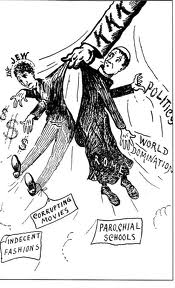
I’ve struggled for a while to come up with a good, succinct definition for what Fascism is all really about, so I’m going to offer this illustration. To a Fascist, his people (often, race) are inherently great and good, and they are inherently great and good because of their traditions, values, and culture, which are all also inherent to them. The greatness of the nation is lost when evil, conniving undesirables start pushing their own cultures, values, and traditions, which are subversive and degenerative to the nation. Therefore, these degenerates who threaten the nation must be stomped out (often quite literally), and the “original” culture/traditions/values must be restored, enforced, and maintained through an all-powerful government, police force, military, etc.

There’s more to it, of course. I could talk about the concepts of autocracy, corporatism, use of ancient Roman symbolism, and the like, but for now, let this all above be the definition we work with.

Now why do I say it’s coming back? Certainly if we disregard the recent massacre and the occasional race-related attack, there doesn’t seem to be any major Fascist threat in the US. The KKK isn’t roaming with impudence in the South. Gangs of Nazis aren’t attacking Jewish stores and businesses. Self-proclaimed defenders of the nation aren’t roaming the boarders trying to-

Oh yeah…

Ok, but it’s not like there’s been any major attack on people for having different skin or heritage or religio-

Ok, fine, but it’s not like any of this bigotry has been legislated or-

…Yeah…

See, that’s how it works. It’s subtle, discreet. The great Sinclair Lewis perhaps said it best:

And this is just America. In Europe, Fascism is even more prevalent and less shameless, simply take a look at France, where the government has instituted laws banning certain forms of Muslim garb, or forcibly expelling the Roma Gypsies.

I recall another guy who took actions to get rid of gypsies…

Over in Germany, Chancellor Angela Merkel declared that “Multiculturalism has failed”

Kinda forgetting about the last time a German chancellor declared the failure of multiculturalism…

…And in Britain, holocaust-denier Nick Griffin, leader of the white-supremacist British Nationalist Party (BNP) was elected to the European Parliament. That’s about the equivalent of the Grand Wizard of the KKK getting elected to congress.

I’d show you an actual picture of Nick Griffin but **** that guy…

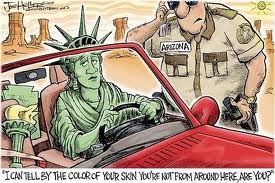
And this is to say nothing of the escalating attacks on immigrants across Europe. Why? Because many Europeans and Americans are buying into the idea that the values, traditions, culture, and beliefs of other people are a direct threat to them. I recall in college on particularly nasty student who asserted that “All immigrants should go home”. Interesting, considering he had an Italian last name. Does he mean that he too will leave America? Of course not. Does he mean the Canadians who attended that school? Not at all. “Immigrants” was simply code for those “undesirable brown people”. But don’t take the words of one bigoted student as evidence of this ugly trend- just look at Congressman Steve King’s attempt to make English the “Official Language” of the US!

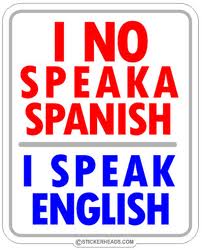
Now why on earth would you try to make English the official language of the US? It’s not like the vast majority doesn’t already speak it. And what if we did speak Spanish? How would it make a difference to anyone what we speak… unless English was somehow viewed as “inherent” to America!

There’s really part of the problem. It’s a perspective on society. Back in College, I had a conservative friend whose opposition to gay marriage was that “the traditional family is the building block of society, and changing the family weakens society”. I’m not saying he’s a fascist- not at all, but this view of society as a solid, unchanging thing is what really serves to create so much of the general bigotry and outright fascism that we see today. When society’s well-being is linked to culture, to maintain society is to maintain culture, and while there’s a certain logic there, all too often it’s taken to mean that every aspect of culture, right down to traditional gender roles, religion, and racial demographics, must be controlled. It’s the reason why you see Muslims, immigrants, homosexuals, or as the past couple days have shown us, Sikhs, targeted. And don’t for a minute imagine that it’s just Aryans who take up this line of thought. I recently had an encounter with an Asian immigrant who cited that his country was once upon a time a “Christian country”, and that he was concerned at Hindus, Buddhists, and the like building places of worship in his community.

Only where does it end? Suppose you argue that non-Christians should be excluded from a country because their cultures threaten the stability of the nation- what the minority groups? I always want to bring this up when I hear someone make the argument that America is a “Christian Country”- does that include the Mormons and Jehovah’s witnesses? What about Unitarians? Episcopalians? Catholics? Mennonites?

That’s the crux of the matter. The Fascists- both the self-declared and the self-deluded- would have us believe that we’re all hopelessly divided. That we cannot respectfully disagree with each other. That you can’t speak Mandarin and I can’t speak Arabic and the two of us get along. That multiculturalism is a fantasy. That we can’t have our own practices and perspectives while all agreeing, to some degree, on how to live together. We’re meant to live in constant fear that if we tolerate anyone who doesn’t fit in, there goes our way of life.

So let it go.

This will be harder for some than others…

The title of this blog is the Culture War Reporters, and perhaps what needs to be understood is that the culture war isn’t something that can (or should) be won. There’s always going to be divergence in opinion and in behavior. There’s always going to be new things coming in, and old things struggling to stay on. There’s always going to be good stuff and bad, so at the end of the day, why worry? Don’t buy the idea that culture can be maintained, or that one group has found all the answers. For all the dark content about murders, genocide, and the like, strange a line from Disney’s Ratatouille should fit so appropriately. Defending his lifestyle against the accusation that it’s “against nature”, Remy the rat declares that “Change is nature”.

Republicans, Marriage Equality, and Inevitable Social Change

Freedom to Marry has set up the Win More States Fund with the goal of influencing legislation in Maine, Minnesota, New Hampshire, New Jersey, and Washington. Interestingly, the fund’s largest donors so far have been a group of major donors to the Republican party.

Freedom to Marry is one of the many organizations in the US that support and fight for the legalization of same-sex marriage

And this isn’t just excitement over a few novel Republicans donating insubstantial amounts; the group collectively donated $1.5 million, which is half of the fund’s stated goal. Ken Mehlman, the former chair of the RNC (Republican National Committee) (I’ve heard that they’re a big deal). The group of donors, including Mehlman, has founded a Super PAC (American Unity), which defines itself as a PAC that “supports GOP political leaders committed to advancing the rights of gay and lesbian Americans”. The PAC’s first donation was $1 million from Paul Singer, hedge fund CEO and major donor to the GOP.

This shows quite the shift, especially compared to popular (if slightly under-informed) consensus about party alignment on the gay marriage debate.
Freedom to Marry quotes Mehlman talking about his decision to donate:

“Supporting the right of adults to marry the person that they love is consistent with Republican and conservative principles. A party that ignores reality and demographic change is a party that loses a lot of elections and becomes less relevant.”

Freedom to Marry’s Win More States Fund targets Maine, Minnesota, New Hampshire, New Jersey, and Washington State

There were a lot of predictions that opposing gay marriage would just cease to be a respected opinion in the US, and it seems that that’s what’s happening now. Mehlmen’s statement is practical – he does say that the position “is consistent with Republican and conservative principles,” but this issue would not be being addressed if not for the huge social movement over the past few decades. That IS sort of how democracy is supposed to work – but I think that we will always hear more people saying things like “Those people have to change in order to survive politically” than things like “They can take the job and shove it … I’m trying to do the right thing.”

But that’s how things work, I guess. People have a tendency to distrust things that are different and strange, and so social change with respect to accepting and adapting to differences usually has more to do with social pressure (and shame) than with lots of miraculously-timed personal insights. The fact that our opinions and actions are inseparably intertwined with the popular sentiment is not news. And while political moves responding to trendy or controversial social issues might be occasionally disingenuous, there’s no arguing that they can instigate actual change.

Is “Art of Manliness” Sexist?

Imagine my surprise to log on to Culture War Reporters to jot down my Tuesday post, only to find Elisa having already written something. I can only imagine that her cutting in on my territory means that she’s looking to start a fight so vicious, bloody, and prison-lunch-line-shanking-ly brutal it will make the combined carnage of the fall of Masada and the genocide at Wounded Knee look like a slap-fight between a couple of elderly Mennonites.

But I’m not here to talk about that. I’m here to make good on my promise last week- to investigate and determine whether or not Art of Manliness is sexist.


Of course, before we begin we have to define what “sexism” is. The obvious answer would be discrimination/prejudice against women, but it has got to be more than that. The stereotyping of women (regardless of whether its positive or negative) has also got to be a part of sexism, just as much as it would be a part of racism or any other form of bigotry.

Now at first glance, Art of Manliness really doesn’t touch on the subject of gender relations all that much. For every one of their articles on subjects such as “What to Wear on a First Date“, there are ten articles on how to shine your shoes, shuffle a deck of cards, hitchhike around the US, make maple syrup, and even a world history of shaving. On the whole, the blog is far more invested in trying to break from what it sees as a culture totally lacking in strength, competence, and independence.

But of course, you really can’t devote an entire blog to what makes a man a man without every once in a while stumbling across the subject of women.

For example, take a look at “Women and Children First? Down with the Ship?” or “Womanly Things We Wish Women Still Did“. In both cases, the author simply brings up the subject, allowing the readers to duke it out in the comments section on whether or not the old cry of “Women and children first!” is still right or fair (or if it ever was to begin with).

On the whole, Brett McKay (the principal author) understands that the subject of feminism and feminist issues are still quite controversial, and only more volatile in the venue of his Art of Manliness blog. For the most part, he either allows his readers to debate such questions as “should men hold doors open for women?”, or refers the issue to his wife (and co-author) Kate. Indeed, from everything I’ve read on the blog, it would appear that the single most “edgy” post on gender roles (“What Can Manly Men Expect of Women?”) really doesn’t do anything more than point out (what the author sees) as a double-standard in what men and women can ask of each other. In fact, I’ll stick my neck out there and say that the author makes some solid points on women’s issues and feminism.


When I was in college, my house was once visited by a collection of female students bearing cookies that they had baked for the men of the campus. The self-titled “Domestic Divas” claimed their mission was to call for a return to “Biblical” roles for men and women, and a rejection of “feminism”. My reaction, and the reaction of every sane man and woman on that campus, went sort of like this:


As many pointed out, this well-meaning but idiotic group had ignored the fact that their ability to be at college (or to speak to men without us having spoken to them first) was a direct result of feminism. And while perhaps not as extreme as in the case I just cited, this basic problem seems rather prevalent in our culture- many women seem to take the struggles and hardships of their predecessors for granted. The (few) benefits of 1950s society are looked back on fondly, but the abuse, neglect, and degradation is completely forgotten. I don’t think Brett McKay is sexist for decrying equality in gender roles combined with inequality in social expectations. McKay isn’t stating that its a woman’s place to dress up for a date, but simply that its as an appreciated gesture as flowers or getting the door.

No, I think Art of Manliness is sexist for completely different reasons.

And in the defense of the authors of the blog, I don’t think it’s anything intentional.

My main issue comes down to this. Art of Manliness is a good site. Heck, it’s a great site. The information is useful, the writing is concise and simple. The subject matter is instructive and edifying. Only it’s directed solely at men.

Don’t get me wrong, I’m not saying that I don’t think both myself and the males of my generation could stand to toughen up a bit…

I just don’t think that the characteristics or skills in the blog are in any way unique to men. Starting fires, shooting guns, shuffling a deck of cards, picking out a good scotch, backing up a trailer, breaking down a door, wrestling alligators (yeah, that’s an article)- these are all things just as useful to women as they are to men. There’s even an article titled “How To Parallel Park… Like a Man!“.


See, I’d imagine that we’d just call that “Parallel Parking”, since driving isn’t exactly exclusive to men or something men are just better at. And I don’t want to hear the whole “Men are evolutionary predisposed to having better spatial judgment” schpeel. First, if it’s correct, it just means men are more likely to have better spatial abilities- it’s not universally true. Second, just because I’m six feet tall doesn’t mean I stand a chance against a five foot NBA star in a basketball match- training trumps negligible physique every time. I’m a man and a relatively new driver- I’d bet that every woman driver in the city I live in can parallel park faster and better than I can.

Case in point…

The real problem with Art of Manliness isn’t so much the content but that the content is labeled as being “for men”. Even the abstract qualities brought up in the blog are good for men and women alike. The post on the virtue of justice uses an illustration in which justice is depicted as a woman, for ****’s sake. Bravery, intelligence, perseverance, leadership, heroism- can you really tell me that these aren’t just as admirable in women as they are in men?

(Just as a final note, I want to thank and recommend Reaction Gifs, from where I frequently borrow my illustrations- it’s a neat site, check it out).