Author Archives: Evan

The Cloaca: A Book Review

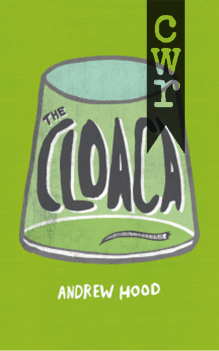
The sophomore collection of short stories from Halifax-based author Andrew Hood, The Cloaca is 138 pages of people who don’t know what they’re doing.

Described on the back cover as “your high school gym coach, drunk and dishing dirt on all the other teachers on the crosstown bus,” the stories in this book capture your attention like a man on a bicycle wiping out in the rain, or a bunch of Italians yelling at each other on the sidewalk [both of which I saw two days ago]. Continue reading

Underemployed, Pilot Episode: A TV Review

Right after finishing the very first episode and right before reading what the A.V. Club’s TV Club thought about it seemed like the perfect time to write my review of MTV’s Underemployed.

As a recent college graduate, the premise instantly caught my attention. Five young Chicagoans begin their first episode slightly buzzed on the eve of their graduation, dreaming about where they’re going to be in a year. Throwing lofty goals back and forth they’ve already begun planning their 1-year reunion where they’ll celebrate their “world domination.”

From left to right: Miles, Daphne, Sophia, Raviva, and Lou.

The characters are Lou and  Raviva, the couple who broke up so that both parties could go on to pursue their dreams [grad school and music, respectively], Miles, the would-be model, Daphne, the aspiring advertiser, and author-to-be Sophia, who I lovingly dubbed “VA” for “virginal Asian girl” [I thought the full acronym somewhat inappropriate].

Flashforward to the present and, to make things easier myself, the friends find themselves making up the following list:

  • Lou is street-canvassing [fundraising] for an environmental organization.
  • Raviva is working at a bar in which music is played.
  • Miles is a part-time male stripper.
  • Daphne is an unpaid intern at an advertising agency.
  • Sophia is working at a “Donut Girl” and is still a virgin.

Now, before I get any further, I’ll have you know that I am a sucker for ensemble shows. Friends is television gold as far as I’m concerned, and as a result I’m fairly into Community, and, even more recently [and into], Happy Endings. That being said, Wikipedia’s extremely scant article on the show categorizes it as a comedy-drama, or “dramedy.”  The problem is, the show is heavy on the drama, and very light on the humour.

Raviva shows up at Lou and Miles’ apartment pregnant. This, of course, creates the situation of Lou realizing he needs to take care of her. How this is dealt with is almost painful, and awkward in a way that just isn’t funny. His clumsy attempts at trying to find out whether or not he’s the father aren’t even cringe-worthy in a way that’s entertaining [see: The Office].

Elsewhere Daphne lets her super-hunky boss know that she has been an unpaid intern for one year, a premise that made me so livid I thought I was going to spit. He, in turn, asks he out to lunch, where they kiss, and then proceed to have sex in his car [after promising her that he’ll work things out].

On the smaller side of things, a cougary woman gives Miles her card while he works catering at an art gallery, which piques his interests since it reads “GQ.” They later have sex. Sophia meets an old classmate who is, of course, on the pathway to success, and his boss, who is a lawyer.

None of these things in and of themselves are terrible, the problem is pacing. Almost everything that’s introduced is almost instantly resolved, meaning that as viewers we don’t have much to look forward in the next episode, or the season to come in general.

For starters, Raviva wastes absolutely no time in giving birth to a beautiful baby girl. Miles finds a job with his dad [albeit after many, many interviews], and Daphne confronts her boss and demands to be paid [and coming out with a great deal of $750 a week and a parking space]. On the comedic side even the joke of Miles thinking he’s gotten a modelling gig is explained away in seconds. The man he thinks is Calvin Klein straight-up tells him that “You’re here to serve mojitos, and mini tacos, and eye candy.”

As far as events that completely blindside the viewer out of nowhere, Sophia is invited out on the phone. We’re led to believe it’s her former classmate, but it’s his boss, which is surprising. What’s even more surprising is that his boss makes a move on her. And then they are having lesbian sex and I no longer had any idea what was going on.

You can tell that somehow the people at MTV realized how the plot leaves us without much to look forward to [save for Daphne’s continuing tryst with hunky boss] by how the episode ends. With a voiceover and caption saying “this season, on Underemployed” followed by almost two full minutes of what’s to come.

In the end, I found myself interested in watching future episodes, but only because of what the teaser provided. While Sophia hints at her search for sexual identity by telling Daphne that “I might be [different]” it takes the teaser to slap us in the face with her saying “I don’t know what my sexuality is.” In other news, new parents Miles and Raviva will struggle, and cheat on each other [just tongue action, as far as I can tell]! All of these things serve to pull the viewer in, but none of these hooks can be found in the pilot.

I’ll probably be tuning in next week to watch at least the second episode, but it’s not very likely. While Underemployed scratches the surface of what it means to find purpose in life after dreams crash and burn, its pacing and distinct lack of laughs also means that it offers a look at life after college that moves both quickly and joylessly.

Stray Observations [something the TV Club does and that I’ve always wanted to do]:

  • None of these characters have average, run-of-the-mill names. To be fair, neither did most of the cast of Friends.
  • For kids who’ve just gone through four years of college, those are some pretty unrealistic goals. Touring as a musician? Writing [let along publishing] a novel?
  • It is oddly refreshing, however, to see an Asian character who majored in English and is big into writing.
  • While I have complained about a dearth of humour, there was a line, said by Raviva’s mother, that I thought was funny: “She is like a set of Russian dolls right now, and every one of them is a total b-tch.”
  • Finding out that Miles became a male stripper was also pretty funny.
  • The episode ends with the five friends having dinner in the biggest apartment I have ever seen. I’m talking bigger than the apartment in New Girl, and a little bigger even than Dave and Max’s in Happy Endings.

There is absolutely no way they could afford this apartment. No. Way.

  • Finally, the show made the decision of actually saying the title of the show in the following line by Sophia: “If life is just about working and earning money we’re all screwed. But if life is about living, none of my friends are underemployed.” I hope they’re proud of themselves for that.

Underemployed
Tuesdays, 10 p.m. EST
MTV

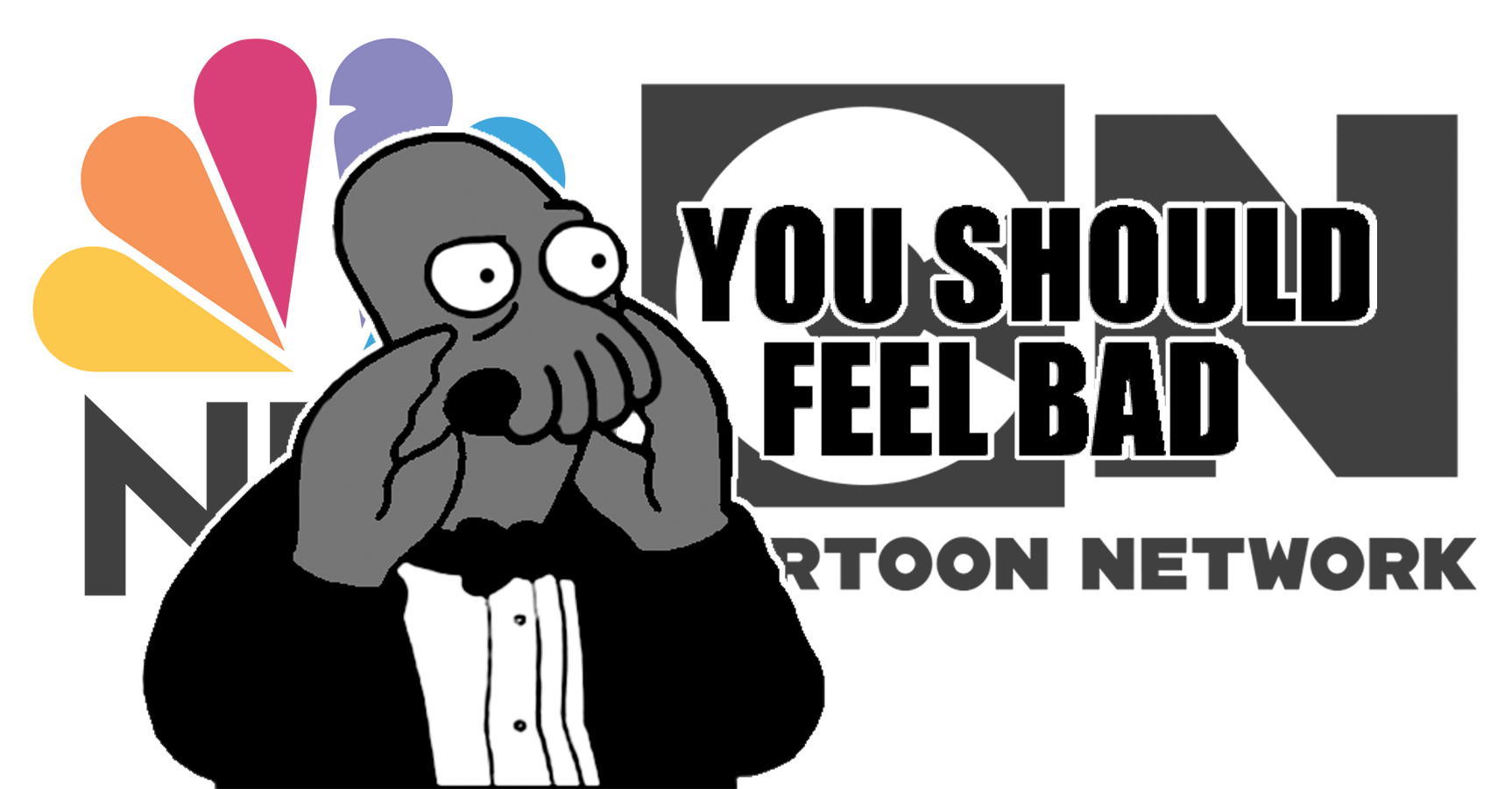
Shame Day: NBC and Cartoon Network

Imagine that you haven’t had pizza in a while, and have a hankering for a slice. As luck would have it, your friend is bringing some over as he promised a few days ago. As you sit there in eager anticipation you receive a call, and he lets you know that there’s going to be some delay. Disappointed, you ask him how long it’ll be. He tells you that you should be getting your pizza sometime in 2013.

Angry? You should be.

If you are one of the many, near-rabid Community fans out there, you were probably disappointed when you found out that the fourth season would only be 13 episodes. That being said, you were probably even more distraught to find out that it won’t be actually be airing this Friday.

That’s right, NBC has decided to remove Community completely from its 2012 Fall lineup. It’s unknown when the show will return, but the best guess is sometime during the Spring of 2013. I have attached a gif because Gordon is rubbing off on me, and because Troy crying is always funny. Look at him, the dude is sad. To be fair, so are a lot of people. I’m a little disappointed myself.

But not near as disappointed to see that Cartoon Network has pushed all of its DC Nation programming back until January 2013. It’s understandable that room had to be made to celebrate the network’s 20th anniversary, which is definitely something special. The main issue I have is that this decision was made after two weeks of programming had already been aired.

This means that after two episodes of Young Justice and two episodes of Green Lantern: The Animated Series it’s three months before we can get any more. If we can go back to my pizza analogy, that’s like someone letting you take a few bites and then telling you that you can have the rest. In three months.

Quality programming can be hard to come by [see: any episode of 2 Broke Girls], and news that your favourite shows won’t be around until after the predicted apocalypse is sombre news indeed. While Cartoon Network’s reasoning makes some sense, to air a few episodes and then push the rest back is insensitive at best. As for NBC, they seem committed to letting Community fans know that they are really not all that important.

And now I want some pizza.

Storm and “Black Hair”

This is somewhat of a continuation off of yesterday’s Fame Day post, concentrating particularly on the Marvel character Storm. Kris Anka’s design for the weather-wielding Ororo Munroe harkens back to her appearance in the 80s [seen on the right].

Keeping consistent with most changes to beloved comic book characters, the mohawk was met with both praise and scorn.

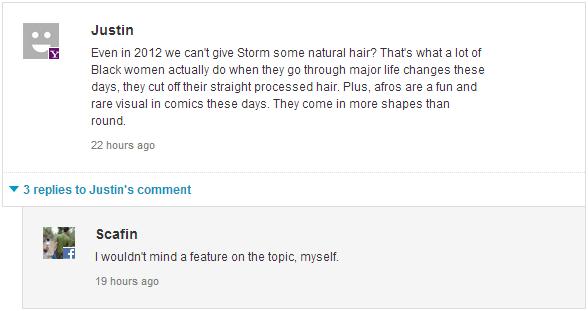
Trawling the comments section of the ComicsAlliance article on the topic, I came across two guys who were very interested in not just the style of her hair, but the state or quality of it as well.


Earlier on Scafin commented about wanting to see Storm’s hair in its natural state. In following up with my reply to his thoughts  [and with a slight miscommunication as to what I meant by “black hair”] he said:

I don’t mean color, though. I really want to see her with white, afro-textured hair. I understand why she was given relaxed hair when she was introduced, as that was the norm back then, but the ubiquity of relaxed hair has declined since then.

The thing is, Storm as a character has always had straight, white hair. The fan-run Marvel Database tells me that she’s descended from “an ancient line of African priestesses, all of whom have white hair, blue eyes, and the potential to wield magic.” That answers Scafin in that the character has never had “black hair.” It’s part of who Storm is now [having been depicted as a young child that way] and to retcon that many years of portrayal would fare poorly with fans.

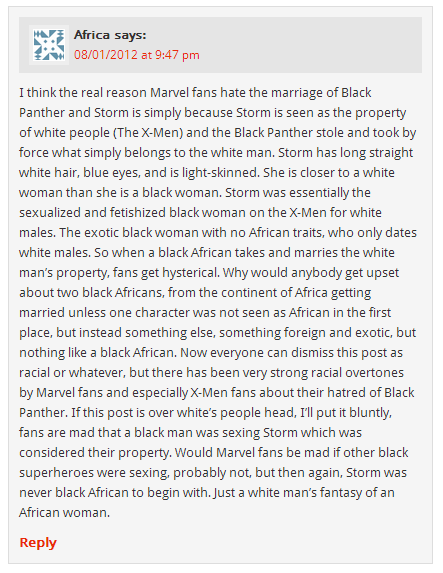
This leads to another question, though, which is why Storm was designed this way at all. This comment on an article about Storm’s marriage to the Black Panther had the following to say about the character’s creation:

I’m going to break this down as quickly and efficiently as possible, so we can concentrate on the more important aspects of the comment.

  • People are upset about the marriage because Marvel didn’t lead up to it well enough. In other words, they weren’t invested, and that’s adding to the fact that marriages in comic books typically do not work [see Peter and Mary-Jane in “One More Day.”]
  • That this is the sexual domination of White over Black when one of the very first relationships Storm gets into in the comics is with Forge, a member of the Cheyenne people. He was not, and still isn’t, white.

David Brothers, a blogger on staff with ComicsAlliance, agreed with part of what Africa had to say, commenting on the same article:

I liked Hudlin’s run on Panther. It was one of the precious few times that Storm actually felt like a black character, instead of a fetish object with blue eyes and perfectly straight hair.

This is in stark contrast to the article he wrote for Marvel a year earlier titled “A Marvel Black History Lesson Pt. 1.” In it he has more than a few good things to say about the heroine, which can be summed with these words:

If Gabe Jones stood for reality, Black Panther for ingenuity, Robbie Robertson for integrity, The Falcon for equality, Luke Cage for self-awareness, and Misty Knight for unadulterated cool, Storm was the combination of all of their traits and more. She was the daughter of a Kenyan princess and a photojournalist from Harlem, and therefore a direct link from African Americans and the continent known as “the Motherland.” She was powerful on a world-class level, refused to allow anyone to be her master, and commanded a massive amount of respect from all who knew her.

Taking into account Brothers’ apparent conflict in viewing the character, I
personally come away from this with the knowledge that Storm is more than just eye candy, she is a strong [in terms of power and character] heroine on par with many of her peers.

While Storm having straight hair may have been a product of the time she was created in, that in no way affects who she is as a character. Marvel has the right to maintain consistency in how she is portrayed, and has other characters who are better examples of having “black hair.” While the event of her marriage had its flaws Storm remains someone who has both strong ties to Africa and one of the most prominent black superheroes of all time. The straightness of her hair should in no way detract from that.

Fame Day: Kris Anka

Today’s Fame Day post is dedicated to the artistic genius of Kris Anka. I’ve been following his work on the superhero redesign blog Project : Rooftop for some time, and was thrilled to see him get the recognition he deserves on ComicsAlliance yesterday.

Apparently Anka had been hired by Marvel to design the costumes for the new Uncanny X-Force series, and he puts his own spin on the new roster of Storm, Psylocke, Spiral, Puck, Lady Fantomex, and their nemesis Bishop.

The biggest changes are in Psylocke losing the unitard for more of a full body suit, and Storm reverting to her 90s look with a fantastic-looking mohawk. Utility was definitely prioritized, and story as well. Working with Uncanny X-Force writer Sam Humphries it was decided that the grey in Spiral’s outfit should be opaque. This fit with the knowledge that Spiral was a character was “a little more confident in her sexuality,” without making the costume’s raciness over-the-top .

Anka’s design philosophy for the team is as follows:

The costume themes were something from the very beginning that I wanted to strive for. I felt that every costume should not only highlight the personality of the character it is wrapped around, but also of the function that the costumes will serve towards. At the end of the day, these costumes have to look like they can get into a tussle, and actually be able to handle it.

This certainly translates over to the many other redesigns that can be found on his various art blogs, and one I want to highlight is his version of the  Avengers.

From left to right: Iron First and Crystal, Ares and Ms. Marvel, Iron Man and Venus, Bucky (Winter Soldier) and Thor.

In another illustration, entitled “avengers – dont f-ck with us,” the entire team is explained in the description, with the idea that he wanted his Avengers to be “a family first off.” Ms. Marvel acts as leader, Venus as a strategic asset, Ares carries Stark-designed weapons that can collapse in on themselves. Every design point has a reason, and it all adds up to clean, recognizable  costumes.

His redesigns for DC’s trinity [Superman, Batman, and Wonder Woman] are images I go back to over and over. His vision of the the Last Son of Krypton shows that you can do away with the red shorts over blue tights, provided you break it up with a little bit of colour [the yellow buckle, the red lines on the side]. I’m looking at you, costume designer for Snyder’s Man of Steel.


All in all, Kris Anka is a name to look out for. In the ComicsAlliance interview Humphries admits that “My only wish is that we could keep going until we redesigned the entire Marvel Universe!” If only that were true.

You can find Kris Anka on various places on the internet:

deviantART: http://anklesnsocks.deviantart.com
Blogger: http://anklesnsocks.blogspot.ca/
tumblr: http://kristaferanka.tumblr.com/
twitter: https://twitter.com/kristaferanka

And don’t forget to search for his stuff on Project : Rooftop!

Evan and Gordon Talk: The Greatest Flaw of This Generation

GORDON: Ladies and gentlemen- this is your captain speaking. After some unavoidable delays we will finally be taking off into our mid-week discussion. Our topic for today is “What’s the greatest flaw of this generation?”(This generation being those born in the late 80s to mid 90s: “The Millennials,” “Generation I”, “Gen Y”- call us what you will).

EVAN: As I mentioned in the news update, we scrapped our conversation last night, largely because it became cyclical. To be more specific, we ended up going back and forth between apathy and cowardice, with one leading back to the other and so on.

GORDON: But let’s widen the picture a bit. While apathy is the go-to criticism many have, also up there for our generation’s flaws is our alleged “sense of entitlement.” Thoughts?

EVAN: If we’re still going with your incredibly broad age range, then yes, I definitely think that a lot of kids these days feel a sense of entitlement. It’s just the norm now to have wireless internet, a phone, the latest iGadget, etc. They’re just expected, the new given.

GORDON: Is that fair, though? I mean- haven’t we assumed that phones, indoor toilets, and electricity are “the norm” since they were first invented?

EVAN: To a point, though, some of what you listed are basic necessities. I’d argue that indoor plumbing is considered much more standard than an iPad.

GORDON: This is true, but I don’t think our generation- barring the handful of people who actually do feel entitled- views the iPad or any specific item as being “standard”- it’s the interconnection that’s the norm, as well as the expectations for new technology.

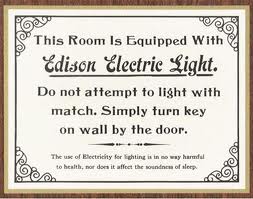
I mean, back in the day you didn’t need light bulbs. But if they’re mass produced, and safer than gas-lamps, then it just stands to reason that we’d eventually come to expect them.
But of course technology’s only one element. what about the idea that this generation is “entitled” in the sense that they get to “find themselves” or “focus on their art” or whatever hipster euphemism is being used to say “part-time employed”?

EVAN: Do I think that people feel they deserve the right to do more than just hit the ground running after college, get right down to the ol’ nine-to-five? I mean, yeah.

But I think this brings up a point I made yesterday about the “where” of our question. In France the age of retirement is 62 and that’s just expected. There are different standards depending on where you live in the world.

GORDON: This is true. I mean, each and every one of us would be considered spoiled brats if we jumped back a hundred years or so.
EVAN: Oh, no doubt. Especially you with your freakishly smooth hands.

GORDON: So would YOU say that the whole “entitlement” criticism stands?

And I use gloves. I refuse to be put down because I take better care of myself.

EVAN: You say that every time, but they’re still as smooth as a baby’s bottom.

GORDON: That means they’re working, and I’ll further have you know that I have a big ol’ scar in my right hand in the shape of a number “7.” But back to the issue-

It doesn’t seem like the “entitlement” bit sticks. Could we be classified as “lazy,” perhaps? The warped and stunted half-humans resulting from government dependence and the welfare state?

EVAN: Well, we discussed “laziness” last night specifically in the context of wanting to change what is clearly a broken system, but is what we’re talking about a general laziness? People just expecting to be spoon-fed?

GORDON: That’s the question. I recall a Cracked.com article in which the author kicked things off by apologizing for helping perpetuate the myth that a college education was a guarantee for a good job. Are we “lazy” in having had the expectation- as most of us had?

EVAN: Well, depending on who you ask, college is hard. In a way, I guess we expect that the hard work we put into maintaining a good GPA, et cetera, will result in finding employment once we’re out in the real world. Which, as I can attest to, is clearly not the case.

GORDON: So is that laziness then? Entitlement mentality?

EVAN: I don’t think that doing hard work and expecting a reward is laziness. That’s like someone working the fields and then being called a layabout because he expected crops to grow. A shaky comparison, I realize.
GORDON: Works for me. And I agree.

Now you yourself have accused us all of being creatively bankrupt. Could that be our major flaw? That we don’t make- we remix?

EVAN: I guess it depends on how we’re working this whole “greatest flaw of our generation” angle. The trend to rehash, remix, et cetera came about recently, but I’m not sure it’s because of us. Or is the question in regards to this day and age we’re in, and not those growing up in it?

GORDON: No, I mean us as an age-group, and that does pretty much answer the question right there. We are, for the most part, not the ones who are making the films and TV shows and music (give or take) of our time- that’s those who came before us.

EVAN: Exactly. Which is why we’re getting stuff like He-Man and Thundercats reboots, because those who were kids in the 80’s have a crippling nostalgia. Music is different, of course, but TV and movies are definitely controlled by the generation before us.

Okay, how about this. Maybe the flaw is our hellish appetite to be entertained.

GORDON: Ooh- interesting take. Expound, by all means.

EVAN: I mean, you’ve talked about the bilge that’s on television countless times. Do you know what we’ve been reduced to? A musical chairs gameshow called “Oh Sit!”

Are we so bored that we’ll watch people play “extreme musical chairs” for an hour?

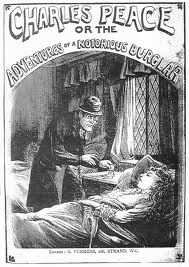
GORDON: I had no idea that existed. But surely this isn’t the first time in history that TV’s been crap. Or radio, or books, or music, or anything. Think of the “Penny Dreadfuls” back in the Victorian era- little, cheap trashy pulp-fiction novels made for mass consumption. Is that any worse than what we have today? Seems like the bilge is the same- it’s just the media that’ve changed.
EVAN: It may be the same, but it’s being produced at a frantic pace. That change, at least, has to be important.

GORDON: That speaks less to our appetites and more to our efficiency.

EVAN: I’d say that it has just as much to do with our appetites, judging by the content of what’s put out.

GORDON: We’re almost out of time, so let’s hit up some other key issues:

Apathy. As we said before, apathy tends to be the go-to criticism, at least, one of the major ones when it comes to our generation, and I think this is one of the easiest to put to rest. The Occupy Movement, environmentalism, increasing number of social movements, increasing global awareness- you name it. We’re strides ahead of the past couple generations. Heck, I’d go so far as to say we’re the most involved generation since the 60s and early 70s.

Well we’re out of time, and still of plenty of ground to cover- so rather than sloppily close up, we’ll be continuing our discussion next week with a question about hipster morality: “Do we want to be good, or do we just want to look good?” If you have any suggestions or recommendations for topics, don’t hesitate to shoot us a comment.

EVAN: Thanks for reading, and remember that CWR now updates every single weekday. I’ll see you tomorrow in our first ever “Fame Day” post!