Category Archives: feminism

Shame Day: Rick Ross and Rape Culture

First off, let me tell you that I like rap music. As I said in a previous post, I unabashedly love the King Fantastic Remix of “Drive It Like You Stole It.” On the other end of the spectrum, I also have a huge appreciation for artists like Macklemore who use the genre to tackle issues like drug abuse and homosexuality [while sounding good doing it].

I will also be one of the first to admit that rap music has also preached the messages of commercialism and misogyny, and that is not something I can get behind. Every now and then, however, a rap artist will push those boundaries enough for the media to get attention [and no, I don’t mean LL Cool J providing the bridge to that song about racism that’s kinda racist]. Continue reading

Shame Day: Reactions to Thatcher’s Death

I am not a fan of Margret Thatcher.

Most people aren’t.

While you do have to recognize Thatcher’s accomplishment in being Britain first female prime minister (that’s one heck of a milestone, no matter where you stand), you really can’t help but wish the first female prime minister of Britain would actually be a good leader, rather than a nationalistic psychopath.

Beating unarmed bystanders- just one of the many accomplishments of the Thatcher years…

Continue reading

Fame Day: Basic Human Decency

I like to rail on our society.

Our blatant disregard for the poor. Our willful ignorance in the information age. Our hypocritical sense of morality. Capitalism. People who have perfect eyesight but wear glasses for “fashion.”

Worst. People. Ever.

But for all of that, I genuinely do think we’re making some (small) progress as a culture. Don’t get me wrong, I fully believe that beneath every person’s thin veneer of civilization lies a seething volcano of barbarism, cannibalism, and baby-punching-ism waiting to be unleashed at any minute. There’s no changing that.

How awesome was this scene?

Nevertheless, we are getting better in some regards. Specifically, I’m thinking about an image I saw not too long ago.

You can’t really argue with that. When something is wrong, it’s wrong. “Injustice anywhere is…”

Well, you get the idea.

Now this guy deserves some applause on his own, but it’s really the bigger picture I want to direct the spotlight to. It’s the simple belief that there’s a basic set of expectations for human behavior. Being morally outraged not simply when the news is covering one story, or during a particularly heinous scandal- but for every act of injustice out there.

Let me break it down a bit.

Chances are, you’ve run into some post on Facebook or any other social networking site in which someone attempts to make a supposedly bold or heroic stand, voicing their support for gay rights or the body positive movement, or something of that nature. While this doesn’t typically happen on any of my feeds, when I do see it, I’m usually pretty underwhelmed. Wow, _____ is coming out in support of gay rights? Brave move, next thing you’ll know he’ll be speaking out against segregation!

I know that sounds needlessly harsh, but more often than not, I feel proclamations and manifestos of that nature are looking for applause more than anything else, and that’s the whole problem. Is it good to be a tolerant, passionate, socially, and environmentally conscious person?

Yes, it is.

What do you want, a cookie?

There’s a 1994 movie by the name of Quiz Show, a drama based off of the true story of a rigged gameshow in the 1950s. While I only ever saw the tail end of the movie (and that was years ago), there’s a scene that stuck in my head. The character who had been cheating at the game is called before congress to testify. Standing up, he offers an eloquent “soul-searching” speech on how he struggled to reclaim his integrity and self-respect after having been a pawn in this entire sordid affair. The congressmen congratulate him on giving such a moving speech- all but one. A congressman by the name of Derounian leans forward and states states that he doesn’t see why the contestant should be commended for simply having told the truth.

And it makes sense, doesn’t it?

We’re patting each other (and more than that, ourselves) on the backs for what? Decrying injustice? Raging against waste and greed? Supporting equality? Should we be praised for this? For briefly rising out of ignorance and selfishness to meet the minimum requirements for human decency?

Seriously, do you think you should feel a sense of pride over not being a racist? Should we applaud ourselves for not clubbing a baby seal to death?

I don’t think so.

And it seems like people are finally starting to get it. Moral outrage for the purposes of fashion are being attacked. Not, perhaps, on a grand and noticeable scale (barring, perhaps, Jon Stewart), but quietly; with caustic jabs like that picture up above. And it’s about time, too.

Best movie of all time.

And yes, I’m fully aware of the hypocrisy of commending basic human decency not being commended. Consider this more of a public service announcement, if you must.

Shame Day: Microaggressions

A few weeks ago I stumbled onto a website called The Microaggressions Project and then promptly forgot about it. Returning to it tonight I looked over the “About” page, which had the following paragraph at the top:

This project is a response to “it’s not a big deal” – “it” is a big deal. ”It” is in the everyday. ”It” is shoved in your face when you are least expecting it. ”It” happens when you expect it the most. ”It” is a reminder of your difference. ”It” enforces difference. ”It” can be painful. ”It” can be laughed off. ”It” can slide unnoticed by either the speaker, listener or both. ”It” can silence people. ”It” reminds us of the ways in which we and people like us continue to be excluded and oppressed. ”It” matters because these relate to a bigger “it”: a society where social difference has systematic consequences for the “others.”

A little later on they define what “microaggressions” are, a term that was originally coined to speak about racial experiences. From the essay “Racial microaggressions in everyday life: implications for clinical practice,” which appeared in American Psychologist, Vol. 62, No.4:

“Racial microaggressions are brief and commonplace daily verbal, behavioral, or environmental indignities, whether intentional or unintentional, that communicate hostile, derogatory, or negative racial slights and insults toward people of color.”

One example of this could be a White couple walking down the street and having a Black man pass by them on the sidewalk. The woman clutches her purse tighter against her body, the subconscious idea being, of course, that Black men are prone to crime and should not be trusted.

As an Asian-Canadian I’ve experienced microaggressions plenty of times. I’ve had someone ask me if I was half-White [I am clearly not] with their rationale being that my “English was very good.” It can be an everyday occurrence for non-White people [I deign to use the word minorities, since I do believe that balance is turning the other way], and begs the question: “Why is this such a big deal?”

Writer of the aforementioned article and author of Microaggressions in Everyday Life: Race, Gender, and Sexual Orientation, Derald Wing Sue, PhD, has observed that microaggressions have actually been found to: “(a) assail the mental health of recipients, (b) create a hostile and invalidating work or campus climate, (c) perpetuate stereotype threat, (d) create physical health problems, (e) saturate the broader society with cues that signal devaluation of social group identities, (f) lower work productivity and problem solving abilities, and (g) be partially responsible for creating inequities in education, employment and health care.”

In other words, a Black or Latino man being stopped for a “random vehicle check” by police could be upset, and may even be accused of overreacting. Maybe they should simply be used to this and not let it bother them. The truth is that it makes them feel, even if only subconsciously, like second-class citizens. It’s true in a case as blatant as this one, and in an as subtle an action as hanging a Confederate flag or  having a Native American stereotype as a high school mascot.

To broaden this to the scope that The Microaggressions Project seeks to attain, microaggressions can include people saying to a person with Asperger’s, with no ill-intent whatsoever, “That you seem so normal!” It can be a 17-year-old girl being told by her gynecologist that just because she has access to birth control pills doesn’t mean she can just sleep around.

Microaggressions work in every direction. It’s like going to a Vietnamese restaurant and being given a fork and spoon instead of chopsticks because you’re White and not Asian. Microaggressions are built on assumptions and can make people painfully aware of who they are. They are rarely meant to offend, but often do. 

It truly is a shame that so much of the time we send out microaggressions without so much as a second thought, and then defend ourselves by deeming the offended to be “too sensitive.” While we won’t always be aware of how our words or actions can harm others, we can at the very least listen to the people being hurt, and in doing so try to lessen the presence of microaggressions in our society.

Stay Classy, Comic Book Fans

I don’t necessarily identify as a “nerd” or a “geek,” but I definitely identify as a comic book fan. As such, it hasn’t been hard to notice how I and others like me are stereotyped by popular culture, whether it be Comic Book Guy from The Simpsons, Kevin Smith and his pals talking about which superheroine they’d most like to bang on AMC’s Comic Book Men, or the gawking crowd of guys in a particular episode of The Big Bang Theory. These stereotypes, like most, are not as true as people think, but every now and then they ring true, much to the shame of those who share in that group.

ComicBookMovie.com is one of my favourite comic news sites, and one that I check on an almost hourly basis. It’s great because it gives a lot of news about upcoming comic book movies, as well as previews of upcoming comic books. One issue the site has, however, is that all of the content is completely user-generated, meaning that certain things may get to the front page that aren’t exactly high quality stuff.

Take, for example, an article in response to actress Shailene Woodley being cast as Mary Jane Watson in the upcoming The Amazing Spider-Man 2, titled “EDITORIAL: Making Shailene Woodley Hot Enough To Play MJ In TASM 2.”

As a little bit of context, the first shots of Woodley as MJ were not met with a great deal of enthusiasm. They depicted what appeared to be a very plain-looking redheaded girl, and not one who was anything like the “super-hot, incredibly bone-able character from the comics,” to quote the CBM contributor Mark “RorMachine” Cassidy. Below is an image I took from the article which shows Woodley side by side with a very popular image of the comic book character.

Upon skimming this article I was disgusted. The four areas that Woodley could work on in her portrayal were listed as “TITS,” “FACE,” “HAIR,” “ASS,” and “ACTING ABILITY,” in that order. I’m going to pull the first, and most offensive, of the paragraphs out to explain exactly why I was so repulsed:

TITS:

Look at the pic – comic MJ has lovely big disproportionate ones, Woodley doesn’t. Now obviously surgery would be the best route, but that’s highly unlikely so I recommend padding. It’s very simple, just stick a stuffed Wonderbra on the chick, and any scenes requiring actual semi or full (hey, we can hope!) nudity can utilize CGI! It’s a magical age for cinema folks.

To help restore your faith in humanity the article was met by others who were just as offended as I was:

I’m not sure if it was present the first time I skimmed it, but posted at the very bottom was the following note by Cassidy:

NOTE: This article is meant as satire. It’s a response to the – genuine – backlash Miss Woodley received when she was cast in the movie, and then again when set images of her were posted online. No offence to Miss Woodley or anyone else is meant, and I (meaning me, and not the absurd persona I wrote the article as!) genuinely think she is a beautiful, talented actress who will do a great job as MJ 

As is the case with the internet, users popped up to comment and agree that clearly this was satirical, and began waging war with those who were “making too big a deal out of it.” Then, over on CinemaBlend, Katey Rich wrote an article in response titled “If You Think Shailene Woodley Isn’t Pretty Enough For The Amazing Spider-Man 2, You Don’t Deserve The Movie.”

In it she decries the shallowness of complaining an actress isn’t “hot enough,” using some very choice words to address realistic beauty. Rich exhibits just as much, if not more, disgust at the article, but more importantly addresses the topic of Cassidy’s article being a satire. She claims, and rightly so, that:

The “satire” was so close to the real thing that most of [CBM’s] commenters didn’t get the difference, and reading it makes your skin crawl because you just know that’s exactly how a strong handful of fanboys feel, no irony intended.

Thankfully, and again, people restoring your faith in humanity, another contributor named “Jack Sparrow” [in quotes because I’m fairly sure that’s not his real name] posted on the site featuring Rich’s rebuttal to the offensive editorial. He essentially agrees with her, summing up why it can’t truly be seen as satire, but more important he apologizes:

We are sorry, Shailene Woodley. We are sorry, comic book fangirls. We are sorry, women that came across Mark “RorMachine” Cassidy’s “satire”. He doesn’t speak for all of us.

We are not all mysoginistic pigs. And in the light of the recent The Amazing Spider-Man 2 announcements, I couldn’t be more excited to watch Shailene Woodley start her journey to bring Mary Jane Watson to life.

I’m mildly excited about TASM2 [I’m way more pumped for this May’s Iron Man 3], and at this point I don’t have any solid opinions on Shailene Woodsley being the girl to deliver the classic line “Face it, Tiger, you just hit the jackpot!” [or some variation thereof]. What’s more important to me is that, as the title of this post suggests, comic book fans stay classy. That the people who love this medium as much as I do conduct themselves in a manner that’s, at best, not reprehensible. The public has a general view of what comic book fans are supposed to be like, and it doesn’t benefit anyone to play to that stereotype even in jest.

Stay classy, comic book fans. I mean it.

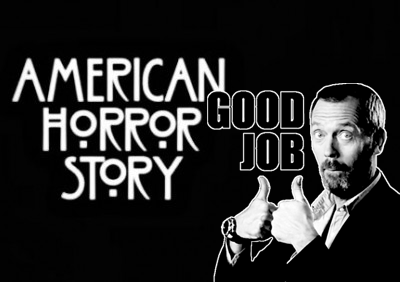
Fame Day: American Horror Story

americansdoghasdToday, I’d like to tip my hat to one of my favorite shows, a young series by the name of American Horror Story.

Now it’s no secret that the horror genre is universally despised, being seen by many as being lower on the totem pole than even toilet-humor comedies or the most saccharine romances out there. I could probably spend an entire post speculating on why exactly horror flicks are treated with such little respect (a lot of it is probably due to the genre’s inbred cousin, the “teen scream” flick), but that’s another topic for another time. I’m here to simply showcase the series and highlight a few of its key strengths and accomplishments that I think make it worthy of a Fame Day.

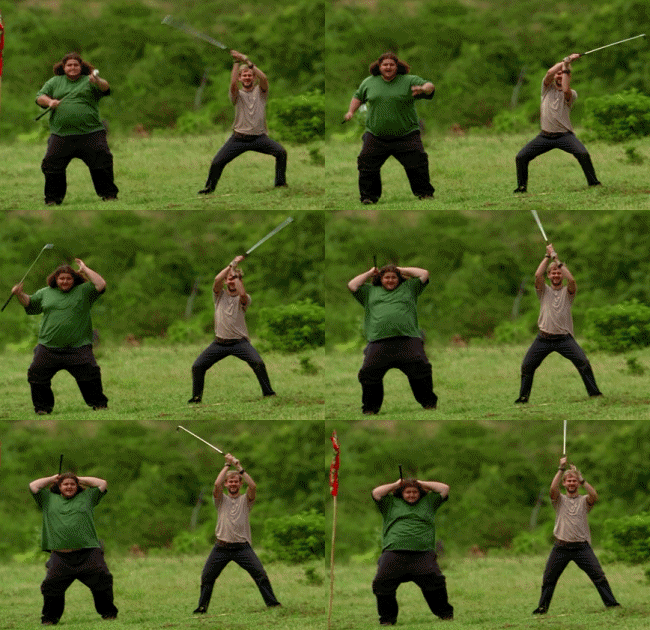
Each season of the show (the second has just concluded, and a third has been greenlit) is a separate story, made up of the horrific lives of the characters as they struggle with their pasts, their inner demons, and some ever-present terror always lurking just beyond the shadows. It essentially cashes in on the initial charm that LOST had before it jumped the polar bear.

Guilt and shame are themes that play heavily into the series as a whole (or at least, the past two “stories”), giving even the most heinous characters a degree of sympathy. Again, similar to LOST at its best, the constant shifting of the story from one perspective to the next prevents the series from ever being boring. Granted, the madcap pacing doesn’t always work (especially in the first story), but for the most part, the audience is always kept interested.

And that brings us to the first key accomplishment of the series:

Popularity

As I stated above, horror is simply not popular- at least, not in any mainstream way. Tim Burton’s lighter works are really the closest most people get to anything remotely macabre, and the fact that the series has continually drawn in high ratings (to say nothing of critical acclaim) is nothing short of amazing. And we’re not talking about a series that is eerie or has a handful of jump-scares, we’re talking about truly unsettling elements here. I’m certainly not alone in hoping that that AHS‘s continued success serves to begin building bridges between mainstream entertainment and horror subculture; heaven knows both could benefit from some fresh perspective.

And even in the subculture, AHS is playing a pretty major role. It’s…

Raising the Bar

As a result of the genre’s (comparative) isolation, quality in horror is typically pretty rare. When you can’t secure funding for special effects, good equipment, or even B-level actors, chances are your product isn’t going to be all that good. Of course, when you have a built in audience who would pay money to watch Dwayne Johnson protect an orphanage from chupacabras, why would you even bother trying?

I would actually probably watch that…

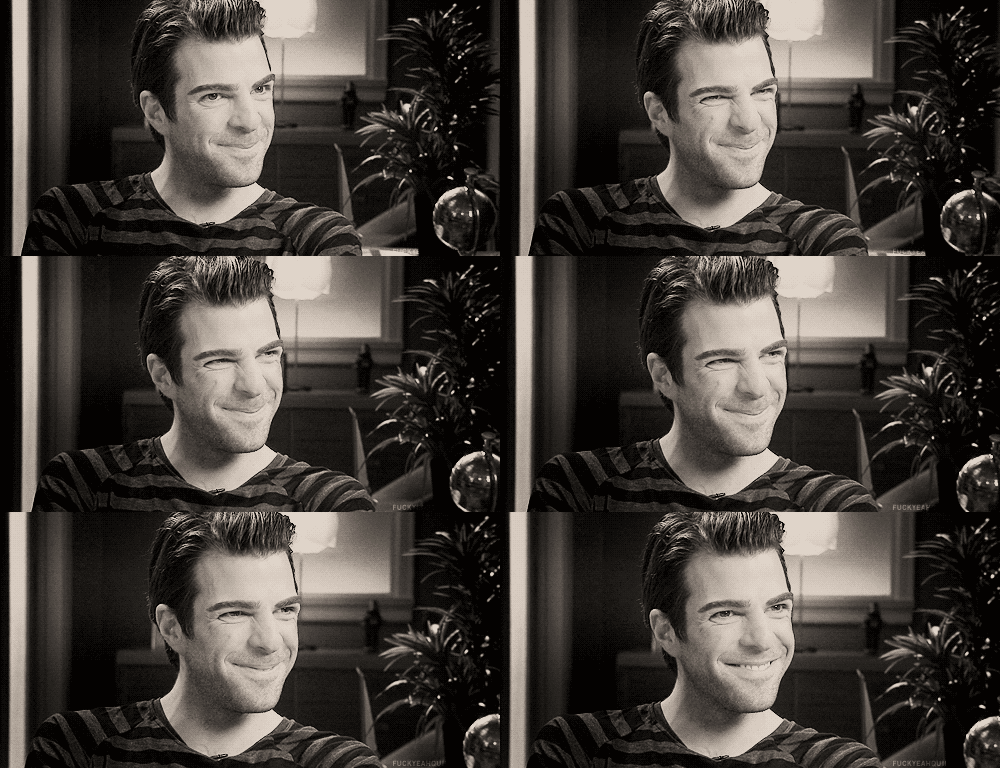
I’ve seen my fair share of (decent) horror movies, and I can count on one hand the films that had even passable cinematography. AHS, as a series that actually has some decent funding and actually puts effort into creating tense atmospheres and believable effects, is raising the bar for the entire industry. When AHS is the basis for most people’s experience with the genre, there’s going to be pressure on the rest of the industry to meet and excel the expectations the mainstream audience is going to have. Furthermore, AHS‘s star-studded cast (including Zachary Quinto, Ian McShane, James Cromwell, and, I kid you not, Adam Levine) is hopefully going to make the horror genre more inviting to high-caliber actors who can actually sell the audience on the direness of the situation and maintain interest without having to drag in a bunch of fornicating teenagers.

The series is actually one of the few I’ve ever seen that actually gives teens any credit or respect…

And perhaps most importantly, it comes down to this:

Depth

While the stories are good, as are the actors (Jessica Lange being easily more frightening than the goriest bits of the series), it’s some of the basic discussions held during the stories that really hit home. Oppression of women and the dark history of psychology are topics repeatedly brought up, and dealt with both in a historically accurate and totally visceral manner. Perhaps the most disturbing thing I’ve yet seen in the series hasn’t been any of the monsters or murders- it’s been a demonstration (scaled back for TV, even) of the psychological “treatment” given to people “suffering from homosexuality,” seen at the time as a mental disease. Those five minutes alone were more frightening than anything else in the story- and it was amazing. Amazing to see some serious and deep social commentary made, and to see the brutality and insanity some people had to undergo actually presented in a way that’s going to resonate with the audience. You will be a better human being for having watched that scene.

Though in the spirit of honesty, your view of nuns will probably diminish a bit…

When’s the last time you could say that about a rom-com?

American Horror Story, keep up the good work.

A final note. I would’ve included more gifs, but (1) I didn’t want to spoil anything and (2) easily 90% of all AHS images are of Evan Peters, who is apparently just the bee’s knee’, if the series’ female fans are to be believed.