Category Archives: morality

2015’s Cultural Battleground – Kat’s Account

EDITOR’S NOTE: We end this year by each taking a look back and picking our five best posts, explaining both their importance to us and to the world we currently live in.  Clicking the banner images will link you to each post, so as 2014 comes to a close join us in remembering how far we’ve come, but also how far we still have to go.

RachelBrown

After the recent acts of Daesh terrorism in Paris I returned to this interview with PhD Candidate Rachel Brown to get some perspective. While Brown’s work was focused on food and religious identity in French and Quebecois Muslim immigrant communities, it also highlights how isolation and religious persecution can push young people towards accepting religious extremism. In the interview, Brown explains,

“I’m not really an expert in ISIS or Jihadist fighters or any of the topics that relate to this. I can say that when people, especially youth, feel alienated, when they don’t feel at home anywhere, this can lead to finding identity in extreme forms of religion. If the religious identity is the only identity that one feels they can claim, he/she is going to place a huge amount of importance on that identity.”

nestle

This year, a petition began circulating that condemned Nestlé’s operations here in British Columbia. While Nestlé has been operating here in B.C. for 15 years, residents became particularly concerned during the drought this past summer.  As Gordon has pointed out in his previous Shame Day post, Nestlé doesn’t have the greatest track record when it comes to respecting other countries and their water needs. In this post we take a closer look at the relationship between Canadian water and the American corporations that would like to bottle it up. Continue reading


2015’s Cultural Battleground – Gordon’s Account

EDITOR’S NOTE: We end this year by each taking a look back and picking our five best posts, explaining both their importance to us and to the world we currently live in.  Clicking the banner images will link you to each post, so as 2015 comes to a close join us in remembering how far we’ve come, but also how far we still have to go.

unnamed4Somewhere in our collective history someone decided to depict God as a bearded, old human, dwelling in the clouds above. The trend caught on and has been going strong for the past couple millennia. As ubiquitous as this portrayal of the almighty has become, we argue that this imagery is the root of some of the worst theology (and art, music, and video) out there today, and how problematic it’s become for both the believer and non-believer alike.

unnamedFew images have so perfectly captured the abject and hellish misery of war than this year’s photograph of the body of Aylan Kurdi- only 3 years old. A would-be refugee from the ongoing conflict in Syria, Aylan and his brother drowned after an overcrowded boat capsized during a desperate attempt to reach Europe. The photograph evokes the deepest feelings of sadness for the dead and sympathy for the living- but crucially missing from the emotional equation is anger. Read on to discover why pity for refugees simply doesn’t cut it. Continue reading

Dividing Violence and Video Games

When I had originally planned on writing this post we were a little ways into November, with Remembrance Day having just passed. Walking through the subway stations here in Toronto it was impossible not to spot a bright red poppy pinned to a stranger’s lapel that inevitably forced me to, well, remember the war that lends them their importance.

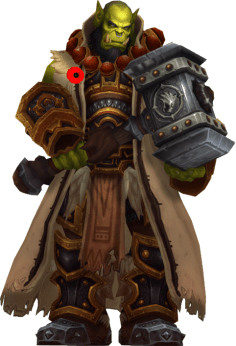
thrallflandersJust before the day on which Canada and the rest of the Commonwealth of Nations pay tribute to those who have fallen in the line of duty was Blizzcon, the annual convention put on by my favourite video game developer. With World War I on one hand and a company that holds the title of creating the highest grossing game of all time in World of WarCraft on the other the connection was clear.

Asking whether or not it’s possible to have a split between violence and one of the quickest growing forms of both entertainment and narrative device, for mainstream audiences, is a difficult enough question as it is, and I felt it all the more pressing as the longer I put off writing this post the more [extreme] acts of violence I could see reported on the news. I don’t even need to drop any news links for you to think back on an incident that occurred just this past week.

Now before I go any further I want to state plainly that this is not an indictment of violence in video games. As my co-writer Gordon related a few years back being exposed to such can actually be beneficial to the way we perceive and navigate the world. Former Culture War Reporter Stew, who assisted me in writing this, also mentioned that it can be “interesting because the interactivity of videogames presents us with a unique way to actually explore our violent tendencies, or our instinct for survival.” I don’t particularly believe that this aspect of the medium is harmful by any means. Instead what I’d like to explore is what video games could be with its absence. Continue reading

What Wouldn’t Jesus Do?

“Would Jesus have carried a gun?”

That was the question Christian activist Shane Claiborne posed in an article this Saturday.

The Jesus I worship did not carry a gun. He carried a cross.  Jesus did not tell us to kill our enemies. He told us to love them.”

These words come as a response to the shocking and repulsive comments by Liberty University’s president Jerry Falwell Jr. who, in a speech to his institution’s students, sneering declared that “if more good people had concealed-carry permits […] we could end those Muslims before they walked in and killed them.”

I shouldn’t have to explain how despicable those words are. And readers- I’m not going to.

If you’re reading this blog, I’m going to assume (to hope) that you have an iota of humanity in you. A speck of morality. A single shred of basic decency. I don’t think I need to describe what vile, bigoted, demonic filth that statement is. I don’t think I could even begin to. The heinous, cancerous insanity that Falwell spouts doesn’t merit a response.

Shane Claiborne, on the other hand, does.

shane-claiborne-believes-the-gospel-is-about-being-close-to-those-who Continue reading

Save Refugees, Save America

I believe in America.

I believe that the defining characteristic of this nation was its unerring sense of moral conviction- that all we did was in the advancement of some great work set into motion by ages past. That every undertaking stemmed from the deepest confidence in the simple rightness of our cause.

This faith led us, countless times, to commit terrible acts that damn the conscious of the nation. Slavery and Wounded Knee. Manzanar and Kandahar. McDonald’s and McCarthy. It’s led to the popular image abroad of Americans as fundamentally arrogant; loudly voicing their opinions without being asked, demanding where they have no right, interfering where they have no business.

And it was this same faith that has pulled this nation back every time. Yosemite and Normandy. Harlem and Harper’s Ferry. John Muir and Eugene Debs. The faith that sent millions to these shores from every corner of the world and the same unabashed confidence that sent American music, art, film, and literature back.

In spite of our divisions and our failings- and they are neither minor nor few- we are united by the common belief that our cause is not merely just but justice itself, and that its triumph needs only ingenuity, passion, and will to be secured.

For good or ill, it is this value that made America. Continue reading

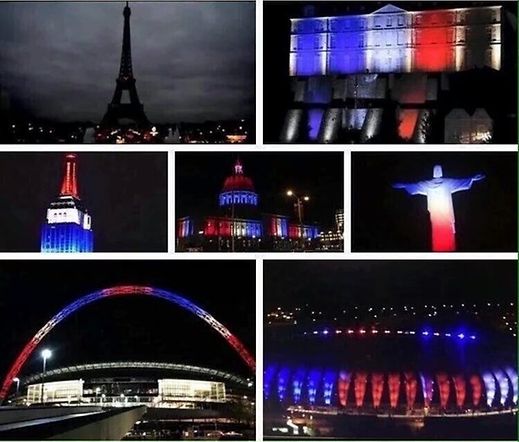
3 Reasons Why the Paris Attack Feels like 9/11 and 1 Reason Why It Demands A Different Response

Since the terrorist attacks in Paris on Friday, I encountered several articles that criticize the way the Western world responded to the tragic loss of life in Paris. While each of these articles bemoans the loss of 132 innocent lives, they also highlight similar atrocities that happened before the Paris attack and were almost completely overlooked.

In a lot of ways this event, and its media response, reminded me of the attack on the Twin Towers in 2001. While the media response to this tragedy has been a little more self-aware, our international reaction has been similar to how it was last time this kind of tragedy affected a Western nation. Rather than discuss the way we responded to these attacks, I wanted to examine why we reacted the way we did.

1) It felt close to home

I remember waking up the morning of 9/11, walking into the living room to see my mom crying. My dad turned to me and told me the world had changed overnight. Hearing about the attacks on Paris gave me the same shiver of fear that I felt that day. I don’t think it’s hard to dissect what motivates that feeling. These particular attacks were frightening because they happened to Western nations, and we in the West are very accustomed to feeling in control. We took control over much of the world during an age of imperialism, colonization, and slavery. Today we continue to control much of the world through unfair aid practices and political manipulation. These kind of attacks are terrifying because they make us feel like we don’t have as much control as we think we do.

Even though last Thursday 45 innocent victims lost their lives to a terrorist attack in Beirut and, 6 months ago a similar attack in Kenya killed 147 innocent people, many of us heard little to nothing about those attacks until their news coverage was compared to what occurred in Paris. In our effort to show solidarity with Paris, the Western world made it apparent that certain tragedies frighten us more than others.

As Elie Fares explained in his blog comparing the media response to the Paris and Beirut attack,

“When my people died, they did not send the world in mourning. Their death was but an irrelevant fleck along the international news cycle, something that happens in those parts of the world.”

Continue reading