Category Archives: writing

Monsters: A Book Review

I don’t normally review books in soft-copy. It’s difficult to read from a computer screen for that amount of time, and I find it easier to relate to a book’s solid permanence; if I can pick it up to hold and read, maybe you can [and should] too. That aside, I agreed to review something a friend had written, so here it is in all its candidness.

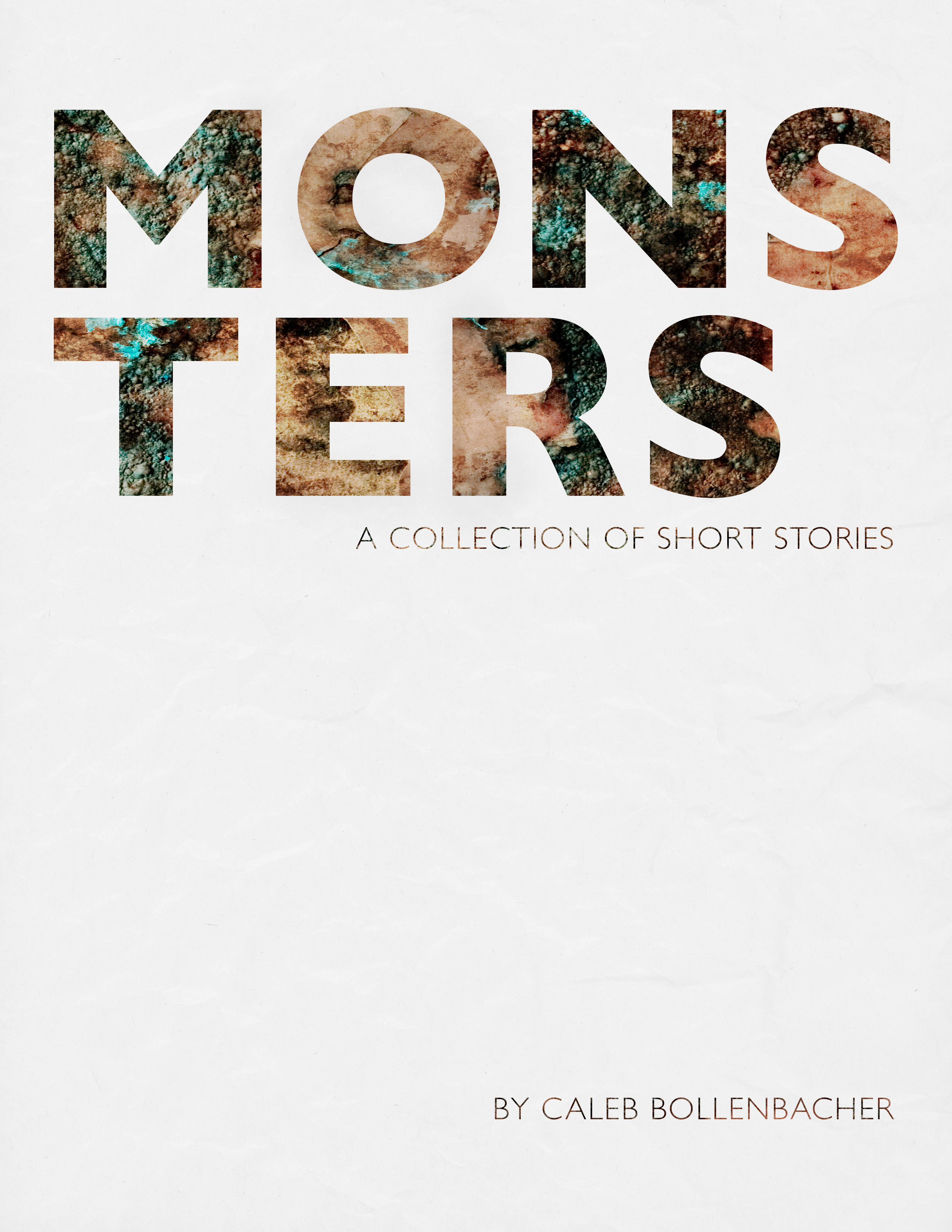
Monsters: a collection of short stories is exactly that, seven tales penned by  Caleb Bollenbacher, a 2011 graduate from Baylor University. Only available on Amazon for the Kindle, an excerpt of the book’s description is as follows:

Nobody yearns to be a monster. But sometimes it works out that way.
Sometimes you merely find yourself looking into the face of one.
Sometimes that face is your own. Continue reading

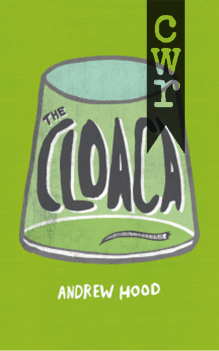
The Cloaca: A Book Review

The sophomore collection of short stories from Halifax-based author Andrew Hood, The Cloaca is 138 pages of people who don’t know what they’re doing.

Described on the back cover as “your high school gym coach, drunk and dishing dirt on all the other teachers on the crosstown bus,” the stories in this book capture your attention like a man on a bicycle wiping out in the rain, or a bunch of Italians yelling at each other on the sidewalk [both of which I saw two days ago]. Continue reading

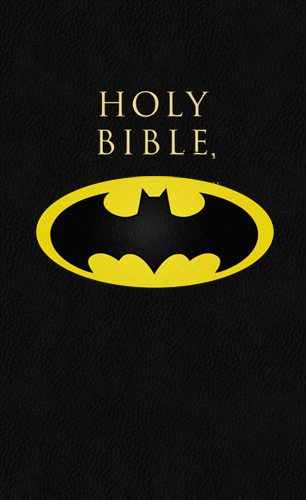
Nolan, Jefferson, and The Batman

Keep on reading, this’ll make sense.

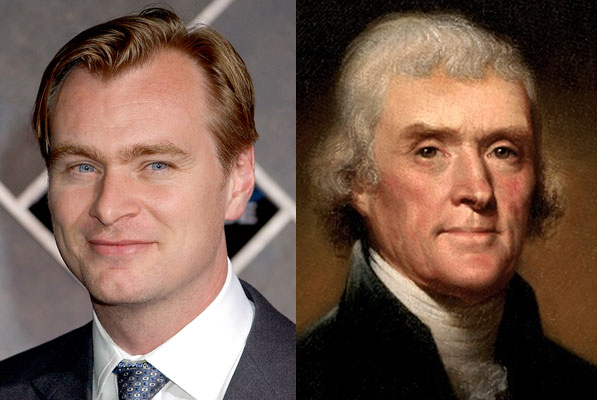
In the year 1820 Thomas Jefferson shared with a number of his friends a book
he had put together entitled The Life and Morals of Jesus of Nazareth. It was, in essence, the four gospels [Matthew, Mark, Luke, and John] in chronological order. What truly differentiated it from the Bible was the omission of all references to angels, prophecy, references to Jesus divinity and resurrection, and miracles.

In the year 2005 Christopher Nolan’s film Batman Begins made its way into theatres, spawning a trilogy and getting the ball rolling for dozens of “grim and gritty” remakes. In an interview with The Guardian the director said that he “[tried] to do it in a more realistic fashion than anyone had ever tried to [do] a superhero film before.”

The parallel I’m trying to make should be obvious to any Batman fan, either of the comics or the animated series. Having finally seen The Dark Knight Rises this Tuesday and finishing the trilogy, I can finally say this with confidence that Nolan has done to the Batman canon what Jefferson did to the Bible.

These two men have something against the improbable.

To make things clear, I like Nolan’s Batman movies. He took a concept as seemingly ridiculous as a vigilante crimefighter who dresses up like a bat and somehow grounded it. On top of that he forced us to accept the fact that comic book movies can be more than entertaining, they can be awe-inspiring as well.

An issue that I had with Christopher Nolan and his films was the staunch inability to embrace anything even vaguely fantastical. The problem with that being that the concept is, as I just mentioned, a vigilante crimefighter who dresses up as a bat. With that in mind, maybe the imagination can be stretched just a little more to accommodate a psychopath whose makeup can’t wash off, or a badly scarred man with a deeply split-personality.

Furthermore, by thinning the line between reality [that of the audience] and art [the film being watched] questions are forced to arise. If this is the real world, why didn’t the kidnapping of a Chinese national from his homeland spark an international debacle [The Dark Knight], and <SPOILERS> how is Bruce able to make the jump to escape the prison given the damage in his legs [The Dark Knight Rises]? The films lower our suspension of disbelief, and with our guard down we become quick to ask why.

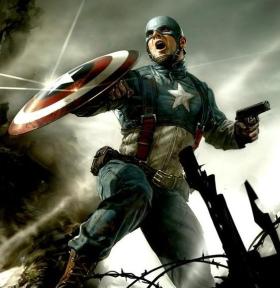
In his film Captain America fought pseudo-Nazis with energy weapons and tanks as large as houses. The audience never questioned this because although the film had some sort of anchor in a real-life event [World War II], we still understood that this was a world with one foot in the fantastic. If we can believe that a scrawny kid from Brooklyn ingesting a “super solider serum” can help the Allies win the war then we can just as easily believe that Hitler’s “deep science division” is led by a man whose face looks like a red skull.

Taking the “magic” out of the Batman mythos was no easy task, and Nolan threw a lot out when he decided what his approach to the canon would be. Scarecrow’s fear gas got the go-ahead, but not the Joker’s laughing gas, or the Venom that Bane uses to grow stronger. Batman could be called by name, but not Catwoman. Batarangs can be seen, and used, but the Batmobile must be free of any visual associations with the character.

Nolan was free to pick and choose what he wanted, and in many ways simply used Batman and his world to tell the stories that he wanted to tell. This is somewhat lost in the third film due to its connections to actual events in the comics [Knightfall and No Man’s Land, though that’s a post for another time], but for the most part he co-wrote the stories and screenplays for all three films. In another interview he states that “I don’t think our Batman, our Gotham, lends itself to that kind of cross-fertilization,” in response to a question about heroes co-existing between films akin to the Marvel Cinematic Universe.

Having stated that, I must admit that I have to view Christopher Nolan’s trilogy of Batman films as- something else. Something not Batman. Batman would never kill purposefully [letting someone die, Batman Begins], accidentally [tackling Harvey Dent, The Dark Knight], or not react to the deaths of others [all throughout The Dark Knight Rises]. I guess I view them as Batman movies about as much as I view the apocrypha part of the Bible. They can be good, and even beneficial, but ultimately miss the mark somehow.

Good Show! (Or, What’s Wrong With The Simpsons)

Over the past couple days, actors Donald Faison and Zach Braff have been campaigning for Obama here in Vegas. While I’m not a fan of their political stance, I freaking love Scrubs and have been re-watching the show for what must now be about the ninety-billionth time.

It got me thinking about a discussion Evan and I had a while back, in which we concluded after some debate that Scrubs is the best show of all time.

Ok, that’s not going to mean anything to you if you haven’t actually seen Scrubs. If you haven’t, go watch it now.

Now think about it- has there been a bad episode of Scrubs? Has there ever been an even sub-par episode of Scrubs?

There really hasn’t. Not every episode is fun to watch (it’s a hospital- you can’t expect them not to deal with mortality and whatnot)- some episodes are downright depressing and tragic. Even so, there show never fails to have some substance to it and (and this is the big thing) never really diminishes in quality despite having been on air for eight seasons (nobody counts the ninth as cannon).

But more on that in a minute…

See, what makes Scrubs so consistently good isn’t that it’s funny- it is funny, but not every episode, and not every joke in the funny episodes will have you on the floor.

Though most will…

It’s that it’s consistent all the way through. The characters develop, certainly, but they never really shift dramatically or break away from who they were a season ago. JD is always JD, Turk is always Turk, and so on. The wacky, exaggerated universe of the show never strays too much into total realism or too far off into surrealism. In short, and episode seen in the last season of Scrubs is about the same (extremely high) quality that the initial episodes are.

Now I know you’re all saying, “But Gordon, you ruggedly handsome bastion of logic and truth, surely consistency isn’t all there is to it!”, and yes, it’s not just consistency that makes a show good. Comedies need to be funny, dramas need to be agonizing, and so on- nevertheless, these things are dwarfed when it comes to consistency- let me give you an example of this done wrong.

Community. I remember seeing ads for it in my first year of college and thinking “Neat- a show about college. Something I and my demographic can all relate to and get a kick out of. This looks like it’s gonna be good”.

And it was.

(Barring that they had an Indian guy playing an Arab kid because apparently all brown people are the same…)

Really good. In fact, the first season of Community is probably one of the funniest things I’ve ever seen in the couple decades I’ve been alive. But what proceeded the glorious first season was one of the fastest and ugliest burnouts in television history.

You remember how Abed was socially-challenged but ultimately human in his attempts to relate to people and make is father (also played by an Indian actor) proud? Remember how Jeff wanted to get his degree and regain control over his life? Remember how Troy was trying to deal with the loss of his status? How Annie was trying to reinvent herself?

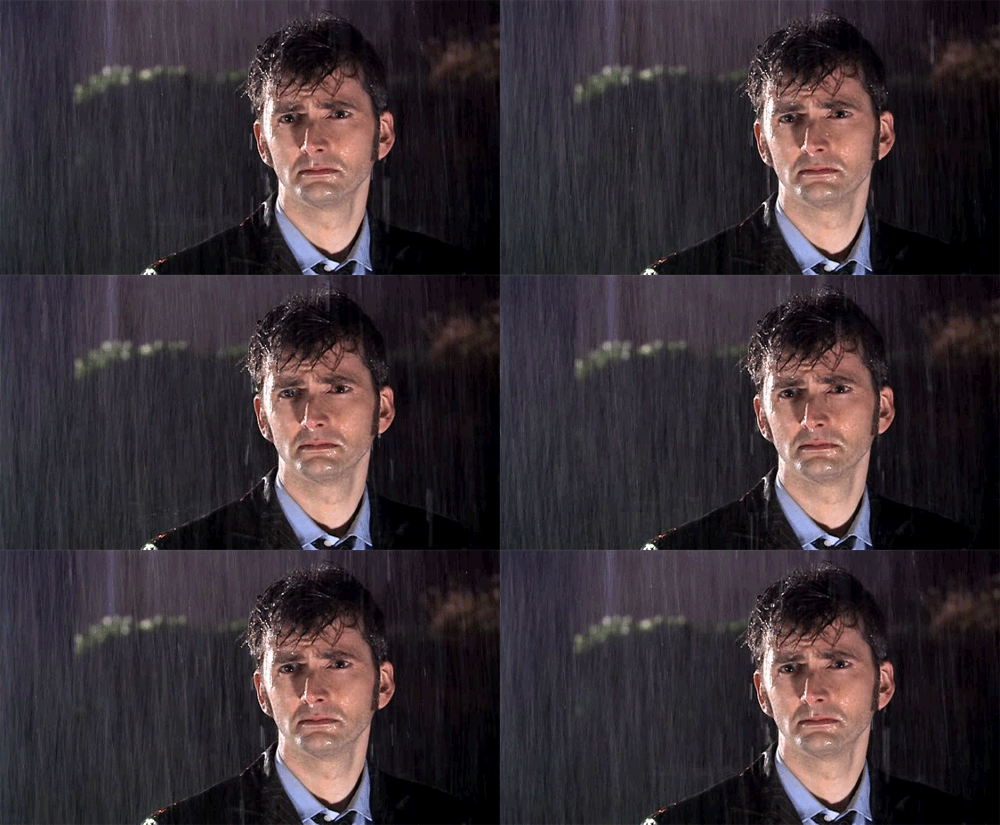
Yeah, all of that went down the toilet in the subsequent season. The motivations that gave the episodes conflict and helped progress the characters and the story as a whole were more or less dropped, and the little quirks that made the characters funny and interested got so blown up that they became the only aspect of the characters. Abed went from movie-geek to schizoid mess, Jeff became charming (and nothing else), Troy became just Abed’s buddy, and Annie was just the sweet naive straight-man (more or less) to the rest of the group. On top of becoming gross caricatures of their former selves, the show stopped dealing with college (which you might recall as being the reason so many people started watching the first place) and became centered entirely on the clownish escapades of the group. Granted, every once in a while you got good episodes, but never on the same level as the first season. Every time I sat down to watch Community the smile faded from my face and I could react in no other way but this:

“But Gordon, you roguish fountain of delight, isn’t this more a warning against being madcap than straying from the characters and story?”

I’d have to concede that, if it weren’t for such shows as South Park and American Dad. Both of these shows have been from their inception pretty surreal, nonsensical, and all-around crazy. Yet both shows have maintained that same level of craziness and remain (more or less) as popular now as when they started.

I admit, these shows are not for everyone…

Again, an excellent example of how shows drifting away from their original material kills them would perhaps the most iconic animated show of all time: The Simpsons.

My old roommate never saw the early Simpsons, and is to this day convinced that the show is side-splitting in its hilarity. And he’s probably right- I stopped watching the Simpsons after my first year of college- I got tired of having my heart broken.
Perhaps it’s best encapsulated in this quote by Lisa Simpson back in Season 2:

I heard you last night, Bart. You prayed for this. Now your prayers have been answered. I’m no theologian. I don’t know who or what God is exactly. All I know is he’s a force more powerful than Mom and Dad put together and you owe him big.

Would you ever hear that from Lisa in one of the later seasons? You would not. Why? Because Lisa has moved from being a brilliantly smart little girl to a pointy-haired midget channeling the whiny liberal indignation of Bill Maher.
Is there anything wrong with Lisa as she is today? Not really, no. If that’s who her character is, then that’s who her character is- only the hitch here is that’s not who Lisa started off as. Had Lisa started off as the yellow counterpart of Brian Griffin, then I wouldn’t have any problem. Had Homer started off as a food-crazed buffoon or Marge as a simple housewife, I’d probably still watch the show. Again, it’s the gradual change from one thing to another that’s responsible for people drifting away from the series. It’s not that shows go stale (not that staleness can’t be a problem- just look at the Gilligan’s Island episode where they’re almost rescued), it’s that they change too much.

And hey, with our ever-shortening attention spans and our rapidly changing culture, maybe that’s not such a bad thing.

Archetypes: Why Wizardry Triumphed Over Mythology

Harry Potter and the Philosopher’s Stone [marketed that way everywhere but in the States and India] was released in 2001. Nine years later Percy Jackson & the Olympians: The Lightning Thief, the first film adaptation of Rick Riordan’s series of young adult novels, hit the big screen. One went on to spawn a sequel the following year, while the other is taking as long as three. One of the reasons for this, I think, lies in the studio’s portrayals of the characters in their respective works.

I’m not going to go into a great deal about the Harry Potter franchise. The first book was released in 1997, and since then the films have swept up Western culture [and others] up into a wonderful world of witchcraft and wizardry. This post is written under the assumption that you have at least some familiarity with the works.

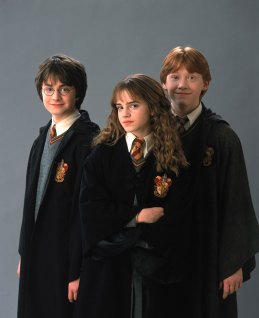
I opted for an image of them really young, since the majority appear to be just shots of good-looking young people staring somewhat broodily at the camera.

At their foundation, Rowling’s novels are built on a trio. Harry Potter is the chosen one, the courageous hero, the primary protagonist. Second is Ron Weasley, redhead, best friend, basically a wimp [for a lot of the series]. Last, but certainly not least, is Hermione Granger, the girl, the genius, the level-headed one. Clearly this is a team with some kind of equilibrium to it and a formula that works, and this is definitely evidenced in Riordan’s pentalogy.

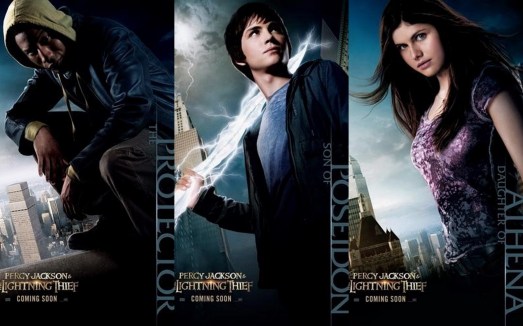
The Lightning Thief, the book the film was based on, stars Percy Jackson, son of Poseidon, talented swordsman, fearless warrior, and new to being a halfblood. Second is his best friend, Grover Underwood, a satyr, kind of a cowardly kid [goat jokes, everyone]. Topping this all off is Annabeth Chase, Athena’s daughter, meaning that she’s definitely got the wisdom thing going on. Clearly if it ain’t broke, don’t fix it. Before you go to assuming that Riordan’s books are a cheap knock-off, don’t; the series is a well-written take on both Greek mythology and the young adult genre as a whole.

From left to right: Grover, Percy, and Annabeth.

The problem isn’t that the characters appear to mirror those in the Harry Potter books. If anything, this is a strength of sorts, as they’re both familiar and effective. The issue is that the film adaptation of the novel takes these archetypes and throws them out the window. The result is this: three badasses.

In Percy Jackson & the Olympians: The Lightning Thief, Percy, Grover, and Annabeth are all depicted as being a) brave, and b) proficient at fighting, making them essentially slightly different facets of the same archetype. Yes, Annabeth is the one knows more about mythology and magic, et cetera, but she still wields a sword along with the best of them, transforming her from a cold, sharp-tongued girl to an athletic tomboy.

The irony is that Chris Columbus directed both films [as well as Academy Award winning The Help], choosing to faithfully adapt one and tailor the other for a specific audience, going so far as to significantly age the characters. Percy Jackson & the Olympians: The Lightning Thief has all the signs of a movie meant to catch the world’s attention with action, special effects, and good-looking teenagers. Three traditionally heroic characters are three times as entertaining, or at least that’s what a certain type of logic would dictate.

The film did well regardless, pulling in $225 million and with the sequel supposedly [I reserve the right to express some doubts] dropping sometime next year. Fans of the book, however, are hoping that Sea of Monsters is a much better installment than the first. Full character rewrites are rare, so the best they can expect is a film that respects the narrative of the series, and strives to fit their characters into that.

Decemberists, Infinite Jest, and Michael Schur Unite (and there was much rejoicing)

The Decemberist’s latest music video (for Calamity Song, from their most recent album The King is Dead) portrayed a scene from David Foster Wallace’s mammoth novel Infinite Jest, and the probability that somewhere within 100 yards of you a humanities major is freaking out increased by about 600%.

And this is awesome not only because 1) The Decemberists are awesome and 2) Infinite Jest is awesome, both of which reasons would be plenty justification for awesomeness, but it’s awesome because Infinite Jest is so huge and complicated and a-linear and full of bizarre details that it seems only slightly short of a miracle than anyone would even be able to succesfully portray in film just one scene from the novel, and yet Michael Schur (known for writing for SNL, The Office, and Parks and Recreation) managed to have the scene play out almost exactly as I imagined it – which I understand is a hideously biased judgement but I really only have my own imagination to go by, and perhaps the fact that film adaptations of writing almost never do that for me bolster the impressiveness of my statement.

The scene fromt the book, by the way, was brilliantly and kind of impressively chosen too – it shows the students at a tennis academy playing Eschaton, which is a ludicrously complicated game involving a mentally-projected map of the world on a tennis court, socks and tshirts representing different strategic targets, tennis balls (lobbed by each country) representing nuclear bombs, and insane algorithms (that David Foster Wallace all but teaches you in the book) to determine the damage and population loss of each hit. Colin Meloy sitting in the place of Michael Pemulis, one of the main characters of the book, with his characteristic sailor’s hat, is weirdly perfect. Schur’s attention to details from the novel made the video, I think, bringing yelps of excitement from readers of the book seeing a scene from possibly the most bizarre and un-movie-able piece of fiction they’ve read portrayed (almost) perfectly on film, but also allowing people who haven’t read the book to still understand what’s going on.

So, in summary, props to The Decemberists for being awesome, postmortem props to David Foster Wallace for being brilliant, and mad props to Michael Schur for creating a visual reality out of a piece of something as abstract and wonderful as Infinite Jest.