Tag Archives: ethics

The Ethics of Tourism: Considering A Small Place in the Traveller’s Era

Is it immoral to be a tourist?

A few weeks ago we returned from spending a week long vacation in Cuba. You may have even read my last post with suggestions for anyone else who might be interested in traveling there.

So, why, out of the blue, am I asking you about the morality of tourism?

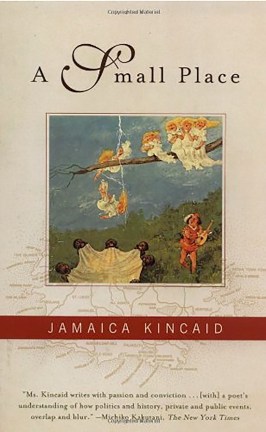
Well, it’s probably because of Jamaica Kincaid and her book, A Small Place.

maxresdefault
Continue reading

Shame Day: Piers Morgan

Speaking on the subject of cornered enemies, the brilliant tactician Sun Tzu warns us to always leave the enemy a way out, lest they rally and defeat you out of desperation. Far be it from me to disagree with the general, but I think the single exception to the rule may be the culture wars. It’s so rare to get a major figure so utterly on the ropes that I don’t think anyone could blame you from moving up and laying into ’em, and readers, Piers Morgan is on the ropes.

The ape isn’t on the ropes, but you get the idea…

American readers might know Piers solely as an obnoxious CNN commentator, and while that’s true, Morgan’s condescending coverage of gun control (his favored dead horse over the past few months) is really only the tip of the iceberg. Continue reading

Shame Day: Political Ignorance

Do you know what the origin of the word “idiot” is?

It comes from the ancient Greek for someone who is totally self-centered; someone without any interest in public affairs. To the inventors of democracy, “idiocy” was the opposite of “citizenship.”

Readers, we are surrounded by idiots.

When I was putting together yesterday’s post, the pictures I used inevitably had a host of comments sighing “It’s Washington, what do you expect?”, “Politicians have always been dirtbags,” and “This is why I don’t vote.”

The issues change, but the reactions remain the same. People throw up their hands and start spewing folksy, thought-cancelling truisms about how politics is inherently corrupt, or how it’s always been this way and always will be, or how it doesn’t matter who you vote for. Continue reading

Beyond Good and Evil

Act 2, Scene 2 of William Shakespeare’s Hamlet has the titular character declare that “there is no good or evil, but thinking makes it so.” Years later, this same sentiment would be echoed by Milton’s Lucifer in Paradise Lost, vowing “The mind is its own place, and itself, can make a heaven of hell, a hell of heaven.”

Moral ambiguity, in case you haven’t caught the drift, is the subject of today’s post. Our culture is becoming increasingly saturated with concepts and figures embodying this general rejection of our traditional measures of what right and wrong is. Jump back twenty years, and the definition of a bad guy would be fairly straightforward. A bad guy breaks the law. A bad guy hurts people. A bad guy lies. A bad guy uses people.

Today, all those things would describe five minutes of screen time with Breaking Bad’s Walter White…

Or Sin City’s John Hartigan…

Or The Walking Dead‘s Rick Grimes…

Or even any of these guys…

And lest anyone think that women are excluded from this mentality…

Now this isn’t the first time we’ve had a run of morally questionable heroes/antiheroes dominating popular culture. If I were to describe tough, unflappable, characters struggling against each other for their own ends and agendas, often in contradiction of the law- you’d probably assume I was talking about characters from some film noir piece.

And it makes sense, doesn’t it? Throw a mass of people in an economic depression with no end in sight, mix in distrust of the powers that be, add cynicism in regards to any progress or change, and when else can you expect but a tacit respect for the handful of people who do manage to carve themselves out a living. When you’re living paycheck to paycheck, “right and wrong” doesn’t quite seem so relevant as “effective or not.” When you feel helpless and voiceless, chances are anyone whose managed to be independent and powerful is going to be attractive- be he/she a suave criminal, a cunning businessman, a shrewd politician (à la Game of Thrones), or even just an all-around tough guy (see Sons of Anarchy).

And we’re not just talking about TV shows here.

Who are the good guys and bad guys in Inception?

Think about it- exactly which characters were representing the side of justice, truth, and freedom? Or Killing Them Softly? The Godfather SeriesThe Big Lebowski?

Our heroes today aren’t crusaders, they’re survivors. They’re those who manage to carve out a slice for themselves in spite of law, society, and conventional morality. “Good and evil” simply aren’t relevant.

And y’know what? I’m not hear to pass judgement on any of that.

There’s strong arguments to be made on all sides for whether or not this is a good or a bad thing or, to put it into morally ambiguous terms, a productive or a destructive thing. There’s even a strong case to be made for the “morally ambiguous” characters on TV and in the movies still never straying too far from anything truly socially unacceptable. Alternatively, you could (and I would) potentially argue that the moral system we had before all this wasn’t actually all that moral to begin with.

And what about the issue of cultural plurality in our ever-shrinking world? When what is right according to my moral code wrong according to yours, how do we proceed? Do we try to find some sort of umbrella system to keep us from fighting each other? Maybe we should declare moral anarchy and simply duke it all out based on the strength of our convictions. Certainly Nietzsche would approve of that.

All that’s to say that the issue’s complicated.

I don’t know, Michael Cera gif, I don’t know…

Speaking for myself, it is nice to see some kind of conviction, even if I don’t agree with the cause at hand. There’s a case to be made for apathy being the pinnacle of all evil. In a world where the greatest battles the average person (or rather, Westerner) faces are over such petty, empty things as getting a dinner order right or having to wait in line, seeing any kind of drive makes for a nice change. As with so much in this past year, it might not be great, but it’s a start.

The Good, The Bad, and The Evil

In an early Shame Day post I called a particularly reprehensible political lobby “what cancer would look like if it were a social movement.” While I continue to stand by that statement (this group was pulling the exact same ploy against Muslims that Middle Ages Christians used against Jews), a commenter did assert that I had gone too far, stating “as wicked or wrong as you think these people are, they remain human beings.”

It’s got me back to thinking on a subject that’s long held my interest- namely the issue of evil. You’d think it’d be pretty straight forward- right is right and wrong is wrong- but let me get right into an example.

Was this guy evil?

No question. Hitler and his followers aren’t simply evil- they’re the go-to example of evil. They’re our baseline for evil. Everything vile and nefarious is measured against either Hitler or the Nazis.

So what about this guy?

Columbus’s long-list of achievements (discovering America not being one of them) read more or less as a chronicle of genocide, slavery, and theft. It’s well known, certainly at this point, that Columbus was a greedy, narcissistic, tyrannical, and corrupt man. Even with streets, cities, a holiday, and even an asteroid commemorating him, surely we can all agree that this guy was evil. Not on the level of Nazi Germany, but still indisputably evil.

But what about him?

Yep, that’s Thomas Jefferson. President.  Founding Father. Author of the Declaration of Independence.

Slave owner.

Not just a slave owner, but an abusive one- carrying on an affair with one of his slaves (that slave also being his wife’s half-sister), getting her pregnant multiple times, and then promptly allowing his own children to spend the rest of their lives as slaves.

Pretty depraved, eh? If I did any one of these things, I’d be called out as a first-rate ******* (and rightly so). I’d be called evil, and that would be telling it like it is.

But let’s move on.

Is this guy evil?

That’s J. Edgar Hoover, founder of the FBI, which he oversaw with about the same leadership you’d expect from some Stone Age self-proclaimed god-king. Hoover was an egoistical, jealous, paranoid man who used the FBI to advance his own political agenda. In addition to all of this, Hoover was a rabid racist, and struggled long and hard against the Civil Rights movement, targeting MLK Jr. in particular, as well as spearheading a campaign to undermine the Black Power movement of the 1960s. Would you call this guy evil?

Ok, what about them?

Yes, the average American family (not pictured above), or heck, even just the average American? Our money goes to supporting companies that use sweatshop labor. Our money goes to supporting companies that recklessly destroy the environment. Our money goes to supporting corporations that push objectifying ads (especially, but not exclusively, in regards to women).
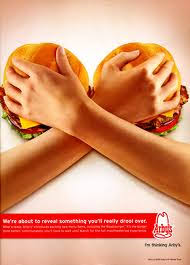
Our taxes go to supporting dictatorial regimes (such as former Egyptian president Mubarak), racist and apartheid states (such as Israel), and even states that utilize child soldiers.

Where does that put us?

Now all of that is simply to illustrate the apparent complexity of the issue. Evil is evil, yes, but pinning down exactly who is and isn’t evil becomes a little more complex once we look at someone other than the Nazis. Jefferson was instrumental not only to the founding of this nation, but to the establishment and perpetuation of the core concepts of democracy and human rights- even to the point where Martin Luther King Jr., a man whose ancestors Jefferson owned– wound up quoting him in his iconic I Have a Dream speech.

Likewise, there’s the issue with the average American. Almost none of us would actually be able to manage a sweatshop, or put an assault rifle in a twelve-year old’s hands, at least, not in person. Despite this, our economy is built on the backs of Bangladeshi kids working for twenty-five cents an our. Our security (we are told) is predicated on us coordinated with nations whose human rights records are drenched in blood (*Cough*China*Cough*Saudi Arabia*Cough*Columbia*Cough*). The vast majority of us either don’t know or don’t care; not enough to raise a voice in protest, anyhow. Again, what does that make us? We might not be ourselves actively implementing imperialism and violence and despotism, but we still do rake in the rewards and howl for more.

We could try arguing innocence by virtue of not being the ones pulling the trigger on any of this, but the truth that history has taught us over and over is that simple knowledge of an injustice creates moral culpability. To ignore injustice equates with committing injustice. We simply can’t escape it.

Not without risk of being hunted down by zealously religious Irishmen…

And maybe that’s the answer. Maybe we can’t be so picky about where we draw the line between right and wrong. Maybe the answer is sweeping judgment. That’s not meant to be some fire and brimstone-esque statement, that’s simply a fact of the matter. You’re not good and evil only when you embark on a mission of genocide- you’re a participant in a viciously evil system until such a time as you act otherwise. You’re part of the problem until you’re part of the solution.

That’s not to say that you have to be flawless. You’re not going to be able to do that (neither am I, for that matter)- in part because we’re human, and in part because the world we live in simply isn’t going to cooperate. But people, we can at least try. I don’t think making an effort to not totally **** up the planet and all that’s in it is really all that much to ask, do you?

David Foster Wallace, Virginia Woolf, and Author Necromancy

Sorry this is late, ye millions of people. I am [still!] traveling through places barren of the internet, but I’m returning to the land of milk and honey soon (or whatever) and will have wireless all the time again.

source: electricliterature.com

I came across this blog on The Outlet that “revisits letters from prominent writers and other artists to revive the dying art of letter writing.” They posted a postcard from David Foster Wallace to Don Delillo (a famous person I haven’t read who seems to have won many awards for books called White Noise and Underworld and Mao II, among others).

First, the phrase “revive the dying art of letter writing” caught my attention. References to “reviving the dying art of [blank]” always have about them a sort of nobility – like when someone tells you that they work for the Peace Corps or rescue puppies for a living. But how does a note from a brilliant man help revive the dying art of letter-writing? The text is a clever note – another person defending the “art of letter[-]writing” might not even recognize it as anything more than an e-mail text.

And then I want to know why we publish and discuss the letters of famous people. David Foster Wallace was particularly brilliant, it’s true, but the post-mortem ransacking of his library was unsettling to hear about. Maybe a year ago I’d think differently, but now reading writers’ letters and diaries (like Virginia Woolf’s) seems me to me a rude, fetishistic, and sort of useless thing to do.

Virginia Woolf's diary, published post-mortem

And yes, the writing is going to be good – but many people can write witty and clever letters. Writers’ letters might be constructed, but they’re only constructed for one person and in that context. Books and published works are written in an entirely different context, for public consumption and enjoyment. Looking for writers’ letters seems to me the equivalent of wanting to hear Beyonce humming while she pees.

In David Foster Wallace‘s letter to DeLillo, he talks about a large palm tree, a book they exchanged, and how Wallace recently got his license in California. The writing is quite witty to read, because Wallace was good at words. But it is saying nothing and communicates nothing but what Wallace wanted to say to DeLillo on the 1st of September of some indiscriminate year. Why do we like reading this? How would this contribute to maintaining the art of letter writing?

Looking for every word on every grocery list scratched out by an author sounds painfully like something that I would have done a few years ago, which might be why I react so strongly against it now.

Knoebel (the blogger) calls the postcard “a prose index of cultural references,” which is pretty characteristic, I think, of the annoying self-effacement with which writers’ personal and accidental writings are usually treated: something must have been so special about these holy people that it is more worth our time to read their private, unrelated writings than it would be to develop our own. And that, I think, is my main problem with this practice – if we really want to appreciate prose, or to revive the art of letter writing, we should probably start working on writing some letters ourselves.