Tag Archives: film

Evan and Gordon Talk: The Bechdel Test


EVAN:
So I came across a little something called the “Bechdel Test” through an article on racebending.com. It’s a test that’s supposed to rate how well a film does in terms of portraying women. That’s a rough description, anyway.

GORDON: I’ve heard of it in film criticism. It essentially asserts that for a film to have “real” female characters, it must have a scene in which (1) two women (2) talk to each other (3) about something other than a man. Sounds simple enough, but you’d be blown away by how many movies fail it…

EVAN: And the thing is, some of these movies happen to have perfectly good “strong female characters.” The site bechdeltest.com lists films that do or don’t make the cut, and in the comments section many a person states “but this female character was such and such…”

GORDON: Example?

EVAN: User “lili” disagreed with the rating given Wrath of the Titans, saying:

Although conversation between the two named women was minimal, the character of the main woman was well developed with no sexual stereotyping or weaknesses. I think it passes the Bechdel test in spirit, if not in actual letter.

GORDON: See man, as much as I’d consider myself a feminist, I really don’t like the Bechdel Test and some of the assumptions it seems to make. A lot of it just really doesn’t pan out- I’m looking at the list they’ve got here, and it’s seriously twisted.

Check it out- Sex and the City 2- easily some of the most misogynistic and racist crap out there gets a free pass, and movies like The Rum Diary or Rise of the Planet of the Apes– which have way better portrayals of women- are failed…

EVAN: I mean, it’s easy to see why their criteria was picked- having the women named is extremely important, as it’s a pretty solid way of ensuring that they’re actual character and not just waitresses or other extras. Also having them talk about something other than a man. That’s pretty important stuff, I think, in maintaining that they’re not just female verbal support for the male lead.

Where it really falls apart is the second part of the test: the need for the female character to have to talk to each other-

GORDON: I don’t think you’re being quite hard enough here, dude- this is a bad test. Look at it this way-

The first criteria is that there be two women, which is dumb because it assumes that a woman’s identity is based on how she relates/matches up with/differs/etc. with other women. Totally disregards her qualities (or failings) as an individual, y’know? The second criteria is, like you say, that they have to interact which each other, which again doesn’t make much sense (see previous point). And the third point, while decent, also kinda falls apart- if two men talk to each other about nothing but women, are they not real male characters? Kinda throws relationship movies out of the window.

…Point is, the test sorta shows you when a movie drops the ball on female characters, but a “passing grade” doesn’t really mean much of anything.

EVAN: I agree with you completely. Part of the reason I’m a little less harsh is thinking about how to construct/write a single test which judges a film on something as deceptively simple as the “active presence of female character,” as Feminist Frequency would put it.

GORDON: Well, what makes a female character a female character?

EVAN: Well, I took Human Sexuality my senior year of college, so I can think of a few key specifics-

Continue reading

Batman: The Dark Knight Re-Cast

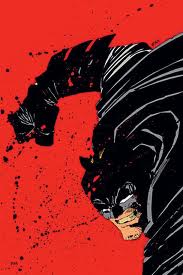
Before we begin, I want to make something clear: I have not seen The Dark Knight Rises. I can’t speak to the actors or the story or Nolan’s heretical-yet-genius take on either. I am further not saying that the actors in the trilogy didn’t do a good job- they were great, however this is Culture War Reporters, and with Batman (and the whole DC Universe) being so popular right now, and with Nolan leaving for other projects, we really can’t help but speculate if Batman were to be re-done, who would be the best fit for the characters?

Bruce Wayne/Batman:
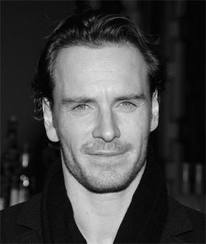
Actor: Michael Fassbender

Why We Want Him: We here at CWR aren’t the first (by a long shot) to speculate on Fassbender for the caped crusader. Simple fact of the matter is, the Irish-German actor has both proven to have the suave poise needed for Bruce Wayne (see his roles in Inglorious Basterds or X-Men: First Class) and the brutish physicality needed for Batman (see his roles in Hunger or 300). Beyond all that, the man has got the strong, square-jaw typically more associated with Batman, which while not required for a good Batman (just look at Bale) is still a plus.

Cons: I’ve never actually heard him do an American accent, so I am gambling a bit here.

Alfred Pennyworth:
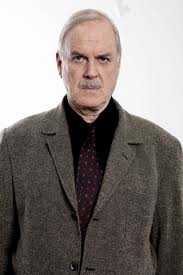
Actor: John Cleese

Why We Want Him: Because he is John ****ing Cleese, one of the funniest men to have ever ministry-of-silly-walked the earth. While Michael Cane did a great job as Alfred, like Fassbender, Cleese simply looks more like the classic depiction of the Wayne’s stalwart servant.

Cons: Standing at 6’5″, Cleese is bound to dwarf everyone else on scene with him.

Dick Grayson/Robin/Night Wing:
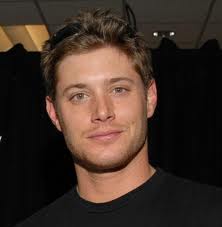
Actor: Jensen Ackles

Why We Want Him: Obviously, this isn’t the same Robin that wears a bright yellow cape and red outfit, because, you know, who needs stealth? Ackles, simply put, has the height and build to serve as a believable counterpart to Fassbender, as well as the acting chops to match the devil-may-care personality Nightwing is usually portrayed as having.

Cons: When I was drafting this list, I told myself that I wouldn’t use anyone who had already been in a Batman movie, and as Ackles did the voice for Jason Todd/Robin in Batman: Under the Red Hood (which is a surprisingly good movie), I am sorta cheating here.

Selina Kyle/Catwoman:

Actress: Olivia Wilde

Why We Want Her: Let there be no mistake- Catwoman is no easy character to play, and many a fine actress has attempted to take on the role, only to get scratched. I won’t say that I think Wilde is at long last the one who will nail it, but rather, if I was a gambling man (which I am), my money would be on her.

Cons: Like I said, it’s a gamble with any actress- runners up would be Noomi Rapace, Zoe Saldana, or the reanimated body of Eartha Kitt. Another major point would be that Wilde, to the best of my knowledge hasn’t (to my knowledge) been in any major action roles.

The Joker:
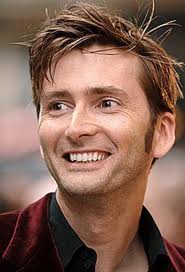
Actor: David Tennant

Why We Want Him: Not only does Tennant look the part, but on nerd-credit alone makes for a valuable addition to the movie. We’re talking about the zaniest Doctor Who and a member of the Royal Shakespeare Company. In short, we have an actor good enough to do Shakespeare, who already has a history of playing semi-psyhcotic characters, who has a rabidly loyal fan following, and who has the perfect facial features for a classic Joker.

Cons: Tennant is just slightly taller than Fassbender, which while certainly making for a scary Joker, might be a bit much. Vincent Cassel might make for a decent alternative, only I’m not sure he can do an American accent.

Commissioner Jim Gordon:
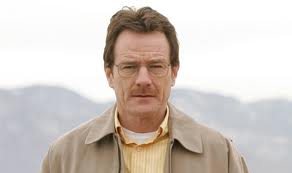
Actor: Byran Cranston

Why We Want Him:
It was Evan, actually, who suggested Bryan Cranston (of Breaking Bad) for the role of Commissioner Gordon, and while I would’ve initially cited Stacey Keach as the logical choice, Cranston, while not quite as heavyset as your classic Jim Gordon, is one powerhouse of an actor (seriously, go watch Breaking Bad).

Cons: Let’s face it, Cranston, as good as he is, does look a little like Gary Oldman’s Commissioner, and there’s a decent chance that you’d have that constantly gnawing at the back of your mind while you watched the movie.

Barbara Gordon/Batgirl/Oracle:
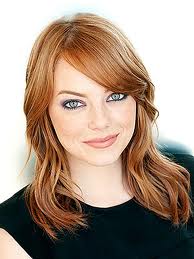
Actress: Emma Stone

Why We Want Her:
Emma Stone is already established as a good actress (see The Help or Superbad), and unlike Wilde, has had a bit of action experience in Zombieland, and if rumors are correct, is going to be doing some action in an upcoming film called “Gangster Squad“.

Cons:
Barring her role in Zombieland action roles, I don’t know of any other action roles Stone has had, which for playing Batgirl is obviously an issue, though that could be avoided by simply skipping ahead to Oracle. Plus she just played Gwen Stacey in The Amazing Spider-Man. Felicia Day would make a decent runner-up.

Edward Nigma/The Riddler:
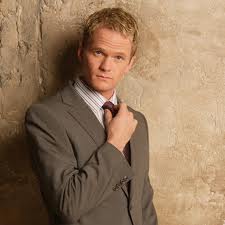
Actor: Neil Patrick Harris

Why We Want Him: Look at him. Look at him! That is Neil Patrick Harris, and he is amazing. Look up the word “Awesome” in the dictionary. Do you see a picture of him? No, because that’s how awesome NPH is- if they put a picture of him in the dictionary nobody would ever read anything but the “Awesome” definition all the time. This guy would make a- no, the– perfect Riddler.

Cons: There are no cons- how dare you even read this! Though if NPH was too busy being awesome to play the Riddler, Steve Buscemi would be a nice backup.

Oswald Chesterfield Cobblepot/The Penguin:
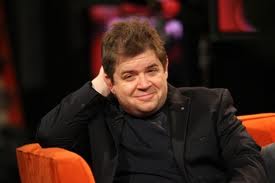
Actor: Patton Oswalt

Why We Want Him: Besides his short stature and general pudginess, comedian Patton Oswalt is a huge comic book fan, and offering him the role of the Penguin seems only right and natural.

Cons: Other than his voice acting, I don’t believe I’ve actually seen Oswalt in any films, and in off-chance his live action work isn’t up to par, there’s always Tobie Jones.

Pamela Isley/Poison Ivy:
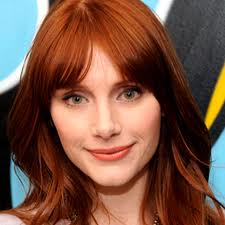
Actress: Bryce Dallas Howard

Why We Want Her: Howard can already do some decently evil characters (see her role in The Help), and on top her general acting abilities already looks the part of the deranged eco-terrorist, Poison Ivy.

Cons: Yet again, we’re faced with the issue of a lack of any action roles to serve as evidence that Howard would do well here. Plus she was apparently in one of the Twilight movies, which is the general moral equivalent of clubbing a baby seal to death using another baby seal.

Jonathan Crane/Scarecrow:
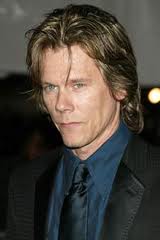
Actor: Kevin Bacon

Why We Want Him: If you’ve ever seen the film The Hollow Man, you really wouldn’t need to ask.

Cons: The man is getting on in years, and his incarnation of the Scarecrow would probably more of an intellectual and physical antagonist.

Victor Fries/Mr. Freeze:
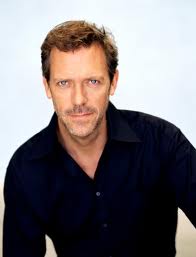
Actor: Hugh Laurie
Why We Want Him:
I had some difficulty trying to figure out who would make a really good Mr. Freeze (Jim Rash was my first reaction). Evan suggested Hugh Laurie, and after some consideration, I guess I can see it- it’d be neat to see Laurie in the role of the villain, at the very least.

Cons: None. The back story of Victor Fries is so touching that not even Arnold Schwarzenegger could butcher the moment they revealed it back in Batman & Robin.

Dr. Harleen Francis Quinzel/Harley Quinn:
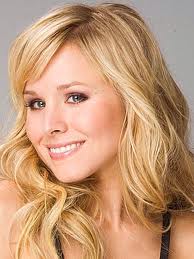
Actress: Kristen Bell

Why We Want Her: I wasn’t aware of this, but apparently there’s this push among Bell’s fans (you might remember her from Heroes, just before the series started to tank) for her to play Harley Quinn. Hey- give the people what they want.

Cons: Seeing as how Bell has already had some experience playing a super-villain, there’s really not a whole lot negative to say here.

Bane:
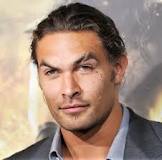
Actor: Jason Momoa

Why We Want Him: Look, I haven’t seen Nolan’s Bane, so I can’t make any comparison there, and with regards to the character in general, despite the whole “Count of Monte Cristo on Steroids” backstory, I’ve only ever seen Bane portrayed as a thug juiced-up on venom. Regardless of which way you’d want to take the character in a reboot, the man for the job is Jason Momoa (Conan the Barbarian, HBO’s Game of Thrones). The man is a freaking beast.

Cons: I’ve seen Momoa in Conan and Thrones, where he’s got a clear physical presence, but I really can’t say if he could hit the intellectual side, and really be Moriarty to Bruce Wayne’s Holmes.

Homeless Guys 1 and 2:
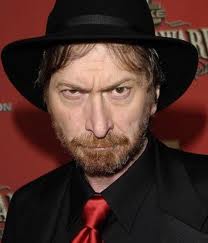
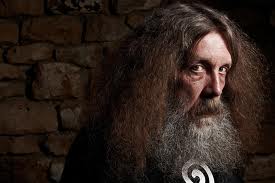
Cameos: Frank Miller and Alan Moore

We We Want Need Them:

As much as Miller is a raving, qausi-fascist lunatic and Moore a man who thinks he’s a wizard, it can’t be denied that both of these men have had a major impact not only on Batman, but on the world of comics- having them pass by in a seen would be, in my own opinion, a neat little salute (not the kind Miller likes, though).

Cons: There’s a strong possibility that Miller will go on a rampage when the moon wanes into a crescent, frothing at the mouth (Miller, not the moon) and swearing it’s part of an Islamic global conspiracy to destroy America. Moore will huff set paint until the voices in his head start singing in key.

Nolan, Jefferson, and The Batman

Keep on reading, this’ll make sense.

In the year 1820 Thomas Jefferson shared with a number of his friends a book
he had put together entitled The Life and Morals of Jesus of Nazareth. It was, in essence, the four gospels [Matthew, Mark, Luke, and John] in chronological order. What truly differentiated it from the Bible was the omission of all references to angels, prophecy, references to Jesus divinity and resurrection, and miracles.

In the year 2005 Christopher Nolan’s film Batman Begins made its way into theatres, spawning a trilogy and getting the ball rolling for dozens of “grim and gritty” remakes. In an interview with The Guardian the director said that he “[tried] to do it in a more realistic fashion than anyone had ever tried to [do] a superhero film before.”

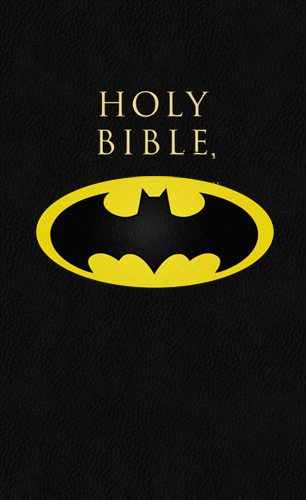
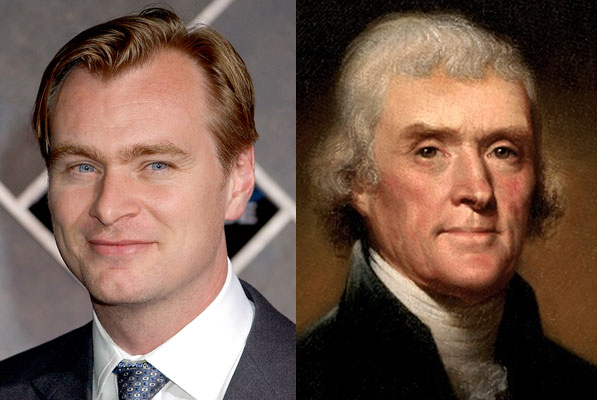
The parallel I’m trying to make should be obvious to any Batman fan, either of the comics or the animated series. Having finally seen The Dark Knight Rises this Tuesday and finishing the trilogy, I can finally say this with confidence that Nolan has done to the Batman canon what Jefferson did to the Bible.

These two men have something against the improbable.

To make things clear, I like Nolan’s Batman movies. He took a concept as seemingly ridiculous as a vigilante crimefighter who dresses up like a bat and somehow grounded it. On top of that he forced us to accept the fact that comic book movies can be more than entertaining, they can be awe-inspiring as well.

An issue that I had with Christopher Nolan and his films was the staunch inability to embrace anything even vaguely fantastical. The problem with that being that the concept is, as I just mentioned, a vigilante crimefighter who dresses up as a bat. With that in mind, maybe the imagination can be stretched just a little more to accommodate a psychopath whose makeup can’t wash off, or a badly scarred man with a deeply split-personality.

Furthermore, by thinning the line between reality [that of the audience] and art [the film being watched] questions are forced to arise. If this is the real world, why didn’t the kidnapping of a Chinese national from his homeland spark an international debacle [The Dark Knight], and <SPOILERS> how is Bruce able to make the jump to escape the prison given the damage in his legs [The Dark Knight Rises]? The films lower our suspension of disbelief, and with our guard down we become quick to ask why.

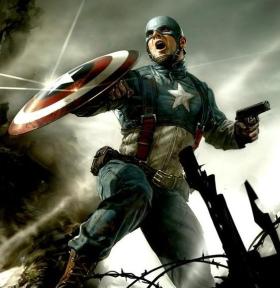
In his film Captain America fought pseudo-Nazis with energy weapons and tanks as large as houses. The audience never questioned this because although the film had some sort of anchor in a real-life event [World War II], we still understood that this was a world with one foot in the fantastic. If we can believe that a scrawny kid from Brooklyn ingesting a “super solider serum” can help the Allies win the war then we can just as easily believe that Hitler’s “deep science division” is led by a man whose face looks like a red skull.
Taking the “magic” out of the Batman mythos was no easy task, and Nolan threw a lot out when he decided what his approach to the canon would be. Scarecrow’s fear gas got the go-ahead, but not the Joker’s laughing gas, or the Venom that Bane uses to grow stronger. Batman could be called by name, but not Catwoman. Batarangs can be seen, and used, but the Batmobile must be free of any visual associations with the character.

Nolan was free to pick and choose what he wanted, and in many ways simply used Batman and his world to tell the stories that he wanted to tell. This is somewhat lost in the third film due to its connections to actual events in the comics [Knightfall and No Man’s Land, though that’s a post for another time], but for the most part he co-wrote the stories and screenplays for all three films. In another interview he states that “I don’t think our Batman, our Gotham, lends itself to that kind of cross-fertilization,” in response to a question about heroes co-existing between films akin to the Marvel Cinematic Universe.

Having stated that, I must admit that I have to view Christopher Nolan’s trilogy of Batman films as- something else. Something not Batman. Batman would never kill purposefully [letting someone die, Batman Begins], accidentally [tackling Harvey Dent, The Dark Knight], or not react to the deaths of others [all throughout The Dark Knight Rises]. I guess I view them as Batman movies about as much as I view the apocrypha part of the Bible. They can be good, and even beneficial, but ultimately miss the mark somehow.

Bad Influence

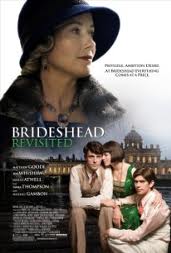
Last night, I watched Brideshead Revisited, and let me tell you, it is one festering pile of garbage.

Seriously, **** this movie…

Now before anyone launches into a tirade- yes, I am aware that Brideshead was originally a novel and, from what a lot of critics have said, one that was infinitely better than the movie, the later of which reduced all of the author’s points on culture, religion, and relationships to a couple hours of pretty set design and not much else. Simple fact of the matter is Everyone Poops could have been adapted for the big screen and still have been better than this confusing mess.

Michael Bay was going to, but the book was too cerebral for him…

Look- I can’t speak to either the novel or the author. People who have read the book say it was better than the film, and while I have difficulty believing that, I’m willing to give them the benefit of the doubt. I’m not hear to address that- I’m here to address the fact that someone at some point did actually think that what they presented in the movie was somehow not only worth watching, but worth paying for.

It aint- in case you haven’t gotten that message yet…

I’m not a fan of British period-pieces; if I wanted to see eloquent people with miserable lives, I’d talk to English majors.

What we have in this movie is a group of extremely rich youngsters lounging about an elegant mansion, downing enough alcohol to make newyears in Vegas look like a Baptist ice-cream social, and whine and wail for over half an hour about how miserable their lives are. Not in any existentialist sense, mind you- these characters aren’t disillusioned with luxury, they’re just frustrated that they can’t have everything that they want when they want it the way they want it. This is essentially Walden without any redeeming qualities- just pasty, entitled brats with delusions of insight, giving trailing speeches about their long “suffering”.

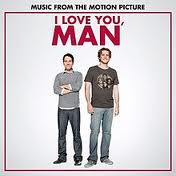
And I’m not bringing this up just because one movie sucked- this seems to be part of a greater problem in our culture. I’ve seen the same kind of problem in the film I Love You, Man.

Back in college, my housemates loved this movie. Suggested it every movie night just to see me shiver with horror and disgust. In case you’re not familiar with the plot line, let me break it down for you:

Peter’s getting married. Peter simply doesn’t have any guy friends outside of his brother (played by Andy Samberg, who was the only good part of the movie), and he one night overhears his fiancee’s vile, harpy collection of friends gossiping that it’s weird Peter’s not going to have a best man at his wedding. Peter, who apparently bases his self-esteem on the idle chatter of obnoxious strangers is filled with self-doubt and embarks on a quest to get himself a male friend- because, you know, what will his future wife’s evil friends think of him if he doesn’t?

If you’re trying to jump through the screen, grab this guy, and slap him across the face while screaming quotes from Nietzsche- don’t worry, that was my first reaction too. How we’re supposed to sympathize with this self-pitying sadsack is beyond me- the guy makes Ted from Scrubs look like Teddy Roosevelt by comparison.

I’m not trying to say that every character in a movie- or even every main character- has to be someone admirable. Just look at American Psycho. I’m not saying that these characters have to be ultimately successful. Just look at Goodfellas or The Godfather trilogy. I’m not saying that the characters have fit a classic/stereotypical form of “manliness” (in the case of male characters, anyways)- just look at Zombieland, Superbad, Napoleon Dynamite, or Scott Pilgrim vs the World.

Between movies like Brideshead Revisited, I Love You, Man, and pretty much every romance movie that ever has or ever will be made, there’s this common attitude of entitlement, self-pity, and melodrama.

Ok, you could kill yourself or- OR– spend some time working at a homeless shelter, petition on behalf of political prisoners, overthrow corrupt dictatorships since you are, y’know, immortal…
Just say’n…

Now I know you must all be saying “But Gordon, you charming devil- what’s the big deal? So what if a section of film is dominated by this lousy message of egocentricity, ignorance, and impotence?”

Let me show what the big deal is.

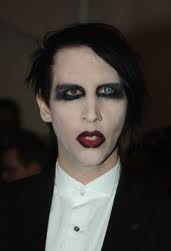
See this guy here? This is goth shock-rocker Marilyn Manson. If you’re not a fan, chances are you’ve still heard of him- in the days that followed the Columbine Shootings, Manson was argued by many conservative and religious critics as having been responsible for influencing the shooters. And obviously, that’s just a single example- whether it’s true or not, we’re all familiar with the outcry against violence in the media- be it anything from video games (see any GTA game) to music (Wu-Tang Clan aint nothin’ to fornicate with) to movies (just take your pick).

Let’s assume, just for a minute, that this is all true. I’m going to discuss the whole “does-violence-in-media-cause-more-violence?” question later in the week, but for now, let’s just say that the answer is “yes”. If these things have a serious negative effect on the views- especially young viewers- and deserve to be censored or even banned on that logic, surely the same can be said for the equally detrimental attitudes and actions (or lack thereof) found in movies like Brideshead Revisited and the like. What do these things teach us?

I was going to say “Stalking and manipulative relationships are romantic”, but I really didn’t have the stomach to slog through countless Twilight posters looking for Edward crouched in the window- enjoy this picture instead…

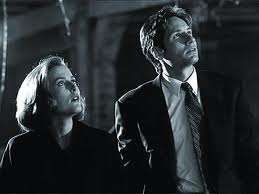
Again- the problem isn’t with romance as a concept or a plot device or anything like that. I’m not a sensitive guy in even the loosest use of the word, but despite my callousness, I really don’t have a problem with romance- it’s just that romance, as a genre, tends to produce these awful, reprehensibly selfish attitudes, and at the same time make the actual relationships pretty dumb as well. Though no one is ever going to admit it, couples like House and Cuddy or Scully and Mulder are both more believable, moving, and inspiring at their worst moments than any Romance film couple at their best.

Obligatory “Still a Better Love Story Than Twilight”…

What else can I say? Romance movies, and indeed, all media that promotes this whiny, entitled message seems to be just as harmful- if not more- than the bloodiest action flick or the most violent rap or rock. I’d be just as worried about the effects of such media on young minds as I am about the most car-stealing-liest-prostitute-beating-iest video game ever made. Allow me to leave you with this brilliant tweet from comedian Dave Chapelle to drive my point home.

[Very] Brief Thoughts On Entertainment

A bitter, angry old man once said:

There’s been a growing dissatisfaction and distrust with the conventional publishing industry, in that you tend to have a lot of formerly reputable imprints now owned by big conglomerates. As a result, there’s a growing number of professional writers now going to small presses, self-publishing, or trying other kinds of [distribution] strategies. The same is true of music and cinema. It seems that every movie is a remake of something that was better when it was first released in a foreign language, as a 1960s TV show, or even as a comic book. Now you’ve got theme park rides as the source material of movies. The only things left are breakfast cereal mascots. In our lifetime, we will see Johnny Depp playing Captain Crunch.

That same man wrote The League of Extraordinary GentlemenV for Vendetta, and one of Time Magazine’s All-Time 100 Novels, Watchmen. Alan Moore certainly has the writing credentials, but is he accurate in his assessment of the future of entertainment?

The truth is, as you’re probably well-aware, that the publishing industry is an ever-changing thing. ComicsAlliance writer Chris Sims has called for the “big two” [Marvel and DC Comics] to get serious about webcomics. In other words, for the two publishers to release content for free to compete in an age where people just aren’t buying print anymore. It would work as a way to increase and maintain interest in their product, and would even help sales; people who like reading something online will typically buy it if they like it enough.

As for creativity, I wrote in a post earlier this month [Mashin’ It Up] about people who are seemingly just reaching into a bucket of tropes and smashing them together at high speeds. Cowboys and Aliens was a movie that came out last year, and it wasn’t even original; it was an adaptation of a [honestly, not very good] webcomic. Not only that, but by next year Gore Verbinski will have directed Lone Ranger, with Johnny Depp as Tonto. That could be considered one step closer to Captain Crunch, I suppose.

At the same time adaptations are being made of novels. They may not be original screenplays, but the original work is nothing like a TV show from the 80s, it’s not built on nostalgia. Audrey Niffenegger’s The Time Traveler’s Wife was adapted for the big screen, and although it didn’t do great with the critics it still stands as evidence that books will do well; and they’ll do well enough to warrant films. This could lead into the conversation about how some books receive film opportunities before they’re even published, but that’s for another time.

The “conventional publishing industry” will continue to change; it has and it will continue to. Alan Moore is a cynical miser of a man [subjective], but he has a point that shouldn’t be ignored. We’re not doing great in regards to creativity, and it’s an area we should expect more from. Cynicism may appear to be the logical place to turn to, but looking for media worthy of attention is the more worthy activity.

Missing: Non-White Actors

This past weekend I asked my friends over lunch who the new generation of actors are. Who are this decade’s Julia Roberts and Tom Hanks? Who are the actors who will be representative of these years?

We came to a few conclusions. Nostalgia is a powerful force, and that’s why our Bruce Willis is still Bruce Willis. Leonardo DiCaprio has been acting since Romeo + Juliet in the mid-90s and has continued to go strong with 2010’s Shutter Island and Inception. Newer stars such as Michael Fassbender and Sam Worthington have only really begun gaining recognition in the past five or so years. Name recognition is what matters, and they’re still earning theirs.

Having answered that question, I posed yet another one: Where are all the new non-white actors?

There are actors [using the gender-neutral version of the word] making a reputation for themselves, but they’re men and women like Emma Stone and Andrew Garfield [yes, the leads of this summer’s The Amazing Spider-Man, I think in comic book movies, okay?]. But where are their non-white counterparts? The following are short lists I’ve made categorized by ethnicity-

AFRICAN-AMERICAN/BLACK
Donald Glover tops the list. NBC’s Community has done a lot to get him out there, and he’s beginning to become a household name. Idris Elba will be in this year’s sci-fi epic Prometheus and in Guillermo del Toro giant mech vs. alien action flick Pacific Rim. Anthony Mackie took a backseat to Matt Damon and Emily Blunt in The Adjustment Bureau, but will be starring in a number of films both this year and the next.

HISPANIC
Édgar Ramirez starred in 2008’s Ché, and will be in this summer’s Wrath of the Titans as the Greek god of war Ares. Javier Bardem has been in show business for quite a while, but will be the primary antagonist [okay, villain] of the next Bond film, Skyfall. Gael García Bernal starred opposite Will Ferrel in Casa de Mi Padre, and will be appearing alongside acting greats Pacino and Daniel Day Lewis in the upcoming years.

EAST INDIAN
Similar to Donald Glover television is where Aziz Ansarfi thrives and he’s gained the most recognition for his role on Parks and Recreation.  Russell Peters was in last year’s star-studded New Year’s Eve, and primarily works as a stand-up comedian. Kal Penn [Kumar, of Harold and Kumar fame] will be in the yet to-be-announced Bhopal: Prayer for Rain.

CHINESE, KOREAN, JAPANESE
Ken Jeong has been running around screaming ever since The Hangover; he’s going to keep finding work. John Cho  will be in the Star Trek sequel reprising his role as Hikaru Sulu. Daniel Dae Kim continues to be ridiculously good-looking on CBS’ Hawaii Five-0. Really, all of these actors are Korean.

As far as Asian actors go martial-arts movies are not as popular as they once were. In fact, the two most recent listed on Wikipedia are MMA [mixed martial arts] films, starring White leads. Actors of Asian descent must find work elsewhere, and normally this means in comedy movies.

In general non-white actors find themselves relegated to supporting roles, most lacking the clout in the industry that heavyweights like Will Smith have. There’s an immense multiethnic audience out there but few studios willing to cast actors of different ethnicities in roles where names mean everything.

Actors like Morgan Freeman, Denzel Washington, Chow Yun-fat, and Jackie Chan aren’t getting any younger. These are all names that once were, and still are, recognizable by most. One day, however, they will inevitably retire, and once that happens who will be there to take their place?