Tag Archives: media

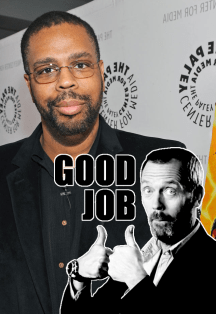
Fame Day: Dwayne McDuffie

This post is one that I write with both deep respect for its subject, as well as a great sense of loss. His impact on the world of comics is greater than many realize, and it was a truly tragic event when he passed away on February 21st of last year due to complications from emergency heart surgery.

While I didn’t know it at the time, McDuffie had a huge influence on my becoming a fan of comic books. Growing up in the Philippines, my dad got his hands on a bunch of trade paperbacks, one of which was Static [now Static Shock]. The series was one of many that was published my Milestone Media, a comic company co-founded by McDuffie and three others. Their aim was to “express a multicultural sensibility” that he felt was missing from the industry, and they succeeded.

The titular Static was the electric alter-ego of African American teen Virgil Ovid Hawkins, and continues to be one of my favourite comic characters ever. One of the many created by McDuffie for Milestone, he embodied the awkwardness of adolescence and the effects of vigilantism on one’s personal life. His world was realistic and gritty without succumbing to the darkness that other such worlds do. Static was well-written, action-packed, and, most importantly, relatable.

After Milestone had stopped publishing new companies, McDuffie went on to enter the world of television. He was hired as a staff writer for the Justice League animated series, and was promoted to both story editor and producer as the show became Justice League Unlimited. Of the show’s 91 total episodes McDuffie wrote, produced, or story-edited 69. McDuffie also did extensive work on continuing the Ben 10 series, wrote for the Teen Titans show, and scripted a number of DC’s direct-to-DVD animated films.

Dwayne McDuffie also had an extensive career working for both DC and Marvel, and earned three Eisner Awards. In addition he was awarded many others, including Comic Con International’s Inkpot Award. Above all, he was able to affect the entire industry for the better. It’s just a tragedy that he left us as soon as he did.

Fame Day: Racebending.com

This Thursday I want to call attention to a website that’s been in this blog’s links-sidebar basically since its inception. I came across Racebending.com around the time it began, and their stance on equality casting and representation in the media is one of the many reasons I decided it was time to start writing more about what I thought mattered.

As their name might suggest, the site came about as a response to M. Night Shyamalan’s film adaptation of the Nickelodeon show Avatar: The Last Airbender. The entirety of the series was set in a distinctly Asian-inspired universe, and the casting decision was made to have the majority of the protagonists be played by Caucasian actors. The change is starkly apparent in the image below:

And for those of you who don’t think Zuko is a villain, click on the link for a thorough explanation.

The organization did a great amount in revealing the decisions that went into the making of the film. Most importantly was their breakdown of the casting calls that read “Caucasian or any other ethnicity,” and how the language affects those who apply for the roles as well as hinting at what they are looking for. They also exposed the blatant racism used by casting director Deedee Rickets, who was quoted as answering the question “Are you at a disadvantage if you didn’t wear a costume?” with the following:

Absolutely not! It doesn’t mean you’re at a disadvantage if you didn’t come in a big African thing. But guys, even if you came with a scarf today, put it over your head so you’ll look like a Ukrainian villager or whatever.

Although the movement was not enough to sway the studio, producers, or director of the film, the site stays up, continuing to work towards educating the internet on when and where whitewashing is taking place, and what people can do to stop it. They also take care to call attention to those who are advancing the role of minorities in the media, giving credit where it’s due.

Most recently the blog has been concentrating on the upcoming film Cloud Atlas, which stands out due to its use of “yellowface” by various actors. While the directing Wachowski siblings and others have cited the theme of reincarnation and  the fact that actors of colour will also be playing White roles, media liaison Mike Le lays out the stark difference between the two. In an interview with  the radio station Vocalo 89.5 he explains the tradition of yellowface in cinema as a means of controlling the perceptions of a race, and the damage it has done and can still do.

All in all, Racebending.com is run by people who are doing good things, and who care about representation whether it be based on race, gender, or orientation. They strive to see the media reflect the immense amount of diversity in our world, and that alone should be worth checking them out.

Evan and Gordon Talk: Zombies

GORDON: Brrrrrrrrrrrrrrrrraaaaaaaaaaaaaaaaaaaaaaaaaaaaaaaiiiiiiiiiiiiinnsss. I mean: Welcome to this week’s installment of Gordon and Evan Talk. Our subject for today: Zombies, have we had enough already?

EVAN: Answer: yes.

GORDON: Have we though? The media keeps on pumping out zombie show/game/story/you-name-it, and we keep gobbling them down like, well, zombies.

Continue reading

Go Listen to “Guilty Pleasures: Art and Politics”

Two days ago Gordon and I talked about “hipster racism,” a topic he heard about via an eye-opening lecture by novelist China Miéville. The talk was titled Guilty Pleasures: Art and Politics, and discussed far more than what we were able to given our time.

A number of things: Firstly, I am not going to discuss or summarize his lecture in its entirety; it was forty-some minutes long and that would be ridiculous, just listen to it for yourself. Secondly, I am not a socialist, and much of what he was saying was through that filter. He did, after all, speak at a little something called “Socialism 2012.” I am not someone who has very strong political leanings, but I am someone who truly loves art in its many forms. The following are the three ideas he spoke about that stuck me the most.

The Artist and Their Art

Miéville, about a minute in, states that the socialist position on art and politics is this: “[socialists] do not judge art by the politics of the creator of that art.” He then quickly adds that they do so all the time anyway. I briefly wrote about this in a post about Jewish children’s author Rich Michelson. Michelson hosted a session that was largely about race and background, and how they impact audiences’ opinions of a work. Is a Jewish author allowed to write about the struggle of the civil right’s movement? And if not, then why?

The relationship between creator and his or her art is heavily debated, but its extremes are very easy to criticize. Miéville said that they’d all sat through “egregious folk music” simply because of the grounds of its sentiments expressed. Simply having a good message does not make art good. A Christian movie about the horrors of porn is not in and of itself a bad thing; having it feature ghosts [and be a clear knock-off of Paranormal Activity] is. To put it in the form of a proverb, “the road to hell is paved with good intentions.” Feel free to replace “hell” with “bad art” or “disappointed audiences.”

Guilty Pleasures

The title of his talk and what I’m the most interested in, Miéville listed different axes of socialist guilt. The third of which [17:56] he says is:

The question of quality: “I know it’s not very good but I like it anyway.” A declaration of kind of defensive guilt.

The thing is, he realizes that the statement is inherently flawed. By saying something is not very good we declare that we can make qualitative judgements about art, and this leads to questions like: “What is art? What makes it good, bad, better? What kind of social phenomenon is it?”

When it comes to television shows I have a standard rule, and that is to watch it ’till its dying days. I have watched all of The Office to date, and that is the same as 30 RockHow I Met Your Mother, and a slew of other shows. Sooner or later they begin to break down [see my first example], but I stick to them. The reason I’m bringing this up is The Big Bang Theory.

Gordon hates TBBT. He hates it because, honestly, it’s not a very good show. He often says that “nerdface” is an excellent way to describe their treatment of the characters. That being said, I have, and do [sometimes still] enjoy it. Do I feel guilty? As an English and Writing major, yes. I studied for four years to differentiate between good and bad writing. As a general media consumer and television enthusiast, yes, I still feel guilty. And, as Miéville said, I somehow defend myself by admitting to others that I realize it is not very good.

Does this justify me? I don’t think so. But beyond what it means to be good or bad, what does it mean to like?

What Does It Mean to “Like” Art?

I like the Dungeons and Dragons Monster Manual. I like the novels of Barbara Cummings [sp?]. I like Gramsci’s prison notebooks. [20:15]

None of these statements tells him anything about his relationship with each piece of art, because they’re all so distinct. What further complicates the verb is the discussion of “the art piece one enjoys disliking” [20:32]. We can like to dislike things; Justin Bieber basically encapsulates this idea by himself. While he never ends up truly defining the word, he seeks closure in the writing of another.

What follows is a piece of writing by Lady Mary Wortley Montagu, an 18th century writer, and Miéville’s response to it [34:45]:

“The pretty fellows you speak of I own entertain me sometimes, but is it impossible to be diverted with what one despises? I can laugh at a puppet show and at the same time know there is nothing in it  worthy of my attention or regard.”

This is one of the most liberating things I have ever read in terms of the cultural sphere. It is not obligatory to have footnoted opinions about everything you consume.

I read his meaning in that last paragraph as being that we need not get caught up in guilt. There should be a way of looking at what we like that doesn’t involve us castigating ourselves. I can enjoy the King Fantastic Remix of Drive It Like You Stole It without being a proponent of foul language. Likewise I can read AmazingSuperPowers, be amused, and not have to argue how high- or lowbrow its humour is. While the intent of an artist and the perceived quality of their work should be taken into account, there are times when we can simply like, or more simply enjoy, art, whatever it may be.

Bad Influence

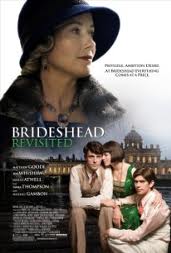
Last night, I watched Brideshead Revisited, and let me tell you, it is one festering pile of garbage.

Seriously, **** this movie…

Now before anyone launches into a tirade- yes, I am aware that Brideshead was originally a novel and, from what a lot of critics have said, one that was infinitely better than the movie, the later of which reduced all of the author’s points on culture, religion, and relationships to a couple hours of pretty set design and not much else. Simple fact of the matter is Everyone Poops could have been adapted for the big screen and still have been better than this confusing mess.

Michael Bay was going to, but the book was too cerebral for him…

Look- I can’t speak to either the novel or the author. People who have read the book say it was better than the film, and while I have difficulty believing that, I’m willing to give them the benefit of the doubt. I’m not hear to address that- I’m here to address the fact that someone at some point did actually think that what they presented in the movie was somehow not only worth watching, but worth paying for.

It aint- in case you haven’t gotten that message yet…

I’m not a fan of British period-pieces; if I wanted to see eloquent people with miserable lives, I’d talk to English majors.

What we have in this movie is a group of extremely rich youngsters lounging about an elegant mansion, downing enough alcohol to make newyears in Vegas look like a Baptist ice-cream social, and whine and wail for over half an hour about how miserable their lives are. Not in any existentialist sense, mind you- these characters aren’t disillusioned with luxury, they’re just frustrated that they can’t have everything that they want when they want it the way they want it. This is essentially Walden without any redeeming qualities- just pasty, entitled brats with delusions of insight, giving trailing speeches about their long “suffering”.

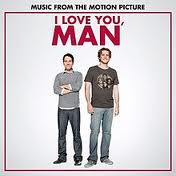
And I’m not bringing this up just because one movie sucked- this seems to be part of a greater problem in our culture. I’ve seen the same kind of problem in the film I Love You, Man.

Back in college, my housemates loved this movie. Suggested it every movie night just to see me shiver with horror and disgust. In case you’re not familiar with the plot line, let me break it down for you:

Peter’s getting married. Peter simply doesn’t have any guy friends outside of his brother (played by Andy Samberg, who was the only good part of the movie), and he one night overhears his fiancee’s vile, harpy collection of friends gossiping that it’s weird Peter’s not going to have a best man at his wedding. Peter, who apparently bases his self-esteem on the idle chatter of obnoxious strangers is filled with self-doubt and embarks on a quest to get himself a male friend- because, you know, what will his future wife’s evil friends think of him if he doesn’t?

If you’re trying to jump through the screen, grab this guy, and slap him across the face while screaming quotes from Nietzsche- don’t worry, that was my first reaction too. How we’re supposed to sympathize with this self-pitying sadsack is beyond me- the guy makes Ted from Scrubs look like Teddy Roosevelt by comparison.

I’m not trying to say that every character in a movie- or even every main character- has to be someone admirable. Just look at American Psycho. I’m not saying that these characters have to be ultimately successful. Just look at Goodfellas or The Godfather trilogy. I’m not saying that the characters have fit a classic/stereotypical form of “manliness” (in the case of male characters, anyways)- just look at Zombieland, Superbad, Napoleon Dynamite, or Scott Pilgrim vs the World.

Between movies like Brideshead Revisited, I Love You, Man, and pretty much every romance movie that ever has or ever will be made, there’s this common attitude of entitlement, self-pity, and melodrama.

Ok, you could kill yourself or- OR– spend some time working at a homeless shelter, petition on behalf of political prisoners, overthrow corrupt dictatorships since you are, y’know, immortal…
Just say’n…

Now I know you must all be saying “But Gordon, you charming devil- what’s the big deal? So what if a section of film is dominated by this lousy message of egocentricity, ignorance, and impotence?”

Let me show what the big deal is.

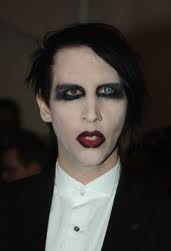
See this guy here? This is goth shock-rocker Marilyn Manson. If you’re not a fan, chances are you’ve still heard of him- in the days that followed the Columbine Shootings, Manson was argued by many conservative and religious critics as having been responsible for influencing the shooters. And obviously, that’s just a single example- whether it’s true or not, we’re all familiar with the outcry against violence in the media- be it anything from video games (see any GTA game) to music (Wu-Tang Clan aint nothin’ to fornicate with) to movies (just take your pick).

Let’s assume, just for a minute, that this is all true. I’m going to discuss the whole “does-violence-in-media-cause-more-violence?” question later in the week, but for now, let’s just say that the answer is “yes”. If these things have a serious negative effect on the views- especially young viewers- and deserve to be censored or even banned on that logic, surely the same can be said for the equally detrimental attitudes and actions (or lack thereof) found in movies like Brideshead Revisited and the like. What do these things teach us?

I was going to say “Stalking and manipulative relationships are romantic”, but I really didn’t have the stomach to slog through countless Twilight posters looking for Edward crouched in the window- enjoy this picture instead…

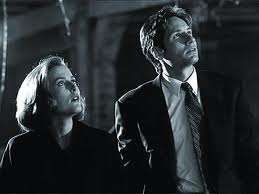
Again- the problem isn’t with romance as a concept or a plot device or anything like that. I’m not a sensitive guy in even the loosest use of the word, but despite my callousness, I really don’t have a problem with romance- it’s just that romance, as a genre, tends to produce these awful, reprehensibly selfish attitudes, and at the same time make the actual relationships pretty dumb as well. Though no one is ever going to admit it, couples like House and Cuddy or Scully and Mulder are both more believable, moving, and inspiring at their worst moments than any Romance film couple at their best.

Obligatory “Still a Better Love Story Than Twilight”…

What else can I say? Romance movies, and indeed, all media that promotes this whiny, entitled message seems to be just as harmful- if not more- than the bloodiest action flick or the most violent rap or rock. I’d be just as worried about the effects of such media on young minds as I am about the most car-stealing-liest-prostitute-beating-iest video game ever made. Allow me to leave you with this brilliant tweet from comedian Dave Chapelle to drive my point home.

Why We Need Graphic Violence

Once upon a time, a lion was sent to the king of Sweden. After it died, its skin and bones were sent to a taxidermist so that the animal could be stuffed and preserved- the only problem was that this was the eighteenth century, and the taxidermist had never seen a lion before. His resulting work was this:

With only the most cursory knowledge of what a lion was, the work turned-out something that looks like it was pulled straight from a Looney-Tunes episode.

I’d suggest laughing at that picture for as long as you can- the rest of this post is going to be pretty unpleasant.

Most people’s Facebook news feeds are made up of snippets of conservations between friends, invitations to apps you’ll never use, the occasional rant, and baby pictures. Most people, but not so much me- only I do get to see pictures of babies, but more on that in a minute.

See, I grew up in the Middle East, specifically in Syria. For those of you who don’t keep up with the news (at all), my adopted homeland is currently in the grips of a brutal civil war. One of the ways the rebels and dissidents spread news is through social media- especially Facebook, and having “liked” such pages as “Syrian Days of Rage” and “Syrian Revolution 2011”, my news feed is mostly comprised of grainy YouTube videos of soldiers declaring their defection to the Free Syrian Army (FSA), or pictures of mass protests, or of a solitary Republic flag tied to a streetlight. Or a baby.

I warned you before that things were going to become unpleasant- again, if you’re sensitive, stop reading now.

This picture was of a baby who was killed in Gaza during the short-lived but brutal Gaza war in the early weeks of 2009. It was a bombing that killed the child. It was burned so badly the skin still on it had been turned soot-black, and was tight and shiny. You might mistake it for one of those life-sized baby dolls if two broken femurs hadn’t been sticking out where the legs should have been, or if the flesh around the left arm hadn’t melted off the bone.

It was frozen like that. Eyes closed and head rolled back so that against all reason, it looks like her or she could have been sleeping. The body’s held up by a Red Crescent paramedic, and there are no words in any language that will ever describe the look that’s on his face.

There are more of them. A young man on a hospital bed, the right side of his jaw ripped open and hanging against his neck, smiling as best as he still can and gesturing the peace sign. A man killed in a shelling bombardment, held together with white gauze and bedsheets.  A little boy, dead on the floor, drenched in blood and the right side of his body blown off.

That last one was from earlier today.

Last week, I mentioned how this generation is living in the longest war in American history, three times as long as WWII. I want to underscore this. I’m twenty one, and more than half of my existence has been during a period of uninterrupted conflict. I was eleven years old when the US went to war in Afghanistan, and today I could join up to fight in that exact same war. In a couple years, we’ll have kids going to high school who have never had a day of peace.

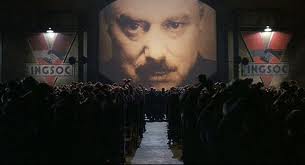
But this isn’t about that. I’m not here to rage against war, or take a stand for it. I’m not going to throw up my hands and declare that we’ve always been at war with Eastasia.

Though it wouldn’t too far from the truth…

I’m not going to talk about what war does to us so much as I’m going to discuss what we do to war.

Let’s face it, for many of us, the current wars the US (and other nations) are involved in don’t affect us much. We’re not on rations, or ducking into bomb shelters, or being told that if we don’t carpool the Axis wins.

Not in so many words, anyways…

Whether a village in some valley in central Afghanistan is controlled by American or Taliban forces really doesn’t change our plans for the day. A harsh as it sounds, whether or not people are killed in Afghanistan doesn’t have much bearing on anyone but the families of the deceased, and it’s there that the problem lies.

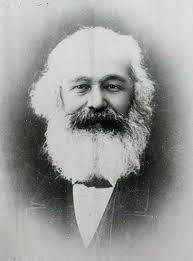
See, we have had a problem in our society for a long time, but with the advent of the internet and similar technologies, it’s becoming worse and worse. Alienation. If you’ve heard it, it was probably in relation to Karl Marx, talking about the separation of workers from the ability to control their lives.

Because we’re dealing with some rough stuff, here’s a picture of Marx smiling…

In a more general sense, it’s simply it’s the separation of things that should naturally go together. Profit shouldn’t be separated from work, and work shouldn’t be separated from profit. Merit shouldn’t be separated from recognition, and recognition shouldn’t be separated from merit. Above all else, actions shouldn’t be separated from consequences- only that’s exactly what we have today.

Most of us are more than willing to wolf down a juicy hamburger, but how many of us would be willing to watch the cow be killed, let alone kill it ourselves? How many of us who wear shirts and shoes made in sweatshops would be willing to stand in the sweatshop hurling profanities and threats at the twelve year-olds hunched over the machinery? How many of us enjoy the advances of the civil rights movement would, back in the 60s and 70s, face off police dogs, hoses, and fire-bombs?

See, we’re a nation that enjoys the hard work of other people. We’re a nation that doesn’t like getting its hands dirty. We’re a nation that has no problem sending kids off to fight, kill, and die on some windswept ridge in Afghanistan because we don’t have anything to do with them afterwards. War is cheap for us. The men and women of our armed forces are expendable to us. Again, I’m not trying to condemn or vindicate the wars we’re in, but what I am saying is that we can’t make reasonable decisions about war until we’re actually confronted with the ugly, bloody, gritty consequences of it. We need pictures of the dead. We need them shoved in our faces on a daily basis. We shouldn’t be able to turn on the news without seeing rubble, the smoke, the wounded, or the dying in graphic detail. For all the outcry against violence in our media, the truth of the matter isn’t that the problem is with violence, but with violence that has been tailored to give us satisfaction and strip away all meaning to it. War, for good or ill, is all for nothing unless we actually understand it. Can we honestly say that we’re acting in the same way now we would be if we actually had to witness the consequences of our actions?

Until then, we’re just the same Swedish taxidermist, making ridiculous travesties out of things we don’t understand. We need graphic violence.