Tag Archives: racist

Shame Day: Porn and Racism

Let’s be honest, porn is not the highest art form to begin with. That being said, it’s 2013, people. It is the 21st century and I expect better from all of us, even those in San Fernando Valley [lovingly dubbed “Porn Valley” by those in the industry].

glenntwdNow, I’m going to assume that most of you are familiar with AMC’s The Walking Dead [I’d be surprised if you weren’t, really]. If not, what you need to know is that it features among its core cast Glenn, who is played by Korean-American Steven Yeun]. A cast member of the original comic book series, Glenn makes his entrance by saving Rick, the protagonist of the series, and goes on to be an all-around successful human being [which, in a zombie apocalypse, equates to being a badass]. So that’s what you have to know about that.

What you also have to know, if you weren’t aware, is that porn studios churn out parodies like nobody’s business. They’ve parodied everything from beloved childhood cartoons [The Flintstones: A XXX Parody] to a 1976 DC/Marvel comic books crossover event [Superman vs Spider-Man XXX: An Axel Braun Parody]; nothing is sacred. It should come as no surprise, then, when they decided to take a stab at adapting AMC’s The Walking Dead [if you watch it, you’d know why I have to write it out like that].

Porn star Danny Wylde was cast to play Glenn in the as-of-yet untitled film. In it, he will be appearing as follows:

Continue reading

Django and the N-Word

Let me begin by explaining that this is not a review of the simultaneously acclaimed and decried 2012 Tarantino blood-fest. You want to hear one of those, I’d recommend clicking over to Spill or The Escapist’s “Escape to the Movies.” No, what I want to talk about are some specific elements and segments of the film which have become points of contention, controversy, and debate in the past weeks.
Let’s start with the most obvious:

I. Saying “Nigger” Every Other Word

I won’t claim to know your stance on the word “Nigger”- heck, I’m not even sure of my own stance. Perhaps you view the term as so degrading and reprehensible as to merit burning it from spoken language. Perhaps you believe that appropriating and using the word strips it of its power to even be used as an insult. Maybe you see it as being purely contextual- a term of address with audience and a terrible insult with another.

It’s all Elmo ever thinks about

There are probably strong points to be made on all sides, but perhaps the stance you cannot take is that the use of the word “nigger” was inappropriate for the movie.

Now before you take up the battle-cry of “Tarantino is just trying to shock us!” or “Tarantino uses the word excessively in his other movies!” I have to say this.

You’re right.

It’s Tarantino; that’s not an excuse, that’s a fact. You wanna take up his use of the word in other films, then that’s part of the whole debate mentioned above. Simple truth of the matter is that this use of the word “nigger” would still be controversial if the film had been made by anyone else. So let’s talk about it.

Let’s assume that this movie, with selfish or noble intent, is trying to demonstrate a glimpse of the world in question; the use of that word is almost bound to come up. I might throw out the example of Mark Twain’s classic novel Huckleberry Finn, and while by sheer volume Django probably has Huck beat for use of the word, by percentage I’d posit the two are pretty evenly matched. The escaped slave Jim is repeatedly and almost exclusively referred to as “Nigger Jim,” as are the other black characters in the book. Now Twain was anti-slavery and used that word to demonstrate the dehumanization of African Americans (which is why taking the word out of versions of the book is so dumb), as well as reflect the general use of the word. Now I’m admittedly no historian, but if the writings of Twain and other authors are any indication of the times, I wouldn’t say the film is quite so far off as some critics might suggest.

And speaking of historical accuracy…

II. The KKK, or Lack Thereof

There is a scene in the film during which a group of men wearing white sacks over their heads attempt to stage an attack on Django and Schultz. New Yorker contributor Jelani Cobb writes “Tarantino depicts the K.K.K. a decade prior to its actual formation in order to thoroughly ridicule its members’ (literally) veiled racism.” While that scene was (in my own opinion) side-splittingly hilarious, Jelani, and many others, are dead wrong in assuming that this scene depicted historical inaccuracy.

Take this section from Huckleberry Finn:

Why don’t your juries hang murderers? Because they’re afraid the man’s friends will shoot them in the back, in the dark — and it’s just what they WOULD do.

“So they always acquit; and then a MAN goes in the night, with a hundred masked cowards at his back and lynches the rascal. Your mistake is, that you didn’t bring a man with you; that’s one mistake, and the other is that you didn’t come in the dark and fetch your masks.

Again, this is a Tarantino movie set in a Tarantino universe. That’s not a defense, simply, as I’ve already stated, a fact. If you’re looking for a historical account of the pre-war South, a spaghetti-western revenge flick probably ain’t the best place to look for it. There are going to be certain inaccuracies, and there are going to be things the filmmaker has to get right- but all of that is beside the point (which we’ll get to in a minute). All of that’s to say if you’re gonna try to criticize (or praise) the movie’s deviation from historical truth, make sure you’re (1) doing it for the right reason and (2) that you’re critique is actually right.

III. Samuel L. Jackson as Uncle Tom

In Django, Samuel L. Jackson plays the role of the villain’s head-slave Stephen, who isn’t so much a character as a caricature of the most groveling, snivelling Uncle Tom you will ever see or even imagine. This guy makes Uncle Ruckus look like Eldridge Cleaver.

You are guaranteed one genuine Gordon hug if you know who Eldridge Cleaver is.

I’ve heard people call this portrayal offensive, bordering on “black-face” in its depiction of stereotypical “black” mannerisms. It’s exactly for that reason that I didn’t have a problem with the character.

I really have no reason for putting this gif in here…

See, the entire point is to make fun of the guy- and not just him, but the quisling slaves that did indeed exist. I don’t think that this portrayal robbed the film of the gravity of slavery anymore than Bugs Bunny foiling a cartoonized Hitler robbed WWII of it’s gravity.

Now let’s get right to it-

IV. The Horror, The Horror

LA Times journalist Erin Aubry Kaplan said this of Django’s depiction of slavery: “It is an institution whose horrors need no exaggerating, yet Django does exactly that…”

This is a flat-out falsehood.

If Django Unchained exaggerated the horrors of the slavery, if the film depicted one one-hundredth of the horrors of slavery, I will never write again. Despite the allegations of this critic, the truth of the matter is that we could depict the institution of slavery for a century and be no closer to depicting an ounce the inhumanity of it all than when we first started. Does the film exaggerate slavery? Absolutely not. Does it make light of it? Certainly this was a concern of mine going into the movie, but having seen it, I really don’t think it can be faulted there either. The film does, I believe, make a distinct effort to show slavery as brutish and ugly as possible. Or, at the very least, the slavery scenes; this is, after all, a revenge movie first and foremost.

V. The Point

That’s the thing I feel most people are missing here. This ins’t a movie about slavery, this is a movie with slavery in it. It’s a revenge film in which one sorely persecuted character dispenses well-deserved justice upon his persecutors and we all nod our heads in approval and feel a sense of pride and joy well up as we look into this fantasy where the bad guy does get what’s coming to him. Slavery is the backdrop, not the subject, of the movie, but it’s just such a major issue that most of us are getting hung up on it. The equivalent might be bashing a western on the basis that the actual “wild west” was pretty peaceful- factually true, but still missing the goal of the story.

No, this is not a historically accurate film. No, it doesn’t capture the horror of slavery. No, it doesn’t even try to wrestle with it. No, it’s not a discussion of our checkered heritage. No, it’s not the film to drag that dark, bloody history out into the light of day.

But damn it, it’s a start.

Slavery and Movies

I recently had a chance to see The Man with the Iron Fists, a gritty Kung-Fu-Spaghetti-Western-70s-Exploitation mash-up film presented (of course) by Quentin Tarantino. I say presented by Tarantino; the creation of the film itself is owed largely to The RZA of the former (and still awesome) Wu-Tang Clan. In addition to co-writing and directing the film, the RZA stars in the epic slug-fest itself, serving as the narrator and titular character.

Now I went into this film simply suspending my disbelief. I assumed all the nonsensical elements in the film would simply be loving jabs at the old-school kung-fu and action movies that Tarantino and Roth grew up on. That’s why Russel Crowe’s character has a gun-scissor-knife weapon, or why (and here’s the big thing) the blacksmith in this fictional Chinese village is black. Much to my surprise however, the movie began offering explanations (though not to the gun-scissor-knife). The blacksmith is, in a flashback, shown having grown up on a plantation and receiving his freedom from his dying master. Despite having papers declaring him a free man, he is continually treated as a slave- in one scene he is told by a couple of dandies that there’s no way he can read, and therefore understand what’s written on his documents. The two men crumple up his paper and proceed to slur and shove him until he fights back, inadvertently killing one of them. He flees west, and after his ship is wrecked, finds himself in China.

Now obviously that whole last bit about him running so far he winds up in the far east is obviously just the movie shifting back into fantasy, but what really got me was the depiction of slavery. Not prejudice, not segregation- slavery. When’s the last time you can actually say you saw a film deal with that? Glory in 1989? Some Little House on the Prairie episode sometime in the 70s? It simply isn’t done (and that one episode of The Boondocks doesn’t count).

And that’s what I want to talk about. Our depiction, or lack of depiction, of slavery. For all our grand talk of freedom, liberty, and American “exceptionalism,” we do tend to gloss over the uglier elements of our history, such as Manzanar, Wounded Knee, and perhaps most notably, slavery. It brings up all sorts of uncomfortable, and frankly unresolved conflicts. It throws a dark shadow over all of our self-reported greatness. Nevertheless, we really can’t shove it under the carpet, and it looks like, at long last, it’s starting to all come out.

AMC’s Hell on Wheels takes place during the years following the close of the Civil War, and like The Man with the Iron Fists is one of the few depictions of slavery I’ve ever seen on film or TV. In addition to its frank depiction of slavery, I want to take a moment to give the show some applause for the historical accuracy it had in general, depicting Northern racism towards the ex-slaves, as well as the racism inflicted to (and by) the Irish immigrants- another nasty little thread in American heritage you won’t find in most history books.

Of course, beyond that, there’s the highly anticipated Tarantino film Django Unchained, which we’re all expecting to be jaw-dropping in how good or bad it turns out to be. Unlike the previous two examples, which depicted slavery only briefly, this is a movie set completely in the antebellum South. That’s another hefty jump, though again, how well this is going to be executed is still very much up in air.

Now I’ve been struggling all night to come up with a conclusion for all of this, but I’m really not sure what to say. I can’t say why we’re suddenly interested in a subject we’ve been ignoring for the past century and a half. I can’t quite figure out if this is some little trend or the awakening of some part of our culture that’s been dormant so long we’ve forgotten it. I can’t pinpoint what’s causing this. I can’t tell you where it’s all going. I can tell you, however, where I hope it goes.

I hope this is the beginning of something that might pass for maturity in our culture or our generation. I hope that movies depicting the reality of slavery become a thing. I hope that they open up the doors for the rest of our small-pox-infected, witch-burning, Japanese-interning, waterboarding history. I hope we can actually learn something from all of this once it’s out there, and hey, maybe we can actually get some racial diversity in our movies for a change.

Maybe.

P.S. I haven’t seen Abraham Lincoln, Vampire Hunter or Lincoln yet, so I can’t say how they deal with it in there.

Fame Day: Racebending.com

This Thursday I want to call attention to a website that’s been in this blog’s links-sidebar basically since its inception. I came across Racebending.com around the time it began, and their stance on equality casting and representation in the media is one of the many reasons I decided it was time to start writing more about what I thought mattered.

As their name might suggest, the site came about as a response to M. Night Shyamalan’s film adaptation of the Nickelodeon show Avatar: The Last Airbender. The entirety of the series was set in a distinctly Asian-inspired universe, and the casting decision was made to have the majority of the protagonists be played by Caucasian actors. The change is starkly apparent in the image below:

And for those of you who don’t think Zuko is a villain, click on the link for a thorough explanation.

The organization did a great amount in revealing the decisions that went into the making of the film. Most importantly was their breakdown of the casting calls that read “Caucasian or any other ethnicity,” and how the language affects those who apply for the roles as well as hinting at what they are looking for. They also exposed the blatant racism used by casting director Deedee Rickets, who was quoted as answering the question “Are you at a disadvantage if you didn’t wear a costume?” with the following:

Absolutely not! It doesn’t mean you’re at a disadvantage if you didn’t come in a big African thing. But guys, even if you came with a scarf today, put it over your head so you’ll look like a Ukrainian villager or whatever.

Although the movement was not enough to sway the studio, producers, or director of the film, the site stays up, continuing to work towards educating the internet on when and where whitewashing is taking place, and what people can do to stop it. They also take care to call attention to those who are advancing the role of minorities in the media, giving credit where it’s due.

Most recently the blog has been concentrating on the upcoming film Cloud Atlas, which stands out due to its use of “yellowface” by various actors. While the directing Wachowski siblings and others have cited the theme of reincarnation and  the fact that actors of colour will also be playing White roles, media liaison Mike Le lays out the stark difference between the two. In an interview with  the radio station Vocalo 89.5 he explains the tradition of yellowface in cinema as a means of controlling the perceptions of a race, and the damage it has done and can still do.

All in all, Racebending.com is run by people who are doing good things, and who care about representation whether it be based on race, gender, or orientation. They strive to see the media reflect the immense amount of diversity in our world, and that alone should be worth checking them out.

Evan and Gordon Talk: Hipster Racism

GORDON: Welcome back, ladies, gentlemen, and persons who defy conventional gender roles, to another edifying episode of Evan and Gordon Talk. Our topic for tonight: Hipster Racism.

Evan- if you’ll offer a quick definition.

EVAN: Uh, I’m going to leave you to that, actually. Gordon sent me this link to check out, and the bit about “hipster racism” is actually quite short [appearing at about 00:00]. The speaker, China Miéville, had a lot of amazing things to say, and I lost it in there somewhere. [I’ll probably be writing more about the lecture on Friday]

GORDON: Essentially, “Hipster Racism” or “Ironic Racism” are jokes or comedy with traditionally racist content, funny not because they put people down, but funny because of how utterly atrocious and ignorant they are. Similar to a dead baby joke.

The question we’ll be dealing with tonight is this: Is ironic racism still just racism?

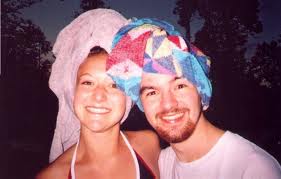
EVAN: This strikes a similar chord with a conversation I had with . . . a friend of mine, where he called Arab people “towelheads.”

GORDON: Yikes. Continue reading

Why I’m Okay With The Mandarin

This is part of a multi-blog series about Race and Comic Books put together by RodtRDH. Justin Tiemeyer has written the first of many such posts [about black comic book characters] on his blog, Cavemen Go.
                                                                                                                                                                  

One of my favourite blogs [you can see it in the sidebar] featured an article sometime ago titled “On Marvel, Mandarin, and Marginalization.” The gist of said article asking why an Asian villain like the Mandarin is being portrayed before any Asian American lead heroes. I’m going to start my defence with the quotes racebending.com used:

“There are certain fears and certain strengths the character evokes that are applicable, but of course you have to completely remove any of that short sighted cultural ignorance that leads to any sort of bigotry in the storytelling. That isn’t to say those fears and shortcomings of Iron Man as relating to that character aren’t relevant…He was based in China which was then mysterious because it was Red China. Today China is mysterious in other ways because it’s Global China.”

– Jon Favreau, director of Iron Man and Iron Man 2 to CHUD in 2006

“You have to do The Mandarin. The problem with The Mandarin is, the way it’s depicted in the comic books, you don’t want to see that.”

– Favreau again, to MTV in 2010

“The Mandarin is a racist caricature.”

– Iron Man 3 director Shane Black at Long Beach ComicCon, October 2011

I’m not going to skirt around the fact that the character was indeed rooted in the “yellow peril” that was rampant at the time of his inception, but the following images should paint a picture of his evolution since that time.

From left to right: The Mandarin as he first appeared in the 60s, then the 90s, and the present day.

Continue reading