That right there is the “Mine Kafon,” an ingenious device used to safely blow up land mines. Light enough to be blown around by the wind, the Mine Kafon is still heavy enough to touch off detonation when it comes into contact with a mine or pressure-activated explosive. While there’s some skill that goes into getting the weight right, the real beauty of it is it’s simplicity- anyone anywhere in the world could mass produce these. Definitely a blessing for areas emerging or dealing with long periods of conflict and militarization. Continue reading →
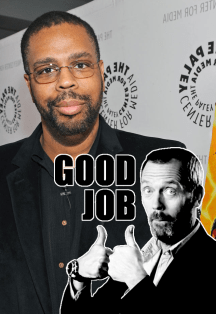
This post is one that I write with both deep respect for its subject, as well as a great sense of loss. His impact on the world of comics is greater than many realize, and it was a truly tragic event when he passed away on February 21st of last year due to complications from emergency heart surgery.
While I didn’t know it at the time, McDuffie had a huge influence on my becoming a fan of comic books. Growing up in the Philippines, my dad got his hands on a bunch of trade paperbacks, one of which was Static [now Static Shock]. The series was one of many that was published my Milestone Media, a comic company co-founded by McDuffie and three others. Their aim was to “express a multicultural sensibility” that he felt was missing from the industry, and they succeeded.
The titular Static was the electric alter-ego of African American teen Virgil Ovid Hawkins, and continues to be one of my favourite comic characters ever. One of the many created by McDuffie for Milestone, he embodied the awkwardness of adolescence and the effects of vigilantism on one’s personal life. His world was realistic and gritty without succumbing to the darkness that other such worlds do. Static was well-written, action-packed, and, most importantly, relatable.
After Milestone had stopped publishing new companies, McDuffie went on to enter the world of television. He was hired as a staff writer for the Justice League animated series, and was promoted to both story editor and producer as the show became Justice League Unlimited. Of the show’s 91 total episodes McDuffie wrote, produced, or story-edited 69. McDuffie also did extensive work on continuing the Ben 10 series, wrote for the Teen Titans show, and scripted a number of DC’s direct-to-DVD animated films.
Dwayne McDuffie also had an extensive career working for both DC and Marvel, and earned three Eisner Awards. In addition he was awarded many others, including Comic Con International’s Inkpot Award. Above all, he was able to affect the entire industry for the better. It’s just a tragedy that he left us as soon as he did.
This Thursday I want to call attention to a website that’s been in this blog’s links-sidebar basically since its inception. I came across Racebending.com around the time it began, and their stance on equality casting and representation in the media is one of the many reasons I decided it was time to start writing more about what I thought mattered.
As their name might suggest, the site came about as a response to M. Night Shyamalan’s film adaptation of the Nickelodeon show Avatar: The Last Airbender. The entirety of the series was set in a distinctly Asian-inspired universe, and the casting decision was made to have the majority of the protagonists be played by Caucasian actors. The change is starkly apparent in the image below:
And for those of you who don’t think Zuko is a villain, click on the link for a thorough explanation.
Absolutely not! It doesn’t mean you’re at a disadvantage if you didn’t come in a big African thing. But guys, even if you came with a scarf today, put it over your head so you’ll look like a Ukrainian villager or whatever.
Although the movement was not enough to sway the studio, producers, or director of the film, the site stays up, continuing to work towards educating the internet on when and where whitewashing is taking place, and what people can do to stop it. They also take care to call attention to those who are advancing the role of minorities in the media, giving credit where it’s due.
Most recently the blog has been concentrating on the upcoming film Cloud Atlas, which stands out due to its use of “yellowface” by various actors. While the directing Wachowski siblings and others have cited the theme of reincarnation and the fact that actors of colour will also be playing White roles, media liaison Mike Le lays out the stark difference between the two. In an interview with the radio station Vocalo 89.5 he explains the tradition of yellowface in cinema as a means of controlling the perceptions of a race, and the damage it has done and can still do.
All in all, Racebending.com is run by people who are doing good things, and who care about representation whether it be based on race, gender, or orientation. They strive to see the media reflect the immense amount of diversity in our world, and that alone should be worth checking them out.
So this news came out while I was still at camp, so I’m definitely a little behind the times. Ubisoft revealed at E3 in early June that another game in the Assassin’s Creed series would be joining Assassin’s Creed III when it launched this October 30th. The following is a trailer for that game:
The AC franchise has always been ahead of its time in terms of racial representation. Altaïr ibn La’Ahad, a Syrian assassin, Ezio Auditore da Firenze, an Italian, and Ratohnhaké:ton [Conor Kenway], English/Mohawk are the stars of the first, second, and third games respectively. Each game has given slavish devotion to historical accuracy, but each has also starred a male protagonist. Until now.
Aveline de Grandpré is an African/French assassin, the only black female video game character I can think of besides Rochelle of Left 4 Dead 2, and from what I can tell a complete and total badass. This is a huge step on Ubisoft’s part, and I’m both impressed and proud that they’ve made this choice. Especially when the reception was so expected.
Clicking on the image to the left will bring up comments on the video I posted. Choice comments are:
Yup, [I know] AC isnt so realistic, but a women?
okay a female is reasonable but seriously y does she have to be black! wtf
looks like i’m not alone on this lol. so many people think i’m racist or something lol
It may seem like this is only to be expected from the video game community, often [and accurately] thought to be both extremely racist and sexist. It was only earlier this year that fans of the book series The Hunger Games took to the internet to express their disgust that Rue, a character in the novel, was portrayed by a black actress in the film.
The image on the right is one of many incredibly offensive tweets about the casting. Jezebel reported on the phenomenon early this year, but it seems that it’s not the only Hunger Games related news that the site has to write about this year.
While the role of Panem-ian heartthrob Finick Odair has already been given to Sam Claflin, months earlier a campaign was started to give it to biracial actor Jesse Williams. This was, again, met with some pretty intense criticism. From racists. Unfortunately a lot of the negative/ignorant comments on this messageboard have been deleted, though Jezebel’s write-up on the situation can be read here. The campaign tumblr is still out there, though it now also discusses racial casting, which I definitely don’t have a problem with.
Suffice to say, the world still has a ways to go before we, in North America, anyway, can simply start accepting that not everyone out there is white, and therefore not everyone who appears in art, either electronic or literary, is either. These comments I posted may just be an example of the “loud minority,” but if female or nonwhite protagonists are really a big deal, maybe we should be loud as well.
I think Aveline de Grandpré is an amazing addition to an already stellar video game series. I think it is fantastic that she’s black and that she is a woman, and I think that you should too.


 The titular Static was the electric alter-ego of African American teen Virgil Ovid Hawkins, and continues to be one of my favourite comic characters ever. One of the many created by McDuffie for Milestone, he embodied the awkwardness of adolescence and the effects of vigilantism on one’s personal life. His world was realistic and gritty without succumbing to the darkness that other such worlds do. Static was well-written, action-packed, and, most importantly, relatable.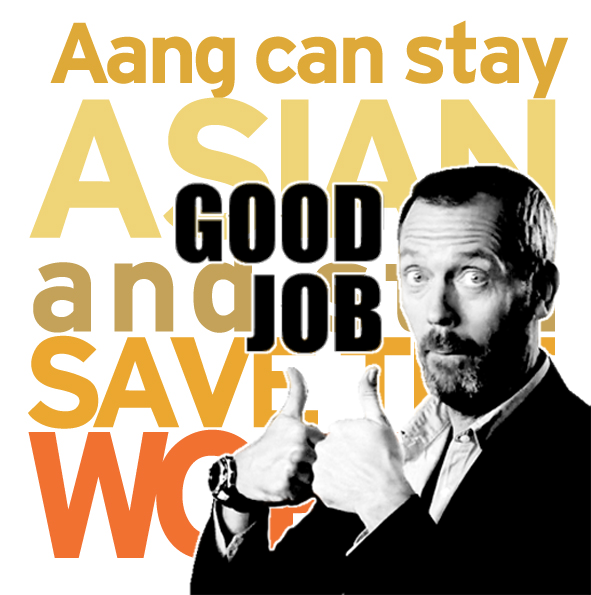

 Most recently the blog has been


 Culture War Reporters
People Are Upset About Aveline de Grandpré [What Else Is New?]
So this news came out while I was still at camp, so I’m definitely a little behind the times. Ubisoft revealed at E3 in early June that another game in the Assassin’s Creed series would be joining Assassin’s Creed III when it launched this October 30th. The following is a trailer for that game:
The AC franchise has always been ahead of its time in terms of racial representation. Altaïr ibn La’Ahad, a Syrian assassin, Ezio Auditore da Firenze, an Italian, and Ratohnhaké:ton [Conor Kenway], English/Mohawk are the stars of the first, second, and third games respectively. Each game has given slavish devotion to historical accuracy, but each has also starred a male protagonist. Until now.
Aveline de Grandpré is an African/French assassin, the only black female video game character I can think of besides Rochelle of Left 4 Dead 2, and from what I can tell a complete and total badass. This is a huge step on Ubisoft’s part, and I’m both impressed and proud that they’ve made this choice. Especially when the reception was so expected.
It may seem like this is only to be expected from the video game community, often [and accurately] thought to be both extremely racist and sexist. It was only earlier this year that fans of the book series The Hunger Games took to the internet to express their disgust that Rue, a character in the novel, was portrayed by a black actress in the film.
While the role of Panem-ian heartthrob Finick Odair has already been given to Sam Claflin, months earlier a campaign was started to give it to biracial actor Jesse Williams. This was, again, met with some pretty intense criticism. From racists. Unfortunately a lot of the negative/ignorant comments on this messageboard have been deleted, though Jezebel’s write-up on the situation can be read here. The campaign tumblr is still out there, though it now also discusses racial casting, which I definitely don’t have a problem with.
Suffice to say, the world still has a ways to go before we, in North America, anyway, can simply start accepting that not everyone out there is white, and therefore not everyone who appears in art, either electronic or literary, is either. These comments I posted may just be an example of the “loud minority,” but if female or nonwhite protagonists are really a big deal, maybe we should be loud as well.
I think Aveline de Grandpré is an amazing addition to an already stellar video game series. I think it is fantastic that she’s black and that she is a woman, and I think that you should too.
Rate this:
33 Comments
Posted in internet, literature, race, video games
Tagged Altaïr ibn La'Ahad, Assassin's Creed III, Assassin's Creed III: Liberation, Aveline de Grandpré, biracial, black, comments, Conor Kenway, Ezio Auditore da Firenze, female, Finick Odair, Jesse Williams, Jezebel, Left 4 Dead 2, literature, nonwhite, race, racism, racists, Ratohnhaké:ton, representation, Rochelle, Rue, Sam Claflin, sexism, sexist, The Hunger Games, Ubisoft, video games