Tag Archives: whitewashing

Asian Comic Book Fan Watches Doctor Strange with Low Expectations of Racial Representation, Is Unsurprised but Writes Blog Post Anyway

This is the second part of a series I began almost exactly three years ago with “Asian Comic Book Fan Watches Thor: The Dark World Expecting Racial Representation, Deals with Crushing Disappointment by Writing Blog Post“. The Marvel sequel in question sidelined Hogun, played by Japanese actor Tadanobu Asano, almost completely, and as the title of the blog post would suggest I had been very excited to see him again.

sir

I can’t not use this image again, it’s just too perfect. Source: platoapproved.tumblr.com

With Doctor Strange, on the other hand, that anticipation was not present at all. Last June I covered the news that Tilda Swinton was in talks to play the Ancient One, the title character’s mentor, in “Celebrity Blind Spots and Fixing Racist Narratives [By Making Everyone White]“. The gist of that post was how, in an effort to be more “progressive” filmmakers have been choosing to “fix” problematic minority characters by simply casting them with white talent. That’s as opposed to simply amending what made them so racist and stereotypical to begin with.

At that point in 2015 Swinton starring in the film had not yet been confirmed, and absolutely nothing had been mentioned about the character of Wong, Doctor Strange’s manservant in the source material. With Benedict Cumberbatch already locked into the role it was a magical time in which there was still the possibility of Marvel releasing a movie with two prominent Asian characters.

Look, my hopes were never particularly high that Swinton wouldn’t land the part. As soon as it was announced she was in talks for the role support began pouring in. That she was a woman in her 50s in a genre that has helped shine a spotlight on men of all ages and women of a very particular age was laudable to many. The thing is, the optics are so bad.

twowhiteys Continue reading

“Kimmy Goes to a Play” as a Conversation Between Tina Fey and Asian American Activists

The culture war is a conversation.

While it is ultimately a conflict, more often than not this takes the form of ideas and criticism being slung back and forth across the trenches. To be heard is a minor success, but to be actually understood is victory.

Within this conversation it’s undoubtedly artists, especially those who have garnered celebrity status, who have the most powerful voices.


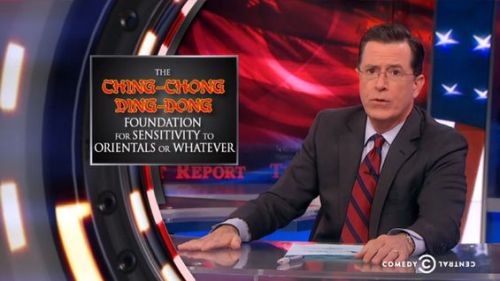
In 2014 the eponymous host of The Colbert Report featured a segment on his show about “The Ching-Chong Ding-Dong Foundation for Sensitivity to Orientals or Whatever”. Given his popularity it reached far and wide, and was eventually viewed by a Twitter activist who created the hashtag #CancelColbert in response.

chingchongcolbert

As it was meant to call attention to and ridicule the outrageous fact that a national sports team is named after an ethnic slur the response was out of line. It was a classic case of [obvious] satire being taken the wrong way, but by inadvertently contributing to what has been dubbed “a fake year of outrage’ this person’s misstep resulted in others who campaign for better representation and the like being worse than silenced, which is to say, ignored.

Despite calling out from what is ostensibly the same side, the misstep of a single loud voice meant that others were unheard.


The exchange between artist and critic is rarely ever an even one, and only becomes more difficult given the sensitivity surrounding such personal creative endeavours.

Lena Dunham is the star and creator of HBO’s Girls, and received enough disapproval about the lack of diversity in a show set in New York City that she was asked about it by NPR. She responded that “[she takes] that criticism very seriously,” and that very same year had Donald Glover playing Hannah’s Black boyfriend on the show.

While the presence of Sandy on the dramedy was a beneficial one, with arguments between the two capturing the tension that can be present in interracial relationships [including such exchanges as: “I never thought about the fact that you were black once.” / “That’s insane. You should, because that’s what I am.”], Glover’s character faltered in that he was very much a response to criticism. Continue reading

Can Casting Choices Promote Global Cultural Dominance? A Possible Explanation for Whitewashing in Cinema

This is a weird, random, and controversial thought, but….

I wonder if this consistent pattern of replacing Asian characters with White actors (even with more and more Asian actors getting more screen time [at least on TV] and all these articles highlighting whitewashing) is a subtle and unconscious battle of cultural and racial dominance? If it stems from a fear-based place of “if you put more Asians as leads in mainstream, worldwide entertainment, then it removes some of the cultural dominance of the status quo”.

I’m really not trying to bash White people, but you really can’t argue that White people overall have more privileges than any other race. And White men are the heads and execs at basically every major company in Europe and North America. And in entertainment, which has major worldwide influence, White people and predominately men are the execs, directors, writers, producers, and agents. Ironically, they welcome foreign money with open arms from Chinese to Middle Eastern investors.

Asians, population-wise, are more than 50% of the world; China and India have enormous populations with a lot of spending power. Asian countries have created very popular forms of entertainment with anime, manga, and video games. They frequently feature characters of Asian descent. Japan has always been a powerhouse country, but their status as an Axis power in World War II has set them up historically as a bad guy. Then their strength in electronics and cars in the 90’s set them up as the “competition” (i.e. not American and not us). And Chinese is ALWAYS the bad guy in the news. “We can’t have factories in China. The Chinese are gonna take over.” There’s a history of US vs THEM. Besides the military, the only industry of world dominance that White America has complete control over is the entertainment industry. American movies make so much internationally. Ironically, the US entertainment industry depends on the income from the foreign markets, but cater very little to their populations by representing them on screen. They know that the foreign populations will come see their movies no matter what, because they aren’t doing huge budget CGI movies where they are. Continue reading

My Problem With Ghost in the Shell (In A Nutshell)

I don’t think there’s anyone here who’s unfamiliar with the term “whitewashing” at this point.

It’s been a frequent topic of conversation here on Culture War Reporters, and while certainly not a new issue, it has been gaining wider and wider attention in recent years…


Most recently, the problem reared its ugly head in the form of Scarlett Johannson being cast in the live-action remake of anime classic Ghost In A Shell. Once again we’re seeing a traditionally non-white (in this specific case, Japanese) role being given to a white actor out of fear that audiences won’t watch movies with non-white leads. And if that were the only issue, I might have stuck with my usually political tirades and left this topic alone. But in the past few days, a shocking development has emerged in the story. Allegations have surfaced that the remake’s producers (and I quote) “Tested Visual Effects That Would Make White Actors Appear Asian“.

Or, as my best friend and this blog’s editor recently put it on Facebook:

“We think so little of you that we’d consider changing a White person’s appearance before entertaining the thought of casting an actual Asian.”

So yeah, I’m feeling compelled to write about this…

tthpnha

And let me tell you what really convinced me to submit the following rant. Continue reading

Black to the Oscars

Well readers, it was exactly one week ago that actress Jada Pinkett Smith announced her decision not to attend this year’s Academy Awards, citing a distinct lack of diversity in the nominees. In a brief video [embedded below], Pinkett Smith expressed her frustration at the apparent exclusion of people of color in the “mainstream”, and declared that “…begging for acknowledgement, or even asking, diminishes dignity.”


Upon hearing this, the nation has since had a moment of quiet reflection over the issues Miss Pinkett Smith has brought up, calmly and honestly discussing the root issues facing the representation of-

Nah, I’m just kidding. People went ape****.

tumblr_nqofbeqloy1twltp9o1_250

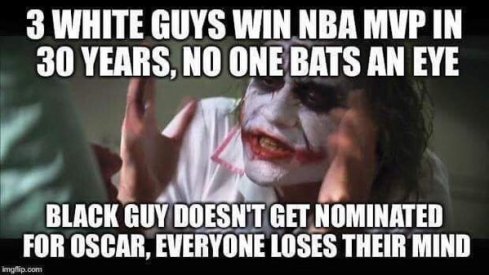
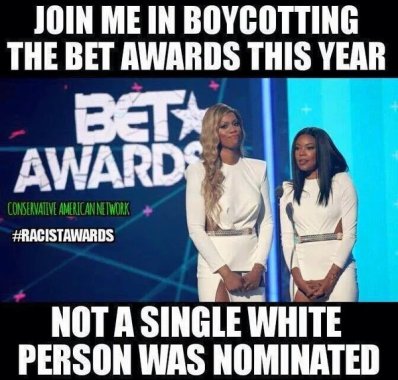
Cue the torrent of self-righteous indignation as folks started positively shrieking about reverse-racism, hypocrisy, and entitlement. And as more and more figures have come out in support of (or at least, sympathy with) Pinkett Smith’s cause, the outrage has only grown with it. It seems that you can’t go anywhere online without running into something like this:

czu22daumaapgu3

Or this:

czdq2uxwwaay9z7

Or this:

20160123_woc197

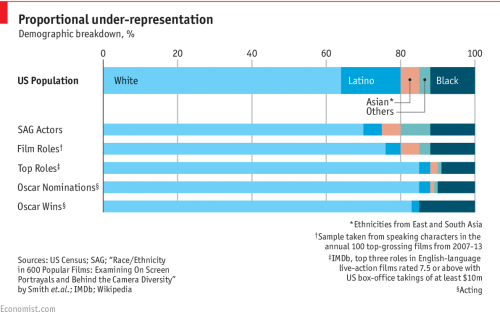
For the record, the stats on this lead to incorrect conclusions- but we can talk about that later.

Continue reading

Having Put The Martian on Blast, Let’s Talk Briefly About Intersectionality

Last Friday was such an outpouring of emotions [alongside a fair amount of research] that even with roughly 2,700 words there was bound to be something I missed. While I had initially planned on making room for it, an omission was made starkly apparent to me once I began sharing the post. As those of you who read it [and you should, before continuing on with this one] it ended with a call to action: kickstarting the discussion about diversity and representation through asking others to read what I’d written [or however else they felt led].

That’s a risky thing to ask of anyone, for obvious reasons.

ahaRbz4 - Imgur

One of my friends shared the post on Facebook, and was immediately faced with another friend of theirs who had an issue with a small section that I’ve since amended. Here it as it was originally written:

“Chiwetel Ejiofor is an Academy Award winning actor. He’s also a Black [not African American] man, part of a demographic that has not struggled in Hollywood compared to many others.”

Going back you’ll notice that it now refers to Ejiofor as being “Nigerian English”, which is of course much more accurate. The issue that the person had with the original was that by going so far as to state that other actors were “Asian” and even “East Indian” I was snubbing Ejiofor’s own background. I was even accused of doing racebending of my own by overlooking this fact. Continue reading