I and TV often find ourselves at odds. More often than not, what you get on television is hours upon hours of sensationalist news, vile game shows, and talk shows that swing between glorified bum-fights and thinly veiled infomercials. Sure, every once in a while you can find quality along the lines of Arrested Development or Ugly Americans or Scrubs or whatever wildly popular and inventive new show that NBC will cancel because **** you, but for the most part there are plenty more weeds out there than roses.
However, one such exception to the norm is- believe it or not- Court TV.
That’s right, Court TV. Judge Judy, Judge Mathis, Judge Milian, and so on.
Now you might be trying to wrap your heads around why on earth these shows are any good, but that’s probably because of the general skepticism you have about daytime TV (and not without just cause). Think about it. Really think about it. What do we see on this show? Glamorization? Perhaps, but for all the strange cases that show up, the majority of them seem nevertheless perfectly plausible. And that brings us to the second point: sympathy. Who among us can say we haven’t had a situation, or haven’t known someone who had a situation, which would constitute a conflict without going so far as to be criminal? Who hasn’t had some petty yet long-running dispute with a neighbor? Who hasn’t had some tiff about splitting up a dead relative’s possessions? Again, Court TV has it all, and what’s more, shows the real-life consequences of all this (usual) pettiness and greed. We actually get to see some positive arbitration, and get educated on not only our explicit laws, but our social contract, our culture, and our state as human beings in general. However hyped up it might be played, the “hollywoodization” of the shows still can’t rob them of their core essence, which is genuinely interesting and relatable conflicts and the ways we resolve ’em.
I’m not saying you don’t have better things you could be doing with your time, but if you’re gonna be watching TV, there’s plenty worse to watch than this.
And just one last note. I understand that “Court TV” also used to be the title of the TV channel now called “TruTV”. Obviously what I’m talking about and that are two unrelated things. Just a heads up.
Over the past couple years, the issue of regulating the internet has repeatedly arisen, and while there have been many issues contributing to this, there is perhaps none more well known than the contention over copyright infringement and piracy.
Now for a brief disclaimer.
I am a Marxist. I do not believe in “property” as the word would be recognized today. Every written work, every film, every piece of art belongs to every human being living. The Godfather series is just as much a part of our legacy and inheritance as the Mona Lisa, and as such, access to it should be enjoyed by all.
This is all to say that I don’t view “copyright infringement” as constituting any true offense. On the contrary, it’s simply the people taking back what was rightfully meant for them to begin with- but I’m not here to talk about that.
No, I’m here to talk about how the music and film industries’ witchhunt for media pirates is doing them (and everyone else) far more harm than good. Let me break it down for you.
I. Some People Will Never Buy
It’s a strange statement, but a true one. There may be a slim minority of people who pirates actually are keeping from the major industries through their cheaper/free service, however it ought to be fairly safe to say that there are plenty of people out there who would not otherwise listen to certain artists or watch certain shows. We’re living in tough times, and with your average movie ticket running at about twenty bucks (to say nothing of the gas getting to the theater and back), for many of us piracy is the only way we’ll see new movies and shows. Assuming there’s a segment of the population who will never, ever pay to see The Godfather, stamping out free avenues- namely piracy- doesn’t save the industry any cash. On the contrary, it just means that those people who don’t get to see the movie because they won’t pay for it aren’t talking about it, and generating buzz that might well attract people who will pay to see the movie. And speaking of them…
II. Some People Will Always Buy
Just as some people simply can not or will not pay (such outrageous prices) for entertainment, you will find people who will spare no expense when it comes to it. There are plenty of people who want to see movies on the big screen. There are plenty of people who want to see their band live in concert.The Mona Lisa is a perfect example of this.
You can see pictures of Mona Lisa anywhere; it’s one the most widely recognized images in human history. Because it’s available for free most anywhere, no one will actually go see it, right? After all, it’s been “pirated” to death. Yet that room in the Louvre is packed wall to wall with people who want to see the thing for themselves. Why? Because it’s the original. Doesn’t matter that it’s roped off, or behind glass, or barely visible, or that the guards usher you along after thirty seconds- it’s still wildly popular. The same is true of all media. Some people- plenty of people- will part with their cash to see Avatar in 3D, rather than watching some grainy, laggy version taken on a hand-held video camera in Thailand.
III. Anti-Piracy Hurts the Audience
You may not have experienced this in the states, but there was once a time when DVDs were listed by region codes, and could only be played on players that recognized that region. In other words, a DVD from America couldn’t be played on a DVD player from Europe and vice versa. You were granted a limited number of “switches,” but seeing as how you typically only got seven, it just put off the problem, rather than solving it. The goal (one of ’em, at least) was to prevent international piracy of DVDs through cracking down on how far away they came from, but all that just came down to it being a huge hassle for everyone, regardless whether or not their purchase was legitimate. Imagine all the time, money, and manpower that was invested in that venture that wound up solving nothing and quite possibly leading the industries involved to lose more money over that debacle than they would’ve lost to actual piracy. The same could be said for those hyperbolic ad campaigns comparing piracy to car theft
IV. Anti-Piracy Hurts the Industry
And while we’re talking about the industry shooting itself in the foot, let’s not forget the fact that preventing access to one film will very often lead to prevention of access to another. Quite simply, a person who doesn’t see The Godfather is not likely to go see the sequel, whereas someone who has seen The Godfather has a far better probability of winding up trying to see the sequel, either legitimately or through piracy. Is it a guarantee? No, but it’s still a better chance for the industry to make some cash than by preventing the person from seeing the first film at all.
V. Anti-Piracy Hurts the Environment
Lastly, I have to point out that we have free access to most films, music, and TV shows anyways- down at the local library. Only problem with that is when I drive to the library, I’m spending gas money, creating traffic, and spitting out exhaust fumes. Now I can get most anything down there for absolutely free, and no one complains. But imagine instead that I save on gas money, I keep the streets clear, and I reduce my carbon footprint by staying inside and watching the same movie I would’ve gotten free at the library. Suddenly, I’m a soulless criminal. Does that make sense to you?
What’s to be gained from all of this? Despite the doom-and-gloom prophecies of the industries, piracy continues on its merry path and yet we haven’t seen a decrease in the quality or production values of our movies.
We have more music artists now than we did a decade ago (at least, more access to them), in spite of piracy, and two of the most popular genres of our generation, techno and dub-step (I will never stop being ashamed of that) is heavily based on remixing and sampling other people’s work, i.e., piracy.
Look- I’m not asking the media giants to be happy about piracy, but at the same time, I have to question whether it’s really even worth it. All that cash being poured into anti-piracy gambits isn’t working– if it doesn’t already outweigh the revenue lost, wouldn’t all that time and effort be better spent elsewhere? Wouldn’t it be more profitable elsewhere?
EVAN: You said we should talk about food shows. Namely, the greatest food show of all time. Ever. In existence.
GORDON: Well, if we’re going to come up with the greatest food show in existence, we obviously have to take into account everything: from the high-class Iron Chef (and Iron Chef spin-off[s]) competition shows to the most rough and tumble [namely, Epic Meal Time].
EVAN: Ooh, dang, I hadn’t even thought of that last one. To be fair, though, thinking about it this week I came up with what I thought the basic structure of the ultimate food show would be.
GORDON: Shoot.
EVAN: I’m a man who loves his cooking shows, so my ultimate cooking show would involve, ideally, Top Chef Masters, MasterChef, and something like Surivorman.
GORDON:Survivorman?
EVAN: It’s like a Bear Grylls-esque show.
GORDON: The chefs have to hunt and skin their ingredients?
EVAN: I’m getting there-
It would have the insane challenges of Top Chef Masters, which calls for ridiculousness such as a gourmet dish made of licorice and sardines or something like that, coupled with the ability to appeal to different a wide range of different palates, a la the challenges of MasterChef, with a sprinkle of Survivorman for that added kick which, as you said, would be along the lines of hunting, skinning, etc.
GORDON: As much as I enjoy the concept of Mario Batali going mano-a-mano with a Yukon bull moose, I feel that there’s only so much you can cram into a cooking show- and it should be focused on the food itself.
EVAN: Well, let’s focus on my first two points then- some seriously difficult [and devious] challenges, as well as the added element of having to appeal to different palates.
GORDON: I can agree with that, only I would obviously like to see the show also grounded in some reality. Like dropping the chefs off in a college cafeteria somewhere and forcing them to work with what precious little is offered there, or an episode exclusively about ramen . . .
EVAN: A ramen episode would be awesome. I actually had the most amazing instant noodles this morning. It was Indonesian “mi goreng,” and it comes with sweet soy sauce, chili sauce, seasoning oil, seasoning powder, and fried onions.
GORDON: YOU HAD INDOMIE? THAT IS THE BEST RAMEN IN EXISTENCE! I WOULD KILL AN ORPHANAGE FOR A PACKET OF THAT STUFF!
EVAN: WE ONLY HAD TWO PACKS AND I ATE THE LAST ONE THIS MORNING. I NEED TO FIND MORE.
GORDON: But yeah, I think it’s important that the show not get too fancy.
EVAN: So we’ve gotta keep it pretty grounded, that makes sense. What I think would be really interesting, though, is kind of turning the whole thing over.
Because in gourmet restaurants, it’s never ever “the customer is always right.” It’s “the chef is always right.” So if we had a show where the chefs had to specifically cater to what people wanted, instead of them being all “I went to school for this I know what you want.”
GORDON: That would be cool- I recall us watching a cooking show episode where the contestants were judged by a whole bunch of kids. Vox populi; I like it
EVAN: Yep, that would be MasterChef. I loved how one guy kept saying he was a dad, and he knew what kids liked and didn’t like.
GORDON: I do think we need to cut something out.
EVAN: Yeah?
GORDON: That’s the judges screwing with the cooks:
EVAN: Really? I kind of love that.
GORDON: It doesn’t build tension- it’s just annoying.
I also feel that there should always be a judge from crazy far away. so there’s always a really different perspective.
EVAN: That’d be cool.
I know something we definitely need to remove.
GORDON: Yeah?
EVAN: Product placement.
GORDON:THANK YOU!
Yes- that crap gets chucked out. Unless. Unless it’s a genuine moment of the chef expressing that a certain thing has really helped him. I think that kind of endorsement is fair.
EVAN: Yeah, I mean, that’s valid.Like, there’s this guy, on MasterChef, who would say things like, “Let’s see what you cooked on your MasterChef TM Frying Pan.” It was painfully blatant.
GORDON: It was.
You good with three chefs?
EVAN: For a show? I don’t see why not.
GORDON: How many contestants? Two, à la Iron Chef, or elimination style, à la MasterChef?
EVAN: Wait, did you mean three judges?
GORDON: I did.
EVAN: I think two chefs, three judges.
GORDON: Are the judges all chefs, or do we include food critics and celebrities? I don’t care for the food critics too much. Too . . . exclusionary?
EVAN: I think food critics have their place. I think that celebrities can be . . . stretched. Like one time on Iron Chef: America one of the celebs was the guy who played Gunther on Friends. The guy who owned Central Perk.
GORDON: Bill Murray was on there, wasn’t he? Called Batali a princess?
EVAN: I think he was in the audience, haha. Which is hilarious.
GORDON: It was. I demand Bill Murray always be in the audience.
EVAN: You would torture the poor man.
GORDON: All in the name of the perfect cooking show, yes. But moving on . . . Secret ingredients?
EVAN: So are we going for more of an Iron Chef approach here?
GORDON: Yeah, but bear with me. I think we should include bonus points for making the food really, really big, à la Epic Meal Time. Decadence combined with technique, which is I believe how we first came up with Turduckens.
EVAN: See, I think we can have decadence and technique by having different rounds, each one hugely different from the one before it. Maybe you can create a Turbaconepic, but can you then create a tower . . . out of soup!?
GORDON: That sounds like an awesome idea.
So let’s see what we got here: two chefs face off, surprised by secret ingredients as they work in different rounds that require ingenuity on their part bordering on genius.
EVAN: Yep. Challenges that force them to keep on their toes.
GORDON: They are judged by three qualified individuals, always including one from a culture whose cuisine is extremely different from that being served. Judgement is quick and of course, accessible to the audience. The only thing we’re missing is the prize . . . I say a golden cauldron.
EVAN: How very Asterix of you.
GORDON: FULL OF THEIR FAVORITE FOOD!
EVAN: Haha, what?
GORDON: Think about it: You just won, you get food. What could make you happier? [That can be shown on national television.]
EVAN: I feel like chefs are pretty snobby about what they eat. Like whatever it is would have to be exactly to their liking.
GORDON: What would you fill it with then?
EVAN: I dunno, something expensive, but food related. Like truffles, or caviar. It’s so expensive it’s basically gold.
GORDON: Fair enough. But they have to eat it with their hands; that’s what the credits fade to.
EVAN: Sounds good to me.
GORDON: Theme song? Opening music?
EVAN: Oh man, uh. . . Something really epic . . .
GORDON:O Fortuna?
EVAN: Something scored by that one guy, Hans Zimmer.
GORDON: Works for me.
EVAN: So with that pretty much taken care of, what shall we turn our attention to next week? I do believe we’ve hit four TV-related E>s in a row.
GORDON: Let’s talk about literature.
EVAN: Alright. In what regard?
GORDON: Books that are coming out, or not coming out. I don’t rightly know. You wanna invent a new genre?
EVAN: Okay, that’s our new topic. That’s all for now, folks! Thanks for tuning in, and we’ll see you next week for Evan and Gordon Talk!
Imagine for a moment, the existence of two mythical lands: Acirema and Adanac. Imagine that you are a citizen of Acirema, living in a little town bordering Adanac. Despite your isolation, you’re just as patriotic as any another Acireman. You wave the Acireman flag, salute it, pledge your undying allegiance to the homeland, and swear to defend her against all attacks. You cheer on your Acireman compatriots competing in the Olympics. You stand up and applaud when they win, and howl with despair when they lose. As far as you are concerned, you are a proud Acireman, a citizen of the greatest nation on earth; you love your country just as every red-blooded Acireman is expected to.
And then it is discovered in an old, forgotten document that a century earlier your far-off neck of the woods was actually purchased by Adanac from some forgettable Acireman president. All this time the Acireman-Adanacian border was actually twenty miles further south, making your town and everyone in it Adanacian. What do you do? You were born in another country, making you a citizen from a country that has until now been foreign to you. Do you still salute the Acireman flag? Do you still cheer for the Acireman athletes? Do you still decry the metric system as a tool of the devil?
You probably get the point by now.
Nationalism, boiled down to its most basic components, is the idea that borders matter. That being born on one side of an imaginary line fabricated by affluent racists a few centuries ago should make you a different person than if you were born a few miles north/south/east/west of it.
Now we’re not exactly caught up in some series of Napoleonic conflicts, so why bring up nationalism as the topic for this week’s shame day?
“America remains the one indispensable nation, and the world needs a strong America, and it is stronger now than when I came into office…”
Now let’s take a few minutes to reflect on the sheer arrogance of that statement.
Done?
Good, now let’s break it down.
According to the president, America, and only America, is the one necessity in the world. Brazil, we’re ok if that goes away. The UK can sink into the ocean. China, Russia, Nigeria, Japan, Italy, Laos- these places are “dispensable.” They don’t serve an important function like America does. America is “indispensable”- the one indispensable nation.
Now if this quote came from some goose-stepping splinter cell in Nowhere, Arkansas, we could probably ignore this. However, as it came from the single most powerful man on the planet, we’re probably not crazy for raising some concerns.
I mean, let’s assume the guy is right- America’s existence is the cornerstone of all stability and decency in the universe, and it is simply more important and valuable than all the other nations of the earth. Shouldn’t we then be concerned about damaging this sole stitch in the fabric of civilization? Puerto Rico, a US territory, is currently petitioning to become a state. If it does, will the America that Obama calls indispensable change in such a way as to unravel all of that? What about selling an acre of land in the south to Mexico, would that shift in the border constitute a change to this indispensable nation?
Or maybe it has nothing to do with borders- maybe America’s indispensable nature has to do with its people. Obviously to protect this, we must maintain things the way they are, and keep any immigrants from entering into the nation, or any Americans from immigrating out, lest we screw up the quota that makes us us. Or maybe it’s not about borders or people- maybe America’s unique nature as “indispensable” comes from its values- that’s why we need to never add or abolish any laws or rules or alter our culture or worldview in any way.
Let’s be realistic here. I’m an American, and I am not exceptional. God Almighty does not smile more upon me for have been born in square A than in square B. My blood is not somehow more precious than that of someone who lives a few feet across an imaginary line in the dirt. If a Mexican, a Canadian, and I were drowning in the ocean, you would not be more obligated to rescue me for either of them. I am not any less dispensable than any other human being on the planet by virtue of my passport or my heritage. This idea that we are somehow inherently divided as human beings on the basis of where we were born is unspeakably stupid. There’s nothing wrong with liking the unique things about the place where you live, or the good and courageous things that are being done, or have been done, or the noble values that your countrymen hold. But ranking these things- the unique things, the good and courageous actions, the noble values- as being less or more important on the basis of their proximity to you is just a flipping shame.
Not “frightening stuff,” mind you- horror. There’s a distinction, you see.
Fright is the simple biological jolt you get when something startles or surprises you- a door being slammed, a discordant note blaring out of nowhere, and so on. Tragically, the title of “horror” gets slapped on things (typically movies) that merely have “jump-scares.” Horror on the other hand, is anticipation and dread at the perception of something threatening on a fundamental level.
So why talk about this? Because despite the outcry of some, horror- especially horror movies- holds a special place in our culture. Indeed, horror holds a special place in all cultures, and has since the first Cro-Magnons huddled around some arctic fire and whispered about strange and terrible things lurking just outside the circle of light. What we’re afraid of tells just as much about us as what we admire; a perfect example being Evan’s post on the remake Red Dawn. Evan cites that one of the reasons the new version doesn’t work is because the concept of the US being invaded is today laughable (especially by North Korea, whose entire population could fit into LA county with room to spare), whereas in the 1980s, the fear was far more realistic, or at least, believable.
Now I’m not here to analyze the past decade’s better horror movies and tell you what it is that we seem to be afraid of (not right now, anyways). In this post I’ll just be breaking down the three basic kinds of horror we seem to be responding to.
Fear For Self
First, we have the fear that attacks our egos- not “egos” as in pride, but “egos” as in the psychological term for you. This fits into the greater psychological element of “external anxiety,” meaning the stress we feel as a result of outside factors, such as school, our jobs, hunger, pain, and so on. When we’re afraid for our safety, or empathizing with characters in a movie or TV series who are fearing for their physical safety, we’re looking at this “fear for self” kind of horror. A good example would be any serial killer or monster movie- Psycho or Jaws being the best examples. Now usually we tend to botch this kind of horror, because the protagonists in movies or stories do things we would never do (blonde female college camper running through the woods at night, I’m talking about you). However, when it’s pulled off well, it leaves a noticeable mark on us. It has been said that Jaws created a significant drop in beach-goers after it was released, and you are a dirty liar if you say you’ve never once looked behind the curtain when you go into the bathroom.
Fear Of Self
Just as we have anxieties that stem from external factors, we have stresses and fears that come from within us: “Internal anxiety.” It was theorized by early psychologists, Freud in particular, that our mental issues were a result of us denying or repressing elements within us, most notably the “id”- that part of our mind with all the bloody, vicious, sexual animalistic drives that typically didn’t mesh well with Victorian (or any) society. As with the ego, horror works on this pathway as well- our fear of ourselves. All that madness and evil that we, for the most part, pretend isn’t there. The most obvious examples of this would be werewolf movies and vampire movies (obligatory “**** you, Twilight“) and most any film depicting a change or evolution the protagonist- see Dr. Jekyll and Mr. Hyde, The Wolfman, Dorian Grey, etc.
Fear Of No Self
Lastly we have stress and anxiety attacking (or coming from, depending on how you look at it) the “superego”- that element of our mind consisting of our real or imagined nobility, propriety, decency, etc. Here we encounter “existential horror,” more often called “cosmic horror.” This particular form of horror can be found in movies where the protagonists are fighting a losing battle against some massive, all powerful being- typically otherworldly in nature. Alien invasions and zombie uprisings are both good examples. Here we’re confronted with the fear that we are, in spite of all of our strength, morality, charity; in spite of our humanity, we are actually inconceivably small and insignificant. Ants who have just become aware that there are beings in the universe of incomprehensible magnitude whose simple existence negates everything about them. That unique feeling of powerlessness is separated from “ego fear” in that this form has a distinct hopelessness, rather than helplessness, attached to it.
Of course, every horror story has all three of these elements in it, but what kind of horror story it winds up being depends entirely on what is emphasized. Take AMC’s The Walking Dead– you’ve got your physical fear of the zombies, your id-based fear at what this new world is bringing out in you, and the general horrific despair at the absolute hopelessness of your situation, both in the face of zombies and the truth of human nature. What you wind up being afraid of depends on which element really gets pushed (survival, rationality, hope) and of course, what you individually, and we as a society, find most terrifying.
So what do we fear as a society right now?
Well, with the rampant popularity of zombie stories, and “disaster” films such as Cloverfield, Skyline, and even the whole “Slenderman” craze; it seems to me that we’re torn between physical and existential horror. And perhaps in an economic depression, that’s understandable- after all, we’re confronted with the physical job of keeping afloat in a rough time, and as the crisis drags on and on, the general feeling of hopelessness with regards to our general situation. We respond to characters whose immediate needs are threatened and characters who are struggling to maintain themselves in the face of cosmic nothingness.
At least, that’s my take on it. Feel free to debate me in the comments, and stop by tomorrow for another Shame Day installment.
This Fame Day, I’ll be continuing my past line of praising men and women who have shaped our world and yet remained largely uncredited. There is perhaps no man more deserving of our admiration and respect in this regard than Vasili Arkhipov (1928-1998): “the man who saved the world.”
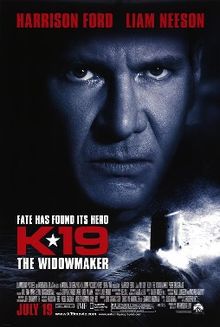
Arkhipov, born to a peasant family in what was then the USSR, joined the navy, participating in World War II, and further earning distinction as being a survivor of the K-19 submarine. Yeah, as in K-19: The Widowmaker.
The Widowmaker (also called The Hiroshima), for anyone who doesn’t know, was a nuclear submarine created by the USSR. Midway through it’s maiden voyage, The Widowmaker‘s nuclear safeguards failed, forcing the crew to heroically sacrifice their lives as they took shifts to rectify the problem, Vasili among them (the crew, not the problem). This event also inspired a movie.
Now the fact that he willingly exposed himself to radiation to help save his crew mates is a feat in and of itself, however, Arkhipov’s true claim to fame was to come a year later, in October of 1962.
This was the height of Cuban Missile Crisis, and Arkhipov was serving as second-in-command on a Soviet nuclear submarine bound for Cuba. While in international waters, the submarine came into contact with a number of American vessels, which began dropping depth charges in an attempt to scare the submarine off. The submarine captain, having been without any contact from Russia for days and suspecting that a war between the US and USSR may have already started, ordered the launch of a nuclear torpedo. Arkhiphov stood up the captain, and after a heated debate, convinced him, along with the other submarines they were traveling with, to stand down. The simple result of Arkhipov’s refusal to let this torpedo be launched was the prevention of a nuclear holocaust and the saving of billions of lives. Without this man, it is almost certain that none of us would be alive today.
So here’s to Vasili Arkhipov, one of the unsung heroes of human history to whom we all owe an unimaginable debt. Thanks for being the sole barrier between mankind and its own bloody self-annihilation!

 I and TV often find ourselves at odds. More often than not, what you get on television is hours upon hours of sensationalist news, vile game shows, and talk shows that swing between glorified bum-fights and thinly veiled infomercials. Sure, every once in a while you can find quality along the lines of Arrested Development or Ugly Americans or Scrubs or whatever wildly popular and inventive new show that NBC will cancel because **** you, but for the most part there are plenty more weeds out there than roses.







 Today, I’m going to talk about horror.