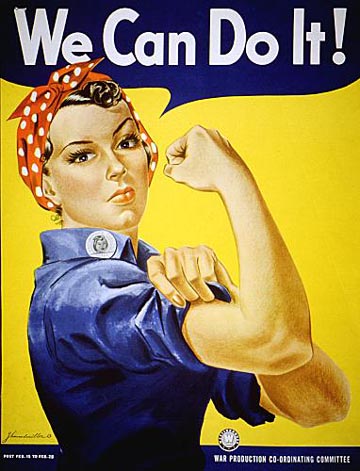
Category Archives: advertising

Internet Disgusted By Video Game Promotion [Also: Zombie Breasts]

Way back in the February of 2011 the following trailer was released for the video game Dead Island:


It was so impressive that last I heard, Lionsgate was going to make a Dead Island film based on the trailer. Not the game, the trailer for the game. A feature-length film based on the trailer for a video game. Think on that for a bit.

What it does is speak volumes for the game’s publisher, Deep Silver, and those it hired to advertise the game. There was an emphasis placed on the feelings of terror and loss and the need to protect one’s family; it sought to set itself apart from other zombie games [of which there are so many]. Unfortunately the game turned out to be your fairly standard run-of-the-mill zombie hack and slash, but that’s not the point here.

The point is that this trend was actually continued in the promotion of the game’s sequel, Dead Island: Riptide, the trailer of which can be viewed here. The tone is once again consistent with that of the first, highlighting the terrors of a vacation gone horribly, horribly wrong. Which is great. And which is why the following seems so shockingly out of place.

The image you see above is a promo image for the European “Zombie Bait Edition” of the game, the crowning glory of which is the statuette at the centre. This was, earlier this week, described as being “Dead Island’s grotesque take on an iconic Roman marble torso sculpture.” This was met with understandable outrage and disgust from the internet, which prompted those at Deep Silver to scramble wildly and release the following apology:

“We deeply apologize for any offense caused by the Dead Island Riptide “Zombie Bait Edition”, the collector’s edition announced for Europe and Australia. Like many gaming companies, Deep Silver has many offices in different countries, which is why sometimes different versions of Collector’s Editions come into being for North America, Europe, Australia, and Asia.

For the limited run of the Zombie Bait Edition for Europe and Australia, a decision was made to include a gruesome statue of a zombie torso, which was cut up like many of our fans had done to the undead enemies in the original Dead Island.

We sincerely regret this choice. We are collecting feedback continuously from the Dead Island community, as well as the international gaming community at large, for ongoing internal meetings with Deep Silver’s entire international team today. For now, we want to reiterate to the community, fans and industry how deeply sorry we are, and that we are committed to making sure this will never happen again.”

 So no harm now foul, right? Dead Silver took back their horrible statuette and we can chalk another victory up for the internet! But why exactly were people upset? An article on Rock, Paper, Shotgun which I linked to but will link to again said this about it:

This is beyond disgusting. It’s as if someone were attempting to demonstrate the most misogynist idea that could possibly be conceived, in an attempt to satirise the ghastly trend. A text book example of the most extreme ends of misogynist fantasy, a woman reduced to nothing but her tits, her wounds hideously depicted in gore, jutting bones, and of course barely a mark covering her globular breasts.

It’s very prevalent in a lot of zombie imagery you can find nowadays, and it’s certainly present in this picture of a zombified Snow White on the left. Her body is mutilated [appropriately so, for a zombie] but her breasts remain completely untouched. There’s this sense of the grotesque from the image as a whole, but her chest remains an object of potential titillation.

I don’t think I have to say too much about how grossly sexist this is, and how prevalent it is in the society we live in. What I am going to say is thank God that on some level we can make enough of a public outcry to stop stuff like this before it happens. The bottom line is this: if we as a community [on the internet or otherwise] care enough about something, we really can do something about it.  Even if it’s just stopping the production and sales of a tasteless statue.

———

A rebuttal to essentially everything I’ve written can be read in an article by Daav Valentaten on Venture Beat entitled “The Dead Island: Riptide reaction was an equality fail.” I present it as a counterpoint to my own post.

A Brief Argument Against Anti-Piracy

Over the past couple years, the issue of regulating the internet has repeatedly arisen, and while there have been many issues contributing to this, there is perhaps none more well known than the contention over copyright infringement and piracy.

Now for  a brief disclaimer.

I am a Marxist. I do not believe in “property” as the word would be recognized today. Every written work, every film, every piece of art belongs to every human being living. The Godfather series is just as much a part of our legacy and inheritance as the Mona Lisa, and as such, access to it should be enjoyed by all.

https://i0.wp.com/gifninja.com/animatedgifs/297918/it-belongs-in-a-museum.gif

This is all to say that I don’t view “copyright infringement” as constituting any true offense. On the contrary, it’s simply the people taking back what was rightfully meant for them to begin with- but I’m not here to talk about that.

No, I’m here to talk about how the music and film industries’ witchhunt for media pirates is doing them (and everyone else) far more harm than good. Let me break it down for you.

I. Some People Will Never Buy

It’s a strange statement, but a true one. There may be a slim minority of people who pirates actually are keeping from the major industries through their cheaper/free service, however it ought to be fairly safe to say that there are plenty of people out there who would not otherwise listen to certain artists or watch certain shows. We’re living in tough times, and with your average movie ticket running at about twenty bucks (to say nothing of the gas getting to the theater and back), for many of us piracy is the only way we’ll see new movies and shows. Assuming there’s a segment of the population who will never, ever pay to see The Godfather, stamping out free avenues- namely piracy- doesn’t save the industry any cash. On the contrary, it just means that those people who don’t get to see the movie because they won’t pay for it aren’t talking about it, and generating buzz that might well attract people who will pay to see the movie. And speaking of them…

II. Some People Will Always Buy

https://i0.wp.com/www.reactiongifs.com/wp-content/uploads/2012/11/take-my-money.gif

Just as some people simply can not or will not pay (such outrageous prices) for entertainment, you will find people who will spare no expense when it comes to it. There are plenty of people who want to see movies on the big screen. There are plenty of people who want to see their band live in concert.The Mona Lisa is a perfect example of this.

No ownership claimed...

You can see pictures of Mona Lisa anywhere; it’s one the most widely recognized images in human history. Because it’s available for free most anywhere, no one will actually go see it, right? After all, it’s been “pirated” to death. Yet that room in the Louvre is packed wall to wall with people who want to see the thing for themselves. Why? Because it’s the original. Doesn’t matter that it’s roped off, or behind glass, or barely visible, or that the guards usher you along after thirty seconds- it’s still wildly popular. The same is true of all media. Some people- plenty of people- will part with their cash to see Avatar in 3D, rather than watching some grainy, laggy version taken on a hand-held video camera in Thailand.

III. Anti-Piracy Hurts the Audience

You may not have experienced this in the states, but there was once a time when DVDs were listed by region codes, and could only be played on players that recognized that region. In other words, a DVD from America couldn’t be played on a DVD player from Europe and vice versa. You were granted a limited number of “switches,” but seeing as how you typically only got seven, it just put off the problem, rather than solving it. The goal (one of ’em, at least) was to prevent international piracy of DVDs through cracking down on how far away they came from, but all that just came down to it being a huge hassle for everyone, regardless whether or not their purchase was legitimate. Imagine all the time, money, and manpower that was invested in that venture that wound up solving nothing and quite possibly leading the industries involved to lose more money over that debacle than they would’ve lost to actual piracy. The same could be said for those hyperbolic ad campaigns comparing piracy to car theft

IV. Anti-Piracy Hurts the Industry

And while we’re talking about the industry shooting itself in the foot, let’s not forget the fact that preventing access to one film will very often lead to prevention of access to another. Quite simply, a person who doesn’t see The Godfather is not likely to go see the sequel, whereas someone who has seen The Godfather has a far better probability of winding up trying to see the sequel, either legitimately or through piracy. Is it a guarantee? No, but it’s still a better chance for the industry to make some cash than by preventing the person from seeing the first film at all.

V. Anti-Piracy Hurts the Environment

Lastly, I have to point out that we have free access to most films, music, and TV shows anyways- down at the local library. Only problem with that is when I drive to the library, I’m spending gas money, creating traffic, and spitting out exhaust fumes. Now I can get most anything down there for absolutely free, and no one complains. But imagine instead that I save on gas money, I keep the streets clear, and I reduce my carbon footprint by staying inside and watching the same movie I would’ve gotten free at the library. Suddenly, I’m a soulless criminal. Does that make sense to you?

https://i0.wp.com/www.reactiongifs.com/wp-content/uploads/2011/09/1239638148802.gif

What’s to be gained from all of this? Despite the doom-and-gloom prophecies of the industries, piracy continues on its merry path and yet we haven’t seen a decrease in the quality or production values of our movies.

Though "quality" is such a tricky word...We have more music artists now than we did a decade ago (at least, more access to them), in spite of piracy, and two of the most popular genres of our generation, techno and dub-step (I will never stop being ashamed of that) is heavily based on remixing and sampling other people’s work, i.e., piracy.

Look- I’m not asking the media giants to be happy about piracy, but at the same time, I have to question whether it’s really even worth it. All that cash being poured into anti-piracy gambits isn’t workingif it doesn’t already outweigh the revenue lost, wouldn’t all that time and effort be better spent elsewhere? Wouldn’t it be more profitable elsewhere?

https://i0.wp.com/media.tumblr.com/tumblr_manlx9hrn71r2sv68.gif

Just sayin’.

Be Thankful For Your Three Seconds of Star Trek

This is going to be a fairly short post, you guys. I leave for a college reunion in about an hour, and am running a little short on time. Maybe stay tuned for a longer one tonight, though.

If you’ve been reading this blog for a while [and really, who has?] then you probably know how I feel about movie trailers and previews. I was more excited than anything for this year’s The Avengers, but the amount of content they put out before its release was almost enough to rid me of a lot of my excitement for the movie. 

On last night’s episode of Conan brought in director J. J. Abrams, and with him a clip from the sequel Star Trek into Darkness. Fans all over America huddled in front of their TVs in anticipation, only to see this:

The clip is all of three frames long.

Understandably viewers were  more than a little disappointed. Honestly, I was as invested in the franchise as the average Trekkie, I imagine I would be too. Abrams lets us know leading up to the teaser that this is a scene where Spock is in a suit of some kind and is also in a volcano. Cue scene, cue outrageous applause from audience.

That might’ve been great for the studio audience, but not so much for people in their homes. Still, it’s good that a 2013 film has the restraint to not start bombarding people with footage.

And speaking of restraint, it seems like that’s what anyone who’s into film needs nowadays. It was my own fault that I found out exactly why the armour Stark wears in Iron Man 3 is the Mark XLVII. Do not look it up, it is a huge, enormous spoiler that will let you know a major plot point, as well as cause you to curse your need to know more and more bitterly.

With the way internet and the media work today, spoilers and leaks abound. It’s up to the viewers who want to preserve their theatre viewing experience to keep a modicum of self-control and not constantly keep checking comic book movie sites [this is more a message to myself than anything else].

What I’m trying to say is, be grateful, Star Trek fans. You have over half a year until Into Darkness comes out. Three seconds should be enough to tide you over for at least another month.

Wither Feminism?

This isn’t the first time I’ve lamented about the sorry state of feminism in the culture wars, and it certainly won’t be the last- nevertheless, the time has come for me to really lay out exactly what it is that’s killing feminism.


Sure feminism was necessary at one point, but it’s just not relevant anymore
.

You never hear that stated outright, but it seems to be underlying most responses on why feminism isn’t as major an issue was it was in the 70s or the 60s or the 50s or whenever exactly it was that the last wall of patriarchy supposedly fell.

Let’s face it, women can vote, run for and hold public office, be CEOs or workers, and so on and so forth. Really, shy of being able to serve in combat (American women, anyways), one might argue that all doors are now open. This mentality even seems to be affected most contemporary feminists, who though I am sure have the very best intentions, really can’t find much to rail about themselves. I’ve been through blog post after blog post, article after article, and found that overwhelmingly the subjects being discussed are mostly rants against Todd Akin (not to say that idiot doesn’t deserve it) or retrospectives on the battles of the past. Take a look at the contents of the latest Ms. magazine:

With Wonder Woman at the helm, the issue celebrates 40 years of fearless reporting with 40 Ms. and key feminist moments that shaped our history; birthday letters from dozens of life-long readers; and essays from founding editors Gloria Steinem and Letty Pogrebin, and current Executive Editor Kathy Spillar.

In the special 40th anniversary issue, you’ll also read about:

– What’s at stake for women in the 2012 election

– The significant ballot initiatives in your state

– Record numbers of women running for office

That’s their central points for their fall issue.

Now let’s take a look at Jezebel.

I had a rough time sifting through the articles for one that best demonstrates my point (I know Jezebel isn’t so much a “feminist” website as it is a “women’s interest” one- though exactly what that means I can’t rightly say)- for the most part, they seem tangential at best. “What is it with Women and Law and Order: SVU?”  or “Should Women Run? You’re Damn Right They Should.

That last one’s not talking about running for office- it’s literally about jogging. ‘Cuz apparently there was some blog post asserting that women with a certain body type aren’t cut-out to be runners, and that merited a response. Sure, whoever said that was wrong, but is that what feminists have been reduced to? Chasing down solitary quips of (comparatively) benign misinformation in the ugly bowels of the blogosphere? If that’s the standard for a worthwhile target, Evan and I should be beaten to death for mixing up when the premier of Community is going to be shown.

Please don’t beat us to death…

If this is the substance of the contemporary feminist movement, can you really blame people for feeling that all that’s to be done has been done? Can you really blame people for stereotyping self-proclaimed feminists as just angsty or contrarian? Is feminism just going to wither away?

I hope not- there’s still plenty of work to be done.

See this picture?

It’s from Dove’s “True Beauty” campaign. A series of advertisements aimed at combating anorexic and unrealistic standards of beauty. I’m sure the owners of Dove- a corporation by the name of Unilever- would be proud.

You know what other company Unilever owns?

Yep- these guys.

Now as I have family who read this blog, I’ve got embedded for you below the mildest Axe commercial I can find- be assured that it’s prudish and progressive compared to the rest of ’em.

That’s what we’ve got here- a corporation that on one hand is hawking their products by telling you that you’re beautiful just the way you are, and on the other hand depicting women as mindless dolls in low-cut dresses who can be manipulated with aerosol bottles. The latter alone would be a slap in the face, but that fact that the company is two-faced enough to shamelessly operate both utterly discredits their “True-Beauty Campaign” and exposes the fact that they’re ready, willing, and able to use feminism itself as a vehicle for controlling and objectifying women and perceptions about ’em.

This is Paul Polman, Unilever’s CEO, and he can go **** himself.

See, there’s this offshoot of modern feminism called “Sex-positive feminism” (you might know it by other names), which broken down to its most basic elements asserts that women’s use of their sexuality is empowering- and while no one would deny sexuality as an integral part of any human being- more often than not, this line of thought is used to justify strip clubs, prostitution, pornography, etc. as being actually good for women.
Now I’m not going to start accusing the founders of “Sex-positive feminism” of selling out their own movement- I don’t think that’s what their intention was. But then again, such things are what the road to hell is paved with, and even if the goal of this off-shoot was to make sexuality just as empowering as brains or brawn, the simple truth of the matter is that the prostitute isn’t probably viewed by her client as being a more well-rounded person because of her job. Heck- using this logic, I might argue that a twelve year old Honduran girl whose working for 32 cents an hour in a sweatshop is likewise “empowered”.

Strange how “Dead by 26 feminism” isn’t quite as popular…

Feminism isn’t dead- it’s just got a knife at it’s throat, and if saving feminism from becoming a tool of the very system that it was first established to combat isn’t a worthwhile endeavor- I don’t know what is. To anyone who would complain that all the important battles have been won- I present to you this. “Your solution to saving feminism is by saving feminism?” you might ask- and hey, it’s a valid point. But this isn’t just some circular exercise- this is a struggle for what’s really empowering. It’s a fight over messages- will we be told “These shoes are empowering!” or “No- they are shoes– empowerment comes from how far you walk and how much butt you kick.” Isn’t that worth something?

At the very least it beats writing an angry article about how body shape doesn’t exclude you from jogging.

P.S. I know I should also say some stuff about the “Slut Walks” (“Slutwalks”?, “Slut-Walks”?), the issue of rape, the continued problems of worker-manager ratios, etc. but it’s past 1:30 in the morning- please excuse the narrowness of this post.

Evan and Gordon Talk: Facebook and Privacy

EVAN: So in spite of the fact that I voted for my topic of preference on last week’s poll, Facebook and privacy and whatnot won. Having bitterly admitted that, Gordon?

GORDON: While the topic of Facebook (or all social networking) and privacy certainly isn’t a new debate, it’s not one that’s lost its relevance either.

As we rely on the internet more and more as our primary means of communication and entertainment, how do we address the issue of having every little element of our lives dissected and sold to the highest bidder?-

EVAN: I mean, really, everyone has been the target more or less of having their information used by Facebook. Log on and check out those sidebar ads; every one has been tailored using the cookies of sites you’ve visited. Which is why mine are always StarCraft related, etc.

GORDON: First thing we gotta ask is- “Is this really a problem? Aint it better to have ads that are actually relevant to you, rather than yet another ****ing insurance commercial courtesy of Geico?”

EVAN: Ugh, Geico. How many ad campaigns can a single company have?

EVAN: Moving disgustedly along, that’s a very relevant point. I’m interested in video games, so to have sidebar ads about such things is not something I can really complain about.

GORDON: I’ve got a pretty aggressive adblock, so I’m fortunate enough not to have to deal with that; but the underlying assumption with that kind of thought is that ads are inevitable. That you can’t get away from ’em, so you might as well try to get ones you like…

EVAN: Which is why, as you well know, I only thumbs up a select number of ad types on Hulu. Food, alcohol, video games, and certain movies.

GORDON: But with Hulu- you are the person in control. I mean, think of it this way: would you tolerate a guy going through your garbage so he can send you junk mail tailored to you?

EVAN: I’ve gotta think about that for a second . . . I mean, not getting junk mail about window/door services would be nice.

The whole “going through your garbage” thing definitely carries some different associations then simply tracking cookies. Maybe it’d be more like- a TV guy who follows you around when you shop, noting what you are and aren’t interested in.

GORDON: But that’s also flawed- in that scenario, you’re actually looking for stuff to buy….

EVAN: Well, you window shop, I mean- browsing, etc. Looking at what you look at, that sort of thing.

GORDON: So I’ve got this obnoxious guy following me wherever I go, listening in on my every word, and trying to sell me his wares without rest. Isn’t that one of the ironic punishments in Dante’s Inferno?

EVAN: Bringing this back to Facebook and whatnot, do we in general have a problem with the ads? I mean, they’re not the most obtrusive to begin with.

GORDON: Well, ads are only one example. What about your location?

EVAN: People want that stuff, though. It’s part of this new generation, tweeting where you are, statuses that read “I just had lunch with ______ at ______.”

GORDON: I’m not talking about when you state your location, I’m talking about when your location is pinpointed and used regardless of your awareness. Sexy Singles in Houghton being a prime example.

EVAN: Heh.

For context, Houghton is where we both attended college. It is so small it is not considered a town. It is a hamlet.

GORDON: The majority of the population- vast majority- is made up of the student body.

EVAN: Vast majority.

GORDON: Meaning that the town decreases by about 80% each summer.

EVAN: But those ads are all the same- they’re just slapping a different town [or hamlet] name onto whatever’s being advertised.

GORDON: But are you really okay with that? That not only your interests are out there, but your location as well? Regardless of your consent?

EVAN: As far as I can tell, it’s more eerie than anything else. And it goes from creepy to laughable when something like “Sexy Singles in Houghton” comes up.

GORDON: Now, as you are in Canada, this might not sound as relevant to your situation- but what about the gummint’ commin’ t’get’ ya?

I mean, there have been issues here in the States,  huge issues, with companies turning over personal information- including conversations- to law enforcement and security agencies without much (if any) process.

EVAN: Heh. “Gummint.” But yeah, that stuff has definitely happened. And seriously, what Facebook does with our personal information is very important.

GORDON: I guess it’s more or less the same for me- though I was a bit older, and having grown up in Syria (where they eventually blocked Facebook)- I never put anything on there I didn’t assume everyone could and would read.

Still do. Or don’t, rather.

EVAN: It’s interesting in that privacy settings are so much more advanced now though, in a way. If you don’t want people looking at even your profile pictures you can do that. Meaning that potential employers can’t use it as a legitimate check on future employees anymore.

GORDON: Now that  is messed up. We can all agree on that.

EVAN: Hm?

GORDON: Employers attempting to maintain control over their workers by monitoring their FB profiles, citing “character” as a reason or justification.

EVAN: Ah, that’s what you were getting at. So to some extent we’re in control of an aspect of our privacy on Facebook.

GORDON: No question. But speaking in a more general sense, what does that do to us as a people? As a society?

EVAN: Well, I for one am incensed when I want to look at a pretty girl’s profile pictures, and even though she clearly has them, I’m told that “there are no pictures in this album.” Bold-faced lies.

GORDON: You’re a pervert.

EVAN: My point stands.

GORDON: So we’re more dishonest with each other? We’re still ironing out the wrinkles in our old-world/cyber-world blend?

EVAN: Are we more dishonest with each other? I mean, if we’re really deconstructing this, the internet has made us more dishonest than we’ve ever been ever.

GORDON: Explain.

EVAN: Nothing we put online is necessarily true. Dating website profiles back me up on this.

GORDON: This is true. Are we then actually more skeptical and guarded despite the critics’ claims?

EVAN: Which are-

GORDON: The general spiel- the internet (social networking especially) is playing on our trust and making us more and more exposed for those who would make money off of us.

EVAN: Ah. Vulnerable, etc. I gotcha.

I’d say people in general are still naive enough to fall for obviously stupid ads [if they didn’t work they wouldn’t still be around]. But we are more skeptical as a generation, so really both are true.

GORDON: Fair enough.

EVAN: And we are exactly out of time.

GORDON: Remember to stop by next week for our discussion on the upcoming season of Community.

EVAN: Yes. It’s gonna be good. And I already know you’re going to end this with that Troy/Abed gif.

GORDON: I am indeed.

Celebrity Mortality and Actual Loss

Eight days ago Michael Clarke Duncan, who you probably know better from the Green Mile but who I remember as the Kingpin in Affleck’s Daredevil, passed away having never fully recovered from a heart attack. Whenever a celebrity dies people take to the internet to mourn, and I saw the following comment on one of MGK’s very simple memorial posts:

What struck me was what exactly made this summer more heartbreaking than any other. Was it the suicide of Top Gun filmmaker Tony Scott? The passing of puppeteer Jerry Nelson? Moreover, was this summer any more “heartbreaking” than 2009, when Michael Jackson, Farrah Fawcett, Ed McMahon, and Billy Mays died? Continue reading