Category Archives: Canada

Escaping Trump’s America: One Writer’s Harrowing Tale of Survival

trump-011It has been 51 days since Drumpf became president, and I lock the door to my apartment for the final time. It’s a cold day in March, but even my thick coat raises eyebrows as I arrive at the station.

They say Mussolini made the trains run on time, but I’m guessing the strange intricacies that seem to govern the Greyhound buses would’ve sent tears running down the fat, doughy face of the Italian despot. My ticket reads 5:30 to Chicago, No. 302, but the sun is already starting to rise over the desert. All the seats have been taken. I find myself a free spot of ground beneath a leering poster of the president. The bitter morning wind, reeking of diesel fumes and cigarette ash, sends loose papers skittering across the concrete. Discarded ticket stubs, crumpled receipts- a single page that looks like it may have come from some shoolboy’s essay. All decadent, unpatriotic schools have been replaced with Drumpf Universities, where we are to be re-educated to stop thinking like “bimbos” and “losers.”

An hour passes, and the guards return- weak, winter sunlight glittering off of their glossy, golden uniforms. They have proper haircuts- as we all do now. Aryan blonde, brushed forward to cover the parts of our head that absolutely aren’t balding. Any illicit hairstyles will earn you and your barber 80 lashings. They takes measurements our hands, to ensure their proper size. They search my belongings. I’ve prepared for this. Just enough clothes for a three day trip. No money. No passport. Just my mandatory certificate proving native birth and authorized religious beliefs. My papers say that I am going to Houghton to visit a sick friend. I am lucky that I already have documents that show I went to college there- at least, to the Houghton in New York. I do not think I could have afforded to have all my papers forged. Continue reading

Filmmaker Christine Welsh on Tracing Her Heritage in Women In the Shadows

My Canadian studies class recently watched Women in the Shadows, a documentary by feminist filmmaker and professor, Christine Welsh. Not long after we had watched her film Welsh agreed to visit our class for a question and answer period. Below I’ve included a little of what I learned from her film and her visit.

christine20qu27appelle20valley

1101331

Norbert Welsh’s oral history was recorded by Mary Weekes.

In an article detailing her documentary experience, Welsh explains that her interest had been sparked when her mother recovered a copy of The Last Buffalo Hunter, an oral history by her great grandfather, Norbert Welsh. In the film, however, Welsh attempts to recover more information about her great grandmothers, figures who were much harder to trace.

Along her search, Welsh discovers the name of her great grandmother, Margaret Taylor, and Margaret’s mother, Jane. Welsh surmises that Jane was most likely Cree. Jane’s union with George Taylor meant that Margaret was one of the first generations of Metis women. While documentation about women was lacking during early colonization, Welsh was able to uncover some details about her foremothers because of Margaret Taylor’s connection to Hudson’s Bay Company Governor George Simpson.

In the early period of Canadian colonization, Hudson’s Bay employees often took “country wives”. These women, of First Nations or Metis heritage, would create family ties between the explorers and the local community and were often the reason their husbands survived their first few Canadian winters. In Women in the Shadows, Welsh discovers that Taylor had been Simpson’s “country wife” for many years, only to be cast aside by Simpson when he returned from a trip to England with a new white wife.

Continue reading

The Remnants of Colonization in La Loche: What Factors Lead to Tragedy?

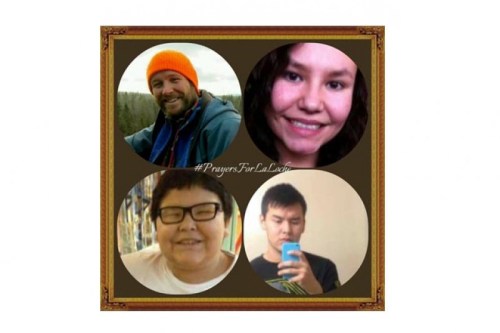
On January 22nd, a 17-year-old student killed four individuals in La Loche, Saskatchewan.

8521289_1453768082-5629

The four victims of the La Loche shooting, Adam Wood, Marie Janvier, and Dayne and Drayden Fontaine.

When I first heard about this heartbreaking tragedy I was shocked. Since then, I’ve been reading more and more about the town of La Loche in order to better understand the context of what happened. Below I’ve shared some of what I’ve learned about the situation this small Northern town has faced.

1. Rural isolation

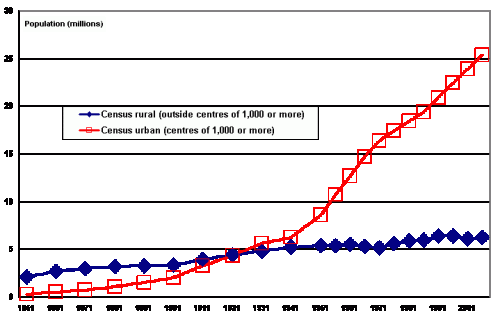
Canada has become an urban nation, so the city is where most of our jobs and resources are.

figure1_e

In some ways the popular Canadian cliche of a “vast, empty wilderness” is still true today. Just like the “discovery” of Canada – when a country filled with many different nations was considered “empty” by explorers – today Canadians still consider the jobless pockets of Northern Canada “empty”.

While settler-Canadians have congregated primarily in the region of Canada closest to the American border, First Nations peoples still tend to be the majority in Northern rural areas. In La Loche, for example, more than 2,400 of the 2,600 community members identify as First Nations or Metis.

However, these communities have changed considerably since “the discovery” of Canada. Generations of First Nations peoples were forced to give up their cultural practices during their time in the Residential school system, which lasted from the 1870s all the way into the 1990s. They also gave up huge portions of land to white settlers. Not as a gift, but in an exchange drafted out in treaties that the Canadian government has yet to honour.

First Nations communities continue to survive, despite the loss of many traditional practices and lands. While these communities struggle to overcome their isolation, many settler-Canadians continue to ask why they don’t move south to find more jobs and a “better lifestyle”. In her article responding to this question, Susanna Kelley argues that many rural reserve members are forced to give up their land and community support if they want to find employment and education.

“First of all, the overwhelming majority of [rural] reserve residents have not completed high school and have no place to work once they hit the urban south. And many fly in reserves don’t have high schools.  Would you like to send your 13-year-old to live 70 km. away for months at a time?

Many who do come to the cities end up in the sex and drug trade.  They simply are unqualified to make a living other ways…

Which is why many [First Nations] people stay where they are, close to family and their community.

But what most Canadians don’t know is that our nation is legally bound to provide housing, health care and education to [First Nations people] who live on reserves.

The federal government isn’t just doing it out of the goodness of its heart.

The obligation comes from legally binding agreements made by treaty many years ago.”

Continue reading

2015’s Cultural Battleground – Kat’s Account

EDITOR’S NOTE: We end this year by each taking a look back and picking our five best posts, explaining both their importance to us and to the world we currently live in.  Clicking the banner images will link you to each post, so as 2014 comes to a close join us in remembering how far we’ve come, but also how far we still have to go.

RachelBrown

After the recent acts of Daesh terrorism in Paris I returned to this interview with PhD Candidate Rachel Brown to get some perspective. While Brown’s work was focused on food and religious identity in French and Quebecois Muslim immigrant communities, it also highlights how isolation and religious persecution can push young people towards accepting religious extremism. In the interview, Brown explains,

“I’m not really an expert in ISIS or Jihadist fighters or any of the topics that relate to this. I can say that when people, especially youth, feel alienated, when they don’t feel at home anywhere, this can lead to finding identity in extreme forms of religion. If the religious identity is the only identity that one feels they can claim, he/she is going to place a huge amount of importance on that identity.”

nestle

This year, a petition began circulating that condemned Nestlé’s operations here in British Columbia. While Nestlé has been operating here in B.C. for 15 years, residents became particularly concerned during the drought this past summer.  As Gordon has pointed out in his previous Shame Day post, Nestlé doesn’t have the greatest track record when it comes to respecting other countries and their water needs. In this post we take a closer look at the relationship between Canadian water and the American corporations that would like to bottle it up. Continue reading

This is What Environmental Racism Looks Like

Environmental racism was one of the most surprising concepts I encountered during my undergrad. It had just never occurred to me that where and how we polluted our environment would be intentionally arranged to affect some racial communities more than others.

In the States there have been several famous instances of environmental racism.

After the Second World War, for example, Chicago kindly provided African American veterans the opportunity to live in a housing community built atop an abandoned landfill. After serving their country and surviving the war these veterans came home to Altgeld Gardens Homes, a community that would have significantly high cancer rates because of exposure to toxic chemicals.

Then, in the 1970s and 80s, there was the Warren County PBC Landfill case, when the state of North Carolina decided to bury soil that had been contaminated with toxic polychlorinated biphenyls in Warren Country, a community with primarily black residents and a much lower income rate than the rest of the state.

With the very likely possibility of their drinking water being contaminated by the toxic material, residents, civil rights groups, environmental leaders, and clergymen all joined together to protest the state’s decision…

…and then got arrested.

Continue reading

Justin Trudeau Makes Me Cry: The Trouble with Strategic Voting

I love democracy. No bullshit. The idea of “one citizen, one vote” fills me with hope and pride. As a woman, a Canadian, and a self-declared citizen of the world I am acutely aware that voting is a hard-won privilege. People my age (particularly women) have given life and limb to make voting my right. So usually, when I vote, I swell with pride. This year I hated voting. Voting made me so sad. Because this year I voted strategically. In Vancouver South Liberal party candidate Harjit Sajjan is most likely to beat Conservative candidate Wai Young. So I voted Liberal.

Before I get too far I need to note I’m not a right-wing-hater. In fact, I pride myself on being relatively non-partisan (but left). I don’t think that people who vote Conservative have bad hearts. In fact I am sure there is enormous goodness in the heart of your average Conservative MP. Good hearts aren’t hard to come by. I do think that the government, as it is, has gone too far. I believe that Stephen Harper’s once good heart has been corrupted by unchecked power. And that’s why I lied on my ballot.

Nor am I a Liberal-hater. Like many of his Conservative competitors and coworkers Justin Trudeau has a good heart. Since I was a child I loved Justin Trudeau. He was my political celebrity crush. He was my rock star. He was like the sensitive one from a political boy band.

trudeaujpg

Photo by Jean-Marc Carisse – CC BY 2.0, 

I had so much hope for his solo career. And that childhood crush sort of lingered through until adulthood. I was SO excited when I heard that he (he!) would be speaking at my university (mine!!!). I was going to get to be in the same room as Justin Trudeau! I couldn’t wait to hear what political wisdoms he would impart and what solutions he would offer to the Conservative infestation we seemed to be having in the cabinet. I arrived two hours early and helped set up chairs. Then he started to speak. At first I was confused. Then I got sad. Then his stupid face started to piss me off. Continue reading