Category Archives: media

Fame Day: Bleeding Cool and The Big Bang Theory

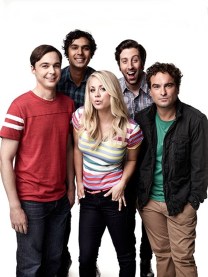
It all started with this teaser for tonight’s episode of The Big Bang Theory:

“The girls go . . . WHERE NO WOMAN HAS GONE BEFORE.”

This prompted the writing a post two days ago by Rich Johnston on his comics website Bleeding Cool, entitled “Are You A Woman, Have You Actually Been Inside A Comic Shop?” This in turn prompted another post by the name of “Disproving The Big Bang Theory” in which Johnston received feedback from numerous individuals on what they thought of this premise.

A few response tweets:

Untitled-1

Untitled-1

And one of the longer email responses, this one from Susanna Baird:

I started reading comic books about a year ago. I’m a middle-aged mom and the first few times I walked to the “New Comics” back wall at Harrison’s in Salem, MA, I felt like I was walking the halls of my junior high school with a new haircut. But after a few weeks, I realized that feeling was entirely my own.

Everyone wanted to talk comics, and no one cared that I was the only middle-aged housewife in the store. Now it’s like all the enthusiastic geekery of junior high minus the mean girls. I love it. Love comics, love Harrison’s – the staff, the clientele – and I love being in a room full of metal shelves lined with three-dollar art.

I love Harrison’s.

Finally, one last post just today revealed that even an editorial staffer at one of the Big Two [Marvel/DC] had things to say about, which I won’t quote here since I don’t want this to just be links to Bleeding Cool articles. You can read that here, though.

Is all of this attention warranted? Should The Big Bang Theory really be criticized for depicting comic book stores as havens for uncomfortably staring virgins?

The fact of the matter is this: it’s the perpetuation of a stereotype that simply isn’t true. More than that, it’s based on the sexist assumption that some forms of media [in this case, comics] are closed off to women. I know for a fact that there are members of the finer sex who appreciate a good comic book, and saying that no woman has ever stepped foot in a comic book store straight-up denies this.

As someone who loves comic books, and wishes more people did, it’s a huge
encouragement to me that so many women are speaking out on this topic. They’re asserting that they appreciate good art and storylines too, and I am immensely pleased that this is happening.

asdgasdgasgd

It’s unfortunate, as well, since The Big Bang Theory has actually been really great this season. They’ve started giving the female cast members equal screentime, and it’s refreshing and creates a lot of immensely funny situations. It’s a shame that tonight’s episode turns to relying on such tired material, but it is definitely worth giving kudos to those who are doing their best to prove its premise false.

Shame Day: The Body Positive Movement

I was recently listening to a stand-up routine by British comedian Robert Newman, who in the course of an Iraq War joke stated something I thought was pretty dang profound.

“Just because you’re fighting the bad guys doesn’t mean that you’re the good guys.”

I really can’t think of anyone this statement applies better to than the adherents of the rising “Body Positive Movement.”

You hear that, starving kids in Sudan?

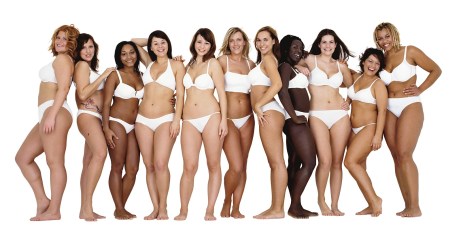
Who are these people? Well, the the “body positive” movement is the result of a reaction against the air-brushed, Photoshopped, and ultimately anorexic presentation of beauty offered by mainstream culture. It’s given us Dove’s “True Beauty Campaign” in which “real” women were used as models (hoping you’ll forget that the same people who run Dove run Axe).

It’s given us memes like this:

And it’s given us a host of philosophical epitaphs on how the size of your brain or heart are vastly more important than the size of your waistline.

“Buuuut we’re gonna use a skinny model anyways…”

And it all has a certain logic to it. Forget society’s standards! Be comfortable with who you are! Your insides are all that should count! Reject anorexic beauty standards! Enough making yourself sick trying to pursue unrealistic and unattainable goals! Only you can make you feel inferior!

And so on.

Now I know that it must sound pretty weird that these people would wind up being the subject of a Shame Day. After all, what’s wrong with rejecting the media’s unattainable and anorexic standard of beauty and embracing your body for what it is?

Well, suppose your body looked something like this:

Sure, I could say this guy is “husky” or “bigger” or “shaped differently” or use any other paper-thin euphemism for fat. Doesn’t change a thing. I could name the asteroid about the hit the earth Friendly Ed and there’d still be as much devastation when Edward hits New York. We can call it anything we want- we’re still not changing the fact that being fat isn’t any more healthy than being stick-thin.

“But Gordon, you incandescent beacon of enlightenment, surely these people aren’t advocating anything like that!

And no, not all of them are- but enough of the big players are endorsing pretty much this philosophy. Let me offer this post from The Body Positive’s website as an example. In her article “‘Tis the Season to be Squishy”, Connie Sobczak asserts that there’s really nothing wrong with gaining weight during winter months, as this is simply the body’s natural reaction the cold as a result of evolutionary adaption. And that is true- only Sobczak goes on to use that factual statement to prop up some far more dubious claims.

“So, the next time you ‘feel like a steak’ or ‘need a cookie’ it could be your brain and not your stomach talking.” Out of the mouths of doctors!”

**** That.

What Sobczak is doing here is attempting to twist evolutionary biology into an excuse for lack of self-control. There’s nothing wrong with wanting to eat a bag of chips. There’s nothing wrong with wanting to eat a bag of chips in winter when you need more calories. There’s nothing wrong with stating that as your reason for eating more chips. But taking all of that and coming away with the conclusion that eating chips (or anything else) is retroactively sanctioned by biology and stating that this conclusion is supported by medical professionals is as dishonest as it is deluded.

Case and point.

Look, it’s true that who you are on the inside is vastly more important than who you are on the outside, no one is going to argue that. But let’s talk about excess, people. Let’s talk about gluttony. Aren’t these realities? Let’s compare the number of people who have had become ill or died as a result of being overweight and contrast it to the number who have become ill or died as a result of being underweight in this country. Which side is gonna have claimed more?

Now that ain’t an endorsement of anorexia or our twisted standards by any means, it’s simply a counter-point.

But hey- maybe it’s not a health thing. Maybe it’s just about being comfortable with who you are regardless of your size. That’s the line taken up by comedian Gabriel Iglesias in his stand-up routine.

Towards the end of one of his acts he states that he wouldn’t want to live to be a hundred if it means he couldn’t eat cake. He asserts that working out doesn’t ensure you’ll live long- why not enjoy life while you have it?

Why not indeed?

So if that’s the case, why are we jumping on the bulimic and anorexic members of society in the fist place? Hey- if health isn’t an issue and happiness is, why is a a girl weighing less than seventy five pounds any worse than a girl weighing three hundred? Why is it “Body Positive” for a woman to expand her waistline and self-loathing when she expands her bust line? It just doesn’t pan out.

Look, I’m not here to offer any solutions. I’m six feet tall (when I’m not slouching, which is always) and skinny. I smoke a little bit, drink a little more, and could stand to cut down on the meat and up my intake of fruits and vegetables considerably. I don’t work out, but then again, if wolves were to be introduced to my city, I’d probably be ok. Despite my extreme examples, the vast majority of us are neither morbidly obese or carried off by strong winds. All that’s to say that I’m in no place to pass judgment on anyone, nor is it my intention to do so. I’m simply here to point out the hypocritical and seemingly self-serving logic being employed by the group in question.

Body Positive, shame on you.

Django and the N-Word

Let me begin by explaining that this is not a review of the simultaneously acclaimed and decried 2012 Tarantino blood-fest. You want to hear one of those, I’d recommend clicking over to Spill or The Escapist’s “Escape to the Movies.” No, what I want to talk about are some specific elements and segments of the film which have become points of contention, controversy, and debate in the past weeks.

Let’s start with the most obvious:

I. Saying “Nigger” Every Other Word

I won’t claim to know your stance on the word “Nigger”- heck, I’m not even sure of my own stance. Perhaps you view the term as so degrading and reprehensible as to merit burning it from spoken language. Perhaps you believe that appropriating and using the word strips it of its power to even be used as an insult. Maybe you see it as being purely contextual- a term of address with audience and a terrible insult with another.

It’s all Elmo ever thinks about

There are probably strong points to be made on all sides, but perhaps the stance you cannot take is that the use of the word “nigger” was inappropriate for the movie.

Now before you take up the battle-cry of “Tarantino is just trying to shock us!” or “Tarantino uses the word excessively in his other movies!” I have to say this.

You’re right.

It’s Tarantino; that’s not an excuse, that’s a fact. You wanna take up his use of the word in other films, then that’s part of the whole debate mentioned above. Simple truth of the matter is that this use of the word “nigger” would still be controversial if the film had been made by anyone else. So let’s talk about it.

Let’s assume that this movie, with selfish or noble intent, is trying to demonstrate a glimpse of the world in question; the use of that word is almost bound to come up. I might throw out the example of Mark Twain’s classic novel Huckleberry Finn, and while by sheer volume Django probably has Huck beat for use of the word, by percentage I’d posit the two are pretty evenly matched. The escaped slave Jim is repeatedly and almost exclusively referred to as “Nigger Jim,” as are the other black characters in the book. Now Twain was anti-slavery and used that word to demonstrate the dehumanization of African Americans (which is why taking the word out of versions of the book is so dumb), as well as reflect the general use of the word. Now I’m admittedly no historian, but if the writings of Twain and other authors are any indication of the times, I wouldn’t say the film is quite so far off as some critics might suggest.

And speaking of historical accuracy…

II. The KKK, or Lack Thereof

There is a scene in the film during which a group of men wearing white sacks over their heads attempt to stage an attack on Django and Schultz. New Yorker contributor Jelani Cobb writes “Tarantino depicts the K.K.K. a decade prior to its actual formation in order to thoroughly ridicule its members’ (literally) veiled racism.” While that scene was (in my own opinion) side-splittingly hilarious, Jelani, and many others, are dead wrong in assuming that this scene depicted historical inaccuracy.

Take this section from Huckleberry Finn:

Why don’t your juries hang murderers? Because they’re afraid the man’s friends will shoot them in the back, in the dark — and it’s just what they WOULD do.

“So they always acquit; and then a MAN goes in the night, with a hundred masked cowards at his back and lynches the rascal. Your mistake is, that you didn’t bring a man with you; that’s one mistake, and the other is that you didn’t come in the dark and fetch your masks.

Again, this is a Tarantino movie set in a Tarantino universe. That’s not a defense, simply, as I’ve already stated, a fact. If you’re looking for a historical account of the pre-war South, a spaghetti-western revenge flick probably ain’t the best place to look for it. There are going to be certain inaccuracies, and there are going to be things the filmmaker has to get right- but all of that is beside the point (which we’ll get to in a minute). All of that’s to say if you’re gonna try to criticize (or praise) the movie’s deviation from historical truth, make sure you’re (1) doing it for the right reason and (2) that you’re critique is actually right.

III. Samuel L. Jackson as Uncle Tom

In Django, Samuel L. Jackson plays the role of the villain’s head-slave Stephen, who isn’t so much a character as a caricature of the most groveling, snivelling Uncle Tom you will ever see or even imagine. This guy makes Uncle Ruckus look like Eldridge Cleaver.

You are guaranteed one genuine Gordon hug if you know who Eldridge Cleaver is.

I’ve heard people call this portrayal offensive, bordering on “black-face” in its depiction of stereotypical “black” mannerisms. It’s exactly for that reason that I didn’t have a problem with the character.

I really have no reason for putting this gif in here…

See, the entire point is to make fun of the guy- and not just him, but the quisling slaves that did indeed exist. I don’t think that this portrayal robbed the film of the gravity of slavery anymore than Bugs Bunny foiling a cartoonized Hitler robbed WWII of it’s gravity.

Now let’s get right to it-

IV. The Horror, The Horror

LA Times journalist Erin Aubry Kaplan said this of Django’s depiction of slavery: “It is an institution whose horrors need no exaggerating, yet Django does exactly that…”

This is a flat-out falsehood.

If Django Unchained exaggerated the horrors of the slavery, if the film depicted one one-hundredth of the horrors of slavery, I will never write again. Despite the allegations of this critic, the truth of the matter is that we could depict the institution of slavery for a century and be no closer to depicting an ounce the inhumanity of it all than when we first started. Does the film exaggerate slavery? Absolutely not. Does it make light of it? Certainly this was a concern of mine going into the movie, but having seen it, I really don’t think it can be faulted there either. The film does, I believe, make a distinct effort to show slavery as brutish and ugly as possible. Or, at the very least, the slavery scenes; this is, after all, a revenge movie first and foremost.

V. The Point

That’s the thing I feel most people are missing here. This ins’t a movie about slavery, this is a movie with slavery in it. It’s a revenge film in which one sorely persecuted character dispenses well-deserved justice upon his persecutors and we all nod our heads in approval and feel a sense of pride and joy well up as we look into this fantasy where the bad guy does get what’s coming to him. Slavery is the backdrop, not the subject, of the movie, but it’s just such a major issue that most of us are getting hung up on it. The equivalent might be bashing a western on the basis that the actual “wild west” was pretty peaceful- factually true, but still missing the goal of the story.

No, this is not a historically accurate film. No, it doesn’t capture the horror of slavery. No, it doesn’t even try to wrestle with it. No, it’s not a discussion of our checkered heritage. No, it’s not the film to drag that dark, bloody history out into the light of day.

But damn it, it’s a start.

Let’s Talk About Hypocrisy

Before I begin, I believe I ought to clarify something.

In this post, I’m going to be addressing the issues of hardship and tragedy and our responses to both of these things as a culture. Naturally none of this is meant to rob any gravity from Friday’s events- pain is, as always, pain. Any and all criticism here is directed strictly at hypocrisy, not sorrow.

There is a scene in season 2 of AMC’s hit series The Walking Dead, in which one of the group’s children goes missing and the other is [accidentally] shot and badly injured- both of which are bad things even without the ongoing zombie apocalypse. After managing to stabilize the boy, his mother begins questioning whether or not her son would be better off dead, rather than going on living the horrific and nightmarish existence life had become. Her exact words went as follows:

Why do we want Carl to live in this world? To have this life? So he can see more people torn apart in front of him? So he can be hungry and scared for however long he has before he…

So he can run and run and run and run and- and even if he survives he winds up- just another animal who doesn’t know anything other than survive…

Now whether or not you’re familiar with the series, this scene will still probably get a reaction out of you. Horror, perhaps, at how vile life must be for a mother to suggest her son dying would be a better alternative. Pity, maybe, for a person so driven and desperate.

Or, if you’re like me, utter indignant rage.

Let’s take a look at that soliloquy again. What’s the criteria this person puts on a life so awful it might as not be lived? Constant hunger, constant fear, and exposure to violence. In other words, the life of the majority of men, women, and children on this planet since the dawn of time.

You heard the lady- might as well just keel over.

And what’s her description of people who live this life? Oh, right- animals.

“And a very merry **** you to you as well”

What really gets me is that this (almost certainly) wasn’t meant to portray Lori as the vicious, self-pitying hypocrite that she came across as. Someone- nay, a whole line of writers and editors and censors- let that whole speech slide on the basis that it’d portray the character as sympathetic and troubled. And it’s this twisted attitude towards life that I want to address.

Early in the summer, I wrote a post on the need to portray graphic violence in media– especially in regards to war. I argued that our distance from the conflicts the US was engaged in made war too easy to ignore. The lack of the presence of violence, or our understanding of the consequences, made it all cheap and trite. Really this problem exists not only with violence, but with every aspect of our alienated society. We love beef, but how many of us could actually kill a cow? I’m not talking about hunting one down using nothing but a smooth rock, I’m just talking about simply ending one’s life. Could you do it? If not, I submit that you shouldn’t have a right to eat beef or wear leather.

Take a look at this cartoon.

Hard to argue with that, huh? Just as you shouldn’t be able to eat meat if you’re unwilling to kill the animal, you really shouldn’t be able to buy clothes and shoes unless you are personally willing to oversee the sweatshops in which they’re made. One way or another, you shouldn’t be able to reap the benefits of something without being at least capable of getting your hands dirty- and nowhere does that apply more than perhaps our government.

You might be familiar with the famous scene from Fahrenheit 9/11, in which Michael Moore attempts to pass out army recruitment flyers to members of congress (not surprisingly, most duck the offer). These people who were more than willing to send other people’s kids out to die in the desert suddenly found themselves far less eager when in the same situation- one congressmen protesting that his son had kids of his own (after all, all soldiers are childless and single).

And before any liberal readers get too smug, you’re far from exempt either. After the tragic mass murder in Newtown on Friday, I came back from work to find a letter in my inbox from a progressive organization I’ve signed petitions with before. “Act now!” they cried, “Demand gun control!”. This from the same people who bombarded me with pleas to re-elect President Obama, author and owner of a freaking “kill list“, to say nothing of his administration’s shoot-first-and-suppress-questions-later policy with drone strikes, and the “operation fast and furious” debacle.

Now all of this is just to demonstrate the social pathology this culture is suffering from.It’s not that we’re involved in countless injustices (that’s all bad in and of itself, but it’s not the point right here)- it’s that we have the gall to act hurt, or shocked, or horrified. Injustice is not greater for having finally happened to you. Pain and suffering don’t intensify based on their proximity to you. If you won’t cry out over the violence overseas, what right do you have to cry out over the violence at home? What right does a person have to feel depressed about cyber-bullying when he’s wearing a shirt made by an eight year old?  If you shrug your shoulders, stick your hands in your pocket, and walk off whistling when you’re told about homelessness in India, what right do you have to complain about mortgage payments in Indiana? Let’s cut the narcissism, shall we?

The Dungeons and Dragons Episode

D&DTVLast night The Big Bang Theory aired its 122nd episode, entitled “The Santa Simulation.” News that its premise hit the internet and avid television watchers everywhere began to cry what may one day become a familiar saying, “Community did it first!” Every single one of them was wrong.

A full year before “Advanced Dungeons and Dragons,” [one of the best episodes of Community‘s second season, in my opinion] there was “Jen the Fredo,” the first episode of British sitcom The IT Crowd‘s fourth season. Both of these episodes were some of the best of their respective shows, so I was pretty excited for what TBBT had to offer.

The thing about the D&D-centric episode is how it’s been used as a plot device. As a role-playing game the players are able to reveal aspects about themselves that might not otherwise come out, and you can see this being done with various degrees of effectiveness  in each episode. Spoilers for all three episodes past this point.

The IT Crowd [S4E1]
“Jen the Fredo”

I realize that most of you have not seen, or maybe even heard of, The IT Crowd. Let me sum in up in that it is, in my ways, what The Big Bang Theory could be. It’s a show about two, well, nerds that work in the IT department of a large company and their boss, who knows nearly nothing about computers. One of the best aspects of the show is that it brings you into the nerdiness of Moss and Roy, and in watching you begin to feel like you really relate to them, becoming equally frustrated when people ask them for help with their computers.

“Jen the Fredo” is, if you’ve seen The Godfather films [which I haven’t], a clear reference to the character Fredo, whose job it was to take out of town businessman and “show them a good time.” Jen takes on the role of helping to entertain a few business partners, but ultimately fails when she takes them to see “The Vagina Monologues.”

Enter Dungeons and Dragons. Moss has been preparing to DM [Dungeon Master, can be used as a verb] and convinces Jen that it’s exactly what these gentlemen are looking for. The best part is, he succeeds [I had a great YouTube clip here but someone decided to make it private].

While the idea of entertaining [and riveting] a few rowdy businessmen with a little D&D is hilarious in and of itself, but there’s more to it than that. Moss uses the game to confront Roy about the latter’s painful breakup, something he’d been avoiding talking about for a while. The conclusion is tear-filled and, more importantly, immensely funny. You can catch it on Netflix, or here, though you didn’t hear that from me.

Community [S2E14]
“Advanced Dungeons and Dragons”

This episode has easily the most actual gameplay of the three, since essentially the entire episode consists of the Greendale Seven playing D&D in the library. It also treats the source material the most lovingly, complete with a voice over and fantastically appropriate score.

The game is set up due to Jeff wanting to help out “Fat Neil,” a young man planning to end his life [understated by the narration] due to his new nickname. Once everything is set up, with Abed as the DM, things really get going.

Each member of the study group essentially plays a version of themselves, with the voice over near the beginning describing them as “Troy the Obtuse,” and “Britta the Needlessly Defiant.” They react to the situations within the game as they normally would, with Jeff impatient and unwilling to put up with nonsense as usual. The best parts, however, are when you discover a little something about the character you thought you knew, well-illustrated in the following scene with Annie:


In this episode Pierce owns his most [as far as I’m concerned] unpopular role: The Villain. Incensed at being excluded from the game he steals Fat Neil’s magical sword and runs away, later using D&D manuals to cheat and garner immense power to himself.

Everything ends, as usual, with a fairly warm and fuzzy conclusion. Pierce is defeated, mostly through his friends forgiving him for his dickishness [hence his title, “Pierce the Dickish]. Neil’s spirits are lifted and he finds the motivation to keep on living.

The Big Bang Theory [S6E11]
“The Santa Situation”

A “guys’ night” is happening and the activity of choice is Dungeons and Dragons, which is territory you’d have expected these characters to have explored in-depth quite a few seasons back. Heck, as far as I can recall they spent more time playing Settlers of Catan than throwing around a 12-sided dice.

The game begins and Leonard, the DM, lets it drop that their quest is to rescue Santa Claus. Queue Sheldon’s disappointed face due to the fact that he a) loves D&D and b) hates Christmas. Also Raj gets shot in the face with a cannon in the first few minutes of the game, highlighting the fragility of life in a world that values perception checks.

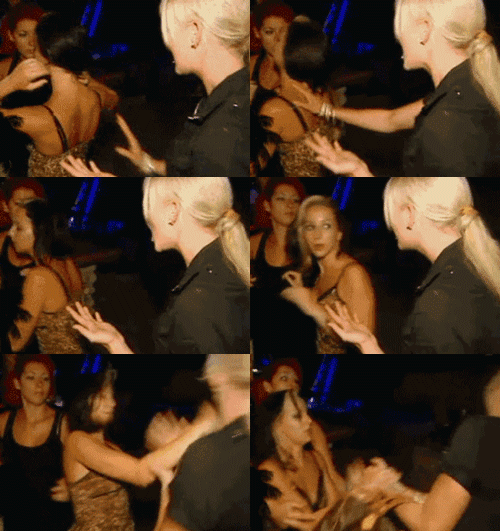
Oh, and they ditch their respective girlfriends to play, which led to this scene, the last line of which was delivered excellently:

This was originally a series of four gifs, but I didn't want to embed each one in this order, so I just took a screenshot instead. I think it still works.

Using the structure of the game Leonard gets Sheldon to sing [all five verses of] “Good King Wenceslas”  and all three remaining players to play “Jingle Bells” using, the obvious instrument of choice, bells.

Upon finding Jolly Old St. Nick in chains they move forward to rescue him, only to have Sheldon cast a paralyzing spell on his companions. He then confronts Santa [or Leonard, in this case] and tells the heartbreaking story of how he asked Father Christmas for only one thing as a child, to have his grandfather back. He then walks out, leaving the old many to die.

In Conclusion

As far as really exploring well-established characters, Community probably succeeds the most, by virtue that it only has the one central plot that revolves around a single game of D&D. While it does feature Pierce continuing on his course to become more cartoonishly evil, Britta’s response to the beleaguered gnomes is a perfect example of how her character will react both in and out of the real world.

The IT Crowd and The Big Bang Theory tread the very similar ground. Moss uses the game to force Roy to come to terms with the love he lost, something that would have been impossible otherwise. Sheldon’s childhood experience with Santa Claus never would have come about without Leonard guiding him to that place where he could talk to the man who disappointed him.

My hope is that there will be a continuation of this trend, with there having being one D&D episode per year from 2010-2012. As the current DM of an ongoing gothic horror campaign I am well-aware of the storytelling capabilities of the game as well as how enjoyable it is to know people you know well deal when presented with fantastical situations. Although 2/3 of the above shows do feature “nerds” I’m sure that this could still appear in the more bizarre sitcoms, such as New Girl and Happy Endings.

Evan and Gordon Talk: Nerd Culture

EVAN: To start this off by ignoring our readership and addressing you, this week’s topic is a weird sort of continuation of the various posts on culture you’ve written, such as “manly culture,” “science culture,” etc. And similar to these other groups of people, “nerd culture” is a pretty nebulous sort of thing to define.

GORDON: No argument there. After all, even the “nerds” insist on calling out “fake nerds”- especially in regards to women/girls. But what is a nerd anyways?

EVAN: See, now I’m torn, because we do need to define it, but you’ve also directly referenced an issue I wanted to discuss in depth this week.

GORDON: How about we abandon our previous track record, and just plunge recklessly ahead and hope the issue resolves itself?

EVAN: Well, let me throw this image out there:

And then hope that suffices for now.

GORDON: Works for me. So what was it that you wanted to address specifically?

EVAN: Well, just last month there was this guy, a comic artist, named Tony Harris. And he wrote this post on his Facebook page that was essentially a tirade against “faux nerd” women, and how they are whores, and so on.

To break it down further, these are women who dress up as superheroes and what have you without knowing about the actual characters themselves. He is upset because, to quote him:

BECAUSE YOU DONT KNOW SH-T ABOUT COMICS, BEYOND WHATEVER GOOGLE IMAGE SEARCH YOU DID TO GET REF ON THE MOST MAINSTREAM CHARACTER WITH THE MOST REVEALING COSTUME EVER.

Also that they attend to essentially just tease the regular con-goers and are actually not even hot, just “con-hot.” So yeah, he said a lot.

GORDON: Ah yes, I recall reading about this. And while I think we can all agree Harris went too far, is a bit hypocritical (seeing how most comic women ain’t exactly average looking), and probably getting too emotional, I can’t help but wonder if he has, somewhere in there, a point.

I mean, imagine if all of a sudden, something that you had been stigmatized for became popular, and people started trying to co-opt your identity knowing nearly nothing about it. I’d be ticked off too.

EVAN: That’s definitely something I’ve read people write about, that this used to be an exclusive club and that it took years to build up this knowledge and become, well, a nerd, and here are these noobs and they want in and it’s not that easy.

And I can see where they’re coming from as well.

But if you really love something, shouldn’t you want others to as well? The Avengers has an enormous following on tumblr these days [because of the movie], and these are people who are actually going out and starting to buy comics. They are helping sales, aiding the industry, etc.

GORDON: That’s true, and something I’ve considered, but there’s probably also an argument to be made for the other side. That something precious to you is being watered down and diluted for profit. I don’t believe that nerds (comic book nerds, anyways) can necessarily make this argument, but the line of logic is there.

Let’s try to come up with an example of this happening somewhere else, especially in regards to persecution.

EVAN: Mmk, go ahead-

GORDON: “Black culture” (or what was passed off as black culture) might be an example. Can you state that you’re not driven nuts by wealthy, comfortable suburban kids fronting like they’re from the streets of Oakland?

EVAN: Yeah, people are upset about it, sure, but there’s not this immense outcry over it. There are comic-con enthusiasts that are genuinely incensed that all of this is happening-

I doubt that an actual thug or gangbanger or whatever these rich White kids are playing at imitating is going to start freaking out that he’s getting ripped off. He’s going to laugh or shrug it off, because it hardly matters.

GORDON: I’d argue that the reason for this has more to do with the change in venue. It’s easy for the major players of the comic book industry to voice their opinions than, say, a Wu-Tang Clan fan in the late 90s. But maybe I’m wrong.

EVAN: For the most part, I see this as a mindset that is the foundation or core of hipsterism, and that we all feel to some extent, however minor. That we found something and we love it and there is a pride in joy in being one of the original fans.

And this outpouring of others somehow cheapens things. And all of a sudden we’re trying to assert how we’re better than them in some way.

“You chose to dress up as Spider-Woman? Do you even know who her alter-ego is, or what her powers are? Etc.”

GORDON: Again, do we not sympathize? Do we not feel frustrated with people who have more or less jumped on the bandwagon now that it’s all safe and socially acceptable to do so? Heck, just imagine if someone tried listing themselves as a fan of fine cooking, having only eaten sushi once- would you be ticked?

EVAN: If I equated sushi with fine cooking I guess I would, yeah. But just because we can understand someone’s anger and frustration doesn’t make it logical.

GORDON: I wouldn’t say that there’s not a logic to it. I mean, a major part of being a nerd is, and always has been, the social pariah element. All of the sudden you have these people trying to claim to be on the fringes of society? It’s condescending and insulting.

EVAN: I think that’s the issue- They’re not trying to “claim to be on the fringes of society.”

GORDON: I disagree- I feel this is a coward’s way of feigning rebelliousness and all that.

EVAN: Sometimes people who haven’t been exposed to comics for much of their lives see a movie, or read a trade, and go to a con. Maybe they wear a costume. That doesn’t mean they’re going into this thinking, in any way, that they’re suddenly a part of this group of outcasts.

Comics are popular now. I mean, more than they’ve ever been. To say “I like comics” is no longer the sort of thing that’s going to get you shunned. People are going to raise their eyebrows and wonder why you think that’s a big deal.

GORDON: Comics yes, no one is gonna argue that. The title of “nerd” however, that’s different. And after all, “nerd” is a much larger term. It applies to gamers, to film, and so on.

EVAN: So how does one become a “fake nerd”?

GORDON: Therein lies the rub- there’s always gonna be more obsessive nerds out there. People higher up and lower down the hierarchy. But for the most part, I think we can agree that a “false” nerd is one who does not meet the criteria in that diagram you posted.

The “social ineptitude”, the “obsessiveness”- if it’s not actually there (no matter how much the person or persons might insist otherwise) then that person is a “fake” nerd.

EVAN: So am I a “fake nerd”?

GORDON: Do you call yourself a nerd?

EVAN: I don’t really call myself anything. But I’d also say that many of the girls who go to cons and find themselves attacked by Harris don’t refer to themselves as anything in particular either.

GORDON: Then no, I wouldn’t define you or them as fitting this category. Like I said- Harris went overboard.

EVAN: I just don’t think social ineptitude needs to be a requirement in this. I think you could be a nerd and still have friends, and achieve some level of popularity. The diagram above really shoehorns the definition. I mean, what if I did call myself a nerd?

I’m fairly smart, about 80% of the time I’m thinking about comics, or comics-related media. At the same time, I’m a fairly social guy. What does that mean?

GORDON: You think about comics 80% of the time?

EVAN: I think about comics a lot.

GORDON: 80% of your waking thoughts is a craaaaaazy lot, though I’d say your self-identification as a nerd is flawed. Serial-killer in the making would be more accurate. But we begin to split hairs at this point.

EVAN: I guess it’s like, does Hugh Laurie have the right to play the blues?

GORDON: Hugh Laurie can do whatever the **** he wants. As does anyone. With everything he does, can he identify himself first and foremost as a blues musician? Not really. At least, that ain’t how we’re all gonna think of him, or remember him.

EVAN: Does it matter that it’s what you identify as first and foremost? I am positive that at some level, yes, he does identify as a blues musician.

GORDON: It does matter how you identify yourself first and foremost. I’ve eaten bugs on multiple occasions- I don’t declare myself “Gordon Brown: Bug Eater.” The rest of the stuff I do outweighs it by far.

EVAN: You’re missing my point. You’ve eaten bugs, so on some level you can identify as a bug-eater.

If he identifies as a blues artist less than he does as an actor, that doesn’t negate the fact that he identifies as a blues artist, and what we’re talking about is people being able to say that they can and do relate to a culture, and that doesn’t make them fake adherents of that.

GORDON: Let me offer another example: I’ve been camping, and I occasionally read survivalist pamphlets. For me to call myself a “survivalist” would nevertheless be inaccurate and misleading. That’s the crux of the matter, I believe.

A nerd is someone who is in this for the long haul- a person who enjoys The Avengers or Nolan’s Batman trilogy isn’t. At least, not necessarily.

EVAN: I’m not saying that a person who enjoyed The Avengers equates being a nerd. That’s like, half the Earth’s population, if the box office is any indicator.

I’m saying that a person who saw The Avengers, and then heads over to their local comics store to check some out, and gets really into it, has the potential to become a “comics nerd” of sorts. And people who see them and scorn them for not being there from the beginning should be ashamed of themselves.

If we’re sticking with the example of film and comics and so-on.

GORDON: And I agree- those people should not be viewed with derision. But that’s not who we’re talking about here.

We’re talking about ****ing hipsters, about people who have just enough knowledge of a culture to give themselves the veneer or adopting it. People who wear glasses as a ****ing fashion statement. You know the kind.

It’s about motives. The noob who is just now getting into the culture isn’t a “false” nerd- just a young one. The person who call himself or herself a nerd to co-opt the social stigma (now that it’s all but gone) deserves contempt.

EVAN: I honestly don’t think that what these people are trying to co-opt is the social stigma.

GORDON: My poor choice of words. I mean the false sense of rebellion. Like people who post pro-gay Facebook statements simply to draw attention and applause to themselves. Fake-rebels. Fair-weather activists.

EVAN: That’s fine, and I agree that these people are not to be applauded.

I just think that for the most part, people are realizing that there is a lot in the “nerd culture” that they find interesting and accessible, and are gravitating towards it. Not out of some misguided attempt to be on the edge of society, but because they legitimately enjoy whatever it is they’re trying to engage with.

GORDON: I agree- I simply don’t think it’s these people most old-guard nerds are angry at.

EVAN: But how can they differentiate? That’s a huge issue. It’s this reaction of the community against anyone that’s not legit, but without any way of truly being able to tell how people feel-

A person can go to comic-con in an elaborate costume simply because they enjoy the aesthetics and design of the character. They’re not required to know everything about them, and shouldn’t be hissed and booed at when they don’t.

GORDON: That in and of itself is another issue. If I showed up to the social justice convention dressed as Che Guevara  you’d best believe I’d better know a thing or two about the guy who I’m completely dressed up as- but we’re moving off track.

EVAN: But the point of social justice conventions isn’t to dress up as your favourite revolutionary- that’s entirely besides the point. I bring it up because it’s completely cogent to our topic, because it’s exactly what Tony Harris was railing against.

GORDON: Tony Harris ran his mouth and made a fool of himself, I ain’t trying to defend a word of what he said or wrote, only the general perspective he seems to be coming from.

EVAN: What I’m saying, without negating your points is this, and I’m going to try to wrap up since we’re 15 minutes past our cut-off, is this:

I’m someone says “LOL im such a nerd” and they wear glasses with big frames and have a Green Lantern patch on their backpack, yeah, I’d say that’s not okay. But a large issue is being able to, as a community, acknowledge when “outsiders” try to access what it is that we love so dearly.

We like comic books and Star Trek and Dungeons and Dragons, and if other people might as well, that’s fine. Just because others weren’t always welcoming of us in the past doesn’t mean we should do the same to others. Especially when there’s some likelihood, even a little, that they could one day be as big a fan as you [as hard as that may be to believe].

GORDON: Well put. Be sure to stop by next time for our discussion of . . .

EVAN: Of . . . uh . . . I threw out this topic last week, what’ve you got?

GORDON: Let’s address the portrayal of drugs- weed in particular- in media and popular culture.

EVAN: That’s a pretty contemporary topic too, because of the legalization in Washington and all that. Sounds good to me.

GORDON: Let it be so then. Merry Wednesday to all, and to all a good night!