Category Archives: morality

Evan and Gordon Talk: The Role of Religion in a Secular World

GORDON: Dearly beloved, we are gathered here today before these witnesses to discuss the role of religion in our comparatively secular world.

Not too long ago, Evan and I discussed the subject of separating art from its artist, which brought up controversial science fiction writer Orson Scott Card, selected by DC to author a series of Superman comics.

Public outcry ensued as a result of OSC’s viciously homophobic views- including a statement advocating the overthrow of the American government should gay marriage ever be legalized.

EVAN: I am going to be honest and admit that I am counting down the second until this is over, when I get to finally play my copy of StarCraft II: Heart of the Swarm.

That being said, this relates back to our talk because OSC’s views are deeply founded in his religion, Mormonism.

GORDON: Now back in that post, Evan asserted that OSC’s views were “reprehensible, regardless of where you stand.” Could you expound on that a bit for us?

EVAN: Well, the general consensus of the internet [from what I could tell] is that OSC is free to believe whatever he wants. If a man believed his cat created the universe he would, by anyone’s standards, certainly be wrong, but would not necessarily be chided for it.

People drew the line at Card’s support of organizations that were actively boycotting the legalization of gay marriage in America, as well as, like you said, advocating the overthrow of the government.

Homosexuality as a sin is something I think on almost every day, due to my belief that the Bible is without errancy and my observation that there is, from what I can see, absolutely nothing negative about a healthy homosexual relationship with another person. That being said, I am not about to cry that we burn down Parliament [or the White House, whatever] simply because the government allows two men to wed.

GORDON: So ultimately, your issue with OSC is that he shouldn’t let his personal views lead to him commit drastic acts?

EVAN: My personal issue, I suppose, is that he takes a stance that I’m already extremely uncomfortable with having and pushes it to its most extreme. That’s my honest answer.

On the surface, and certainly where I was last week or whenever it was, yes. Essentially that was where I was coming from, that his cry to overthrown the powers that be was an overreaction.

GORDON: And that’s certainly something that’s fair.

I often hear the argument that “You can’t force your religious views on others,” usually using a homophobic, sexist, or totalitarian agenda as an example. My issue with that has always been that you never hear the same people making that argument when something positive is on the table.

I’d probably reference John Brown, MLK Jr., Bonhoeffer, or Malcolm X as examples.

EVAN: I definitely agree with what you’re saying. Just regarding basic good behavior you never really hear people saying, “How dare you tell people to tell the truth and not murder and steal! Stop pushing your antiquated morals on the rest of us!”

GORDON: Exactly. That brings me to the core of the issue I wanted to hash out a bit: is militancy really a bad thing? Earlier today, I came across this image:

And I was kinda bugged by it. The implication seemed to be that Jimmy’s only two courses of action are silence or rage. I mean- if a friend posted something on Facebook I thought was incorrect, I don’t think I’d just ignore it.

EVAN: I rarely do when it comes to misspellings, grammatical issues, and anything regarding comic books.

GORDON: Exactly. If something is important to you, you should speak up about it, right? Heck, you shouldn’t you take direct action on it?

EVAN: I’m going to bring up an experience of mine that essentially no one knows about:

When I was much, much, much younger I thought it would be a good idea to evangelize to a classmate [this was in 8th Grade, I think]. It didn’t pan out the way I’d hoped, because they were quite satisfied with their own religious beliefs, and reasonably so.

The thing is, I was coming from a place where I thought I was doing the right thing. After all, if Christians really do believe that Jesus is “the way the truth and the life” and that no one gets to heaven except through him, isn’t there some sort of responsibility to tell others? And if there isn’t an onus, wouldn’t you want the people you care about to get in?

So yes, it was important to me, and no, I don’t think I went about it the right way. But I did take action, for better or for worse.

GORDON: Let me throw you an extreme scenario:

The government has decided to start indiscriminately throwing minorities into internment camps, dragging ’em out of their homes in the middle of the night because, I don’t know, if you don’t, the terrorists win. Do you take militant action?

EVAN: Would I directly oppose the government, you mean?

GORDON: Yes.

EVAN: Do I count as a minority?

GORDON: For the purposes of this example, yes.

EVAN: If I was not a minority I would probably act in the same capacity as those who hid Jews in Nazi-occupied Europe.

As a minority, I’m honestly not sure. I’m not particularly disposed to act violently, so I suppose I have to ask what you would deem as being “militant action.”

GORDON: But one way or another, your actions would be rooted in your understanding of your religious/moral code, right?

EVAN: Correct.

GORDON: So it’s not so much an issue of extremism, even in regards to religion- it’s just a question of the issue itself

In this case, OSC is a jerk not because he advocates the overthrow of the government, but because he makes that threat over something so benign as Adam and Steve getting a sheet of paper.

EVAN: I suppose it is contextual, yes. Though I’m sure there are people out there [myself not included] who would equate gay marriage with throwing babies into the Nile.

GORDON: This is indeed true. with that in mind, How do we address the question of the separation of church and state?

EVAN: That’s a really great question. I guess we have to ask how well of a job we’re doing with that at the moment.

GORDON: Not knowing the ins and outs of Canadian politics, I’m afraid I won’t be able to make so much of a universal statement. Speaking for myself, I prefer a pretty staunch elimination of the cosmetics of religion in my government.

Get “In God We Trust” off my money, take “Under God” out of the Pledge of Allegiance. Though in total honesty, that’s more from a distrust of government in my religion than vice versa.

EVAN: The whole issue that “money is the root of all evil,” so why do we have religious institutions that have a net worth that goes into the billions? Yeah, I can be pretty into that sentiment.

GORDON: A very interesting topic, considering the elections currently going on in the Vatican.

EVAN: Well, the question we were presented today is what role does religion have to play in our increasingly secular world. In terms of Christianity, my hope is that its role is a positive one.

That Christians [myself included] can be seen as loving and not hateful [see: The Westboro Baptist Church], as giving and not selfish [see: most people in general], as willing to consciously process what we believe to be the truth instead of sticking to them blindly because they’re what we were told.

Christianity has changed a lot over the centuries without straying from what it is at its core. We can keep changing, we should keep thinking.

GORDON: So at the end of the day, religion becomes a social movement, rather than a distinct community or culture?

EVAN: I think that as a culture Christianity is, ideally, a social movement.

GORDON: So how do you reconcile other religions with this?

EVAN: Honestly it depends on the religion. I think Buddhism, when done right, more or less works along the same lines.

Are we counting Scientology as a religion and not a cult?

GORDON: Oooh. Them’s fighting words. Let’s call it a religion, for now.

EVAN: I suppose I would like every religion, Scientology included, to stick to my format of what I would like Christianity to be. If you hash out logically that alien soul debris is the cause of every human’s problems, more power to you; I have done the same thing in believing that a man who was also God died on a cross and was resurrected.

What’s really important is that we act on the positive aspects of our religious beliefs [taking care of the poor, not being dicks to one another] and really thinking upon our beliefs. Like I said, homosexuality as a sin does not at this point in my life make a lick of sense to me, and I continue to struggle with reconciling that with the rest of my faith. Make sure what you believe makes sense to you.

So as a TL;DR, do good things and think.

GORDON: Fair enough- but what about when it doesn’t work? There are plenty of vile groups out there whose diseased, twisted “logic” has led them to some pretty nasty conclusions. They’re obligated to act on those beliefs, right? How do you deal with conflicting agendas?

EVAN: How are they acting on these beliefs?

GORDON: Let’s say they’re banning the Hijab for Muslim Women; passing legislation on it.

EVAN: I’d say that infringes on basic human rights, and that people should stick to the words of public awareness campaign “If You See Something, Say Something.” People should protest.

GORDON: Certainly something we don’t get enough of. And with that, dearly beloved, we are out of time. 

EVAN: It’s creeping me out that you’re calling our readers that. Or me. That’s even more troubling.

GORDON: Imagine if I actually did have a cult following. How awesome would that be?

EVAN: Extremely troubling.

GORDON: I for one believe our readers have learned their lesson- I’d like to leave them the option of offering an “other” topic in the comment section.

EVAN: Guys and girls, this week we talked as much as we could upon the topic for the week, and were only able to get so far. So in addition to us possibly discussing what you want us to, next week you can possible look forward to us discussing:

GORDON: Violence in media: How much is not enough?

EVAN: Which you’ve written about before. I propose we talk about alcohol in our [Western] culture.

GORDON: I’m down with that.

EVAN: Thank you for wading through our back and forths, and we sincerely hope you join us again next week [and every weekday, really]. I am now off to go play some Heart of the Swarm.

Beyond Good and Evil

Act 2, Scene 2 of William Shakespeare’s Hamlet has the titular character declare that “there is no good or evil, but thinking makes it so.” Years later, this same sentiment would be echoed by Milton’s Lucifer in Paradise Lost, vowing “The mind is its own place, and itself, can make a heaven of hell, a hell of heaven.”

Moral ambiguity, in case you haven’t caught the drift, is the subject of today’s post. Our culture is becoming increasingly saturated with concepts and figures embodying this general rejection of our traditional measures of what right and wrong is. Jump back twenty years, and the definition of a bad guy would be fairly straightforward. A bad guy breaks the law. A bad guy hurts people. A bad guy lies. A bad guy uses people.

Today, all those things would describe five minutes of screen time with Breaking Bad’s Walter White…

Or Sin City’s John Hartigan…

Or The Walking Dead‘s Rick Grimes…

Or even any of these guys…

And lest anyone think that women are excluded from this mentality…

Now this isn’t the first time we’ve had a run of morally questionable heroes/antiheroes dominating popular culture. If I were to describe tough, unflappable, characters struggling against each other for their own ends and agendas, often in contradiction of the law- you’d probably assume I was talking about characters from some film noir piece.

And it makes sense, doesn’t it? Throw a mass of people in an economic depression with no end in sight, mix in distrust of the powers that be, add cynicism in regards to any progress or change, and when else can you expect but a tacit respect for the handful of people who do manage to carve themselves out a living. When you’re living paycheck to paycheck, “right and wrong” doesn’t quite seem so relevant as “effective or not.” When you feel helpless and voiceless, chances are anyone whose managed to be independent and powerful is going to be attractive- be he/she a suave criminal, a cunning businessman, a shrewd politician (à la Game of Thrones), or even just an all-around tough guy (see Sons of Anarchy).

And we’re not just talking about TV shows here.

Who are the good guys and bad guys in Inception?

Think about it- exactly which characters were representing the side of justice, truth, and freedom? Or Killing Them Softly? The Godfather SeriesThe Big Lebowski?

Our heroes today aren’t crusaders, they’re survivors. They’re those who manage to carve out a slice for themselves in spite of law, society, and conventional morality. “Good and evil” simply aren’t relevant.

And y’know what? I’m not hear to pass judgement on any of that.

There’s strong arguments to be made on all sides for whether or not this is a good or a bad thing or, to put it into morally ambiguous terms, a productive or a destructive thing. There’s even a strong case to be made for the “morally ambiguous” characters on TV and in the movies still never straying too far from anything truly socially unacceptable. Alternatively, you could (and I would) potentially argue that the moral system we had before all this wasn’t actually all that moral to begin with.

And what about the issue of cultural plurality in our ever-shrinking world? When what is right according to my moral code wrong according to yours, how do we proceed? Do we try to find some sort of umbrella system to keep us from fighting each other? Maybe we should declare moral anarchy and simply duke it all out based on the strength of our convictions. Certainly Nietzsche would approve of that.

All that’s to say that the issue’s complicated.

I don’t know, Michael Cera gif, I don’t know…

Speaking for myself, it is nice to see some kind of conviction, even if I don’t agree with the cause at hand. There’s a case to be made for apathy being the pinnacle of all evil. In a world where the greatest battles the average person (or rather, Westerner) faces are over such petty, empty things as getting a dinner order right or having to wait in line, seeing any kind of drive makes for a nice change. As with so much in this past year, it might not be great, but it’s a start.

Evan and Gordon Talk: Piracy

EVAN: Ladies and gentlemen, children with surprisingly discerning taste, Gordon and I have managed to look past the weariness of a day of work to bring you a new installment of Evan and Gordon Talk.

Today’s topic: Piracy.

GORDON: That’s right- having not actually received any suggestions on time last E&G Talk, we’ve resorted once again to choosing for ourselves. Let this be a warning to you.

EVAN: This topic arose organically, actually, due to a few posts by Gordon on piracy and my not being able to fully agree with them.

And no, it’s not that kind of piracy, though we did start a new pirate-themed D&D game just this past Sunday.

GORDON: And it shall be awesome- but back to the subject at hand. I’m going to start with some full disclosure:

I am not of the mind that piracy is, in and of itself, a great and noble thing. Any indication or implication of this on my part is usually just in reaction to the mainstream media’s portrayal of piracy as a crime on par with defacing priceless art, grand theft auto, and punching old ladies in the face.


EVAN:
 And in all fairness from my part, I will admit that I’m no saint when it comes to piracy. I stream a plethora of shows for my viewing pleasure, though I have [and this is likely the voice of Justification speaking] sworn off downloading full-length films, music, books, etc.

GORDON: And Evan, I will attest, is not some twisted chaos-worshiping miscreant devoid of honor or humanity, as the major media industries would have you believe. Well, not entirely, anyways.

Now, Evan, one of the justifications I’ve heard you use in the past is that you’re living in Canada. Many- if not all- US shows are simply unavailable outside of the States through any conventional means.

EVAN: This is true. And while I resided in the States for my post-secondary education I made frequent use of the free streaming service Hulu. I even watched, and somewhat enjoyed, the ads.

In Canada we cannot even watch the episodes on the channels’ respective websites [NBC.com, CBS.com, etc.]

GORDON: And you’re certainly not alone in that. The vast majority of the world is in the same boat, forced to choose between piracy or waiting a few years for the DVDs to come out and then pay an exorbitant fee plus crazy shipping costs. Better hope your purchase isn’t damaged en-route.

EVAN: Since we have been so good about being fair, I will point out that there are options- many television episodes are available to buy via Amazon, online. Before you ask why you should pay for something you would otherwise get for free I’d point out that you pay for these shows by watching ads, and that as someone not in the States you would not “otherwise get it for free” to begin with.

GORDON: And that’s something I can actually tolerate. In spite of my muting ads and/or talking back to them while giving the corporate pigs the finger, I’m perfectly willing to subject myself to ’em if it means cheap and convenient access.

EVAN: If I recall our time together in college correctly [which we both know I can, and do], I distinctly remember you blocking said ads with Adblock.

GORDON: Even though it meant the waiting time was ultimately longer.

EVAN: Which is besides the point. But let’s continue onwards: is piracy damaging?

GORDON: The continued existence of Hollywood, as well as the ever increasing budget of films, would seem to indicate otherwise.

There are people out there who might try to argue that piracy hurts new musicians, who can’t afford to lose profits like big businesses can, but that’s a flawed argument. Truth is, musicians only get a sliver of the profits they generate, and wind up losing the rights to their own songs in the process. Working independently with the consumer is generally a safer and more profitable move.

EVAN: I will not argue with what you have said about musicians for a second. The amount they make through selling single tracks on iTunes is deplorable.

What I will point to, however, are the other areas where piracy can [and does] occur. Television series live and die based on their ratings, and buying them does nothing to help what’s perfectly good [if not great] television. Similarly, if only 1,000 people decided to download a new issue of a comic book instead of simply paying the three or four dollars, that could mean the end of that series; titles that dip below 20,000 are typically cancelled soon afterwards.

GORDON: I agree wholeheartedly. But I think that speaks the whole reason piracy exists- not malice, but rather cost and convenience. These people- especially television producers- have got to understand that their old metrics for measuring the popularity of shows are dead.

It’s the equivalent of saying communication isn’t popular because house phones are dying out. No, we’re just turning to new, cheaper, and more convenient methods. Piracy could be dealt a deathblow if these major industries would just step up their game, rather than trying to use lobbies and buy off politicians to keep us dancing to their tunes.

EVAN: The thing is, I think in arguing for “cost and convenience” you run the risk of defending those who just a) want to get quality products for free b) whenever they want.

It’s not just that people want ease in accessing what they love, the truth is that when given the choice between paying and not paying people will always opt for the latter.

GORDON: I agree such people exist.

EVAN: As I stated in your Shame Day post about the internet providers and their lobbying group, if people really love something they should be willing to sacrifice both time and money. Maybe that means working around an 8 pm show if it truly means that much to them, or paying for a copy of Captain Marvel.

Not to bring it back to comic books [who am I kidding, it’s what I do], but you putting down a few dollars means that a talented writer or artist is able to keep on doing what they do: providing you with high-quality stuff. That’s an actual case where piracy can severely jeopardize both artists and their art.

GORDON: Again, I agree. I do believe in paying for what I love. My record collection stands as a testament to this, as does my choice to spend a few extra bucks buying beer produced by one of the few ethical companies on this blighted earth.

Tell me this- you like the show New Girl, right?

EVAN: Immensely.

GORDON: Would you pay fifty bucks American to watch the show at 4:12 (and ONLY at 4:12) in the afternoon?

EVAN: I would not.

GORDON: How ’bout ten cents to watch it whenever you so desire?

EVAN: Yes indeed.

GORDON: You and millions others, am I right? Ten cents for a crisp, working copy rather than some choppy, blurry pirated version where the sound and video are out sync?

EVAN: Oh, I stream at only the highest quality.

GORDON: That’s my point, I guess. Yeah, there will always be people out there who don’t want to pay the ten cents, but overwhelmingly, that kind of price and convenience will make such a minority negligible.

I assert again that piracy doesn’t exist because millions of people are art-hating maniacs, but because the business plans of these networks and companies are painfully obsolete and short-sighted, especially in regards to the international market. Heck, I’d say such changes could ultimately lead to these companies turning a healthy profit- especially if they just included some advertising à la early Hulu.

EVAN: Here’s the thing, the US already has a working model of what you just said. As I mentioned you can purchase episodes of stuff on Amazon, and I’m talking $2 an episode. That is reasonable. I don’t think your average American would look at that price and think, “There’s no way in Hades I am spending two dollars on a 45-minute episode of television that I can keep forever.”

Yet in spite of that, people in America still download TV shows all the time. If it doesn’t work for them, what makes you think they can extend something like that to the rest of the world?

GORDON: Firstly, I disagree that 2 bucks is reasonable for an episode. That’s the cost of an entire dinner right there. How much more so is that going to be true for the rest of the world, who have even less?

I mean, we’re not talking about a book or a record which goes through an intensive manufacturing process for each copy- we’re talking digital here. Every man, woman, and child on Earth could be given every book, movie, song, and piece of art on earth if the masters so chose…

EVAN: Gordon. It’s two dollars. The average American does not spend that much on a full meal, they spend that much on stuff they don’t need, like gum or coffee or inane tabloids. As a country America is more than able to pay that paltry amount and yet they do not. My point stands.

I’d further argue that since it’s digital that ease of access adds, not detracts, from its value. You can watch it whenever and wherever you want.

GORDON: What I mean about it being digital is that it doesn’t cost money (anything noticeable) to reproduce it, unlike hard copies of things such as books or art. With that mind, charging two bucks an episode seems to me to be unreasonable. I’d cite the fact that for 20 dollars you can get a season of a show with (at least) 20 episodes as proof of this. The cost can, and should, be lowered for great consumption.

EVAN: Like I said, we’re adding availability as a variable. Sure, you can pay 20$ for a full season of a show, but that’s waiting a year or however long it takes for it to come out. People are also paying for the availability of getting it when or soon after it airs.

GORDON: That’s gonna be different from company to company, but for the most part, that’s true. But I’d jump back to my complaint about how little the actual artists get in all this. If anyone- anyone– is gonna set a price, let it be the ones producing the work.

EVAN: Honestly, though, that’s an entirely different argument.

The fact of the matter is that if a writer/artist wanted to print their own comic book there’s no way they’d be able to do it on any significant scale on their own, the cost of printing alone would wreck them.

Different industries pay those who work in them different amounts, and it’s not the topic of our conversation this week.

GORDON: Again, my issue isn’t with the fact that we must pay; we can all get behind this. My issue is with the terms and conditions we’re subjected to- especially when big companies start throwing their weight around to slow progress.

If piracy is the rampant issue that they say it is- and I seriously contest that- then I submit that the fault is on their part for adopting inconvenient, pricey, and exclusionary policies. Let me put it this way:  If you say apples can only be purchased by people who’ve climbed Mount Everest, you’re gonna create a lot of apple thieves.

EVAN: We’ve left you a lot to think about, even if you’re not someone who refreshes a website over and over waiting for a new episode of 2 Broke Girls to pop up [did you know I review that show?].

So with that ladies, gentlemen, and genius babies, we bid you a happy Wednesday. We came up with this week’s topic, but you can decide if next week we talk about . . . um . . . Dungeons & Dragons. How we’ve chosen to play it and why we think it works [better?].

GORDON: Alternatively, you may vote that we discuss the role of religion in our (relatively) secular society.

EVAN: Thank you, as always, for reading, and please vote!


Evan and Gordon Talk: Separating Art From Artist

GORDON: Ladies and Gentlemen, boys and girls of all ages, welcome you here to Evan’s Dignity Memorial Art Gallery to view these lovely pictures of houses and flowers and stuff. The artist? Adolf Hitler.

Why, you ask, do we have Hitler’s youthful paintings and sketches? Because tonight we’re going to be talking about separating art from the artist, and whether or not such a thing can be done.

EVAN: To throw out an example, let me refer to the science fiction author Orson Scott Card, a man famous for writing Ender’s Game and for being pretty staunchly opposed to homosexuality in any form.
DC has hired him to pen a new “Adventures of Superman” comic for them, and quite a few stores have decided to boycott this product and not stock them. This being done, of course, as an act of protest.
GORDON: We’re not talking about some latent disapproval of homosexuality people, we’re talking about full blown vitriol on OSC’s part. Here’s a quote from him on the subject:

The dark secret of homosexual society—the one that dares not speak its name—is how many homosexuals first entered into that world through a disturbing seduction or rape or molestation or abuse, and how many of them yearn to get out of the homosexual community and live normally…

OSC straight up declares  in one piece of his, that he will not simply advocate, but will actively engage in the overthrow of the government should it ever attempt to legalize gay marriage:

Regardless of law, marriage has only one definition, and any government that attempts to change it is my mortal enemy. I will act to destroy that government and bring it down, so it can be replaced with a government that will respect and support marriage

EVAN: Which is straight-up reprehensible, which I hope you’ll agree with regardless of your personal stance towards the very loaded topic of gay marriage, etc.

GORDON: Absolutely.

EVAN: On a similar note, we have Frank Miller, a legend in the comics industry.

 The guy penned Batman: The Dark Knight, 300, Sin City, and had a marvelous run on Daredevil that really defined the character. The man’s a legend.

He’s also on record for calling members of the Occupy Movement “nothing but a pack of louts, thieves, and rapists, an unruly mob, fed by Woodstock-era nostalgia and putrid false righteousness.”

The Occupy Movement doesn’t have the same hot button status gay marriage does, and it’s arguable that people are less certain about it, but that doesn’t make the things Miller said any less ignorant or wrong.

GORDON: Again, this is true. But we’re not here to list off the artists and creative minds who have maintained ignorant or bigoted positions over the years.We’re here to talk about separating them from their art, and I’m going to submit that one some fundamental level, it can’t be done.

EVAN: Alright, let’s hear why.

GORDON: I’m going to cite Miller’s iconic work The Dark Knight Returns, which has just recently been adapted as an animated film.

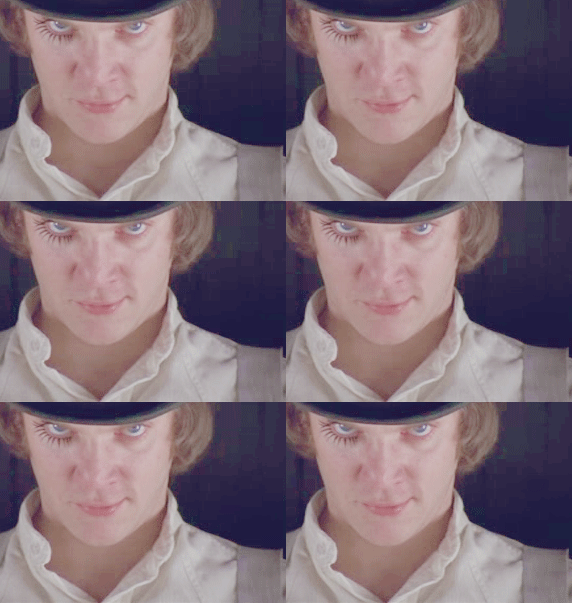
It’s not hard to see Miller’s borderline fascist views bleeding through in the book, as he takes pot shots at “reform not punishment” imprisonment, youth (portrayed as violent, stupid, barely comprehensible thugs that even Alex DeLarge would be creeped out by), and even the latest Robin’s parents being portrayed was whiny, drug-addled liberals.

While I doubt Miller was using much restraint, I’m going to submit that the artist is almost always too close to his or her art for her views not to bleed through.

EVAN: So members of Oprah’s book club who read The Education of Little Tree, by former member of the KKK Forrest Carter, should have been able to pick up on his racial sentiments?

GORDON: I said “almost.” Obviously there are exceptions to the rule.

And this isn’t to say that the work itself is to be shunned; I really and truly enjoy Miller’s work, even though he has a goose-stepping, paranoid Islamophobe.

Because of this, in particular.

EVAN: So we shouldn’t let the beliefs of creators affect our enjoyment of their work?

GORDON: I’d hope not. That would preclude me from liking anything done by Dali, any music written by Wagner, and so on and so forth. My issue isn’t with enjoying something a despicable person has made, my issue is with hiring someone you know is despicable.

Would I listen to “Flight of the Valkyries”? Yes. if Wagner was alive today, would I hire that anti-Semite? No way.

EVAN: That’s a really good point. For example, anyone who buys the new “Adventures of Superman” comic will actually be indirectly funding various anti-homosexual movements that Card himself supports. In this case paying money for his product actually results in an action you probably aren’t okay with.

That doesn’t mean that you couldn’t read his comic and think, “Huh, that is a great take on the Last Son of Krypton,” which is entirely likely since he really is a great writer. His art isn’t necessarily affected by his beliefs, but your buying his art supports them, in a roundabout way.

It’s a metaphor for rejection

GORDON: Despite the counter-arguments in DC’s favor, the simple truth of the matter is people aren’t going to be boycotting these books simply because they’re angry at Card- they were angry at him before- they’re also angry at DC for not having the basic decency to not go into business with a raging homophobe.

EVAN: No matter how good a writer, or any other kind of artist, is, there will always be another who approaches them in talent who doesn’t espouse the negative views that they do. The fact of the matter is that DC has other options.

But going back to the topic at large, we confirmed earlier, in a way, that knowing about an artist’s beliefs after you’ve already appreciated and enjoyed their work shouldn’t rob you of that. If I see a painting and think it’s quite lovely, then find out Hitler painted it, that doesn’t suddenly cause it to become hideous in my eyes. At least, it shouldn’t.

GORDON: And because of the pressure we the audience can put on companies to ensure that bigots and nutcases aren’t given a platform, we should try to keep the artist and their work tied together.

EVAN: Voting with our wallets, which should really be done in every area of our lives [buying ethically produced products, high quality entertainment, etc.].

GORDON: Kinda thrown off by the fact that some wallets are thicker than others. But such is Capitalism. Overthrow the bourgeois. Down with the system.

EVAN: But that is a topic for another day. One that I may or not be hopping on, simply due to a lack of knowledge on the matter.

And it’s also about time we wrapped things up.

GORDON: I submit that next week we discuss poverty, as more and more of the nation (and world) slips into it.

EVAN: And I think that we should talk about Gordon never seems to win these polls.

Ha! Just kidding. We could maybe talk about . . . eh . . . yeah, I got nothing. I’m gonna open up my spot to be viewer submitted, just to see what ideas you have in mind.

GORDON: How gracious of you. Perhaps you’ll even close us out here?

EVAN: Thanks, as usual, for tuning in. If you have anything you want to tell us in general, feel free to email us at culturewarreporters@gmail.com, we’re always happy to hear from you.

Evan and Gordon Talk: Why Christian Media Is So Bad

EVAN: The particular topic of discussion that comes to us today is more one that finds itself passed back and forth within Christian circles, and that is: “Why is Christian media so bad?”

GORDON: I think the problem is self-imposed by the religion (I use the term loosely) itself. We’re not talking about a lack of funding (we’ve got plenty of good low-budget films), or a lack of good directors (there’s plenty of decent talent out there), we’re talking about an issue that runs right down the core of it all.

“Christian” media can’t just be media- they have to drag in everything that goes with it.

EVAN: So basically what you’re saying, and we talked about this a little earlier, is that Christian media more often than not has an agenda, correct?

GORDON: I’d say plenty of it has an agenda, but no, I don’t think that’s the core issue-  there’s plenty of other preachy movies out there.

EVAN: So what are you saying, exactly?

GORDON: I’m saying that “Christians” can’t make good media because they won’t allow themselves to. Every protagonist has to fit the moral code to a tee, so that they wind up as either Aslan 2.0 or the epitome of Christian morality: John Smith, the middle class suburban, patriotic family man. Which is why I keep putting “Christian” in quotation marks.

We’re not talking about Catholic peasants in El Salvador or the East Orthodox Church in Ethiopia.

EVAN: Okay, I like that a lot, this idea that those creators of Christian media [and primarily I think we’re talking about films] box themselves in. They’re telling the same sorts of stories to who they perceive to be their audience [and they’re not wrong]: white suburban middle class families.

To sort of break this up a little, I actually saw a Christian film that was reasonably passable at some point last summer.

GORDON: Was it related in any way to Steve Taylor?

EVAN: Is that any way related to “End of the Spear”? It was not, if that’s what you’re referring to.

GORDON: Steve Taylor is the only good Christian musician who ever has or ever will have existed.

But anyway, what was the movie you saw?

EVAN: It was called “To Save a Life,” and it stood out for a couple of reasons:

1) The cinematography was shockingly good for something produced and made by Christians. You can tell which movies they are within the first few seconds.

2) The “villain” of the piece was actually the pastor’s kid. Which was- refreshing, and kind of nice.

It kind of broke out of the whole stereotype you introduced earlier.

GORDON: Huh- interesting. I’ll have to check out the trailer. But let me ask you this:

Can a Christian make a James Bond movie?

EVAN: You mean a movie starring a suave, debonair British man who beds women and guns down henchmen as naturally as he dons his suit jacket every morning?

I’d say no, probably not.

GORDON: I think that’s the problem. It’s not just that you can’t have any explicit sex or graphic violence or excessive profanity (which are overused and abused as is), you can’t have anything even remotely sensual or rough or crude. It rips away reality and humanity in the name of not stepping on anyone’s toes.

Self-imposed legalism.

EVAN: Well, I’d say the difference is that you can’t have a protagonist who glorifies such things as wanton sexuality-

I say that Christian filmmakers will never produce anything like James Bond because of who the character is.

GORDON: Did you like the movie “Fight Club”?

EVAN: I liked it a fair amount.

GORDON: Did you like “Ocean’s 11” or “Snatch”?

EVAN: I haven’t seen the latter, but I very much enjoyed the former.

GORDON: Did you like “Superbad”? “Kick-Ass”? “Ironclad”?

EVAN: I enjoyed aspects of the first, thought the second was a shaky, though fairly decent adaptation of the source material, and thought the third was pretty unfair in its depiction of “strong female characters.”

But I think you’re going to have to get to your point-

GORDON: Could a Christian make any of these movies?

EVAN: I think a Christian could, yes. In relation to “Fight Club”, at least, Christian author Ted Dekker has penned novels [sold both in and out of Christian bookstores] which offer a fairly decent psychological thriller aspect to the reader.

GORDON: Ah, Dekker. The whole reason he stands out as an exception is- I believe- that he grew up among Indonesian headhunters, and not in Middle America. Again, it’s about having that different perspective on life.

EVAN: And I think what he’s realized, as a creator of the arts, as someone who has a hand in shaping Christian media, is that you can have these other sorts of exciting, thrilling stories told with a faith-built worldview. People of every religion want a little excitement.

GORDON: Of that there’s no question. The heavy use of the video library at our school stands in testament to that.

But again I think the issue is that “Christian” self-imposed isolation inevitably leads to the vast majority of their work winding up as “White People Problems” or “Chronicles-of-Narnia-minus-the-good-stuff”…

EVAN: Or “Lord-of-the-Rings-but-way-more-heavy-handed.”

GORDON: Exactly.

EVAN: I mean, we’ve talked a little bit about why Christian media can be bad [terrible production values, cookie-cutter story lines, sheer absurdity], but how could it be better [to harken back a little to our last talk]?

GORDON: They have to stop being terrified of the big bad world. They have to realize they can show characters with flaws- real flaws- not drunkard stereotypes and the occasional swear word.

Saying this will get you expelled from Liberty, Pensacola, and BJU

EVAN: I mean, a deeply flawed person who finds redemption is a much more compelling story than a white bread sort of guy with his middle class problems.

And they have to stop coddling their audience. Yes, Christians turn to Christian media for “better alternatives,” but the odd cuss word won’t negate an overall positive message; neither will a fight scene, or two guys sitting around enjoying a beer.

GORDON: There’s this one scene in a (Christian) movie Steve Taylor directed:

A character hurts his hand loading something into the back of van. He lets loose a cuss word and his buddy chides him for it, saying “God don’t like it when we cuss.”

Later on in the film, the buddy hangs his head and apologizes, saying “I’m sorry. I was upset that you cussed- I should’ve just been upset that you hurt your hand.”

EVAN: Wow. That is very, very good.

GORDON: That right there is the problem not just with Christian media, but with the whole religion.

EVAN: Misplaced priorities.

GORDON: More obsessed with present clean-cut paragons of middle class etiquette than anything really real.

That’s why we turn to “secular” movies for actual substance. The struggle for identity in “Fight Club”, the heroism in “Kick-Ass”, the friendship in “Superbad.”

EVAN: I think what’s really ironic is that Christian media-makers have a Christian-made work out there that’s immensely popular. “The Hobbit: An Unexpected Journey” came out just this past December.

GORDON: I again reference an (alleged) quote by Steve Taylor.

“I’m not a Christian artist- I’m an artist who is Christian- it affects what I do.”

EVAN: Really well-put. And something that a lot of us [I speak for many in our graduating class] as writers, musicians, artists, et cetera would benefit from keeping in mind.

And that puts us more than a little overtime.

GORDON: Well, people, you know what that means. Time to vote on our subject for next week.

EVAN: My contribution this time around is . . . wow, I never think ahead . . . masculinity. You’ve done a post about “Manly Culture” in the past, but I want to talk about what it is at present, and how we feel about the shifts and trends and things.

GORDON: Interesting subject. I submit we speculate on the upcoming Star Wars movies.

EVAN: If you think you’re up for it, then yeah, cool. I’ve read quite a few of the post-original-trilogy books, so I know a reasonable amount about the subject.

GORDON: Nerd.

And with that witty response, we’re out! Have a good night, everyone.

EVAN: Spend it with better friends than Gordon.

Evan and Gordon Talk: The Greatest Flaw of This Generation

GORDON: Ladies and gentlemen- this is your captain speaking. After some unavoidable delays we will finally be taking off into our mid-week discussion. Our topic for today is “What’s the greatest flaw of this generation?”(This generation being those born in the late 80s to mid 90s: “The Millennials,” “Generation I”, “Gen Y”- call us what you will).

EVAN: As I mentioned in the news update, we scrapped our conversation last night, largely because it became cyclical. To be more specific, we ended up going back and forth between apathy and cowardice, with one leading back to the other and so on.

GORDON: But let’s widen the picture a bit. While apathy is the go-to criticism many have, also up there for our generation’s flaws is our alleged “sense of entitlement.” Thoughts?

EVAN: If we’re still going with your incredibly broad age range, then yes, I definitely think that a lot of kids these days feel a sense of entitlement. It’s just the norm now to have wireless internet, a phone, the latest iGadget, etc. They’re just expected, the new given.

GORDON: Is that fair, though? I mean- haven’t we assumed that phones, indoor toilets, and electricity are “the norm” since they were first invented?

EVAN: To a point, though, some of what you listed are basic necessities. I’d argue that indoor plumbing is considered much more standard than an iPad.

GORDON: This is true, but I don’t think our generation- barring the handful of people who actually do feel entitled- views the iPad or any specific item as being “standard”- it’s the interconnection that’s the norm, as well as the expectations for new technology.

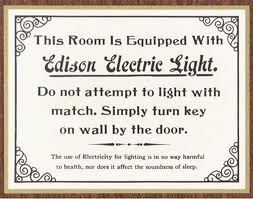
I mean, back in the day you didn’t need light bulbs. But if they’re mass produced, and safer than gas-lamps, then it just stands to reason that we’d eventually come to expect them.

But of course technology’s only one element. what about the idea that this generation is “entitled” in the sense that they get to “find themselves” or “focus on their art” or whatever hipster euphemism is being used to say “part-time employed”?

EVAN: Do I think that people feel they deserve the right to do more than just hit the ground running after college, get right down to the ol’ nine-to-five? I mean, yeah.

But I think this brings up a point I made yesterday about the “where” of our question. In France the age of retirement is 62 and that’s just expected. There are different standards depending on where you live in the world.

GORDON: This is true. I mean, each and every one of us would be considered spoiled brats if we jumped back a hundred years or so.

EVAN: Oh, no doubt. Especially you with your freakishly smooth hands.

GORDON: So would YOU say that the whole “entitlement” criticism stands?

And I use gloves. I refuse to be put down because I take better care of myself.

EVAN: You say that every time, but they’re still as smooth as a baby’s bottom.

GORDON: That means they’re working, and I’ll further have you know that I have a big ol’ scar in my right hand in the shape of a number “7.” But back to the issue-

It doesn’t seem like the “entitlement” bit sticks. Could we be classified as “lazy,” perhaps? The warped and stunted half-humans resulting from government dependence and the welfare state?

EVAN: Well, we discussed “laziness” last night specifically in the context of wanting to change what is clearly a broken system, but is what we’re talking about a general laziness? People just expecting to be spoon-fed?

GORDON: That’s the question. I recall a Cracked.com article in which the author kicked things off by apologizing for helping perpetuate the myth that a college education was a guarantee for a good job. Are we “lazy” in having had the expectation- as most of us had?

EVAN: Well, depending on who you ask, college is hard. In a way, I guess we expect that the hard work we put into maintaining a good GPA, et cetera, will result in finding employment once we’re out in the real world. Which, as I can attest to, is clearly not the case.

GORDON: So is that laziness then? Entitlement mentality?

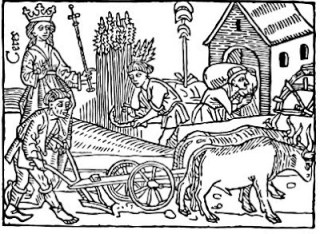
EVAN: I don’t think that doing hard work and expecting a reward is laziness. That’s like someone working the fields and then being called a layabout because he expected crops to grow. A shaky comparison, I realize.

GORDON: Works for me. And I agree.

Now you yourself have accused us all of being creatively bankrupt. Could that be our major flaw? That we don’t make- we remix?

EVAN: I guess it depends on how we’re working this whole “greatest flaw of our generation” angle. The trend to rehash, remix, et cetera came about recently, but I’m not sure it’s because of us. Or is the question in regards to this day and age we’re in, and not those growing up in it?

GORDON: No, I mean us as an age-group, and that does pretty much answer the question right there. We are, for the most part, not the ones who are making the films and TV shows and music (give or take) of our time- that’s those who came before us.

EVAN: Exactly. Which is why we’re getting stuff like He-Man and Thundercats reboots, because those who were kids in the 80’s have a crippling nostalgia. Music is different, of course, but TV and movies are definitely controlled by the generation before us.

Okay, how about this. Maybe the flaw is our hellish appetite to be entertained.

GORDON: Ooh- interesting take. Expound, by all means.

EVAN: I mean, you’ve talked about the bilge that’s on television countless times. Do you know what we’ve been reduced to? A musical chairs gameshow called “Oh Sit!”

Are we so bored that we’ll watch people play “extreme musical chairs” for an hour?

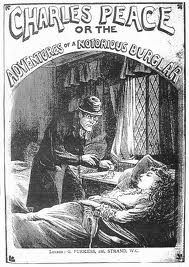
GORDON: I had no idea that existed. But surely this isn’t the first time in history that TV’s been crap. Or radio, or books, or music, or anything. Think of the “Penny Dreadfuls” back in the Victorian era- little, cheap trashy pulp-fiction novels made for mass consumption. Is that any worse than what we have today? Seems like the bilge is the same- it’s just the media that’ve changed.

EVAN: It may be the same, but it’s being produced at a frantic pace. That change, at least, has to be important.

GORDON: That speaks less to our appetites and more to our efficiency.

EVAN: I’d say that it has just as much to do with our appetites, judging by the content of what’s put out.

GORDON: We’re almost out of time, so let’s hit up some other key issues:

Apathy. As we said before, apathy tends to be the go-to criticism, at least, one of the major ones when it comes to our generation, and I think this is one of the easiest to put to rest. The Occupy Movement, environmentalism, increasing number of social movements, increasing global awareness- you name it. We’re strides ahead of the past couple generations. Heck, I’d go so far as to say we’re the most involved generation since the 60s and early 70s.

Well we’re out of time, and still of plenty of ground to cover- so rather than sloppily close up, we’ll be continuing our discussion next week with a question about hipster morality: “Do we want to be good, or do we just want to look good?” If you have any suggestions or recommendations for topics, don’t hesitate to shoot us a comment.

EVAN: Thanks for reading, and remember that CWR now updates every single weekday. I’ll see you tomorrow in our first ever “Fame Day” post!