Category Archives: Shame Day

“White Washed Tombs” or “Shame and Social Pressure”

Yours truly is not one to shy away from railing on things I doesn’t like. Or people, I dislike, for that matter. Over the past few months I’ve offered the middle finger to TLC and NBC for their exploitative and repellent shows, ISPs, nationalism, the British monarchy, and one especially vile lobbyist group dubbing itself “Concerned Women for America.” In fact, that last group was so downright nasty I straight up likened them to cancer in the form of a social movement.

And you know what?

I stand by that.

Continue reading

Shame Day: Todd Kincannon

There’s an old supposedly Scottish proverb that goes,

“The only reason some people are alive is because is because it is illegal to kill them.”

toddkincannon

This is perhaps truer of no one than former South Carolina Republican Party
executive director Todd Kincannon.

Now you’re probably all saying “Whoa there! Ain’t that more than a little harsh?

To which I respond: no.

This is a guy so twisted I feel perfectly comfortable with slapping the label “evil” on him and not losing a moment’s peace of mind. Let me break it down for you.

This guy makes Rush Limbaugh (the guy who came out in support of the genocidal, child-rapist “Lord’s Resistance Army” terrorist group in the Congo) look like Gandhi by comparison. Here’s what Kincannon posted regarding Trayvon Martin during the Superbowl:

And just to be sure there was no confusion as to his meaning, Kincannon continued on to post this:

Yeah, I’m going to give you all a moment to try to wrap your head around just how vile of a thing that was.

Ready?

Well, we’re moving on anyways.

Now I could spend the entire post breaking down Kincannon’s assumption that some high school kid gunned down by a gung-ho neighborhood watchman was a “thug” or that had he grown up, he inevitably would’ve resorted to “sucking dick” for “drug money,” but there’s oh so much more still to see!

Kincannon’s spent the past few days attacking Iraq war veteran Mike Prysner for his views on recently deceased Venezuelan president Hugo Chavez, offering such reasonable and level-headed comments as:

https://twitter.com/ToddKincannon/status/315693128914989056

And:

https://twitter.com/ToddKincannon/status/315697254180728832

Again, it’s kind of hard for me to feel guilty about my statement above when it has to compete with even the mildest of things this guy has to say.

https://twitter.com/ToddKincannon/status/315571885620473856

https://twitter.com/ToddKincannon/status/315673713553059841

https://twitter.com/ToddKincannon/status/315677582668468225

https://twitter.com/ToddKincannon/status/316410543760084992

What makes it all worse is that when this guy is confronted over his statements, he resorts to “free speech” arguments to evade any responsibility. He is correct in that he has the freedom to say whatever he so chooses, just as I have the freedom to stick forks in my own eyes or kick a grizzly bear- just because I have the right to do something doesn’t mean it’s the right thing to do. As far as trying to play off his statements.

In one interview, Kincannon out rightly stated that “If you say something that’s borderline offensive or if it is offensive, the people that attack you and say just the awfulest [sic] things about you, they do the very thing that they accuse you of.”

Evan does try to keep the blog relatively profanity-free, but this was really the only gif I could find that quite captured the feeling…

For anyone wondering, that’s the equivalent of punching a guy and calling him a hypocrite when he punches you back. But there’s more to it than just that.

Even if Kincannon truly does believe he’s nothing more than a witty prankster, he does have a following and his statements do get reactions out of people, including such gems as:

https://twitter.com/lrindl/status/315698741858426881

So we’ve effectively jumped from “This vet deserves to have died for holding political views I disagree with” to “every soldier who has come back alive is a coward and a disgrace to the fatherland.”

Again, if this is all some elaborate prank being played by Kincannon, we can’t ignore that it’s not being taken to lightly by his followers. I don’t think J.D. Salinger should be blamed because a nutcases took Catcher in the Rye to be code for “Kill John Lennon,” but when most everyone reading your work is coming away with homophobic, racist, sexist, and generally reprehensible messages, it’s time to rethink your medium.

https://twitter.com/BlakeHarllee/status/316427102201184257

If Kincannon’s playing some prank. Between you and me, I don’t think this is all that funny:

https://twitter.com/ToddKincannon/status/316410079152857089

What’s there left to say?

Todd Kincannon, you are an evil human being. Shame on you.

Evan, if there was ever a time to break Culture War Reporter’s no-profanity rule, it is now

Shame Day: Negativity

As some of you may know, I played a lot of StarCraft II: Heart of the Swarm last week. Having played the campaign from Tuesday to Friday, I can say that I thoroughly enjoyed it. It was many, many times better than its predecessor, Wings of Liberty, and I only had good things to say about it.

Now, I am a person who thoroughly believes that a discerning eye is needed when approaching anything. Millions upon millions of people ate Nolan’s The Dark Knight Rises up with a spoon, and shower it in praise. I haven’t personally taken the time to write this all of this out, but I’ve discussed it with friends for hours, and can leave it up to Christopher Sebela of Comics Alliance and “first black comics editor” Christopher Priest to speak on my behalf. Suffice to say, I was not terribly impressed.

You read that right. I did not like The Dark Knight Rises.

And, since The Dark Knight Rises was a film I thoroughly disliked, I should mention that I am very willing to find flaws in the things I love. The Avengers was a film that I really, really liked, but I’ll be one of the first people to tell you that Hawkeye really got the short end of the stick, and that [SPOILERS] the Chitauri just flopping over like a bunch of Trade Federation droids probably deserved some sort of explanation.

To get to the reason I decided to write this post. When StarCraft II: Wings of Liberty came out StarCraft Legacy writer Gradius put together a very extensive review of the single-player campaign, and he was not very gracious. I remember reading it three years ago and agreeing with him on almost every point, the story needed quite a bit of work.

Then maybe four or so hours ago I read his review of Heart of the Swarm, and he ripped it a new one. While I will admit that he peppers his review with positivity he ultimately ends up damning its entirety with faint praise. It leaves no stone unturned, and takes time to dub the game’s creators as being “juvenile” and utilizing “fridge logic.” I finished it and felt sick to my stomach.

I wish I could edit this to have Kerrigan shedding a single tear.

Why was I so upset? I have argued extensively about why I think a widely beloved film is objectively bad, does this make me a hypocrite? Have I taken something that other people hold dearly and spat on it, making them feel as I have?

No, I don’t think so, and it all has to do with how you say what you’re saying.

There exists a very popular series of YouTube videos reviewing the Star Wars prequels done by Red Letter Media. My housemates in college adored them, and I distinctly remember them watching the Phantom Menace review and having a really great time doing so. I didn’t really share in their enthusiasm.

The honest truth is that the reviewer acknowledges where the prequel films went wrong, and makes some incredibly insightful comments about simple storytelling structure within film; there’s some great stuff there. The problem for me was that his videos are dripping with sarcasm, disrespect, a smattering of immaturity, I could go on. It’s a fantastically written analysis packaged in a format that I found really unappealing.

When my friends and I saw X-Men: The Last Stand back in high school we walked out and broke down how it could have been improved. Highlight the relationship between Bobby [Iceman], Kitty [Shadowcat], and Rogue [does anyone call her by her real name?], make the mutant cure more of a topic of discussion among the X-Men, creating divisiveness within the team, etc. We did a lot of the same things that the reviewer did for The Phantom Menace, but we did so by focusing on how it could be better instead of why it was so awful.

We did.

I am a huge proponent of people thinking hard on what sort of media they consume, and processing whether or not it was actually good. On top of that, I also strongly value the ability to find the good in everything [The Last Airbender had good . . . costume design . . . there, I found something]. My mother told me for years that “if you have nothing good to say, don’t say it.” I slightly disagree. If you have nothing good to say, say it in a way that isn’t dripping with snark. Say it in a way that will convince people to see that no, it wasn’t good, and this is exactly why, and this is how it could be.

There are some things I downright disagree with in regards to Gradius’ review of Heart of the Swarm, but at it’s core I see a huge fan of the franchise who has ultimately been disappointed by Blizzard’s first two installments in over a decade. That being said, he doesn’t so much throw the baby out with the bathwater as he just chucks the whole tub out the window.

I love reading reviews. I love reading what other people have to say about films I’ve watched or comic books I’ve read. What I hate is when negativity seeps in, and when it actively seeks to prevent me from legitimately enjoying something that I once did. I appreciate your opinion, and I generally want to hear about it, but I also want you to give it to me straight, free of your spite and vitriol.

Shame Day: Microaggressions

A few weeks ago I stumbled onto a website called The Microaggressions Project and then promptly forgot about it. Returning to it tonight I looked over the “About” page, which had the following paragraph at the top:

This project is a response to “it’s not a big deal” – “it” is a big deal. ”It” is in the everyday. ”It” is shoved in your face when you are least expecting it. ”It” happens when you expect it the most. ”It” is a reminder of your difference. ”It” enforces difference. ”It” can be painful. ”It” can be laughed off. ”It” can slide unnoticed by either the speaker, listener or both. ”It” can silence people. ”It” reminds us of the ways in which we and people like us continue to be excluded and oppressed. ”It” matters because these relate to a bigger “it”: a society where social difference has systematic consequences for the “others.”

A little later on they define what “microaggressions” are, a term that was originally coined to speak about racial experiences. From the essay “Racial microaggressions in everyday life: implications for clinical practice,” which appeared in American Psychologist, Vol. 62, No.4:

“Racial microaggressions are brief and commonplace daily verbal, behavioral, or environmental indignities, whether intentional or unintentional, that communicate hostile, derogatory, or negative racial slights and insults toward people of color.”

One example of this could be a White couple walking down the street and having a Black man pass by them on the sidewalk. The woman clutches her purse tighter against her body, the subconscious idea being, of course, that Black men are prone to crime and should not be trusted.

As an Asian-Canadian I’ve experienced microaggressions plenty of times. I’ve had someone ask me if I was half-White [I am clearly not] with their rationale being that my “English was very good.” It can be an everyday occurrence for non-White people [I deign to use the word minorities, since I do believe that balance is turning the other way], and begs the question: “Why is this such a big deal?”

Writer of the aforementioned article and author of Microaggressions in Everyday Life: Race, Gender, and Sexual Orientation, Derald Wing Sue, PhD, has observed that microaggressions have actually been found to: “(a) assail the mental health of recipients, (b) create a hostile and invalidating work or campus climate, (c) perpetuate stereotype threat, (d) create physical health problems, (e) saturate the broader society with cues that signal devaluation of social group identities, (f) lower work productivity and problem solving abilities, and (g) be partially responsible for creating inequities in education, employment and health care.”

In other words, a Black or Latino man being stopped for a “random vehicle check” by police could be upset, and may even be accused of overreacting. Maybe they should simply be used to this and not let it bother them. The truth is that it makes them feel, even if only subconsciously, like second-class citizens. It’s true in a case as blatant as this one, and in an as subtle an action as hanging a Confederate flag or  having a Native American stereotype as a high school mascot.

To broaden this to the scope that The Microaggressions Project seeks to attain, microaggressions can include people saying to a person with Asperger’s, with no ill-intent whatsoever, “That you seem so normal!” It can be a 17-year-old girl being told by her gynecologist that just because she has access to birth control pills doesn’t mean she can just sleep around.

Microaggressions work in every direction. It’s like going to a Vietnamese restaurant and being given a fork and spoon instead of chopsticks because you’re White and not Asian. Microaggressions are built on assumptions and can make people painfully aware of who they are. They are rarely meant to offend, but often do. 

It truly is a shame that so much of the time we send out microaggressions without so much as a second thought, and then defend ourselves by deeming the offended to be “too sensitive.” While we won’t always be aware of how our words or actions can harm others, we can at the very least listen to the people being hurt, and in doing so try to lessen the presence of microaggressions in our society.

Shame Day II: ISPs and the Six Strike System

Normally, Thursdays here at Culture War Reporters is dedicated to “Fame Day,” in which Evan and I call attention to people, events, or trends we think aren’t getting the attention they deserve.

But not today.

Partly due to my illness, partly due to some unforeseen time constraints, and mostly because of the severity of the issue in question, today there will be no Fame Day.

Instead, we’ll be performing an emergency Shame Day on the subject of yesterday’s terrible news that five major internet service providers (ISPs) will be implementing a “six-strike” system on people suspected of copyright infringement.

Let me break it down for you.

Normally, when you sign up with an internet provider, exactly what you do or don’t do with your connection is entirely and exclusively your business. Whether it’s something as impressive as you doing an electric guitar cover of the hallelujah chorus or as lousy as writing a thousand comments calling that same YouTube video gay is all up to you. What you read, what you write, what you post, what you view- the ISP is simply there (as the name states) to provide internet.

But no longer.

Yesterday, five major ISPs (Verizon, Time Warner, Cablevision, Comcast, and AT&T) announced that they would be participating in this anti-piracy initiative spearheaded by the “Center for Copyright Information” or “CCI”- a lobbyist group for a number of media groups. Quite simply, individual users suspected of “copyright infringement” will be given five warnings, the sixth “strike” resulting in their internet speed being slashed to dial-up quality for an unspecified amount of time.

Now you’re probably thinking “Hey- just don’t pirate stuff and you’ll be fine!” and you know what?

You’re right. You don’t have to pirate.

I’m taking over from this point on for a number of reasons. For the most part because although Gordon had good things to say, he didn‘t necessarily say them well, and in some cases didn’t make very much sense; we’re going to chalk that up to his recent illness. I will be relating to you what points of his that I can, while adding my own.

-Evan.

Gordon’s next point is that for the most part, many people pirate because of time and money. Focusing on time, the truth is that we can’t always guarantee that we’ll be at home on a Thursday night to catch The Office. Maybe we’re working another job [many of us need to], or maybe we just forgot. What options does this leave us?

For those of us in America, Hulu is always an option. The on-demand streaming site once provided a very broad range of TV programming, and Gordon points out that it’s a fantastic resource, or at least used to be. Nowadays, however, it’s a lot more difficult to use than it used to be. Hulu Plus, which requires a subscription, is needed to watch a lot of older shows, sometimes even episodes that aired a month ago, if New Girl is any indication. With one of the most convenient resources made less so, is it any wonder that so many people simply turn to torrents?

Gordon’s next point, and a very valid one, is this issue of the Six Strike System and how it relates to piracy. There’s an issue of what exactly is at stake here. Gordon insists that the answer to that is everything, and while I’m not fully with him on that, there’s some sense to what he’s saying.

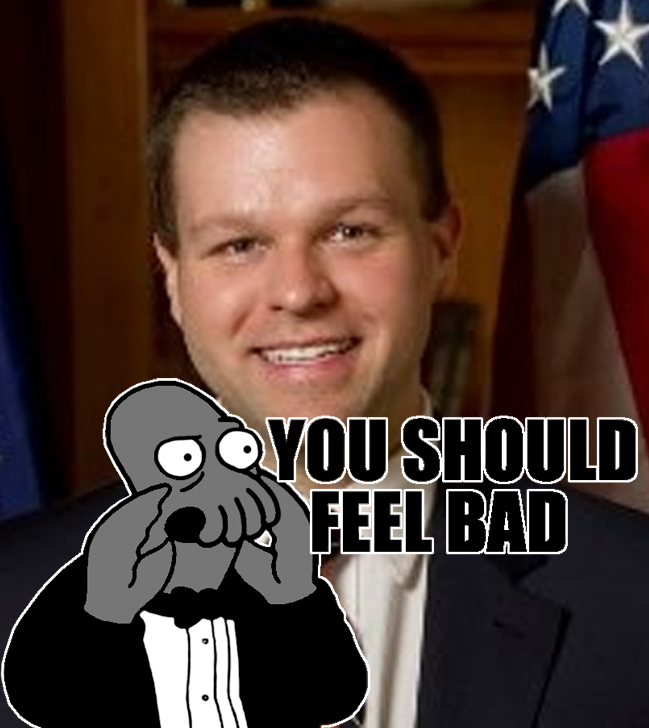
The thing is that almost anything can be considered copyright infringement. YouTube covers, memes [which often use screenshots of shows like Futurama {see: our Shame Day image}], Gordon’s beloved gifs, even many of the pictures of this blog, in spite of being Photoshopped, don’t technically belong to us.  Would we have our internet cut because we run this blog? [Answer: I wouldn’t, because I am Canadian.]

To finish off what Gordon wrote earlier today, the issue is that the people in question aren’t being penalized by an international agency, or even the state or federal government. The fact of the matter is that these ISPs are “using their lobbies to persecute and prosecute suspected users without due process” [quoting Gordon]. What truly incensed him more than anything, though, was the way they’re going about it. That they’re holding themselves up as Knights of Good when in reality they’re just proud that they’re “selectively picking off anyone their bosses deem a threat to their unending stream of profit.”

Untitled-2

Piracy is not a subject I agree with Gordon on, and in fact I had a very hard time letting his last piece on the subject be put up on the blog. If people really, truly love art, whether it take the form of television or movies or video games they need to vote with their wallets and know that what they love is worth spending money on.

That being said, I do believe that what these ISPs are doing is wrong, particularly in that they have no one to be accountable but themselves. No business or corporation should have that right. Shame on these ISPs, and shame on the Center for Copyright Information.