Category Archives: video games

Internet Disgusted By Video Game Promotion [Also: Zombie Breasts]

Way back in the February of 2011 the following trailer was released for the video game Dead Island:


It was so impressive that last I heard, Lionsgate was going to make a Dead Island film based on the trailer. Not the game, the trailer for the game. A feature-length film based on the trailer for a video game. Think on that for a bit.

What it does is speak volumes for the game’s publisher, Deep Silver, and those it hired to advertise the game. There was an emphasis placed on the feelings of terror and loss and the need to protect one’s family; it sought to set itself apart from other zombie games [of which there are so many]. Unfortunately the game turned out to be your fairly standard run-of-the-mill zombie hack and slash, but that’s not the point here.

The point is that this trend was actually continued in the promotion of the game’s sequel, Dead Island: Riptide, the trailer of which can be viewed here. The tone is once again consistent with that of the first, highlighting the terrors of a vacation gone horribly, horribly wrong. Which is great. And which is why the following seems so shockingly out of place.

The image you see above is a promo image for the European “Zombie Bait Edition” of the game, the crowning glory of which is the statuette at the centre. This was, earlier this week, described as being “Dead Island’s grotesque take on an iconic Roman marble torso sculpture.” This was met with understandable outrage and disgust from the internet, which prompted those at Deep Silver to scramble wildly and release the following apology:

“We deeply apologize for any offense caused by the Dead Island Riptide “Zombie Bait Edition”, the collector’s edition announced for Europe and Australia. Like many gaming companies, Deep Silver has many offices in different countries, which is why sometimes different versions of Collector’s Editions come into being for North America, Europe, Australia, and Asia.

For the limited run of the Zombie Bait Edition for Europe and Australia, a decision was made to include a gruesome statue of a zombie torso, which was cut up like many of our fans had done to the undead enemies in the original Dead Island.

We sincerely regret this choice. We are collecting feedback continuously from the Dead Island community, as well as the international gaming community at large, for ongoing internal meetings with Deep Silver’s entire international team today. For now, we want to reiterate to the community, fans and industry how deeply sorry we are, and that we are committed to making sure this will never happen again.”

 So no harm now foul, right? Dead Silver took back their horrible statuette and we can chalk another victory up for the internet! But why exactly were people upset? An article on Rock, Paper, Shotgun which I linked to but will link to again said this about it:

This is beyond disgusting. It’s as if someone were attempting to demonstrate the most misogynist idea that could possibly be conceived, in an attempt to satirise the ghastly trend. A text book example of the most extreme ends of misogynist fantasy, a woman reduced to nothing but her tits, her wounds hideously depicted in gore, jutting bones, and of course barely a mark covering her globular breasts.

It’s very prevalent in a lot of zombie imagery you can find nowadays, and it’s certainly present in this picture of a zombified Snow White on the left. Her body is mutilated [appropriately so, for a zombie] but her breasts remain completely untouched. There’s this sense of the grotesque from the image as a whole, but her chest remains an object of potential titillation.

I don’t think I have to say too much about how grossly sexist this is, and how prevalent it is in the society we live in. What I am going to say is thank God that on some level we can make enough of a public outcry to stop stuff like this before it happens. The bottom line is this: if we as a community [on the internet or otherwise] care enough about something, we really can do something about it.  Even if it’s just stopping the production and sales of a tasteless statue.

———

A rebuttal to essentially everything I’ve written can be read in an article by Daav Valentaten on Venture Beat entitled “The Dead Island: Riptide reaction was an equality fail.” I present it as a counterpoint to my own post.

Fame Day: StarCrafts

gjscStarCraft, undoubtedly one of the best and most important games of all time, at least according to Wikipedia. This is an RTS [real time strategy game] that commands legions of fans, and its sequel, which launched in 2010, now commands many of the same legion of fans.

But the competitive online scene for any game is not an exceptionally friendly place. There’s the stress and pressure of playing against other players to achieve ranks, and that’s not at all helped by players who are BM (bad manner[ed]). This rudeness can even be found among pro-gamers themselves (see: many of IdrA’s interactions with other players).

Enter Jonathan Burton, also known as “Carbot” and the creator of the YouTube StarCrafts. Set entirely in the world of StarCraft II each episode presents various units from the Terran, Protoss, and Zerg races engaging in a battle that is, in a word, adorable.

Here is an artist’s rendition of the Zergling as it appears in-game:

And this is a gif of what the Zerglings look like in StarCrafts:

And they’re more than just heartwarmingly lovable, they’re also hilarious. Anyone with even the slightest familiarity with the game will lose it when they see a Zealot dancing from side to side to defend a choke, and people who didn’t understand what any of those words meant are still going to chuckle when they see the baby-like Marines running [almost always away from something]. Add to that the fact that almost all of the soundbites used are from the game itself and you have a very impressive piece of work on your hands.

The following is probably the best entry into the series, and it showcases the dangers of letting yourself get . . . overzealous. Cue classic CSI scream.

What’s really great though, is how I don’t even really have to be writing this post. StarCrafts has received the recognition it so greatly deserves, and episodes have been featured fairly often on the Blizzard [the game’s creator] site. What’s even more exciting is how they were also aired during game breaks at the first ever BWC [Battle.Net World Championship] in China. A special episode was also created for NASL [North American Star League].

I strongly encourage all of you to check out a few episodes. Even if StarCraft II isn’t your thing [and really, it’s not for everybody] maybe this can help you relate just a little to all the die-hards out there. At the very least, you’ll have spent a few minutes watching an excellently produced video by a very talented man.

YouTube Channel: youtube.com/user/CarbotAnimations
Facebook Page: facebook.com/CarbotAnimations
Twitter: @CarbotAnimation
Personal Site: carbotanimations.com
Updates every Saturday

Evan and Gordon Talk: Nerd Culture

EVAN: To start this off by ignoring our readership and addressing you, this week’s topic is a weird sort of continuation of the various posts on culture you’ve written, such as “manly culture,” “science culture,” etc. And similar to these other groups of people, “nerd culture” is a pretty nebulous sort of thing to define.

GORDON: No argument there. After all, even the “nerds” insist on calling out “fake nerds”- especially in regards to women/girls. But what is a nerd anyways?

EVAN: See, now I’m torn, because we do need to define it, but you’ve also directly referenced an issue I wanted to discuss in depth this week.

GORDON: How about we abandon our previous track record, and just plunge recklessly ahead and hope the issue resolves itself?

EVAN: Well, let me throw this image out there:

And then hope that suffices for now.

GORDON: Works for me. So what was it that you wanted to address specifically?

EVAN: Well, just last month there was this guy, a comic artist, named Tony Harris. And he wrote this post on his Facebook page that was essentially a tirade against “faux nerd” women, and how they are whores, and so on.

To break it down further, these are women who dress up as superheroes and what have you without knowing about the actual characters themselves. He is upset because, to quote him:

BECAUSE YOU DONT KNOW SH-T ABOUT COMICS, BEYOND WHATEVER GOOGLE IMAGE SEARCH YOU DID TO GET REF ON THE MOST MAINSTREAM CHARACTER WITH THE MOST REVEALING COSTUME EVER.

Also that they attend to essentially just tease the regular con-goers and are actually not even hot, just “con-hot.” So yeah, he said a lot.

GORDON: Ah yes, I recall reading about this. And while I think we can all agree Harris went too far, is a bit hypocritical (seeing how most comic women ain’t exactly average looking), and probably getting too emotional, I can’t help but wonder if he has, somewhere in there, a point.

I mean, imagine if all of a sudden, something that you had been stigmatized for became popular, and people started trying to co-opt your identity knowing nearly nothing about it. I’d be ticked off too.

EVAN: That’s definitely something I’ve read people write about, that this used to be an exclusive club and that it took years to build up this knowledge and become, well, a nerd, and here are these noobs and they want in and it’s not that easy.

And I can see where they’re coming from as well.

But if you really love something, shouldn’t you want others to as well? The Avengers has an enormous following on tumblr these days [because of the movie], and these are people who are actually going out and starting to buy comics. They are helping sales, aiding the industry, etc.

GORDON: That’s true, and something I’ve considered, but there’s probably also an argument to be made for the other side. That something precious to you is being watered down and diluted for profit. I don’t believe that nerds (comic book nerds, anyways) can necessarily make this argument, but the line of logic is there.

Let’s try to come up with an example of this happening somewhere else, especially in regards to persecution.

EVAN: Mmk, go ahead-

GORDON: “Black culture” (or what was passed off as black culture) might be an example. Can you state that you’re not driven nuts by wealthy, comfortable suburban kids fronting like they’re from the streets of Oakland?

EVAN: Yeah, people are upset about it, sure, but there’s not this immense outcry over it. There are comic-con enthusiasts that are genuinely incensed that all of this is happening-

I doubt that an actual thug or gangbanger or whatever these rich White kids are playing at imitating is going to start freaking out that he’s getting ripped off. He’s going to laugh or shrug it off, because it hardly matters.

GORDON: I’d argue that the reason for this has more to do with the change in venue. It’s easy for the major players of the comic book industry to voice their opinions than, say, a Wu-Tang Clan fan in the late 90s. But maybe I’m wrong.

EVAN: For the most part, I see this as a mindset that is the foundation or core of hipsterism, and that we all feel to some extent, however minor. That we found something and we love it and there is a pride in joy in being one of the original fans.

And this outpouring of others somehow cheapens things. And all of a sudden we’re trying to assert how we’re better than them in some way.

“You chose to dress up as Spider-Woman? Do you even know who her alter-ego is, or what her powers are? Etc.”

GORDON: Again, do we not sympathize? Do we not feel frustrated with people who have more or less jumped on the bandwagon now that it’s all safe and socially acceptable to do so? Heck, just imagine if someone tried listing themselves as a fan of fine cooking, having only eaten sushi once- would you be ticked?

EVAN: If I equated sushi with fine cooking I guess I would, yeah. But just because we can understand someone’s anger and frustration doesn’t make it logical.

GORDON: I wouldn’t say that there’s not a logic to it. I mean, a major part of being a nerd is, and always has been, the social pariah element. All of the sudden you have these people trying to claim to be on the fringes of society? It’s condescending and insulting.

EVAN: I think that’s the issue- They’re not trying to “claim to be on the fringes of society.”

GORDON: I disagree- I feel this is a coward’s way of feigning rebelliousness and all that.

EVAN: Sometimes people who haven’t been exposed to comics for much of their lives see a movie, or read a trade, and go to a con. Maybe they wear a costume. That doesn’t mean they’re going into this thinking, in any way, that they’re suddenly a part of this group of outcasts.

Comics are popular now. I mean, more than they’ve ever been. To say “I like comics” is no longer the sort of thing that’s going to get you shunned. People are going to raise their eyebrows and wonder why you think that’s a big deal.

GORDON: Comics yes, no one is gonna argue that. The title of “nerd” however, that’s different. And after all, “nerd” is a much larger term. It applies to gamers, to film, and so on.

EVAN: So how does one become a “fake nerd”?

GORDON: Therein lies the rub- there’s always gonna be more obsessive nerds out there. People higher up and lower down the hierarchy. But for the most part, I think we can agree that a “false” nerd is one who does not meet the criteria in that diagram you posted.

The “social ineptitude”, the “obsessiveness”- if it’s not actually there (no matter how much the person or persons might insist otherwise) then that person is a “fake” nerd.

EVAN: So am I a “fake nerd”?

GORDON: Do you call yourself a nerd?

EVAN: I don’t really call myself anything. But I’d also say that many of the girls who go to cons and find themselves attacked by Harris don’t refer to themselves as anything in particular either.

GORDON: Then no, I wouldn’t define you or them as fitting this category. Like I said- Harris went overboard.

EVAN: I just don’t think social ineptitude needs to be a requirement in this. I think you could be a nerd and still have friends, and achieve some level of popularity. The diagram above really shoehorns the definition. I mean, what if I did call myself a nerd?

I’m fairly smart, about 80% of the time I’m thinking about comics, or comics-related media. At the same time, I’m a fairly social guy. What does that mean?

GORDON: You think about comics 80% of the time?

EVAN: I think about comics a lot.

GORDON: 80% of your waking thoughts is a craaaaaazy lot, though I’d say your self-identification as a nerd is flawed. Serial-killer in the making would be more accurate. But we begin to split hairs at this point.

EVAN: I guess it’s like, does Hugh Laurie have the right to play the blues?

GORDON: Hugh Laurie can do whatever the **** he wants. As does anyone. With everything he does, can he identify himself first and foremost as a blues musician? Not really. At least, that ain’t how we’re all gonna think of him, or remember him.

EVAN: Does it matter that it’s what you identify as first and foremost? I am positive that at some level, yes, he does identify as a blues musician.

GORDON: It does matter how you identify yourself first and foremost. I’ve eaten bugs on multiple occasions- I don’t declare myself “Gordon Brown: Bug Eater.” The rest of the stuff I do outweighs it by far.

EVAN: You’re missing my point. You’ve eaten bugs, so on some level you can identify as a bug-eater.

If he identifies as a blues artist less than he does as an actor, that doesn’t negate the fact that he identifies as a blues artist, and what we’re talking about is people being able to say that they can and do relate to a culture, and that doesn’t make them fake adherents of that.

GORDON: Let me offer another example: I’ve been camping, and I occasionally read survivalist pamphlets. For me to call myself a “survivalist” would nevertheless be inaccurate and misleading. That’s the crux of the matter, I believe.

A nerd is someone who is in this for the long haul- a person who enjoys The Avengers or Nolan’s Batman trilogy isn’t. At least, not necessarily.

EVAN: I’m not saying that a person who enjoyed The Avengers equates being a nerd. That’s like, half the Earth’s population, if the box office is any indicator.

I’m saying that a person who saw The Avengers, and then heads over to their local comics store to check some out, and gets really into it, has the potential to become a “comics nerd” of sorts. And people who see them and scorn them for not being there from the beginning should be ashamed of themselves.

If we’re sticking with the example of film and comics and so-on.

GORDON: And I agree- those people should not be viewed with derision. But that’s not who we’re talking about here.

We’re talking about ****ing hipsters, about people who have just enough knowledge of a culture to give themselves the veneer or adopting it. People who wear glasses as a ****ing fashion statement. You know the kind.

It’s about motives. The noob who is just now getting into the culture isn’t a “false” nerd- just a young one. The person who call himself or herself a nerd to co-opt the social stigma (now that it’s all but gone) deserves contempt.

EVAN: I honestly don’t think that what these people are trying to co-opt is the social stigma.

GORDON: My poor choice of words. I mean the false sense of rebellion. Like people who post pro-gay Facebook statements simply to draw attention and applause to themselves. Fake-rebels. Fair-weather activists.

EVAN: That’s fine, and I agree that these people are not to be applauded.

I just think that for the most part, people are realizing that there is a lot in the “nerd culture” that they find interesting and accessible, and are gravitating towards it. Not out of some misguided attempt to be on the edge of society, but because they legitimately enjoy whatever it is they’re trying to engage with.

GORDON: I agree- I simply don’t think it’s these people most old-guard nerds are angry at.

EVAN: But how can they differentiate? That’s a huge issue. It’s this reaction of the community against anyone that’s not legit, but without any way of truly being able to tell how people feel-

A person can go to comic-con in an elaborate costume simply because they enjoy the aesthetics and design of the character. They’re not required to know everything about them, and shouldn’t be hissed and booed at when they don’t.

GORDON: That in and of itself is another issue. If I showed up to the social justice convention dressed as Che Guevara  you’d best believe I’d better know a thing or two about the guy who I’m completely dressed up as- but we’re moving off track.

EVAN: But the point of social justice conventions isn’t to dress up as your favourite revolutionary- that’s entirely besides the point. I bring it up because it’s completely cogent to our topic, because it’s exactly what Tony Harris was railing against.

GORDON: Tony Harris ran his mouth and made a fool of himself, I ain’t trying to defend a word of what he said or wrote, only the general perspective he seems to be coming from.

EVAN: What I’m saying, without negating your points is this, and I’m going to try to wrap up since we’re 15 minutes past our cut-off, is this:

I’m someone says “LOL im such a nerd” and they wear glasses with big frames and have a Green Lantern patch on their backpack, yeah, I’d say that’s not okay. But a large issue is being able to, as a community, acknowledge when “outsiders” try to access what it is that we love so dearly.

We like comic books and Star Trek and Dungeons and Dragons, and if other people might as well, that’s fine. Just because others weren’t always welcoming of us in the past doesn’t mean we should do the same to others. Especially when there’s some likelihood, even a little, that they could one day be as big a fan as you [as hard as that may be to believe].

GORDON: Well put. Be sure to stop by next time for our discussion of . . .

EVAN: Of . . . uh . . . I threw out this topic last week, what’ve you got?

GORDON: Let’s address the portrayal of drugs- weed in particular- in media and popular culture.

EVAN: That’s a pretty contemporary topic too, because of the legalization in Washington and all that. Sounds good to me.

GORDON: Let it be so then. Merry Wednesday to all, and to all a good night!

The Horror, The Horror

Today, I’m going to talk about horror.

Not “frightening stuff,” mind you- horror. There’s a distinction, you see.

Fright is the simple biological jolt you get when something startles or surprises you- a door being slammed, a discordant note blaring out of nowhere, and so on. Tragically, the title of “horror” gets slapped on things (typically movies) that merely have “jump-scares.” Horror on the other hand, is anticipation and dread at the perception of something threatening on a fundamental level.

So why talk about this? Because despite the outcry of some, horror- especially horror movies- holds a special place in our culture. Indeed, horror holds a special place in all cultures, and has since the first Cro-Magnons huddled around some arctic fire and whispered about strange and terrible things lurking just outside the circle of light. What we’re afraid of tells just as much about us as what we admire; a perfect example being Evan’s post on the remake Red Dawn. Evan cites that one of the reasons the new version doesn’t work is because the concept of the US being invaded is today laughable (especially by North Korea, whose entire population could fit into LA county with room to spare), whereas in the 1980s, the fear was far more realistic, or at least, believable.

Now I’m not here to analyze the past decade’s better horror movies and tell you what it is that we seem to be afraid of (not right now, anyways). In this post I’ll just be breaking down the three basic kinds of horror we seem to be responding to.

Fear For Self

First, we have the fear that attacks our egos- not “egos” as in pride, but “egos” as in the psychological term for you. This fits into the greater psychological element of “external anxiety,” meaning the stress we feel as a result of outside factors, such as school, our jobs, hunger, pain, and so on. When we’re afraid for our safety, or empathizing with characters in a movie or TV series who are fearing for their physical safety, we’re looking at this “fear for self” kind of horror. A good example would be any serial killer or monster movie- Psycho or Jaws being the best examples. Now usually we tend to botch this kind of horror, because the protagonists in movies or stories do things we would never do (blonde female college camper running through the woods at night, I’m talking about you). However, when it’s pulled off well, it leaves a noticeable mark on us. It has been said that Jaws created a significant drop in beach-goers after it was released, and you are a dirty liar if you say you’ve never once looked behind the curtain when you go into the bathroom.

Fear Of Self

Just as we have anxieties that stem from external factors, we have stresses and fears that come from within us: “Internal anxiety.” It was theorized by early psychologists, Freud in particular, that our mental issues were a result of us denying or repressing elements within us, most notably the “id”- that part of our mind with all the bloody, vicious, sexual animalistic drives that typically didn’t mesh well with Victorian (or any) society. As with the ego, horror works on this pathway as well- our fear of ourselves. All that madness and evil that we, for the most part, pretend isn’t there. The most obvious examples of this would be werewolf movies and vampire movies (obligatory “**** you, Twilight“) and most any film depicting a change or evolution the protagonist- see Dr. Jekyll and Mr. Hyde, The Wolfman, Dorian Grey, etc.

Fear Of No Self

Lastly we have stress and anxiety attacking (or coming from, depending on how you look at it) the “superego”- that element of our mind consisting of our real or imagined nobility, propriety, decency, etc. Here we encounter “existential horror,” more often called “cosmic horror.” This particular form of horror can be found in movies where the protagonists are fighting a losing battle against some massive, all powerful being- typically otherworldly in nature. Alien invasions and zombie uprisings are both good examples. Here we’re confronted with the fear that we are, in spite of all of our strength, morality, charity; in spite of our humanity, we are actually inconceivably small and insignificant. Ants who have just become aware that there are beings in the universe of incomprehensible magnitude whose simple existence negates everything about them. That unique feeling of powerlessness is separated from “ego fear” in that this form has a distinct hopelessness, rather than helplessness, attached to it.

Of course, every horror story has all three of these elements in it, but what kind of horror story it winds up being depends entirely on what is emphasized. Take AMC’s The Walking Dead– you’ve got your physical fear of the zombies, your id-based fear at what this new world is bringing out in you, and the general horrific despair at the absolute hopelessness of your situation, both in the face of zombies and the truth of human nature. What you wind up being afraid of depends on which element really gets pushed (survival, rationality, hope) and of course, what you individually, and we as a society, find most terrifying.

So what do we fear as a society right now?

Well, with the rampant popularity of zombie stories, and “disaster” films such as Cloverfield, Skyline, and even the whole “Slenderman” craze; it seems to me that we’re torn between physical and existential horror. And perhaps in an economic depression, that’s understandable- after all, we’re confronted with the physical job of keeping afloat in a rough time, and as the crisis drags on and on, the general feeling of hopelessness with regards to our general situation. We respond to characters whose immediate needs are threatened and characters who are struggling to maintain themselves in the face of cosmic nothingness.

At least, that’s my take on it. Feel free to debate me in the comments, and stop by tomorrow for another Shame Day installment.

Where I Try to Explain Red Dawn

I’ve begun seeing trailers on TV, and apparently it hit theatres two days ago, so I figure now’s as good a time to talk about Red Dawn as any.

For those of you who don’t know, Red Dawn is a remake of the 1984 film of the same name. In the original the United States is invaded by both the Soviet Union and its Cuban allies. A group of plucky high schoolers bands together to form a guerrilla fighting force, named the Wolverines after their high school mascot.

In remaking the film the studio, Metro-Goldwyn-Mayer (MGM), realized that they needed to modernize the invaders in light of the current political climate, and chose China. Keep in mind that in the original film that country was apparently America’s only ally, with the following exchange taking place:

“…Well, who is on our side?”
“Six hundred million screaming Chinamen.”
“Last I heard, there were a billion screaming Chinamen.”
There were.”

Production was going smoothly until the summer of 2010 when the Global Times, a Chinese state-run newspaper, got a hold of leaked excerpts of the script. This prompted such headlines as “U.S. reshoots Cold War movie to demonize China” and “American movie plants hostile seeds against China.” In early 2011 the LA Times reported that the film’s villains were changed from Chinese to North Korean to “[maintain] access to the Asian superpower’s lucrative box office.Continue reading

Free Information Culture

The last of my installments (for now) in looking at these rising alternative cultures is “Free Information Culture,”  which shares the same problem with “science” culture in that there’s really no good name for it yet. I’ve referred to it before as “internet culture,” only the problem with that is that, like “science culture,” it isn’t so much the culture of the thing itself as the culture of the fanbase. In simpler terms, it’s the difference between Hollywood culture and movie-lover culture- it’s the end product that’s valued.
So what’s the internet’s “end product”?

Besides porn and stuff like this…

Free Information.

Whether it’s the news, or Wikipedia, or TED Talks, or Imgur, or anything else imaginable, it’s on the internet for free and public use. It’s something of a great equalizer. No matter where you’re from, what language you speak, what class you hail from- you can create or say anything and then get called gay in the comment section.

And while that last bit is sort of a joke, it does play a role in developing the “free information culture.” Granted, general anonymity can make us vicious and vile people, but it also (to some extent) strips us of our egos. When you make something online, you really don’t get much, if any, credit, but that’s alright since it isn’t the point. It’s just about creating, nothing more or less. Who drew the first rage face? Who started up Bad Luck Brian? Who edited and sourced that one Wikipedia page you used to stitch your last minute term-paper together? Who puts together those monthly fail compilation videos? I don’t know and will probably never know, but I do know that they’ll keep coming because of the simple joy of creating them. I and every other person with a half-decent internet connection.

And all of this simply isn’t understood by some people.

Recall the massive outcry against the SOPA and PIPA bills? What prompted the creation of  these acts was that some people- certain corporations in particular- couldn’t quite wrap their heads around the idea of free and unlimited access. Now maybe you agree with them, and maintain that posting copyrighted material of any kind is piracy and immoral, however, what needs to be understood is that this was viewed as an act on the very nature of the internet and everything it had come to represent.

Again excluding porn and stuff like this…

Now more and more companies are catching on to the idea that it’s wiser to try to work with the faceless and vengeful cat-worshippers of the internet than against them- just look at video game companies that are starting to work in tandem with modders. The game Minecraft in particular is a good example of this, as many of the new aspects of each update to the game coming from the fan-forums themselves. Nevertheless, there are still plenty of people out there (I’m looking at you, Music Industry) who continue to struggle (vainly) against the dissemination of what they view to be the “information wants to be free” crowd.

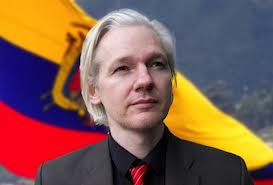
Again, it all boils down the core of the culture that the internet has produced, gravitating around the concepts of freedom and egalitarianism. Look at Wikileaks founder, Julian Assange.

If he did his work back in the early 90s, we can be pretty sure he’d be viewed overwhelmingly as a candidate for a James Bond villain. But today we (for the most part) view him as being a heroic (or at least positive) figure in a world that’s become increasingly secretive and unequal. Why this dramatic shift in perception? Again, it’s the internet and it’s affect on us. In a time of economic crisis we might not be able to go to the movies, or eat out, or drive for miles to see a friend, but we can watch something online, or browse recipes, or video-chat with the same buddies that you’d otherwise not be able to see. Any threat to your full and unrestricted access to the internet is, by proxy, a threat to some of the last pleasures you have left.

Hence the formation of a culture obsessed with the values of free speech, free access to information, and freedom from censorship. And with every development of the internet or our access to it serving as another leap in the evolution of the culture, it’s safe to say that the howl of anger that the governments of the world met when trying to create such bills as ACTA is only going to intensify.