Along with the debate, a variety of memes have popped up on both sides of the conversation. While it irritates me to see the particularly popular Chuck Norris-themed meme belittle transgender experiences, I thought trans activists were easily holding their own in the meme department by reminding readers of how difficult it can be to spot a transgender person, and therefore how ridiculous it is to police who enters which bathroom.
Unfortunately, there have already been several cases of bathroom policing, where women who aren’t deemed feminine enough are challenged for entering their bathroom (as might be expected, the video below includes some strong language).
Today, on International Women’s Day, I’ve been reminded of how grateful I should be. Maybe it’s because I’ve been flipping through images of women’s protests around the world. Maybe it’s because I’ve been watching sentimental videos that make me feel inspired (even if they are marketing ploys by Google). Either way, I can’t help but feel grateful.
By the time this post goes up around midnight tonight, it will no longer be International Women’s Day. Before then, I’d like to take a moment to be thankful, and highlight ways we can support other women in their fight to win these privileges too.
1. Freedom and Safety
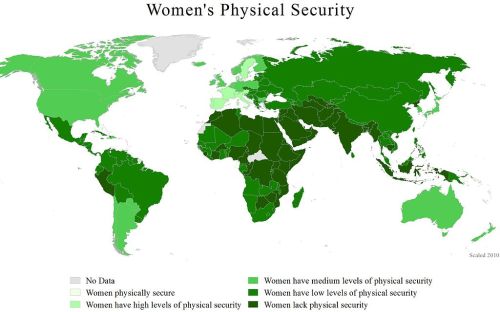
When I get up in the morning, I do not feel afraid. My country is not at war. My physical safety is not threatened. Throughout history, this was not something most women could take for granted. In many countries around the world this is still something women cannot take for granted.
This month I got to go out and cast my vote in the Canadian federal election. I owe this privilege to women who came before me. Women who sacrificed their time, energy, and sometimes their lives because they believed that we deserved the same privileges as men. Because I’m thankful for the sacrifices those women made, I’m ecstatic to see a film coming out this month that celebrates those women and explores what they went through in order to win us the freedoms we have today.
However, if you have been paying attention to the way the film has been publicized, you may have heard about the controversy surrounding one of its marketing campaigns:
By wearing this particular quote on their shirts, these successful white actresses have demonstrated another instance of what many activists and bloggers have begun to call “white feminism”. In her article, “This is What I Mean When I Say ‘White Feminism'”, Cate Young explains that
“White feminism is a set of beliefs that allows for the exclusion of issues that specifically affect women of colour. It is “one size-fits all” feminism, where middle class white women are the mould that others must fit. It is a method of practicing feminism, not an indictment of every individual white feminist, everywhere, always.”
I like Gawker. I mean, for the most part. Back when I was more into video game news Kotaku was one of my go-to sites, and I inevitably return to general science fiction and fantasy site io9 every Thursday to see if Rob Bricken has updated his weekly Q&A feature “Postal Apocalypse”. When things are going particularly slowly at work I even pop over to Kitchenette for “Behind Closed Ovens” to be regaled by tales of those who work in the restaurant industry. That of course leads me to the larger site Kitchenette is a part of, and probably the most reviled part of the Gawker network: Jezebel.
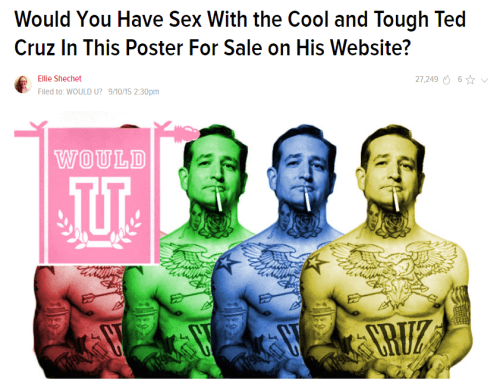
Of course, marketing yourself as a feminist blog in any way, shape, or form is sure to bring out a lot of angry, irrational, unsurprisingly male voices your way, but such is life. I’ve never particularly been bothered by anything on the site, but I’m only ever directed over there when one of their bigger stories is featured on io9. It wasn’t until just last week that a friend of mine linked me to the following feature that I even spent more than a couple of minutes clicking around Jezebel [click the image to be linked directly to the post itself]:
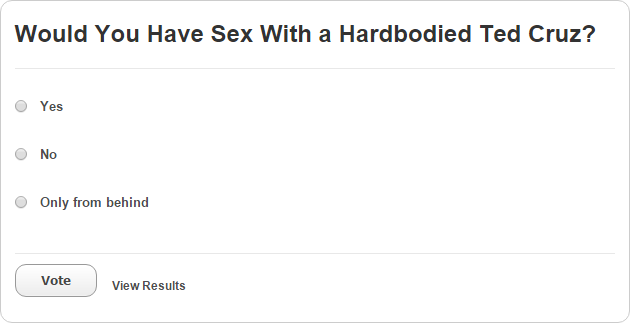
Which initially delighted me, primarily because I found out that a poster of a tatted-up Republican Presidential nominee Rafael Edward “Ted” Cruz was so very, very real. “Would U?” is described upfront as being “an academic forum in which [Ellie Shechet shares her] gross crush of the week and ask if you, too, would bang that person” and includes a roundtable between Jezebel staff which I found mildly amusing, though by the time I made it to the bottom and the poll, which I’ve embedded below, I felt more than a little bit uncomfortable.
Seeing how I love to pretend that binge-watching comedy sketches counts as research, I decided to follow up on last week’s post about Amy Schumer with a post about Key and Peele.
I find a lot of Schumer’s work funny because I can relate to it. It’s not quite the same with Key and Peele, since I am neither black, nor male, nor American.
Although sometimes their characters aren’t male either.
Even though I have little in common with Jordan Peele and Keegan-Michael Key, I do find their work hilarious. They do a variety of flawless impressions and have a much wider range than Schumer, who generally sticks to one (albeit very funny) schtick.
Like Schumer, they also take on some very serious social issues in their comedy. Since they are both half-black, Key and Peele often touch on the way racism affects the lives of black or biracial individuals. Below, I’ve included three racial inequalities that Key and Peele do a great job revealing via their sketches.
Key and Peele often subvert this “threatening black man” trope in their sketches. In “Flash Mob” and “White Zombies” Key and Peele play non-threatening black men who are mistaken as dangerous by the white people (or white zombies) around them.
Similarly, “Solution to Racial Profiling” mocks the racial double-standard that fames black youth in hoodies as “thugs” while their white peers are described as “misunderstood”.
One of their more serious sketches, “Negrotown,” addresses police violence directly, by imagining a world where police violence and racial profiling no longer existed.
I know. Pretty well every woman with a computer has written about how great Mad Max: Fury Road was. I actually meant to write about it last week, but then I decided that I needed to address the news about the Duggars instead.
Not only am I late to the Mad Max conversation, but when I went to write about this post I came across the video I’ve included below, which succinctly summarizes many of the points I was hoping to make.
Even though Rowan Ellis beat me to the punch with several of her points, I loved this movie too much not to add my two cents. I also wanted to dig deeper into some of the feminist identities offered in the film and how they impacted me as a female viewer. Spoilers, obviously.
Furiosa: The Tough, Capable Woman
Furiosa is, of course, the first person anyone is going to think of when I say “strong female character”. She is a brave, intelligent, and capable character. I also love that she isn’t sexualized by the camera angles, and that we aren’t forced to view her through the male gaze.
As much as I absolutely love Furiosa, she doesn’t really bring anything new to the table. We’ve already had hardcore, confident female leaders like Sarah Connor and Ellen Ripley since the 80’s. And as much as I want to be like Furiosa, I don’t always feel myself reflected in these kind of figures. Sometimes that’s okay, sometimes all I want is to escape into the kind of fantasy where I can imagine myself kicking ass and taking names. However, it can be discouraging when movies only have one type of “strong female character” to offer. While I absolutely love female heroes like Furiosa, I really loved having less capable heroines in Mad Max as well. Heroines who were well-rounded and brave in spite of their weaknesses and fears. Continue reading →



 Culture War Reporters