In recent years there’s been talks of the possibility of fans seeing a black James Bond at some point. Do you have any personal favorites that you would consider for the role?
I didn’t realize that there was this talk and then I did a film with Idris [Elba] and he said that he met Barbara Broccoli [James Bond producer] and that it does seem like there is a possibility in the future that there could very well be a black James Bond. And I would have to vote for Idris because I just finished working with him and he’s a great guy. [Laughs]
Obviously this change would rile people [and racists] quite a bit, but it actually fits in with a very popular fan theory. The idea is that “James Bond” is a codename that’s passed on from one agent to the next, justifying the change of roles as the decades have rolled on, and the extreme personality changes in the character. Lee Tamahori, the director of Die Another Day actually espouses this theory, and thought it would be great if former Bond Sean Connery could make an appearance in his movie alongside Pierce Brosnan.
Idris Elba is an immensely-talented actor, and a shoe-in for the role. The London native has clearly thought long and hard on the issue, and although he appears to have had some uneasiness about it, the following quotes show that he now appears to be very on board with the idea.
I would do it, but I don’t want to be called the first black James Bond. Do you understand what I ‘m saying? Sean Connery wasn’t the Scottish James Bond and Daniel Craig wasn’t the blue-eyed James Bond. So if I played him, I don’t want to be called the black James Bond.”
I engaged in a recent debate with someone over the casting of Ben Kingsley as the Mandarin in the upcoming Iron Man 3, and the same argument I’ve heard time and time again popped up. “The person who’s best for the job gets cast.” Somehow, though, I doubt that those who believe this will be using the same logic in support of Idris Elba portraying James Bond.
In all honesty, the world probably isn’t ready for a Black James Bond. People are, in general, averse to change, especially when it comes to their beloved characters. While a film with Elba as Bond will receive a large amount of criticism [much of it racist], it may just be the beginning to a world that truly doesn’t see colour.
GORDON: Ladies and gentlemen- this is your captain speaking. After some unavoidable delays we will finally be taking off into our mid-week discussion. Our topic for today is “What’s the greatest flaw of this generation?”(This generation being those born in the late 80s to mid 90s: “The Millennials,” “Generation I”, “Gen Y”- call us what you will).
EVAN: As I mentioned in the news update, we scrapped our conversation last night, largely because it became cyclical. To be more specific, we ended up going back and forth between apathy and cowardice, with one leading back to the other and so on.
GORDON: But let’s widen the picture a bit. While apathy is the go-to criticism many have, also up there for our generation’s flaws is our alleged “sense of entitlement.” Thoughts?
EVAN: If we’re still going with your incredibly broad age range, then yes, I definitely think that a lot of kids these days feel a sense of entitlement. It’s just the norm now to have wireless internet, a phone, the latest iGadget, etc. They’re just expected, the new given.
GORDON: Is that fair, though? I mean- haven’t we assumed that phones, indoor toilets, and electricity are “the norm” since they were first invented?
EVAN: To a point, though, some of what you listed are basic necessities. I’d argue that indoor plumbing is considered much more standard than an iPad.
GORDON: This is true, but I don’t think our generation- barring the handful of people who actually do feel entitled- views the iPad or any specific item as being “standard”- it’s the interconnection that’s the norm, as well as the expectations for new technology.
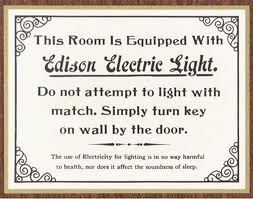
I mean, back in the day you didn’t need light bulbs. But if they’re mass produced, and safer than gas-lamps, then it just stands to reason that we’d eventually come to expect them.
But of course technology’s only one element. what about the idea that this generation is “entitled” in the sense that they get to “find themselves” or “focus on their art” or whatever hipster euphemism is being used to say “part-time employed”?
EVAN: Do I think that people feel they deserve the right to do more than just hit the ground running after college, get right down to the ol’ nine-to-five? I mean, yeah.
But I think this brings up a point I made yesterday about the “where” of our question. In France the age of retirement is 62 and that’s just expected. There are different standards depending on where you live in the world.
GORDON: This is true. I mean, each and every one of us would be considered spoiled brats if we jumped back a hundred years or so.
EVAN: Oh, no doubt. Especially you with your freakishly smooth hands.
GORDON: So would YOU say that the whole “entitlement” criticism stands?
And I use gloves. I refuse to be put down because I take better care of myself.
EVAN: You say that every time, but they’re still as smooth as a baby’s bottom.
GORDON: That means they’re working, and I’ll further have you know that I have a big ol’ scar in my right hand in the shape of a number “7.” But back to the issue-
It doesn’t seem like the “entitlement” bit sticks. Could we be classified as “lazy,” perhaps? The warped and stunted half-humans resulting from government dependence and the welfare state?
EVAN: Well, we discussed “laziness” last night specifically in the context of wanting to change what is clearly a broken system, but is what we’re talking about a general laziness? People just expecting to be spoon-fed?
GORDON: That’s the question. I recall a Cracked.com article in which the author kicked things off by apologizing for helping perpetuate the myth that a college education was a guarantee for a good job. Are we “lazy” in having had the expectation- as most of us had?
EVAN: Well, depending on who you ask, college is hard. In a way, I guess we expect that the hard work we put into maintaining a good GPA, et cetera, will result in finding employment once we’re out in the real world. Which, as I can attest to, is clearly not the case.
GORDON: So is that laziness then? Entitlement mentality?
EVAN: I don’t think that doing hard work and expecting a reward is laziness. That’s like someone working the fields and then being called a layabout because he expected crops to grow. A shaky comparison, I realize.
GORDON: Works for me. And I agree.
Now you yourself have accused us all of being creatively bankrupt. Could that be our major flaw? That we don’t make- we remix?
EVAN: I guess it depends on how we’re working this whole “greatest flaw of our generation” angle. The trend to rehash, remix, et cetera came about recently, but I’m not sure it’s because of us. Or is the question in regards to this day and age we’re in, and not those growing up in it?
GORDON: No, I mean us as an age-group, and that does pretty much answer the question right there. We are, for the most part, not the ones who are making the films and TV shows and music (give or take) of our time- that’s those who came before us.
EVAN: Exactly. Which is why we’re getting stuff like He-Man and Thundercats reboots, because those who were kids in the 80’s have a crippling nostalgia. Music is different, of course, but TV and movies are definitely controlled by the generation before us.
Okay, how about this. Maybe the flaw is our hellish appetite to be entertained.
GORDON: Ooh- interesting take. Expound, by all means.
EVAN: I mean, you’ve talked about the bilge that’s on television countless times. Do you know what we’ve been reduced to? A musical chairs gameshow called “Oh Sit!”
Are we so bored that we’ll watch people play “extreme musical chairs” for an hour?
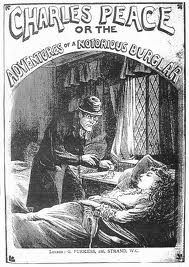
GORDON: I had no idea that existed. But surely this isn’t the first time in history that TV’s been crap. Or radio, or books, or music, or anything. Think of the “Penny Dreadfuls” back in the Victorian era- little, cheap trashy pulp-fiction novels made for mass consumption. Is that any worse than what we have today? Seems like the bilge is the same- it’s just the media that’ve changed.
EVAN: It may be the same, but it’s being produced at a frantic pace. That change, at least, has to be important.
GORDON: That speaks less to our appetites and more to our efficiency.
EVAN: I’d say that it has just as much to do with our appetites, judging by the content of what’s put out.
GORDON: We’re almost out of time, so let’s hit up some other key issues:
Apathy. As we said before, apathy tends to be the go-to criticism, at least, one of the major ones when it comes to our generation, and I think this is one of the easiest to put to rest. The Occupy Movement, environmentalism, increasing number of social movements, increasing global awareness- you name it. We’re strides ahead of the past couple generations. Heck, I’d go so far as to say we’re the most involved generation since the 60s and early 70s.
Well we’re out of time, and still of plenty of ground to cover- so rather than sloppily close up, we’ll be continuing our discussion next week with a question about hipster morality: “Do we want to be good, or do we just want to look good?” If you have any suggestions or recommendations for topics, don’t hesitate to shoot us a comment.
EVAN: Thanks for reading, and remember that CWR now updates every single weekday. I’ll see you tomorrow in our first ever “Fame Day” post!
This is going to be a fairly short post, you guys. I leave for a college reunion in about an hour, and am running a little short on time. Maybe stay tuned for a longer one tonight, though.
If you’ve been reading this blog for a while [and really, who has?] then you probably know how I feel about movie trailers and previews. I was more excited than anything for this year’s The Avengers, but the amount of content they put out before its release was almost enough to rid me of a lot of my excitement for the movie.
On last night’s episode of Conan brought in director J. J. Abrams, and with him a clip from the sequel Star Trek into Darkness. Fans all over America huddled in front of their TVs in anticipation, only to see this:
The clip is all of three frames long.
Understandably viewers were more than a little disappointed. Honestly, I was as invested in the franchise as the average Trekkie, I imagine I would be too. Abrams lets us know leading up to the teaser that this is a scene where Spock is in a suit of some kind and is also in a volcano. Cue scene, cue outrageous applause from audience.
That might’ve been great for the studio audience, but not so much for people in their homes. Still, it’s good that a 2013 film has the restraint to not start bombarding people with footage.
And speaking of restraint, it seems like that’s what anyone who’s into film needs nowadays. It was my own fault that I found out exactly why the armour Stark wears in Iron Man 3 is the Mark XLVII. Do not look it up, it is a huge, enormous spoiler that will let you know a major plot point, as well as cause you to curse your need to know more and more bitterly.
With the way internet and the media work today, spoilers and leaks abound. It’s up to the viewers who want to preserve their theatre viewing experience to keep a modicum of self-control and not constantly keep checking comic book movie sites [this is more a message to myself than anything else].
What I’m trying to say is, be grateful, Star Trek fans. You have over half a year until Into Darkness comes out. Three seconds should be enough to tide you over for at least another month.
EVAN: Last week you all voted for us to talk about the popularity of kung fu movies, so that is what we’re doing. The question that’s been on my mind being, why aren’t they popular anymore?
GORDON: See, I’m gonna have to butt heads with you right out of the gate. I just don’t think that kung fu movies are unpopular- at least, not anymore than at the supposed height of their glory…
EVAN: But there’s definite evidence of a time when they were all the rage. There were the dubbed martial arts films in the 70s and 80s, as well as the immense popularity of actors like Bruce Lee, Jackie Chan, and now Jet Li.
GORDON: No argument there.
EVAN: Recently, all that really comes to mind is Li’s role in The Expendables 2. Which is by no means a large one, considering the immensity of its cast.
GORDON: Well, that’s part of the problem- movies have developed since the 70s and 80s- none perhaps more dramatically than the action flick. Take The Matrix, for example.
EVAN: Definitely a revolutionary flick.
GORDON: Amazing stunts, choreography, and so on- and all hugely influenced by kung fu movies. In fact, Wikipedia goes right ahead and lists it as a “King Fu” movie.
Now look at an action film from the 60s or 70s. At the very best, you get Dirty Harry pistol-whipping some thug, and more often than not, you get Captain Kirk doing some weird slap-fight with a man in green spandex.
EVAN: Hey, that man in green spandex had it coming.
GORDON: This is true. What I’m driving at here, I guess, is that kung fu movies haven’t gone away- they’ve been incorporated into every major action flick made since the 80s.
Just look at fight scenes in a modern action movie- that’s Judo, or Jui Jitsu, or Karate, or Muay Thai, and so on and so forth.
EVAN: Okay, let me come at this from a different angle. Would you say that at this point in time, Jet Li is the go-to guy as an Asian actor who specializes in martial arts?
GORDON: More or less, sure.
EVAN: How many [Western] movies has the guy been in compared to Jason Statham?
GORDON: Couldn’t say. I’m guessing Statham’s got him beat, though.
EVAN: Why is it that more often than not, whenever martial arts are depicted in a movie they’re performed by a white guy?
GORDON: Oof- where to begin? Tacit racism, hiring ease, translation, and so on.
EVAN: I’m just saying that there was a time, mid to late 90s and early 00s where Asian actors could still headline these films. You’ve got the Rush Hour films and Shanghai Noon and its sequel, to name some Jackie Chan vehicles. And you had stuff like Romeo Must Die with Jet Li.
As far as Wikipedia can tell me, all the martial arts films starring Asians in the last few years were made in Asia.
GORDON: And are nevertheless seen by Western audiences. Take The Raid, an Indonesian film, or The Man With the Iron Fists, which people are pretty psyched for, or Tony Jaa’s work.
EVAN: Yes. Tony Jaa.
GORDON: As there did before. I mean, barring certain movies, like Crouching Tiger, Hidden Dragon or Rush Hour, how much appeal did kung fu movies have anyways? I’m not knocking them or anything, but it seems that with certain exceptions for major pieces, kung fu movies (in the West) have always been mostly popular as a sugenre with fans of said subgenre. Much like the monster movie, or the sci-fi horror.
EVAN: At some point they epitomized the action genre, so I’d say they had a lot of appeal. I mean, it rode the trend of dojos and whatnot opening up all over North America.
GORDON: Wasn’t that with the 80s stupid action flick, though? I mean, c’mon. It was the 80s. Get some Aryan guy to face-kick a bunch of minorities, slap on an over-the-top title and you’ve got a hit.
EVAN: I was mostly referring to the fact that Asian martial arts films became so popular that they started creating them in Hollywood, using Asian actors.
GORDON: So the issue here isn’t kung fu- it’s Asians in media…
EVAN: We can concentrate on the genre and its popularity before we follow that train of thought. Why do you think it’s lessened so much? And if it has, what has replaced it?
GORDON: I think that the rise in awareness of martial arts in the West is responsible for that. Suddenly, you can get all the amazing choreographed fights without them being (necessarily) rooted in Asian culture.
The equivalent would probably be the Western/Cop flick and it’s influence on Hong Kong action movies.
EVAN: So what you’re saying is that Western culture has realized that this isn’t a genre that solely the East can lay claim to.
GORDON: Not entirely, anyways. Depends on how you define a “Kung Fu Movie.” I was just going with a movie that’s heavily rooted in martial arts.
EVAN: I mean, I’d say that it’s because the Asian actors that we [Westerners] can relate to are getting old. Jackie Chan is 58. Jet Li is 49. No one has really stepped up [or has been able to] and taken their places.
GORDON: Well- no argument there. Barring perhaps Tony Jaa. Who will **** you up if you so much as look at his elephant the wrong way.
EVAN: ช้าง อยู่ ไหน [chang yuu nai]?! If you saw the movie, you’d get it.
GORDON: Go see the movie. Now.
EVAN: Watch it please. Tom Yum Goong as it was released in Thailand, but retitled The Protector for an American release.
GORDON: Also, eat tom yum goong. It is the best thing ever.
EVAN: Anyway. I just think it’s interesting, the fact that there’s clearly still an interest in Asian martial arts.
Using two panda-related examples, Dreamworks’ Kung Fu Panda movies, and Blizzard’s upcoming expansion for World of WarCraft, Mists of Pandaria.
GORDON: This is true.
EVAN: Pandarens had existed in WarCraft for years before those movies, by the way. Just for everyone who’s saying that Blizzard ripped the concept of anthropomorphic martial arts fighting pandas from a Jack Black movie.
GORDON: And with that, we’re out of time.
EVAN: Don’t we have ten more minutes? We started at ten past.
GORDON: Oh. I thought we started on the hour.
EVAN: Nay. And we’re keeping all of this dialogue.
GORDON: To assure our readers that we too are flawed mortals?
EVAN: Well, that one of us is.
GORDON: Touché.
Back on the subject- let’s not forget that thanks to Netflix and piracy, it’s easier and easier to get movies from out of the country anyways. Just look at Red Cliff.
EVAN: Red Cliff?
GORDON: Epic action movie. Based on ancient Chinese history, and a text called “The Romance of the Three Kingdoms,” if I recall correctly. Some sort of an Eastern equivalent to “swords and sandals” flicks. Which are awesome, by the way.
EVAN: Yes. We do love our “swords and sandals” movies.
GORDON: Go watch Ironclad. Watch it now.
EVAN: If only to watch Paul Giamatti’s veins pop out on his neck as an angry King John.
GORDON: Words cannot describe how irritated he is in that movie. It defies logic. Also, a man gets beaten to death with his own arm.
EVAN: Actually, I am fairly sure the severed arm belonged to a different guy.
Back on topic one last, time, before we run out of it- It seems that Asian cinema continues to chug on, producing martial arts movies even if Western Cinema has since moved past that. In a way, what was popular for a period of time in Hollywood never stopped in Asia. Though those movies still changed the action genre in a huge way.
GORDON: Absolutely. From The Bourne Identity to Batman Begins, the blood of Kung Fu movies still pumps strong. And with that, we’re out of time. Be sure to swing in next week for our discussion on the upcoming season of Community.
EVAN: Nooooooooo. That’s next-next week. The day before the new season starts.
GORDON: Why must you make a fool of me?
EVAN: Why must you make a fool of yourself.
GORDON: Anyways. Be sure to vote for our discussion topic next week.
This is part of a multi-blog series about Race and Comic Books put together by RodtRDH. Justin Tiemeyer has written the first of many such posts [about black comic book characters] on his blog, Cavemen Go.
One of my favourite blogs [you can see it in the sidebar] featured an article sometime ago titled “On Marvel, Mandarin, and Marginalization.” The gist of said article asking why an Asian villain like the Mandarin is being portrayed before any Asian American lead heroes. I’m going to start my defence with the quotes racebending.com used:
“There are certain fears and certain strengths the character evokes that are applicable, but of course you have to completely remove any of that short sighted cultural ignorance that leads to any sort of bigotry in the storytelling. That isn’t to say those fears and shortcomings of Iron Man as relating to that character aren’t relevant…He was based in China which was then mysterious because it was Red China. Today China is mysterious in other ways because it’s Global China.”
– Jon Favreau, director of Iron Man and Iron Man 2 to CHUD in 2006
“You have to do The Mandarin. The problem with The Mandarin is, the way it’s depicted in the comic books, you don’t want to see that.”
I’m not going to skirt around the fact that the character was indeed rooted in the “yellow peril” that was rampant at the time of his inception, but the following images should paint a picture of his evolution since that time.
From left to right: The Mandarin as he first appeared in the 60s, then the 90s, and the present day.
We all saw The Avengers; let’s not lie to ourselves here. It’s the third highest grossing film of all time, and we are the reason for that. As of earlier this month Joss Whedon was confirmed as returning to direct the sequel, with the film due to hit theatres on May 1st, 2015.
With a bit of a wait between movies, a buffer of films is currently in the works, including sequels Captain America: The Winter Soldier, Thor: The Dark World, and, probably the most highly anticipated, Iron Man 3. Also on the docket is the spacefaring super-group Guardians of the Galaxy.
All of this news pleases me. What’s problematic is that when researching this article I found out that the Marvel Studios have a model of “releasing just two films per year.” So let’s see what we have here:
Iron Man 3 – May 3rd, 2013
Thor: The Dark World – November 8th, 2013
Captain America: The Winter Soldier – April 4th, 2014
Guardians of the Galaxy – August 1st, 2014
With those four films taking up the next two years a horrifying fact emerges:
Marvel will not be making or releasing a Black Panther film before the next Avengers movie comes out.
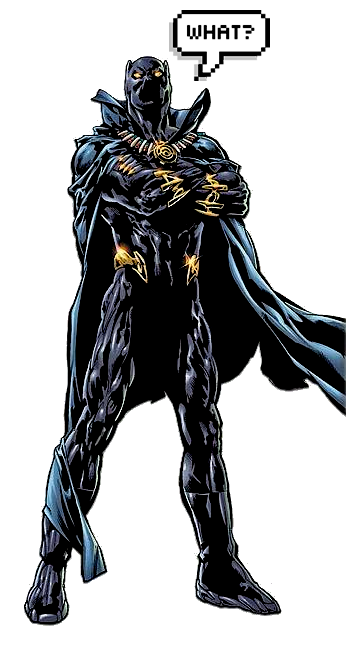
Let me back up a little. Black Panther is, as comic book fans know, T’challa, the king of the fictional African nation of Wakanda. It is an extremely technologically advanced country, and the character himself has a PhD in physics, as well as being a master hunter, martial artist, inventor, and politician. On top of that he wears a suit made of vibranium, the same stuff Captain America’s shield is made of. He’s like if Batman were also the president and he is awesome.
“He has a lot of the same characteristics of a Captain America: great character, good values,”
Which is true. But he doesn’t stop there, going on to say :
“But it’s a little more difficult, maybe, creating [a world like Wakanda]. It’s always easier basing it here. For instance, ‘Iron Man 3’ is rooted right here in Los Angeles and New York. When you bring in other worlds, you’re always faced with those difficulties.”
Cue outrage from fans everywhere. The general argument against the statement above being that a sizeable portion of Thor took place in Asgard. Asgard, the mystical dwelling of the Norse gods. But playing devil’s advocate, as I try to do, perhaps Marvel execs are afraid of portraying Africa badly. Counterpoint: Wakanda is a pretty well-to-do place. Point: maybe they’re afraid of portraying the continent insincerely? Counterpoint: it’s a comic book movie. Point: but, but, but . . . Counterpoint:
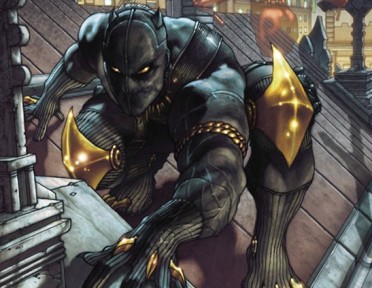
Those eyes sneer at D’Esposito’s claims.
Djimon Honsou is a number of things. An immensely talented Beninese American actor is one. The guy everyone wants to play the Black Panther is another. Honsou actually voiced the character for a short-lived TV series on BET which was essentially a motion comic.
“It is true that I have said certain things about it some time ago and that I would love to play the Black Panther. Also the opportunity came to do the voice over for the animation so I did that, maybe in the hopes that one-day they would finally get around to doing a movie. We have so many super heroes, but none that really defines the African American. I thought it could definitely happen and I have tried to push that envelope before.”
And if that wasn’t enough, Stan Lee himself is on the record as answering the question “What obscure characters would you like to see adapted into a big budget film?” in an AmA [Ask Me Anything] on reddit. His answer was this:
“Black Panther. He’s not too obscure, I hope.”
If the fans, the actor, and Stan “The Man” Lee [who also co-created the character] are all pushing for this there’s really no reason it should not or cannot happen. All that’s standing in the way are a bunch of executives too willing to take the way that’s “always easier.”










 Culture War Reporters