Tag Archives: race

Order Up: A Parable About Asian Viewers and Big Hero 6

INT. YOUR STEREOTYPICAL AMERICANA-STYLE DINER – DAY

Two young men sit at a booth, the same one they sit at each and every single day. On the left is EVAN, a Filipino-Chinese blogger extraordinaire. Facing him is someone we’re going to call CODY, a white acquaintance/peer/friend. Both enjoy sharing a meal in the diner together and each other’s company.

A WAITRESS approaches their booth to take their orders.

CODY
I’ll have the hamburger.

EVAN
The roast chicken for me, please.

Pan up to the clock on the wall. Fifteen minutes rapidly elapse and the WAITRESS returns and places their food in front of them.

Both EVAN and CODY
Thank you.

bergerSitting in front of CORY is a hamburger. EVAN stares down at his plate, which holds the exact same thing.

EVAN
(not angrily but wearily)
Every time, man. Every single time.

CODY
(with forced sympathy, as he’s heard this more than once before)
Aw, really, again?

EVAN
You were sitting right there when I ordered. I very, very clearly asked for roast chicken. I always order roast chicken.

CODY
Well, at least it’s good though, right?

EVAN picks up his hamburger and takes a bite. He chews it slowly.

EVAN
(sighing)
Yeah, it’s pretty good. I mean, it always is.

CODY
(brightly)
So let’s just enjoy this meal together, huh? Continue reading
Unpacking the Importance of The Whiteness Project

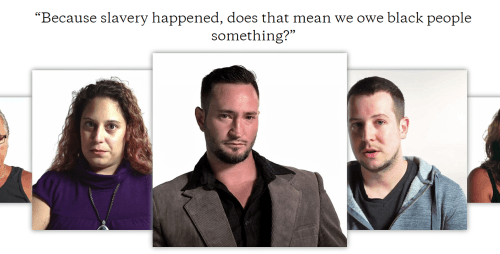
I rarely double up on posts during the week, and I just wrote pretty great review of this month’s issue of Ms. Marvel [if I do say so myself], but I felt the need to spotlight a little something called The Whiteness Project and field a few more opinions from you about the entire thing-

I chose to feature the same guy The Guardian did, because how could I not?

I chose to feature the same guy The Guardian did, because how could I not?

The Whiteness Project is, to let their About page speak for itself:

“a multiplatform investigation into how Americans who identify as ‘white’ experience their ethnicity.”

This investigation is carried out through interviews with White Americans, some of whom you can see in the image up above. Speaking to the camera, and consequently us [due to their use of the Interrotron camera technique], these men and women share how they relate to and understand their ethnicity and what it means in today’s United States. Continue reading

The Ethics of Tourism: Considering A Small Place in the Traveller’s Era

Is it immoral to be a tourist?

A few weeks ago we returned from spending a week long vacation in Cuba. You may have even read my last post with suggestions for anyone else who might be interested in traveling there.

So, why, out of the blue, am I asking you about the morality of tourism?

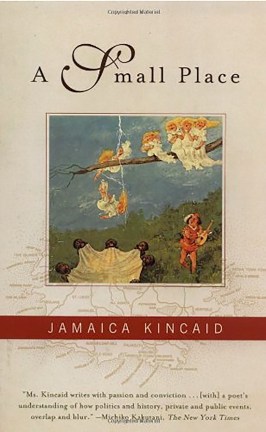
Well, it’s probably because of Jamaica Kincaid and her book, A Small Place.

maxresdefault
Continue reading

The Post-Racial America (That We Don’t Live In)

Well, I woke up this morning, flipped on my laptop, and had this image waiting there to greet me.

Django Unchained Actress Accosted by LAPD After Kissing White Husband

For ****’s sake, people.

Alright, lets get to it. Continue reading

Don’t Just Hire Minority Creators [Promote Hiring Them, Too]

It should be absolutely no secret to any and all of you that I’m an advocate for diversity. There are a myriad of different reasons for this, from the “it would be nice…” of seeing a little more colour in popular media to the more specific “think of the children” that pertains to White boys specifically [not White girls or Black boys and girls] having their self-esteem boosted by watching TV. What some people don’t realize is that the need need for diversity extends beyond actors and the characters they portray to the actual creators involved.

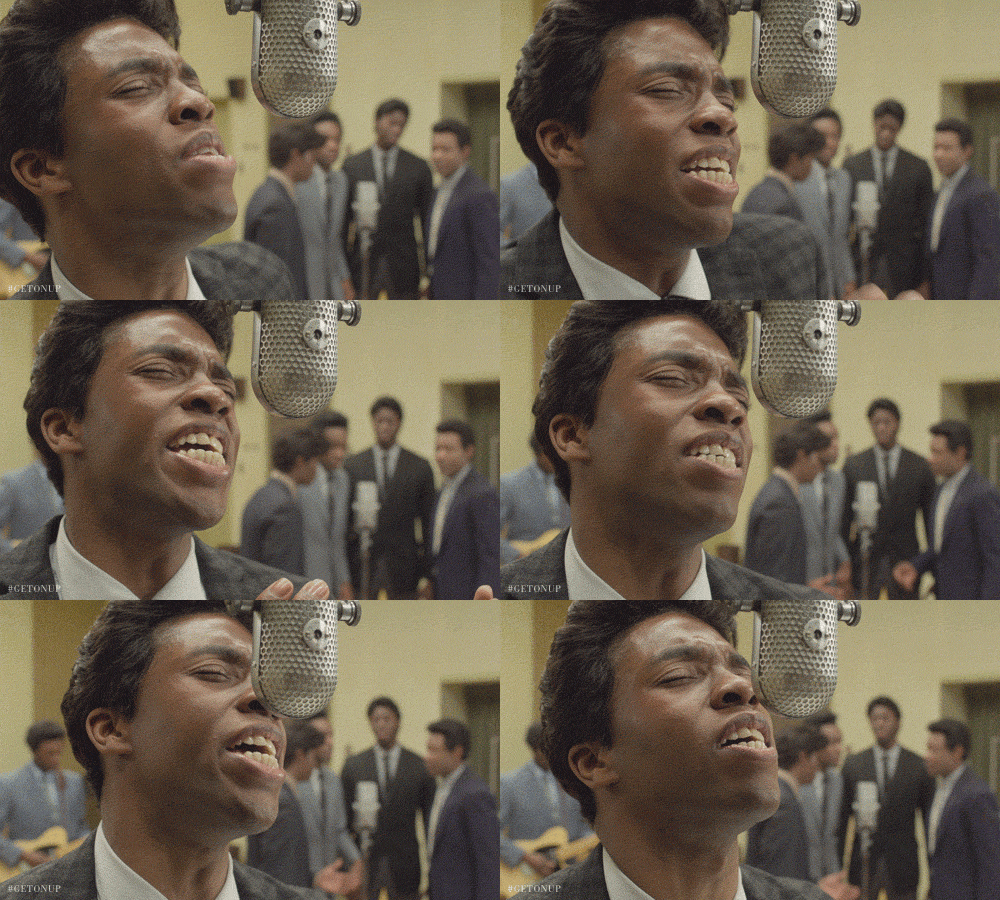
I’m not going to say that a White man cannot ever be involved in the creation of art that discusses or features minorities and their struggles- it’s a topic I touched on when discussing children’s author Rich Michelson and the books he’s written about the Civil Rights Movement. These stories can, and have been, and will continue to be valid, the question remains as to why we live in a world where a James Brown biopic can be created as a summer blockbuster and have “all the producers, writers, and the director [. . . be] white.” At what point should anyof these people stopped and thought to themselves, “Maybe a Black person would be able to provide a perspective on this that none of the rest of us could?” “Immediately” is the answer in case you were wondering.

This is all a lead-up to how, if this is definitely a problem in our current culture, we can change things. As history would dictate I am going to be coming at this from a distinctly comic-related perspective, but the issues therein can be paralleled across the board to TV and movies.  Continue reading

Shame Day: Whitewashed Bible Movies and the Christians Who Watch Them

I think it only fair, given the current situation in the Gaza Strip, to shout-out the West’s general view of the Middle East today as having honorary Shame Day status [you can check out yesterday’s post for what that’s all about]. Cue my flawless segue into today’s actual topic, which is in regards to the West’s general view of the historical Middle East.

This retreads some pretty well-worn ground for me, because it’s about Hollywood and race. I’ve spotlit problems with the “one size fits all” approach to casting minorities, heavily criticized Hollywood’s attempts to whitewash their remakes of groundbreaking animated films, and outright condemned producers who cite the inevitable change in the industry while stolidly refusing to have any part of it. The difference here is that this time it’s heavily tied into Western Christianity.

It’s been almost 60 years since The Ten Commandments, and I want to say we’ve come a very long way since then. Again note that that’s something I want to say. To be truly and completely honest there is almost nothing I want more than to be able to write to you all and tell you that in six decades we are so, so far from the time when Charles Heston and Anne Baxter were cast as Moses and Nefertiti, respectively. You know what they say, though, you can’t always get what you want. Continue reading