Tag Archives: television

This S.H.I.E.L.D. Needs a Little Colour

In the wake of The Avengers‘ 1.5 billion dollar success it was inevitable that Disney/Marvel would be creating a sequel. They also decided to broaden both the universe and the franchise by green-lighting a TV series based on the organization in the comics, titularly named S.H.I.E.L.D.

It marks Joss Whedon’s return to television, as he will be both directing and producing the pilot. Acting as directors and producers, however, are his brother Jed Whedon and his sister-in-law Maurissa Tancharoen. The three formerly worked together on the online cult classic Dr. Horrible’s Sing-Along Blog, which actually leads me to the point of this post.

The DVD and Blu-Ray versions of Dr. Horrible a commentary track titled Commentary! The Musical, which consists of entirely new songs performed by the cast and crew. Track 10 was written and performed by Tancharoen, and I’ve embedded it here:

While obviously very tongue-in-cheek, as an Asian-American in the entertainment industry she’s more than a little aware of the imbalance in roles for racial minorities. Having her and Jed Whedon take off as showrunners if the pilot is a hit, this is a huge opportunity for a show other than Hawaii Five-0 to feature a good number of Asians in their main cast.

The perfect opportunity for this takes the form of S.H.I.E.L.D. agent James “Jimmy” Woo. Originally starting out with the FBI, he created and led the first ever super-hero team to exist with a government mandate. Although he later left to join the Agents of Atlas, Woo was a high-ranking member of S.H.I.E.L.D. and definitely a possible addition to the upcoming series.

In general, it’s exciting to have the comics come to the small screen as a live-action show. Cartoons like The Avengers: Earth’s Mightiest Heroes and the classic Batman: The Animated Series have proven very popular, but were directed at a younger audience. In recent years  The Walking Dead is the only program based on comics that has received any amount of positive attention.

Disney/Marvel have a chance, as they often do, to bring diversity through a form of media, this time television. With Jed Whedon and Maurissa Tancharoen at the helm, here’s hoping that we might even see our first ABC series headlining an Asian actor that is also a spinoff of a major motion picture based on a comic book.

Girl Don’t Need A Man To Get Into Hilariously Comedic Situations

This past Monday a new show called The New Normal premiered on NBC. I wasn’t able to catch the pilot, though I did make sure to watch a preview to see what it was all about. You can watch the whole thing if you want, but what I want you to see is right near the beginning:

So at around 22 seconds into the trailer we’re shown that Goldie’s good-for-nothing husband has cheated on her, which becomes the catalyst to her drive across America to begin life anew with eight-year-old daughter.

Continue reading

Go Listen to “Guilty Pleasures: Art and Politics”

Two days ago Gordon and I talked about “hipster racism,” a topic he heard about via an eye-opening lecture by novelist China Miéville. The talk was titled Guilty Pleasures: Art and Politics, and discussed far more than what we were able to given our time.

A number of things: Firstly, I am not going to discuss or summarize his lecture in its entirety; it was forty-some minutes long and that would be ridiculous, just listen to it for yourself. Secondly, I am not a socialist, and much of what he was saying was through that filter. He did, after all, speak at a little something called “Socialism 2012.” I am not someone who has very strong political leanings, but I am someone who truly loves art in its many forms. The following are the three ideas he spoke about that stuck me the most.

The Artist and Their Art

Miéville, about a minute in, states that the socialist position on art and politics is this: “[socialists] do not judge art by the politics of the creator of that art.” He then quickly adds that they do so all the time anyway. I briefly wrote about this in a post about Jewish children’s author Rich Michelson. Michelson hosted a session that was largely about race and background, and how they impact audiences’ opinions of a work. Is a Jewish author allowed to write about the struggle of the civil right’s movement? And if not, then why?

The relationship between creator and his or her art is heavily debated, but its extremes are very easy to criticize. Miéville said that they’d all sat through “egregious folk music” simply because of the grounds of its sentiments expressed. Simply having a good message does not make art good. A Christian movie about the horrors of porn is not in and of itself a bad thing; having it feature ghosts [and be a clear knock-off of Paranormal Activity] is. To put it in the form of a proverb, “the road to hell is paved with good intentions.” Feel free to replace “hell” with “bad art” or “disappointed audiences.”

Guilty Pleasures

The title of his talk and what I’m the most interested in, Miéville listed different axes of socialist guilt. The third of which [17:56] he says is:

The question of quality: “I know it’s not very good but I like it anyway.” A declaration of kind of defensive guilt.

The thing is, he realizes that the statement is inherently flawed. By saying something is not very good we declare that we can make qualitative judgements about art, and this leads to questions like: “What is art? What makes it good, bad, better? What kind of social phenomenon is it?”

When it comes to television shows I have a standard rule, and that is to watch it ’till its dying days. I have watched all of The Office to date, and that is the same as 30 RockHow I Met Your Mother, and a slew of other shows. Sooner or later they begin to break down [see my first example], but I stick to them. The reason I’m bringing this up is The Big Bang Theory.

Gordon hates TBBT. He hates it because, honestly, it’s not a very good show. He often says that “nerdface” is an excellent way to describe their treatment of the characters. That being said, I have, and do [sometimes still] enjoy it. Do I feel guilty? As an English and Writing major, yes. I studied for four years to differentiate between good and bad writing. As a general media consumer and television enthusiast, yes, I still feel guilty. And, as Miéville said, I somehow defend myself by admitting to others that I realize it is not very good.

Does this justify me? I don’t think so. But beyond what it means to be good or bad, what does it mean to like?

What Does It Mean to “Like” Art?

I like the Dungeons and Dragons Monster Manual. I like the novels of Barbara Cummings [sp?]. I like Gramsci’s prison notebooks. [20:15]

None of these statements tells him anything about his relationship with each piece of art, because they’re all so distinct. What further complicates the verb is the discussion of “the art piece one enjoys disliking” [20:32]. We can like to dislike things; Justin Bieber basically encapsulates this idea by himself. While he never ends up truly defining the word, he seeks closure in the writing of another.

What follows is a piece of writing by Lady Mary Wortley Montagu, an 18th century writer, and Miéville’s response to it [34:45]:

“The pretty fellows you speak of I own entertain me sometimes, but is it impossible to be diverted with what one despises? I can laugh at a puppet show and at the same time know there is nothing in it  worthy of my attention or regard.”

This is one of the most liberating things I have ever read in terms of the cultural sphere. It is not obligatory to have footnoted opinions about everything you consume.

I read his meaning in that last paragraph as being that we need not get caught up in guilt. There should be a way of looking at what we like that doesn’t involve us castigating ourselves. I can enjoy the King Fantastic Remix of Drive It Like You Stole It without being a proponent of foul language. Likewise I can read AmazingSuperPowers, be amused, and not have to argue how high- or lowbrow its humour is. While the intent of an artist and the perceived quality of their work should be taken into account, there are times when we can simply like, or more simply enjoy, art, whatever it may be.

Violence (Not) In Media

In the wake of the Aurora Shooting, the Sikh Temple Massacre, and a recent spate of gun violence across the country, the debate of the violence in media has once again reared its head. On one side, those who cite the saturation of film, music, and video games with violence and the glorification of violence as responsible for creating these monsters, or at the very least, pushing them over the edge. On the other side, the ranks of apologists, who declare that it’s ridiculous to blame movies and music for mass-murder.  I’m not here to analyze the claims of either point, or to make an argument for one side or the other- that’s already been done better by The Escapist’s Robert Chipman (check it out here).

No, I’m here to address the subject of violence and its possible contributing factors outside of film and music.

When I touched on a complaints I had with movies like Brideshead Revisited and I Love You Man a few weeks ago, I briefly mentioned goth-rock-star Marilyn Manson, whose music was accused by many of being responsible for having influenced the Columbine shooters in committing the massacre. Interviewed by Michael Moore in his documentary Bowling for Columbine, Manson had this to say regarding violent influences:

And therein really lies the crux of the issue- when tragedies like this happen, the scope of our outrage is usually so small that we fail to take into account all the other possible factors. We can cite GTA or rock or rap or cartoons as being responsible and maybe- just maybe- there’s something to that. But what about everything else? If violence in media causes violence, surely violence itself should be cited here!

You remember this?

That’s Marine Corps veteran Scott Olsen, moments after he was shot in the head with a gas canister from close range. Part of the brutal crackdown by police on the Occupy Oakland protests last year- back when Mayor Jean Quan decided the best way to deal with a peaceful protest was by turning her town into a war zone.

But why talk about Oakland and countless other cities being turned into war zones when we can just talk about actual war?

As I’ve mentioned in previous posts, this is the single longest war in American history. Year after year after year, it goes on, and with no end in sight. That’s got to be the single largest and publicized campaign advocating violence, yet where is the outrage against it?

And what about hunting? That’s all about guns and the glorification of killing things…

What about Civil War Reenactors?

What about the national anthem? That thing is full of references to bombs. What about the 4th of July? A day when we celebrate our victory in a war by setting off explosives!

What about the very way we talk about violence? Should the Mob Museum here in Las Vegas be shut down? Should we do away with anything related to pirates? Should we stop teaching about the war of 1812 in schools?

And so on…

You get the idea. Ours is a culture and history built on violence. It’s in everything–  not just our media. While I’ve got my own views on what does and doesn’t cause or promote violence, my purpose here isn’t to take a side. I’m simply trying to demonstrate that if you do want to try to get into the causes of violence, you don’t get to be selective about who you put on trial.You want to find out if there was something in our world beyond the killer’s diseased mind responsible for death and destruction, you have to look at everything- anything less is just a witch hunt, pure and simple.

Let’s face it, half the time, tragedies like these are the platform from which we get to lynch things we didn’t like to begin with…

…I wonder if that kind of vicious and petty mentality might contribute to violence at all…

Good Show! (Or, What’s Wrong With The Simpsons)

Over the past couple days, actors Donald Faison and Zach Braff have been campaigning for Obama here in Vegas. While I’m not a fan of their political stance, I freaking love Scrubs and have been re-watching the show for what must now be about the ninety-billionth time.

It got me thinking about a discussion Evan and I had a while back, in which we concluded after some debate that Scrubs is the best show of all time.

Ok, that’s not going to mean anything to you if you haven’t actually seen Scrubs. If you haven’t, go watch it now.

Now think about it- has there been a bad episode of Scrubs? Has there ever been an even sub-par episode of Scrubs?

There really hasn’t. Not every episode is fun to watch (it’s a hospital- you can’t expect them not to deal with mortality and whatnot)- some episodes are downright depressing and tragic. Even so, there show never fails to have some substance to it and (and this is the big thing) never really diminishes in quality despite having been on air for eight seasons (nobody counts the ninth as cannon).

But more on that in a minute…

See, what makes Scrubs so consistently good isn’t that it’s funny- it is funny, but not every episode, and not every joke in the funny episodes will have you on the floor.

Though most will…

It’s that it’s consistent all the way through. The characters develop, certainly, but they never really shift dramatically or break away from who they were a season ago. JD is always JD, Turk is always Turk, and so on. The wacky, exaggerated universe of the show never strays too much into total realism or too far off into surrealism. In short, and episode seen in the last season of Scrubs is about the same (extremely high) quality that the initial episodes are.

Now I know you’re all saying, “But Gordon, you ruggedly handsome bastion of logic and truth, surely consistency isn’t all there is to it!”, and yes, it’s not just consistency that makes a show good. Comedies need to be funny, dramas need to be agonizing, and so on- nevertheless, these things are dwarfed when it comes to consistency- let me give you an example of this done wrong.

Community. I remember seeing ads for it in my first year of college and thinking “Neat- a show about college. Something I and my demographic can all relate to and get a kick out of. This looks like it’s gonna be good”.

And it was.

(Barring that they had an Indian guy playing an Arab kid because apparently all brown people are the same…)

Really good. In fact, the first season of Community is probably one of the funniest things I’ve ever seen in the couple decades I’ve been alive. But what proceeded the glorious first season was one of the fastest and ugliest burnouts in television history.

You remember how Abed was socially-challenged but ultimately human in his attempts to relate to people and make is father (also played by an Indian actor) proud? Remember how Jeff wanted to get his degree and regain control over his life? Remember how Troy was trying to deal with the loss of his status? How Annie was trying to reinvent herself?

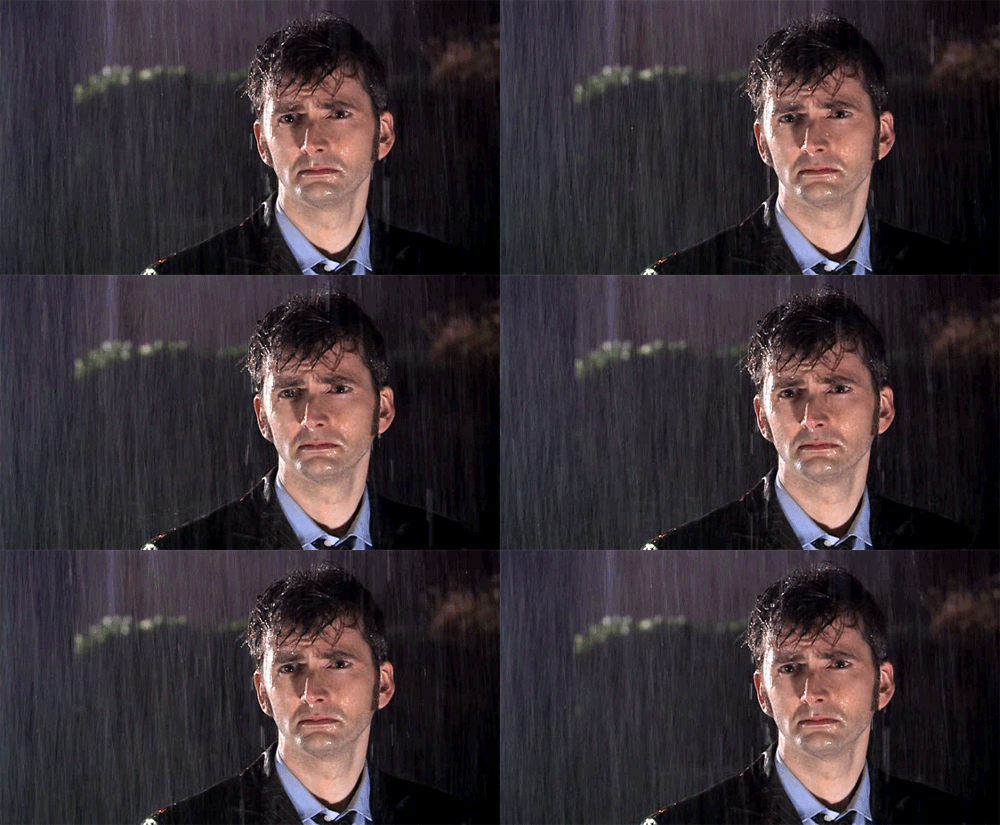
Yeah, all of that went down the toilet in the subsequent season. The motivations that gave the episodes conflict and helped progress the characters and the story as a whole were more or less dropped, and the little quirks that made the characters funny and interested got so blown up that they became the only aspect of the characters. Abed went from movie-geek to schizoid mess, Jeff became charming (and nothing else), Troy became just Abed’s buddy, and Annie was just the sweet naive straight-man (more or less) to the rest of the group. On top of becoming gross caricatures of their former selves, the show stopped dealing with college (which you might recall as being the reason so many people started watching the first place) and became centered entirely on the clownish escapades of the group. Granted, every once in a while you got good episodes, but never on the same level as the first season. Every time I sat down to watch Community the smile faded from my face and I could react in no other way but this:

“But Gordon, you roguish fountain of delight, isn’t this more a warning against being madcap than straying from the characters and story?”

I’d have to concede that, if it weren’t for such shows as South Park and American Dad. Both of these shows have been from their inception pretty surreal, nonsensical, and all-around crazy. Yet both shows have maintained that same level of craziness and remain (more or less) as popular now as when they started.

I admit, these shows are not for everyone…

Again, an excellent example of how shows drifting away from their original material kills them would perhaps the most iconic animated show of all time: The Simpsons.

My old roommate never saw the early Simpsons, and is to this day convinced that the show is side-splitting in its hilarity. And he’s probably right- I stopped watching the Simpsons after my first year of college- I got tired of having my heart broken.

Perhaps it’s best encapsulated in this quote by Lisa Simpson back in Season 2:

I heard you last night, Bart. You prayed for this. Now your prayers have been answered. I’m no theologian. I don’t know who or what God is exactly. All I know is he’s a force more powerful than Mom and Dad put together and you owe him big.

Would you ever hear that from Lisa in one of the later seasons? You would not. Why? Because Lisa has moved from being a brilliantly smart little girl to a pointy-haired midget channeling the whiny liberal indignation of Bill Maher.
Is there anything wrong with Lisa as she is today? Not really, no. If that’s who her character is, then that’s who her character is- only the hitch here is that’s not who Lisa started off as. Had Lisa started off as the yellow counterpart of Brian Griffin, then I wouldn’t have any problem. Had Homer started off as a food-crazed buffoon or Marge as a simple housewife, I’d probably still watch the show. Again, it’s the gradual change from one thing to another that’s responsible for people drifting away from the series. It’s not that shows go stale (not that staleness can’t be a problem- just look at the Gilligan’s Island episode where they’re almost rescued), it’s that they change too much.

And hey, with our ever-shortening attention spans and our rapidly changing culture, maybe that’s not such a bad thing.

Why We Need Graphic Violence

Once upon a time, a lion was sent to the king of Sweden. After it died, its skin and bones were sent to a taxidermist so that the animal could be stuffed and preserved- the only problem was that this was the eighteenth century, and the taxidermist had never seen a lion before. His resulting work was this:

With only the most cursory knowledge of what a lion was, the work turned-out something that looks like it was pulled straight from a Looney-Tunes episode.

I’d suggest laughing at that picture for as long as you can- the rest of this post is going to be pretty unpleasant.

Most people’s Facebook news feeds are made up of snippets of conservations between friends, invitations to apps you’ll never use, the occasional rant, and baby pictures. Most people, but not so much me- only I do get to see pictures of babies, but more on that in a minute.

See, I grew up in the Middle East, specifically in Syria. For those of you who don’t keep up with the news (at all), my adopted homeland is currently in the grips of a brutal civil war. One of the ways the rebels and dissidents spread news is through social media- especially Facebook, and having “liked” such pages as “Syrian Days of Rage” and “Syrian Revolution 2011”, my news feed is mostly comprised of grainy YouTube videos of soldiers declaring their defection to the Free Syrian Army (FSA), or pictures of mass protests, or of a solitary Republic flag tied to a streetlight. Or a baby.

I warned you before that things were going to become unpleasant- again, if you’re sensitive, stop reading now.

This picture was of a baby who was killed in Gaza during the short-lived but brutal Gaza war in the early weeks of 2009. It was a bombing that killed the child. It was burned so badly the skin still on it had been turned soot-black, and was tight and shiny. You might mistake it for one of those life-sized baby dolls if two broken femurs hadn’t been sticking out where the legs should have been, or if the flesh around the left arm hadn’t melted off the bone.

It was frozen like that. Eyes closed and head rolled back so that against all reason, it looks like her or she could have been sleeping. The body’s held up by a Red Crescent paramedic, and there are no words in any language that will ever describe the look that’s on his face.

There are more of them. A young man on a hospital bed, the right side of his jaw ripped open and hanging against his neck, smiling as best as he still can and gesturing the peace sign. A man killed in a shelling bombardment, held together with white gauze and bedsheets.  A little boy, dead on the floor, drenched in blood and the right side of his body blown off.

That last one was from earlier today.

Last week, I mentioned how this generation is living in the longest war in American history, three times as long as WWII. I want to underscore this. I’m twenty one, and more than half of my existence has been during a period of uninterrupted conflict. I was eleven years old when the US went to war in Afghanistan, and today I could join up to fight in that exact same war. In a couple years, we’ll have kids going to high school who have never had a day of peace.

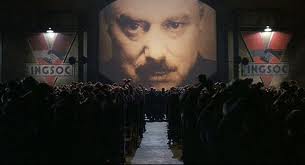
But this isn’t about that. I’m not here to rage against war, or take a stand for it. I’m not going to throw up my hands and declare that we’ve always been at war with Eastasia.

Though it wouldn’t too far from the truth…

I’m not going to talk about what war does to us so much as I’m going to discuss what we do to war.

Let’s face it, for many of us, the current wars the US (and other nations) are involved in don’t affect us much. We’re not on rations, or ducking into bomb shelters, or being told that if we don’t carpool the Axis wins.
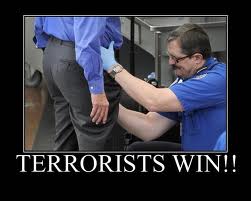
Not in so many words, anyways…

Whether a village in some valley in central Afghanistan is controlled by American or Taliban forces really doesn’t change our plans for the day. A harsh as it sounds, whether or not people are killed in Afghanistan doesn’t have much bearing on anyone but the families of the deceased, and it’s there that the problem lies.

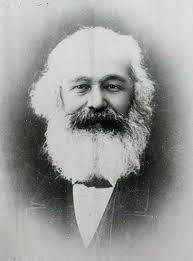
See, we have had a problem in our society for a long time, but with the advent of the internet and similar technologies, it’s becoming worse and worse. Alienation. If you’ve heard it, it was probably in relation to Karl Marx, talking about the separation of workers from the ability to control their lives.

Because we’re dealing with some rough stuff, here’s a picture of Marx smiling…

In a more general sense, it’s simply it’s the separation of things that should naturally go together. Profit shouldn’t be separated from work, and work shouldn’t be separated from profit. Merit shouldn’t be separated from recognition, and recognition shouldn’t be separated from merit. Above all else, actions shouldn’t be separated from consequences- only that’s exactly what we have today.

Most of us are more than willing to wolf down a juicy hamburger, but how many of us would be willing to watch the cow be killed, let alone kill it ourselves? How many of us who wear shirts and shoes made in sweatshops would be willing to stand in the sweatshop hurling profanities and threats at the twelve year-olds hunched over the machinery? How many of us enjoy the advances of the civil rights movement would, back in the 60s and 70s, face off police dogs, hoses, and fire-bombs?

See, we’re a nation that enjoys the hard work of other people. We’re a nation that doesn’t like getting its hands dirty. We’re a nation that has no problem sending kids off to fight, kill, and die on some windswept ridge in Afghanistan because we don’t have anything to do with them afterwards. War is cheap for us. The men and women of our armed forces are expendable to us. Again, I’m not trying to condemn or vindicate the wars we’re in, but what I am saying is that we can’t make reasonable decisions about war until we’re actually confronted with the ugly, bloody, gritty consequences of it. We need pictures of the dead. We need them shoved in our faces on a daily basis. We shouldn’t be able to turn on the news without seeing rubble, the smoke, the wounded, or the dying in graphic detail. For all the outcry against violence in our media, the truth of the matter isn’t that the problem is with violence, but with violence that has been tailored to give us satisfaction and strip away all meaning to it. War, for good or ill, is all for nothing unless we actually understand it. Can we honestly say that we’re acting in the same way now we would be if we actually had to witness the consequences of our actions?

Until then, we’re just the same Swedish taxidermist, making ridiculous travesties out of things we don’t understand. We need graphic violence.