A few weeks ago I stumbled onto a website called The Microaggressions Project and then promptly forgot about it. Returning to it tonight I looked over the “About” page, which had the following paragraph at the top:
This project is a response to “it’s not a big deal” – “it” is a big deal. ”It” is in the everyday. ”It” is shoved in your face when you are least expecting it. ”It” happens when you expect it the most. ”It” is a reminder of your difference. ”It” enforces difference. ”It” can be painful. ”It” can be laughed off. ”It” can slide unnoticed by either the speaker, listener or both. ”It” can silence people. ”It” reminds us of the ways in which we and people like us continue to be excluded and oppressed. ”It” matters because these relate to a bigger “it”: a society where social difference has systematic consequences for the “others.”
A little later on they define what “microaggressions” are, a term that was originally coined to speak about racial experiences. From the essay “Racial microaggressions in everyday life: implications for clinical practice,” which appeared in American Psychologist, Vol. 62, No.4:
“Racial microaggressions are brief and commonplace daily verbal, behavioral, or environmental indignities, whether intentional or unintentional, that communicate hostile, derogatory, or negative racial slights and insults toward people of color.”
One example of this could be a White couple walking down the street and having a Black man pass by them on the sidewalk. The woman clutches her purse tighter against her body, the subconscious idea being, of course, that Black men are prone to crime and should not be trusted.
As an Asian-Canadian I’ve experienced microaggressions plenty of times. I’ve had someone ask me if I was half-White [I am clearly not] with their rationale being that my “English was very good.” It can be an everyday occurrence for non-White people [I deign to use the word minorities, since I do believe that balance is turning the other way], and begs the question: “Why is this such a big deal?”
Writer of the aforementioned article and author of Microaggressions in Everyday Life: Race, Gender, and Sexual Orientation, Derald Wing Sue, PhD, has observed that microaggressions have actually been found to: “(a) assail the mental health of recipients, (b) create a hostile and invalidating work or campus climate, (c) perpetuate stereotype threat, (d) create physical health problems, (e) saturate the broader society with cues that signal devaluation of social group identities, (f) lower work productivity and problem solving abilities, and (g) be partially responsible for creating inequities in education, employment and health care.”
In other words, a Black or Latino man being stopped for a “random vehicle check” by police could be upset, and may even be accused of overreacting. Maybe they should simply be used to this and not let it bother them. The truth is that it makes them feel, even if only subconsciously, like second-class citizens. It’s true in a case as blatant as this one, and in an as subtle an action as hanging a Confederate flag or having a Native American stereotype as a high school mascot.
Microaggressions work in every direction. It’s like going to a Vietnamese restaurant and being given a fork and spoon instead of chopsticks because you’re White and not Asian. Microaggressions are built on assumptions and can make people painfully aware of who they are. They are rarely meant to offend, but often do.
It truly is a shame that so much of the time we send out microaggressions without so much as a second thought, and then defend ourselves by deeming the offended to be “too sensitive.” While we won’t always be aware of how our words or actions can harm others, we can at the very least listen to the people being hurt, and in doing so try to lessen the presence of microaggressions in our society.
Today, I’d like to tip my hat to one of my favorite shows, a young series by the name of American Horror Story.
Now it’s no secret that the horror genre is universally despised, being seen by many as being lower on the totem pole than even toilet-humor comedies or the most saccharine romances out there. I could probably spend an entire post speculating on why exactly horror flicks are treated with such little respect (a lot of it is probably due to the genre’s inbred cousin, the “teen scream” flick), but that’s another topic for another time. I’m here to simply showcase the series and highlight a few of its key strengths and accomplishments that I think make it worthy of a Fame Day.
Each season of the show (the second has just concluded, and a third has been greenlit) is a separate story, made up of the horrific lives of the characters as they struggle with their pasts, their inner demons, and some ever-present terror always lurking just beyond the shadows. It essentially cashes in on the initial charm that LOST had before it jumped the polar bear.
Guilt and shame are themes that play heavily into the series as a whole (or at least, the past two “stories”), giving even the most heinous characters a degree of sympathy. Again, similar to LOST at its best, the constant shifting of the story from one perspective to the next prevents the series from ever being boring. Granted, the madcap pacing doesn’t always work (especially in the first story), but for the most part, the audience is always kept interested.
And that brings us to the first key accomplishment of the series:
Popularity
As I stated above, horror is simply not popular- at least, not in any mainstream way. Tim Burton’s lighter works are really the closest most people get to anything remotely macabre, and the fact that the series has continually drawn in high ratings (to say nothing of critical acclaim) is nothing short of amazing. And we’re not talking about a series that is eerie or has a handful of jump-scares, we’re talking about truly unsettling elements here. I’m certainly not alone in hoping that that AHS‘s continued success serves to begin building bridges between mainstream entertainment and horror subculture; heaven knows both could benefit from some fresh perspective.
And even in the subculture, AHS is playing a pretty major role. It’s…
Raising the Bar
As a result of the genre’s (comparative) isolation, quality in horror is typically pretty rare. When you can’t secure funding for special effects, good equipment, or even B-level actors, chances are your product isn’t going to be all that good. Of course, when you have a built in audience who would pay money to watch Dwayne Johnson protect an orphanage from chupacabras, why would you even bother trying?
I would actually probably watch that…
I’ve seen my fair share of (decent) horror movies, and I can count on one hand the films that had even passable cinematography. AHS, as a series that actually has some decent funding and actually puts effort into creating tense atmospheres and believable effects, is raising the bar for the entire industry. When AHS is the basis for most people’s experience with the genre, there’s going to be pressure on the rest of the industry to meet and excel the expectations the mainstream audience is going to have. Furthermore, AHS‘s star-studded cast (including Zachary Quinto, Ian McShane, James Cromwell, and, I kid you not, Adam Levine) is hopefully going to make the horror genre more inviting to high-caliber actors who can actually sell the audience on the direness of the situation and maintain interest without having to drag in a bunch of fornicating teenagers.
The series is actually one of the few I’ve ever seen that actually gives teens any credit or respect…
And perhaps most importantly, it comes down to this:
Depth
While the stories are good, as are the actors (Jessica Lange being easily more frightening than the goriest bits of the series), it’s some of the basic discussions held during the stories that really hit home. Oppression of women and the dark history of psychology are topics repeatedly brought up, and dealt with both in a historically accurate and totally visceral manner. Perhaps the most disturbing thing I’ve yet seen in the series hasn’t been any of the monsters or murders- it’s been a demonstration (scaled back for TV, even) of the psychological “treatment” given to people “suffering from homosexuality,” seen at the time as a mental disease. Those five minutes alone were more frightening than anything else in the story- and it was amazing. Amazing to see some serious and deep social commentary made, and to see the brutality and insanity some people had to undergo actually presented in a way that’s going to resonate with the audience. You will be a better human being for having watched that scene.
Though in the spirit of honesty, your view of nuns will probably diminish a bit…
When’s the last time you could say that about a rom-com?
American Horror Story, keep up the good work.
A final note. I would’ve included more gifs, but (1) I didn’t want to spoil anything and (2) easily 90% of all AHS images are of Evan Peters, who is apparently just the bee’s knee’, if the series’ female fans are to be believed.
EVAN: Welcome, one and all, young and old, to what I am dubbing as the first ever Valentine’s Day Edition of Evan and Gordon Talk!
I had originally come up with this topic to rile my co-writer, but then realized that it fit in perfectly with tomorrow’s holiday.
GORDON: Which isn’t to say that it doesn’t rile me. My vindictive co-writer understands that I am a deeply unemotional individual who knows more about the surface of the moon than human interactions.
EVAN: I had mostly planned on this being me asking Gordon about what traits he appreciates in a woman, and I will start thusly:
Gordon, what is the first thing you notice in a woman, physically [that appeals to you]?
GORDON: You know that I am partial to redheads.
EVAN: Our readership did not. What do you like about them, exactly?
GORDON: No reason springs to mind, I guess it’s just an irrational preference. Similar to your irrational detestation of the ladies of your own ethnicity.
EVAN: Oh, I don’t detest Asian women, I’m just not as attracted to them as almost any other race. But we’re getting off topic, you can ask me potentially embarrassing questions in a moment.
What woman would you hold up above all others as an ideal example of physical beauty?
GORDON: Beauty is in the eye of the beholder.
This is beautiful to someone. Just not me. Or anyone I know. Or will ever know.
In my case, I’d cite Bryce Dallas Howard or Olivia Wilde as being prime examples. At least of physical attractiveness.
Obviously there’s plenty more that goes into it.
EVAN: Like what? I mean, I know there’s more, but what else do you think there is to it?
GORDON: Intelligence, obviously, is a major factor.
EVAN: So what’s the standard for your future significant other?
GORDON: I’ve answered quite a few- I’ll let you answer that first.
EVAN: I’d like to be with a lady who reads. Not being able to talk to her about a book [or, let’s be honest, a comic] that I’m reading would be pretty terrible.
So reasonable well-read, I’d say. She doesn’t have to have read Joyce’s Ulysses, but knowing who the Romantics are would be nice.
GORDON: Certainly we can agree on this.
EVAN: Certainly.
I’m going to describe who I’ve always seen you marrying/dating, since I feel like it’ll touch on another area of life you deem very important.
I’ve always imagined you getting together with what you would call “a dirty hippy.” Dreads, doesn’t shower very often, a conscientious consumer in that she pays for products that are ethically produced, someone who goes to rallies but knows what exactly she’s protesting.
GORDON: This is the part where I’d describe who I’ve always thought you’d wind up being only, only I don’t speculate on that because I’m not a pervert.
EVAN: I feel like your skirting around the subject and avoidance of outright denying my speculation gives it validity.
GORDON: Then here is my outright denial: I don’t like hippies. They’re pacifists.
EVAN: Fine, she advocates violence in certain situations.
GORDON: I don’t like vegetarianism or veganism or any of those other affronts to god and nature.
EVAN: So you’re saying being a vegetarian is a deal-breaker for you?
GORDON: Totally. My little sister is a vegetarian, and I am so ashamed of the fact that I just tell people that she’s actually a meth dealer.
If cows had the chance, they’d kill you and everyone you love…
EVAN: While we as an audience are probably relieved that you would never date your sister, I think now would be a great time to list off the [presumably] many deal-breakers you have when it comes to a significant other.
GORDON: Emotions. Talkativeness. A need for companionship or validation of any kind. Playing any music which isn’t heavy metal without earphones. More than three pairs of shoes. Adherence to any political belief that Glenn Beck wouldn’t decry as being forged in the fires of hell.
This could go on, you know this.
EVAN: I’m going to take it from your second deal-breaker that you prefer your women to be seen and not heard. How are our readers supposed to perceive this?
GORDON: The readers can take it any way they want- my own point is that I don’t like people who I hang out with to have to talk, as a baffling number of people on this little blue rock apparently feel obliged to.
EVAN: You live a hard life, Gordon.
GORDON: I truly do.
EVAN: To switch our places while still hopefully making you equally uncomfortable, you can ask me a question about my feelings. My feelings about women.
GORDON: . . . why are you doing this to me?
EVAN: Gordon, I am doing this for our readers.
GORDON: In that case, I guess what the reader apparently wants to know is. . . I have no idea. I have literally no idea. . .
EVAN: Gordon, if a girl wanted to send you a Valentine, what sort of gift/card would you most appreciate?
GORDON: Can cigars count? You can write on the little labels. . .
EVAN: Only if we’re allowed to read something Freudian into your choice.
GORDON: Do I still get cigars?
EVAN: Sure.
GORDON: Then I can live with that.
EVAN: Conversely, what sort of Valentine would you give a girl?
GORDON: . . . Cigars? They’re like chocolate, only they don’t taste lousy and make a mess.
EVAN: Also, they don’t go straight to your thighs.
GORDON: This is true.
EVAN: I’m going to try to come up with one more question you don’t want to answer, and then we can wrap this up. When was the last time you had a crush on someone?
GORDON: Ah, an easy one. Never.
EVAN: The last time you considered a woman you saw to be very attractive [not counting on TV/on the internet]?
GORDON: That’d be when I went to Toronto with you. Though it must be noted that I had been stuck in a tiny college town with the same people for the past four years. So I wouldn’t put much stock in my judgment at that point.
EVAN: The women of Toronto will try not to read too much into your comment. And I suppose that brings this Special Evan and Gordon Talk Valentine’s Day Edition to a close!
GORDON: For next week, I suggest: Drugs, Legalization, and Culture. It won once before, I think it deserves another shot.
EVAN: Oh yeah, it did. I think we talked about Django instead.
EVAN: Cool stuff. You should end this by telling our readers how you feel about them.
GORDON: You people make me sick. Prying into a dude’s personal life at the cackling delight of Evan. He’s an impressionable child and easily led astray. You should be ashamed of yourselves for encouraging his bad behavior.
EVAN: I think you are all wonderful people, and should consider yourselves lucky to have been privy to Gordon’s life. Tune in next time, as always!
GORDON: Moved by your incessant letters, as well as tearful pleas from more than one head of state, yours truly has returned for this and only this installment of Evan and Gordon Talk
You’re welcome, America.
EVAN: Truly, you are too gracious. [Also, we cater to an international readership].
This week the two of us will be discussing men and manliness [or masculinity]. Which makes perfect sense since we are, after all, men.
GORDON: MANLY men. We once made an axe using nothing but things we found in the woods. On the very same day, we built a grave for a drowned beaver.
EVAN: He is not lying. But, moving forward, one of the reasons I brought up this topic is because it’s loaded with possibilities. There’s the idea of the, for lack of a better term, the “Barney Stinson,” the fratbro who watches Spike TV day in and day and out, and this recent ad that appeared in The Times of India due to the gang-rape and murder of a 23-year-old woman [click on the image to visit an article on it].
GORDON: Well, let’s narrow down some the of core qualities that make a man a man. Or at least, commonalities in all cultures and subcultures of what “manliness” is.
EVAN: How about- the ability to provide for one’s family.
GORDON: We’ll take it. Ability to defend oneself, with either words or deeds?
EVAN: I think we could expand that to simply being physically able. Physicality means both being able to defend oneself and loved ones as well as attack others for whatever reason you might have.
GORDON: Assertiveness- that’s it. Not taking guff from any of these swine.
EVAN: Who exactly “these swine” are aside, I’d also like to suggest that, in essentially every culture out there, manliness is directly associated with heterosexuality.
GORDON: The Spartans, actually, were unbelievably gay. Heck, the entire basis of western civilization is pretty gay. I want to strike that one from the record; highly sexual would probably be a better statement.
EVAN: I’m gonna have to stick by it. The majority of cultures out there use the term homosexual derogatorily, I think it’s hard to look past it.
GORDON: I guess I’ll allow it. Tough. A man is tough. Stoic. Potentially emotionless.
EVAN: That sounds pretty good to me. Want to total them up? Really just list ’em all out for us.
GORDON: [AND THEN GORDON LISTEN THEM ALL]
A man is tough.
A man provides for his family [loved ones].
A man doesn’t take **** from anyone.
A man gets it on.
Scratch that last one and you have the stereotype of a black woman.
EVAN: Okay, now rate yourself by that list of qualities.
GORDON: I realize that there are billions of people out there who have hellish existences, but taking in what I’ve dealt with in my own life, I’d say I’m pretty tough.
EVAN: You’re definitely pretty emotionless.
GORDON: I don’t have a family, but I certain provide for myself, proud proletarian that I am.
I’ve yet to be in a situation I’ve been unable to diffuse diplomatically, but I certainly have my limits and lines that I will not allow to be crossed.
And I view my sexuality as my own business. I ain’t exactly good with the ladies (see the emotionless bit), but I also think anyone who judges a man’s worth by his sexual activity isn’t worth the time of day anyhow (see the “no taking crap from anyone” bit).
Yeah, I’m a man. Or a woman. It kinda falls apart.
EVAN: A man is tough: I’m a pretty emotional dude. I distinctly remember crying after I saw A Walk To Remember. I was also 13, but I guess that’s neither here nor there.
A man provides for his family: Like you, I don’t have a family. I live with my granddad, though to be fair I do take care of him, so I’m good in that area.
A man don’t take none: I am not a confrontational person. I also can’t say I’ve been in a fight-or-flight situation, though, This remains to be seen, I guess.
A man get it on: Since I live by a certain religious standard, I have not yet gotten it on. See my post on virginity. I am a virgin.
A man don’t take none: I am not a confrontational person. I also can’t say I’ve been in a fight-or-flight situation, though, This remains to be seen, I guess.
So how do we stack up as men by most cultural standards?
GORDON: I think we stack up well, all things considered.
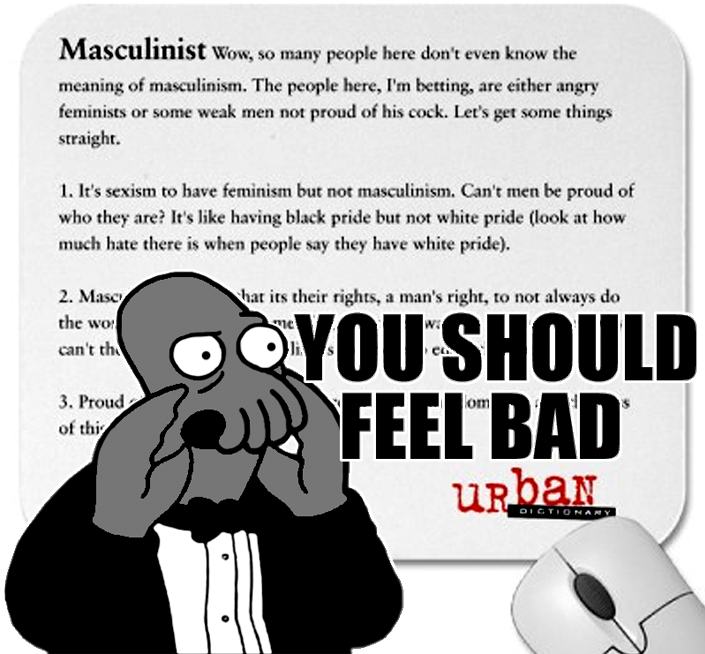
EVAN: Okay, I just remembered why I wanted to discuss this topic in the first place, and it pertains to the last manly attribute on our list [the one that we both happened to fail]:
Click on the image to read it in a new tab.
GORDON: . . .
How exactly does one respond to that?
EVAN: I’d say an ellipsis sums it up pretty well.
GORDON: Yeah, I’m going to call BS on that. I couldn’t begin to list the number of men who were celibate and achieved more in their lives than this guy ever will.
EVAN: Which I agree with completely. It is pretty messed up, though, how many people [guys] live by this rule of thumb.
GORDON: I think the point remains that this isn’t any reasonable way to spend one’s existence. Nikola Tesla accomplished more than a week than I imagine this guy fishing on Omegle will in his lifetime.
EVAN: To take a line from your book, touché.
GORDON: Going back to the original list, the issue is that most of this could just as easily be said of a woman. I work with people who are in pretty rough situations. Many of the women I work with a single mothers, living below the poverty line, struggling to provide for their families. Pride is really the only thing they have left. They don’t take crap from anyone, and they can’t allow themselves to be dragged down by their circumstances. Are they “manly” woman?
EVAN: I’d say that they fit three of the four categories, but it depends largely on how you want to view the word “tough.” I felt like we sort of defined it as having to do with emotions, which, and I don’t think I’m spouting insanity right now, are something that women seem to be pretty in touch with. Which would then put them at 2/4, or half the qualities.
GORDON: Certainly we can agree that these women quietly endure crap that would have most white-collar executives curled up in the shower weeping.
Barring the issue of promiscuity, everything we’ve covered would be- by our standards today and most standards the world over- “womanly” characteristics.
EVAN: Including the predilection towards physicality and violence towards others?
GORDON: You ever fought a woman?
EVAN: You know neither of us have ever fought anyone.
GORDON: Speak for yourself. I studied Judo for five years, and I had my share of matches against female opponents.
EVAN: We’re talking actual fights, though. Not martial arts matches with set rules and moves without the added chaos of scratching and biting [which I would probably carry out with gusto].
GORDON: Believe me, I got my butt handed to me plenty of times. There’s nothing but prejudice keeping women from being just as effective at fighting as men.
EVAN: Right, but that’s not a cultural expectation, is it?
GORDON: Not in this culture, no, but in other cultures this does exist. I’d point to the high numbers of women in the militaries of countries affected by leftist ideology- Nepal, for example
EVAN: We are talking the majority of cultures, though. Just as I don’t think I’d
equate homosexuality with “manliness” because the Spartans [who were very manly] engaged in it, I’m likewise not willing to accept that most societies placed women in that physically aggressive role.
GORDON: Point taken.
EVAN: But I get what you’re saying.
A number of the key qualities we defined as being “manly” are, in general, key qualities of being successful human beings.
GORDON: Exactly.
My entire issue with contemporary feminism is that it tries spin traditionally “feminine” (i.e. submissive, weak, emotional) traits as being equally as healthy- if not more so- than traditionally “masculine” traits rather than trying to divorce itself from the old “feminine” trait set entirely.
I like my women like I like my men: self-assured, tough, and independent. That probably didn’t come out quite the way I intended.
EVAN: Don’t worry, I took it at face value.
And, since we’ve successfully transitioned away from a discussion on masculinity towards more of one discussing feminism, I’m forced to admit that we are well past our time limit.
GORDON: That we can agree on.
Until we get internet, it’s radio silence on my end.
EVAN: So I suppose you’ll have to say good-bye to these nice people until then, while I scramble to maybe find a replacement writer for the next little while.
GORDON: For whenever I get back, I’d recommend that we talk about our generation’s greatest strength or victory, as we spoke a while ago about our generation’s greatest failing.
EVAN: And I am going to recommend . . . okay, this is ridiculous, but our ideal girl. Just because I know your answer is something everyone wants to read.
That is all for today, folks. I’d like to thank Gordon [who left before this conversation could end] for heading over to his grandparents’ and getting online for this, he’s a real champ. Thanks for reading!
Let’s be clear right here and now- I’m not talking about “masculinism” in the original “let’s recognize gender discrimination against men too” philosophy. No, I’m talking masculinism in its modern day sense: the general idea that women have somehow hijacked everything it means to be a man, and have either watered down everything manly, or made it socially unacceptable. This is the gripes of countless dads and uncles around the country at every kid on the team getting a medal given an intellectual motor.
That’s not to say that there are certain points which these guys aren’t correct on. In custody battles, the courts are almost certainly going to side with the mother on the basis that her gender somehow makes here a superior parent. That’s stupid. If a man were to make a pass at a female co-worker, the consequences would in all likelihood be more severe than if the positions were reversed. That’s unfair. A man striking a woman gets a visceral reaction out of us, a woman striking generally does not. That’s sexist.
Now promoting gender equality is perfectly fine. After all, when a person hits a person, that’s all that really matters. Gender (or race, creed, religion, etc.) don’t make the act any better or worse. But tragically, that positive element of the movement is mired down by all the psychotic and apologetically misogynistic madness that makes up the other 50%. Stuff like:
Equating circumcision with genital mutilation (or even wrongly declaring that women are exempt from any such practice)
Declaring the existence of a “war on men”
Complaining of the lack of existence of any day celebrating men
Complaining the women are somehow exempt from heavy, dangerous, and strenuous labor (again, what planet are these people living on?)
And countless other bat**** crazy claims of male victimization and persecution
Again, as stated above, there is a double standard, and while any inequality in the rules is obviously unfair there’s no way on earth we can possibly imagine that these offenses against men in any way stack up to the offenses against women. Is there female domestic abuse of males? There is. Is it as much as male domestic abuse against females? Not even remotely. Does that mean that one side is more right or wrong than the other? Of course not. The same basic logic applies to pretty much each and every one of the nutty gripes the masculinist movement brings against the supposedly woman-dominated world we’re trapped in. Other claims are quite simply false. The idea that women somehow have a “glass floor” protecting them from working physical labor or living in rough, dismal conditions is simply an utter lie. Women are disproportionately the majority in sweatshops around the world. Not two hours ago, I drove past a homeless woman on the street, and I saw another one the day before (although it could’ve been a hipster, I’m not entirely sure). Again, it’s true that men are sometimes treated unfairly on the basis of their gender, or subjected to a double standard. However, the degree to which men are persecuted and the degree to which women are persecuted are leagues apart.
That’s not to say that injustice to a man is any less unjust, but rather, when you’ve got a paper cut and the person in the emergency room with you is missing an arm, you should still apply a band-aid, just maybe without griping about it.
For the most part, I try to keep my politics toned down here at CWR, but every once in a while, something comes along that straddles the line between ideology and culture that’d be wrong not to talk about.
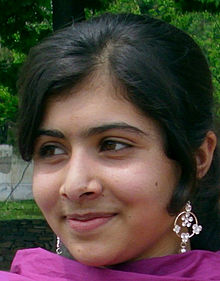
I’m guessing you may have heard of Malala Yousafazi.
Young Pakastani girl known for being a women’s education and peace activist, shot by a reported Taliban assassin just short of a week ago and just today being flown to England to continue her recovery.
You may have seen this picture of her:
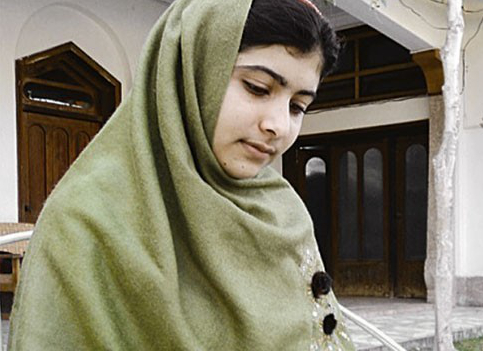
But the picture you may not have seen is this one here:
That’s young Malala wearing a hijab, a head-covering worn by many Muslim women as part of their understanding of modesty. Yep, Malala’s a Muslim– but that’s something you’re not gonna hear on the news or read in your paper.If Islam is mentioned at all, chances are, it’s in reference to Malala’s would be assassin- not her (or her friends who were with her). Why is that? How come the same frenzied media attention that is devoted to listing off every attack or offense on the part of “Radical Islam” utterly fails to note the Islamic element when it’s related to something positive. I can understand- maybe even overlook- the fact that the news doesn’t offer any attention to the millions of Muslims (the ones I grew up with) who just go about their day without doing anything to anyone. But the moment a Muslim man or woman stands up for what he or she believes, even going so far as be nearly murdered for those beliefs and actions, religion disappears from the picture.
And while we’re at it, there’s another thing that’s been bothering me.
You remember Pussy Riot? Feminist Punk Band who got into trouble for playing anti-Putin songs in a historic Russian cathedral?
Why is it that when they got convicted of “hooliganism” and were sentenced to two years in prison (a term waaay disproportionate to the crime) the world united in outrage, and when Leah-Lynne Plante was arrested-
Oh.
Who’s “Leah-Lynne Plante”?
She’s an activist up in Washington State whose apartment was raided by FBI and SWAT Teams. See, back on May 1st, there was some vandalism that occurred in Seattle and Leah-Lynne was a suspect.
How many people who have vandalized walls or billboards actually have the police investigate them, let alone the FBI and the Joint Terrorism Task Force? Of those people, how many have black clothes and books confiscated as “evidence”?
Obviously this has about as much to do with vandalism as Pussy Riot’s sentencing had to do with disturbing the peace. See, Leah-Lynne Plante is a self-proclaimed anarchist, and after refusing for a third time to answer questions before a grand jury. Considering the Grand Jury that’s investigating these and other alleged anarchist criminals was first created in March (two months prior to when she allegedly committed these crimes) doesn’t exactly reflect well on the whole “liberty and justice for all” element of the legal system.
But that’s all beside the point.
The point is, you probably don’t know about it. Your news has almost certainly never reported it, and considering the similarities between the two cases, doesn’t Leah-Lynne Plante’s case deserve your attention just as much as anti-government rockers off in Moscow?
Your media doesn’t think so.
And I think we’re being asked too much. I think we’ve had enough.
See, you can’t pick and choose- if the media want to take the violent or oppressive actions of Muslims as being representative of their faith, they have to apply the same logic to Muslim heroism as well. The same goes for equal air-time. The news can’t report on a bunch of women in brightly colored balaclavas for being broadsided by the state and then whistle Dixie while one in a black shirt has her home raided by men in kevlar.
Consistency- I’m not expecting that the news be factual (and considering it’s the news, that’s a pretty big thing to let slide) but they have got to be fair or stop calling themselves reporters. If they wanted to pick and choose their battles, they should’ve become bloggers instead.





 EVAN: I think we could expand that to simply being physically able. Physicality means both being able to defend oneself and loved ones as well as attack others for whatever reason you might have.







 Culture War Reporters