Author Archives: Kat

Not Strictly Literary: 6 Unexpected Subjects You Learn About in English

I’m currently in the last year of my English undergraduate degree. Well, kinda. I will probably have to do an extra semester to finish off my credits completely, but after next semester I will have finally finished all my English requirements.

Like many students, I kind of fell into my major. In my first year of full time studies I was seriously considering a degree in economics, or anthropology. Until I took a class in those subjects and quickly changed my mind. Once I started figuring out what kind of classes I actually liked, I started talking about doing my degree in Sociology, Political Science, or Environmental Ethics. Then, when I transferred to UVic, I decided I would take their writing program. Well I thought I was decided, until I was invited to join the English Honours program. That invitation totally went to my head and I dropped everything in order to pursue that (very structured) program.

Because of the number of required English classes (and because I blew many of my elective classes during first year), I’ve been taking pretty-well only English classes for the last two years. During that time, I began to ask myself if I had made the best choice. After all, English is really just reading books, isn’t it? Couldn’t I do that in my own time?

Ah, reading for fun/relaxation. Can’t wait until I get to do that again.

Now that I’m getting close to the end of my degree, I’m able to look back and be thankful for (almost) all of the English classes I needed to take. Yes, I still feel like there are a million others I wish I could have taken, but I think I would have felt that way regardless of my major. There are more fantastic courses out there than what you can possibly fit into one undergraduate degree.

Getting close to the end has also allowed me to reflect on the many English courses I have taken and realize just how broad a range of subjects they actually address. I’ve included a few examples below.

Linguistics

Screen Shot 2014-12-08 at 10.32.54 AM

One of the texts we are translating for our final project.

I’m currently finishing off a class on Middle English that I did not want to take. Not at all. I’m required to take a class in early English literature, so I chose this class after a friend recommended the professor. I was then pleasantly surprised to find that it was a fantastic class. It was also not at all what I was expecting.

English has evolved considerably since the 12th century, so it’s hardly surprising that trying to read Middle English texts is like reading an entirely different language.

At the beginning of the class our professor touched on many of the other languages that have influenced the formation of the English language. Then, as the class progressed, a lot of the work we did in class involved translating various works. The translation process required a basic understanding of how to parse language, something I had almost no experience with. Like many English speakers, sentence structure is something I know intuitively, not something I’ve intentionally learned. However, if my experience in Quebec this summer taught me anything, it’s that knowing how to break down language is key to learning a new one. So I’m hopeful that the linguistic skills I’ve been struggling to learn in this class will help me with my future language learning goals. Continue reading
Why Men Need Feminism Too: On Shia LeBeouf’s Rape

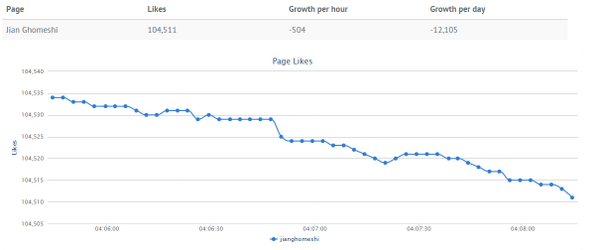
A couple weeks ago I wrote a post about how quick we seem to disbelieve rape victims when they share their story. Specifically, I was referring to the Jian Ghomeshi case, when the fanbase actually increased after he was initially accused of sexual assault. People rushed to show their support on social media because they they believed that his accusers were lying.

http://www.huffingtonpost.ca/2014/10/30/jian-ghomeshi-facebook-followers_n_6072544.html

Although those fans were also very quick to jump ship when more and more women stepped forward to accuse Ghomeshi.

Recently, another claim of assault has sprung up in the media, and once again, some people seem quite sure that the victim made up his story in order to get attention.

In a recent interview with Dazed magazine, Shia LeBeouf said that during his #IAMSORRY event in February “one woman whipped [his] legs for ten minutes and then stripped [his] clothing and proceeded to rape [him].”

Continue reading

5 Major Issues that Contributed to the Burnaby Mountain Protest

Canadians have a really bad habit of patting ourselves on the back. We see violent clashes between citizens and the state, like what is continuing to unfold in Ferguson, and we tell ourselves that would never happen here in Canada.

In light of the recent Grand Jury decision in the Ferguson case, I would encourage you to check out what Gordon, our resident American, has to say on the topic.

While the dispute in Ferguson may be drawing our attention, here in British Columbia we are actually experiencing our own clash between citizens and the state.

Continue reading

My First Time LARPing (Live Action Role Playing): A Culture War Report

One of the things you may not know about me is that I have some of the coolest nieces and nephews out there. Recently one of these very cool nephews invited me and John to join him and his friends for some LARPing.

According to the Urban Dictionary, LARP, or Live Action Role Play, is

“a type of game where a group of people wear costumes representing a character they create to participate in an agreed fantasy world. [They] use foam sticks as swords, foam balls as magic and other props to create the games world.”

The first time John and I visited Dagger Deep, the massive Heavy Action Roll Playing arena here on Vancouver Island, we figured we’d just take a look around. That was when we realized that LARPing was one of those all-or-nothing sort of things; we were, of course, denied entrance at the gate. Apparently, jeans just don’t cut it in the medieval world.

This photo was borrowed from the Pictures of Medieval Chaos page on facebook. Check out this photo and more by clicking here, or on the photo itself.

Continue reading

I’m Sorry, but Keira Knightley’s Topless Photo Does Not Count as a Win in the War Against Photoshop

I consider myself a somewhat fit person. I try to do yoga at least once a week. I bike to school. I force-feed myself smoothies (I’ve almost convinced myself that I like them). I also think I’m a fairly confident person. The mental image I hold of myself is, if anything, a little too gracious.

Damn girl, you’re looking fine today!

That being said, after unwillingly encountering photo after photo of perfectly photoshopped women day after day, sometimes I start feeling pretty freaking ugly.

This feeling of inadequacy, directly linked to viewing altered images, makes a lot of people wish there was a wider representation of body types in the media. We want to see people who look like us on TV and in magazines. And we want to see those people presented as attractive, not merely as comic relief or as a foil to the attractive characters. Continue reading

Jian Ghomeshi Part II: What Should We Do With Our Monsters?

It’s been a little over a week since the news about Ghomeshi went viral. Since the news first hit, nine women have come forward anonymously to the media and three have already reported their case to the police.

The increasing number of testimonies has pretty well solidified his guilt in the public eye, and everyone from the PR firm he hired to the musician he managed have withdrawn their support from him.

Since Ghomeshi was a familiar presence in most Canadian homes, many Canadians felt personally betrayed by his actions. When my husband, John, tried to identify his own interest in the case, he explained it like this,

“When you hear someone’s voice so often, you start to feel like you know who they are. So when you discover the truth about terrible things they have done, it’s shocking to realize that you never really knew them at all.”

This isn’t the first time we’ve have heard about the terrible things familiar faces (or in this case, voices) have done. The difference is, in the past, we have tried to forget the monsters hidden in the public men and women we admire. Continue reading