Allow me to set one thing straight before we begin.
This isn’t some “let’s not talk about black history, let’s talk about human history” spiel, similar to sentiment put forward by Morgan Freeman a while ago.
I completely disagree with Mr. Freeman, but my reasons for that can be answered better in a different post.
This is a Shame Day post directed against “black history,” or rather, the reprehensible white-washed version we, the people, are spoon fed each February.
Now you all know who this is:
And you could probably tell me who this is:
We’re getting a little more obscure, but the literary-minded among you might even recognize who this is:
As most of you should know by now, I am a Canadian. And as a Canadian, I actually know very little about American gun control laws. Yes, I know about the Second Amendment and have been somewhat in the know about the encroaching legislation brought about, more or less, due to the tragedy that befell Sandy Hook Elementary.
Now I know what you’re thinking. “Dang, Evan, get to the point already. This doesn’t even have anything to do with comics, which are definitely your forte [and that you probably write about too much].” Well, dear reader, allow me to cut to the chase.
By cartoonist Jimmy Margulies. Also the image that Comics Alliance used, but hey, it’s perfect for the topic.
This morning Comics Alliance released an article titled “14 Editorial Cartoonists Make NRA Blacklist For ‘Endorsing Anti-Gun Positions.’” Its focus was a list that the NRA-ILA had put together of people and organizations who have been known to lend their “name and notoriety to anti-gun causes.” The reason they bring this to attention is that joining the National Black Nurses` Associationand actress Catherine Zeta Jones are 14 political cartoonists. Described as being “journalists [who] actively editorialize in favor of gun controls laws” they are as follows:
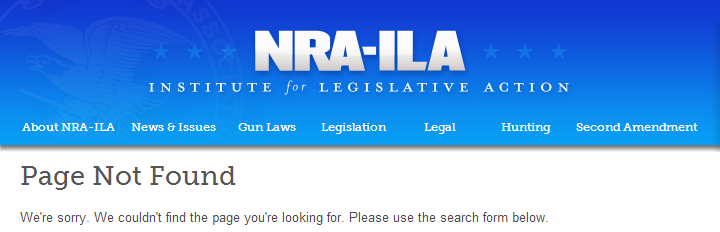
The links provided for each cartoonist were provided by the article on Comics Alliance, and are super useful. Unfortunately, the link they provided for the NRA-ILA’s blacklist was much less useful. The problem is that the link [which you can check here] does not work, by no means due to the fault of the comics news site. It turns out that whoever runs the site has since taken it down.
But wait, there’s more!
Luckily for me [and, consequently, you], Internet Archive exists. By taking the dead-end link and throwing it into their “Wayback Machine,” I was able to retrieve the list, available for your viewing pleasure:
Does anyone else find it disconcerting that a) an organization that is known for promoting the right to tote firearms has a blacklist of any kind, or b) that they’ve since taken down this page due to it receiving media attention?
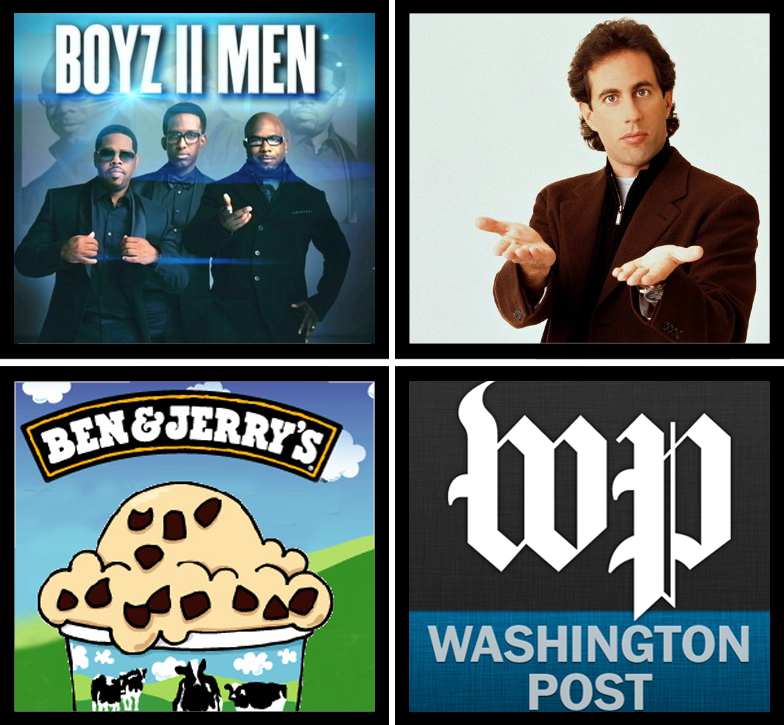
Since the NRA considers gun ownership to be a civil right they have dubbed themselves the “largest and oldest civil rights organization in the United States.” I’m not at all implying that there’s anything inherently menacing or threatening about their list, I’m questioning their transparency. If there’s nothing wrong with the list, then why take it down? Was it to hide the fact that there could exist a list so ridiculous that it lumps together R&B group Boyz II Men, actor Jerry Seinfeld, Ben & Jerry’s Homemade, Inc., and the Washington Post?
I’m not sure why it happened, but I’m letting you know that it did; what you do with this information is entirely up to you. It also has to do with comics on some level, which you know I can’t not write about.
Gordon’s absence has forced me to dedicate yet another Fame Day to a man in the comic book industry [a post on a woman is in the near future] to join the ranks of Anka, McDuffie, and Fraction.
Introducing the Editor in Chief of Marvel Comics, Axel Alonso. Interviewed by FOX News Latino [which I didn’t even know was a thing], he was asked the question: “Is that a new initiative at Marvel Comics is doing? We’re going with the Latinos now?”
This question was in response to a few “new” characters appearing in the publisher’s titles, with Miss America being one of them. First featured in Marvel Mystery Comics #49 in November 1943, Miss America was originally another embodiment of the United States in World War II, a star-spangled powerhouse punching out Nazis. Now, in 2013, Miss America is the moniker for America Chavez, a Latina teenager and new member of the Young Avengers [one of Marvel’s bestselling new titles]. Also mentioned was the new Blatino Ultimate Spider-Man, who has already been covered on this site.
From left to right: Miss America Chavez, Miles Morales [Ultimate Spider-Man]
Alonso, a Mexican-American himself, replied:
“I’d be lying if I said I wasn’t motivated, on a personal level, to have Hispanic characters represented in comic books, but this isn’t some PC initiative, [this is] capitalism.”
He acknowledged that a growing range of people read comics, and that as a publishing company it is their “responsibility to make them feel included.” Going back to his comment about “capitalism,” the fact of the matter is that as a company it’s in their best interest to create a product that appeals to the fastest growing demographic in America.
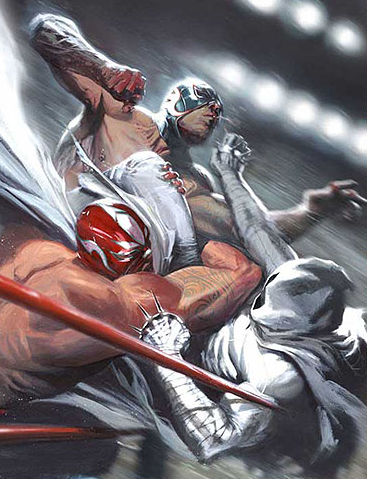
While Alonso agrees that comic books have not always treated minorities with due respect, he also acknowledges that stereotypes are more complex then they might first appear. He took part in helping to create Mexican heroes the Zapata Brothers, who were based on his cousins in Mexico. The two wear full luchador regalia, and while this may be perceived by some as racist, Alonso would argue otherwise. “Is that a little stereotypical?” he says, “Yeah, but it’s also fun and a part of our culture.” Growing up watching these wrestling matches growing up they struck him as being an important part of his culture.
When asked why Latino characters haven’t achieved the same status and notoriety of heroes like Batman and Wolverine, his response was “Why haven’t they become that yet?” His opinion is that, with America’s ever-shifting cultural landscape, it’s an inevitability. You can’t force an audience, or simply make a character big, it just evolves and happens naturally.
Unfortunately, fellow member of “The Big 2” DC declined to be interviewed for this piece. While Marvel has its fair share of seemingly racist characters [Mexican villain/anti-hero Armadillo] DC has a large mark of shame in Extraño, a “gay Latino magician who had HIV and referred to himself as ‘Auntie.’” That being said, it’s a shame that they didn’t offer a means of looking forward through heroes such as Blue Beetle [Jamie Reyes] and Vibe [Paco Ramone] who has his own new title.
Alonso is a man who realizes that comic books are a business, and one that needs to make money and that has an impact on its readers. His joy that Miles Morales exists as a character is in “knowing that there would be a child out there who would see Spider-Man peel back that mask to see a different face and a face that resembled their own.” He understands that, and that’s worth giving him credit for.
EVAN: The particular topic of discussion that comes to us today is more one that finds itself passed back and forth within Christian circles, and that is: “Why is Christian media so bad?”
GORDON: I think the problem is self-imposed by the religion (I use the term loosely) itself. We’re not talking about a lack of funding (we’ve got plenty of good low-budget films), or a lack of good directors (there’s plenty of decent talent out there), we’re talking about an issue that runs right down the core of it all.
“Christian” media can’t just be media- they have to drag in everything that goes with it.
EVAN: So basically what you’re saying, and we talked about this a little earlier, is that Christian media more often than not has an agenda, correct?
GORDON: I’d say plenty of it has an agenda, but no, I don’t think that’s the core issue- there’s plenty of other preachy movies out there.
EVAN: So what are you saying, exactly?
GORDON: I’m saying that “Christians” can’t make good media because they won’t allow themselves to. Every protagonist has to fit the moral code to a tee, so that they wind up as either Aslan 2.0 or the epitome of Christian morality: John Smith, the middle class suburban, patriotic family man. Which is why I keep putting “Christian” in quotation marks.
We’re not talking about Catholic peasants in El Salvador or the East Orthodox Church in Ethiopia.
EVAN: Okay, I like that a lot, this idea that those creators of Christian media [and primarily I think we’re talking about films] box themselves in. They’re telling the same sorts of stories to who they perceive to be their audience [and they’re not wrong]: white suburban middle class families.
To sort of break this up a little, I actually saw a Christian film that was reasonably passable at some point last summer.
GORDON: Was it related in any way to Steve Taylor?
EVAN: Is that any way related to “End of the Spear”? It was not, if that’s what you’re referring to.
GORDON: Steve Taylor is the only good Christian musician who ever has or ever will have existed.
But anyway, what was the movie you saw?
EVAN: It was called “To Save a Life,” and it stood out for a couple of reasons:
1) The cinematography was shockingly good for something produced and made by Christians. You can tell which movies they are within the first few seconds.
2) The “villain” of the piece was actually the pastor’s kid. Which was- refreshing, and kind of nice.
It kind of broke out of the whole stereotype you introduced earlier.
GORDON: Huh- interesting. I’ll have to check out the trailer. But let me ask you this:
Can a Christian make a James Bond movie?
EVAN: You mean a movie starring a suave, debonair British man who beds women and guns down henchmen as naturally as he dons his suit jacket every morning?
I’d say no, probably not.
GORDON: I think that’s the problem. It’s not just that you can’t have any explicit sex or graphic violence or excessive profanity (which are overused and abused as is), you can’t have anything even remotely sensual or rough or crude. It rips away reality and humanity in the name of not stepping on anyone’s toes.
Self-imposed legalism.
EVAN: Well, I’d say the difference is that you can’t have a protagonist who glorifies such things as wanton sexuality-
I say that Christian filmmakers will never produce anything like James Bond because of who the character is.
GORDON: Did you like the movie “Fight Club”?
EVAN: I liked it a fair amount.
GORDON: Did you like “Ocean’s 11” or “Snatch”?
EVAN: I haven’t seen the latter, but I very much enjoyed the former.
GORDON: Did you like “Superbad”? “Kick-Ass”? “Ironclad”?
But I think you’re going to have to get to your point-
GORDON: Could a Christian make any of these movies?
EVAN: I think a Christian could, yes. In relation to “Fight Club”, at least, Christian author Ted Dekker has penned novels [sold both in and out of Christian bookstores] which offer a fairly decent psychological thriller aspect to the reader.
GORDON: Ah, Dekker. The whole reason he stands out as an exception is- I believe- that he grew up among Indonesian headhunters, and not in Middle America. Again, it’s about having that different perspective on life.
EVAN: And I think what he’s realized, as a creator of the arts, as someone who has a hand in shaping Christian media, is that you can have these other sorts of exciting, thrilling stories told with a faith-built worldview. People of every religion want a little excitement.
GORDON: Of that there’s no question. The heavy use of the video library at our school stands in testament to that.
But again I think the issue is that “Christian” self-imposed isolation inevitably leads to the vast majority of their work winding up as “White People Problems” or “Chronicles-of-Narnia-minus-the-good-stuff”…
EVAN: Or “Lord-of-the-Rings-but-way-more-heavy-handed.”
GORDON: Exactly.
EVAN: I mean, we’ve talked a little bit about why Christian media can be bad [terrible production values, cookie-cutter story lines, sheer absurdity], but how could it be better [to harken back a little to our last talk]?
GORDON: They have to stop being terrified of the big bad world. They have to realize they can show characters with flaws- real flaws- not drunkard stereotypes and the occasional swear word.
Saying this will get you expelled from Liberty, Pensacola, and BJU
EVAN: I mean, a deeply flawed person who finds redemption is a much more compelling story than a white bread sort of guy with his middle class problems.
And they have to stop coddling their audience. Yes, Christians turn to Christian media for “better alternatives,” but the odd cuss word won’t negate an overall positive message; neither will a fight scene, or two guys sitting around enjoying a beer.
GORDON: There’s this one scene in a (Christian) movie Steve Taylor directed:
A character hurts his hand loading something into the back of van. He lets loose a cuss word and his buddy chides him for it, saying “God don’t like it when we cuss.”
Later on in the film, the buddy hangs his head and apologizes, saying “I’m sorry. I was upset that you cussed- I should’ve just been upset that you hurt your hand.”
EVAN: Wow. That is very, very good.
GORDON: That right there is the problem not just with Christian media, but with the whole religion.
EVAN: Misplaced priorities.
GORDON: More obsessed with present clean-cut paragons of middle class etiquette than anything really real.
That’s why we turn to “secular” movies for actual substance. The struggle for identity in “Fight Club”, the heroism in “Kick-Ass”, the friendship in “Superbad.”
EVAN: I think what’s really ironic is that Christian media-makers have a Christian-made work out there that’s immensely popular. “The Hobbit: An Unexpected Journey” came out just this past December.
GORDON: I again reference an (alleged) quote by Steve Taylor.
“I’m not a Christian artist- I’m an artist who is Christian- it affects what I do.”
EVAN: Really well-put. And something that a lot of us [I speak for many in our graduating class] as writers, musicians, artists, et cetera would benefit from keeping in mind.
And that puts us more than a little overtime.
GORDON: Well, people, you know what that means. Time to vote on our subject for next week.
EVAN: My contribution this time around is . . . wow, I never think ahead . . . masculinity. You’ve done a post about “Manly Culture” in the past, but I want to talk about what it is at present, and how we feel about the shifts and trends and things.
GORDON: Interesting subject. I submit we speculate on the upcoming Star Wars movies.
EVAN: If you think you’re up for it, then yeah, cool. I’ve read quite a few of the post-original-trilogy books, so I know a reasonable amount about the subject.
GORDON: Nerd.
And with that witty response, we’re out! Have a good night, everyone.
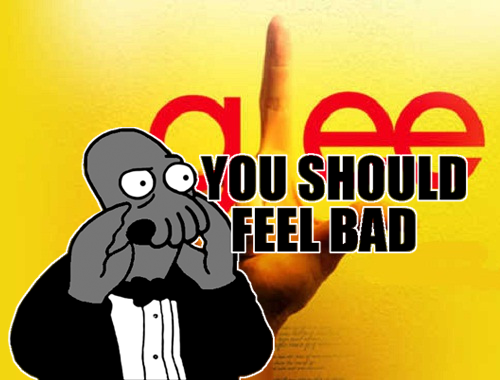
To begin with, I’m not a huge fan of Glee. I am a man who can say with confidence how much he loves musicals and acapella arrangements, but the show’s claim to be a melting pot of diversity [a place where Black people, Asians, homosexuals, and the disabled can belt it out to their hearts’ content] is not one I find myself agreeing with. But that’s the topic of another post.
The issue being that Coulton released his own version of the song in 2006, which you can check out [and should, for comparison’s sake] here:
If you really want to scrutinize the two side by side, there’s a track on Soundcloud that simply places both tracks on top of one another [and an in-depth audio analysis, for those of you into that]. Coulton’s issue isn’t simply that Glee seems to have stolen his arrangement, but did so to the point where unique elements he added were copied as well. A duck quack is used to censor an expletive, and [this is practically impossible to ignore] the lyric “Mix-a-Lot’s in trouble” is replaced with “Johnny C’s in trouble” in both versions.
As he has kept the blog post constantly updated, four days ago he announced that having gotten in touch with the people at Glee, the following information was relayed to him:
They also got in touch with my peeps to basically say that they’re within their legal rights to do this, and that I should be happy for the exposure (even though they do not credit me, and have not even publicly acknowledged that it’s my version – so you know, it’s kind of SECRET exposure). While they appear not to be legally obligated to do any of these things, they did not apologize, offer to credit me, or offer to pay me, and indicated that this was their general policy in regards to covers of covers.
While Coulton is unsure of his exact copyright claim to the track, he had obtained a Harry Fox license to release it on an album alongside his own original music. His response is, refreshingly, a mature one in response to this whole ordeal.
In his interview with Wired magazine Coulton shared a very simple solution for the show that spends millions per episode. He suggests that “they could offer to pay artists whose arrangements they use the same amount of money they would otherwise pay a musical arranger,” and that “if they opened with that, I’m sure a lot of artists would jump at the chance.”
Somehow, this isn’t the first time this has happened. Singer-songwriter Greg Laswell’s cover of a song made famous by Cyndi Lauper, “Girls Just Wanna Have Fun”, was also seemingly ripped off for an episode in November 2011. I’ve embedded the two songs for you to compare once again [and because I’ve gotta break up this wall of text somehow]:
It remains to be seen whether or not Coulton’s lawyers will be able to take legal recourse, but for the time being I’m happy that the show is finally being taken to task by those who believe that creativity should be rewarded and acknowledged, not plundered.
Well, I am going to be talking about guns. I can’t speak to Evan’s convictions on the subject, other than that he favors the needler in Halo. I further understand that the word “Reporters” in our blog’s title may make my post seem like it is using journalism as a facade for promoting personal social and political views à la Fox News.
Your source for interchangeable blonde news anchors since 1996.
Despite this, the simple truth of the matter is that here at CWR, we do hold fairly strong views and don’t shy away from laying them out, be it calling out lousy comic book “artists” to demanding greater coverage of violence by the media. Granted, we have Fame/Shame Day here at CWR to more directly bash what we believe to be wrong with society and laud what we think is being done right, but the purpose of this post really isn’t either of those things. This is simply my own take on a current debate, submitted for your consideration.
Let’s get right to it.
I like guns.
And no, not in the obsessive way where I can tell you how many rounds a Beretta Px4 can hold, or why it’s important that the bullets from one hunting rifle travel marginally faster than those of another. I’ve never hunted anything bigger than a cockroach (which isn’t to say those weren’t some big roaches). I’ve never posted a photo of me and my gun on Facebook.
I don’t even own a gun.
So why do I like them? Why, in the face of all the recent atrocities committed with guns, would I voice any support for the alleged right to own a killing device?
I could spout all the old rhetoric and slogans of the gun-nuts.
“If we take away guns, only bad guys will have them!” “Guns won this country’s independence!” “My right to own a gun protects your right to complain about them!”
In addition to just being used-to-death, the simple truth of the matter is that all of those supposedly “tried-and-true” arguments have some holes in them. There are countries out there with gun control laws more stringent than the US whose gun-related crimes are nevertheless low. Guns didhelp win this nation’s freedom, but so did the cannon and the battleship, neither of which could be found hanging above the average colonist’s mantle. And if we’re looking to face the facts, the same guns that supposedly protect my freedom could likewise take it away. Let the facts be faced, the gun owners of this nation are not some courageous bastion standing between me and an intrusive, all-powerful government.
So why support guns?
Because I like having a fighting chance.
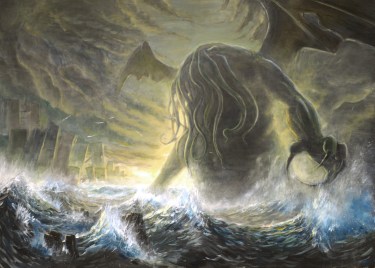
Too often these debates get painted as black and white. Both sides point at each other and howl that a victory for their opponents would be on par with the rise of Cthulu.
I, for one, welcome our elder-god overlord…
Take it from any Black/Hispanic/Native American/Jewish/Etc. person living in the 1950s- access to firearms is not a guarantee of freedom, justice, and equality. And take it from someone who actually lived in a brutal dictatorship- a society without guns in no ways guarantees safety and security for you or those you care for. A gun is just a gun. It is not a magical freedom stick forged in angel tears and presented to you by the almighty. It is not an infernal, malicious, conscious beast that turns otherwise good people into psychopaths.
You’re thinking of board games
It is just a machine.
Cars kill people. Cars save people. Speaking for myself, I’d prefer to live in a world with cars. Dogs kill people. Dogs save people. I’d rather in a world with dogs. Hammers make good chairs. Hammers make lousy chairs, and I don’t care that it’s been years since I last used a hammer. For good or ill, I’d like to know that if I wanted to, I could walk into the garage and use one.
Same goes for guns.
They aren’t always safe. They aren’t always good. They don’t always protect me, but I nevertheless like to know that I can try to use them to do that.
It’s just something to consider.
This isn’t meant to offer all or even some of the answers- it’s just an alternate take on the situation I think wouldn’t kill us to discuss.

 Allow me to set one thing straight before we begin.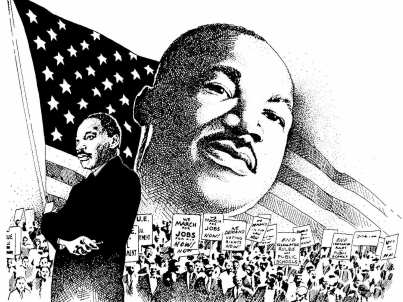


![From left to right: Miss America Chavez, Miles Morales [Ultimate Spider-Man]](https://culturewarreporters.com/wp-content/uploads/2013/02/asdgasdga.png)








 Culture War Reporters