
Spoilers below… and all that jazz.
Unabashedly a Story about Women
At this year’s Oscars Cate Blanchett happily exclaimed that her award proves that women are not a niche market. Some of this year’s top films are evidence that people care about women and their stories. There were the Hunger Games films, which blazed the trail for future female heroines, then Frozen, which is now the fifth highest grossing film ever. In fact, movies that pass the Bechdel test are now doing better at the domestic box office than those that don’t. But the latest trend in female heroines tends to imbue them with traditionally male traits, and rarely celebrates the issues that the majority of women regularly engage with. In contrast, Maleficent is a story that is unabashedly about women, and its success demonstrates that people care about the issues that affect the “other” gender.


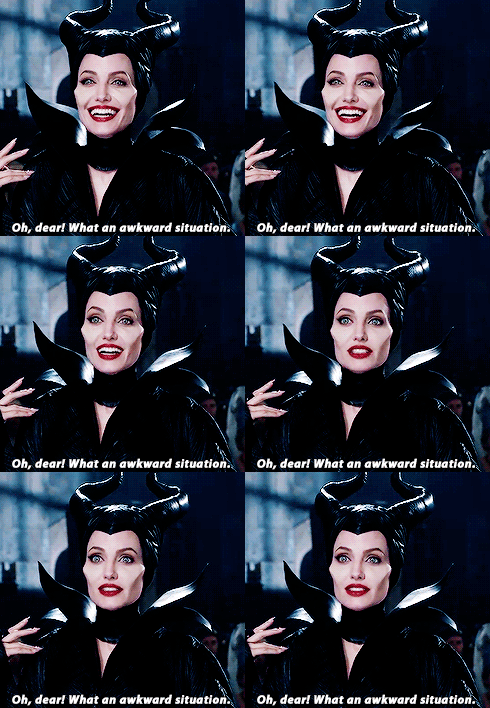
I felt this was fitting, what with female protagonists breaking out of their “niche” market.
 If you know nothing else about the Japanese animated film Akira you should know this: it’s worth every bit of praise it’s ever received. If you want to add another jot of information to that knowledge you should also be aware that it is beautiful.


 People have been flipping gender roles and sexual scripts for longer back than I care to research. It’s as simple as a sitcom depicting a wife coming back from a long day’s work and her husband meeting her with a pair of slippers and the evening paper. “This doesn’t match up with life as we know it to be!” the audience thinks. They shake their heads, they laugh, they go on with their lives.


 Culture War Reporters