Category Archives: interview

Making Till We Meet Again: Backpacking and Screenwriting with Johan Matton

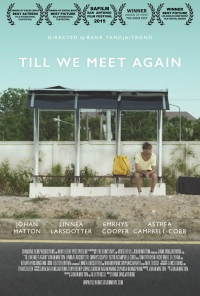
tillwemeetagainTill We Meet Again is an award-winning indie film focused on the way relationships can both begin and change when traveling abroad. So far I have been given the opportunity to watch and review the film, as well as bounce a few questions off of director Bank Tangjaitrong in the first installment of “Making Till We Meet Again“.

Today I’ll be sharing an interview I conducted via email with Johan Matton, whose role in the production include writer, executive producer, and acting as Erik, one of the leads. That being said, while the film was ultimately directed and brought to life by Tangjaitrong it can’t be argued that its very existence largely lies on Matton’s shoulders.


David tells Joanna that being in Thailand “realigns you with who you really are.” It seems apparent from the film, which you wrote as well as starred in, that you’d been there before. How much truth do you think there is in that statement?

I wanted the character David (Emrhys Cooper) to come across as a flirtatious, charming person who always knows what to say but is still real and sincere, not the stereotypical obstacle of a man for Erik and Joanna that he could have been. I believe in this moment he speaks about what is true to him; he is not just using catchy lines to charm Joanna (Linnea Larsdotter) at this point, I think he means it sincerely and believes this to be true. For me I believe in individuality [laughs] and that expressions such as this where “you” means “everyone” can be a bit naive.

Some people might be aligned, some people may not. However, empirically for me, Thailand definitely aligns me and I find myself looking inwards and realizing what more I can give to the world and how egotistical New York makes me if I do not take enough pauses from the city. I also believe strongly that some people do tend to get grounded sometimes when they travel and change perspectives from the loop of life we are usually in. So the statement is true to David and for me, but most likely not to everyone. Continue reading

Making Till We Meet Again: Director Bank Tangjaitrong on Filming Your Home Country

tillwemeetagainLast Wednesday I posted my review of Till We Meet Again, an award-winning American-Thai production. The film follows the experiences of a couple traveling through Thailand, paying particularly close attention to how separation and loneliness play a part in their relationship.

Following that is “Making Till We Meet Again“, a series of interviews with the creators. The first of which is an email Q&A with director Bank Tangjaitrong to get insight on how Till We Meet Again came to be. Following sometime after should be interviews with Johan Matton, who both starred in and wrote the film, as well as co-star Emrhys Cooper.


From what I could tell this is actually your second time working with Johan Matton, with the first being your award-winning short film That Girl, That Time, which you wrote and directed. He was the star of both films, but actually penned the script for Till We Meet Again. Can you share anything about your experiences working with him, as well as having him on story duties this time around?

I always look forward to my collaborations with Johan as we’ve worked together so many different times in the past from a director-actor capacity. With Till We Meet Again, Johan was not only the actor but also the writer and producer, and to most directors that would be an immediate red flag since lines would be blurred and there wouldn’t be a sense of hierarchy with too many “voices” on set, but that was not the case here. Collaboration is essential for me and I try to bring in the best people for the job and learn from them and listen to them. Every idea was valid whether it came from an actor, producer, writer, gaffer, etc. But it had to all be funneled through the director and he or she would choose what works what doesn’t and I think Johan understood that. During the shooting process our relationship was always about director and actor first, that was the priority.

I read that you were born and raised in Bangkok, and wanted to know what it was like filming the majority of a feature film in your home country. In particular I noticed that while shots are certainly beautiful, they never feel exoticized. Unlike, say, the way Thailand was portrayed in The Hangover Part II where it’s very clearly depicted as a foreign place.

The way we shot Thailand was very important to our story and I wanted to make sure that we weren’t just including famous landmarks and treating the visuals like an ad for the tourism authority. We needed to find that balance between what’s expected of a film shot in Thailand but also a film about the human condition. It’s important that a scene that takes place in the confines of four walls can be equally as intriguing as a scene on a secluded tropical beach.

walkin Continue reading

NEON: Our Illuminating Interview with Director Mark Blackman

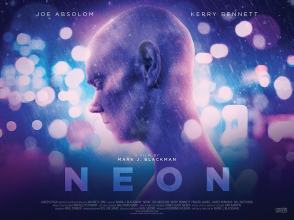
neonThe week before last we at CWR were given the opportunity to review a sci-fi thriller short film called NEON. In addition to that director Mark J. Blackman was also kind enough to answer a few of our questions about his work. He did change my correct spelling of “favorite” to the British-Canadian “favourite” (because he and all his lobsterback brethren are a bunch of heathens) but we’ll try not to hold that against him.

NEON definitely presents some surprises with the development of the story. What was the inspiration behind the plot?

The truth is, NEON was a story that just wouldn’t die, based on a very graphic, stark image of a man silhouetted in the rain who had fallen from grace and was the epitome of a lonely heart.

I was trying to work out what this man wanted and what had got him into such an emotionally dire predicament.  I awoke in the middle of the night just knowing it was about love and shame: it was about keeping another out of love’s way for your own selfish desires – and then it all just clicked: the tone, the mood, the emotion, why it was raining, why he was bald and his place in the world around him.

I was developing another short to direct, a haunting medieval horror, but pitched this to my producer and exec. producer instead – we then spent a year developing the script and working out the best way to present a narrative that goes far beyond what shorts usually handle, as there’s an entire history and world-building element to NEON that is intrinsic to it working. Narratively, we knew we were taking a monumental risk in how we were presenting our story but we figured go big or go home. We went big.

We really enjoyed that NEON was able to present such a vibrant world on what I can only assume was a bit of a budget. In your experience as a creator, what are some of the challenges and rewards in making a short film like this?

NEON is the first film for a while that I’ve directed in such a meticulous manner. I usually like to direct and shoot more organically – a bit more ‘guerilla’ – and feel things out as we go along following rehearsals and workshopping – but NEON was not that sort of film at all.

With so much backstory and world-building to accomplish, every second counted. The way in which the script was written was VERY prescriptive and we even made an animatic of the entire film to check our timings throughout. Every moment was accounted for – every angle, reason for a shot… the timing of an actor’s blocking was rehearsed in my head a million times before the camera ever rolled.

Was it rewarding? It was and it wasn’t. I like to be surprised on set, I like to encourage improvisation and to find new details or moments that are unexpected delights as they can often make a scene. However, the ambitious nature of NEON meant we had less time to allow for such moments and, as such, it was quite the military operation schedule-wise. Having said that, it was the very ambition of what we were trying to achieve with the story and emotion, the cinematography and saga-esque nature to the film that made the process rewarding. Up until NEON I’d been making films with what I could, budget-wise, resource wise – films I could make with what I had access to. NEON was a film for which my producer and I said to ourselves: “What’s the film we want to make?” And we put our money into that. Continue reading

Re: “Black Lives Matter and White Privilege”

I need to state upfront that this post is not an all-encompassing response to the Black Lives Matter movement [which I will be shortening to “BLM”] and the concept of White privilege. The title instead refers to a blog post titled “Black Lives Matter and White Privilege”. Written by Ghanaian-Canadian Samuel Sey and appearing on his site Slow to Write, the article delved into his opinions on both topics.

Regular readers of the blog will know that I don’t often respond to other blog posts in this manner; the last time I did so was back in 2014, to the article “Meet The Poster Child For ‘White Privilege’ – Then Have Your Mind Blown”. I wasn’t able to read it without addressing, and outright dismantling, many of the arguments presented, and having read Sey’s post I found myself in a similar position.

It should be mentioned that Sey and I have vastly more in common with one another than I do with Tal Fortgang, the writer of the aforementioned article. He is a fellow Canadian, POC, and Christian, actually attending a church in Toronto [although he lives just outside it]. Sey and I also, and I believe I can say this with confidence, care about the wellbeing of the Black community in North America. With all of those similarities in place it made it that much more difficult to read his post and find myself disagreeing with so many key points. Continue reading

In Ophelia‘s Seat: A Q&A with Ali Mueller About Her Interview

opheliaposterThis is the second of two interviews I was able to conduct with the cast and crew of the short film Ophelia. On Friday, when it premiered at this year’s LA Shorts Fest, I published a review, and just yesterday I was able to share a Q&A with director Andrew Garland.

Playing the eponymous character herself is Ali Mueller. In addition to starring in such programs as ABC’s All My Children and films like STARZ movie Category 5, Mueller is also hard at work creating her own film and television content. She can be found on Twitter and Instagram as @alimueller1.


alimuellerWhat did you want to be when you were seven-years-old?
I wanted to be a horse show jumper, a tennis player, an actress, a lawyer and a princess. Four out of five have come true in some shape or form but when I really look at what I wanted to be, it was a performer. A storyteller, expressing my feelings unapologetically.

What was the strangest question you’ve ever been asked in a job interview?

I did a commercial audition once where they asked me to sing “Bohemian Rhapsody”. Now I wouldn’t exactly call myself a singer, but I did know and love the song, despite being notorious for making up my own lyrics rather than ever learning the proper ones. And “Bohemian Rhapsody” is a seriously big song. So I got almost halfway and they stopped me. Didn’t hear back from them.

Do you have any strategies when it comes to interviewing for a job [or auditioning for a role]? [How do you deal with pressure?]

Honestly, rehearsing. Being really prepared, so much so that I’m excited to go in and play and do my work. Also being open to whatever the moment brings. Nerves are actually alright, because you can use them as an internal energy to fuel what you’re going after. Continue reading

In Ophelia‘s Seat: Anthony Garland Explains the Film’s Name, Length, and Even Its Genre

opheliaposterThis past Friday the short film Ophelia
began screening at the 2016 LA Shorts Fest. The piece touches on fear, expectation, pressure, and ambition through a the first few minutes of a job interview with the title character. I was able to view and review the film for myself not too long ago.

Answering a few questions himself is Anthony Garland, the director. Garland has acted in a number of small film and television roles, and assisted other directors in filming such music videos as Lana Del Ray’s “Summertime Sadness”.


garlandWhat did you want to be when you were seven-years-old?

THAT question! … A superhero. Super strength and invulnerability would be preferable but I definitely had to be able to fly. I was obviously past the age where you know that powers don’t exist, but I remember being pretty sure that I’d be the exception. I grew up reading comics before the characters had this cinematic renaissance; that was really my education in storytelling, art direction and frame composition.

What was the strangest question you’ve ever been asked in a job interview?

I’ve actually been relatively safe in interviews and auditions thus far… I feel like I’m the one asking the strange questions a lot of the time, but that’s deliberate! Just the nature of status and hierarchy, we forget that we’re all just individuals, regardless of position, and a job interview is as much for you as it is for the people that might hire you; so questions, however wacky, are a good way to set up a back and forth rather than sitting through an interrogation, which is what most bad interviews feel like.

Do you have any strategies when it comes to interviewing for a job [or auditioning for a role]? [How do you deal with pressure?]

Sure, and maybe this comes from having a background in acting, but so long as the focus is on something external, like engaging with the person opposite you by asking those questions, or really taking them in, then there’s no space to be self conscious. Continue reading