Category Archives: media

Celebrity Mortality and Actual Loss

Eight days ago Michael Clarke Duncan, who you probably know better from the Green Mile but who I remember as the Kingpin in Affleck’s Daredevil, passed away having never fully recovered from a heart attack. Whenever a celebrity dies people take to the internet to mourn, and I saw the following comment on one of MGK’s very simple memorial posts:

What struck me was what exactly made this summer more heartbreaking than any other. Was it the suicide of Top Gun filmmaker Tony Scott? The passing of puppeteer Jerry Nelson? Moreover, was this summer any more “heartbreaking” than 2009, when Michael Jackson, Farrah Fawcett, Ed McMahon, and Billy Mays died? Continue reading

Go Listen to “Guilty Pleasures: Art and Politics”

Two days ago Gordon and I talked about “hipster racism,” a topic he heard about via an eye-opening lecture by novelist China Miéville. The talk was titled Guilty Pleasures: Art and Politics, and discussed far more than what we were able to given our time.

A number of things: Firstly, I am not going to discuss or summarize his lecture in its entirety; it was forty-some minutes long and that would be ridiculous, just listen to it for yourself. Secondly, I am not a socialist, and much of what he was saying was through that filter. He did, after all, speak at a little something called “Socialism 2012.” I am not someone who has very strong political leanings, but I am someone who truly loves art in its many forms. The following are the three ideas he spoke about that stuck me the most.

The Artist and Their Art

Miéville, about a minute in, states that the socialist position on art and politics is this: “[socialists] do not judge art by the politics of the creator of that art.” He then quickly adds that they do so all the time anyway. I briefly wrote about this in a post about Jewish children’s author Rich Michelson. Michelson hosted a session that was largely about race and background, and how they impact audiences’ opinions of a work. Is a Jewish author allowed to write about the struggle of the civil right’s movement? And if not, then why?

The relationship between creator and his or her art is heavily debated, but its extremes are very easy to criticize. Miéville said that they’d all sat through “egregious folk music” simply because of the grounds of its sentiments expressed. Simply having a good message does not make art good. A Christian movie about the horrors of porn is not in and of itself a bad thing; having it feature ghosts [and be a clear knock-off of Paranormal Activity] is. To put it in the form of a proverb, “the road to hell is paved with good intentions.” Feel free to replace “hell” with “bad art” or “disappointed audiences.”

Guilty Pleasures

The title of his talk and what I’m the most interested in, Miéville listed different axes of socialist guilt. The third of which [17:56] he says is:

The question of quality: “I know it’s not very good but I like it anyway.” A declaration of kind of defensive guilt.

The thing is, he realizes that the statement is inherently flawed. By saying something is not very good we declare that we can make qualitative judgements about art, and this leads to questions like: “What is art? What makes it good, bad, better? What kind of social phenomenon is it?”

When it comes to television shows I have a standard rule, and that is to watch it ’till its dying days. I have watched all of The Office to date, and that is the same as 30 RockHow I Met Your Mother, and a slew of other shows. Sooner or later they begin to break down [see my first example], but I stick to them. The reason I’m bringing this up is The Big Bang Theory.

Gordon hates TBBT. He hates it because, honestly, it’s not a very good show. He often says that “nerdface” is an excellent way to describe their treatment of the characters. That being said, I have, and do [sometimes still] enjoy it. Do I feel guilty? As an English and Writing major, yes. I studied for four years to differentiate between good and bad writing. As a general media consumer and television enthusiast, yes, I still feel guilty. And, as Miéville said, I somehow defend myself by admitting to others that I realize it is not very good.

Does this justify me? I don’t think so. But beyond what it means to be good or bad, what does it mean to like?

What Does It Mean to “Like” Art?

I like the Dungeons and Dragons Monster Manual. I like the novels of Barbara Cummings [sp?]. I like Gramsci’s prison notebooks. [20:15]

None of these statements tells him anything about his relationship with each piece of art, because they’re all so distinct. What further complicates the verb is the discussion of “the art piece one enjoys disliking” [20:32]. We can like to dislike things; Justin Bieber basically encapsulates this idea by himself. While he never ends up truly defining the word, he seeks closure in the writing of another.

What follows is a piece of writing by Lady Mary Wortley Montagu, an 18th century writer, and Miéville’s response to it [34:45]:

“The pretty fellows you speak of I own entertain me sometimes, but is it impossible to be diverted with what one despises? I can laugh at a puppet show and at the same time know there is nothing in it  worthy of my attention or regard.”

This is one of the most liberating things I have ever read in terms of the cultural sphere. It is not obligatory to have footnoted opinions about everything you consume.

I read his meaning in that last paragraph as being that we need not get caught up in guilt. There should be a way of looking at what we like that doesn’t involve us castigating ourselves. I can enjoy the King Fantastic Remix of Drive It Like You Stole It without being a proponent of foul language. Likewise I can read AmazingSuperPowers, be amused, and not have to argue how high- or lowbrow its humour is. While the intent of an artist and the perceived quality of their work should be taken into account, there are times when we can simply like, or more simply enjoy, art, whatever it may be.

Evan and Gordon Talk: Hipster Racism

GORDON: Welcome back, ladies, gentlemen, and persons who defy conventional gender roles, to another edifying episode of Evan and Gordon Talk. Our topic for tonight: Hipster Racism.

Evan- if you’ll offer a quick definition.

EVAN: Uh, I’m going to leave you to that, actually. Gordon sent me this link to check out, and the bit about “hipster racism” is actually quite short [appearing at about 00:00]. The speaker, China Miéville, had a lot of amazing things to say, and I lost it in there somewhere. [I’ll probably be writing more about the lecture on Friday]

GORDON: Essentially, “Hipster Racism” or “Ironic Racism” are jokes or comedy with traditionally racist content, funny not because they put people down, but funny because of how utterly atrocious and ignorant they are. Similar to a dead baby joke.

The question we’ll be dealing with tonight is this: Is ironic racism still just racism?

EVAN: This strikes a similar chord with a conversation I had with . . . a friend of mine, where he called Arab people “towelheads.”

GORDON: Yikes. Continue reading

Violence (Not) In Media

In the wake of the Aurora Shooting, the Sikh Temple Massacre, and a recent spate of gun violence across the country, the debate of the violence in media has once again reared its head. On one side, those who cite the saturation of film, music, and video games with violence and the glorification of violence as responsible for creating these monsters, or at the very least, pushing them over the edge. On the other side, the ranks of apologists, who declare that it’s ridiculous to blame movies and music for mass-murder.  I’m not here to analyze the claims of either point, or to make an argument for one side or the other- that’s already been done better by The Escapist’s Robert Chipman (check it out here).

No, I’m here to address the subject of violence and its possible contributing factors outside of film and music.

When I touched on a complaints I had with movies like Brideshead Revisited and I Love You Man a few weeks ago, I briefly mentioned goth-rock-star Marilyn Manson, whose music was accused by many of being responsible for having influenced the Columbine shooters in committing the massacre. Interviewed by Michael Moore in his documentary Bowling for Columbine, Manson had this to say regarding violent influences:

And therein really lies the crux of the issue- when tragedies like this happen, the scope of our outrage is usually so small that we fail to take into account all the other possible factors. We can cite GTA or rock or rap or cartoons as being responsible and maybe- just maybe- there’s something to that. But what about everything else? If violence in media causes violence, surely violence itself should be cited here!

You remember this?

That’s Marine Corps veteran Scott Olsen, moments after he was shot in the head with a gas canister from close range. Part of the brutal crackdown by police on the Occupy Oakland protests last year- back when Mayor Jean Quan decided the best way to deal with a peaceful protest was by turning her town into a war zone.

But why talk about Oakland and countless other cities being turned into war zones when we can just talk about actual war?

As I’ve mentioned in previous posts, this is the single longest war in American history. Year after year after year, it goes on, and with no end in sight. That’s got to be the single largest and publicized campaign advocating violence, yet where is the outrage against it?

And what about hunting? That’s all about guns and the glorification of killing things…

What about Civil War Reenactors?

What about the national anthem? That thing is full of references to bombs. What about the 4th of July? A day when we celebrate our victory in a war by setting off explosives!

What about the very way we talk about violence? Should the Mob Museum here in Las Vegas be shut down? Should we do away with anything related to pirates? Should we stop teaching about the war of 1812 in schools?

And so on…

You get the idea. Ours is a culture and history built on violence. It’s in everything–  not just our media. While I’ve got my own views on what does and doesn’t cause or promote violence, my purpose here isn’t to take a side. I’m simply trying to demonstrate that if you do want to try to get into the causes of violence, you don’t get to be selective about who you put on trial.You want to find out if there was something in our world beyond the killer’s diseased mind responsible for death and destruction, you have to look at everything- anything less is just a witch hunt, pure and simple.

Let’s face it, half the time, tragedies like these are the platform from which we get to lynch things we didn’t like to begin with…

…I wonder if that kind of vicious and petty mentality might contribute to violence at all…

Evan and Gordon Talk: The Bechdel Test


EVAN:
So I came across a little something called the “Bechdel Test” through an article on racebending.com. It’s a test that’s supposed to rate how well a film does in terms of portraying women. That’s a rough description, anyway.

GORDON: I’ve heard of it in film criticism. It essentially asserts that for a film to have “real” female characters, it must have a scene in which (1) two women (2) talk to each other (3) about something other than a man. Sounds simple enough, but you’d be blown away by how many movies fail it…

EVAN: And the thing is, some of these movies happen to have perfectly good “strong female characters.” The site bechdeltest.com lists films that do or don’t make the cut, and in the comments section many a person states “but this female character was such and such…”

GORDON: Example?

EVAN: User “lili” disagreed with the rating given Wrath of the Titans, saying:

Although conversation between the two named women was minimal, the character of the main woman was well developed with no sexual stereotyping or weaknesses. I think it passes the Bechdel test in spirit, if not in actual letter.

GORDON: See man, as much as I’d consider myself a feminist, I really don’t like the Bechdel Test and some of the assumptions it seems to make. A lot of it just really doesn’t pan out- I’m looking at the list they’ve got here, and it’s seriously twisted.

Check it out- Sex and the City 2- easily some of the most misogynistic and racist crap out there gets a free pass, and movies like The Rum Diary or Rise of the Planet of the Apes– which have way better portrayals of women- are failed…

EVAN: I mean, it’s easy to see why their criteria was picked- having the women named is extremely important, as it’s a pretty solid way of ensuring that they’re actual character and not just waitresses or other extras. Also having them talk about something other than a man. That’s pretty important stuff, I think, in maintaining that they’re not just female verbal support for the male lead.

Where it really falls apart is the second part of the test: the need for the female character to have to talk to each other-

GORDON: I don’t think you’re being quite hard enough here, dude- this is a bad test. Look at it this way-

The first criteria is that there be two women, which is dumb because it assumes that a woman’s identity is based on how she relates/matches up with/differs/etc. with other women. Totally disregards her qualities (or failings) as an individual, y’know? The second criteria is, like you say, that they have to interact which each other, which again doesn’t make much sense (see previous point). And the third point, while decent, also kinda falls apart- if two men talk to each other about nothing but women, are they not real male characters? Kinda throws relationship movies out of the window.

…Point is, the test sorta shows you when a movie drops the ball on female characters, but a “passing grade” doesn’t really mean much of anything.

EVAN: I agree with you completely. Part of the reason I’m a little less harsh is thinking about how to construct/write a single test which judges a film on something as deceptively simple as the “active presence of female character,” as Feminist Frequency would put it.

GORDON: Well, what makes a female character a female character?

EVAN: Well, I took Human Sexuality my senior year of college, so I can think of a few key specifics-

Continue reading

TLC (That Lousy Channel)

A couple weeks ago, I unleashed my wrath against NBC for their exploitative and fetishistic show, Stars Earn Stripes. Despite their cold, calculated attempt to make a quick profit off of the sacrifices and hardships of the armed forces, NBC, as a channel, still manages to pump out a handful of decent shows.

The same can’t be said for TLC.

If you’re not familiar with TLC, they’re the channel responsible for such shows as Toddlers & Tiaras and those fifteen different series about midgets (yes, I’ll be using the term ‘midget’, get used to it). Now there’s been some criticism already that TLC (The Learning Channel) doesn’t have a thing to do with learning (not anymore, anyways), but my issue with TLC goes further than that. TLC isn’t just unhelpful or unintelligent- it’s straight-up bad for you.

Here’s Why:

I. Whites Only?

When Evan and I were having a discussion about TLC a few days ago, I brought up how strange it was that they had so many shows about midgets. His response was that he suspected it had something to do with the “celebration of diversity.” That’s probably how TLC would spin it, too. Their plethora of shows centering on midgets (Big Tiny, The Little Couple, Little People- Big World) unusually large families (19 Kids and Counting, Table for 12, formerly John & Kate Plus 8, United Bates of America), and other shows such as High School Moms, Sister Wives, or My Big Fat Gypsy Wedding are all part of their mission to portray the diversity our world and help us all learn from each other.

Only that’s some ol’ ********.

See, if TLC were actually showing you giant (by Western standards) families or midgets in the interest of promoting understanding, they might actually show some diversity. But just go to the TLC television show page and tell me what you don’t see.

Where are all the black people? Where are all the Asians? Where are the shows about Hispanic families? For Pete’s sake, the combined non-white population of the US is nearing 50%, and TLC doesn’t have a single show starring a non-white family! What’s up with that? Not only are there no shows centered on non-whites this year, but if you look at their “Past Shows” section, you will find one show with a black star and one show with an Asian co-star. Not only is TLC pretty lacking in racial diversity when it comes to its shows, but other major demographic groups are left out as well. Non-Christian religious groups make up nearly 20% of the population- where’s the show about the day-to-day lives of American Muslims, Buddhists, or atheists? Wouldn’t we benefit from a show about life on a Navajo reservation more than Long Island Medium? I’m gonna go out on a limb here and say “Yeah- yeah, it would be.”

II. The “Freak-Show”

So we’ve established TLC’s programming is more or less exclusively about white people, let’s take a look at what white people. Counting up the subject material of this year’s shows, we have 19 out of 36 programs centered on what could certainly be titled “abnormal”. That is, one out of two TLC shows deals is about midgets, huge families, addiction, hoarding, teen pregnancy, fringe religious groups (see Breaking Amish or Sister Wives), and the like, with the other 17 shows centered (largely) on wedding dresses and people who bake stuff. Is there anything inherently wrong with all of this? Not at all. In fact, a lot of the subject matter these shows cover looks pretty interesting- most notably Abby and Brittany, a series following conjoined twins. You can’t tell me that you aren’t really intrigued by that.

But that’s not the problem. The problem is the vicious redundancy, and what it says about TLC’s motives here. Currently, TLC is airing two shows about large families (to say nothing about all their past shows about large families), as well as three shows centered on midgets (again, they’ve had other shows about midgets in the past). Why the redundancy? Because it’s about money. The concepts behind both sets of shows are being squeezed for every last penny, meaning when TLC has a camera crew following a family of twenty or a four-foot couple, it’s not because they want to make a quick buck.

“But Gordon, you veritable living library of knowledge, do intentions really make a difference?”

Absolutely.

If I went around with Peter Dinklage and said, “Meet one of the most talented actors of our generation who is also a midget”, that would be constructive. If I went around with Peter Dinklage shouting “Yo! Check out the midget!”, that would be awful. Same goes for anything- just look at Michelangelo’s David. The inention of the piece as a representation of Florence as a brave and mighty city is what makes the statue art instead of marble porn.
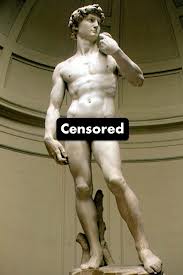
Like so…

With this in mind, doubt must be cast upon the rest of TLC’s programming- we’re forced to strongly consider that shows like Long Island Medium, Addicted, Strange Sex, and the like aren’t here for our edification, but for our entertainment. This is all just voyeurism- a chance to stare at people who are different than us. TLC doesn’t keep pumping out these shows about midgets and massive families because they think each show is unique, but because each show is the same. Because they don’t look at the individual qualities (or lack-thereof) of these people- they’re just reduce them to being nothing more than “abnormal”, which is why they feel they can keep making these series. It’s objectification, pure and simple.

III. Only Encouraging Them

In addition to their lack of diversity, and objectification of people who are (by our standards) “abnormal”, TLC is also responsible for for delightful little pile of festering garbage we all know as Toddlers & Tiaras.

Even if you thought my previous point was a little shaky, you really can’t argue with this. TLC openly advertises T&T as a show you’re meant to laugh at. The ridiculously dolled-up girls, the psychotic mothers, the manipulation, the abuse. It’s a show meant to make you feel better about yourself as a human being; that you’re not some morbidly-obese Midwesterner or spray-tanned monstrosity on your fifteenth cosmetic surgery desperately trying to live out your crushed dreams of glory by slathering your daughter with her weight in makeup. Now I’ve got a seriously dark sense of humor, but not even I think that’s funny.

“But Gordon! It’s not like TLC is promoting this idiocy- you say yourself that you’re meant to laugh at these people!”

Ah, but TLC is rewarding these people. Keep in mind that attention is what this is all about, and that the message here is “You don’t have to be talented or smart or funny to be on tv! If you’re a big enough *******, you can still get on!”. Torment your little girl, and you can still get on nationally-viewed television. If we’re going to make any progress towards getting rid of this child-abuse, we need to stop airing this- it’s just rewarding bad behavior and making us worse on the whole. What’s it say about TLC that they show mothers berating their five year-olds and expect us to be entertained?

No, I am not.

And again, with Toddlers & Tiaras as a major TLC show (along with their spin-off Here Comes Honey Boo Boo), this casts serious doubt on TLC’s intentions with their other shows. If you’re expected to find a collection of mentally disturbed women abusing toddlers funny, are you also really expected to be edified by watching The Little Couple or My Big Fat American Gypsy Wedding, or are these just “freaks” with their lives filmed for your voyeuristic pleasure.

So let’s review what we have here. A channel whose programming is centered almost exclusively on whites, with a majority of its programs centered on “abnormal” families and individuals, presented not for any educational or instructive value, but for your entertainment, demonstrating TLC’s complete and utter contempt for both the “stars” of its shows and for you as an audience. And the rotten, mildewed cherry on top of this bilge-pie is that the entirety of TLC’s programs are presented with this veneer of tolerance and understanding, so they can pass off their twisted side-show as somehow healthy and admirable.  At least when the circuses advertised a chance to see the wolf-boy or bearded woman, they were up-front about it.

As with NBC, I have this to say to the folks over at TLC: