Category Archives: race

Tumblr and SJWs: The Difference Between Having a Problem and Being One

So roughly two months ago Gordon said I would be “providing some cutting observations on the state of Tumblr”, and I’ve finally gotten to the point where I’ve done enough research to finally tackle this thing. In this case “this thing” refers to “the internet’s conceptions of Tumblr and its users, specifically those who have been deemed ‘social justice warriors'”. It’s going to be a long one, so sit back, buckle up, and do one other thing you would do when riding in a vehicle.
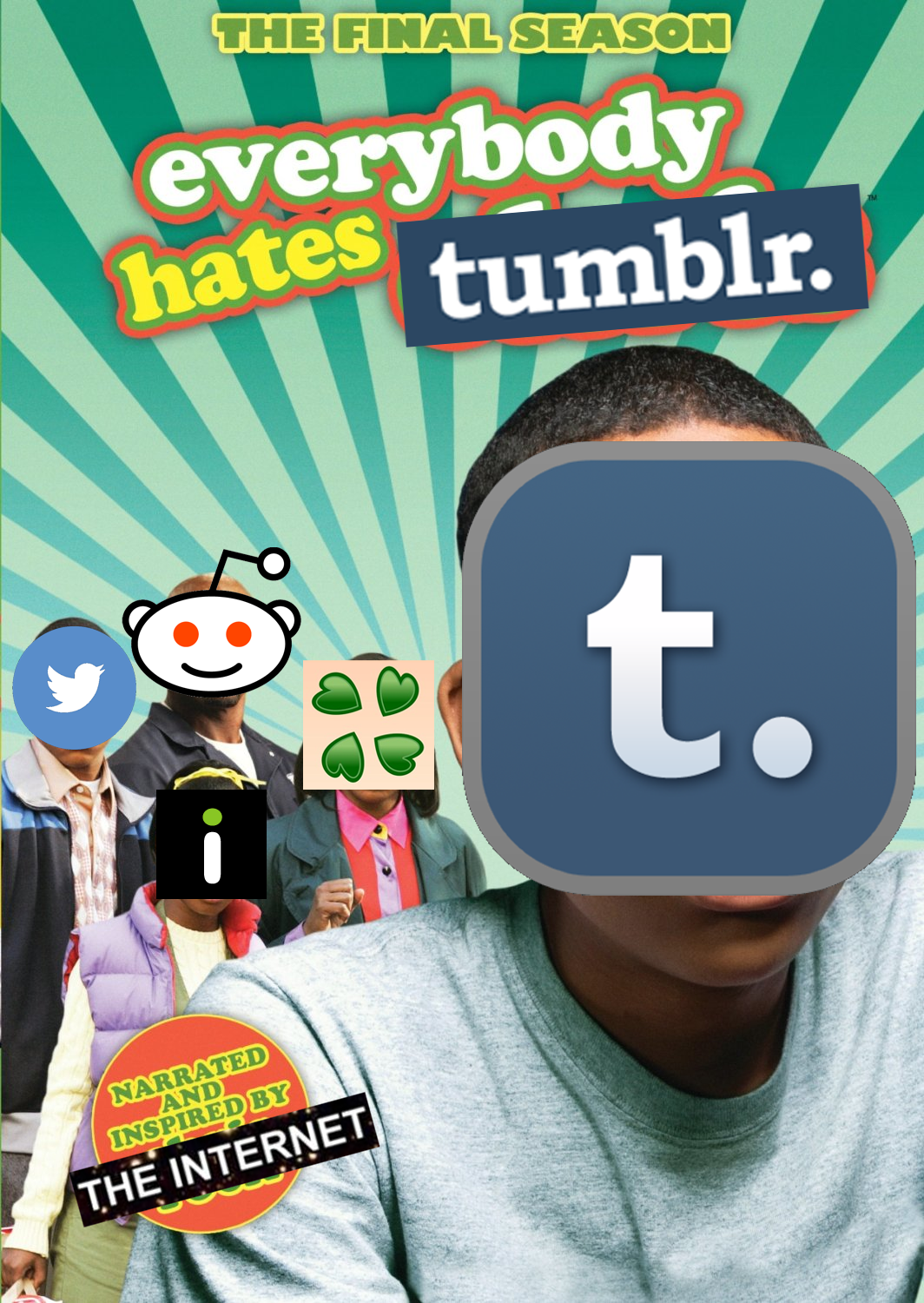
everybodyhatestumblrEverybody Hates Tumblr

I’m not going to pretend I know where you spend your time on the internet, but chances are that you’ve come across the general sentiment that Tumblr is “all that is wrong with the internet” or “a literal cancer” or some other hyperbole. It’s gotten to the point where just invoking the site’s name in relation to anything can be, and usually is, a damning condemnation.

As far as I can tell, there exists a much stronger bias towards it than even 4chan, with the latter being heralded as the primordial ooze that the vast majority of our memes come from, a primal, unadulterated place that has stood true to its roots. That’s a conversation for another time, but the point is that Tumblr has come to carry more negatie connotations than other social networking sites, with a lot of that having to do with it being the homeland of SJWs, or “Social Justice Warriors”-

What Is A Social Justice Warrior? [Wow, Google Image Search Has Not Been Kind To That Search Term]

This YouTube video is a pretty short, funny breakdown of what one is:

If you didn’t feel like watching it, here’s what the dude defines it as, providing three definitions that get more and more easy-to-understand:

  1. a derogatory term for people who advocate for socially marginalized groups
  2. a bad name for feminists
  3. a bad name for women-are-cool people

Continue reading

Ms. Marvel, #13: A Comic Book Review

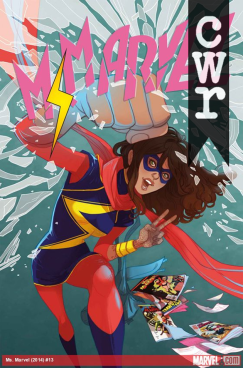
msmarvel13Look, I know I was tough on Ms. Marvel last month. It was a so-so issue, a fact that surprised me greatly considering it guest starred the Norse god of trickery. The thing is, even then I wasn’t worried that it was some sort of herald of less-great things to come, and the latest installment of Kamala Khan’s adventures is one of the best yet.

Everything that was missing from the Valentine’s issue is present here. Inhumans? Check. Genuine hero vs. villain throwdowns? Check. An exploration of the life hyphenated-American youth live, AKA the cornerstone of immigrant literature? Ch-ch-ch-check.

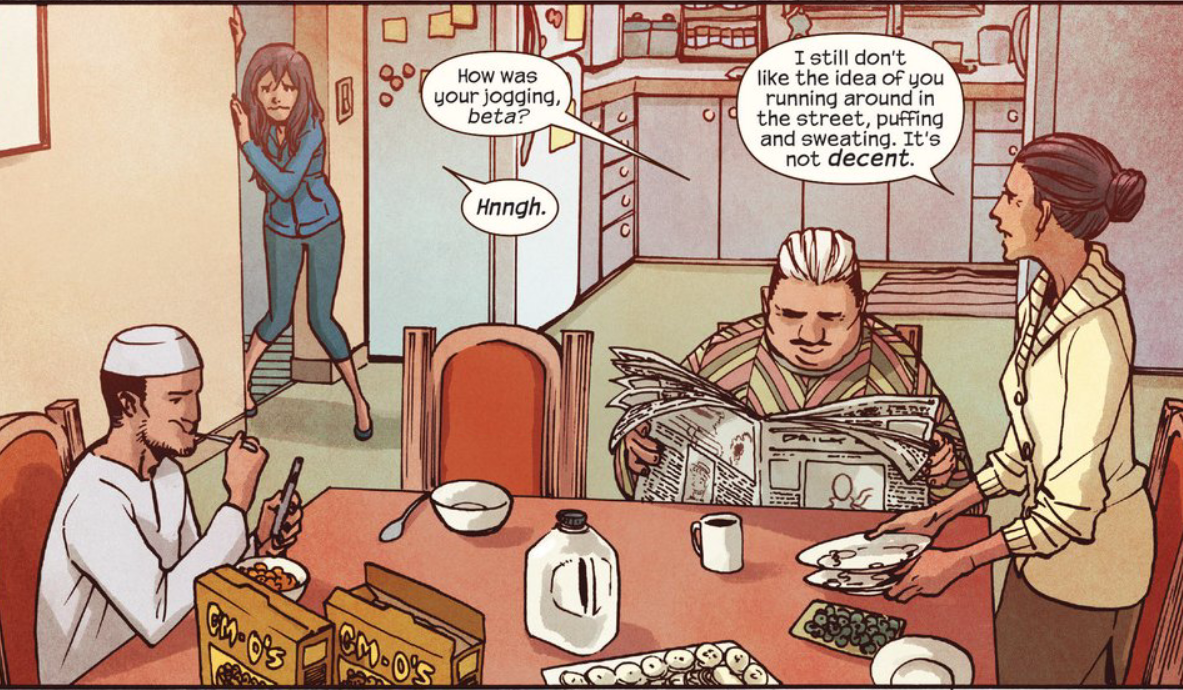
That last point is what truly made me love this comic, because the rest of the Khans get some quality pagetime after being out of the spotlight for so long. Take the following panel-

notdecent

It takes place after we see Kamala training in the Inhuman version of the X-Men’s Danger Room, and while seeing Medusa worry about her subject [she is queen of the Inhumans, after all] is intriguing all I could think of was: “older Pakistani people would probably not be down with the skin-tight leggings she has on.” Lo and behold we have her ammi chiding her for her indecency. Continue reading

Lisa Nakamura Part 2: Navajo Circuits and the “Nimble Fingers” of Asian Women

In my last post, I told you a little bit about Lisa Nakamura, her research, and the talk she gave at my university about Tumblr activism. I also promised to tell you about her second lecture the next time I wrote.

Both of Nakamura’s lectures were about digital media, but unlike her first talk, her second presentation focused on the physical material of digital technology.

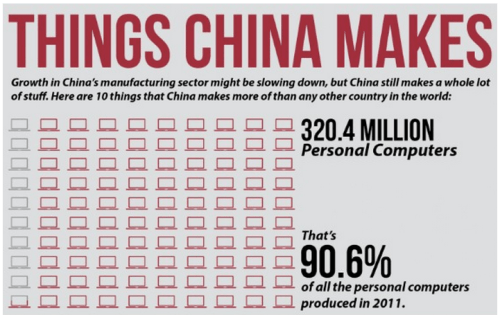
Unless you’ve been hiding under a rock, or recently time-travelled to 2015, you probably wouldn’t be surprised to hear that most of your digital hardware came from Asia. You may even be familiar with the way Asian women have been racialized as innately predisposed to factory work because of their “supposed docility, nimble fingers and attention to mind-numbing detail”.

Screen Shot 2015-03-09 at 8.39.54 PM

Click on the image to view the full infographic.

However, you might be surprised to learn that this stereotype has been applied to women of colour ever since the digital revolution. In her paper on “Indigenous Circuits: Navajo Women and the Racialization of Early Electronics Manufacture”  Nakamura examines the way digital factory work is both gendered and racialized. She refers to the work of Karen Hossfeld when she insists that

“…by the eighties in Silicon Valley, electronic assembly had become, not just women’s work but women of color’s work.” (290)

Continue reading

2 Broke Girls, S4E14 “And the Cupcake Captives”: A TV Review

cupcakecaptives

At long last there appears to be an overlap between one of my favourite superheroes [Spider-Man] and one of my least favourite TV shows [this one], in a way that has the former redeem the latter in its own way. In the fifth issue of Superior Spider-Man supervillain Massacre approaches the manager of a big business, offering to kill a large number of people while wearing a shirt bearing her competitor’s logo. Here’s a splash page of him making his offer:

massacre

Which is all to say that Caroline freaking out about their brand being tarnished by a criminal wearing their shirt is actually fairly reasonable. Associations are created by everything from getting a particularly messy stomach bug while eating a certain type of cuisine for the first time to seeing a billboard crush three NYC tourists to death on the news. What I do want to focus on, however, is what the man in question did.

It turns out that the guy, Richard Griffin, AKA “Beer Belly Gym Shorts”, kidnapped three women and kept them trapped in his apartment for months. Now I don’t know if you remember the last few times crimes like this have been uncovered by the law, but it is always incredibly disturbing. There is a large amount of rape, is what I’m saying. The episode veers very far away from any implications that this guy was guilty of such acts, but still expects us to think that him wearing their shirt is a big deal. It’s a very fine like that the show traverses, and its success is up in the air as far as I’m concerned. Continue reading

BURAAQ: Two Brothers, A Superhero, And the Truth About Islam

adilkamil

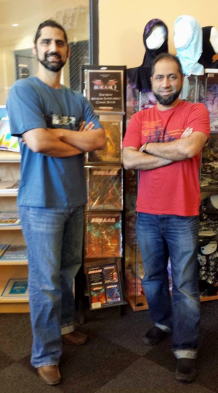
Kamil and Adil Imtiaz.

This past Saturday I had the opportunity to connect with Adil Imtiaz, one half of the two sibling team responsible for the comic book BURAAQ, which stars a Muslim superhero. While he was the illustrator starting out he shared, and continues to share, creative responsibilities with his brother Kamil, and was more than happy to talk to me a little bit more about how this project came to be and why.

Ms. Marvel, as you may have guessed, came up in conversation, and I ended up learning a few things about Islam that I didn’t originally know.
Throughout our talk it was clear that this character and all he presents is a passion for Adil, and that he believes it can, and has done, good things for Muslim youth.

After thanking him for finding the time to speak with me about his work we got right down to questions and answers, the latter of which he was very ready to provide.

Evan: Now I can’t wait to get into talking about BURAAQ, but before we get there would you like to say a few words about yourself?

Adil: Adil Imtiaz is my name. I’m an IT professional, just so you know. And I came here from Pakistan back in 1990; me and my  brother and my family. So we’re here with our families and that’s pretty much it as far as my background is concerned.

Evan: Would you say that your interest in comic books began at a very young age?

Adil: Absolutely. Even in Pakistan as kids, my brother and I used to have a stack of comic books by our bedside. Every night we used to read Marvel, DC, superhero stories. We were, and still are, fascinated with sci-fi and superhero stories and characters.

And movies, of course. Hollywood as you can see is all about superhero films. And we used to draw comics and superhero characters as kids. I got sidetracked when I had to focus on higher education, pursuing a career. I had to put it on the back burner so to speak.

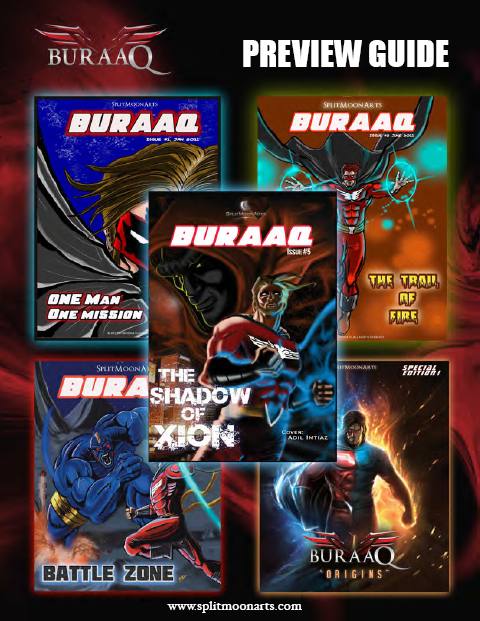
buraaqpreview

Evan: In the PDF I was given to review you and your brother’s mission was very clearly stated, and I’m just going to reiterate it for all my readers:

  • To provide a clean, fun (halal) and positive entertainment media alternative for our Muslim youth.
  • Reconnect our Muslim youth to Islam and make them feel proud to be a Muslim.
  • Enable interfaith dialogue and increase positive Islamic awareness.
  • Our principles are based on the Quran, Islamic values, and the teaching of the Prophet Muhammad (PBUH).

How long this been in the works? It seems particularly relevant now given recent events in North Carolina [with what I’m going to call a hate crime]-

Adil: Well, no, actually. This is something, the idea was born back in 2009 actually. Especially after 9/11 things changed in the US. And in the media, traditionally, Arabs and Muslims have been portrayed in a negative light in Hollywood, but after 9/11 things really picked up steam; a bunch of crazy people around the world who claim to be Muslims and other agencies at play, not to get into politics…

Sammy Sheik as Mustafa in American Sniper.

Continue reading

Lisa Nakamura Part 1: Tumblr Activism and This Bridge Called My Back 

On Thursday and Friday UVic hosted Lisa Nakamura, Collegiate Professor from the University of Michigan, to speak about her research on Digital Media and Race, Gender and Sexuality. Nakamura has been writing about digital media since 1994. While she has written several books about race and the internet, some of her shorter pieces focus on things like “The Racialization of Labour in World of Warcraft”. In order to feel qualified to write about platforms like World of Warcraft, she spent hours playing the game herself.

On Thursday, Nakamura’s talk was titled “The Digital Afterlife of This Bridge Called My Back: Women of Color, Feminism and the Internet”. She began by giving a brief overview of the book and explained why it matters so much.

As an anthology that prioritized written work by women of colour, This Bridge Called My Back responded to the whitewashing of feminism long before movements like the #SolidarityIsForWhiteWomen hashtag began to highlight the problem. This book also introduced the concept of intersectionality, which has since become a key element of feminist theory.

Unfortunately, since it’s original publication the groundbreaking collection has struggled to remain in print. According to Wikipedia,

“The anthology was first published in 1981 by Persephone Press, and the second edition was published in 1983 by Kitchen Table: Women of Color Press. The book was out in its third edition, published by Third Woman Press, until 2008, when its contract with Third Woman Press expired and it went out of print.”

The book’s struggle to remain in print made it an “artificially scarce commodity” and drove up the price. At its inflated price, the book’s authors might even have been unable to afford their own work.

Screen Shot 2015-02-22 at 9.48.27 PM Continue reading