Category Archives: writing

Don’t Just Hire Minority Creators [Promote Hiring Them, Too]

It should be absolutely no secret to any and all of you that I’m an advocate for diversity. There are a myriad of different reasons for this, from the “it would be nice…” of seeing a little more colour in popular media to the more specific “think of the children” that pertains to White boys specifically [not White girls or Black boys and girls] having their self-esteem boosted by watching TV. What some people don’t realize is that the need need for diversity extends beyond actors and the characters they portray to the actual creators involved.

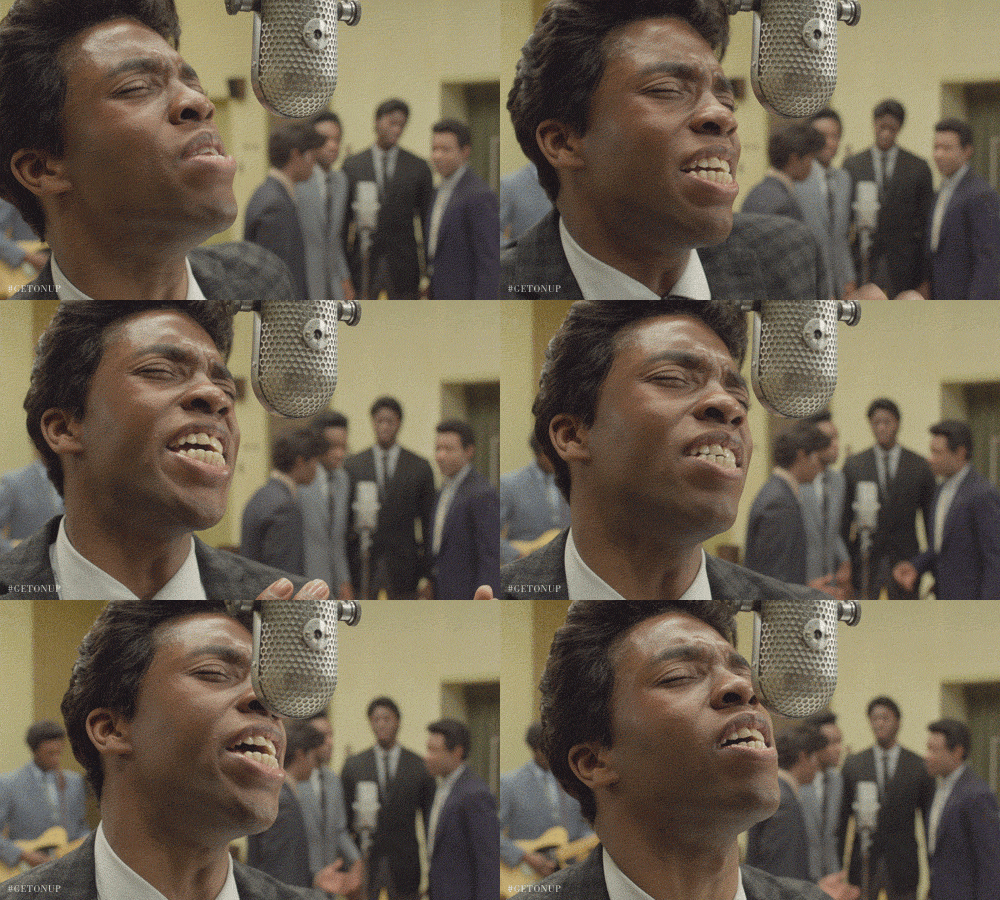
I’m not going to say that a White man cannot ever be involved in the creation of art that discusses or features minorities and their struggles- it’s a topic I touched on when discussing children’s author Rich Michelson and the books he’s written about the Civil Rights Movement. These stories can, and have been, and will continue to be valid, the question remains as to why we live in a world where a James Brown biopic can be created as a summer blockbuster and have “all the producers, writers, and the director [. . . be] white.” At what point should anyof these people stopped and thought to themselves, “Maybe a Black person would be able to provide a perspective on this that none of the rest of us could?” “Immediately” is the answer in case you were wondering.
This is all a lead-up to how, if this is definitely a problem in our current culture, we can change things. As history would dictate I am going to be coming at this from a distinctly comic-related perspective, but the issues therein can be paralleled across the board to TV and movies.  Continue reading

Fixing Ghost Movies

A while back, we had a discussion on everything wrong with our attempts to make exorcism movies. Good ones, anyways. That done, I figured we might try to keep the ball rolling and talk today about how to repair our stories of ghosts and haunted houses.
Now as a disclaimer, I’m coming into all this with some bias. While I’ve never had anything particularly against these kinds of movies, ghost and haunting stories have always been my least favorite kind of horror. Heavily reliant on jump scares, rather than psychological horror, they’ve always struck me as being not all that much different than an amusement park ride. That’s all just to say that I’m not what you’d call an expert by any means, but I think  we can all agree on some ground rules here.

Let’s get started.

Drop the Victorian Crap

It’s not every ghost story that’ll include junk from this period in time- just most of ’em. If you see the ghost, 9 times out of 10, it’s some woman in ragged-but-unmistakable Victorian garb. This is actually one of the arguments skeptics use to discredit most paranormal claims- we’ve had so many people die since the 1800s that the fact that most every “sighting” is of a specter in turn-of-the-century clothing just shows how deeply ingrained this trope is into our psyche.

Of course, that doesn’t stop the film industry from showing nothing but that.


Granted, in the movie’s defense it looks like it actually is set in the 1800s, so the whole Victorian schtick is at least explained- that still doesn’t make any of it less tiresome.

And it’s not just the ghosts- it’s everything.  The settings, the props- old mirrors, dolls, mysterious antique boxes, little red balls that’ll inevitably roll down the stairs seemingly of their own accord. The moment the audience sees ’em there’s a collective internal groan of “here we go again”.

Right back at ya, Tina…

It’s a question of realism- who even has this kind of stuff anymore? 30 or so years ago, yeah, I could see someone inheriting some old turn-o’-the-century junk, but these days it just feels out of place. Horror can’t be horror unless the threat feels real, and the classic “you’ve inherited a haunted mansion” story is becoming harder and harder to buy.

We don’t exactly have a ton of these things lying around either…

Don’t get me wrong- I understand why people choose these settings. You can’t exactly do a convincing ghost story in a cramped apartment in the middle of the city, and as much as Japan tries to cash in on technology-horror (see One Missed Call or The Ring), it’s still a really tough sell.

There’s gotta be some other options, though. Haunted farm. Ghost town.  Heck, even some new housing development could probably be scary if you added the right twist. I’ve even seen a submarine make for a pretty decent haunting-story. All in we have got to stop relying on these old crutches if we want to make something worth watching. Continue reading

Ms. Marvel, #7: A Comic Book Review

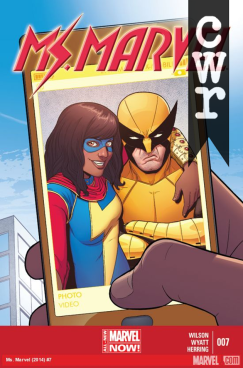
msmarvel7If I want to be honest with all of you, which I do, the fact is that comic book characters don’t change all that much. That’s a gross overgeneralization, so let me backtrack a little: comics don’t change quickly. Sure, between 2010-2011 Spider-Man had this whole “no one dies” thing that strongly affected the way he behaved in situations for months to come, but it took like three whole issues. We’re just past the half-dozen mark with this comic, and Kamala’s already learning things that are going to stick with her for years [yeah, this title’s not going anywhere] to come.
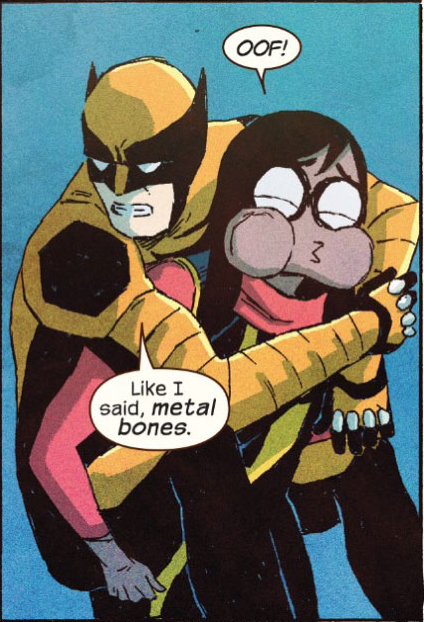
When we last left our plucky New Jerseyite she was facing off against the mother [or father] of all alligators alongside a short, hairy Canadian who also happens to have metal blades sticking out from his hands. Whereas the last issue revolved pretty heavily around her gushing over one of her idols, this one focuses more on the dichotomy between the two [newly-powered Inhuman and world-weary mutant] and what they can learn from one another.

wolverinesnotfatTo be more accurate, what Kamala Khan can learn from James “Logan” Howlett. Though it’s not like she doesn’t help him out at all.

Now I could give you all a blow-by-blow of what they do in these twenty-some pages [fight a giant crocodilian beast, obviously], but I think what’s far more important is the near encyclopedia of knowledge that Wolverine imparts. G. Willow Wilson can write teenage girls, but she tackles the voice of Everyone’s Favourite Hirsute Eviscerator™ just as well. Continue reading

Ms. Marvel, #6: A Comic Book Review

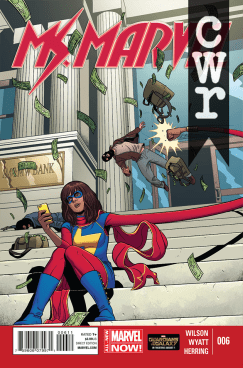
msmarvel6Not only is this the first full issue of no holds barred genuine superhero-ing as we all expect it, it’s also the first team-up the all-new Ms. Marvel has ever had and the first installment sans series regular artist Adrian Alphona. And man, is it good.
That’s not to deride the man’s work, and really I promise to stop bringing this up, but Jake Wyatt can draw himself some superhero goings-on. He’s on board for #6 and #7 before heading back to work on his creator-owned Necropolis. I’m going to enjoy it while it lasts.

In short, this issue is all about Kamala Khan embracing her crimefighting
identity in full as well as rubbing shoulders with the world’s most famous fictional Canadian [sorry, Dudley Do-Right]. On closer inspection, though, there are so many facets of her character that allows hers to be a unique story unlike anyone else’s. Continue reading

Ms. Marvel, #4: A Comic Book Review

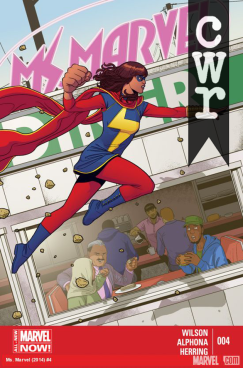
msmarvel3What better time to take a look back at the fourth issue of Ms. Marvel
than today, on the eve of its sixth? As I mentioned in my last review, I missed out on this due to being abroad in a place where English comic books are scarce. Enough about that, though, let’s see what Kamala was up to.

This issue fits as a natural segue between our heroine learning that vigilantism comes with its consequences [getting shot accidentally at the end of #3] and that it takes even more failure, followed by bravery, to truly succeed [#5, natch]. It’s also a lead-in to the kind of traditional superhero antics you expect in books with “Marvel” or “DC” on them.

More importantly, though, this is the issue that really spotlights Bruno and Kamala’s friendship. It’s not just that he reminds her [and reveals to us] that he’s her “second-best friend”, it’s the sudden inversion of their relationship that takes place.  Continue reading

Storing Characters: If Not The Fridge, Then Where?

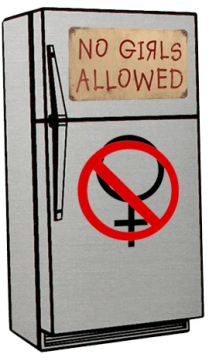
Not all appliances are created equal, and that certainly rings true for longtime readers of comic books. While some of us have discovered the phrase simply by taking part in the discourse that surrounds superhero titles, there are those among us who can remember reading Green Lantern #54, which featured the titular character discovering that his girlfriend had been murdered and stuffed in the aforementioned kitchen mainstay.

Since then [and thanks to Gail Simone] nofridging“fridge” has become both a noun and a verb, and occurs to a character when, according to TV Tropes, “[they are] targeted by an antagonist who has them killed off, abused, raped, incapacitated, de-powered, or brainwashed for the sole purpose of affecting another character, motivating them to take action.” It shouldn’t surprise you at all to learn that most characters who have been fridged are, you guessed it, women, and for the benefit of men to boot.

This particular topic made its way back onto my radar after an internet-response-to-comic-book-happenings debacle that I don’t want to get into [Brett White goes into what took place as well as the resulting backlash quite well, if you’re interested], where one of the listed grievances against a particular writer was that he had fridged a longstanding female supporting character.

Timothy O’Neil, whose blog has somehow missed making its way unto the links sidebar, tweeted the following with that in mind:

Continue reading